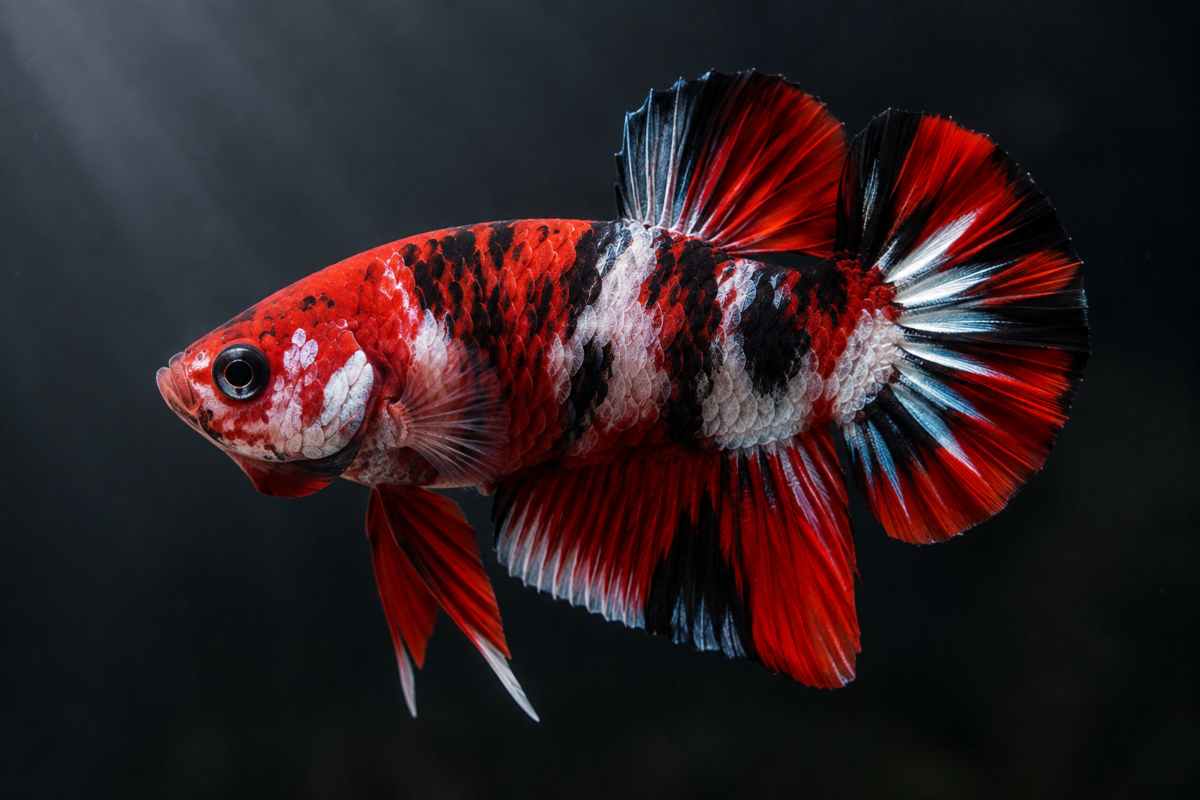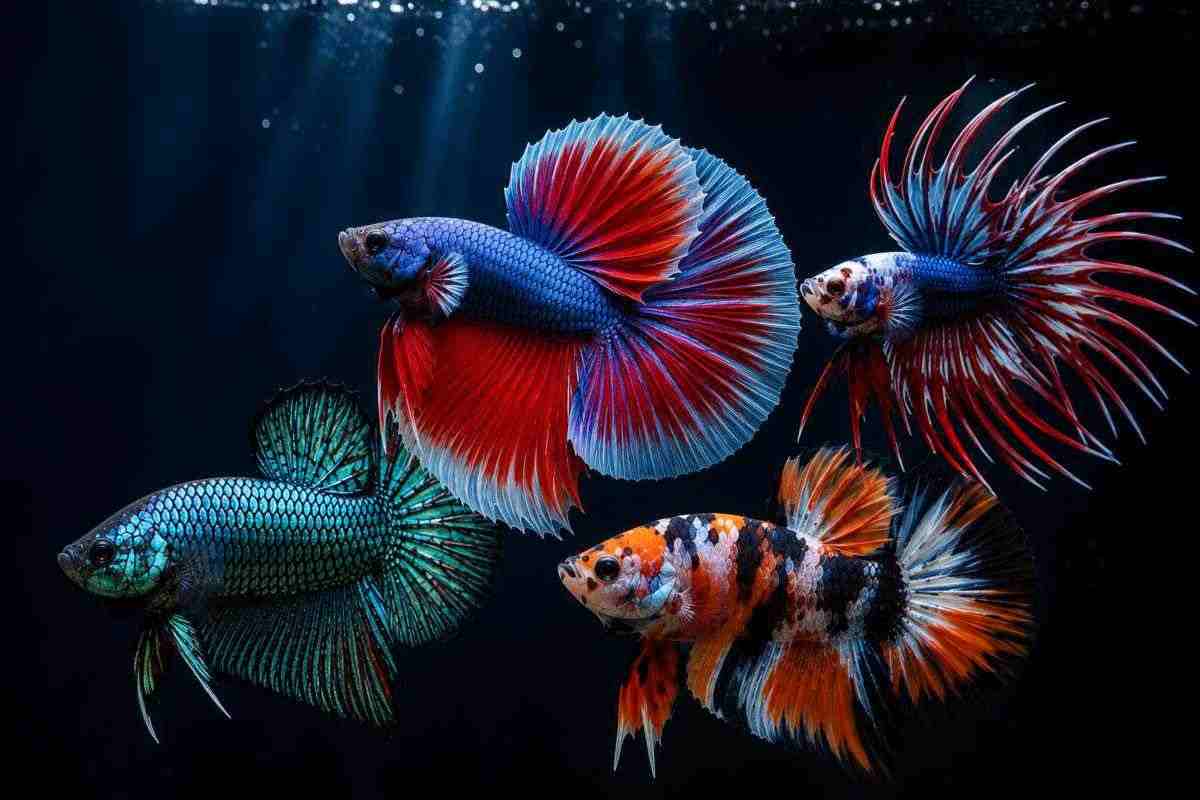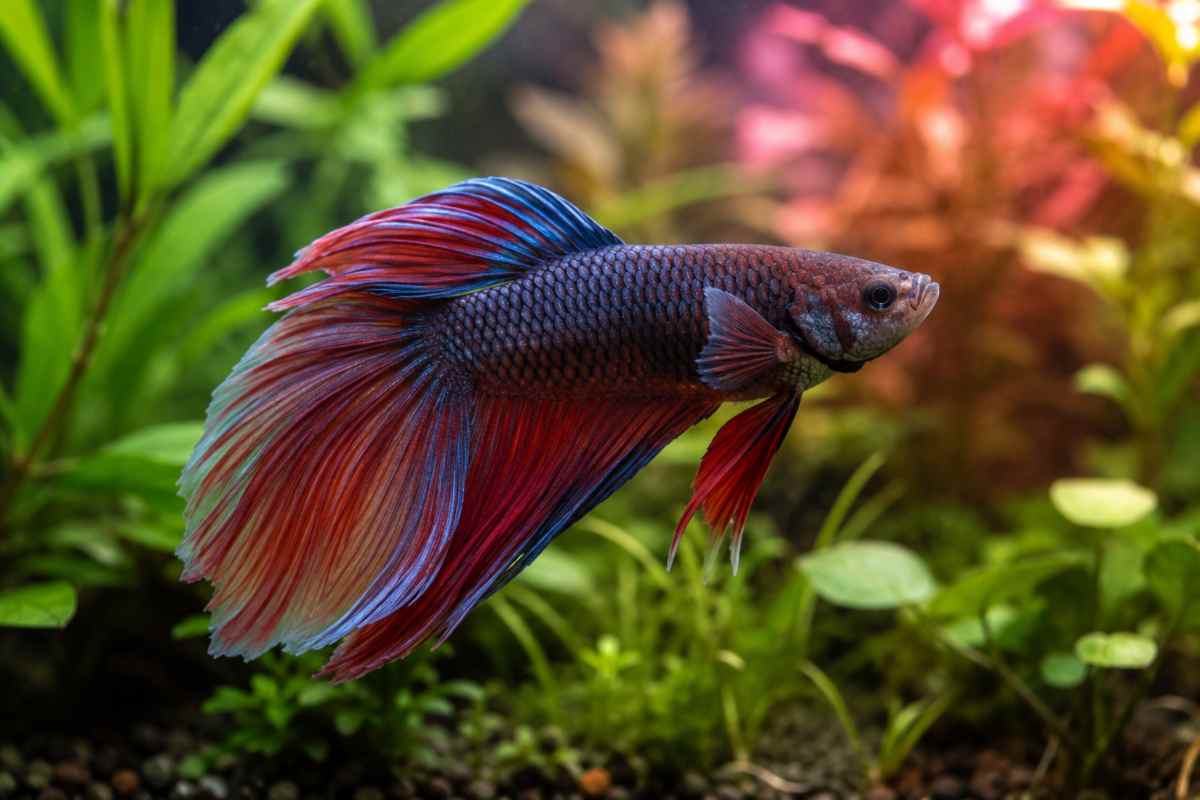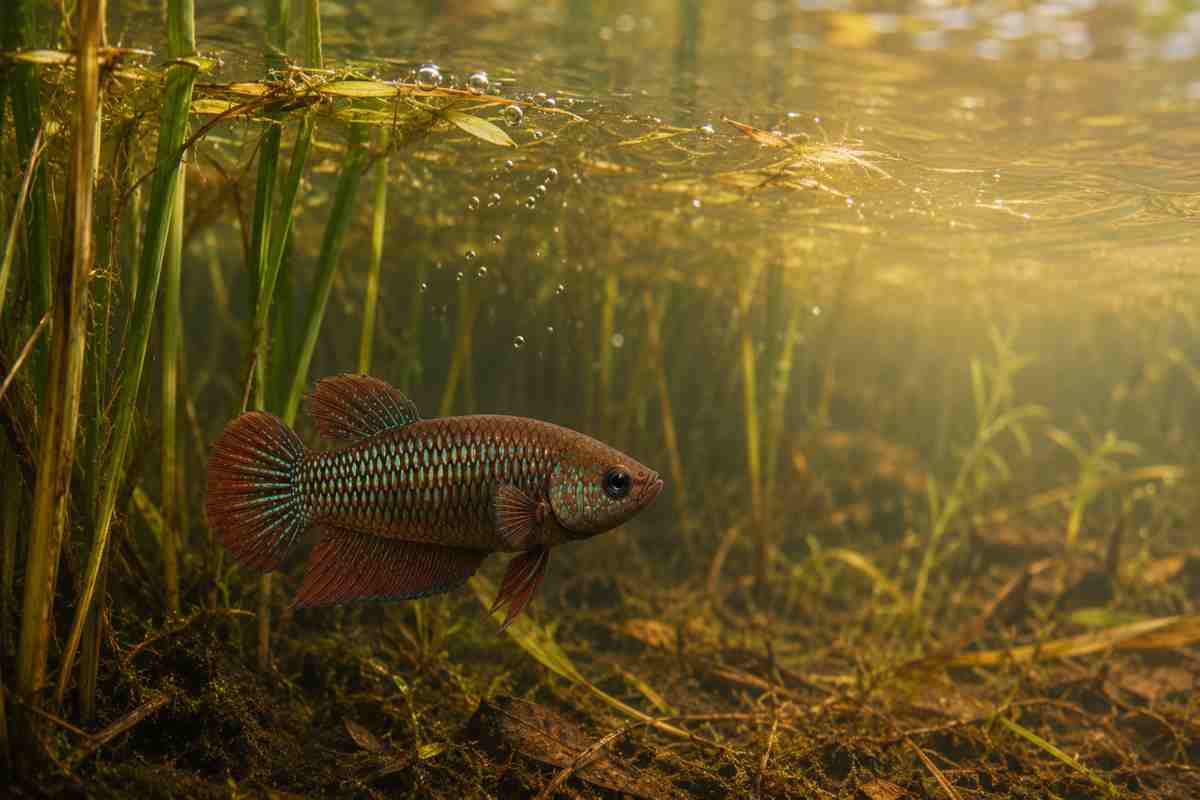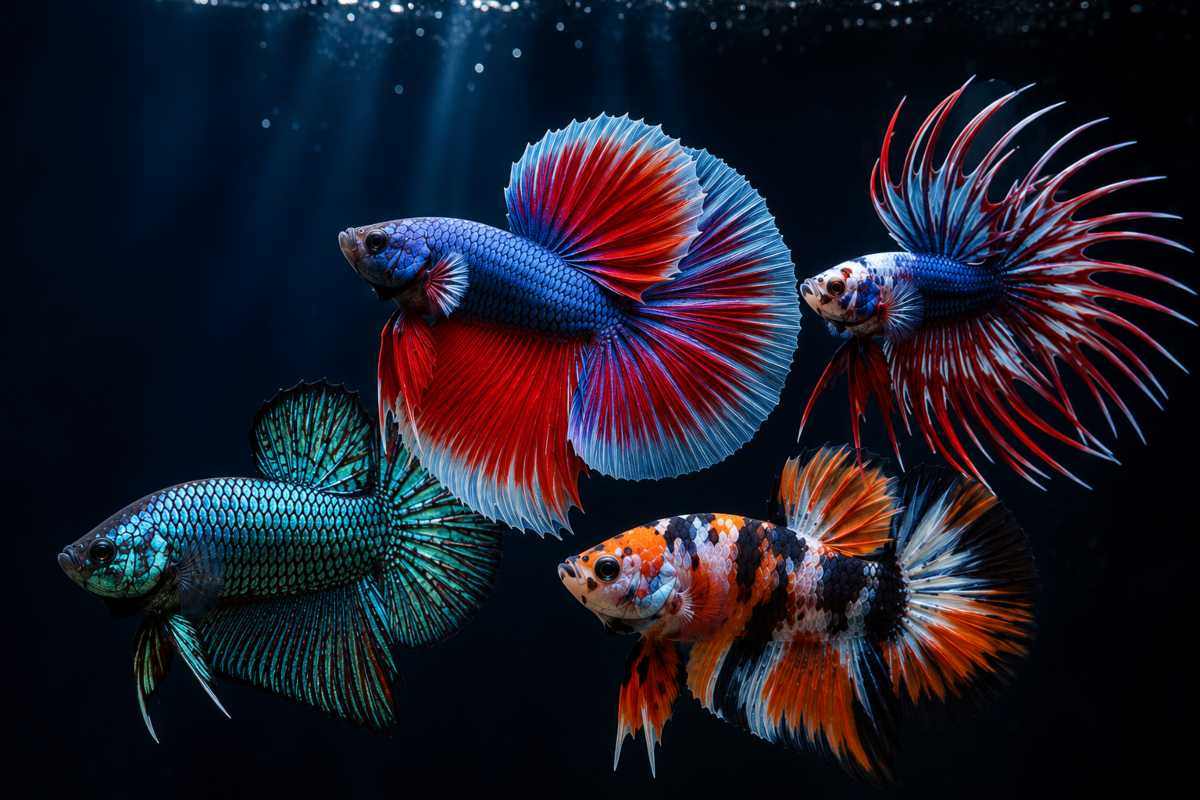
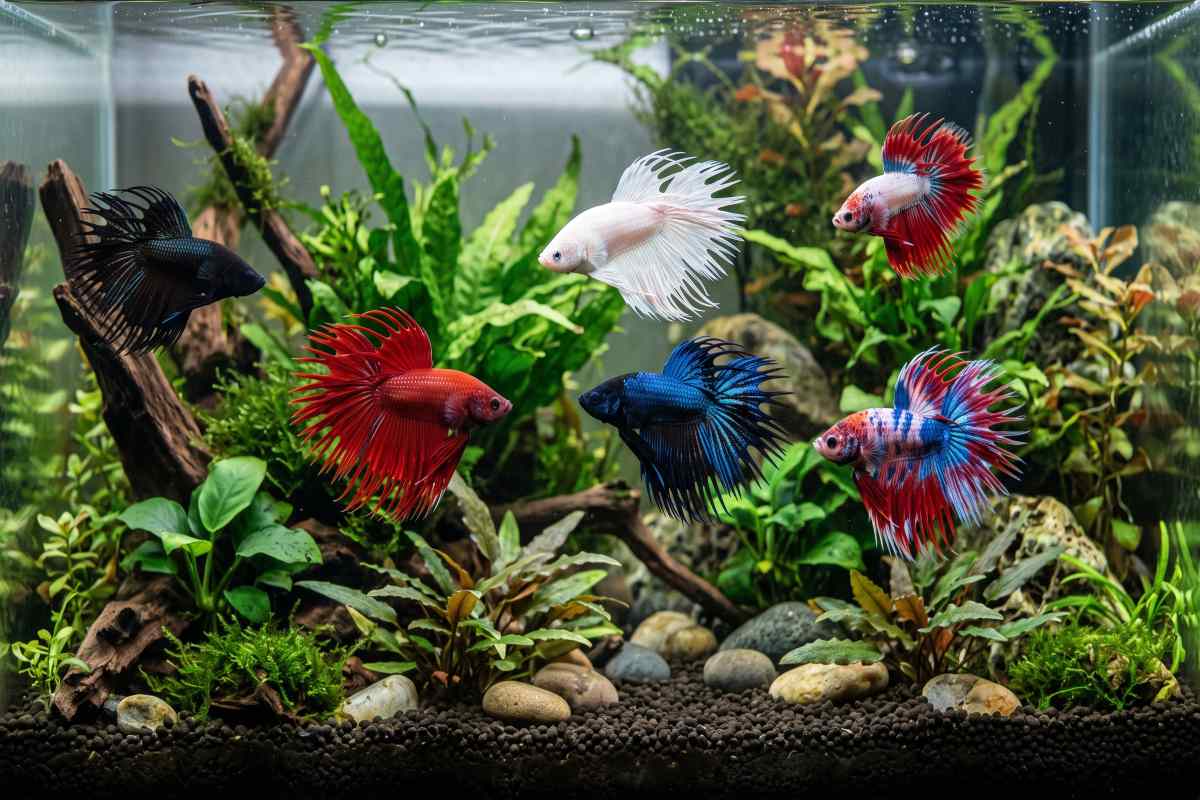
If you have ever imagined a betta fish, chances are you pictured a colorful male with flowing fins, bold displays, and a solitary personality. Female crowntail bettas often receive far less attention, but they deserve recognition as a fascinating variety in their own right. They can be more adaptable in certain situations, show unique social behaviors, and display the same stunning crowntail characteristics that make this variety so popular.
This guide focuses entirely on female crowntail bettas rather than treating them as a smaller version of males. You will learn what defines a crowntail betta fish, how females differ from males in appearance and temperament, how to create the right aquarium environment, provide proper nutrition, prevent health issues, understand breeding, and make smarter choices when selecting your fish.
Quick Facts (At a Glance)
| Category | Detail |
|---|---|
| Common name | Female crowntail betta |
| Adult size | 2–2.5 inches (5–6.5 cm) body length, with a shorter fin spread than males |
| Lifespan | 2–4 years typically, with some reaching 5+ years with excellent care |
| Minimum tank size | 5 gallons for a single fish; 20+ gallons for a sorority setup |
| Temperament | Hierarchical by nature; can live alone or in groups under suitable conditions |
| Diet | Carnivorous diet requiring high-protein pellets with occasional live or frozen foods |
| Water temperature | 76–82°F (24–28°C) |
| Water pH | 6.5–7.5 |
| Care difficulty | Beginner level for solo keeping; intermediate for sorority setups |
| Distinguishing feature | Ovipositor, a small white egg-laying spot above the ventral fins |
| Origin of fin type | Selectively bred in Indonesia around 1997 by breeder Achmad Yusuf |
Scientific Classification (Taxonomy)
| Rank | Classification |
|---|---|
| Kingdom | Animalia |
| Phylum | Chordata |
| Class | Actinopterygii (ray-finned fishes) |
| Order | Anabantiformes |
| Family | Osphronemidae (gouramis and relatives) |
| Genus | Betta |
| Species | Betta splendens |
| Variety | Crowntail (a fin-type mutation, not a separate subspecies) |
What “Crowntail” Actually Means
Crowntail isn’t a species. It is a fin-type mutation within Betta splendens, the same species as veiltails, halfmoons, and plakats. The defining trait is fin ray reduction: the webbing between the rays doesn’t fully develop, so the rays extend beyond the membrane, creating a spiky, crown-like, or “fringed” edge. This trait was selectively bred in Indonesia in the late 1990s and has since become one of the most recognizable betta fin types worldwide.
Because it’s a fin-type trait rather than a sex-linked one, both males and females can be crowntails. The mutation itself doesn’t change temperament or care needs, but sex does, significantly.
Ray Reduction: The Genetics in Plain English
Crowntail fin structure is measured informally by “ray reduction” — how much webbing is missing relative to ray length:
| Reduction Level | Appearance | Common Name |
|---|---|---|
| Single ray (1x) | Slight spiking with mostly webbed fin rays | Standard crowntail |
| Double ray (2x) | Fin rays split and form spikes in pairs | Double ray crowntail |
| Triple/quadruple ray | Heavy branching with a more dramatic, spiky appearance | “Crown” or “king” crowntail |
Females almost always show a milder version of this than males, simply because their fins are shorter overall — there’s less ray length for the spiking to show off.
Female vs. Male Crowntails: What Actually Differs
This is where most confusion starts, because pet stores rarely separate or label sexes clearly, and juvenile bettas of both sexes can look deceptively similar.
| Trait | Female Crowntail | Male Crowntail |
|---|---|---|
| Fin length | Short to medium; spiking is present but less dramatic | Long, dramatic spiking is the breed’s signature look |
| Body size | Slightly rounder and shorter body | Longer and leaner body shape |
| Color intensity | Often muted or patchy, but can still display vivid colors | Typically shows more saturated and solid coloration |
| Ovipositor | Small white dot behind ventral fins (egg-laying tube) | Absent |
| Vertical “breeding stripes” | Appear when stressed or ready to breed | Not present |
| Aggression | Can be kept in groups (“sororities”) under the right conditions | Must be housed alone except during brief breeding periods |
| Lifespan (typical) | 2–4 years | 2–4 years |
The single most reliable identifier is the ovipositor — a small white or cream-colored dot located just above and behind the ventral (pelvic) fins. It’s easy to miss on a young fish but becomes clearer as she matures.
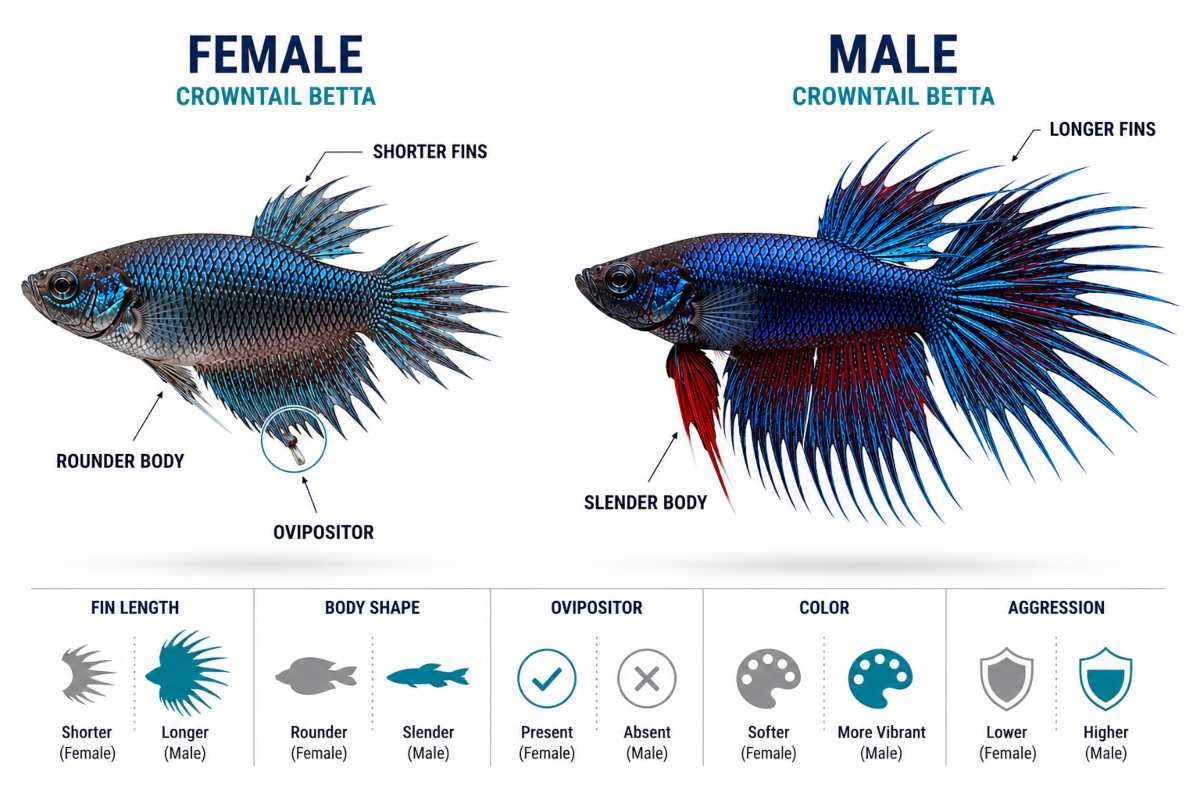 Visual comparison of female and male crowntail bettas.
Temperament and Social Behavior
This is the part that surprises new owners most. Male bettas are famously solitary. Two males in the same tank will fight, often fatally. Females are more nuanced.
Female crowntails can be kept in groups, commonly called a “sorority,” typically 4–6 or more females in a 20+ gallon tank with heavy plant cover and visual breaks. This works because female aggression is about establishing a hierarchy, not eliminating rivals. With enough space and hiding spots, they settle into a pecking order rather than fighting to the death.
That said, sororities are an intermediate-to-advanced project, not a default for beginners. A few realities to weigh:
- Group size matters more than tank size alone. Fewer than 4 females concentrate aggression on the smallest or weakest fish. 4–6+ spreads it out.
- You need backup space. A hospital or grow-out tank for fish that get bullied out of the group is close to mandatory, not optional.
- Sororities can still fail. Individual temperament varies a lot; some females are simply too aggressive or too timid for group life, and you may need to remove one permanently.
- A single female alone is entirely fine. She doesn’t “need” company the way a schooling fish does. Solo keeping is lower-risk and perfectly humane.
Decision Framework: Solo or Sorority?
| If you… | Consider |
|---|---|
| Are new to bettas | Keep one female alone or with peaceful community fish |
| Have a 20-gallon+ tank with dense planting | A sorority of 5+ females can be viable |
| Have limited space or a spare quarantine tank | Stick to solo keeping |
| Want to breed | Keep the female separate from males except during a controlled spawning event |
| Notice one fish being chased relentlessly | Remove her immediately, regardless of group size |
Tank Setup and Water Parameters
Female crowntails have the same core water needs as any Betta splendens, but their long, delicate ray tips (especially on heavily reduced crowntails) make water quality more consequential than it is for hardier fin types.
Why Fin Type Raises the Stakes
Crowntail fin edges have reduced webbing, which exposes more fin rays to the water than fully webbed fin types like veiltails. This can make them more prone to fin rot and ray splitting when water quality declines. Clean, stable water is essential for preventing these common issues.
Core Parameters
| Parameter | Ideal Range | Why |
|---|---|---|
| Temperature | 76–82°F (24–28°C) | Bettas are tropical fish; cold water suppresses immune function and slows healing |
| pH | 6.5–7.5 | Bettas tolerate a wide range, but stability matters more than the exact number |
| Tank size | 5 gallons minimum (solo); 20+ gallons for sororities | Smaller tanks experience faster temperature changes and ammonia spikes |
| Filtration | Gentle flow, sponge or baffled filter | Strong currents can damage fin tips and stress fish adapted to calm waters |
| Ammonia/Nitrite | 0 ppm | Directly damages fin and gill tissue and is a major preventable cause of fin rot |
| Nitrate | Under 20 ppm | Long-term exposure can weaken immune response |
A common mistake is assuming a small bowl is acceptable because females are “less flashy” than males. It isn’t — a heated, filtered, minimum 5-gallon tank is the baseline for any betta, male or female.
Diet and Feeding
Female crowntails are carnivorous, like all bettas, and their nutritional needs don’t differ from males — but their smaller body size means portion control matters more (it’s easy to overfeed a fish that’s a third smaller than you’re picturing).
- Staple: High-protein betta pellets (look for fish meal or shrimp meal as the first ingredient, not fillers like wheat)
- Variety: Frozen or live brine shrimp, daphnia, bloodworms 1–2 times a week
- Portion: 2–4 small pellets, twice daily — roughly what she can eat in under 2 minutes
- Fasting: One day per week with no food, to prevent constipation and bloating
Common mistake: Treating bloodworms as a staple rather than a treat. They’re fatty and low in fiber; used daily, they contribute to swim bladder issues and constipation, which show up as a female floating oddly or struggling to stay level.
Breeding Female Crowntails
This is one of the more misunderstood areas, because bettas don’t breed like most community fish — it’s a deliberate, supervised process, not something that happens accidentally in a shared tank.
Why You Can’t Just Add a Male and a Female Together
Male bettas build bubble nests and can be aggressive toward females that aren’t ready to spawn. An unprepared or unwilling female introduced to a male’s tank can be seriously injured or killed. Breeding is a managed event, not a cohabitation arrangement.
General Process Overview
- Preparation: Condition both fish for 1–2 weeks with high-protein live or frozen foods to improve breeding readiness.
- Readiness Check: The female should display vertical breeding stripes and a noticeable ovipositor, while the male should actively build a bubble nest.
- Introduction: Introduce the pair gradually using a divider or separate visible containers, allowing them to adjust without direct contact.
- Spawning: Supervise the breeding process in a dedicated tank, where the pair will embrace beneath the bubble nest as eggs are released and fertilized.
- Female Removal: Remove the female immediately after spawning because the male takes full responsibility for egg and fry care and may become aggressive toward her.
- Male Removal: Remove the male once the fry become free-swimming, usually after 3–4 days, as he may begin eating them after his protective instincts decline.
Breeding crowntails specifically adds one layer of unpredictability: fin type genetics are polygenic and not fully dominant/recessive in a simple Mendelian sense, so pairing two crowntails does not guarantee crowntail fry. Expect a mixed spread of fin types in the resulting brood, with crowntail traits more likely but not certain.
Health Issues Specific to (and Common in) Females
| Issue | What It Looks Like | Primary Cause | Prevention |
|---|---|---|---|
| Fin rot | Ragged, browning, or receding fin ray tips | Poor water quality | Regular water changes and stable water parameters |
| Ray splitting | Individual crowntail spikes become separated or frayed | Physical damage or poor water quality | Gentle filtration and smooth decor edges |
| Egg binding | Swollen abdomen, lethargy, or inability to release eggs | Long periods without spawning, overfeeding, or other health issues | Balanced diet, occasional fasting, and monitoring for abnormal swelling |
| Fin melt | Rapid and severe fin deterioration | Advanced bacterial infection, often developing after untreated fin rot | Treat fin damage early before it progresses |
| Bloating/constipation | Distended belly, floating, or sinking abnormally | Overfeeding or excessive bloodworms | Weekly fasting and a varied, balanced diet |
A note on egg binding: female bettas produce eggs on a cycle, whether or not a male is present. Mild abdominal fullness is often just normal egg development, not illness. It becomes a concern when it’s accompanied by lethargy, loss of appetite, or clamped fins for more than a few days — that combination warrants closer attention, potentially including a vet familiar with fish.
Buying Guide for Female Crowntail Bettas
Choosing the right female crowntail betta involves more than just appearance. A fit fish from a reputable source is far more likely to thrive than an unusually colorful fish kept in poor conditions.
Where to buy: Whenever possible, buy from a reputable breeder or a well-maintained local aquarium store that keeps bettas in clean, heated water. Healthy fish are typically more active, better conditioned, and less likely to carry disease than those kept in overcrowded or neglected tanks.
Typical price: Most female crowntail bettas cost $10–30 USD, while high-quality bloodlines, rare colors, or show-grade specimens may cost significantly more.
Common buying mistakes to avoid:
- Choosing color over overall health.
- Buying fish with clamped fins, cloudy eyes, or labored breathing.
- Purchasing from dirty or overcrowded tanks.
- Confusing juvenile males with female crowntails.
- Skipping quarantine before introducing the fish to an established aquarium.
After bringing your betta home: Acclimate the fish slowly to the new water temperature and chemistry, then quarantine it for 2–4 weeks whenever possible. Observe its appetite, swimming behavior, and fins during the first few days, as early monitoring helps detect health problems before they become serious.
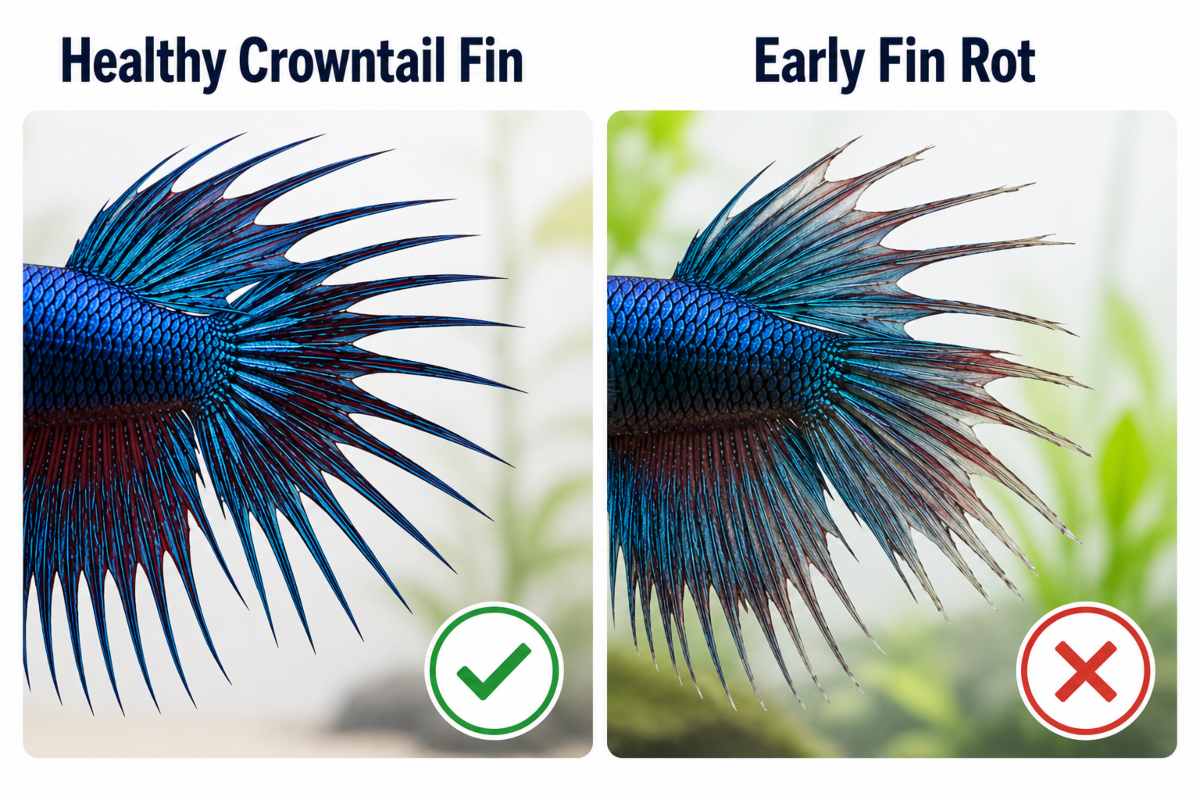 Crowntail betta fin health comparison between normal and affected fins.
Frequently Asked Questions
Are female crowntail bettas as colorful as males?
Female crowntail bettas are often less saturated in color, but they are not always dull. Many females display beautiful marbling, iridescent scales, especially in koi or galaxy patterns, and vibrant jewel-like tones. Color intensity depends more on individual genetics and bloodline than on sex alone.
Can I keep a female crowntail with other fish species?
Yes, female crowntails can often live with peaceful, fast-moving community fish such as small tetras or corydoras in a properly sized aquarium of 10 gallons or more. Avoid fin-nipping species like tiger barbs and other labyrinth fish that may trigger territorial behavior.
Do female crowntails need a heater?
Yes. Room temperature is usually too cool and inconsistent for a tropical fish. A reliable heater maintaining a stable temperature between 76 and 82°F is an essential part of proper betta care.
Why does my female’s fin edge look ragged? Is it normal or fin rot?
Some ragged edges are naturally part of the crowntail fin structure, especially in fish with heavy ray reduction. The key difference is progression. Healthy crowntail spiking remains stable, while fin rot continues to worsen and may include discoloration or tissue loss.
How long do female crowntail bettas live?
Female crowntail bettas typically live 2 to 4 years with proper care, although some may live longer. Their lifespan depends more on water quality, diet, and overall care than on their sex or fin type.
Is it true that females are less aggressive than males?
Female crowntails are often less aggressive toward each other when kept in suitable groups, but individual personalities vary. Some females can still be highly territorial and may show aggression toward unsuitable tank mates or other fish.
References
- International Betta Congress — history and standards for crowntail and other recognized betta fin types
- Bettastore, “History of Crowntail Betta” — origin account of Achmad Yusuf and the crowntail’s development in Indonesia