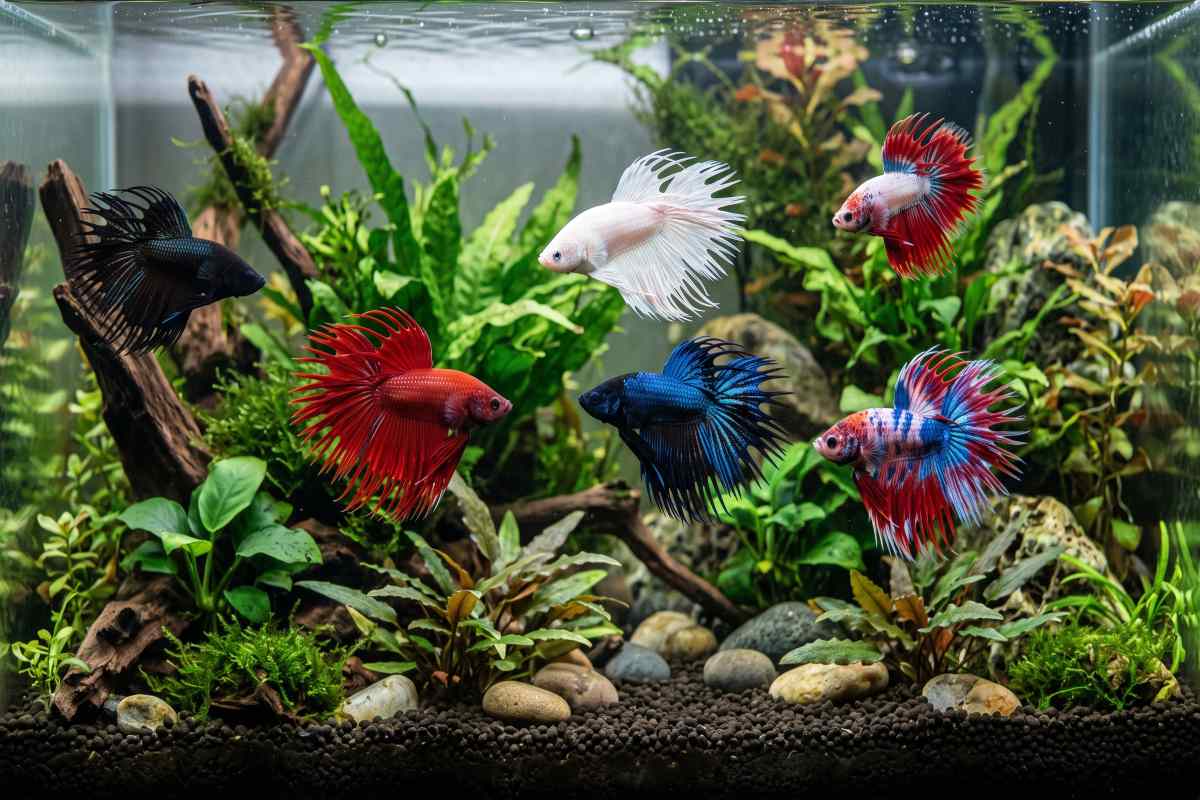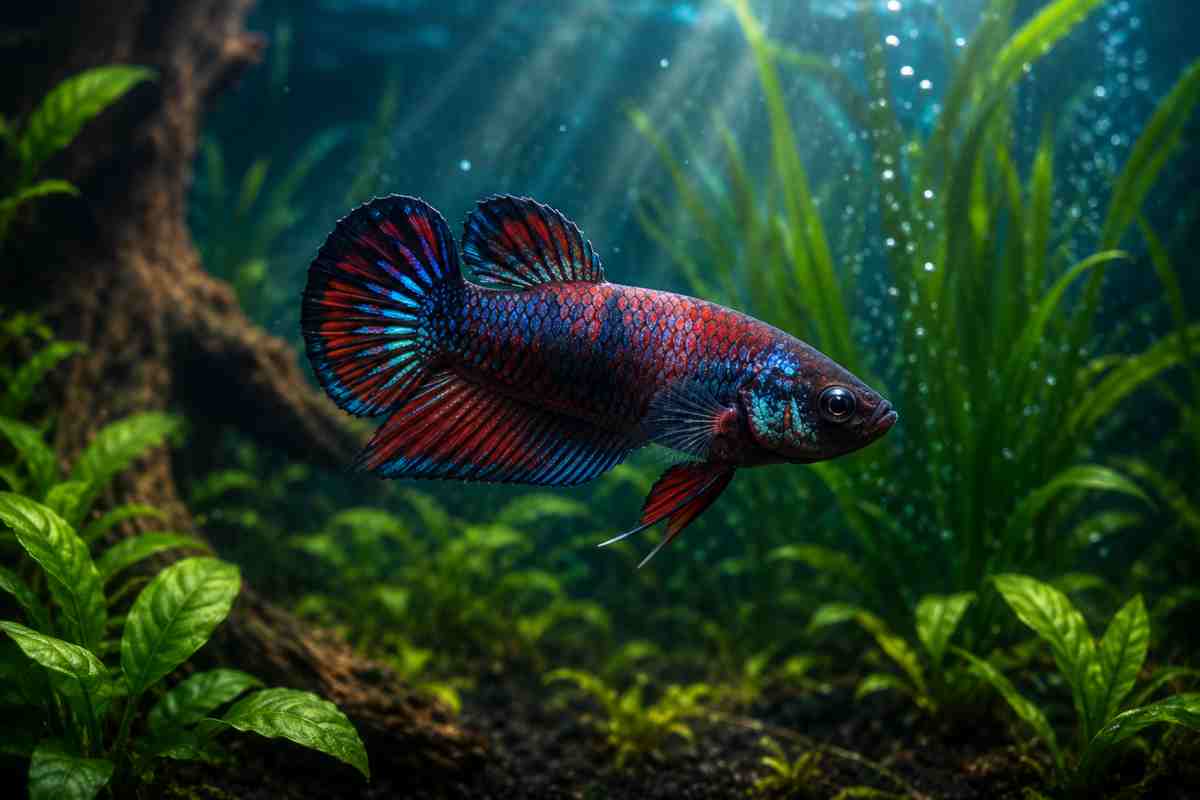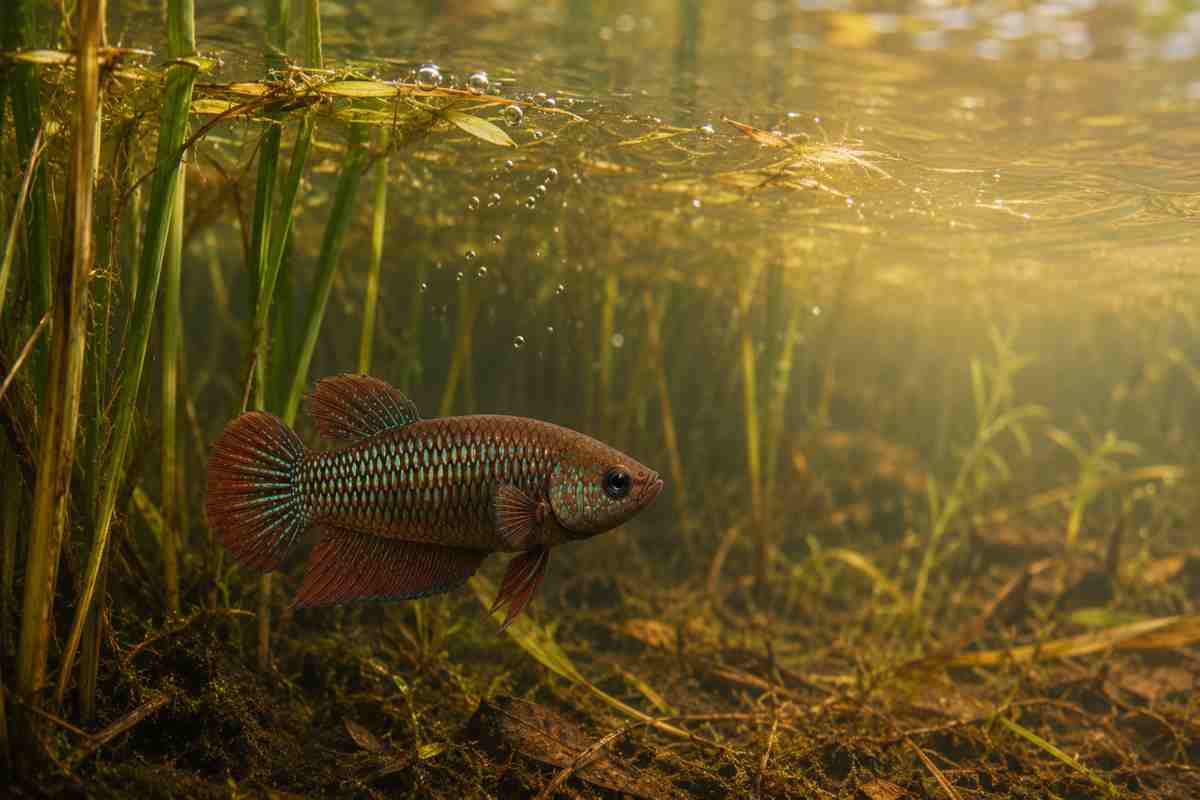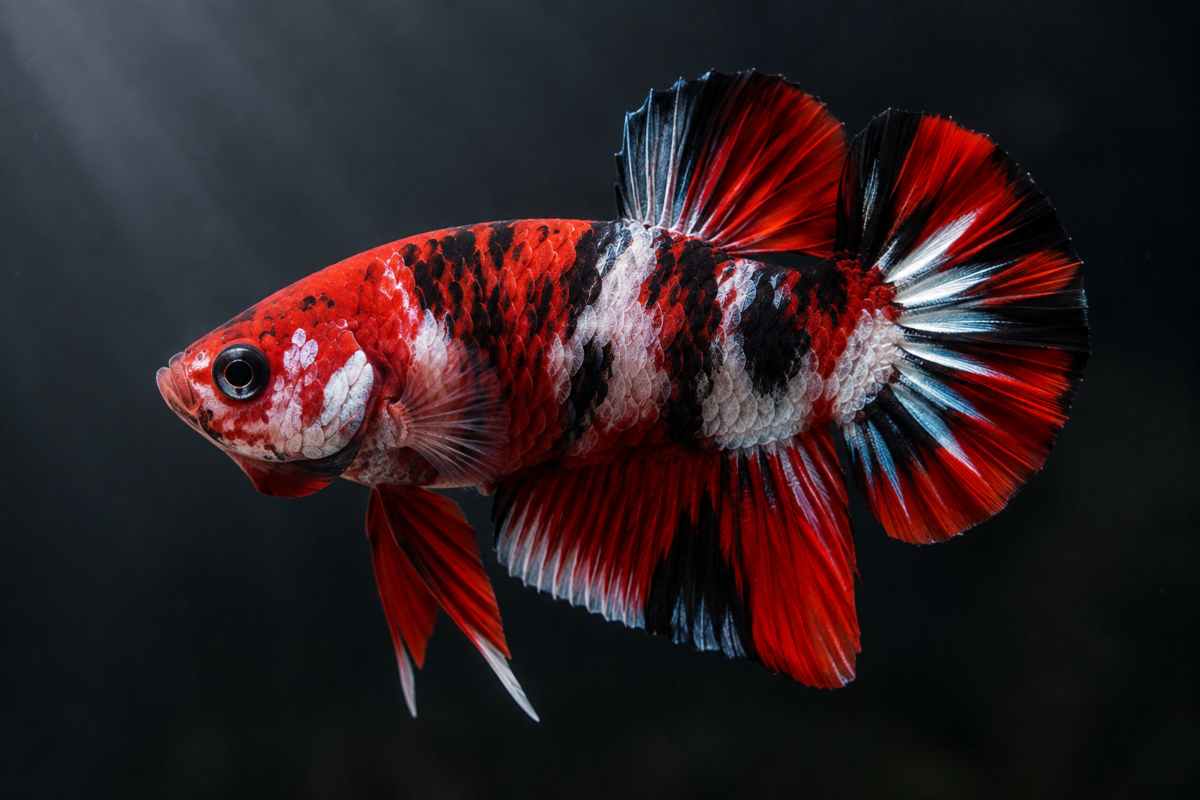
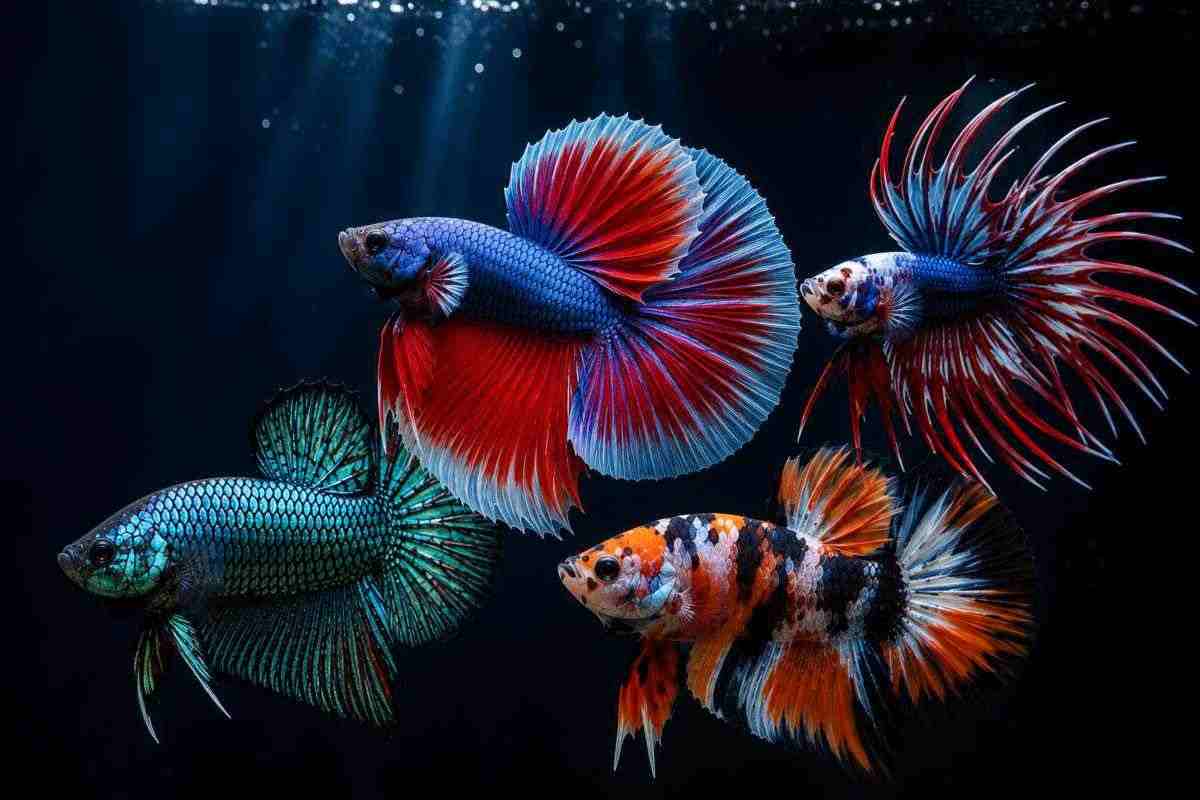
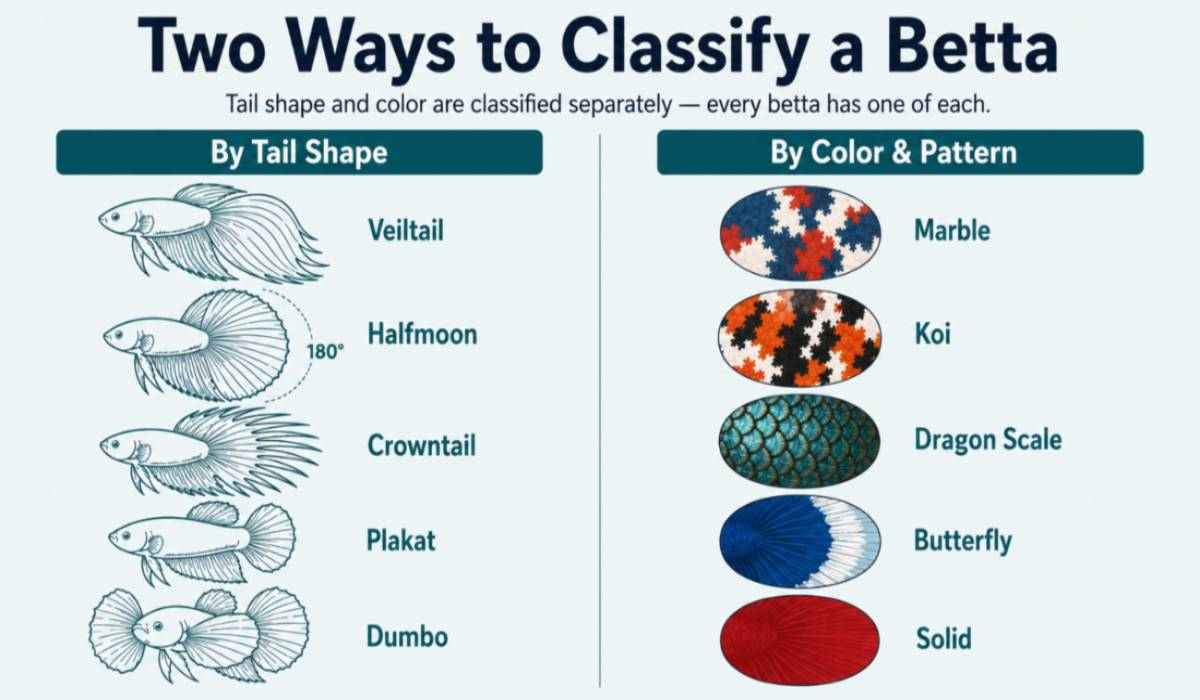
Betta fish varieties are classified mainly by tail shape (Veiltail, Halfmoon, Crowntail, Plakat, and others) and separately by color and pattern (Marble, Koi, Dragon Scale, Butterfly, and more), so a single fish is usually described by both a tail type and a color type together. Choosing the right variety matters less for looks than for temperament, fin health, and tank requirements — some tail types are far more prone to injury and disease than others.
Key Takeaways
- Betta varieties are sorted along two independent axes: fin/tail shape and color/pattern. A “Halfmoon Marble” combines both.
- Long-finned varieties (Halfmoon, Crowntail, Dumbo/Giant) look spectacular but are more prone to fin rot, tearing, and swimming difficulty.
- Plakat bettas (short-finned) are closer to the wild ancestor, generally harder, and often more active swimmers.
-
- Price and rarity (e.g., Copper, Galaxy Koi, Fancy varieties) reflect breeding difficulty, not better health or temperament.
What Determines a Betta “Variety”?
A betta fish “variety” isn’t a separate species. Every pet betta is Betta splendens. Varieties are the product of decades of selective breeding, primarily out of Thailand and Indonesia, aimed at exaggerating two traits: fin shape and pigmentation. Understanding this distinction early prevents a common beginner mistake: expecting a color to be permanent or a tail shape to guarantee a certain personality, when in reality neither is fixed by rules of thumb.
Betta Varieties by Tail and Fin Shape
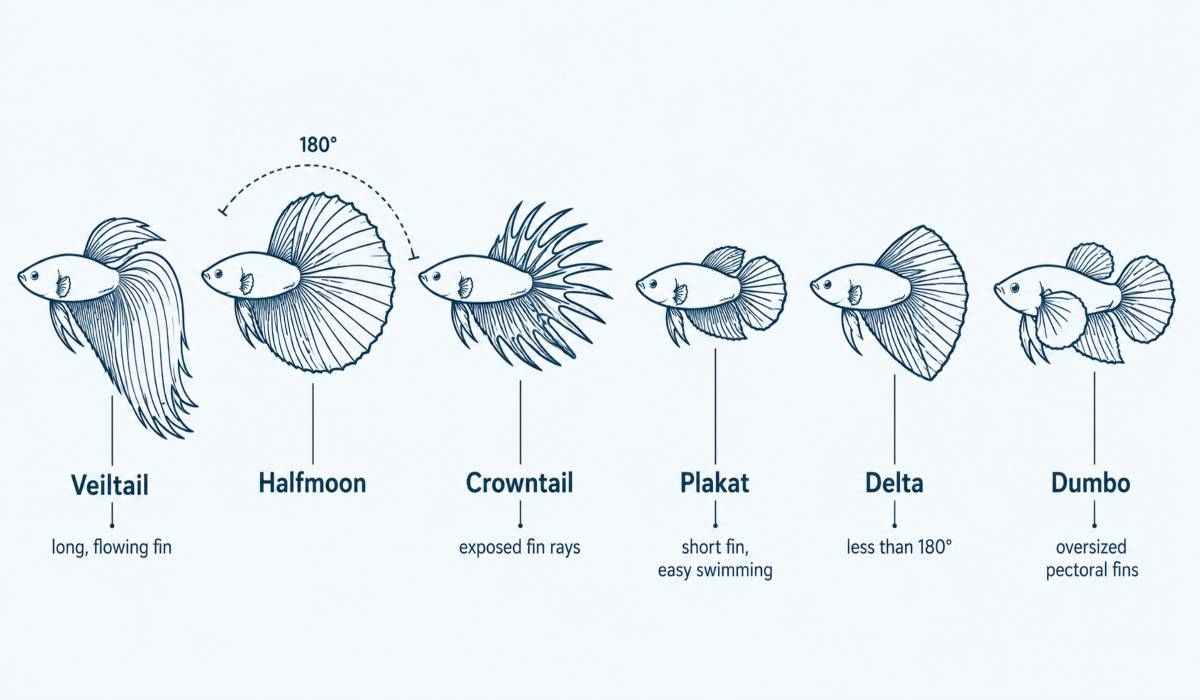
Tail shape affects far more than aesthetics — it directly influences swimming ability, injury risk, and how much tank maintenance the fish needs.
Veiltail
Halfmoon
Crowntail
Fin rays extend past the webbing, creating a spiky, crown-like edge. Crowntails were developed in Indonesia in the 1990s and are genetically related to Halfmoons but with reduced webbing between rays. The exposed ray tips are more prone to ray-splitting than to true fin rot, which owners sometimes misdiagnose.
Plakat
Short-finned, closely resembling the original fighting fish used in Thai bullfighting matches (the Word “plakat” literally means “biting fish” in Thai). Because the fins are short, Plakats swim faster, tire less, and suffer far fewer fin injuries. For anyone prioritizing an active, hardy fish over maximum finnage, Plakat is usually the better practical choice.
Delta and Super Delta
Dumbo (Elephant Ear) / Giant Betta
“Dumbo” refers to oversized pectoral fins that resemble ears, not the tail shape — it can be combined with any tail type. Giant bettas are a separate size-selected line bred to reach 3–4 inches or more, roughly double a standard betta’s length, and require noticeably more swimming space and a longer maturation period.
| Tail Type | Fin Size | Swimming Ease | Injury Risk | Best For |
|---|---|---|---|---|
| Veiltail | Long | Moderate | Moderate | Beginners, budget buyers |
| Halfmoon | Very large | Harder | High | Experienced keepers, show tanks |
| Crowntail | Long, spiky | Moderate | Moderate (ray splitting) | Owners who like a distinct look |
| Plakat | Short | Easy | Low | Active tanks, community-adjacent setups |
| Delta/Super Delta | Medium-large | Moderate | Moderate | Stepping stone to Halfmoon |
| Dumbo/Giant | Varies + large pectorals | Varies | Moderate | Larger tanks, statement fish |
Betta Varieties by Color and Pattern
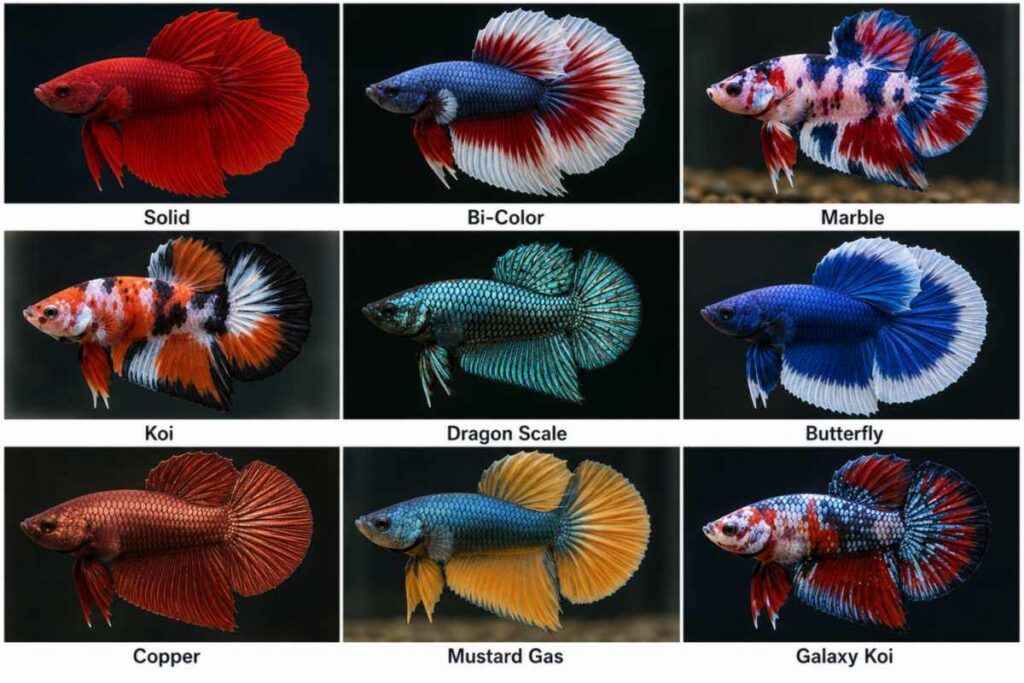
Color genetics in bettas involve multiple overlapping genes (for base color, iridescence, and pattern), which is why two “Marble” bettas can look completely different from each other.
Solid (Single Color)
Bi-Color
Marble
Koi Betta
Dragon Scale
Thick, metallic scales with a heavy, almost armor-like iridescent sheen that can obscure the base color underneath. Dragon scale genetics are dominant and were originally prized for their metallic shine. However, breeders have noted the thickened scales occasionally correlate with eye-clouding issues in older fish — worth mentioning to a vet if it appears, rather than assuming it’s cosmetic.
Butterfly
A banding pattern where the body color transitions sharply into a differently colored (often white) band at the edge of the fins, like a dipped-paint effect. True, symmetrical butterfly patterning is difficult to breed consistently and is prized in show circles.
Copper, Mustard Gas, and Galaxy Koi
Common Misconceptions Worth Correcting
Female bettas are less colorful and less aggressive. Females can be just as vividly colored as males, though their fins are shorter by nature regardless of tail type. They’re generally less aggressive toward other bettas, but not harmless — sorority tanks (groups of females) still require careful monitoring and sufficient space to establish a hierarchy without constant conflict.
A betta’s tail type tells you its personality. Aggression and activity level are driven more by individual temperament and experience (e.g., whether it was raised in isolation and flared at often) than by fin shape. Plakats tend to be more physically active simply because they can swim more easily, not because they’re inherently more aggressive.
Bettas can live in tiny bowls because they’re used to small puddles in the wild. This oversimplifies their natural habitat — wild bettas inhabit rice paddies, slow-moving streams, and floodplains, which are shallow but not small in surface area. A minimum of 5 gallons with a heater and filter is the widely recommended baseline for any Betta variety, and long-finned varieties in particular benefit from calmer water flow rather than cramped space.
How Variety Should Actually Influence Your Buying Decision
Instead of choosing based on color alone, work through this decision order:
- Tank size and flow first. If you’re limited to a smaller heated, filtered tank (5–10 gallons) with gentle flow, most varieties work, but avoid Giant bettas, which need more swimming room.
- Maintenance tolerance second. If you don’t want to monitor fins closely for tearing or rot, choose Plakat, Veiltail, or Delta over Halfmoon or Crowntail.
- Color preference last. Once tail type and care level are settled, pick the color/pattern you find most appealing. Solid if you want a color that won’t change, Marble or Koi if you’re comfortable with (and interested in) unpredictable pattern shifts over time.
This order matters because color has no meaningful effect on care difficulty, while tail shape does — prioritizing looks first is the most common reason new owners end up with a fish whose needs don’t match their setup.
Summary and Next Steps
At The Fish Care, our goal is to help you make this decision the right way around: fin shape and coloration are two independent traits, and the healthiest approach is to pick a tail type based on your tank setup and maintenance comfort first, then treat color as a matter of personal taste. Plakat and Veiltail varieties are the most forgiving starting points for new keepers, while Halfmoon and Crowntail reward more experienced fishkeepers who are willing to watch fin condition closely. Before you start browsing varieties from a local breeder or aquarium store, use this guide to confirm your tank meets the 5-gallon-plus, heated, filtered baseline — then choose the tail type that fits that setup before falling in love with a specific color.
Frequently Asked Questions
What is the rarest betta fish variety?
Rarity shifts with breeding trends, but symmetrical, high-grade Butterfly and Galaxy Koi patterns are generally considered among the hardest to reproduce consistently, which keeps them at higher price points.
Do Marble bettas really change color on their own?
Yes. Marble-patterned bettas carry a genetic element that can cause new color patches to appear or existing ones to shift, sometimes noticeably, over the course of months to a couple of years. It’s a known, harmless trait of the variety, not a symptom of illness.
Which betta variety is best for a beginner?
A Plakat or Veiltail in a Solid color is typically the most forgiving choice. Short-to-moderate fins mean lower injury risk, and a stable color means you’ll know at a glance if something looks off (a useful early-warning sign for illness).
Are Halfmoon bettas harder to keep alive than other varieties?
Not inherently harder to keep alive, but their oversized fins make fin rot and physical injury more common if water quality or tank decor (sharp edges, strong flow) isn’t well managed. They typically need slightly more attentive care than short-finned varieties.
Can two different varieties of betta live together?
Tail shape and color don’t change compatibility. Male bettas of any variety are territorial and should not be housed with other male bettas regardless of type. Female sorority groups or single-betta community tanks depend on temperament and tank size, not variety.
Is a Dragon Scale betta’s cloudy-looking eye normal?
The metallic scale pattern can sometimes extend near the eyes, creating a naturally different appearance. Still, true cloudiness, swelling, or vision changes should be checked against symptoms of illness (such as cloudy eye disease) rather than assumed to be cosmetic. When in doubt, consult an aquatic vet or experienced breeder.
Do fancier varieties (Copper, Galaxy Koi, Mustard Gas) live longer or need special care?
No. Lifespan (typically 2 to 4 years, occasionally longer with excellent care) and care needs are determined by tail length, tank conditions, and genetics related to health, not by how visually striking or expensive the color pattern is.