If you’ve ever spotted tiny white specks scattered across your fish and panicked while searching “what is this white stuff on my fish,” you’ve likely encountered Ich, one of the oldest, most common, and most misunderstood problems in the aquarium hobby. Understanding it properly can be the difference between a fish that recovers in a week and a tank wipeout.
This guide covers Ich as a disease: what causes it, how it progresses, how it spreads, and how to treat it correctly. The information applies broadly to freshwater aquarium fish, though it’s especially common in popular pet fish like betta fish, goldfish, and a few others. If you keep a betta specifically, jump straight to how to treat Ich in betta fish for species-specific dosing and care steps.
Key Takeaways
- Ich has a four-stage life cycle, and medication only works during the brief free-swimming stage, which is why single treatments rarely work.
- Visible white spots are the confirming symptom; flashing alone can also be due to poor water chemistry.
- Treatment must continue for 7–14 days even after spots clear, or the infection often returns within weeks.
- Raising tank temperature to 82–86°F speeds up the parasite’s cycle and shortens the path to full recovery.
- Quarantining new fish for 2–4 weeks remains the most reliable way to prevent outbreaks in the first place.
What Is Ich, Exactly?
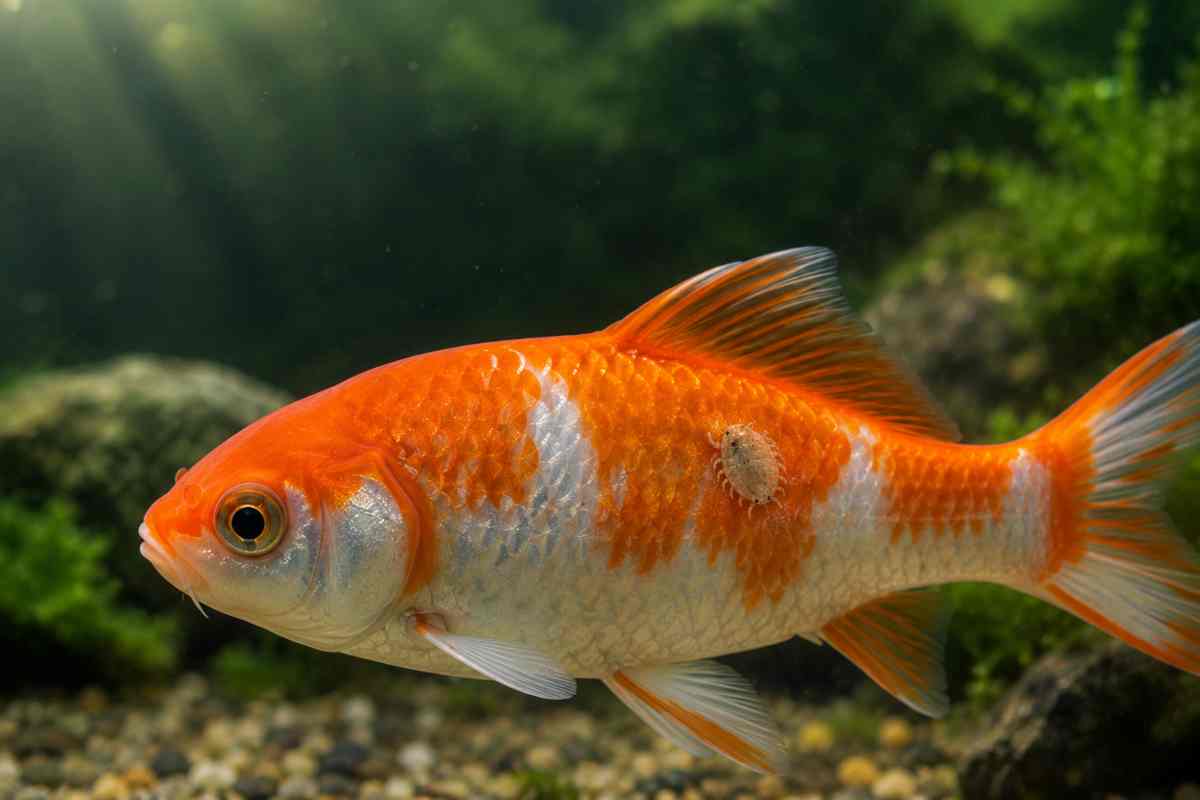
Ich (pronounced “ick,” short for Ichthyophthirius multifiliis) is a parasitic infection caused by a single-celled protozoan, often called “white spot disease” for the small white cysts that scatter across a fish’s body, fins, and gills like grains of salt.
It isn’t a bacterium, virus, or fungus, but a living organism with its own life cycle, which is exactly why it’s so hard to eliminate with a single treatment and why timing matters so much.
Ich is one of the most common freshwater aquarium diseases worldwide, affecting nearly every species under the right conditions. A marine equivalent, caused by a different parasite (Cryptocaryon irritans), produces nearly identical symptoms in saltwater fish. Still, this guide focuses on freshwater Ich, since that’s what most home aquarists encounter.
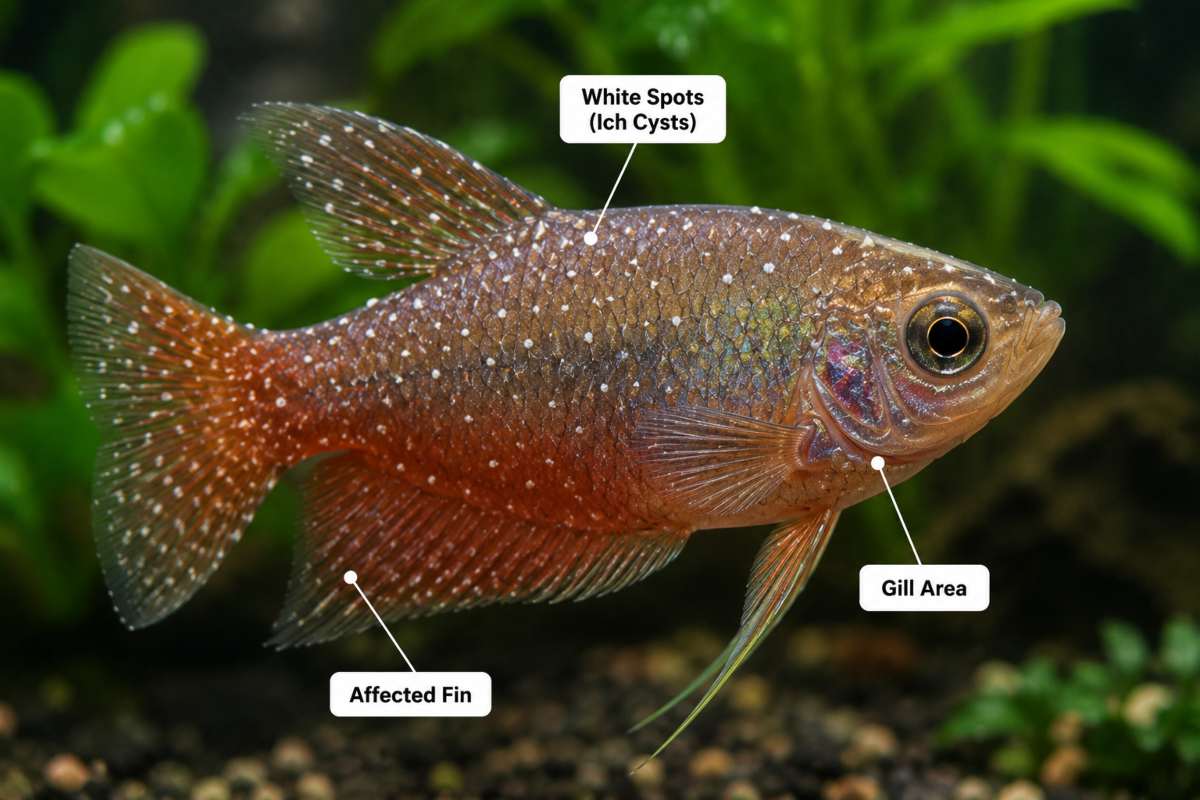 Visual overview of Ich disease signs, causes, and effects on aquarium fish.
Why Does Ich Happen? The Real Cause
Ich isn’t caused by “dirty water” alone, and it doesn’t appear out of nowhere in a healthy, established tank with no new introductions. Two conditions almost always need to be present:
- The parasite has to be introduced. This usually happens through new fish, plants, or even water from an infected source. Ich doesn’t spontaneously generate in a closed aquarium system.
- The fish’s immune defenses have to be compromised. Many aquarium fish carry low levels of Ich without ever showing symptoms. Stress from poor water quality, sudden temperature swings, overcrowding, aggressive tankmates, or a recent move is often what allows the parasite to multiply out of control.
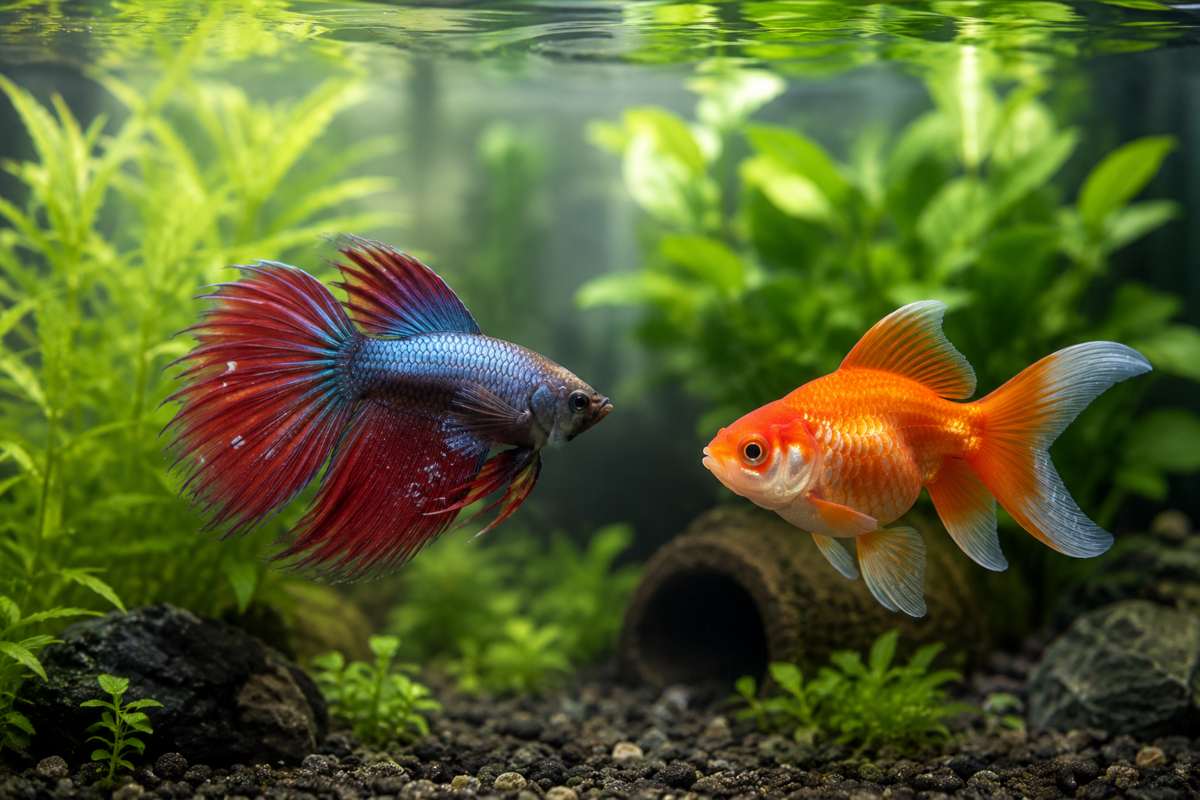
This is why Ich outbreaks so frequently follow a stressful event, like adding new fish without quarantine, a cold snap, or a rough shipping experience. Betta fish, often shipped in small cups or bags with wide temperature swings, and goldfish, frequently kept in bowls or tanks that are too small for their bioload, are two examples of popular species in which these stress triggers often show up.
The Life Cycle: Why Ich Is So Hard to Treat
Understanding the life cycle isn’t just trivia. It explains almost everything about why treatment takes as long as it does and why a single dose of medication rarely works.
| Stage | What’s Happening | Vulnerable to Treatment? |
| Trophont | The parasite burrows under the fish’s skin, feeding and growing. This is the visible white cyst stage. | No, it’s protected under the skin |
| Protomont | The mature parasite breaks free of the fish and falls to the substrate. | No |
| Tomont | Forms a cyst on the tank floor or decor and divides rapidly, producing hundreds of new parasites. | No |
| Theront | Free-swimming infectious stage that must find a fish host within roughly 24–48 hours or it dies. | Yes, this is the only stage medication can kill. |
This cycle is the reason treatment protocols run for a set number of days rather than a single dose: you’re not just treating the fish, you’re waiting for the parasite to reach its one vulnerable stage.
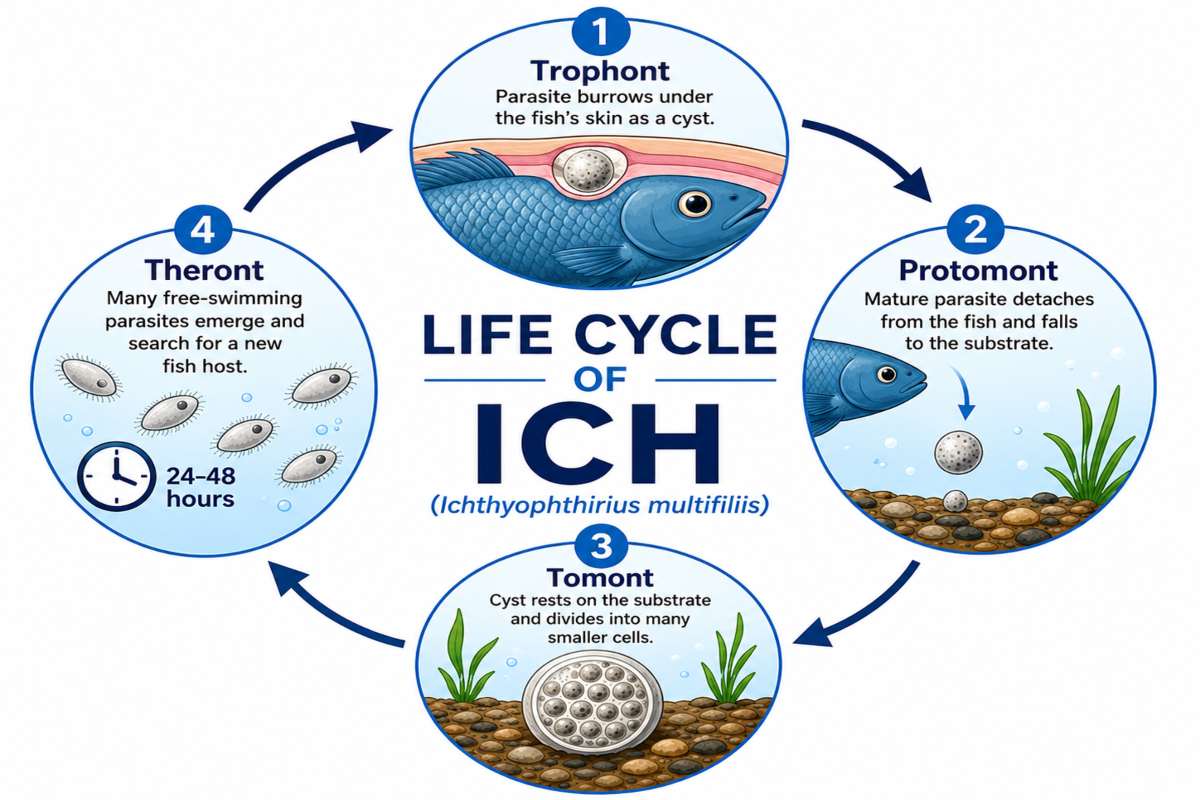 The four-stage life cycle of the Ich parasite, from trophont to theront, in freshwater fish.
How Fast Does Ich Spread and Progress?
Water temperature directly affects how quickly the parasite cycles through its stages. In warmer water, the cycle completes faster, which may sound bad but is actually part of why raising the temperature is a common treatment strategy (more on that below).
A rough timeline for an untreated outbreak:
- Day 1-2: A few white spots appear, often first on fins or gills where they’re harder to spot.
- Day 2-5: Spots multiply rapidly and spread across the body. Fish begin flashing (scratching against objects) and clamping fins.
- Day 5-7: Breathing becomes labored as gills become heavily infected. Appetite drops.
- Day 7+: Without intervention, secondary bacterial infections often set in through the skin damage, and fatalities increase sharply.
This is why Ich is often described as one of the more time-sensitive fish diseases. Waiting a week to “see if it clears up on its own” is rarely a good strategy.
Symptoms: What to Actually Look For
Symptoms typically fall into two categories, and noticing behavioral symptoms early often gives you a head start before the visible spots become obvious.
Physical signs:
- Small white cysts resembling salt grains or sugar granules on the body, fins, or gills
- Cloudy or dulled body slime coat
- Frayed or clamped fins
- Faded coloration
Behavioral signs (often appear first):
- Flashing or scratching against gravel, décor, or tank walls
- Rapid or labored gill movement
- Lethargy and hiding
- Loss of appetite
- Gasping near the water surface
A useful distinction: if a fish is only flashing with no visible spots yet, it may be in the very early theront stage, or the irritation could be from something else entirely, like poor water chemistry. Spots are the confirming symptom; behavior alone isn’t a reliable diagnosis.
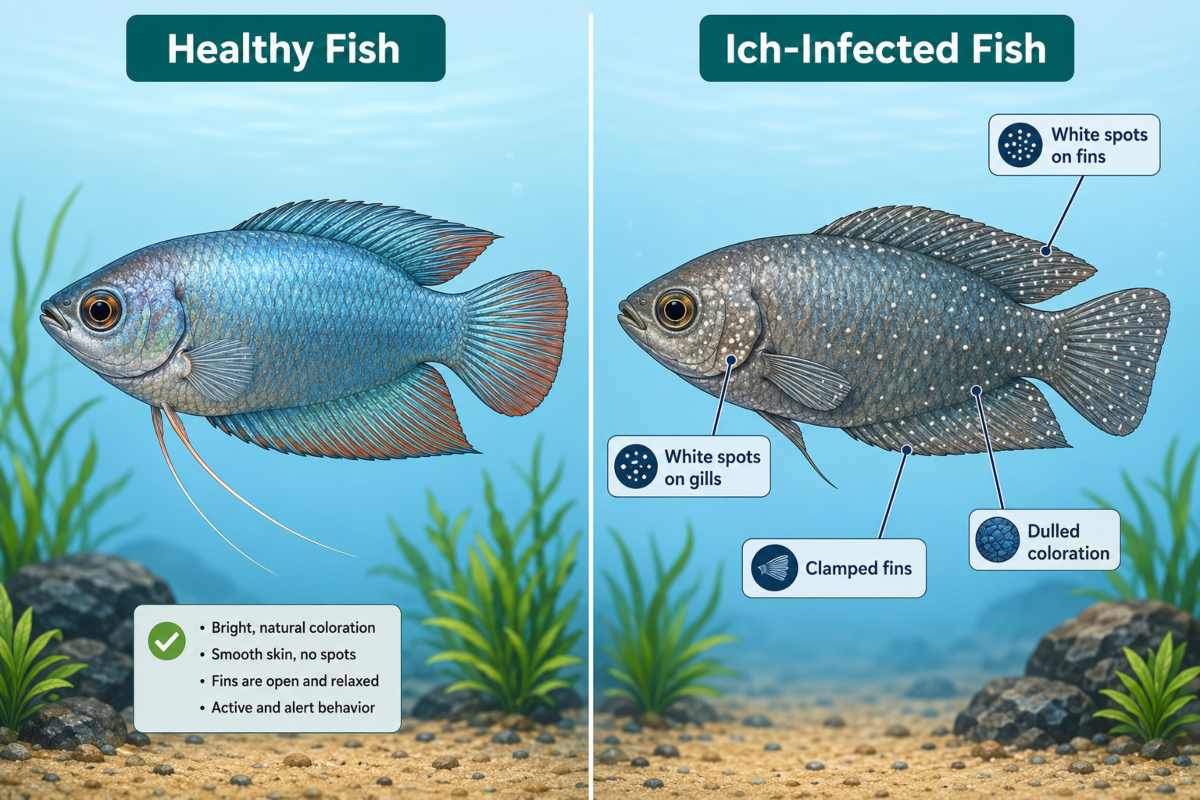
Healthy fish compared with an Ich-infected fish showing the disease’s characteristic symptoms.
What Ich Is Often Confused With
Correctly identifying Ich versus a similar-looking condition matters, since each requires a different treatment approach, and treating the wrong condition can allow the real problem to progress.
Velvet diseaseSpots are finer, gold or rust-colored, and give a dusty appearance rather than distinct white grains
| Condition | Key Difference from Ich |
| Body slime / excess mucus | No distinct raised spots; looks more like a hazy film. |
| Fish lice or anchor worms | Visible parasites are larger and often attached at a single point, not scattered dots. |
| Salt/mineral residue on glass mistaken for spots on fish | Doesn’t move or change over days; not actually on the fish. |
| Epistylis (a bacterial-like ciliate infection) | Spots tend to look more like tufts or cotton-like growths rather than smooth grains. |
If you’re not sure, closely observe whether the spots increase in number over 24-48 hours. Ich spreads visibly; a one-time cosmetic issue usually doesn’t.
How Ich Spreads Within a Tank and Between Tanks
Because of its free-swimming theront stage, Ich spreads easily through shared water. Common transmission routes include:
- Adding new fish directly to an established tank without quarantine
- Sharing nets, siphons, or décor between tanks without disinfecting
- Moving water from an infected tank to another
- Live plants transported with tank water from an infected source
It does not spread through the air, and it cannot infect invertebrates like shrimp or snails, though those tankmates can carry trace parasites on their bodies between tanks.
General Treatment Approach
This section covers universal treatment principles. Species-specific dosing sensitivities (bettas and goldfish respond differently to treatments) are covered in their dedicated guides.
Core treatment options, often combined:
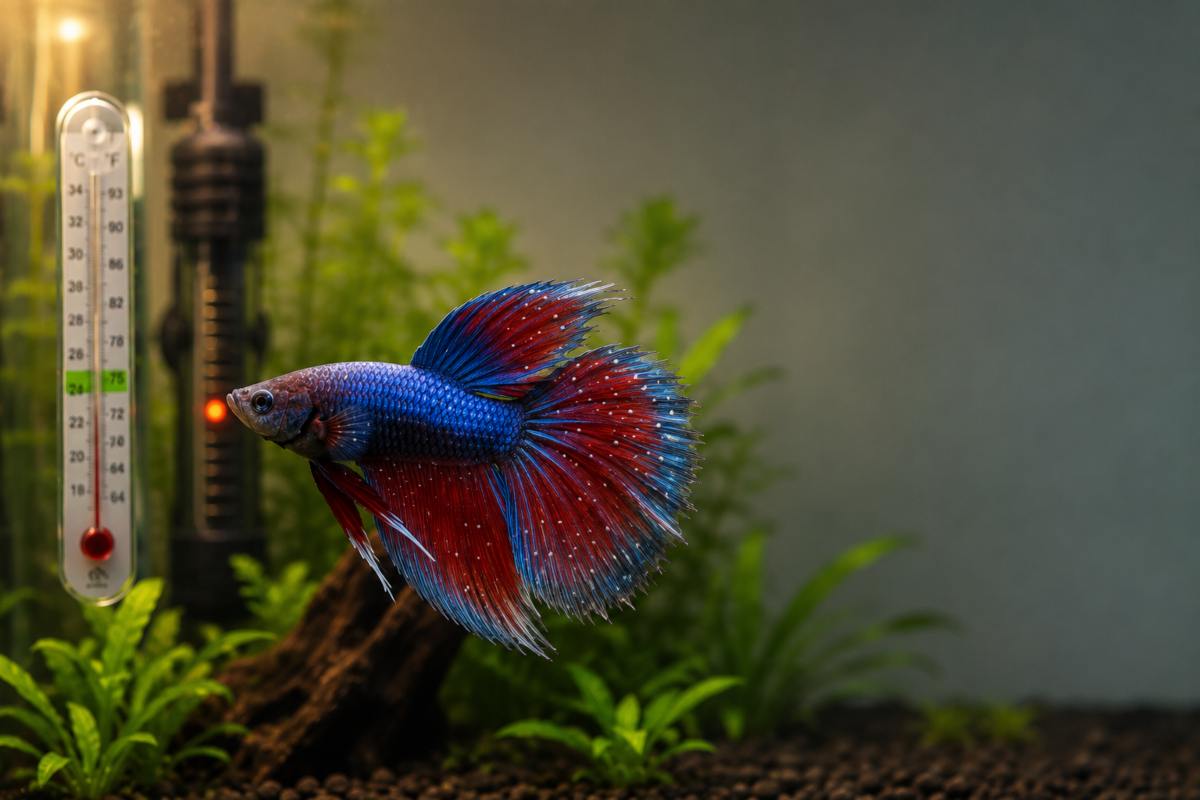
- Raising water temperature. Gradually increasing to around 82-86°F (28-30°C) speeds up the parasite’s life cycle, pushing it into its vulnerable free-swimming stage faster, where medication or heat itself can kill it. This range is generally well tolerated by warmth-loving species like bettas, though it needs to be introduced gradually rather than all at once.
- Medication. Common active ingredients include malachite green, formalin, and copper-based treatments. Always follow product-specific dosing, since overdosing is a common cause of treatment-related fish deaths.
- Aquarium salt. Effective for many freshwater species, though not suitable for scaleless fish or certain sensitive species. Goldfish tend to tolerate aquarium salt reasonably well as part of a treatment plan, though the correct concentration still depends on tank size and the fish’s condition.
- Consistent treatment duration. Because of the life cycle, treatment typically needs to continue for 7-14 days, even if visible spots disappear earlier. Stopping early is one of the most common reasons Ich returns within weeks.
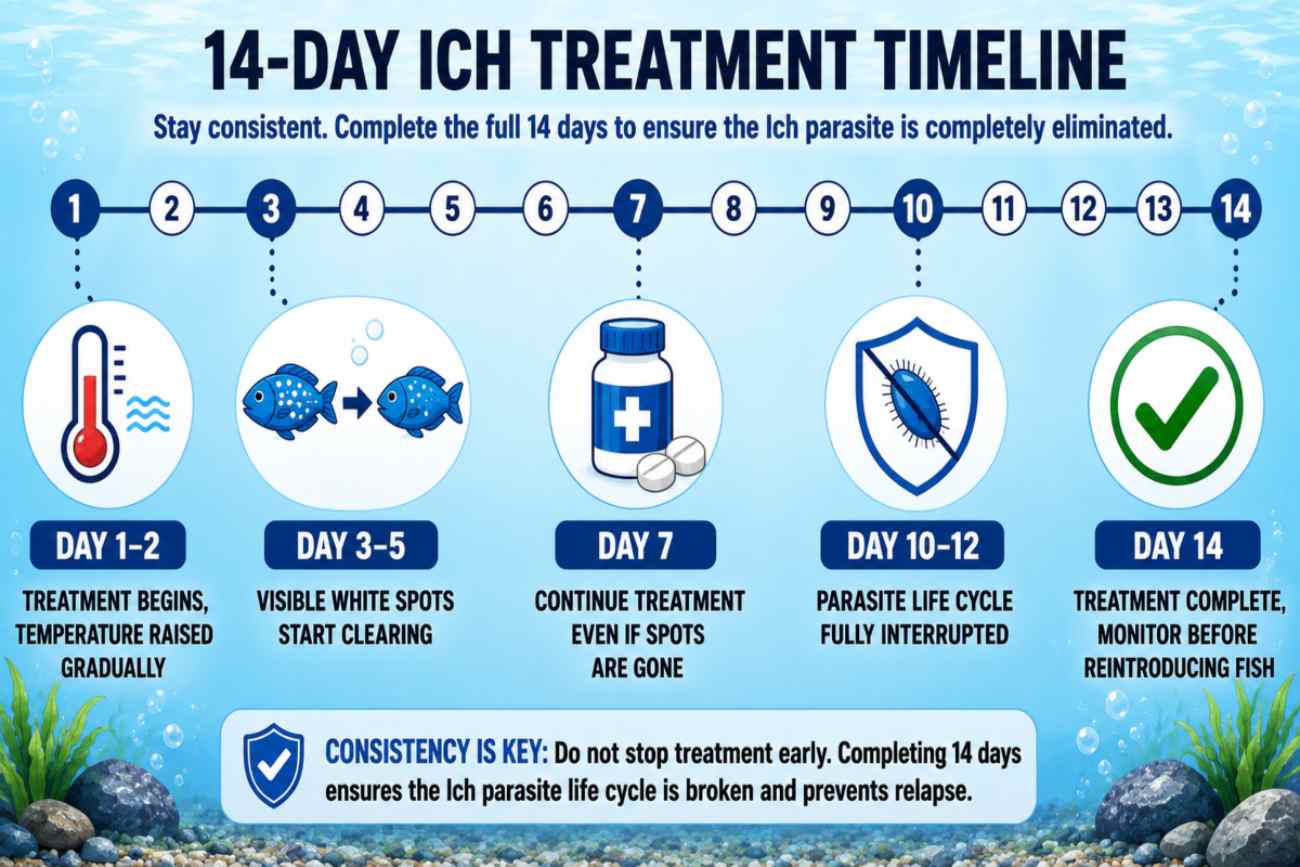 Step-by-step timeline of treating ich disease in aquarium fish over 14 days.
Quarantine: The Single Most Effective Tool
Moving sick fish to a separate quarantine tank isn’t just about isolating the illness. It also lets you treat more aggressively without exposing plants, invertebrates, or beneficial bacteria in your main tank to medication.
Quarantine checklist:
- Separate tank with a heater and sponge filter (avoid using main tank filter media)
- Match water parameters to the main tank before moving fish, then adjust temperature gradually
- Treat for the full recommended duration, not just until spots disappear
- Wait at least 2 weeks after symptoms clear before reintroducing to the main tank
- Disinfect nets, siphons, and hands between quarantine and main tank use
Can the Main Tank Get Reinfected After Treatment?
Yes, if the free-swimming or cyst stages are still present in the substrate or décor when you stop treatment early. This is why many experienced hobbyists treat the entire main tank rather than just the visibly sick fish, since fish that appear healthy may already be carrying a low-level infection.
Prevention: What Actually Works Long-Term
- Quarantine all new fish for a minimum of 2-4 weeks before adding them to an established tank
- Avoid sudden temperature swings, especially during water changes in colder months
- Don’t overcrowd tanks, since stress from limited space is a major trigger
- Maintain stable water parameters rather than chasing perfect numbers inconsistently
- Rinse new plants and disinfect new décor before introduction
Decision Framework: Do I Need to Treat the Whole Tank or Just One Fish?
Only one fish shows spots, tank is otherwise stableQuarantine and treat that fish individually
| Situation | Recommended Action |
| Multiple fish show spots or flashing | Treat the entire main tank. |
| One fish shows spots and you can’t easily catch or move it | Treat the whole tank rather than risk the parasite spreading. |
| Spots appear shortly after adding new fish | Strong sign of quarantine failure; treat the whole tank and review your quarantine process. |
Frequently Asked Questions
Is Ich fatal to fish?
It can be, especially in fish that are already weak or very young, or when treatment is delayed. Gill infection is typically the cause of death, since it interferes with breathing.
Can Ich spread to humans or other pets?
No. Ich is species-specific to fish and poses no risk to humans, cats, dogs, or other non-aquatic pets.
How long does Ich take to go away?
With proper treatment, visible spots often clear within 3-7 days, but full treatment should continue for up to two weeks to catch the parasite through its entire life cycle.
Can Ich go away on its own without treatment?
In rare cases with very mild exposure and excellent water conditions, a strong fish’s immune system may suppress it. This isn’t reliable and isn’t recommended as a strategy, since untreated Ich usually worsens rather than resolves.
Does every fish in the tank need to be treated, even if they look healthy?
In most cases, yes. Fish sharing water with an infected fish have likely been exposed, even before symptoms appear.
Can I survive without fish present?
The free-swimming stage dies within roughly 24-48 hours if it can’t find a host, which is why some hobbyists use a fish-free fallow period to clear a tank of persistent infections fully.
Key Takeaways
Ich is a parasite with a defined life cycle, not a random illness, and that life cycle is the reason treatment takes time and consistency rather than a single fix. Catching it early through behavioral signs, treating for the full recommended duration, and practicing consistent quarantine habits are the three factors that matter most for a good outcome.