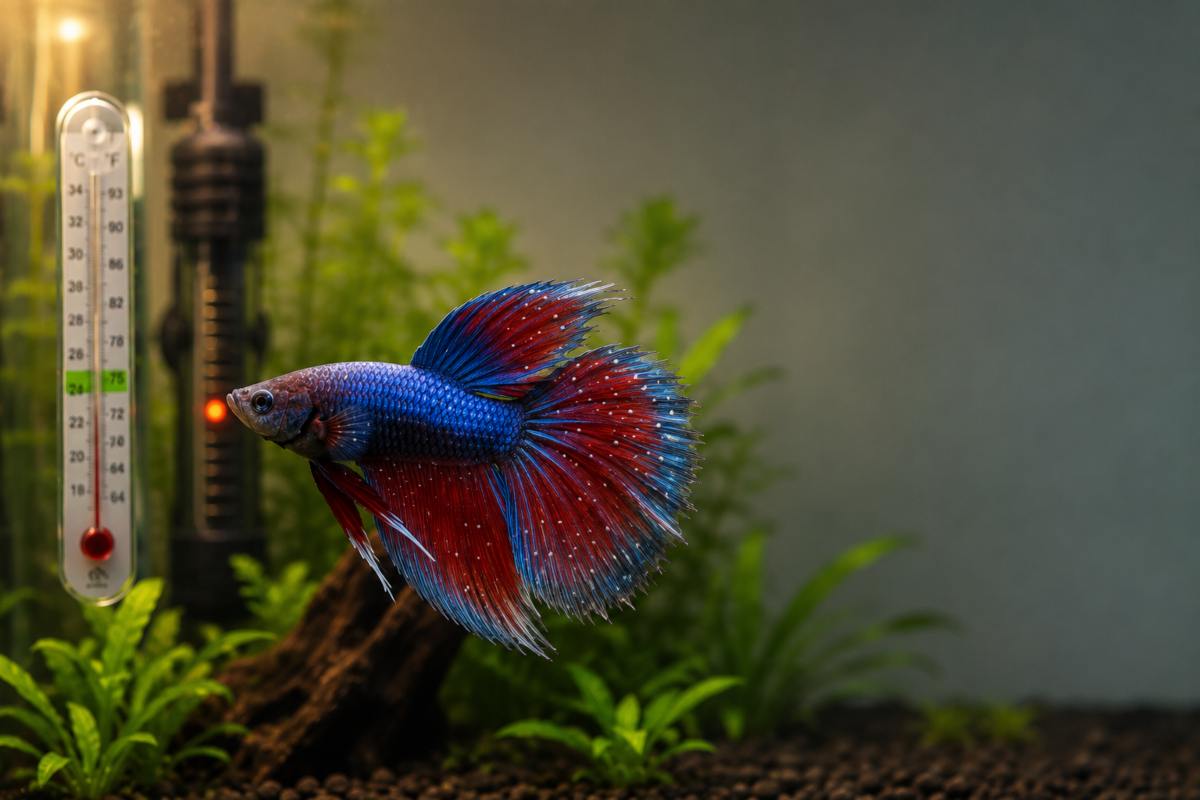
If your betta has suddenly developed tiny white specks and started rubbing against the gravel, you’re likely dealing with Ich, and bettas need a slightly different approach than most other freshwater fish. Their long fins, sensitive labyrinth organ, and the small, often under-heated tanks many betta fish live in all change how this disease shows up and how it should be treated.
Bettas share the same underlying parasite and life cycle as other freshwater fish. Still, their fins, temperament, and typical tank setup change how the disease presents and how it should be handled. This article walks through those differences in detail: how to spot Ich specifically in bettas, why they’re more prone to it, and the treatment steps best suited to their biology.
Why Betta Fish Are Particularly Prone to Ich
Bettas face a few specific risk factors that make them more likely to develop Ich than many other aquarium fish:
1. Shipped and Sold in Tiny Containers
Cups, bags, and small store tanks expose bettas to rapid temperature changes and stagnant water, both of which suppress their immune response right before they arrive in a new home.
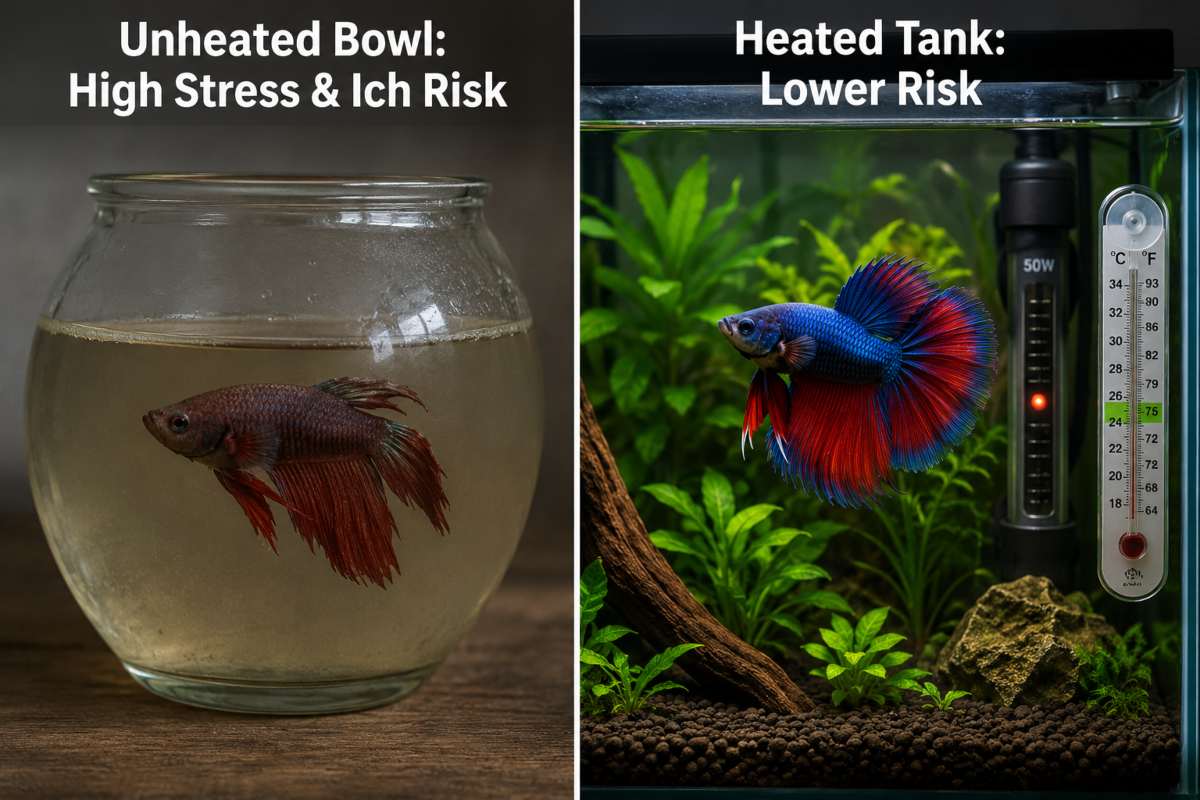
2. Frequently Housed in Small or Unheated Tanks
A common and serious mistake is keeping a betta in an unheated bowl or vase. Bettas are tropical fish and need stable warmth (see the temperature section below); cold, fluctuating water is one of the biggest triggers for Ich in this species.
3. Long, Flowing Fins Offer More Surface Area
Their fins give parasites more surface area to attach to, particularly in male bettas with large tail types like halfmoons or veiltails.
4.Usually Housed Alone
This is actually protective in one sense (no tankmates to catch it from). Still, it means any stress in their single-fish environment falls entirely on them, with no dilution effect from a larger community tank.
Recognizing Ich in Betta Fish
Ich looks slightly different on a betta than on a scaleless or short-finned fish, mainly because of how visible it becomes against their fins and vivid coloration.
What to look for specifically on a betta:
- White grain-like spots on the body, and often more visible along the edges and rays of the fins
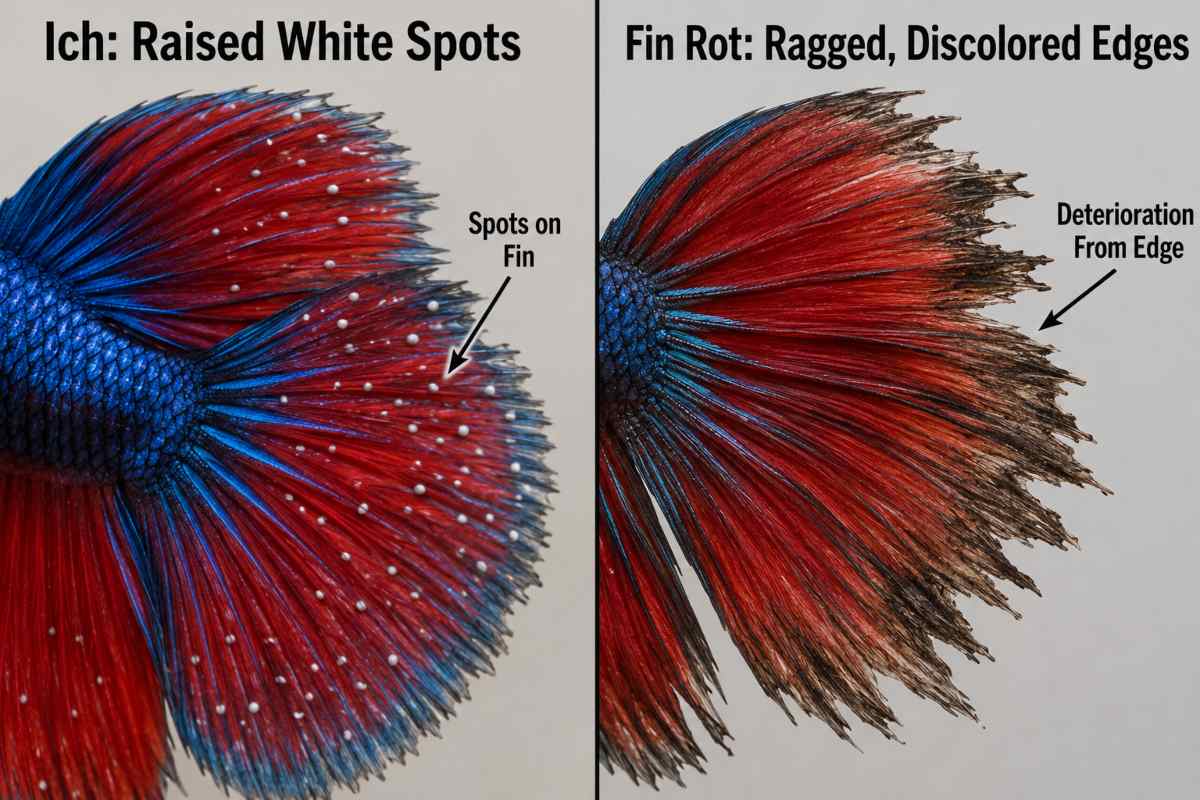
- Spots on the fins can be mistaken for fin rot in the early stages (see comparison below)
- Clamped fins held close to the body instead of flared
- Increased trips to the surface, though this needs context, since bettas naturally surface-breathe using their labyrinth organ (explained next)
A Betta-Specific Detail: The Labyrinth Organ
Bettas have a labyrinth organ that lets them gulp air directly from the surface, which is normal, healthy behavior even in a fish with no health issues. This becomes important during ICH diagnosis and treatment for two reasons:
- Increased surface visits alone are not a reliable indicator of Ich in bettas, since they do this anyway. Look for it in combination with other signs: spots, clamped fins, lethargy, or labored gill movement.
- Gill-stage Ich is still dangerous for bettas, even though they can supplement oxygen from the air. Heavily infected gills still impair their ability to process oxygen from water and put strain on the fish.
Ich vs. Fin Rot in Bettas: How to Tell Them Apart
This is one of the most common points of confusion for betta owners, since both conditions affect the fins and are frequently misdiagnosed by beginners.
| Feature | Ich | Fin Rot |
| Appearance | Raised white spots, like salt grains | Ragged, discolored (often black or brown) fin edges, no raised spots |
| Spread pattern | Spots appear across body and fins together | Starts at fin edges and progresses inward |
| Cause | Parasite (protozoan) | Usually bacterial, often secondary to poor water quality or fin damage |
| Body involvement | Yes, spots appear on the body too, not just fins | Rare, typically stays confined to fins unless severe |
| Treatment | Anti-parasitic medication, heat, salt | Antibacterial treatment, water quality correction |
It’s also possible for a betta to have both conditions at once, since fin damage from Ich can create an entry point for a secondary bacterial fin rot infection. If you treat for Ich and the fin edges continue to degrade after spots clear, a secondary fin rot infection is a reasonable next concern.
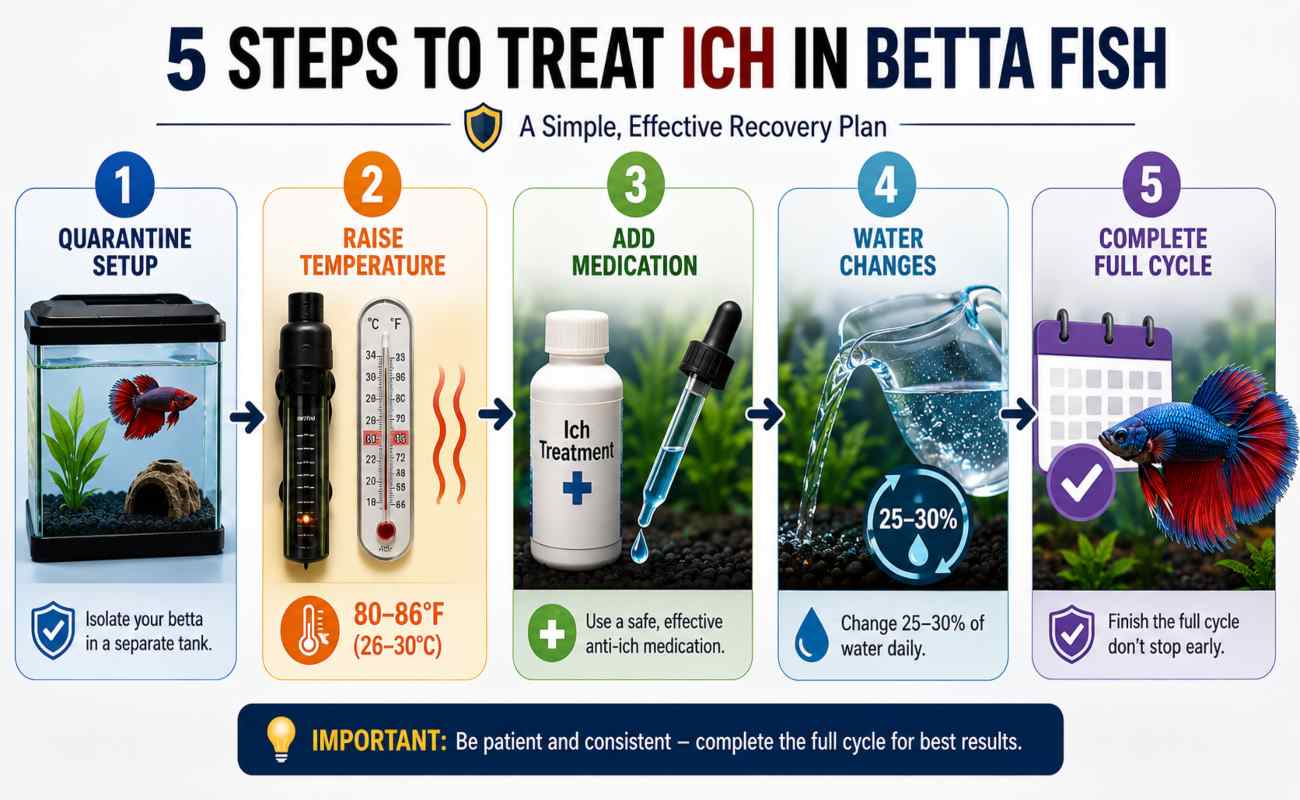
Treating Ich in Betta Fish: Step by Step
Step 1: Move to a Quarantine Setup (If Not Already Alone)
Most bettas are already housed alone, so this step is often about upgrading the quality of that setup rather than separating fish. A bare-bottom quarantine tank with a heater and a gentle sponge filter is ideal, since it makes it easier to track improvements (or leftover parasites in the substrate).
Step 2: Raise the Temperature Gradually
Bettas are tropical fish and are naturally comfortable in warmer water than many community fish, which works in your favor here.
- Target range during treatment: 82-86°F (28-30°C)
- Raise gradually, about 1-2°F per hour, rather than all at once, to avoid additional stress
- Since bettas already tolerate high heat well under normal conditions, this step is generally lower-risk for them than it is for cooler-water species
Step 3: Choose a Betta-Safe Medication
| Treatment | Betta Safety Notes |
|---|---|
| Heat increase alone (mild cases) | Very well tolerated; often sufficient for very early, mild infections combined with clean water. |
| Malachite green-based medications | Generally safe at labeled doses; avoid combining with other medications simultaneously. |
| Formalin-based medications | Use cautiously; can be harsher on the labyrinth organ and gill tissue. Follow dosing instructions exactly. |
| Copper-based medications | Use with caution and only as directed; bettas can be sensitive to overdosing more quickly than larger-bodied fish due to their small size. |
| Aquarium salt | Tolerated in low doses for short treatment periods; not recommended for extended, ongoing use. |
A practical note on dosing: because bettas are small, it’s easy to accidentally overdose medication if you’re estimating tank volume instead of measuring it. Always calculate actual water volume before dosing, not just tank size on the label.
Step 4: Maintain Water Quality Throughout Treatment
Daily or every-other-day partial water changes (around 25-30%) during treatment help remove free-swimming parasites from the water column and reduce medication buildup. Match the temperature closely when doing water changes so you don’t undo the gradual warming from Step 2.
Step 5: Continue Treatment for the Full Cycle
Even if spots disappear after a few days, continue the full treatment course, generally 7-10 days for bettas given their smaller body size and faster metabolic response to heat. Stopping early is a common reason Ich returns within one to two weeks.
Betta Quarantine and Treatment Checklist
- Confirm the actual tank water volume before calculating any medication dose
- Heater installed and set to raise temperature gradually to 82-86°F
- Bare-bottom or minimal-decor setup for easier monitoring and cleaning
- Gentle filtration (sponge filter preferred to avoid fighting strong current with weakened fins)
- Partial water changes every 1-2 days during treatment
- Full treatment course completed, not stopped early at the first sign of improvement
- Fins are monitored separately for signs of secondary fin rot after Ich clears
Aftercare: Fin Regrowth and Recovery
Betta fins are usually capable of regrowing after Ich-related damage, provided water quality stays clean during recovery. Fin regrowth is typically visible as slightly clearer or lighter-colored new tissue at the fin edges within a few weeks of the infection clearing. Avoid adding tankmates or returning the betta to a community setup until fins have visibly started healing and no new spots have appeared for at least two weeks.
Common Mistakes Betta Owners Make When Treating Ich
- Treating in an unheated container. Raising temperature is one of the most effective tools available, and skipping it significantly slows recovery.
- Guessing tank volume instead of measuring it, leading to under- or overdosing medication.
- Stopping treatment as soon as spots disappear allows surviving parasites in the substrate to reinfect the fish.
- Confusing fin rot with Ich (or vice versa) and applying the wrong treatment type entirely.
- Adding aquarium salt long-term as a general habit rather than a short, targeted treatment can stress a betta’s kidneys over time.
Frequently Asked Questions
Can bettas tolerate the higher temperatures used to treat Ich?
Yes, generally well, since bettas are already a warm-water species. Gradual increases to 82-86°F are typically safe and are actually part of why heat-based treatment tends to work well for this species specifically.
Is aquarium salt safe for bettas?
In low doses for a short, defined treatment period, yes. Long-term or excessive use is not recommended, since it can place ongoing stress on a betta’s kidneys and osmoregulation.
Why does my betta still have clamped fins after the white spots are gone?
This can be lingering stress, early-stage secondary fin rot, or simply the recovery period as fin tissue heals. Monitor water quality closely and watch for continued fin degradation, which would point to fin rot rather than normal healing.
Can I treat Ich in a betta’s existing tank instead of a separate quarantine setup?
Yes, if the betta is already housed alone with no live plants or invertebrates sensitive to medication. If there are live plants or snails in the tank, a separate quarantine setup is safer for treatment.
How do I know if it’s working?
A decreasing spot count within 3-5 days, along with improved appetite and less flashing, is a good early sign. Continue full treatment regardless of early improvement.
Key Takeaways
Bettas respond well to Ich treatment, specifically because they already tolerate warm water, making heat-based treatment one of the most effective and lowest-risk tools available for this species. The bigger challenges tend to be practical: correctly measuring tank volume for dosing, distinguishing Ich from fin rot, and resisting the urge to stop treatment the moment visible spots disappear.