If you’re standing in front of a pet store tank full of goldfish wondering which one won’t die on you in three weeks, you’re asking exactly the right question. Not all goldfish are equally easy to keep, and that surprises most first-time owners, who assume “a goldfish is a goldfish.” Remember, taking the first step can feel overwhelming, but understanding these differences helps you feel more confident in your choice.
The truth is that goldfish fall into two very different families: single-tail goldfish (streamlined, athletic, closer to their wild carp ancestors) and fancy goldfish (rounded, ornamental, bred for looks over function). Recognizing these differences can spark your curiosity and help you make a more informed choice about which type suits your needs as a beginner.
This guide walks through exactly which varieties are easiest to keep, why their body shape matters more than their color, what “beginner-friendly” really means in terms of tank size and water quality, and which popular goldfish you should actually avoid until you have more experience. Gaining this knowledge can make you feel more prepared and less overwhelmed as you start your goldfish care journey.
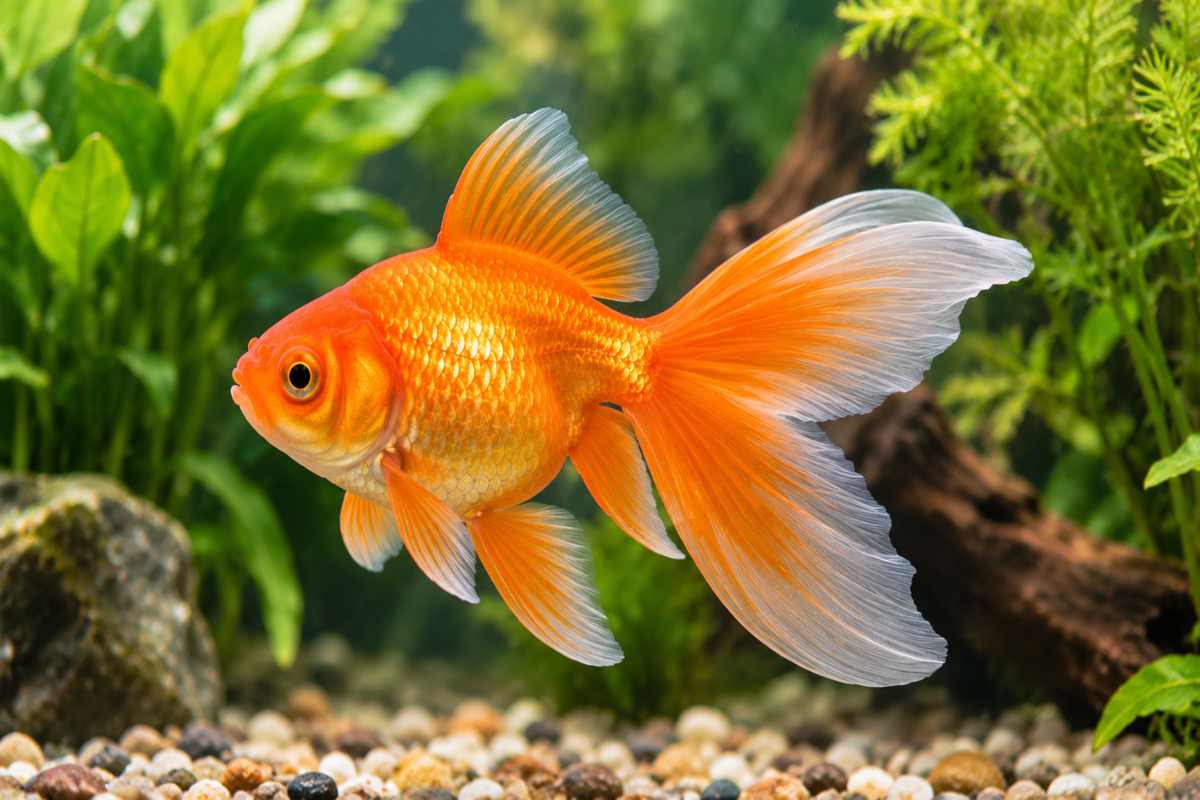
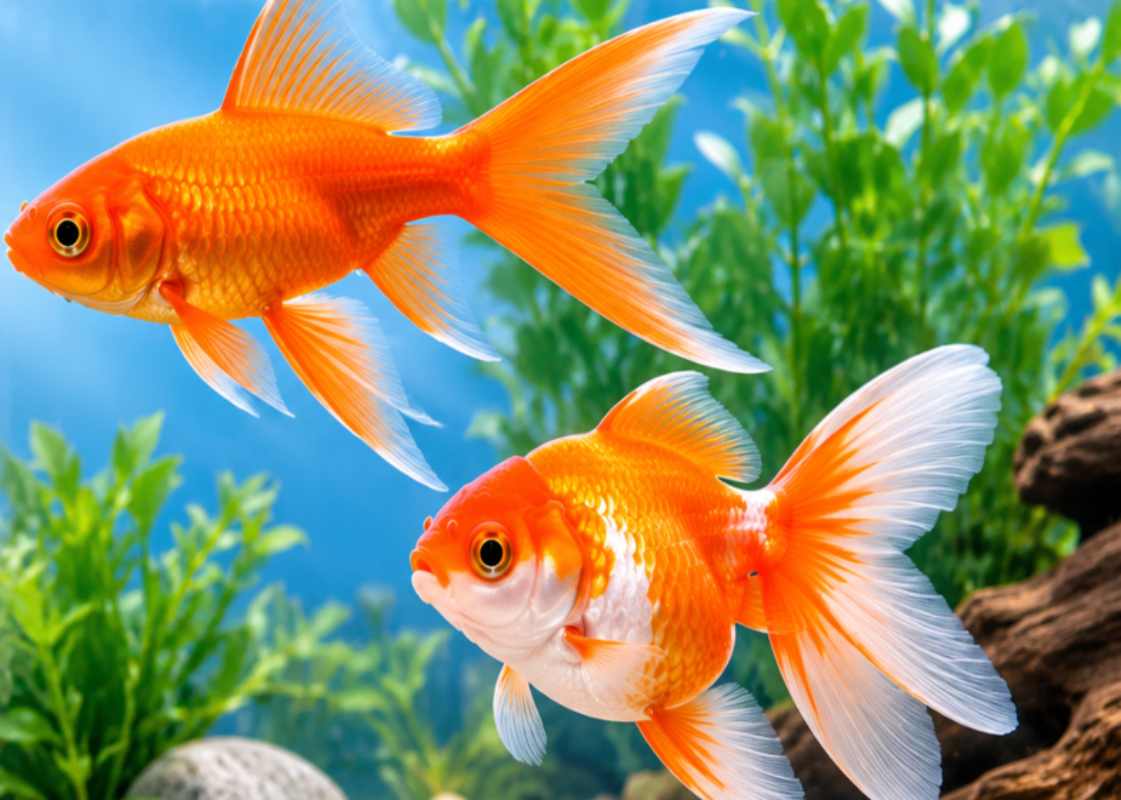
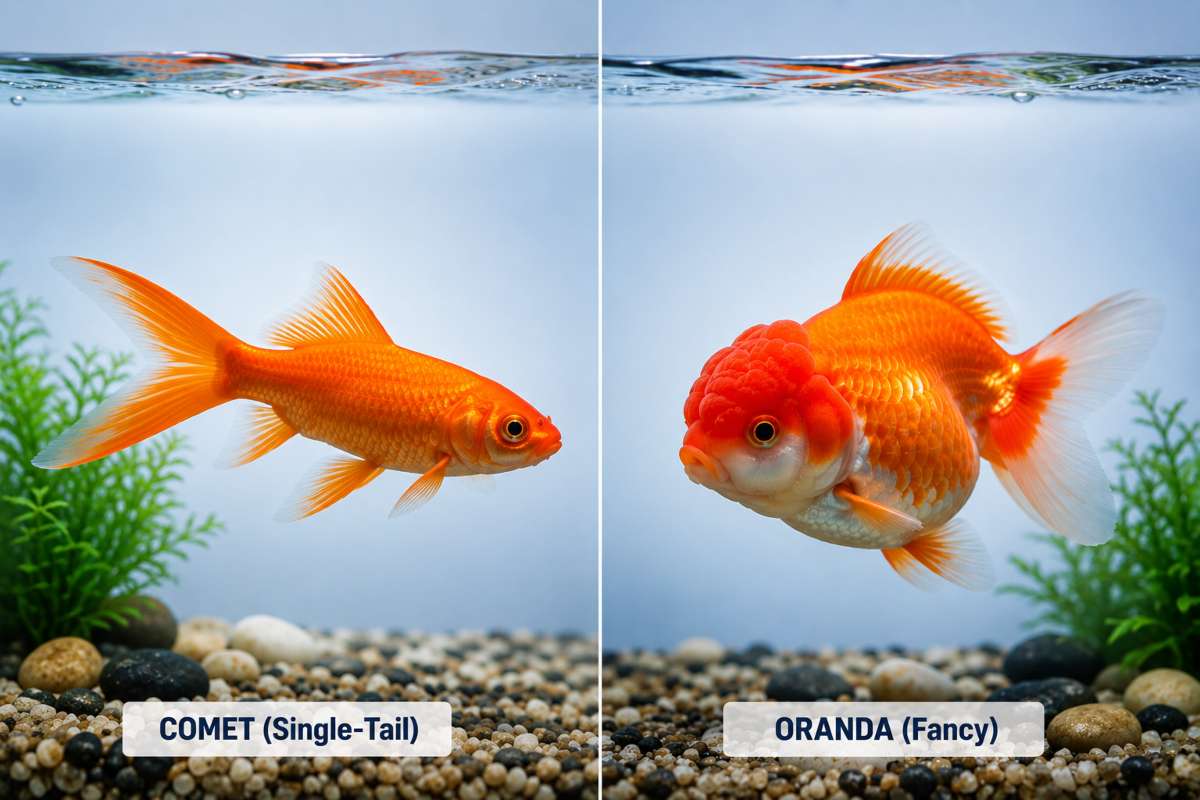 Comet (left) vs. Oranda (right): body shape is the biggest factor in how easy a goldfish is to keep.
Why Goldfish Type Matters More Than You’d Think
Before naming names, it helps to understand why some goldfish are harder to keep than others. It comes down to three factors: body shape, waste production, and genetic fragility.
Body Shape Affects Swimming and Organ Function
Single-tail goldfish have a torpedo-shaped body like their wild ancestor, the Prussian carp, which keeps internal organs positioned naturally for efficient digestion and buoyancy control. Fancy goldfish have been bred for generations into shortened, rounded bodies, an appealing look that compresses the swim bladder and digestive tract, making buoyancy problems and constipation more common.
All Goldfish Are Heavy Waste Producers
This surprises many beginners, who assume goldfish are “easy” simply because they’re cheap and common. Every variety needs strong filtration and frequent water changes, regardless of type. “Beginner-friendly” means more forgiving of minor mistakes, not forgiving of a dirty tank.
Selective Breeding Has Traded Resilience for Appearance
Traits like telescope eyes, bubble-shaped eye sacs, or extremely short bodies look striking but carry real functional costs, including poor eyesight, collision injuries, and chronic swim bladder issues. The more extreme the physical trait, the more experience a keeper needs.
The Short Answer: Best Goldfish Types for Beginners
If you want the quick version before the details: the Common Goldfish, Comet, and Shubunkin are the easiest goldfish to keep, thanks to their streamlined bodies and hardy genetics. If you specifically want a “fancy” goldfish with flowing double tails, the Fantail is the most forgiving choice, sturdier than other fancy types while still having that ornamental look.
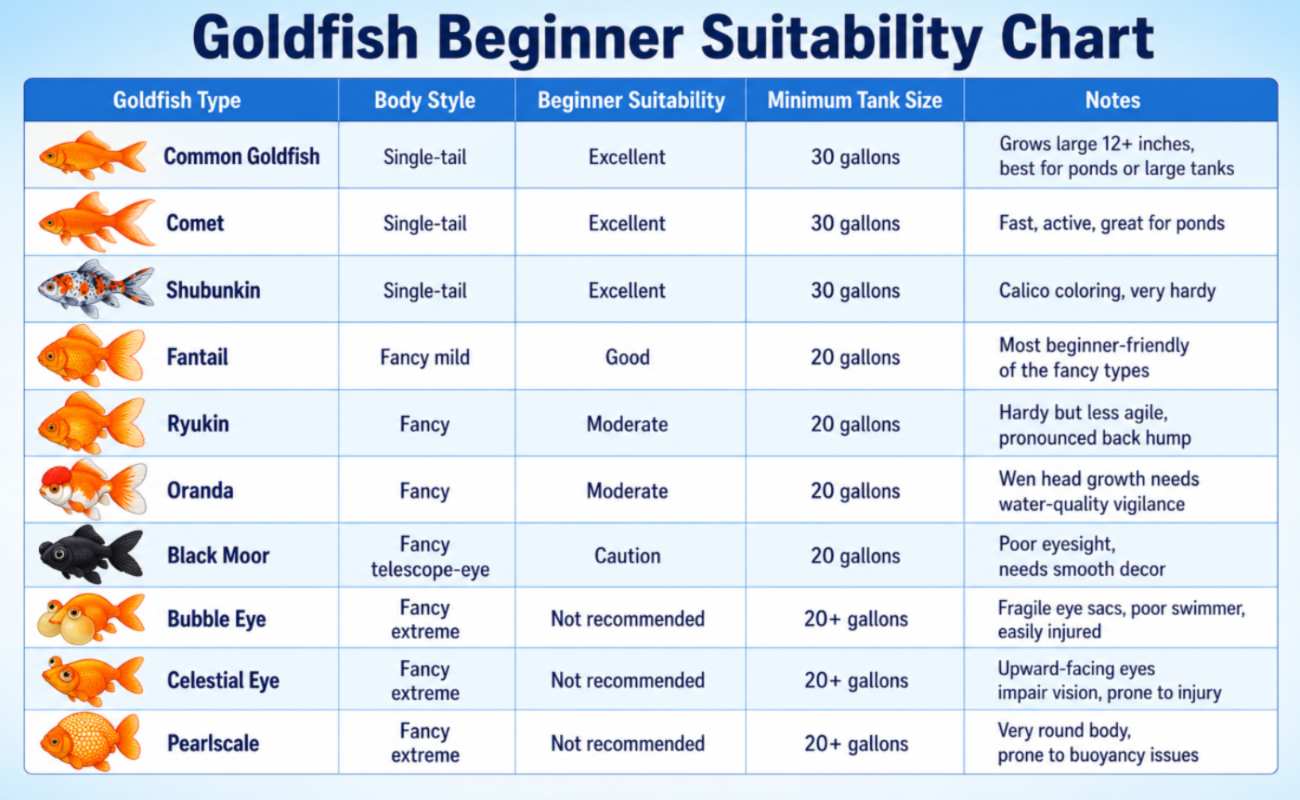
Common Goldfish: The Gold Standard for Beginners
The Common Goldfish is, quite literally, the fish the whole hobby is named after, and it’s the closest living relative to the wild carp goldfish were domesticated from. That ancestry is exactly why it’s so hardy.
Why it works for beginners:
- Tolerates a wide temperature range, including unheated tanks and outdoor ponds in most temperate climates
- A streamlined body means efficient swimming and a low risk of swim bladder disease
- Strong, adaptable immune system built through centuries of natural and light selective pressure
- Forgiving of minor water-quality lapses (though not chronic neglect)
The trade-off: Common goldfish can grow to 12 inches or more and can live well over a decade with good care. A lot of new owners underestimate this and start them in a small tank, only to face a stunted, unhealthy fish a year later. If you go this route, plan for a 30-gallon-plus tank (or better, a pond) from day one, not “upgrade later.”
Comet Goldfish: Common Goldfish’s Faster, Finnier Cousin
The Comet looks a lot like the Common Goldfish but with longer, more flowing fins and a noticeably more active swimming style. It’s one of the most popular pond fish in the world for good reason.
Comets share almost all the hardiness advantages of the Common goldfish, including the same streamlined body and the same tolerance for temperature swings, while being slightly more visually interesting to many beginners. They’re also fast swimmers, so they do best with tankmates of similar speed and size (fancy goldfish, which are slower, aren’t ideal companions).
Shubunkin: The Hardy, Colorful Option
If you like the idea of a single-tail goldfish but want more color variety than plain orange, the Shubunkin is worth a look. It has the same torpedo-shaped body as the Comet but comes in striking calico patterns: blue, red, black, orange, and white in mottled combinations.
Shubunkins are just as hardy as Comets and Common goldfish, making them an excellent pond or large aquarium fish for beginners who want visual variety without sacrificing resilience.
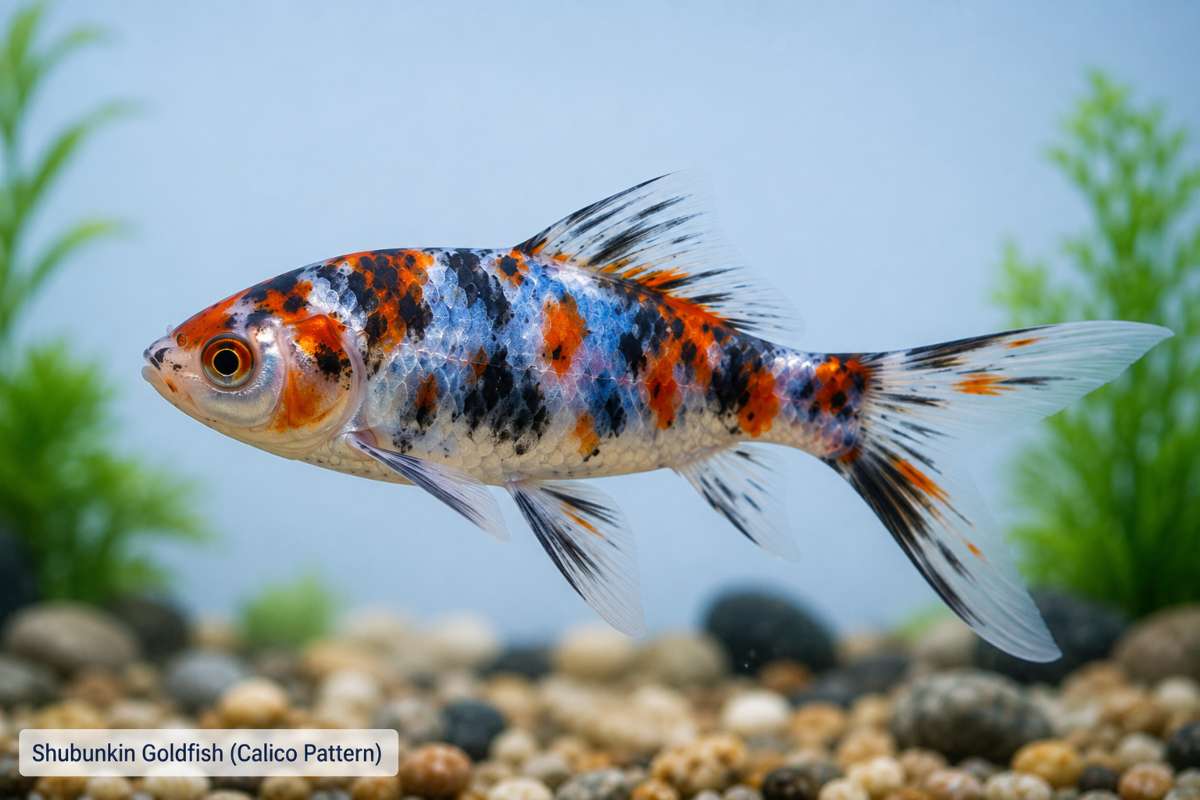 The Shubunkin’s calico pattern combines blue, orange, black, and white in a natural, mottled design.
Fantail: The Best “Fancy” Goldfish for Beginners
Not everyone wants the classic single-tail look. A lot of people are drawn to goldfish specifically because of the flowing double tails and rounder bodies of fancy varieties. If that’s you, the Fantail is the fancy goldfish to start with.
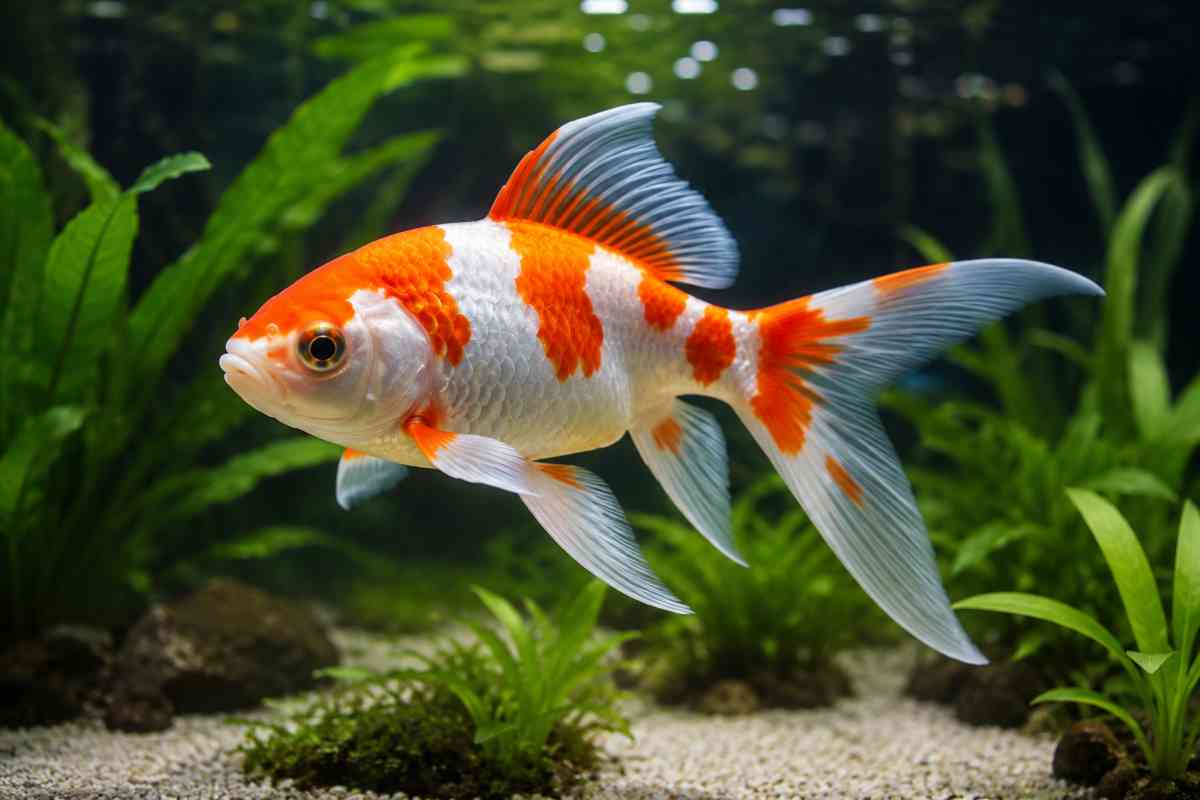
Its body is less extreme than other fancy types: plump but not as compressed as a Ryukin’s or as spherical as a Pearlscale’s. This more moderate shape means its internal organs aren’t squeezed as severely, which translates into less buoyancy and fewer digestive problems than those of its more heavily bred cousins.
Still, keep in mind: Fantails are more delicate than single-tail goldfish. They need:
- Smooth substrate and décor (no sharp edges that can tear delicate fins)
- Sinking pellets rather than floating flakes, to reduce air-gulping and swim bladder strain
- Stable water temperature; sudden swings hit fancy varieties harder than single-tails
Fancy Goldfish to Approach with Caution (Not for First-Time Owners)
Some goldfish varieties are genuinely beautiful but come with care demands that go beyond “beginner-friendly,” no matter what a pet store label says. It’s worth naming these plainly so you know what you’re getting into if you fall in love with one at the store.
- Bubble Eye: Has no dorsal fin and carries large, fragile fluid-filled sacs under each eye. These sacs can tear on décor or tankmates and take a long time to heal. Poor swimmers overall.
- Celestial Eye: Eyes point permanently upward, which severely limits vision and makes the fish prone to collisions and difficulty finding food.
- Telescope Eye / Black Moor: Protruding eyes reduce depth perception; needs a decor-light, obstacle-free tank to avoid injury.
- Pearlscale: An extremely round, almost golf-ball-shaped body that’s prone to swim bladder disorder and constipation.
- Ranchu: No dorsal fin and a curved back that limits swimming ability; needs very well-oxygenated, clean water.
None of these are “bad” fish. Many experienced keepers love them precisely because they’re a rewarding challenge. They’re just not where a first-time goldfish owner should start.
What “Beginner-Friendly” Actually Requires (Even for Hardy Types)
Choosing a hardy variety doesn’t mean you can skip the basics. Every goldfish, hardy or fancy, needs the following actually to thrive:
- A properly cycled tank. Goldfish produce a lot of ammonia. A new tank needs to go through the nitrogen cycle before fish go in, or you risk ammonia poisoning even with the hardiest breed.
- More space than you’d guess. A single fancy goldfish needs at least 20 gallons; single-tail types need 30 gallons or more, with 10+ additional gallons per extra fish.
- Strong filtration. Goldfish are messier than most tropical fish of similar size. Oversized filtration relative to tank size is the norm, not the exception.
- Sinking pellets over floating flakes. This reduces the amount of air a goldfish swallows at the surface, lowering the risk of swim bladder issues, especially important for rounder-bodied fancy types.
- Stable, appropriate temperature. Goldfish are coldwater fish and generally don’t need a heater, but sudden temperature swings (like from an unheated room in winter) stress them. Delicate fancy varieties in particular do best in the 65 to 72°F (18 to 22°C) range.
- A quarantine plan. New fish should ideally be observed separately for a couple of weeks before joining an established tank to catch illness early, which becomes especially relevant with diseases like ich, which spreads quickly in shared water.
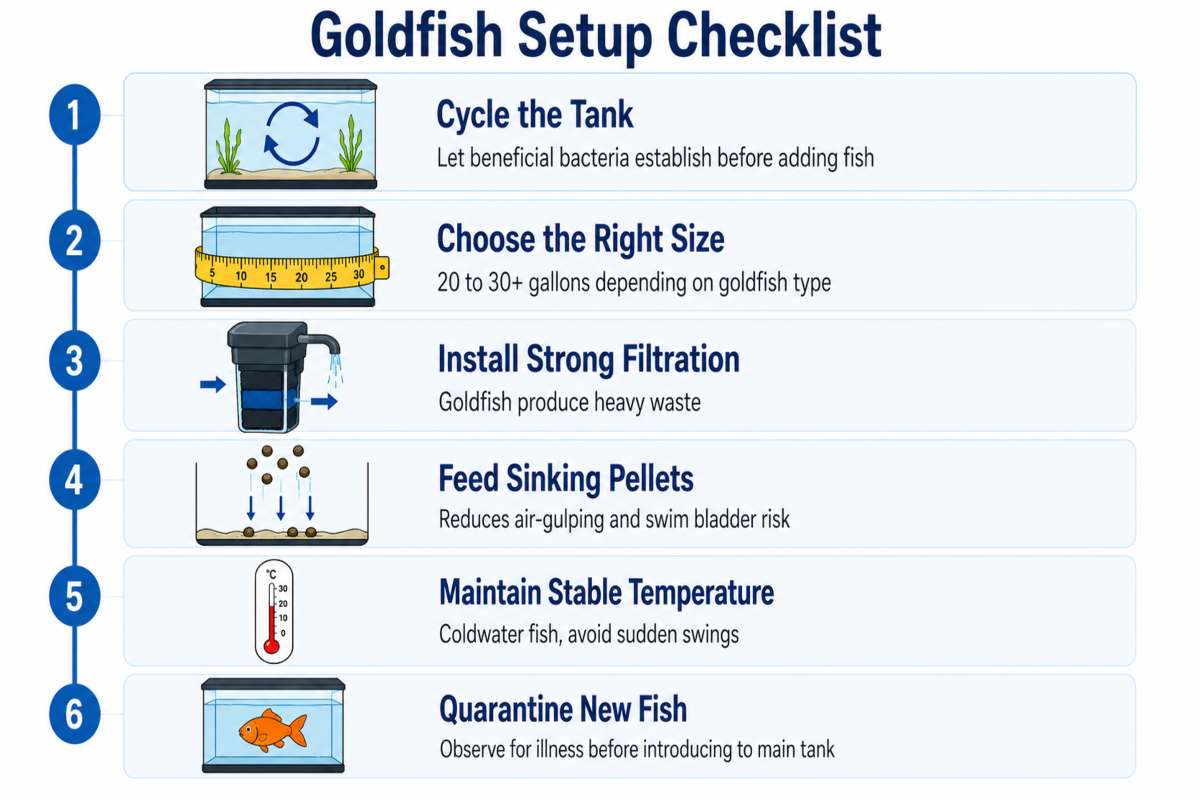 A quick visual checklist for setting up a healthy goldfish tank from day one.
Single-Tail vs. Fancy: A Quick Decision Guide
If you’re still torn between the two broad categories, this comparison should help settle it.
| Factor | Single-Tail (Common, Comet, Shubunkin) | Fancy (Fantail and beyond) |
| Hardiness | Highest | Moderate to low, depending on variety |
| Adult size | Large (up to 12+ in) | Smaller (typically 6 to 8 in) |
| Best housing | Large tank or pond | Aquarium |
| Swimming speed | Fast | Slower |
| Visual style | Classic, streamlined | Ornamental, rounded, flowing fins |
| Tolerance for beginner mistakes | High | Lower, needs more precise care |
If your main goal is the lowest-risk entry into goldfish keeping, go single-tail. If you specifically want that classic “fancy goldfish” look and are willing to be more careful about water quality and tank decor, the Fantail is your best middle ground.
Frequently Asked Questions
Can goldfish live in a bowl?
No. Bowls have too little water volume and surface area, so waste and ammonia build up quickly, no matter how hardy the goldfish is. A filtered tank of at least 20 to 30 gallons is the real minimum.
Do goldfish need a heater?
Generally no. Goldfish are cold-water fish and do well at room temperature in most homes. What matters more is temperature stability than having a heater specifically.
Can I keep a fancy goldfish and a single-tail goldfish together?
It’s not ideal. Single-tail types are much faster swimmers and will consistently out-compete slower fancy goldfish for food, leading to uneven growth and stress.
How long do beginner-friendly goldfish live?
With proper care, Common goldfish, Comets, and Shubunkins regularly live 10 to 15 years, with some individuals living 20+ years. Fantails have a similar potential lifespan when kept well.
Is it true that goldfish only grow to the size of their tank?
No, this is a myth. A small tank stunts a goldfish’s growth in an unhealthy way (organ development doesn’t stop even when body growth slows); it doesn’t keep the fish naturally small.
The Bottom Line
If you want the simplest, most reliable path to goldfish-keeping success, choose a Common Goldfish, Comet, or Shubunkin, and give it real space, a large tank or a pond, right from the start. If the rounder, more ornamental look is what drew you to goldfish in the first place, the Fantail remains the one fancy variety built to forgive a beginner’s early mistakes.
Whichever you choose, hardiness alone will only get you so far. A properly cycled tank, strong filtration, and consistent care are what actually keep any goldfish healthy for the decade-plus it’s likely to be part of your life. At The Fish Care, we believe the right start matters just as much as the right fish, and getting both in place gives you the best possible foundation for a thriving aquarium for years to come.