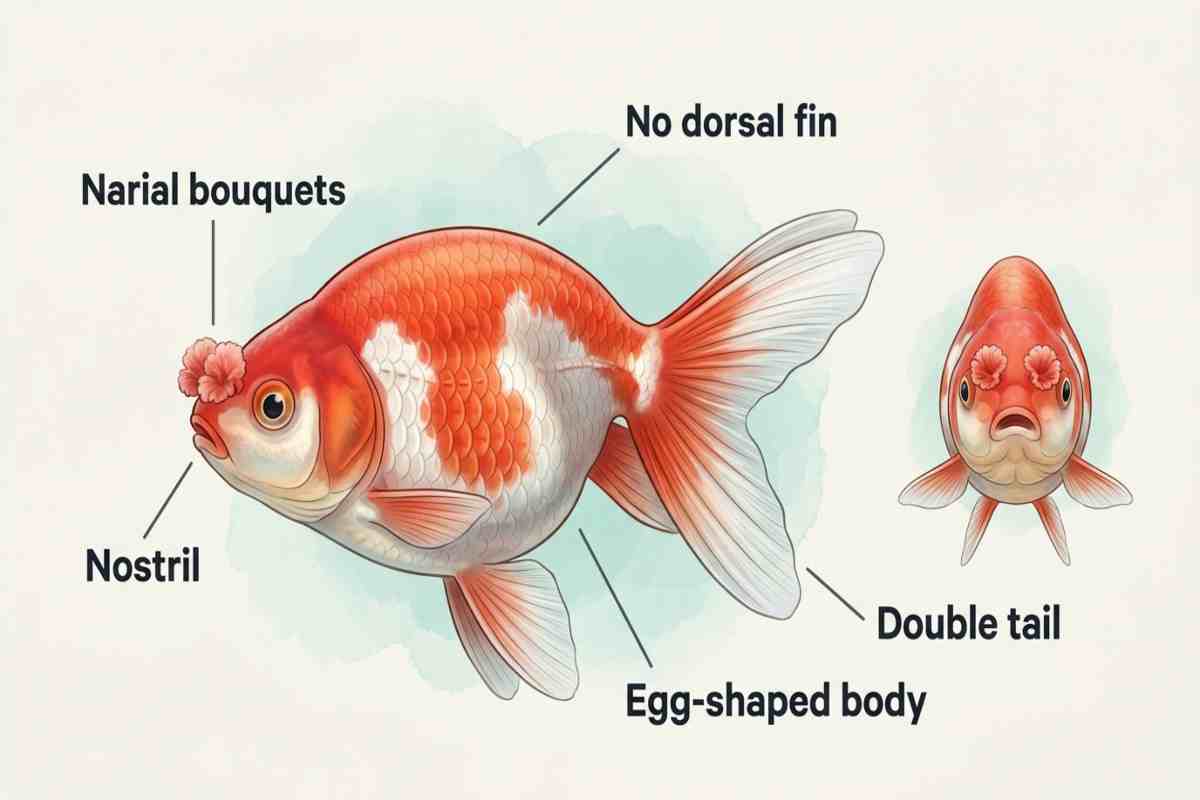
A pompom goldfish is a fancy goldfish with two fleshy, velvety tufts on its nose, called nareal bouquets. It needs at least 20 gallons (76 L) for the first fish, cool water around 65–72°F (18–22°C), gentle filtration, smooth decor, and a sinking, easily digested diet. With good care, it can live 10 to 15 years and reach 6 to 8 inches (15–20 cm).
Those tufts make this fish special, and they also make it fragile. They trap debris, snag on sharp objects, and can partly block the fish’s view of food. Most pompom problems trace back to those three facts.
Key Takeaways
- Plan for 20 gallons for one pompom goldfish and 10 or more gallons for each extra fancy goldfish, since bowls and small tanks shorten lives.
- Keep ammonia and nitrite at 0 ppm, because dirty water is the biggest threat to the delicate pompoms themselves.
- Use smooth gravel or a bare bottom, silk or live plants, and a sponge filter or baffled outflow, as anything rough can tear the bouquets.
- Feed soaked sinking pellets and gel food in small portions, and make sure your pompom can actually find the food.
- Pair it only with slow, round-bodied fancy goldfish, as fast single-tail goldfish will outcompete and harass it.
What Is a Pompom Goldfish?
The pompom goldfish is a variety of Carassius auratus, the same species as every other goldfish. It belongs to the fancy goldfish group: a double tail and an egg-shaped body.
The pompoms are overgrowths of tissue from the nasal septum, the thin wall between the two nostrils. Each tuft is a soft, flower-like mass of fleshy tissue. The Japanese name for the trait is hana fusa, roughly “flower tuft.”
Most pompoms lack a dorsal fin, giving them a smooth, rounded back. Some strains do have one, so a dorsal fin doesn’t mean a fish is mixed or unhealthy. Colors include red, orange, red-and-white, calico, and white.
Quick Facts
| Feature | Typical Value |
|---|---|
| Scientific name | Carassius auratus (fancy goldfish) |
| Adult size | 6–8 inches (15–20 cm) |
| Lifespan | 10–15 years with excellent care |
| Minimum tank | 20 gallons (76 L) for one fish |
| Temperature | 65–72°F (18–22°C) |
| pH | 7.0–8.0 |
| Temperament | Peaceful, slow, a poor competitor for food |
| Difficulty | Moderate; beginner-friendly only with a cycled, roomy tank |
How Big Do Pompom Goldfish Get?
Most reach 6 to 8 inches, and well-kept fish can grow slightly larger. Growth is fastest in the first two years. A tiny pet-store fish is a juvenile, not a stunted adult.
Water quality and space matter as much as genetics. Fish raised in cramped or dirty water often stay smaller, but that signals stress, not a smaller breed.
Want to learn more about goldfish growth? Read our guide to how big goldfish get.
Do Pompom Goldfish Outgrow Their Pompoms?
Not really. The tufts keep developing for the first couple of years, but the body grows faster at first. As a result, a young fish can look briefly “less pompommed” before the tufts catch up.
Genetics decide the final size. Some fish never develop large bouquets even in perfect conditions. If the tufts are small but the fish is healthy, bright, and eating well, that is usually normal variation.
What Tank Size Does a Pompom Goldfish Need?
Goldfish produce a lot of waste for their size, so volume buys you stability. Pompoms swim slowly, so floor space matters more than height.
| Setup | Minimum | Better Choice |
|---|---|---|
| One adult | 20 gallons (76 L) | 30 gallons (114 L) |
| Two fancy goldfish | 30 gallons (114 L) | 40 gallons (150 L) |
| Each additional fish | +10 gallons (38 L) | +15–20 gallons (57–76 L) |
A long “breeder” style tank gives more surface area for oxygen exchange than a tall one. Bowls and small tanks cannot hold stable water for a fish that will reach 6 inches or more.
Water Parameters
- Temperature: 65–72°F (18–22°C). Goldfish tolerate cool water well, but warmer water raises their oxygen needs and speeds disease.
- pH: 7.0–8.0, kept stable.
- Ammonia and nitrite: 0 ppm, always.
- Nitrate: Below 40 ppm, ideally below 20.
- Hardness: Moderately hard water with enough carbonate hardness (KH) to stop pH from swinging.
An uncycled tank is the most common beginner mistake. The nitrogen cycle is the process in which beneficial bacteria convert toxic ammonia to nitrite, then to much safer nitrate. Cycle the tank before the fish arrives, and test with a liquid kit, not strips.
Change 30–50% of the water weekly. Treat tap water for chlorine and chloramine, and match the new water temperature to the tank.
Filtration, Substrate and Decor
The fish’s delicate tufts dictate the equipment.
- Filter: Use a sponge filter, canister, or hang-on filter with a baffled, gentle outflow. Strong currents exhaust slow fish and push debris into the pompoms. Oversize the filter, since goldfish produce a lot of waste.
- Substrate: Bare bottom or large, smooth, rounded gravel. Fine sand can also work, but sharp or small gravel invites abrasions and may be swallowed.
- Decor: Silk plants, hardy live plants such as anubias, and smooth rocks or driftwood. Skip plastic plants with sharp edges and ornaments with narrow gaps where the fish can snag a tuft.
- Air: An air stone adds oxygen. Position it so the bubbles don’t blast the fish’s face.
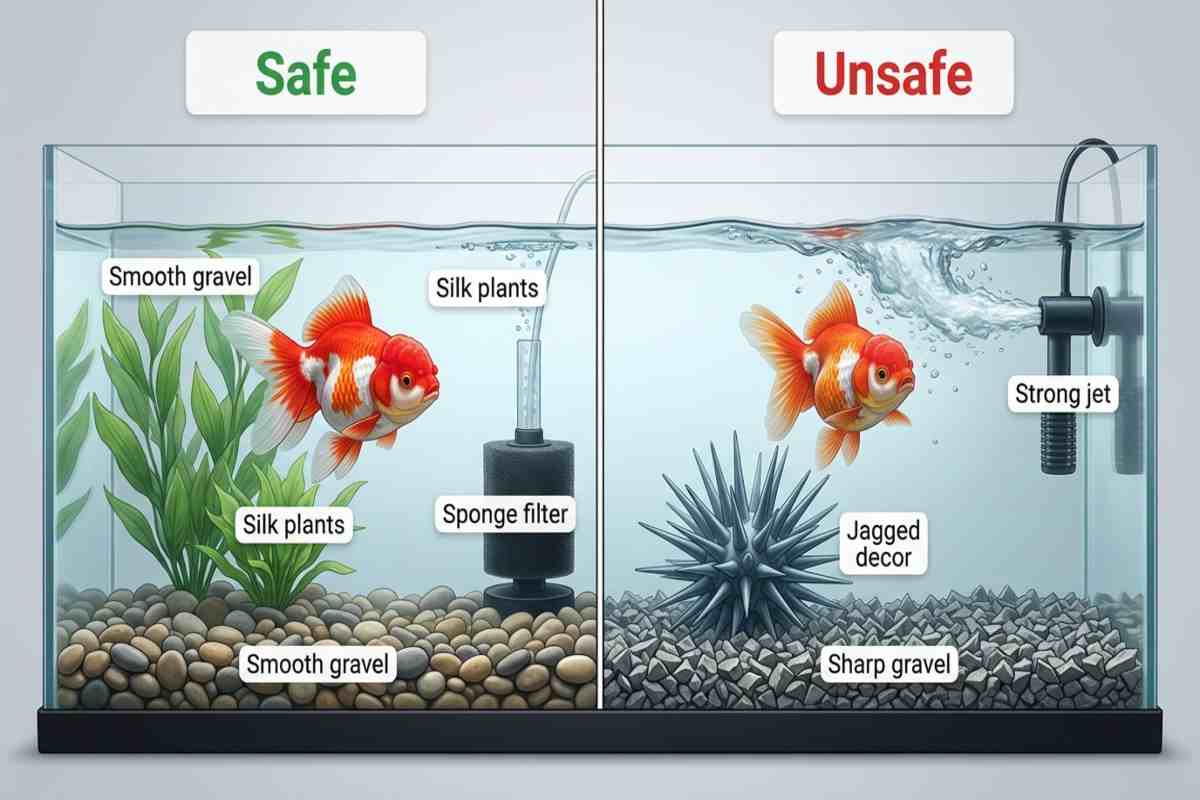 Smooth, gentle setups protect delicate pompoms; sharp ones can tear them.
For more on building the habitat, see our guide to goldfish tank setup.
What Do Pompom Goldfish Eat?
Deep-bodied fancy goldfish have compressed internal organs, so diet affects both digestion and buoyancy.
The best staples:
- Sinking or soaked pellets. Floating food makes fish gulp air at the surface, which can contribute to buoyancy problems.
- Gel foods. Highly digestible and easy to portion, so they suit fancy body shapes well.
- Vegetables. Blanched, shelled peas, spinach, and zucchini add fiber.
- Occasional treats. Daphnia, brine shrimp, or bloodworms once or twice a week.
Feed small amounts two or three times a day, only what the fish finishes in about two minutes. Overfeeding fouls the water and strains the gut.
The Hidden Feeding Problem
Large pompoms can partly block a fish’s forward and downward vision, so it may miss food that faster tank mates grab. Watch at feeding time. If your pompom keeps coming up empty, feed it separately or use a feeding dish, and drop food near it so it finds it by smell.
Our nutrition and digestive-system guides explain more about why goldfish digest food the way they do.
How Long Do Pompom Goldfish Live?
A realistic goal is 10 to 15 years. Fancy goldfish generally live shorter lives than their single-tail cousins because their compact bodies are more prone to buoyancy and digestive problems. Some reports cite longer lifespans, but treat them as exceptions.
Three things most affect longevity: water quality, tank size, and avoiding stress. Quarantine new fish, avoid overfeeding, and keep water stable. Sudden temperature or pH swings shorten lives more than any other single mistake.
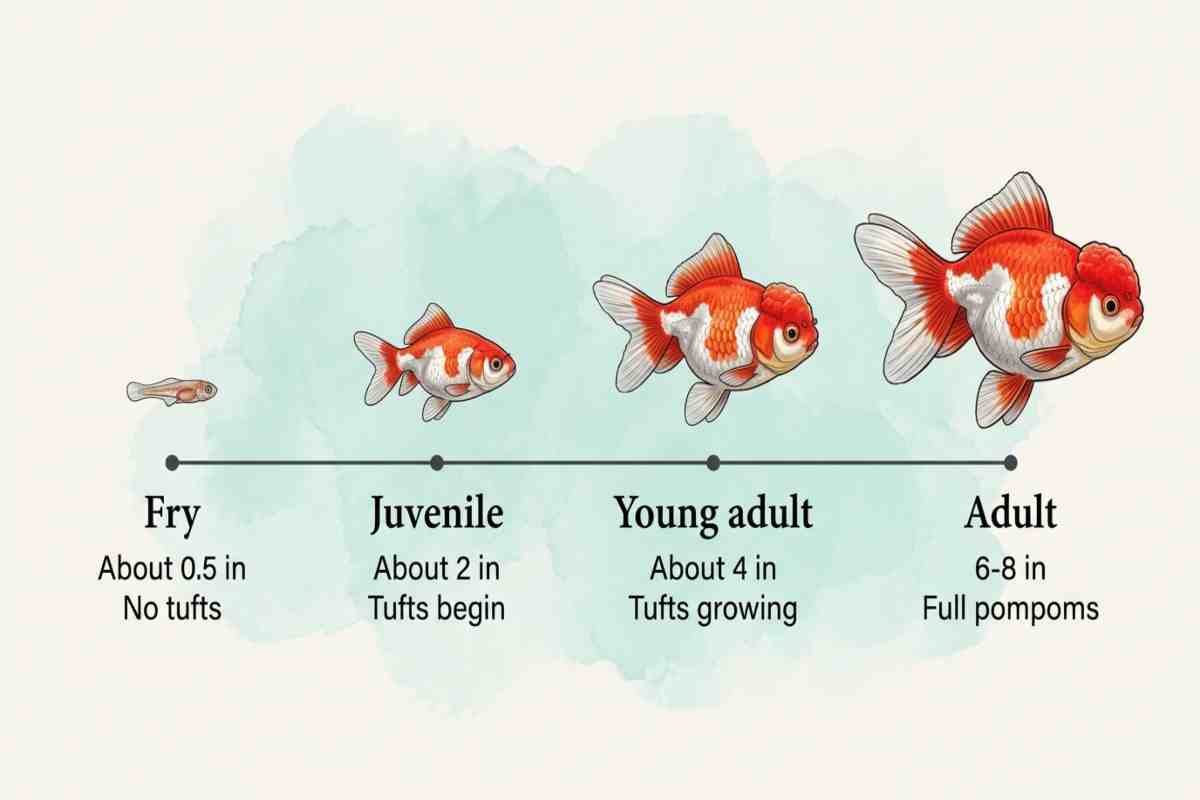 Pompoms develop gradually, so young fish rarely look like adults.
Pompom Goldfish Tank Mates
The rule is simple: slow fish with slow fish.
Good tank mates:
- Other round-bodied, double-tailed fancy goldfish such as ranchu, lionhead, and fantail-style fish
- Orandas with similar swimming ability
Poor tank mates:
- Common goldfish, comets, and shubunkins. They are fast, grow large, and outcompete slow fish for food.
- Tropical fish. They need warmer water than goldfish tolerate.
- Plecos. Some will rasp the slime coat of slow goldfish.
- Small fish that fit in a goldfish’s mouth.
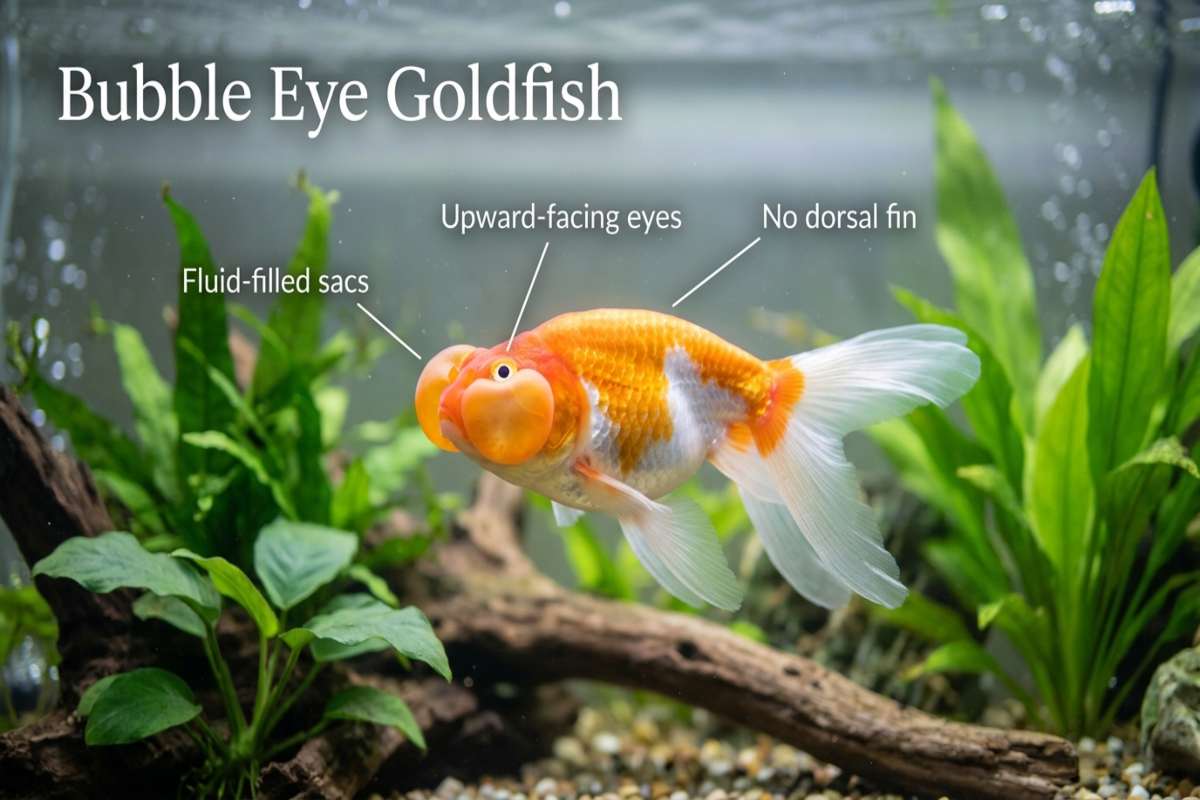
- Very delicate varieties, such as bubble eyes. A pompom is not a gentle partner.
With any tank mates, add 10 or more gallons per fish.
Common Pompom Goldfish Problems
Pompoms are prone to the same illnesses as other fancy goldfish, plus a few specific to the tufts. The tufts have many folds where debris, bacteria, and parasites can settle.
| Sign | Likely Cause | What to Do |
|---|---|---|
| Shrinking, ragged, or missing pompoms | Injury from rough decor, tank mate bites, bacterial infection, or poor water | Test water, remove sharp objects, separate any aggressor |
| Red streaks or sores on tufts or body | Bacterial infection, often after injury or ammonia burns | Improve water, isolate, and consult an aquatic vet |
| Floating, sinking, or tilting | Swim bladder disorder from diet, constipation, or infection | Fast 24 hours, then feed soaked, high-fiber foods |
| White salt-like spots | Ich parasite | Treat for ich following the product directions; see our ich guides |
| Clamped fins, scratching, flashing | Flukes or other parasites | Confirm the parasite and use the proper medication |
| Bloated body, raised scales | Dropsy, a sign of serious internal disease | Isolate and seek veterinary advice quickly |
Why Are My Goldfish’s Pompoms Shrinking?
Start with water testing. Ammonia and nitrite burn fish tissue, and they hit delicate, fleshy tissue first. Next, look for physical causes: new decor, a filter intake, or a tank mate nipping at the tufts.
If the tissue looks red, white, or fuzzy, or the fish is lethargic, bacterial infection is possible. Do not guess at medications. An aquatic veterinarian can distinguish bacterial infection from parasites, and treating one will not fix the other.
When to Call a Vet
See a fish-experienced veterinarian if the fish stops eating for several days, a wound spreads, the body swells, or multiple fish get sick at the same time. The Merck Veterinary Manual describes poor water quality as a leading cause of disease in aquarium fish, so fixing the water comes first.
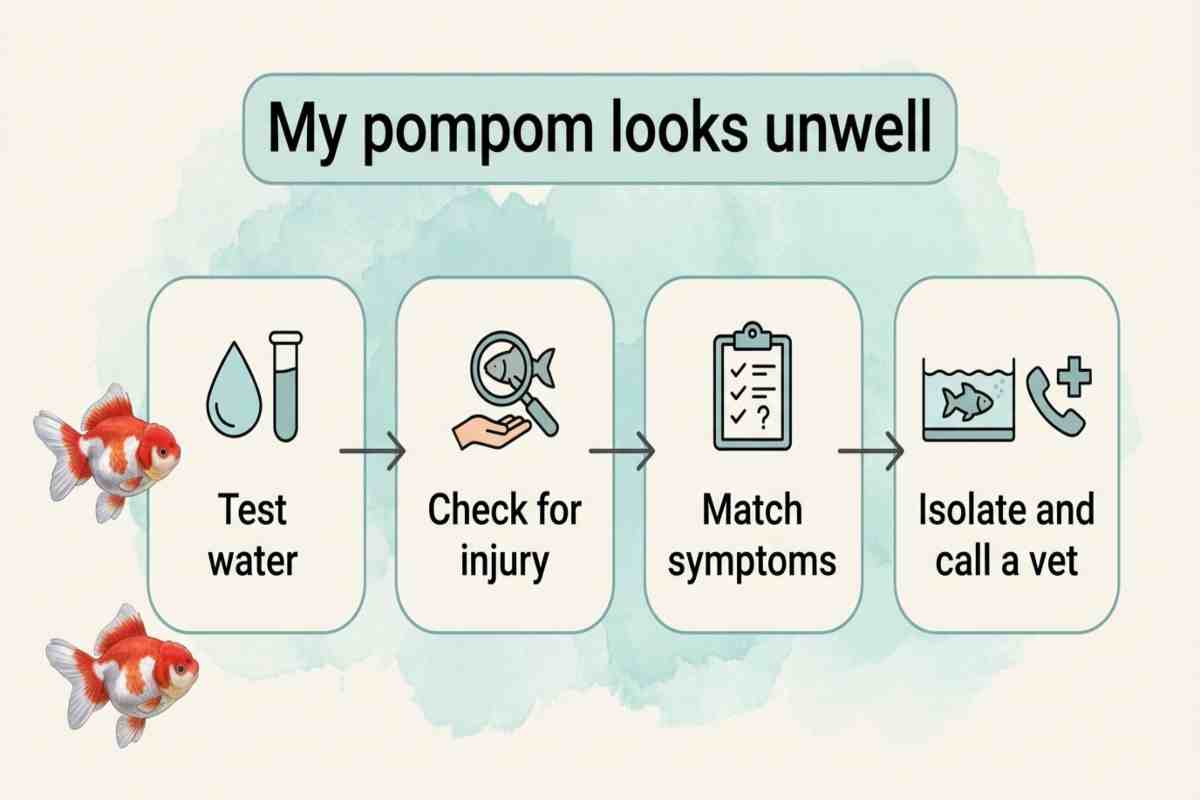 Start with water and injuries, then match symptoms and call a vet.
Buying a Pompom Goldfish: Price and Where to Find One
Prices vary widely by region, quality, and seller. Pet stores usually sell young pompoms at modest prices. Show-quality fish from specialist breeders can cost much more, especially with symmetrical, well-developed tufts.
When shopping, check for:
- Clear eyes and an active, upright swimmer
- Two evenly shaped tufts without torn or red tissue
- Intact fins with no white spots or red streaks
- Clean, healthy tanks at the seller, with no sick fish in the same system
No matter where you buy, quarantine the fish for 4 to 6 weeks in a separate tank. It is the cheapest disease prevention available. If you are new to goldfish, The Fish Care’s beginner goldfish guide can help you compare easier varieties first.
Weekly Pompom Care Checklist
- Test ammonia, nitrite, and nitrate
- Change 30–50% of the water and treat it
- Rinse the filter media in old tank water, never tap water
- Inspect pompoms and fins for damage, redness, or debris
- Remove uneaten food
- Check that the temperature is steady
Common Mistakes to Avoid
- Using a small or uncycled tank
- Keeping pompoms with fast single-tail goldfish
- Overfeeding floating flakes
- Using sharp decor or a strong filter jet
- Treating a disease without confirming the cause
A healthy pompom needs space, clean, cool water, smooth surroundings, and the right food. Get those four things right and its tufts, like its long life, usually take care of themselves.
FAQs (Frequently Asked Questions)
Are pompom goldfish good for beginners?
They can be, if you cycle a roomy tank and maintain it consistently. Their fragility makes them less forgiving than hardy single-tail goldfish.
Do pompom goldfish need a heater?
Usually not. They prefer cool water, and most homes keep it within their comfort range. A heater is only useful if the room swings widely.
Can pompom goldfish live in a pond?
Only in mild climates, and with great care. They are slow, have limited vision, and are easily outcompeted, so pond life is riskier than for single-tail goldfish.
Can pompoms grow back?
Minor tissue loss can regenerate if you fix the cause and keep the water clean. Repeated damage or infection can leave permanent scarring.
Are pompom goldfish hardy?
Moderately. They tolerate cool water well, but their body shape and delicate tufts make them more prone to health problems than simpler goldfish.
Do pompom goldfish have a dorsal fin?
The standard form does not, though some strains do.
References
- FishBase: https://www.fishbase.se
- Merck Veterinary Manual: https://www.merckvetmanual.com