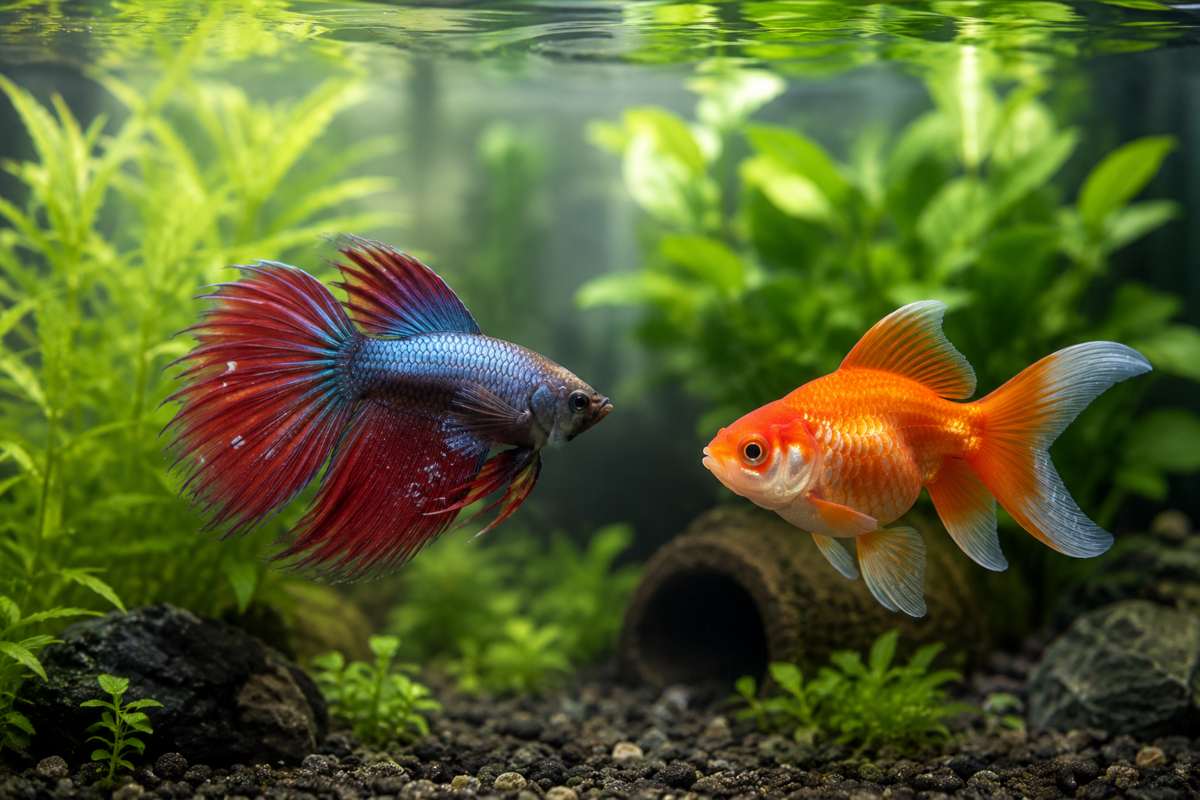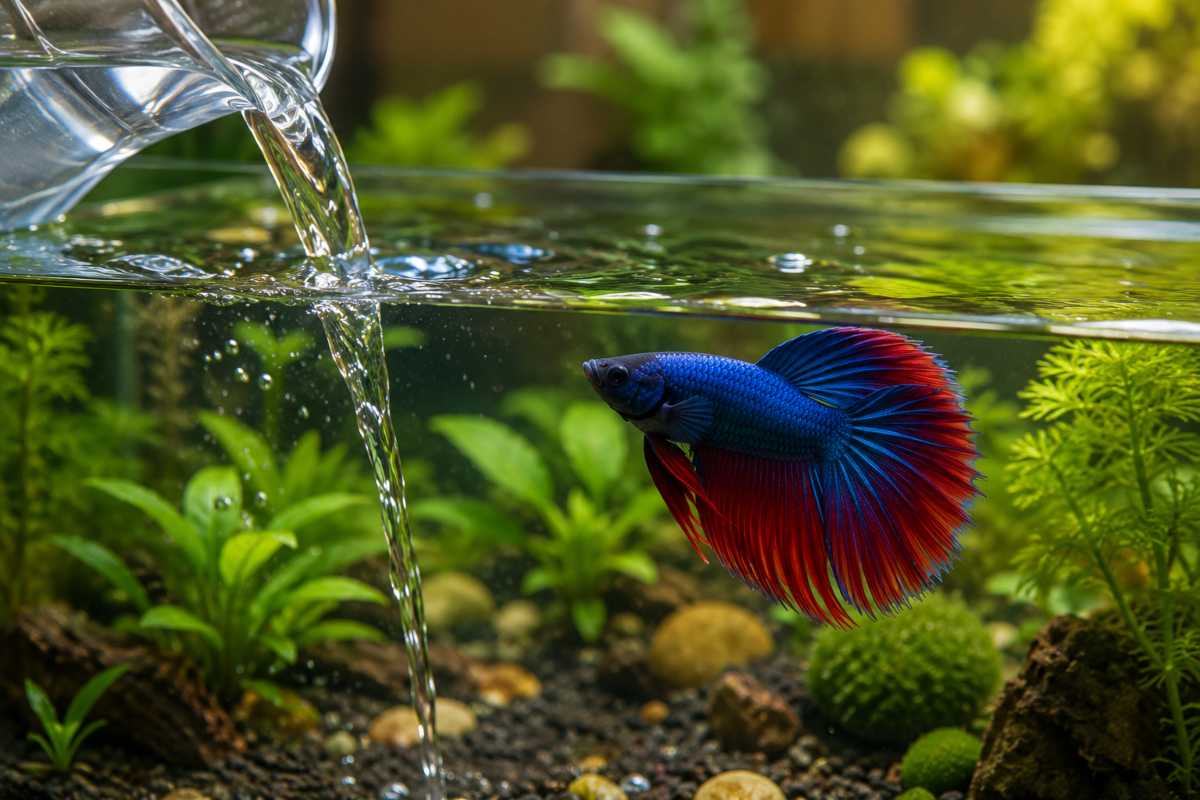
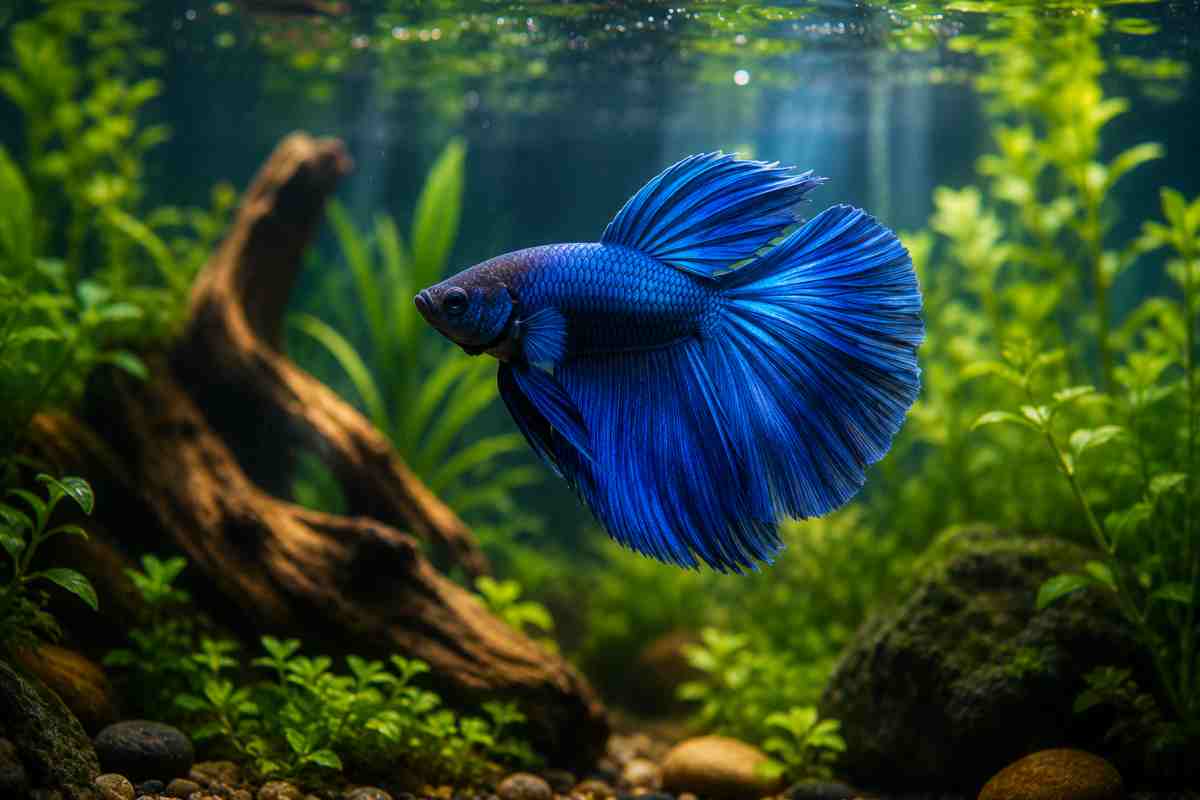
Anyone searching this phrase is usually standing in a pet store aisle, phone in hand, or has just brought a betta home in a plastic cup and needs the truth fast: what to buy, what order to do things in, and how long until the fish is actually safe. They don’t want theory; they want a system that won’t kill the fish. That’s what this guide gives you, in the order you’ll actually use it.
A healthy betta tank needs a minimum 5-gallon (10-gallon is better) filtered, heated tank kept at 76–82°F, with the nitrogen cycle fully established before the betta goes in. Skipping the cycle is the single most common reason new bettas die in the first two weeks.
What You Actually Need
Skip anything not on this list for a starter setup; extras can come later.
| Item | Why it’s Non-Negotiable |
|---|---|
| Tank, 5 gal minimum (10 gal recommended) | Stabilizes temperature and water chemistry; smaller volumes swing rapidly and stress the fish. |
| Adjustable heater (~25W for 5 gal) | Bettas are tropical fish and cannot regulate their body temperature in cool water. |
| Gentle filter (sponge or low-flow HOB) | Removes waste and houses beneficial bacteria that process ammonia; strong flow can damage betta fins. |
| Water conditioner (dechlorinator) | Neutralizes chlorine and chloramine, which are toxic to fish and the beneficial bacteria you’re trying to establish. |
| Liquid test kit (not strips) | Test strips are often inaccurate for ammonia; a liquid kit provides reliable readings before adding your betta. |
| Substrate (sand or smooth gravel) | Anchors plants and decorations while providing extra surface area for beneficial bacteria. |
| Lid | Bettas are excellent jumpers and can easily leap out of uncovered aquariums. |
| Thermometer | Confirms the heater is maintaining the correct temperature rather than relying only on the heater’s setting. |
Optional but genuinely useful: a gravel vacuum/siphon for water changes, and live or silk plants (avoid stiff plastic, it tears fins).
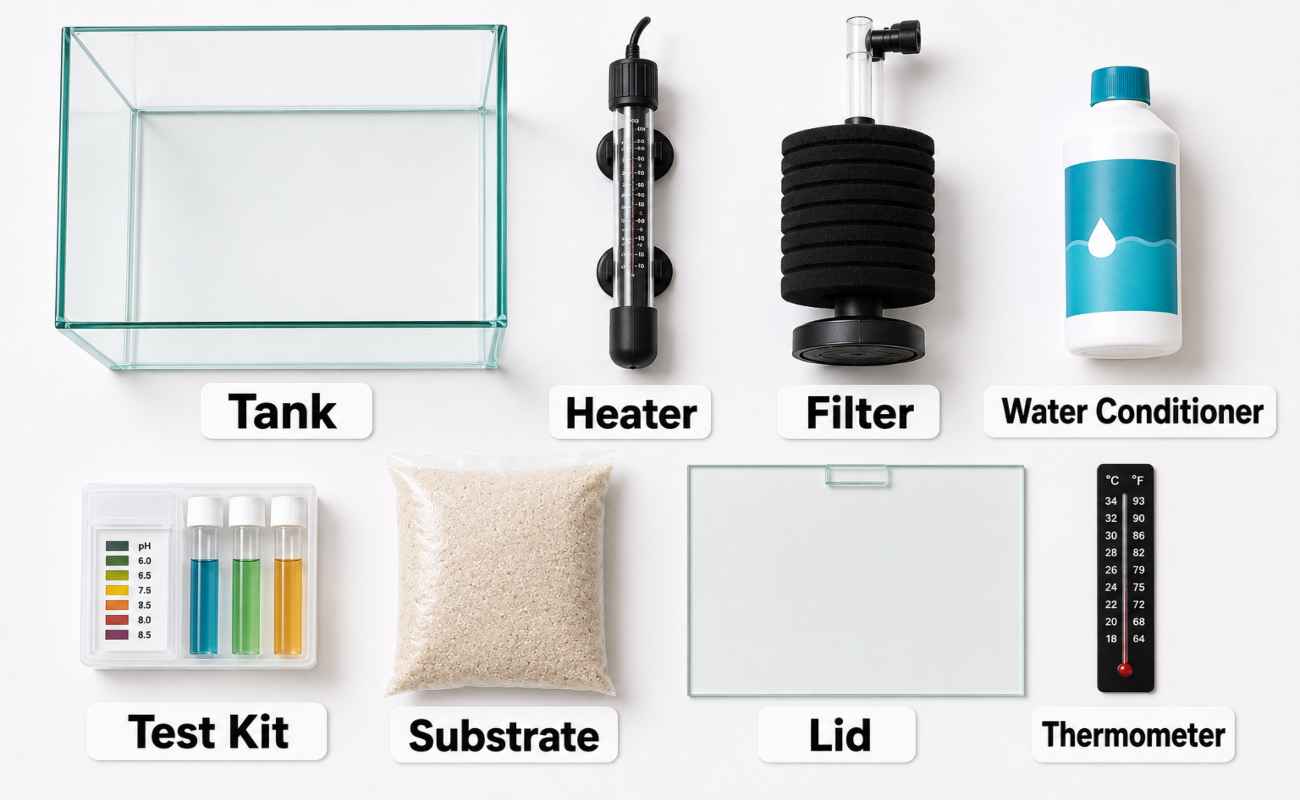 Everything you need before setting up a betta fish tank, in one shopping checklist.
Choosing the Right Tank Size
Betta splendens naturally inhabit shallow rice paddies and slow-moving waters in Southeast Asia, not the tiny bowls they’re often sold in. A larger volume of water is more forgiving: it dilutes waste faster and resists temperature swings.
- Under 5 gallons: Not recommended. Parameters shift too fast for a beginner to manage safely.
- 5 gallons: The realistic minimum. Workable with consistent maintenance.
- 10 gallons or more: Ideal. More stable, more room for enrichment, and easier to keep cycled.
Not sure exactly how many gallons your tank holds, especially if it’s an odd shape or a secondhand setup with no label? Use our aquarium volume calculator to get an exact number before you buy a heater or filter, since both are sized around gallons, not tank dimensions.
Step-by-Step Setup Process
- Rinse everything (tank, substrate, decor) with plain water only (no soap; residue is toxic to fish).
- Place the tank on a level, sturdy surface, away from direct sunlight and heating/cooling vents, near an outlet.
- Add substrate, rinsed until the runoff water is clear, in a shallow, even layer.
- Arrange hardscape and decor (smooth-edged only) to protect fins.
- Fill with water, adding conditioner as you go (or immediately after).
- Install the heater and filter, following the manufacturer’s instructions, and let them run.
- Let the tank run empty of fish while you complete the nitrogen cycle (below). This is the step most guides skip past, and the one that matters most.
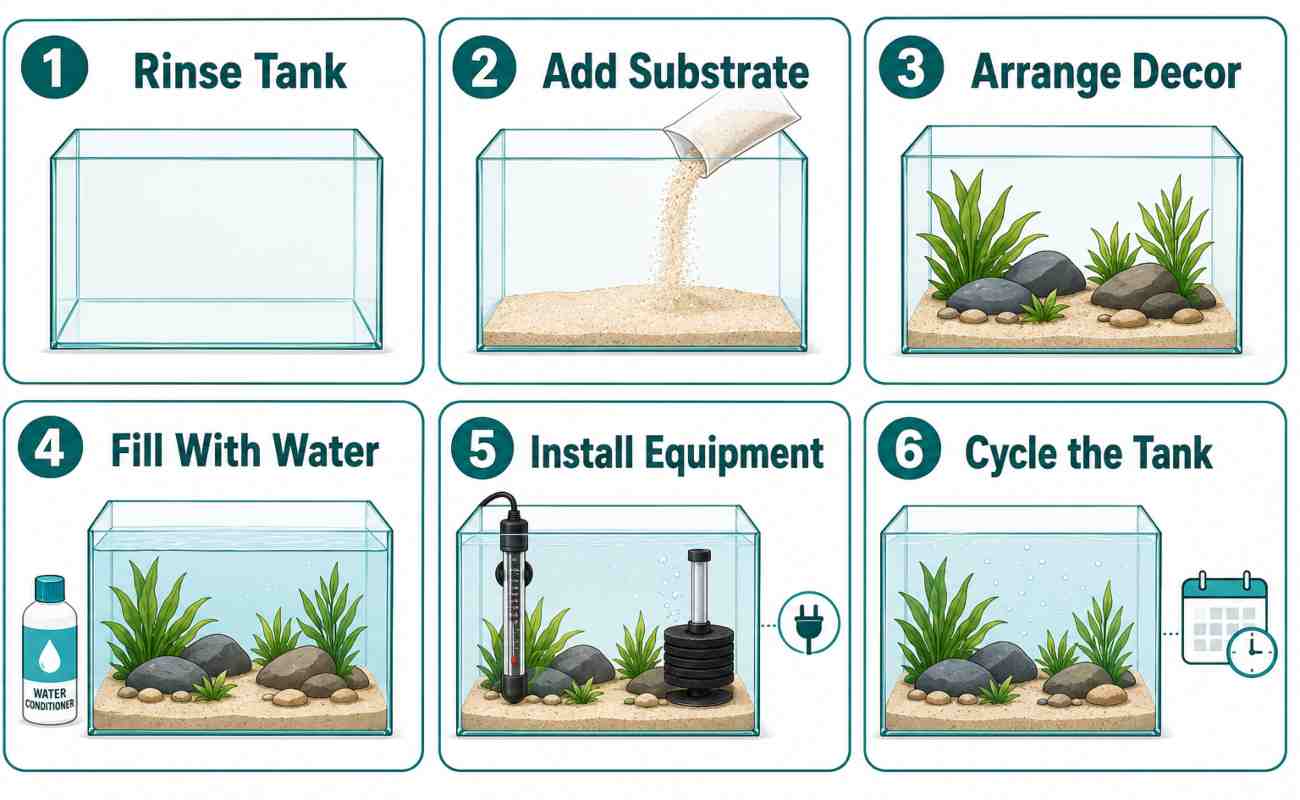 The six steps to setting up a betta tank, from empty glass to a fully cycled home.
Cycling the Tank: The Step Nobody Explains Properly
This is where most beginner setups go wrong, and it’s the section worth reading twice.
Why it matters: Fish waste and uneaten food break down into ammonia, which is toxic to bettas even in tiny amounts. In a “cycled” tank, colonies of beneficial bacteria have grown on the filter media and substrate that convert ammonia into nitrite, then nitrite into a far less harmful compound, nitrate. Adding a betta before this bacterial colony exists means the fish is swimming in its own poison with nothing there to neutralize it; this is what hobbyists call “new tank syndrome,” and it’s the top cause of early betta deaths.
Fishless cycling (recommended method):
- Add a source of ammonia (a bottled pure-ammonia product, or fish food left to decay) to the empty, running tank to reach roughly 2–4 ppm.
- Test daily with a liquid kit, tracking ammonia, nitrite, and nitrate.
- Ammonia will rise, then fall as nitrite appears and rises.
- Nitrite will then fall as nitrate appears.
- The cycle is complete when ammonia and nitrite both read 0 ppm within 24 hours of dosing, and nitrate is present.
- This typically takes 4–6 weeks without a bacterial starter product, or as little as 1–2 weeks with one.
| Timeframe | What’s Happening | What to Do |
|---|---|---|
| Day 1 | Tank is filled, and the filter and heater are running. | Dose an ammonia source and begin testing the water daily. |
| Week 1–2 | Ammonia levels rise while nitrite starts to appear. | Continue daily testing and do not add the betta yet. |
| Week 2–4 | Nitrite reaches its peak and then declines as nitrate levels increase. | Keep monitoring ammonia, nitrite, and nitrate every day. |
| Week 4–6 | Ammonia and nitrite both return to 0 ppm within 24 hours after dosing. | The nitrogen cycle is complete, and it is safe to introduce your betta. |
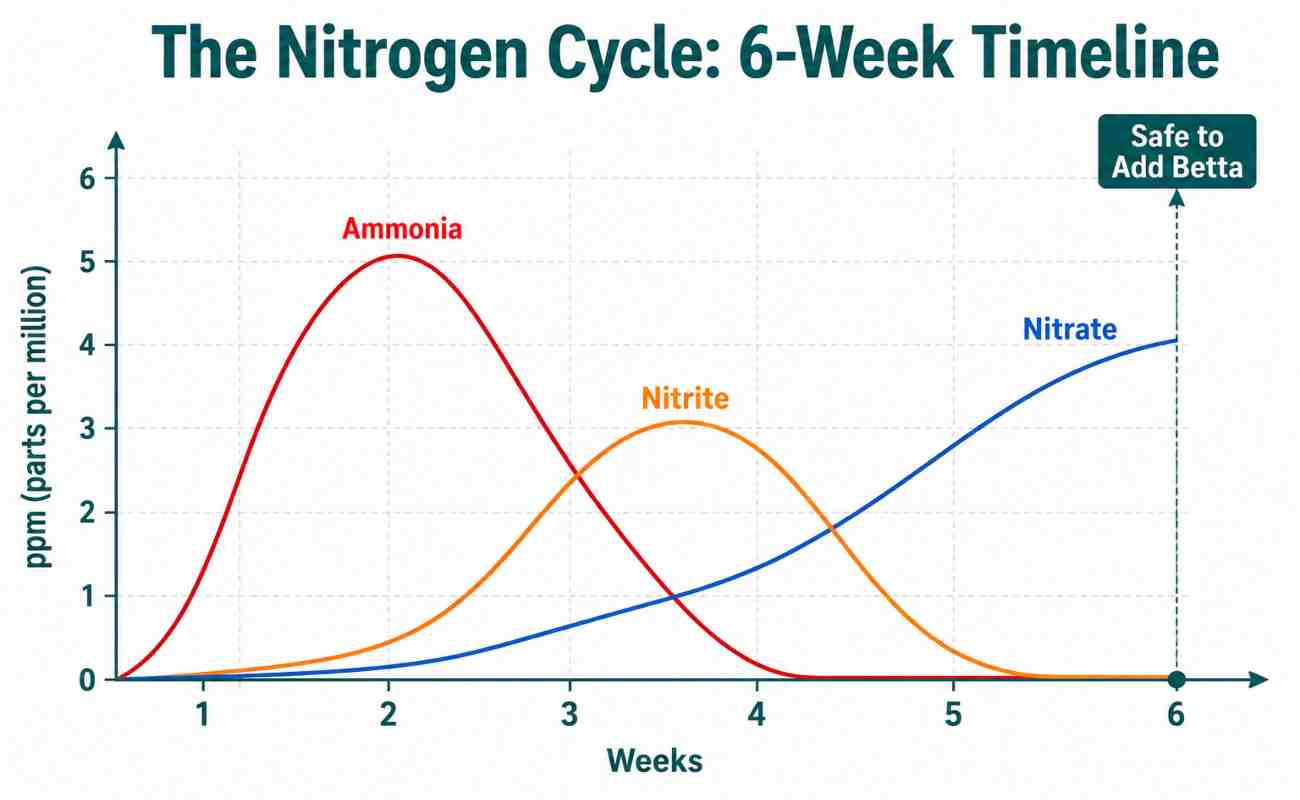 How the nitrogen cycle unfolds over six weeks, and when it’s finally safe to add your betta.
Ideal Water Parameters for a Betta
| Parameter | Ideal Range |
|---|---|
| Temperature | 76–82°F (24–28°C) |
| pH | 6.5–7.5 |
| Ammonia | 0 ppm |
| Nitrite | 0 ppm |
| Nitrate | Under 20 ppm |
| General Hardness (GH) | 3–20 dGH |
Consistency matters more than hitting an exact number. Betta fish handle a slightly off reading far better than a sudden swing in their water.
Acclimating and Adding Your Betta
Don’t just net the fish into the new tank; temperature or pH shock can be fatal.
- Float the sealed bag in the tank for 15–20 minutes to match temperature.
- Open the bag and add a small amount of tank water every 5 minutes for 20–30 minutes (drip acclimation for sensitive fish).
- Net the betta into the tank; discard the bag water rather than pouring it in (it may carry pathogens from the store’s system).
- Turn off the tank light for the first few hours so the fish can settle without stress.
First Two Weeks: Maintenance Schedule
- Daily Visual check: is the betta active, eating, breathing normally? Confirm heater is holding temperature.
- 2–3x per week: Test ammonia and nitrite; a newly stocked tank can still show a small “mini-cycle” bump.
- Weekly: 20–30% water change with conditioned, temperature-matched water, plus light gravel vacuuming.
Common Mistakes That Kill New Betta Tanks
- Adding the betta before cycling is complete: the single biggest cause of early deaths.
- Using a bowl or unheated tank: bettas are tropical fish, not cold-water fish.
- Choosing a high-flow filter: shreds fins and stresses a fish built for still water.
- Skipping water conditioner: chlorine kills the beneficial bacteria you just spent weeks growing.
- Overfeeding: excess food rots and spikes ammonia; feed only what’s eaten in 2 minutes.
- Trusting test strips over liquid tests: strips frequently misread ammonia, giving false confidence.
FAQs (Frequently Asked Questions)
Do bettas really need a heater?
Yes. Betta splendens are tropical fish native to warm waters in Thailand; room temperature (often 65–72°F) is too cold and slows their metabolism, immune system, and digestion.
Can I add a betta the same day I set up the tank?
No. The tank needs a fully established nitrogen cycle first, which takes several weeks; adding the fish immediately exposes it to toxic ammonia.
What’s the smallest tank a betta can live in?
Five gallons is the realistic minimum for stable water parameters; anything smaller requires far more frequent maintenance and leaves little margin for error.
Do bettas need a filter?
Yes, filtration houses the beneficial bacteria that process waste and keeps the water oxygenated, but it should be low-flow to avoid stressing the fish.
At The Fish Care, this same process is the one we recommend to every beginner: cycle first, add the betta second, no exceptions. Get the sequence right, and the rest of betta keeping is genuinely low-maintenance.