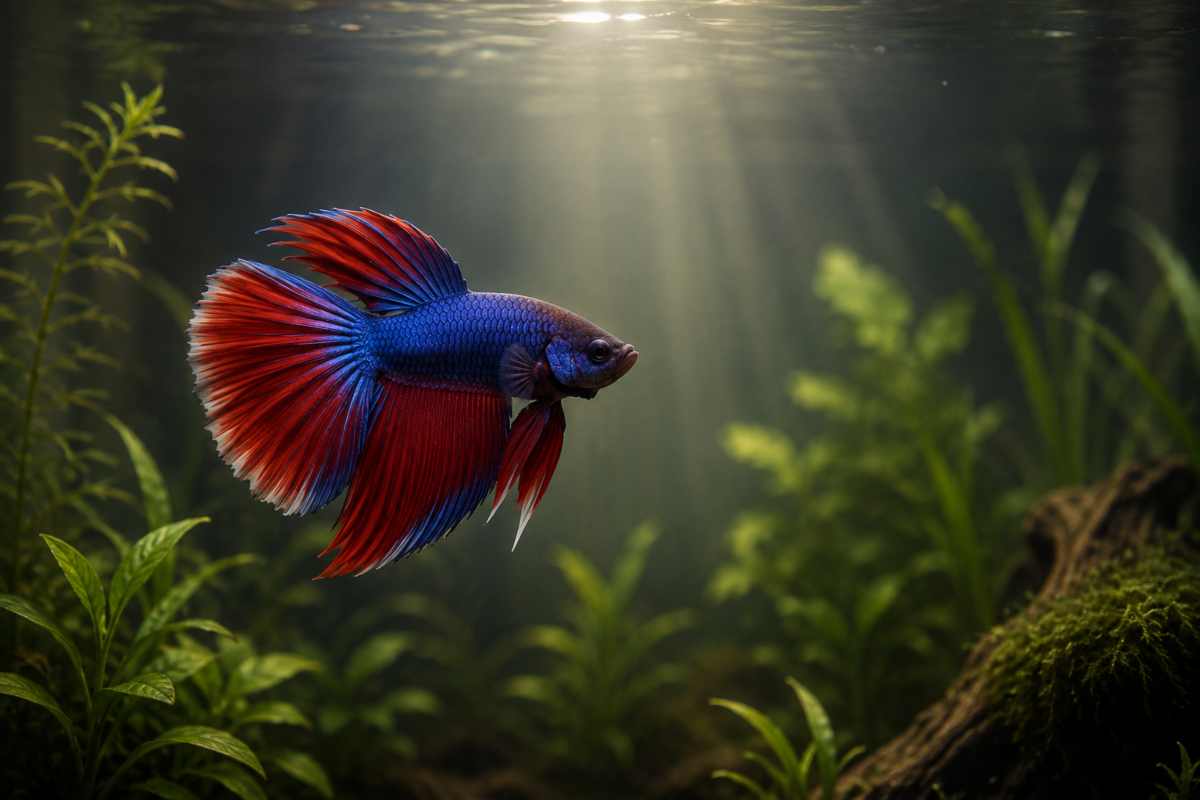
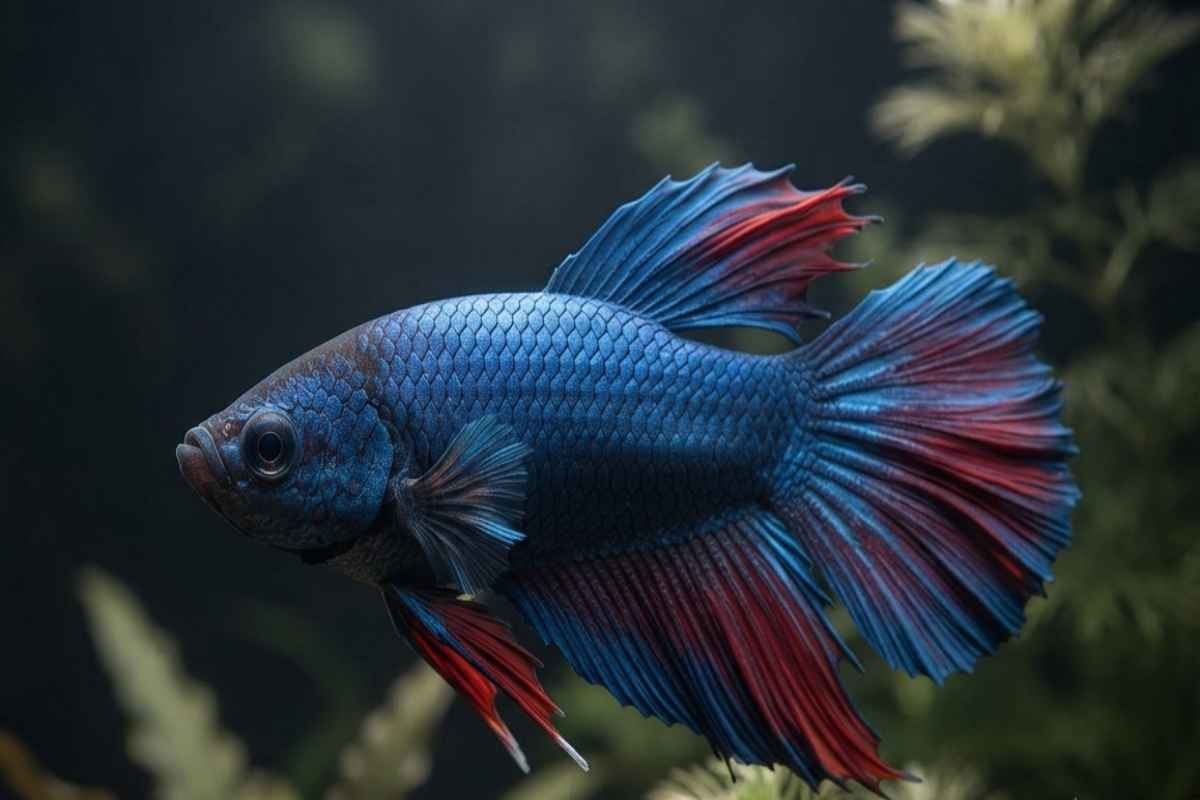
A betta fish may look simple at first glance, but its body is a highly specialized system designed for survival in shallow freshwater environments. Every feature, from its flowing fins and vibrant scales to its unique labyrinth organ, plays an important role in movement, breathing, communication, feeding, and adaptation.
Understanding betta fish anatomy helps keepers make better care decisions. When you know how a betta’s body works, you can recognize signs of stress, identify health problems earlier, choose suitable aquarium conditions, and provide an environment that matches its natural biology.
At The Fish Care, we believe learning fish anatomy is one of the foundations of responsible fishkeeping. A betta is not just a colorful aquarium pet. It is a specialized freshwater species with unique physical adaptations developed over thousands of years.
Key Takeaways
- The labyrinth organ allows bettas to breathe atmospheric oxygen, but this does not reduce the need for clean water and proper filtration.
- Large ornamental fins result from selective breeding; wild bettas have shorter fins adapted for efficient swimming rather than display.
- An upward-facing mouth reflects natural surface feeding and a digestive system built for protein-rich, animal-based food.
- Fins, scales, eyes, and gill movement serve as early indicators of health, making them worth monitoring before assuming illness.
External Anatomy of a Betta Fish
The external body of a betta fish includes visible structures such as the fins, scales, eyes, mouth, gill covers, and body shape. These features help the fish move, sense its environment, protect itself, and interact with other fish.
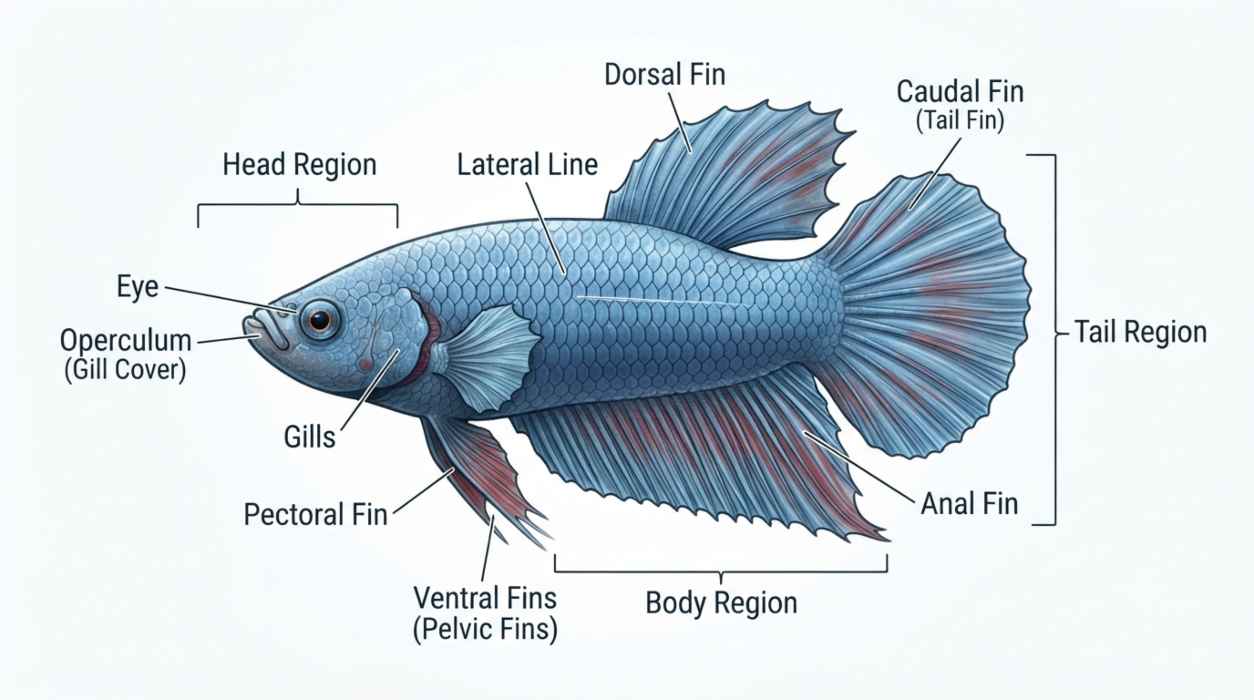
Body Shape and Structure
Betta fish have a streamlined body shape that allows them to move efficiently through slow-moving freshwater habitats such as rice fields, ponds, marshes, and shallow streams.
Their body can be divided into three main sections:
- Head region: Contains the brain, eyes, mouth, sensory organs, and gills.
- Trunk region: Contains most internal organs and provides attachment points for fins.
- Tail region: Provides propulsion and helps control movement.
Unlike fast open-water fish, bettas are adapted for environments with dense vegetation and limited water movement. Their compact body allows them to navigate through plants and small spaces.
The natural body structure of wild bettas is usually slimmer and shorter-finned compared with many ornamental varieties developed through selective breeding.
Betta Fish Fins and Their Functions
A betta’s fins are among its most recognizable features. They are not only responsible for movement but also play a major role in communication and behavior.
Dorsal Fin
The dorsal fin is found on the top of the fish. It helps maintain balance while swimming and prevents the fish from rolling sideways.
A healthy dorsal fin should appear open and stable when the fish is active. Damage, clamping, or deterioration of this fin may indicate stress or health issues.
Caudal Fin (Tail Fin)
The caudal fin is the main propulsion structure of a betta fish. It generates forward movement by pushing water backward.
Different betta varieties have different tail shapes, including:
Although large decorative tails are popular among aquarium keepers, extremely long fins may require more swimming effort compared with shorter-finned varieties.
Anal Fin
The anal fin extends along the lower rear portion of the body. It helps with stability and directional control while swimming.
Pectoral Fins
The small paired fins located behind the gill covers are called pectoral fins. Bettas use these fins like small paddles to:
- Move backward
- Turn quickly
- Hover in place
- Adjust their position
These fins are constantly moving, especially when a betta is exploring its environment.
Ventral Fins
Also called pelvic fins, ventral fins are located below the body near the head. They assist with balance, braking, and precise movement.
Betta Fish Scales: Protection and Color
Scales act as a protective outer layer surrounding the betta’s body. They lower the risk of injury and help maintain the fish’s internal balance by acting as a barrier between the body and surrounding water.
Betta scales are covered with a thin protective mucus layer called the slime coat. This mucus helps protect against harmful microorganisms and physical damage.
According to the Merck Veterinary Manual, the skin and mucus layer of fish provide important protection against environmental pathogens and injury.
Betta coloration comes from specialized pigment cells called chromatophores. Different pigments create the wide variety of colors seen in domestic bettas, including:
- Red
- Blue
- Yellow
- Black
- White
- Metallic shades
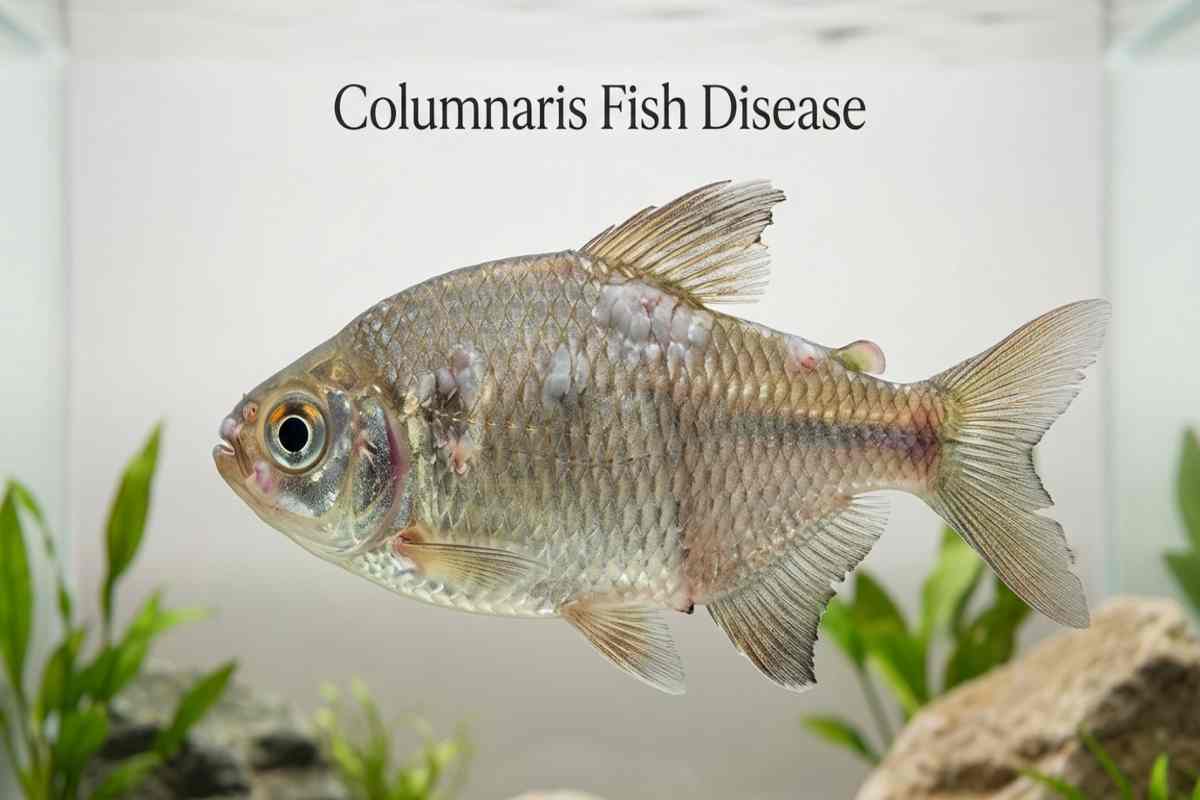
The appearance of scales can also provide clues about health. A dull color, excessive mucus, missing scales, or unusual swelling may indicate stress or illness.
Eyes and Vision: How Bettas See Their Environment
Betta fish have relatively large eyes compared with their body size, allowing them to detect movement and identify objects around them.
Their vision is adapted for short-distance observation rather than long-range hunting. Bettas rely heavily on movement detection, which is why they often react strongly to nearby activity.
Their eyesight helps them:
- Locate food
- Recognize threats
- Identify other fish
- Navigate plants and objects
Bettas can also see colors, which contributes to their visual displays during territorial behavior and courtship.
Mouth and Feeding Anatomy
A betta’s mouth is positioned upward, which reflects its natural feeding behavior.
In the wild, bettas commonly feed near the water surface where they capture insects, larvae, and small organisms.
Their mouth structure allows them to:
- Capture floating food
- Remove insects from the water surface
- Strike quickly at prey
Bettas are carnivorous fish with digestive systems adapted for protein-rich foods. A diet designed for their biology should contain suitable animal-based nutrition rather than relying mainly on plant ingredients.
Gills and Breathing System
Like other fish, bettas use gills to extract oxygen from water. Water enters through the mouth, passes over the gill filaments, and exits through the gill openings.
The gills perform several important functions:
- Extract oxygen from water
- Remove carbon dioxide
- Help regulate salt and water balance
Healthy gills should move smoothly and evenly. Rapid gill movement can indicate problems such as poor water quality, low oxygen, stress, or disease.
The Labyrinth Organ: The Unique Adaptation of Betta Fish
One of the most fascinating parts of betta anatomy is the labyrinth organ.
The labyrinth organ is a specialized breathing structure located above the gills. It allows bettas to take oxygen directly from atmospheric air at the water surface.
This adaptation developed because wild bettas often live in warm, shallow waters where oxygen levels may fluctuate.
The labyrinth organ allows bettas to survive in conditions where many other fish would struggle. However, this does not mean bettas can live without proper aquarium care. Clean water, suitable temperature, and good filtration remain essential.
The University of Florida IFAS Extension explains that labyrinth fish possess specialized organs that allow them to use atmospheric oxygen, providing an advantage in oxygen-limited environments.
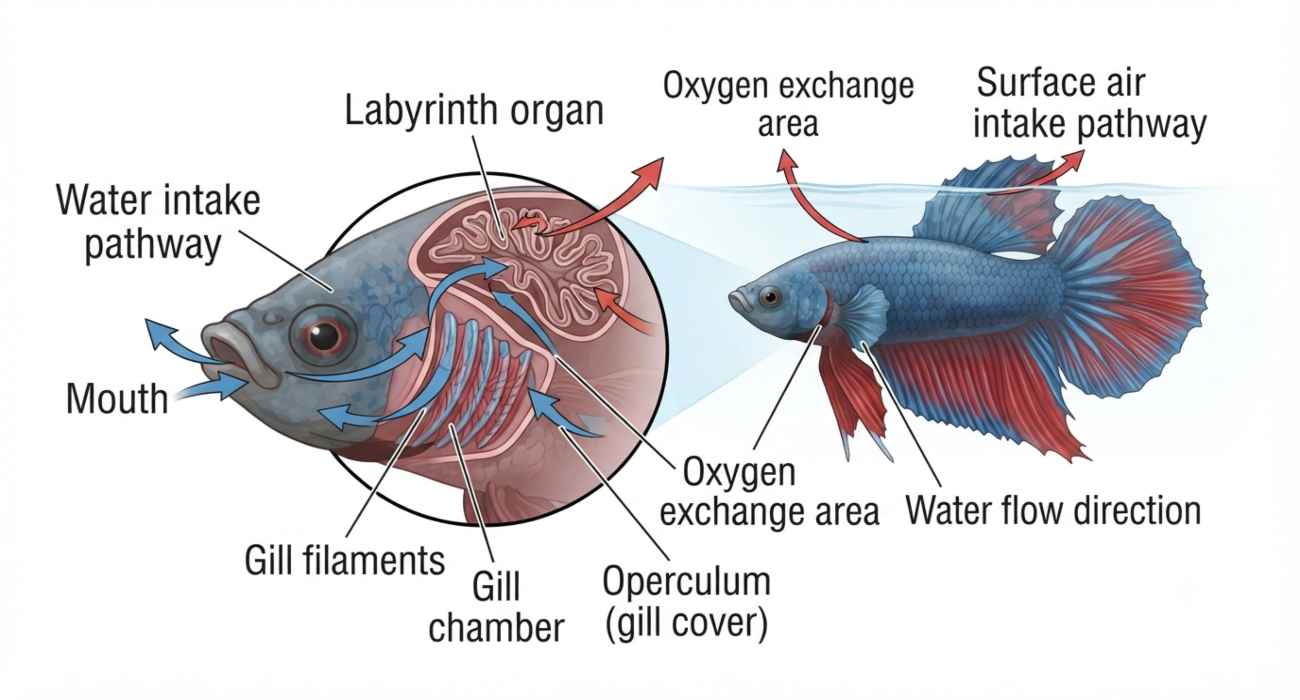
Internal Anatomy of a Betta Fish
Although most keepers see only the external features, internal organs control everything from digestion to reproduction.
Brain and Nervous System
The brain controls movement, feeding responses, aggression, and environmental awareness.
Betta fish are intelligent fish capable of learning routines, recognizing their owners, and responding to changes around them.
Heart and Circulatory System
The betta heart pumps blood through the body, supplying oxygen and nutrients while removing waste products.
Like other fish, their heart is relatively simple compared with mammals, consisting mainly of chambers specialized for aquatic circulation.
Digestive System
The digestive tract processes food and absorbs nutrients needed for energy, growth, and immune function.
Because bettas naturally consume small animal prey, their digestive system is better suited to protein-rich foods than excessive amounts of plant-based foods.
Swim Bladder
The swim bladder is an inner gas-filled organ that helps bettas control buoyancy.
It allows the fish to:
- Maintain position in the water
- Rise or sink efficiently
- Reduce energy use while swimming
Problems with buoyancy can occur when the swim bladder is affected by factors such as overfeeding, injury, or illness.
Betta Fish Sensory Systems
Bettas use several senses to understand their surroundings.
Lateral Line System
The lateral line is a sensory system running along the sides of the body. It detects vibrations and changes in water movement.
This helps bettas:
- Detect nearby movement
- Sense potential threats
- Navigate their environment
Chemical Detection
Bettas also use chemical signals in the water to gather information about their surroundings and other fish.
This plays an important role in territorial behavior and reproduction.
How Anatomy Influences Betta Behavior
A betta’s physical structure directly affects how it behaves.
For example:
- Large fins make movement slower and require more energy.
- The labyrinth organ encourages frequent trips to the water surface.
- Upward-facing mouths explain why bettas often feed from the top.
- The lateral line helps them detect nearby fish and defend territory.
Understanding anatomy allows fish keepers to interpret behavior more accurately instead of assuming every action is aggression or illness.
Common Anatomy-Related Health Signs to Watch For
Knowing normal anatomy makes it easier to identify problems.
Watch for:
- Torn or damaged fins
- Missing scales
- Cloudy eyes
- Rapid gill movement
- Swollen abdomen
- Difficulty maintaining balance
- Loss of color
Early observation is one of the most effective ways to support long-term betta health.
Final Thoughts
Betta fish anatomy reveals how specialized and fascinating these small freshwater fish really are. Their fins control movement, their scales provide protection, their labyrinth organ allows unique breathing abilities, and their sensory systems help them survive in challenging environments.
For aquarium keepers, understanding anatomy is more than learning scientific terms. It provides the knowledge needed to create better habitats, recognize problems early, and appreciate bettas as living animals with complex biological adaptations.
At The Fish Care, we believe better fishkeeping starts with understanding the biology behind the species we care for.
Frequently Asked Questions
Do betta fish have lungs?
No. Betta fish do not have lungs. They breathe mainly through their gills but also use their labyrinth organ to absorb oxygen from air above the water surface.
Why do bettas come to the water surface?
Bettas often visit the surface because they use their labyrinth organ to breathe atmospheric oxygen. This is normal behavior.
Why are betta fins so large?
Large fins are mostly the result of selective breeding. Wild bettas generally have smaller fins that are better suited for natural swimming.
Can you tell a betta’s health by its appearance?
Yes. Changes in fins, scales, color, eyes, and swimming patterns can provide early clues about stress or illness.
Why do bettas flare their fins?
Flaring is a natural display behavior used for communication, especially during territorial encounters or courtship.
Trusted Resources
- Merck Veterinary Manual
- Provides veterinary information about fish anatomy, physiology, and aquatic animal health.
- FishBase Betta splendens Profile
- Provides scientific classification and biological information about Siamese fighting fish.