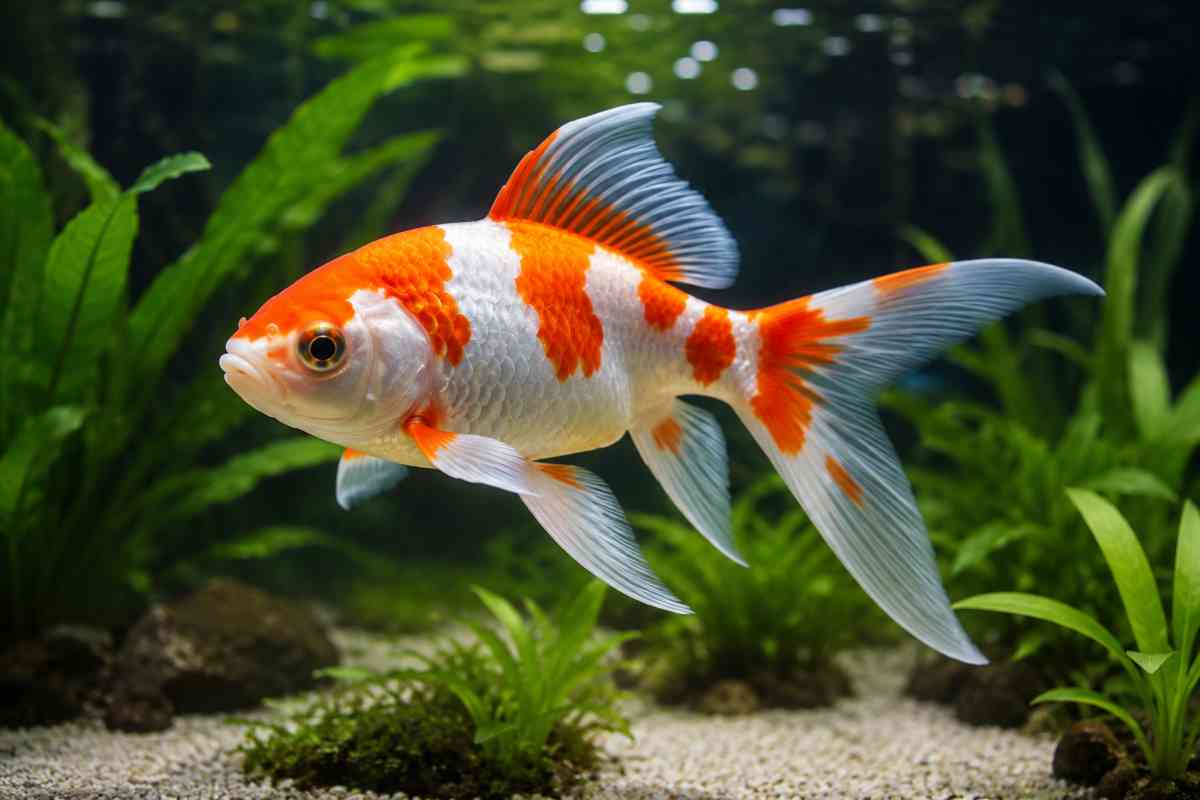
A white-and-orange goldfish is not a specific breed. It is a color pattern, known in the hobby as “nacreous” or “calico-influenced” coloring, that can appear in several different goldfish varieties, including the Comet, Common Goldfish, Fantail, Oranda, and Ryukin. The pattern usually shows up as patches of solid orange combined with white or pale pink-white areas, and in most cases it is a stable, genetically normal trait rather than a sign of illness. The most well-known version of this pattern is called Sarasa. This red-and-white or orange-and-white Comet-type goldfish has been selectively bred in Japan for generations specifically for this coloring.
That said, white and orange coloring can also appear temporarily or change gradually due to age, genetics, diet, lighting, and water quality, which is why so many owners search for this topic wanting to know whether their fish’s color is normal. This guide covers both sides of that question: what causes the pattern, and how to tell natural coloring apart from a health-related color change.
Table of Contents
- What Causes the White and Orange Pattern
- Goldfish Varieties That Commonly Show White and Orange Coloring
- Variety Comparison Table
- Temperament and Compatibility
- Tank Requirements and Water Parameters
- Diet and Nutrition
- Does the White and Orange Pattern Change Over Time
- When Color Change Signals a Health Problem
- Maintaining Vibrant Color: Practical Tips
- Is a White and Orange Goldfish Right for Your Tank
- Buying Advice
- Quick Answer Summary
- Frequently Asked Questions
- References
What Causes the White and Orange Pattern
Goldfish coloring comes from pigment cells called chromatophores, which sit in the skin and scales. Orange and red tones come from cells called erythrophores, while white areas result from a lack of pigment or from reflective cells called iridophores that scatter light instead of absorbing it.
Every goldfish starts life dark, usually a metallic brown or olive-bronze, because this coloring helps young fish hide from predators in the wild. As the fish matures, usually between three months and one year of age, it begins to lose this dark pigment in a process called “goldening.” Which areas turn orange, which stay white, and which remain dark is determined largely by genetics, though the final pattern is not always fully set until the fish reaches twelve to eighteen months old.
This means two goldfish from the same batch of eggs can end up with completely different color patterns, and a young fish that looks solid orange today may still develop white patches later. This is one of the most common reasons owners write in, confused about a “sudden” color change that is actually just normal maturation.
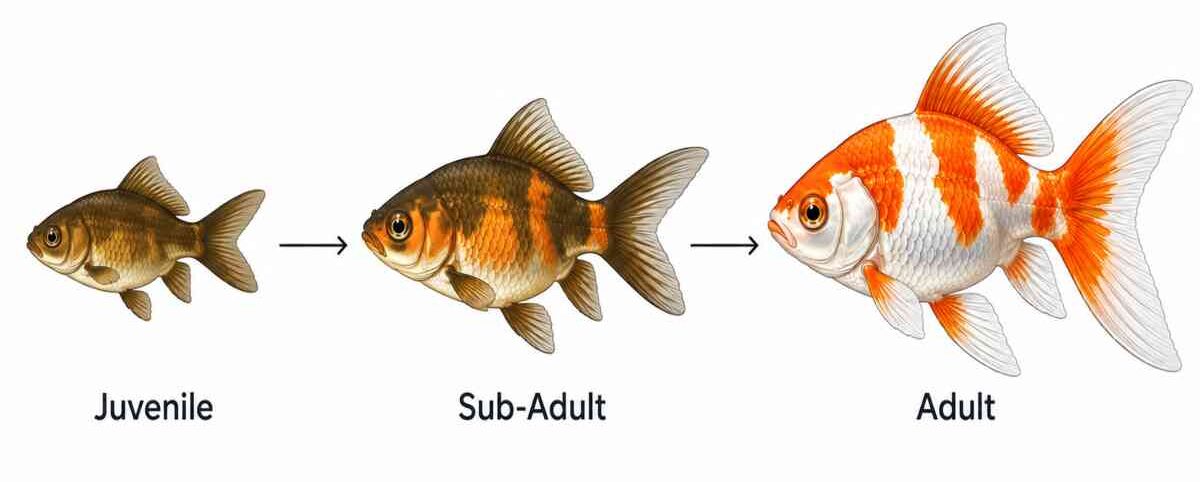 How goldfish “golden” from bronze juveniles into white and orange adults.
Goldfish Varieties That Commonly Show White and Orange Coloring
Several distinct goldfish varieties can carry this color pattern. They differ significantly in body shape, fin length, and care requirements, so identifying the variety matters more than identifying the color alone.
Sarasa Comet
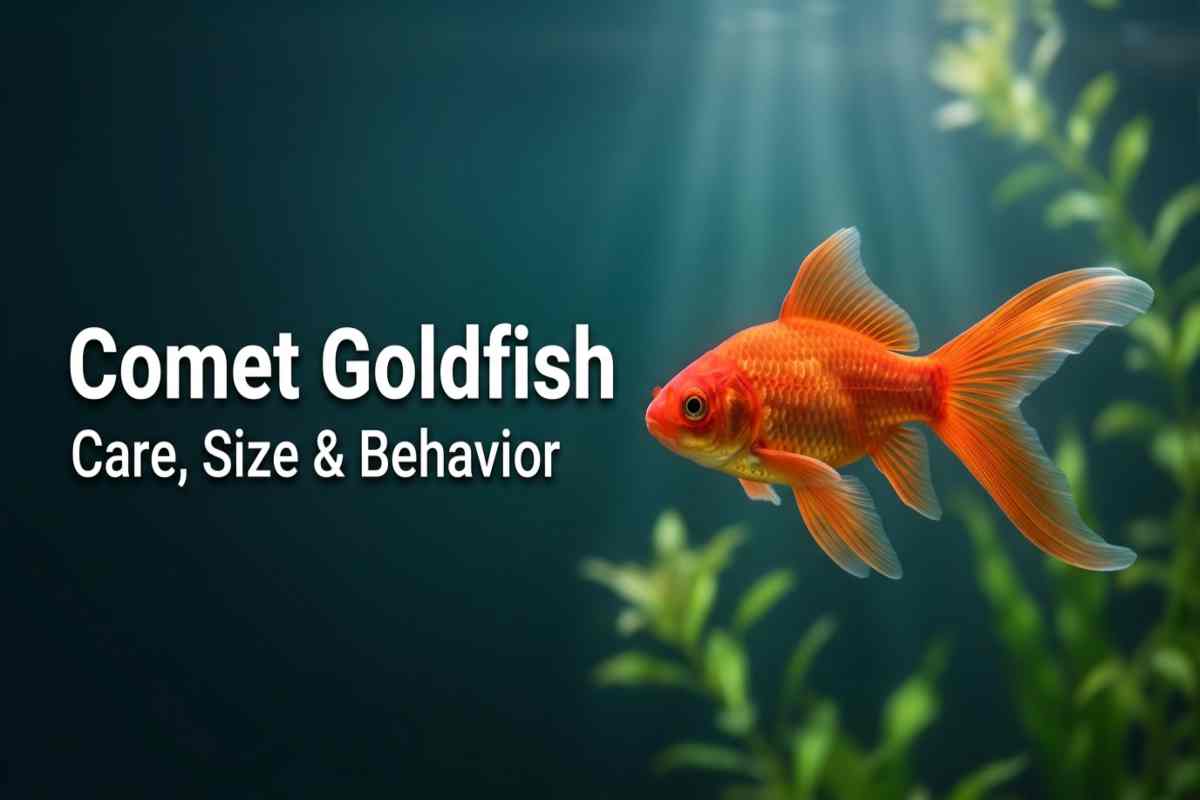
The Sarasa is a single-tailed, streamlined Comet variety bred specifically for a clean, symmetrical white and orange (or red and white) pattern. It has a slender body and long, flowing fins, and is one of the fastest and hardiest goldfish varieties available.
Common Goldfish
The Common Goldfish has the same torpedo-shaped body as a Comet but shorter fins. White and orange patterning can occur naturally, though breeders don’t select for it as deliberately as they do with Sarasa lines.
Fantail Goldfish
Fantails have a rounded, egg-shaped body and a double tail fin. White and orange Fantails are common in pet stores. They are a good entry point into fancy goldfish varieties for people who want fuller-bodied fish without the more delicate anatomy of Orandas or Ranchus.
Oranda
Orandas have the same rounded body as Fantails but grow a raspberry-like “wen,” or head growth, that develops with age. A white and orange Oranda often has an orange wen with a white body, or the reverse, and the wen color can continue changing for the first two years of life.
Ryukin
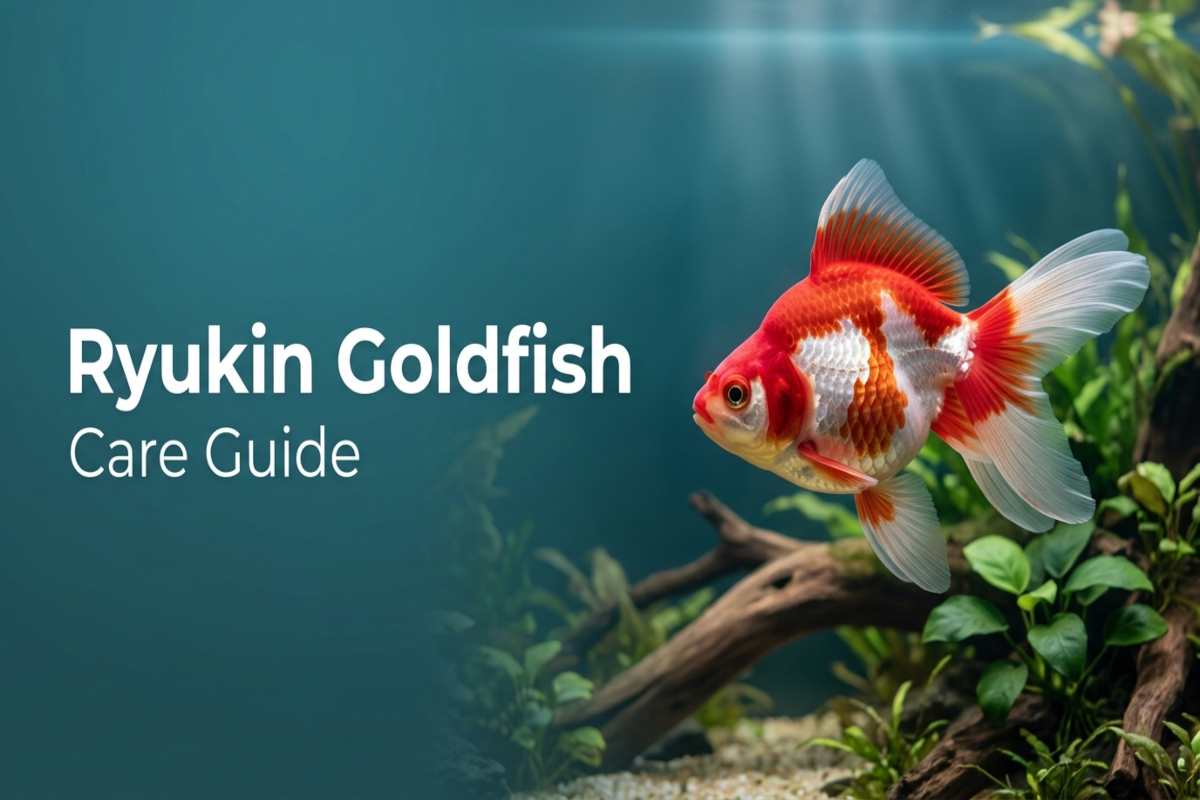
Ryukins have a high-backed, humped body shape and are known for being especially deep-bodied. White and orange Ryukins show the same patchy nacreous pattern but on a rounder frame than Comets or Common Goldfish.
Variety Comparison Table
| Variety | Body Shape | Adult Size | Lifespan | Tail Type | Beginner Suitability |
|---|---|---|---|---|---|
| Sarasa Comet | Slim, torpedo-shaped | 10-12 inches | 10-15 years | Long single tail | Excellent |
| Common Goldfish | Slim, torpedo-shaped | 10-14 inches | 10-15 years | Short single tail | Excellent |
| Fantail | Rounded, egg-shaped | 6-8 inches | 10-15 years | Double tail | Good |
| Oranda | Rounded with head wen | 8-10 inches | 10-15 years | Double tail | Moderate |
| Ryukin | Rounded, high-backed | 6-8 inches | 10-15 years | Double tail | Moderate |
Sizes and lifespans assume proper tank size, filtration, and diet. Fish kept in undersized bowls or tanks rarely reach their full genetic potential and often live far shorter lives, which is a common misconception worth addressing directly: a goldfish’s small size in a bowl is a sign of stunted growth, not a natural trait.
Temperament and Compatibility
White and orange goldfish, regardless of variety, are peaceful, social fish that do best in groups of their own kind. Streamlined varieties like the Sarasa Comet and Common Goldfish are fast swimmers and can be housed with other single-tailed goldfish. Rounder-bodied fancy varieties such as the Oranda, Ryukin, and Fantail are slower. They should be kept with other fancy varieties rather than mixed with fast Comets, which will consistently outcompete them for food.
Goldfish are not suitable tankmates for tropical community fish, since goldfish require cooler water and produce a heavy bioload that most tropical setups aren’t designed to handle.
Tank Requirements and Water Parameters
Goldfish are frequently sold in small containers, which leads many new owners to underestimate their actual space and filtration needs. A single-tailed variety like the Sarasa Comet needs at least a 30-gallon tank, with an additional 10 to 15 gallons for each additional fish. Fancy varieties like Fantails, Orandas, and Ryukins need a minimum of 20 gallons for the first fish, with the same per-fish increase.
Key water parameters:
- Temperature: 65 to 72°F (18 to 22°C)
- pH: 7.0 to 8.0
- Ammonia and Nitrite: 0 ppm at all times
- Nitrate: Below 40 ppm, kept low with regular water changes.
- Filtration: Rated for at least double the actual tank volume, since goldfish produce significantly more waste than most other freshwater fish
Weekly 25 to 30 percent water changes are essential. Goldfish are highly sensitive to ammonia and nitrite spikes, and poor water quality is one of the most common preventable causes of both illness and dulled coloration in this species. Readers setting up a new tank for the first time may find it helpful to review a complete beginner goldfish care guide before bringing a fish home, since tank size mistakes are the leading cause of early goldfish deaths.
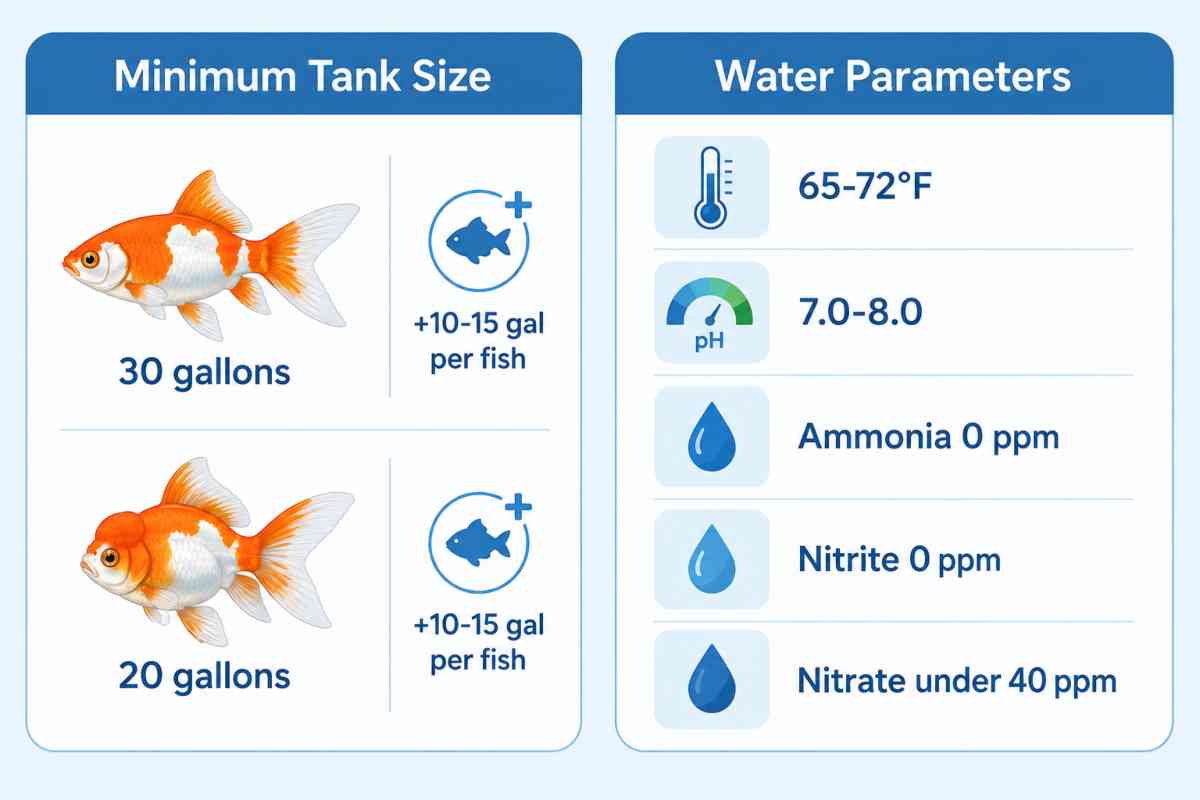 Quick-reference chart for goldfish tank size and water parameters.
Diet and Nutrition
A varied diet supports both healthy growth and full color development. Feed a high-quality goldfish-specific pellet or flake as the base diet, supplemented two to three times per week with:
- Blanched vegetables such as peas, zucchini, or spinach
- Occasional live or frozen foods such as bloodworms or brine shrimp
- Color-enhancing foods containing natural carotenoid sources like spirulina or krill, which support orange pigmentation
Feed only what the fish can finish in about two minutes, once or twice daily. Overfeeding is very common with goldfish and can cause poor water quality, which dulls their coloration and increases disease risk. Keeping portion sizes appropriate promotes healthier, brighter fish.
Does the White and Orange Pattern Change Over Time
Yes, and understanding this is key for responsible goldfish ownership. Color change can happen for several reasons, most of which are completely normal. Recognizing these helps owners avoid unnecessary concern and focus on proper care routines.
Age-related changes: As covered above, young goldfish darken and lighten as they mature, and the final pattern isn’t always locked in until 12 to 18 months of age.
Genetic mosaicism: Some goldfish carry a genetic trait that causes patches of color to shift gradually throughout life, even into adulthood. This is more noticeable in nacreous-scaled fish, which lack the fully reflective metallic scale coating of solid-colored goldfish.
Lighting and environment: Goldfish kept under weak or inconsistent lighting, or in bare tanks without natural-toned substrate, often develop duller coloring simply because pigment production responds to light exposure and background contrast.
Diet: A diet lacking carotenoid pigments (found in shrimp, spirulina, and color-enhancing pellets) can cause orange areas to fade toward pale yellow or white over several months.
Stress and water quality: Chronic stress from poor water conditions, overcrowding, or aggressive tankmates can suppress healthy pigment development and cause colors to look washed out.
Illness: Certain diseases and parasites can cause visible color and texture changes, covered in detail below.
When Color Change Signals a Health Problem
Most color change is harmless, but a few patterns are worth watching closely. A color change becomes a concern when it happens quickly, over days rather than months, or when other symptoms accompany it.
| Symptom Alongside Color Change | Possible Cause | Action Needed |
|---|---|---|
| White fuzzy patches or cotton-like growth | Fungal infection | Treat promptly, improve water quality |
| Small white dots covering body and fins | Ich (white spot disease) | Begin treatment immediately |
| Faded, pale, or grayish patches with clamped fins | Poor water quality or chronic stress | Test water, perform water change |
| Red streaking under white or orange scales | Bacterial infection or ammonia burn | Test ammonia, consult an aquatic vet if it persists |
| Gradual, even fading over months with no other symptoms | Diet or lighting related | Adjust diet and lighting, usually not urgent |
Ich is one of the most common causes of sudden white spotting that owners mistake for a natural color pattern, so it’s worth learning to tell the two apart. Natural white coloring is smooth, flat, and part of the fish’s normal pattern, while Ich produces small, raised, grain-of-salt-like white spots scattered across the body and fins, often paired with flashing (rubbing against tank decorations) and clamped fins.
A detailed breakdown of symptoms and treatment is available in our guide on how to treat Ich in goldfish safely and fast, and the broader disease explanation in what Ich disease actually is can help owners of any fish species recognize it early.
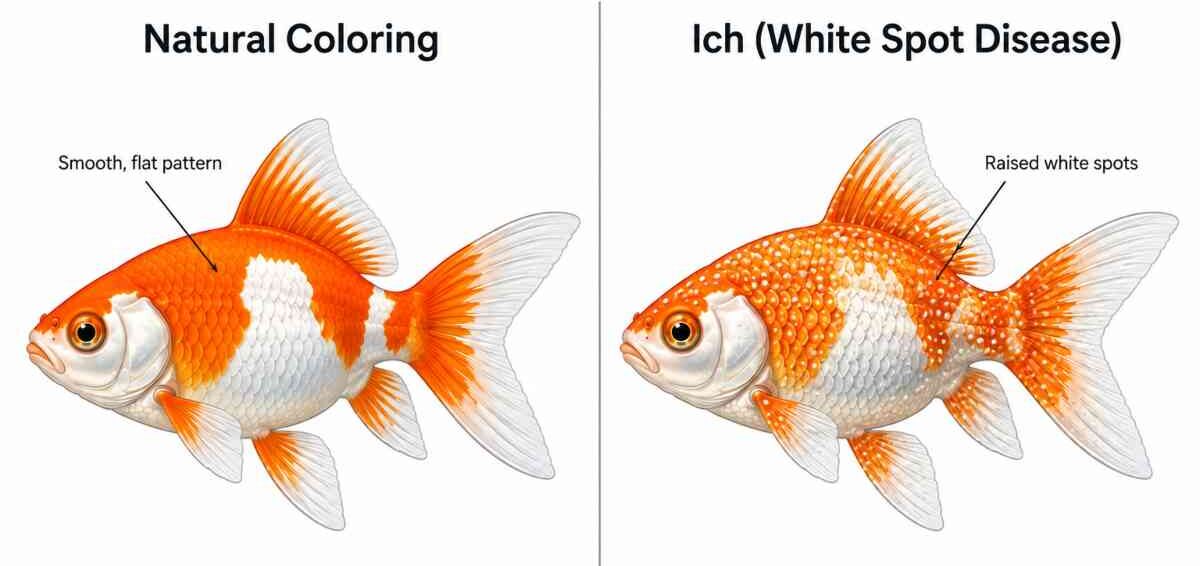 Natural coloring versus Ich: how to tell the difference at a glance.
Maintaining Vibrant Color: Practical Tips
- Feed a rotating diet that includes color-enhancing ingredients like spirulina, krill, and shrimp meal at least twice a week.
- Keep ammonia and nitrite at 0 ppm and nitrate under 40 ppm through consistent weekly water changes.
- Provide moderate, consistent lighting on a regular day-night cycle.
- Use a natural-toned substrate, which studies on ornamental fish pigmentation have linked to improved chromatophore activity and color contrast.
- Avoid overcrowding, which increases stress hormones that can suppress healthy pigmentation.
- Quarantine new fish for two to four weeks before adding them to an established tank to prevent disease-related color changes.
Is a White and Orange Goldfish Right for Your Tank
Streamlined varieties like the Sarasa Comet and Common Goldfish are excellent choices for beginners who have access to at least a 30-gallon tank or, ideally, an outdoor pond, and who want a hardy, low-maintenance fish that tolerates minor water quality fluctuations better than most freshwater species. Fancy varieties like the Oranda, Ryukin, and Fantail suit owners who can commit to slightly more precise water quality maintenance and are comfortable housing slower swimmers separately from faster goldfish. Readers who are new to the hobby and still deciding which type fits their setup may want to start with a broader overview of beginner-friendly goldfish varieties before choosing a specific white and orange fish.
Goldfish are a long-term commitment. With proper care, a healthy Comet or Common Goldfish can live 10 to 15 years and reach up to a foot in length, so tank size and filtration should be planned around the adult fish, not the small juvenile typically sold in stores.
Buying Advice
White and orange goldfish are inexpensive and widely available compared to other ornamental varieties.
Typical price range:
- Sarasa Comet or Common Goldfish: $3 to $10
- Fantail: $8 to $20
- Oranda or Ryukin: $15 to $40, with higher prices for fish with well-developed head growth or exceptional color contrast
Where to buy:
- Local fish stores that maintain visibly clean, well-stocked tanks
- Reputable online goldfish breeders that ship live fish with health guarantees
- Local aquarium clubs or breeder meetups, which often have healthier stock than mass retailers
How to choose a healthy fish:
- Clear eyes with no cloudiness
- Fully extended, undamaged fins with no red streaking at the base
- Active, alert swimming with no gasping at the surface or resting on the tank bottom
- Rounded, well-fed body shape, not sunken or pinched behind the head
- No visible spots, fuzzy growths, or unusual discoloration on the body or gills
Avoid purchasing from tanks that contain visibly sick or dead fish, since diseases like Ich spread quickly between tankmates before symptoms become obvious.
Quick Answer Summary
- White and orange is a color pattern, not a breed, and appears most often in Sarasa Comets, Common Goldfish, Fantails, Orandas, and Ryukins.
- The pattern develops naturally as young goldfish mature and can continue shifting for up to two years.
- Gradual fading is usually diet- or environment-related; sudden change with other symptoms points to illness.
- Minimum tank size ranges from 20 gallons for fancy varieties to 30 gallons for streamlined varieties, plus 10-15 gallons per additional fish.
- Prices typically range from $3 for a basic Comet to $40 for a high-quality Oranda.
At The Fish Care, we focus on helping owners tell the difference between normal biological variation and genuine health warning signs, since that distinction is where most beginner confusion about goldfish coloring comes from.
Frequently Asked Questions
Is a white and orange goldfish rare?
No. It’s one of the more common goldfish color patterns, especially in Sarasa Comets, and is widely available at both pet stores and specialty breeders.
Will my white and orange goldfish turn fully orange eventually?
It’s possible but not guaranteed. Some fish do shift toward solid orange as they age, while others keep a stable white and orange pattern for life. The final result depends on individual genetics.
Can I make a white goldfish turn orange with diet alone?
Diet influences pigment intensity but generally cannot fully change a fish’s underlying genetic pattern. Color-enhancing foods can deepen existing orange tones but won’t turn a genetically white fish fully orange.
Are white and orange goldfish more delicate than solid-colored ones?
No. Color pattern has no meaningful effect on hardiness. Body shape matters far more. Streamlined varieties like Comets are hardier than rounded fancy varieties regardless of color.
Do white and orange goldfish need a different tank setup than other goldfish?
No. Tank size, filtration, and water parameter needs are determined by the variety’s body shape and adult size, not by coloring.
Why does my young goldfish look white now when it was born dark orange?
This is a normal part of the goldening process and doesn’t necessarily mean the fish will stay white. Many goldfish move through several color phases before settling into their adult pattern between one and two years of age.
References
- FishBase, “Carassius auratus (Goldfish)” species profile, https://www.fishbase.org
- Merck Veterinary Manual, “Ornamental Fish” section, https://www.merckvetmanual.com