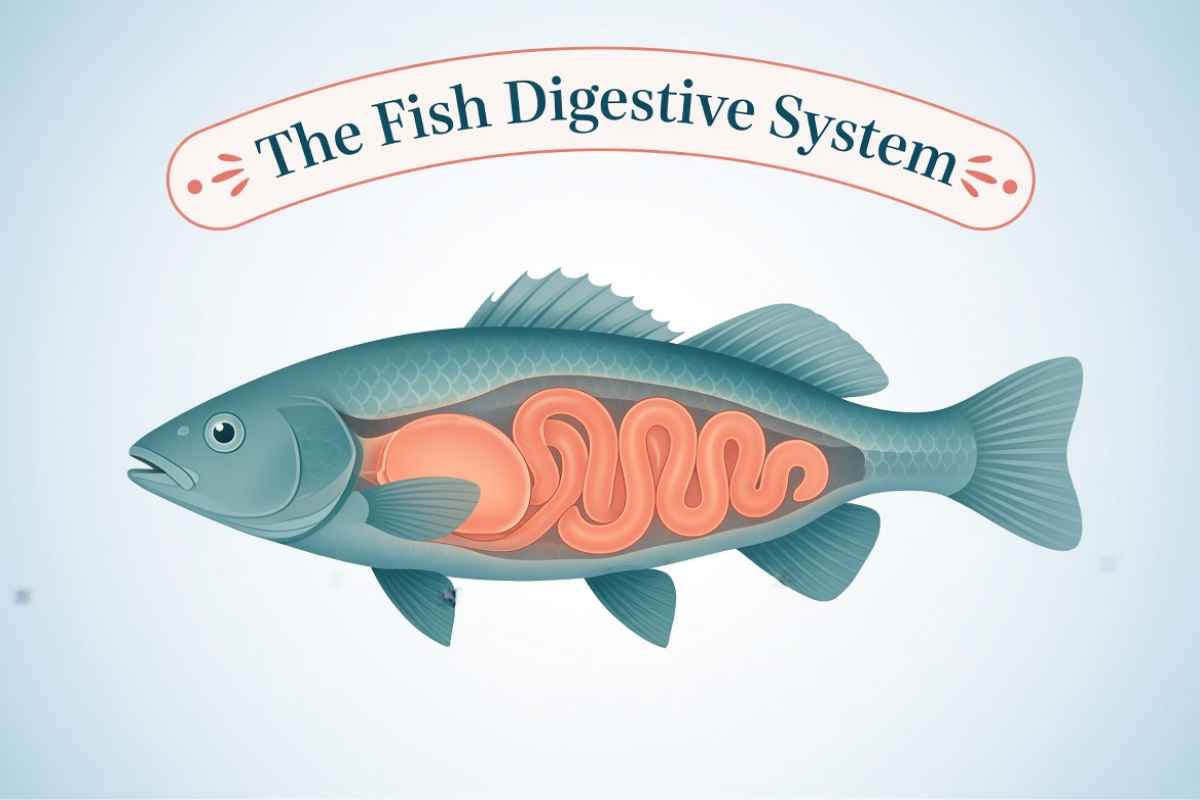
A fish’s digestive system runs from mouth to vent through a mouth, esophagus, stomach (in most species), intestine, and cloaca or anus, with the liver, gallbladder, and pyloric caeca supporting digestion along the way. The exact structure varies by diet: carnivorous fish tend to have a stomach and a short gut, while herbivores and many omnivores have a long coiled intestine and, in about a quarter of all fish species, no stomach at all.
That single fact, that not every fish even has a stomach, is one of the most overlooked parts of fish biology, and it explains a lot about why different species need different feeding schedules, why some fish seem to “graze” constantly, and why overfeeding hits some species harder than others.
Key Takeaways
- About 1 in 4 fish species has no stomach at all.
- Gut length varies by diet: short in carnivores, long in herbivores.
- Pyloric caeca boost nutrient absorption near the gut junction.
- Overfeeding raises both waste output and ammonia levels.
- Species-appropriate, portioned feeding prevents most digestive issues.
How Does Food Move Through a Fish’s Digestive Tract?
Fish don’t chew the way mammals do. Most species use their mouthparts and teeth (when present) to capture and position prey rather than to break it down, which is why the real digestive work happens further along the tract.
The general path looks like this:
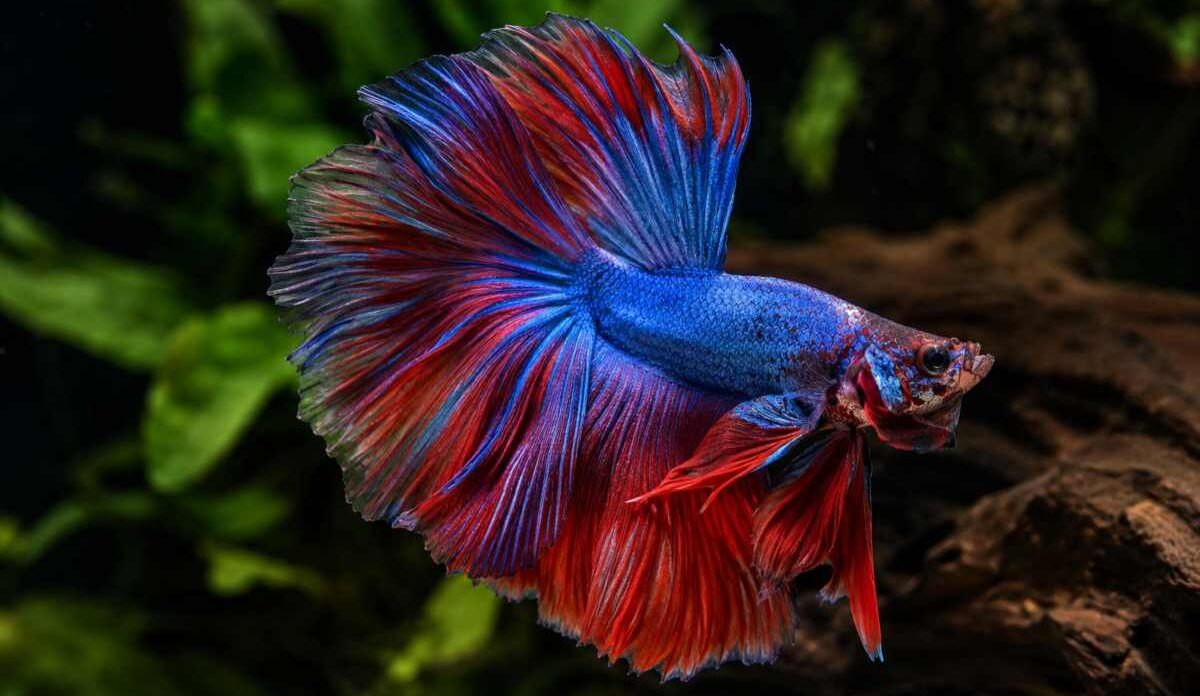
- Mouth: Shape and position vary by feeding style. An upward-facing mouth, like a betta’s, suits surface feeding, while a downward-facing mouth suits bottom feeders like corydoras catfish.
- Esophagus: A short, muscular, and highly expandable tube that allows fish to swallow prey items whole, sometimes surprisingly large relative to their own body size.
- Stomach (in most species): A muscular, acidic chamber that begins breaking down proteins using digestive enzymes. Shape ranges from a simple straight tube to a curved pouch, depending on the species.
- Pyloric caeca: Small pouch-like structures at the stomach-intestine junction that increase surface area for absorption. Not present in every species, and absent entirely in fish without stomachs.
- Intestine: Where most nutrient and water absorption happens. Length varies enormously by diet, discussed in detail below.
- Cloaca or vent: The final exit point where undigested waste leaves the body.
Throughout this process, the liver, gallbladder, and pancreas (or pancreatic tissue scattered near the liver in many species) contribute enzymes and bile that help break down fats and regulate blood sugar. The liver, in particular, plays a major role in lipid metabolism and energy storage, as in other vertebrates.
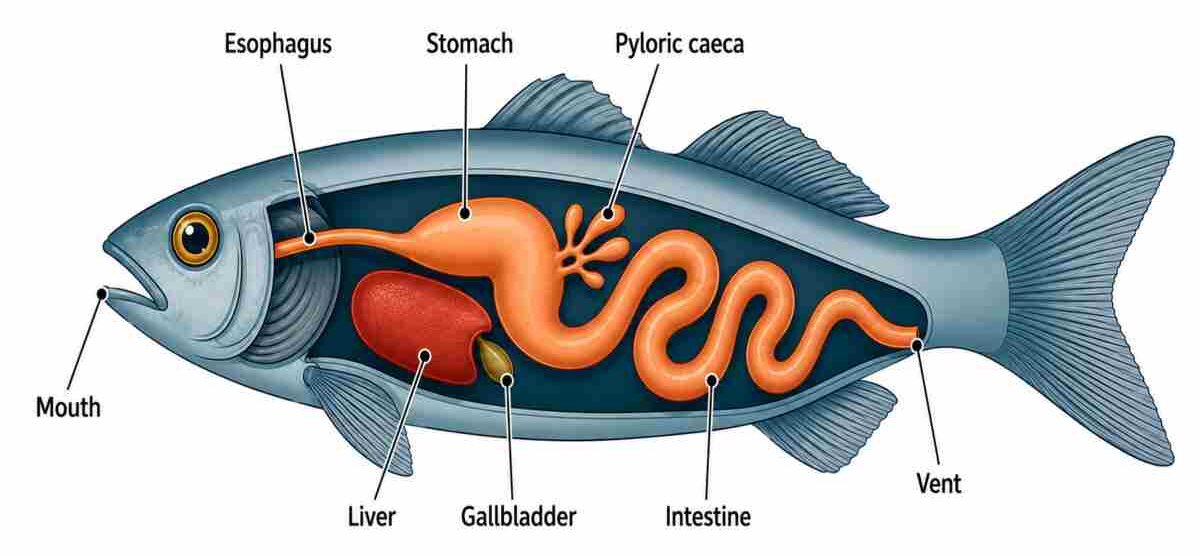 The full digestive tract of a freshwater fish, from mouth to vent.
Why Do Some Fish Not Have a Stomach?
This is one of the more surprising facts in fish biology, and it directly explains behavior that many aquarium keepers misread as constant hunger.
Roughly 25% of fish species, mostly herbivores and omnivores, have no true stomach. Instead of passing through an acidic digestive chamber, food enters the intestine directly from the esophagus, where enzymes carry out the breakdown. A few carnivorous species, like needlefish, also lack a stomach and rely entirely on intestinal enzymes to digest prey.
Fish without a stomach can’t store large meals the way fish with a stomach can, since there’s no expandable holding chamber. This is why species like many livebearers and some herbivorous fish naturally graze on small amounts throughout the day rather than eating one or two large meals, a feeding pattern worth matching in the aquarium rather than fighting against it.
A small number of species, such as gizzard shad, have evolved a muscular gizzard-like structure instead of a true stomach, mechanically grinding food much the way a bird’s gizzard does.
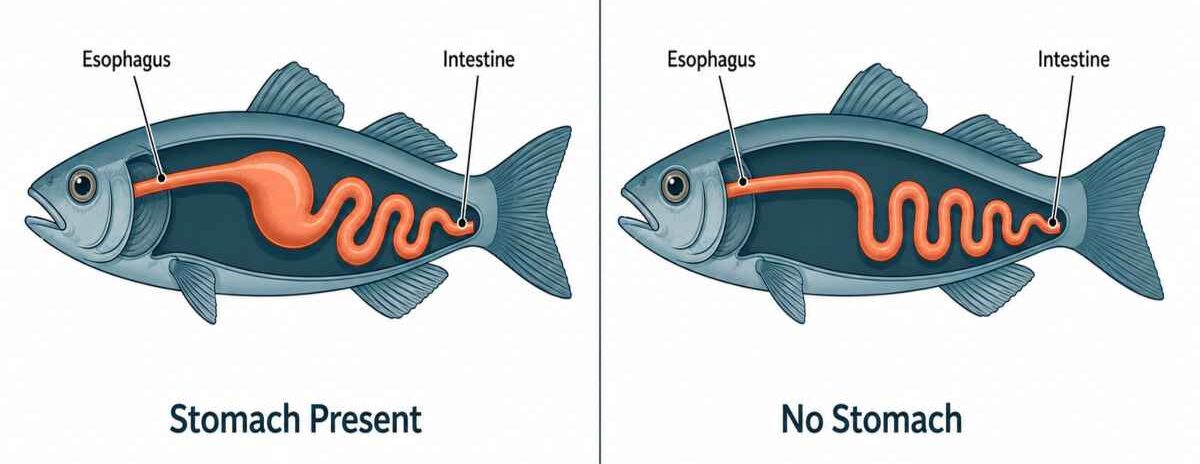
About 1 in 4 fish species digest food without ever having a stomach.
How Does Diet Type Change a Fish’s Digestive System?
Gut structure closely tracks what a species eats in the wild, and understanding this is one of the most practical things an aquarium keeper can learn, since it explains why the same feeding routine doesn’t work for every fish.
| Diet Type | Gut Length | Stomach | Digestion Speed | Example Aquarium Species |
|---|---|---|---|---|
| Carnivore | Short, often close to body length | Usually present | Fast | Betta fish, most cichlids |
| Omnivore | Moderate, several times body length | Present in most species | Moderate | Goldfish, many tetras |
| Herbivore | Long, often coiled and many times body length | Frequently absent | Slow, continuous | Plecos, silver dollars |
Carnivorous fish, like bettas, eat protein- and fat-dense prey that’s relatively easy to break down, so a short gut and a strong acidic stomach are enough. Herbivorous fish face a harder task: plant cell walls are difficult to digest, so a longer intestine gives food more time and surface area for nutrient extraction. Omnivores sit in between, often with digestive tracts flexible enough to handle both plant and animal matter reasonably well.
This is also why species-appropriate feeding matters so much. Goldfish, for example, are omnivores prone to digestive slowdowns and buoyancy problems partly because their digestive tract isn’t built to process large amounts of dry, air-filled flake food quickly, which is part of the reasoning behind soaking food or offering occasional vegetable matter for that species.
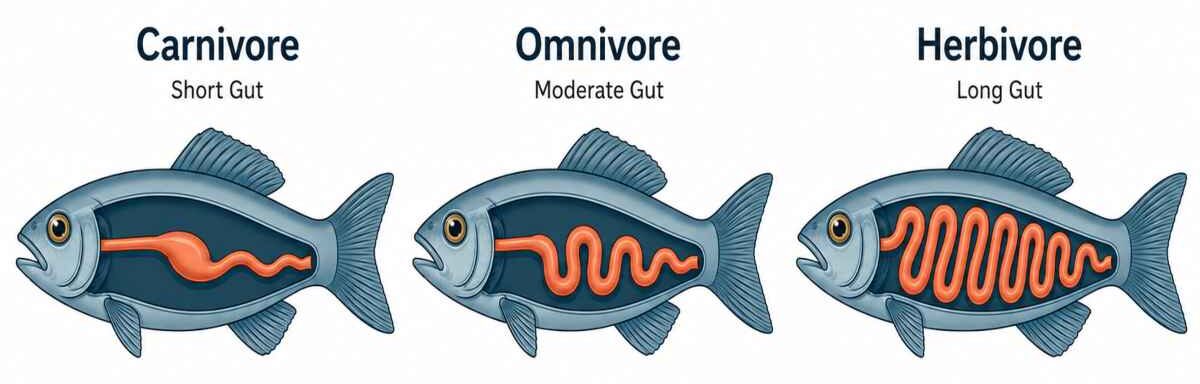 Gut length scales with diet: short in carnivores, long in herbivores.
What Organs Support Digestion Besides the Gut?
A few accessory organs do a disproportionate amount of the actual chemical work of digestion:
- Liver: Present in virtually all fish, the liver metabolizes fats and sugars, stores energy, and filters toxins from the blood, much like in other vertebrates. According to the Merck Veterinary Manual, the liver and pancreas together are essential for processing nutrients absorbed through the intestinal wall.
- Gallbladder: Stores bile produced by the liver and releases it to help emulsify fats. Most bony fish have one, though cartilaginous fish and a few other groups do not.
- Pancreas: Often diffuse rather than a single organ in fish, producing digestive enzymes and hormones that regulate blood sugar.
- Pyloric caeca: Increase absorptive surface area in species that have them, functioning somewhat like the finger-like villi lining the human intestine.
How Does the Fish Digestive System Affect Waste and Water Quality?
This is where digestion becomes directly relevant to tank maintenance rather than pure biology. Undigested and unabsorbed waste leaves the body as solid waste through the vent, while nitrogenous waste, mainly ammonia, is released primarily through the gills rather than by excretion of urine.
This matters because overfeeding doesn’t just create more solid waste in the substrate. It also increases the ammonia load released through the gills, since digesting excess protein produces more nitrogenous byproducts than a fish’s kidneys and gills can process cleanly. This is a major, often invisible contributor to ammonia spikes in aquariums that otherwise seem well maintained.
Feeding a high-quality food with easily digestible proteins reduces this burden. Fish absorb more of what they eat and produce comparatively less waste, which supports both fish health and water clarity.
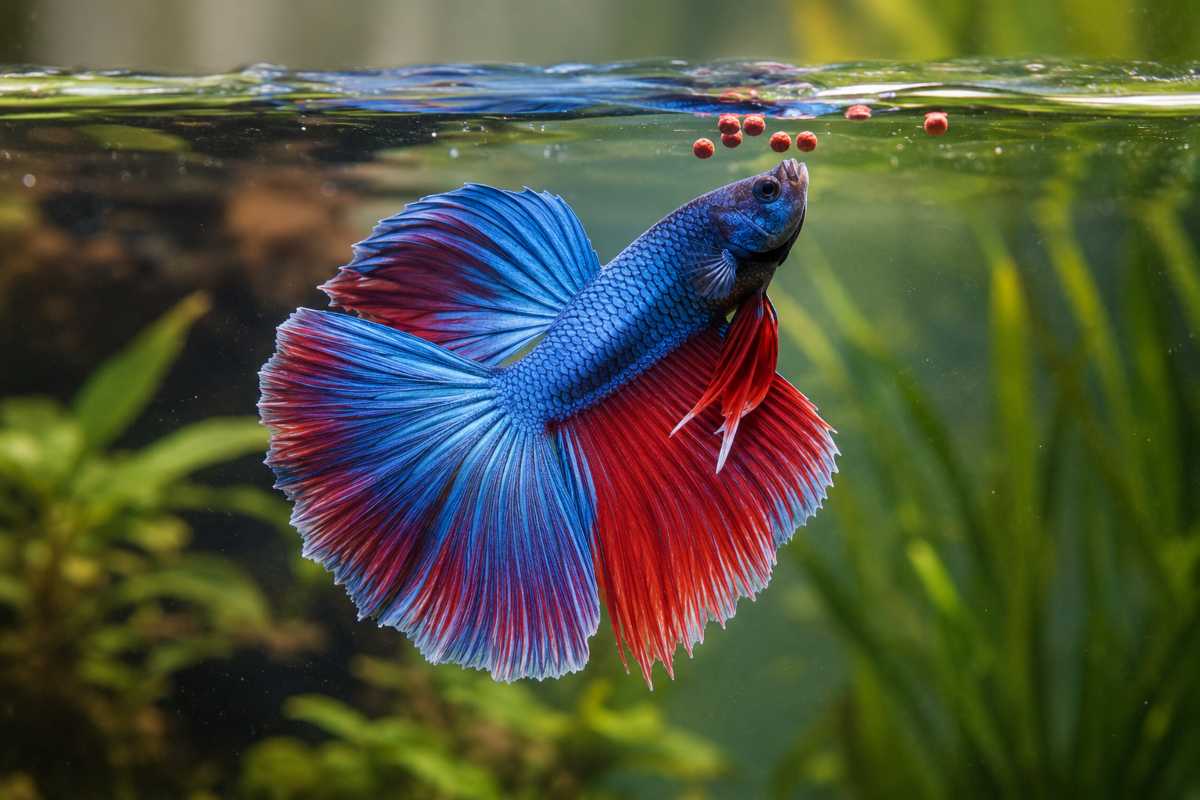
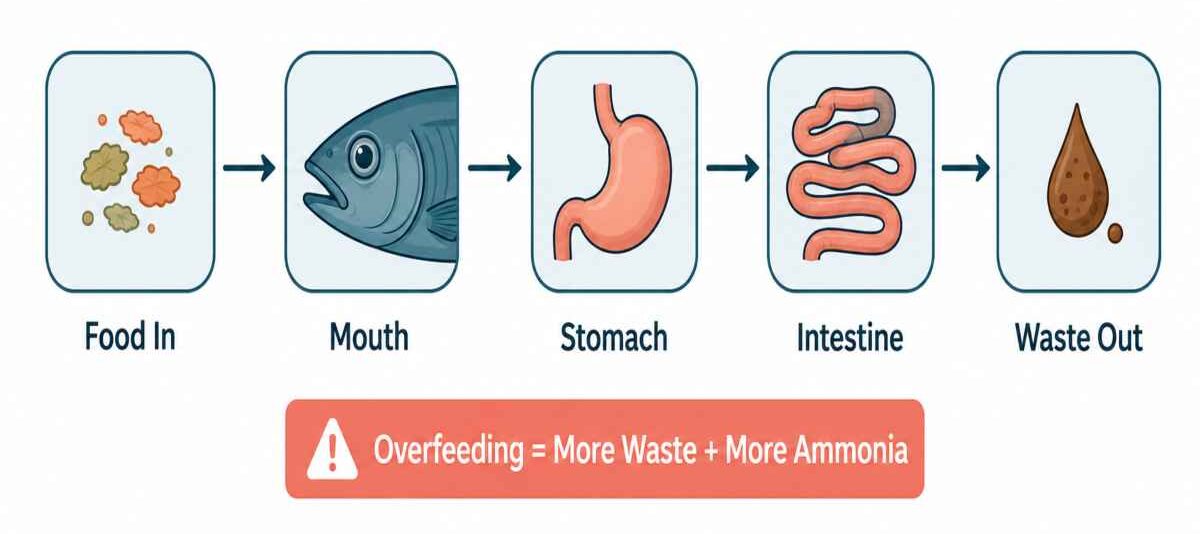 Overfeeding doesn’t just add waste, it raises ammonia levels too.
What Are Signs of Digestive Problems in Aquarium Fish?
Recognizing early digestive trouble prevents it from developing into something more serious, like swim bladder disease.
Common signs to watch for:
- Bloated or visibly swollen abdomen
- Stringy, white, or clear feces (as opposed to normal solid waste)
- Floating or sinking that the fish can’t correct
- Loss of appetite
- Lethargy or hiding more than usual
- Visible constipation, with little or no waste produced over several days
Not every sign points to the same cause. A swollen belly with flat, normal-looking scales is more often bloat, constipation, or egg-binding in females, while scales sticking outward in a pinecone pattern point toward a more serious condition, such as dropsy, which stems from organ failure rather than digestion alone.
What Causes Digestive Issues in Pet Fish?
Most digestive problems in aquarium fish trace back to a handful of avoidable causes:
- Overfeeding: The single most common cause. Excess food overwhelms the gut’s processing capacity and increases waste output.
- Poor-quality or inappropriate food: Feeding a carnivore mostly plant-based flakes, or a herbivore mostly protein-heavy pellets, mismatches their digestive system’s design.
- Dry food that expands in the gut: Some dry foods absorb water and swell after being eaten, which can contribute to bloating if fish gulp it down without pre-soaking.
- Sudden diet changes: A fish’s gut flora and enzyme activity adjust gradually, so abrupt switches in food type can temporarily disrupt digestion.
- Stress and poor water quality: Chronic stress slows digestive function in most animals, including fish, making otherwise normal feeding amounts harder to process.
How Can You Support Healthy Digestion in Aquarium Fish?
Practical steps that make a real difference:
- Feed small amounts your fish can finish within one to two minutes, rather than a single large feeding.
- Match food type to the species’ natural diet (protein-rich for carnivores, more plant matter for herbivores and omnivores)
- Soak dry pellets briefly before feeding species prone to bloating, such as goldfish.
- Offer an occasional fast day, especially for goldfish and other omnivores, to allow the digestive tract to fully clear.
- Introduce new foods gradually rather than switching all at once
- Keep water parameters stable, since chronic stress slows digestion just as it does in other animals.
At The Fish Care, we treat digestion as one of the most underrated pieces of everyday fish care, since so many common health issues, from bloating to swim bladder trouble, trace back to how well a fish’s digestive system is being supported through diet and feeding habits.
Frequently Asked Questions
Do fish have a large and small intestine like mammals?
No. Most fish have a single intestine of relatively uniform diameter rather than the separate large and small intestine structure found in mammals. However, intestinal length and coiling vary significantly with diet.
Can fish get constipated?
Yes. Constipation is common, especially in goldfish and other omnivores fed too much dry food without enough variety. Signs include a swollen belly and reduced or absent bowel movements, and it often resolves with a short fast.
Do all fish chew their food?
No. Most fish use their mouths and teeth, when present, mainly for capturing and positioning food rather than chewing it into small pieces the way mammals do. The actual breakdown occurs later in the esophagus, stomach, and intestine.
Why do goldfish poop so much?
Goldfish are omnivores with a digestive system that processes food relatively quickly but less efficiently than that of more specialized feeders. Hence, a larger share of what they eat passes through as waste. Overfeeding makes this considerably worse.
Is a fish’s digestive system similar to a human’s?
In broad terms, yes; both involve a mouth, a digestive tract, a liver, and waste elimination. But fish show far more variation among species, including the presence or absence of a stomach, a variation not found in humans.