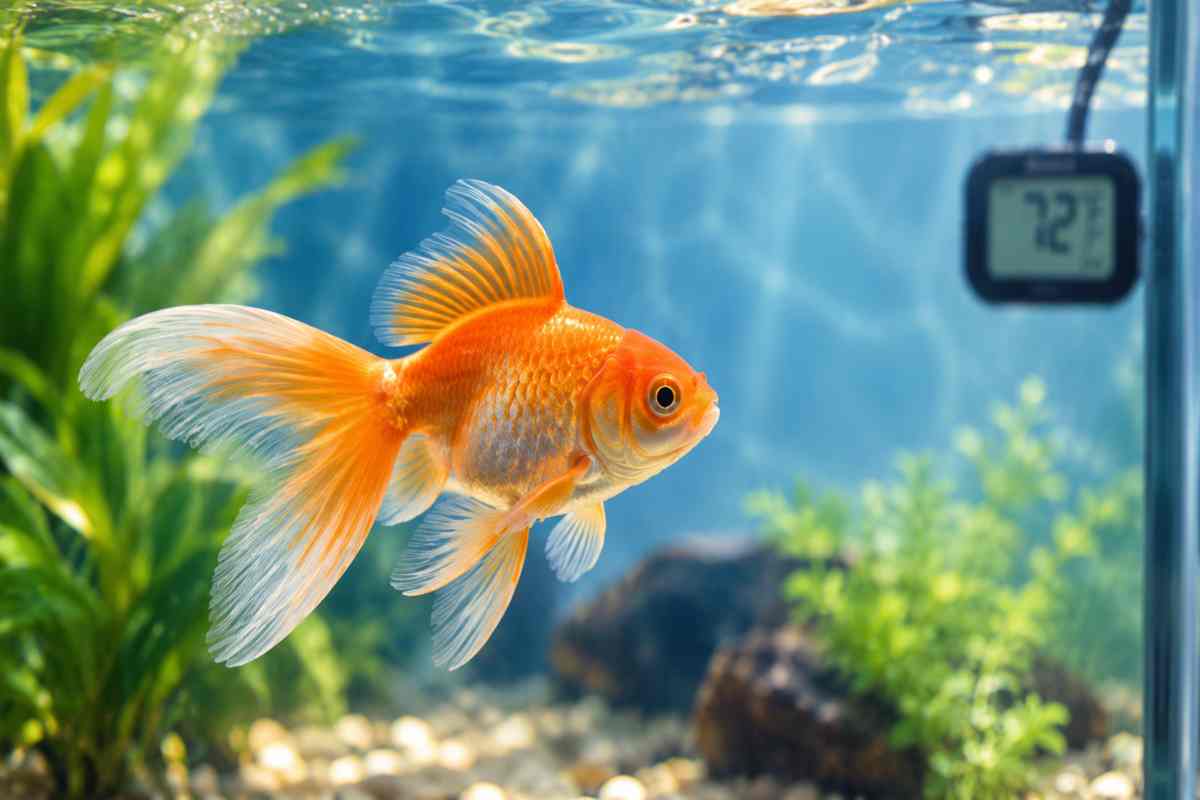
The ideal water temperature for most goldfish is between 65°F and 72°F (18°C to 22°C). Common, comet, and shubunkin goldfish tolerate a wider cold-water range, while fancy goldfish varieties like orandas and ryukins do best within a narrower, slightly warmer band because their rounder bodies and shorter digestive tracts are more sensitive to temperature swings.
Key Takeaways
- Most goldfish do well between 65°F and 72°F (18°C to 22°C), while fancy varieties can be kept closer to 68°F to 74°F (20°C to 23°C).
- Goldfish are coldwater fish, not tropical fish, so most indoor tanks do not need a heater when room temperature remains stable.
- Rapid temperature changes of more than 2 to 3°F within an hour can cause thermal stress, even when the new temperature is otherwise safe.
- Warm water holds less dissolved oxygen, so temperatures above 75°F can increase respiratory stress, especially in crowded or poorly aerated tanks.
- Outdoor pond goldfish can tolerate near-freezing water by becoming less active, but ponds need enough depth to prevent the water from freezing solid.
What Is the Ideal Water Temperature for Goldfish?
Goldfish belong to the carp family and are true coldwater fish, which sets their comfort range apart from tropical species like bettas or tetras. Within that coldwater category, though, there is meaningful variation between the hardier, single-tailed varieties and the more delicate fancy breeds.
| Goldfish Type | Examples | Ideal Range (°F) | Ideal Range (°C) | Notes |
|---|---|---|---|---|
| Common and pond varieties | Comet, Shubunkin, Common Goldfish | 60–72°F | 15–22°C | Tolerate the widest range, including cool outdoor ponds |
| Fancy goldfish | Oranda, Ryukin, Fantail, Black Moor | 68–74°F | 20–23°C | Prefer more stable, slightly warmer water due to their rounder body shape |
| Fry and juveniles | Any variety under 3 months | 68–72°F | 20–22°C | Warmer water supports growth and digestion during early development |
These ranges reflect where goldfish are comfortable and active, not simply where they can survive. A goldfish can tolerate temperatures outside this window for short periods, but comfort and long-term health depend on staying within it.
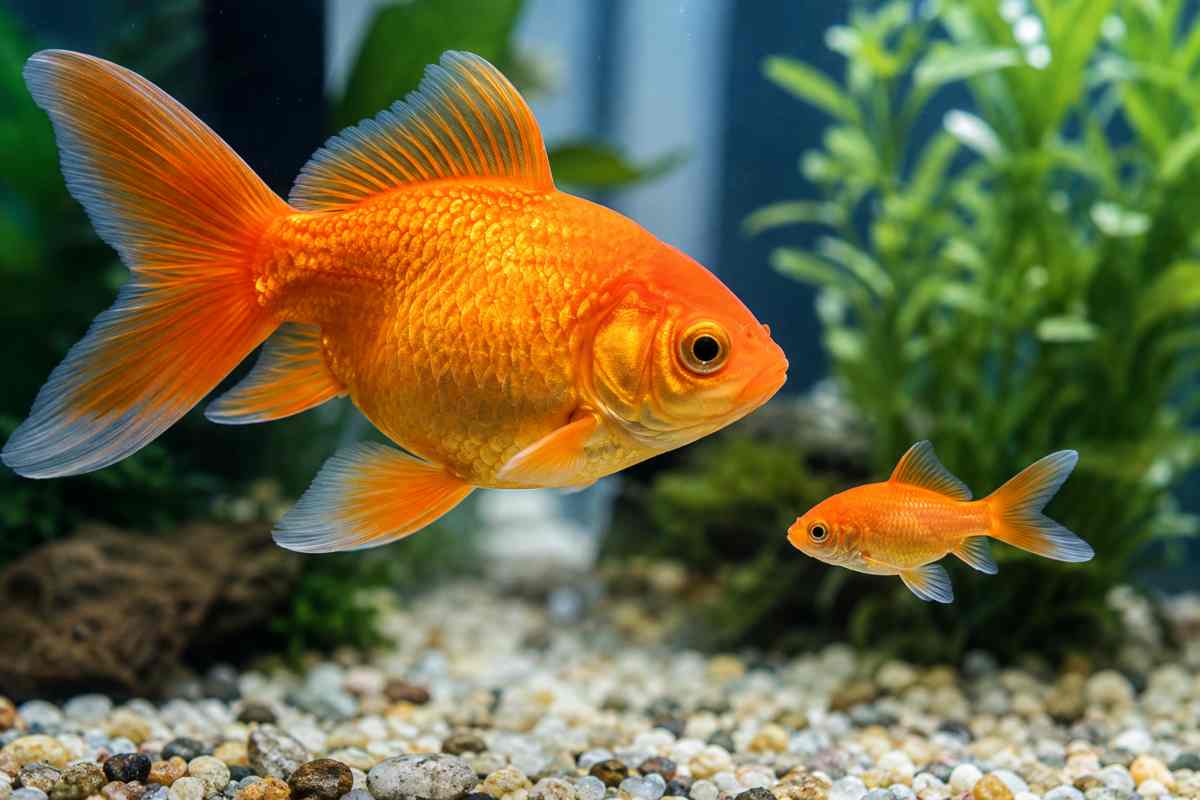
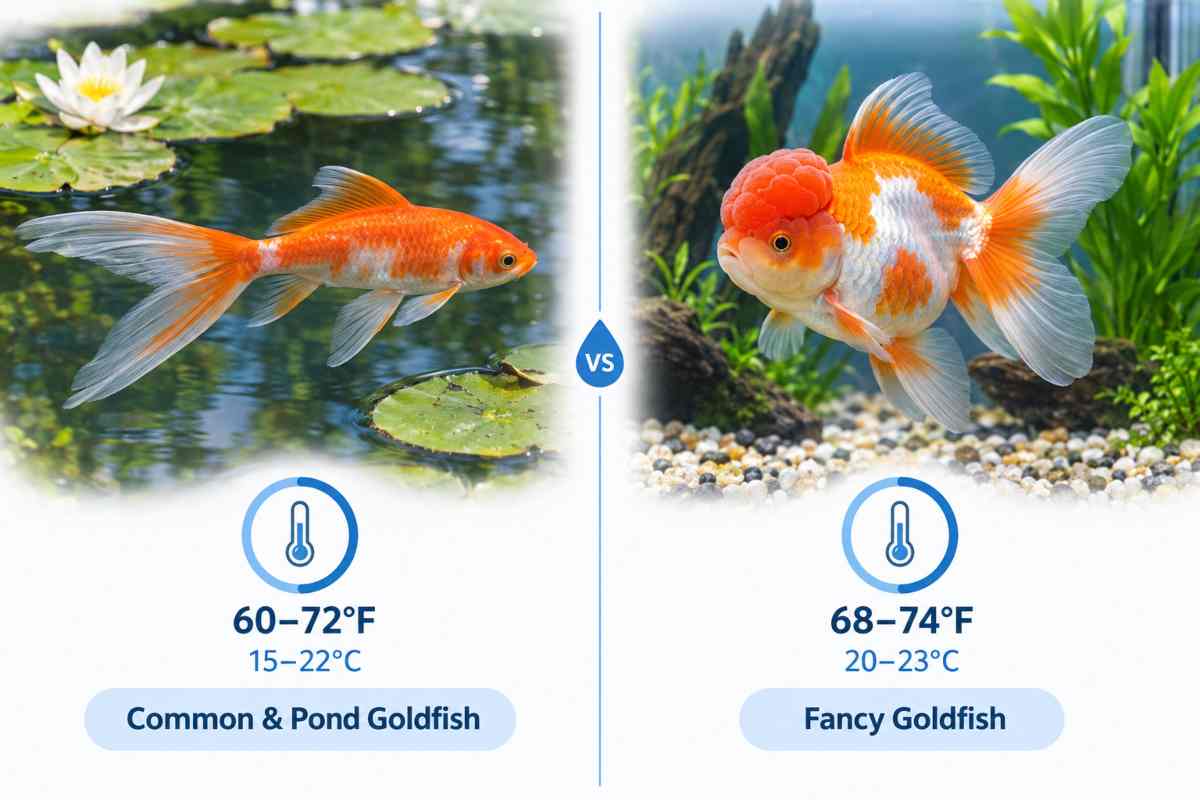 Comet goldfish thrive cooler in ponds, while fancy goldfish like orandas prefer slightly warmer, stable indoor water.
How Does Water Temperature Affect a Goldfish’s Body?
Fish are ectotherms, meaning their internal body temperature and metabolic rate follow the surrounding water temperature rather than being self-regulated. When the water warms up, a goldfish’s metabolism speeds up. It burns energy faster, digests food more quickly, and becomes more active. When the water cools down, the opposite happens: digestion slows, movement decreases, and the immune system becomes less responsive.
This metabolic link is why temperature affects almost every aspect of goldfish care, from how often you feed them to how quickly disease can take hold. A goldfish kept too cold for its variety may struggle to digest food properly, which can contribute to constipation or swim bladder issues. A goldfish kept too warm burns through oxygen and energy reserves faster than its gills and organs can comfortably keep up with.
Can Goldfish Live in Warm Water?
Goldfish can survive in water up to around 80°F (27°C) for short periods, but sustained warm water creates two compounding problems. First, warmer water holds less dissolved oxygen, so the fish has less oxygen available when its metabolism demands more. Second, warm water speeds up harmful bacteria and accelerates ammonia toxicity in an uncycled or borderline tank, since waste breaks down faster at higher temperatures.
Goldfish kept consistently above 75°F for weeks at a time tend to have a shorter lifespan and become more susceptible to disease, even if no single day looks dangerous on a thermometer. This is different from a brief summer heat wave, which most established tanks can tolerate with proper aeration.
Do Goldfish Need a Heater in Winter?
For most indoor tanks, no. Goldfish are coldwater fish, and average room temperature in a heated home, typically 65°F to 72°F, sits comfortably within their ideal range without any additional equipment. A heater is only useful if your room genuinely drops below 60°F in winter, such as in an unheated garage, basement, or sunroom.
Outdoor pond goldfish are a different story. As autumn water temperatures fall below 50°F, goldfish naturally slow down, eat less, and eventually enter a dormant, low-activity state once temperatures approach 39°F to 41°F (4°C to 5°C). This is a normal seasonal adaptation, not a sign of illness, and it is one reason pond keepers stop feeding goldfish once water temperature drops consistently below 50°F: cold water slows digestion enough that uneaten food can rot and foul the water instead of being processed.
What Happens If Goldfish Water Is Too Cold?
A goldfish in water that is too cold for its variety, generally below 50°F for fancy goldfish or below 39°F for hardier types without proper pond depth, becomes lethargic and stops feeding. Its immune system weakens, making it more vulnerable to fungal and bacterial infections. Digestion slows dramatically, so any food eaten may sit undigested and cause internal blockages.
Sustained cold outside a variety’s tolerance, rather than a brief dip, is usually the real risk. A shallow outdoor pond that freezes solid, or an indoor tank near a drafty window that regularly swings below 55°F overnight, poses far more danger than one cold night in an otherwise stable setup.
What Are the Signs Goldfish Water Is Too Hot?
Overheated goldfish typically show a recognizable pattern of stress signals rather than one single symptom:
- Gasping at the surface or hanging near the water outlet where oxygen is highest
- Rapid, labored gill movement (respiratory distress)
- Unusual lethargy despite the warmer water that would normally increase activity
- Faded color or clamped fins
- Increased susceptibility to ich and other parasitic outbreaks, since warm water speeds up parasite life cycles
If you notice these signs, check your thermometer first, then increase surface agitation and consider a partial water change with slightly cooler, dechlorinated water to lower the temperature gradually.
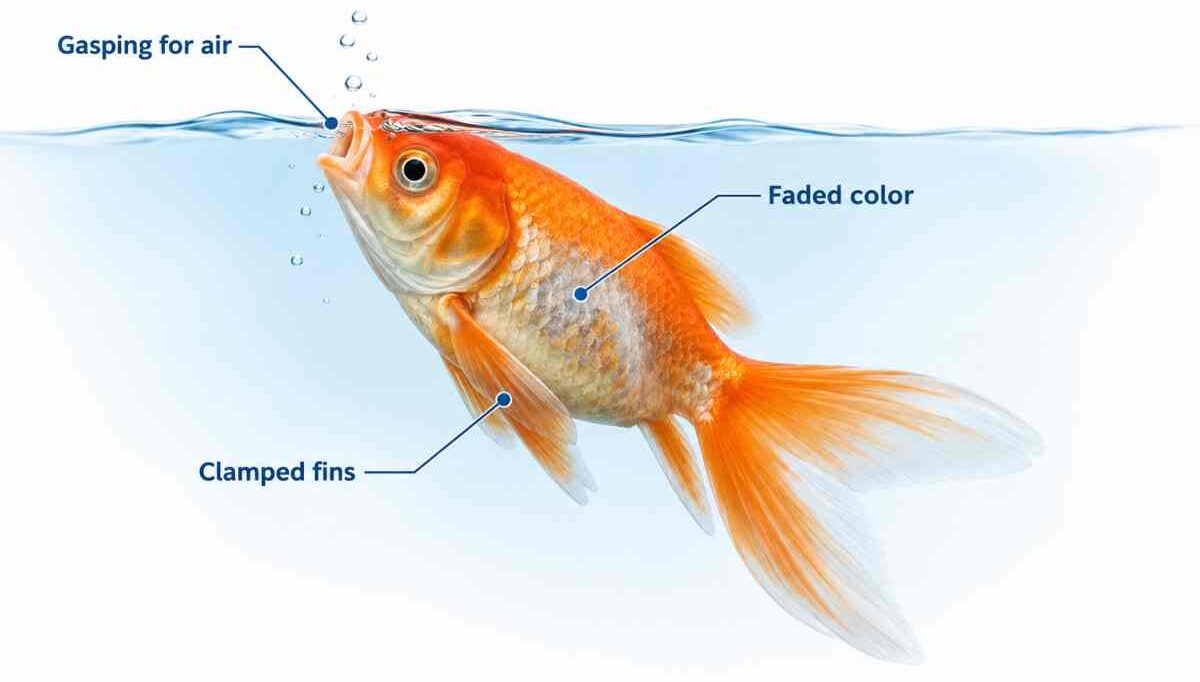 Gasping, clamped fins, and faded color are key warning signs your goldfish’s water is too warm.
How Much Temperature Fluctuation Can Goldfish Handle?
Goldfish can tolerate a seasonal temperature range spanning tens of degrees over a year, but they can’t handle rapid changes within that range. As a general rule, keep changes to no more than 2 to 3°F per hour, and ideally spread any larger adjustment over several hours or days.
Rapid swings cause thermal shock, a physiological stress response where the fish’s gills, slime coat, and internal systems cannot adjust quickly enough. Thermal shock can suppress the immune system for days afterward, even if the fish appears to recover its normal swimming behavior within minutes. This is why sudden temperature drops, such as adding several inches of cold tap water directly to a tank, are far more dangerous than the same total temperature change spread across a full water change routine.
How Do You Safely Change Goldfish Water Temperature?
- Measure first. Use a reliable digital thermometer to confirm the current tank temperature before adjusting.
- Match new water closely. When doing a water change, let replacement water sit until it is within 2 to 3°F of the tank before adding it.
- Adjust gradually. If moving a goldfish between tanks or bags, float the sealed bag in the new tank for 15 to 20 minutes so temperatures equalize slowly.
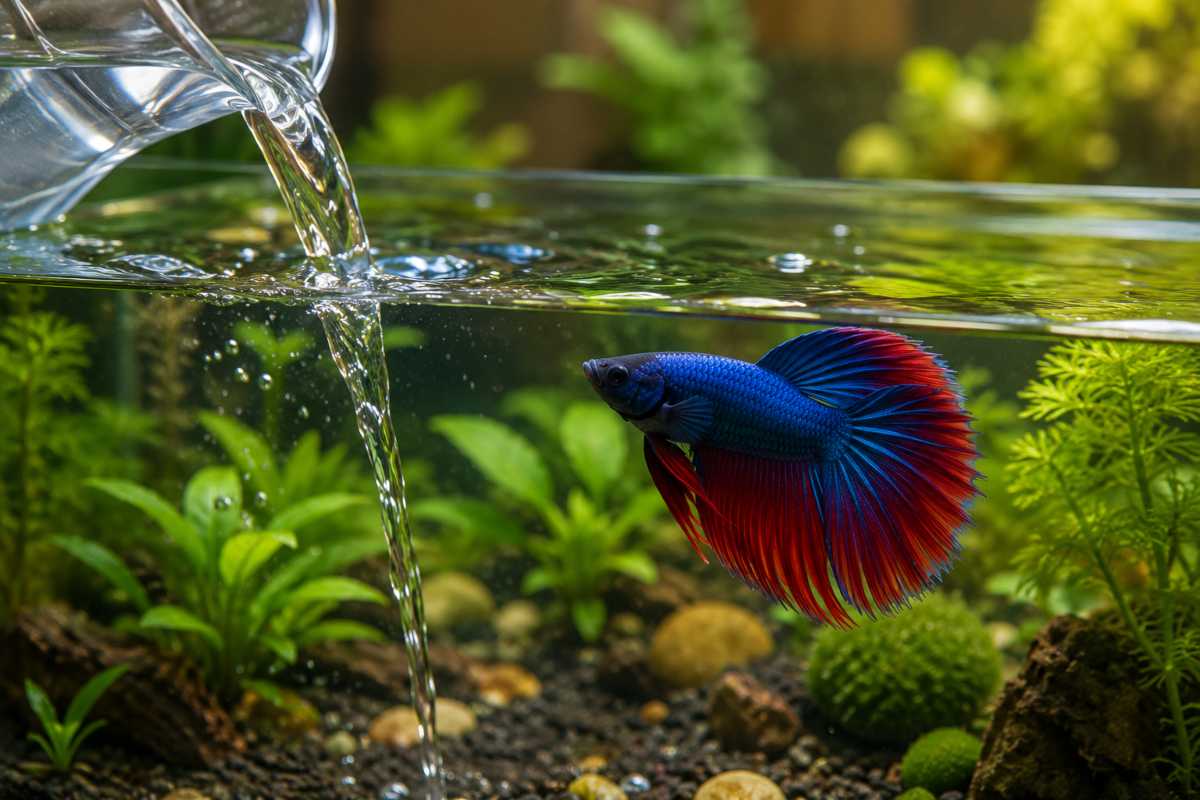
- Cool a tank gradually. Increase surface agitation, add a small clip-on cooling fan aimed across the water surface, or perform a partial water change with cooler water in stages rather than all at once.
- Warm a tank gradually. Use a properly rated aquarium heater with a built-in thermostat rather than raising room temperature abruptly, and check the tank an hour later to confirm the change was gentle.
- Recheck after 30 to 60 minutes. Confirm the tank has stabilized within the target range before considering the adjustment complete.
What Equipment Helps Maintain Stable Goldfish Water Temperature?
A few simple tools make stable temperature far easier to maintain than reacting to problems after they appear:
- Digital aquarium thermometer: Gives an accurate, at-a-glance reading and is worth checking daily, especially near seasonal transitions.
- Adjustable aquarium heater: Useful for cooler rooms or fancy goldfish tanks that benefit from a stable 70°F baseline; choose one sized appropriately for the tank volume.
- Cooling fans: Small fans aimed across the water surface increase evaporation and can lower temperature by a few degrees during heat waves.
- Surface agitation and filter flow: Beyond helping with gas exchange generally, good surface movement helps prevent localized warm pockets and supports dissolved oxygen levels when temperatures rise.
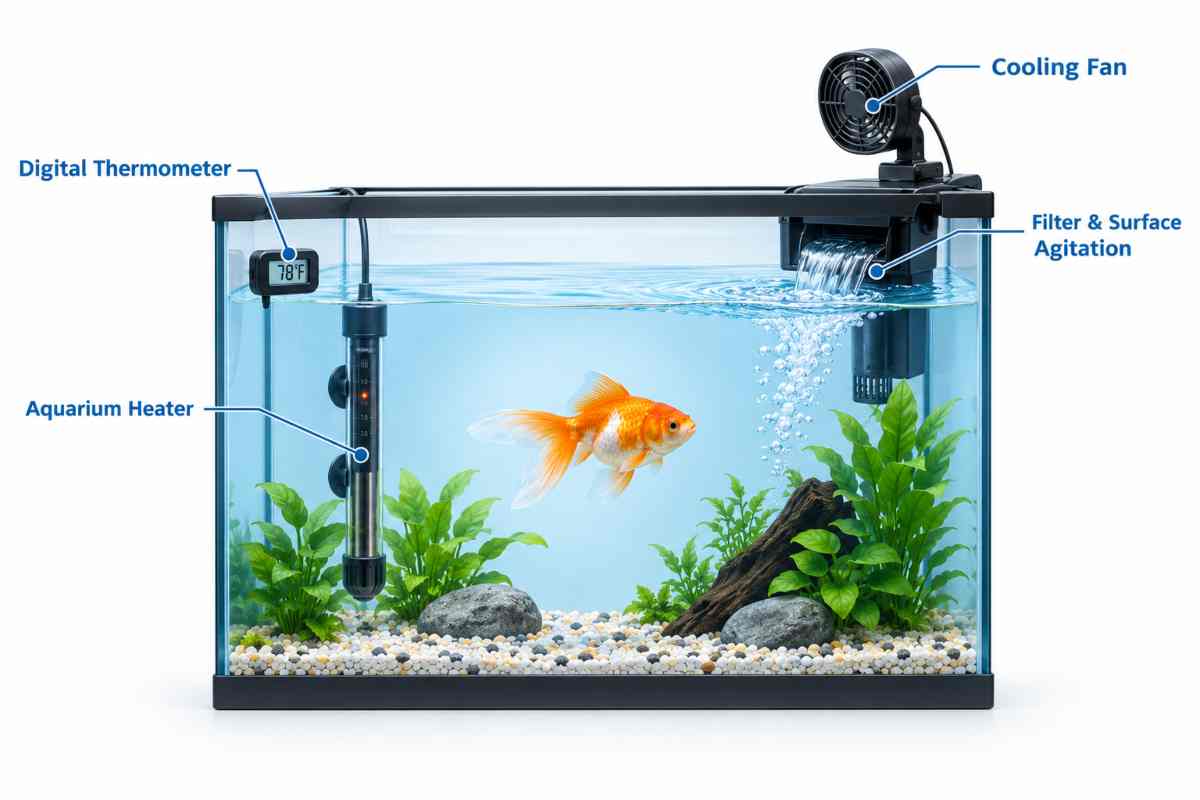 A thermometer, heater, filter, and cooling fan work together to keep goldfish tank temperature stable.
What Temperature Do Goldfish Need in Outdoor Ponds?
Outdoor pond goldfish experience natural seasonal temperature swings that indoor fish never see, and this is generally healthy for hardy varieties like comets and shubunkins. In spring and summer, pond temperatures commonly range from 60°F to 75°F depending on climate and sun exposure. In winter, surface water may approach freezing, while a stable, slightly warmer zone remains at the bottom.
For pond goldfish to survive winter safely, the pond needs a section at least 18 to 24 inches deep that will not freeze solid, allowing the fish to remain dormant and in a low-metabolism state near the bottom until spring. A pond deicer or aerator can help maintain a small opening in the ice for gas exchange without warming the whole pond.
Understanding water temperature is one part of a wider picture of goldfish care, and pairing it with the right tank size, filtration, and feeding routine at The Fish Care gives goldfish the stable environment they need to thrive for years, not months.
Frequently Asked Questions (FAQs)
What is the best water temperature for goldfish?
For most goldfish, 65°F to 72°F (18°C to 22°C) is ideal, with fancy varieties doing slightly better toward the warmer end of that range.
Can goldfish live in warm water?
Goldfish can tolerate warm water up to around 80°F briefly, but sustained warmth above 75°F lowers dissolved oxygen and raises disease risk, so it is not a good long-term environment.
Do goldfish need a heater in winter?
Most indoor goldfish tanks don’t need a heater if the room stays between 65°F and 72°F. A heater is only necessary if the room regularly drops below about 60°F.
Can goldfish survive sudden temperature drops?
A small, gradual drop is generally tolerated, but a sudden drop of more than a few degrees within an hour can cause thermal shock and should be avoided through gradual water changes and stable room conditions.
How much temperature fluctuation can goldfish handle?
Goldfish handle seasonal changes over weeks and months well, but rapid changes of more than 2 to 3°F per hour can still cause thermal shock, even within an otherwise safe range.
How do I lower my aquarium water temperature safely?
Increase surface agitation, add a small cooling fan across the water surface, and perform partial water changes with slightly cooler dechlorinated water in stages rather than all at once.
References
- Merck Veterinary Manual, Overview of Ornamental Fish — https://www.merckvetmanual.com
- FishBase, Carassius auratus (Goldfish) — https://www.fishbase.se