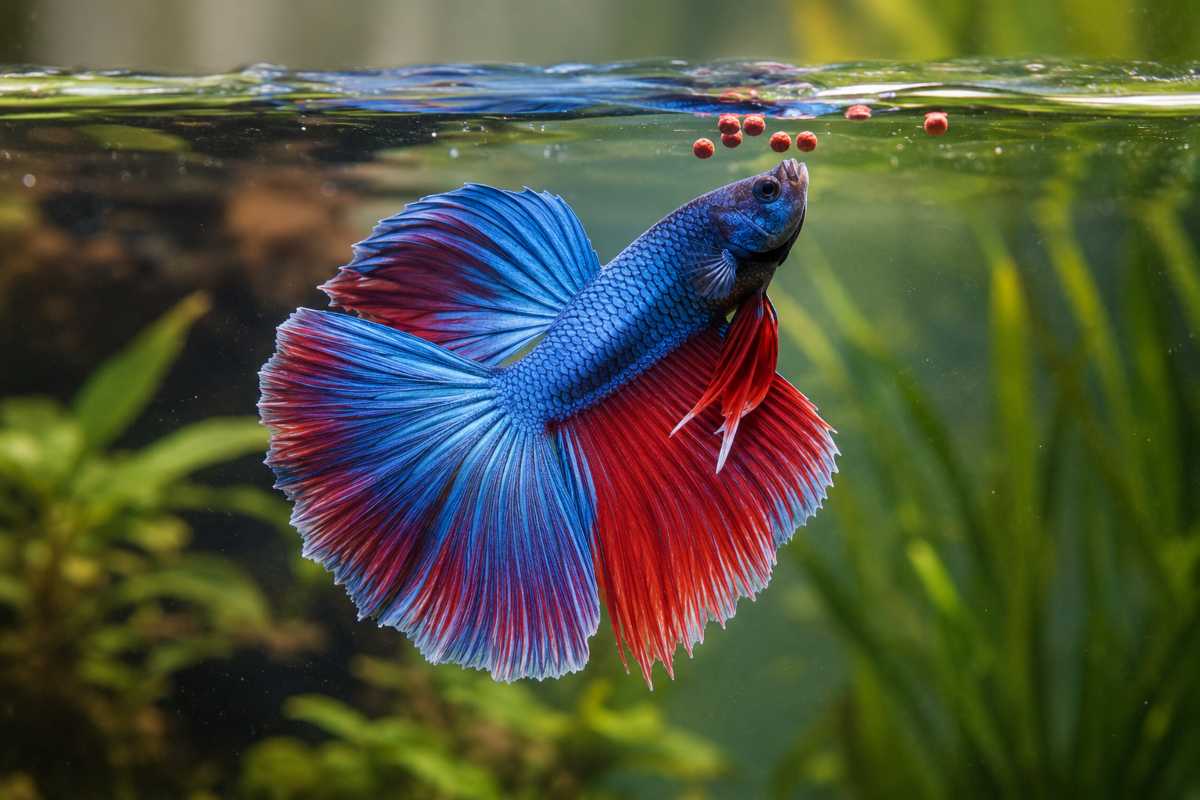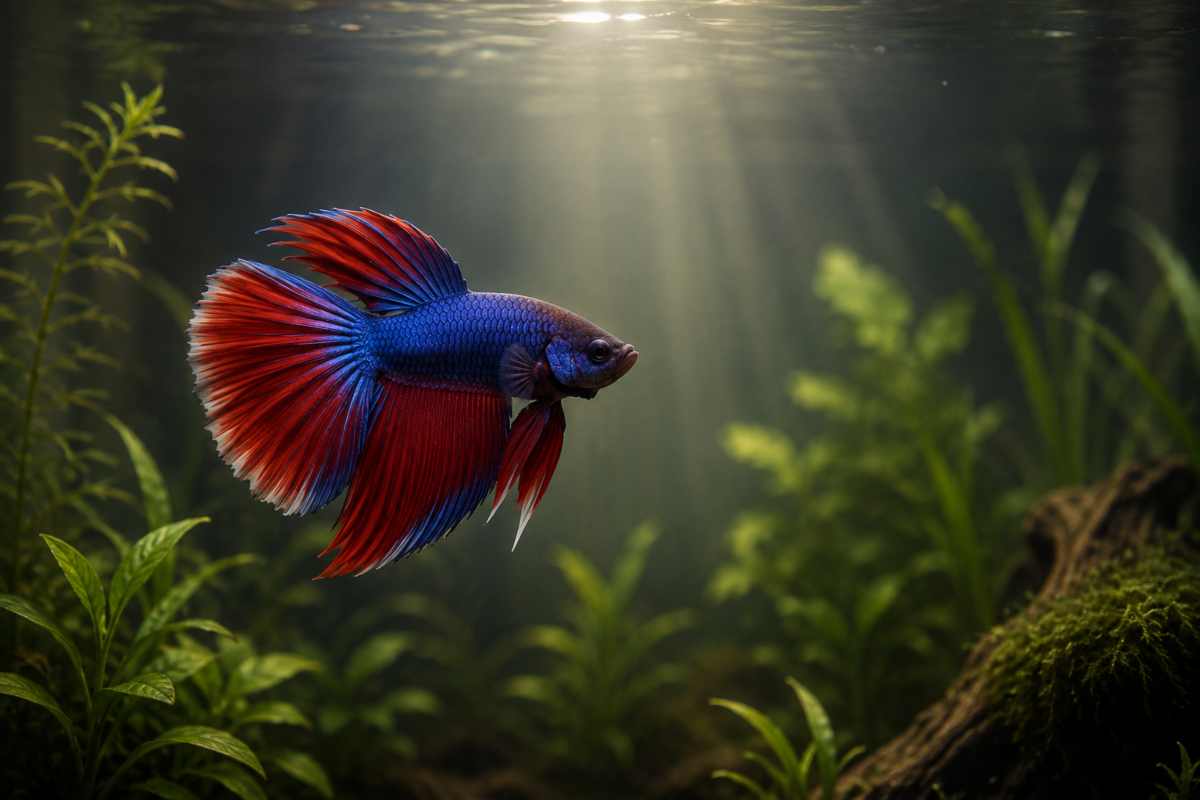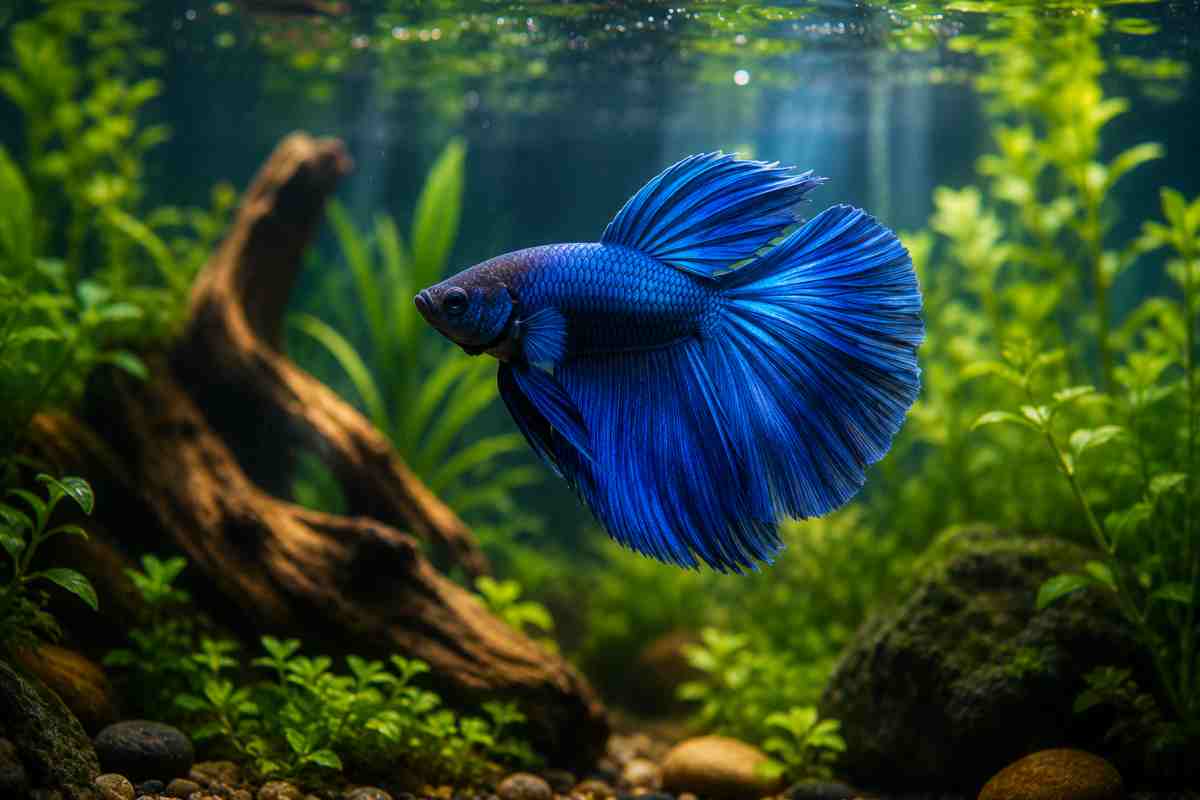
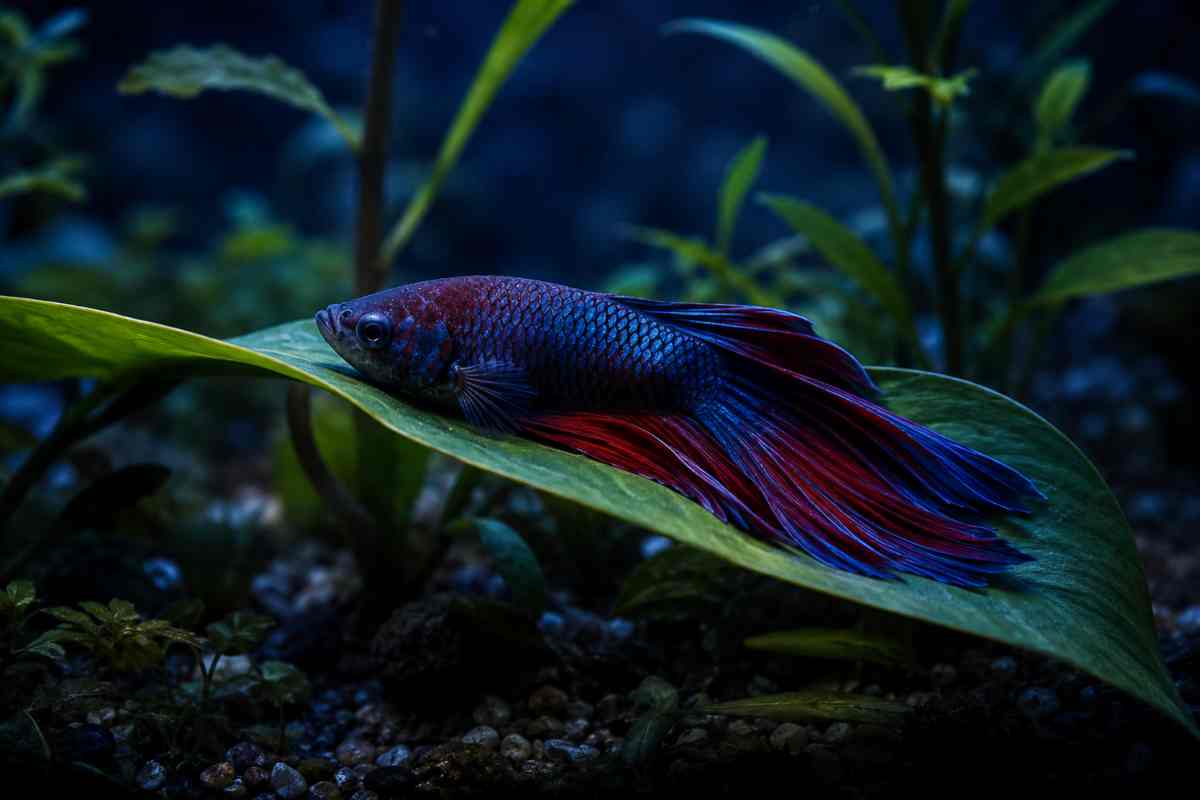
Yes, betta fish sleep. They rest for several hours a day, usually at night when the tank goes dark, by slowing their movement, sinking or resting near the bottom, or lying against a leaf, log, or piece of decor. Because bettas have no eyelids, their eyes stay open even during this rest state, which is the main reason so many owners mistake a sleeping betta for a sick or dying one.
Quick Answer Box
| Question | Answer |
|---|---|
| Do bettas sleep? | Yes, they enter a low-activity rest state. |
| When do they sleep? | Mostly at night, in darkness. |
| Do they close their eyes? | No, bettas have no eyelids. |
| How long do they sleep? | Roughly 8–12 hours in low light, often broken into shorter rest bouts. |
| Where do they sleep? | Tank bottom, near plants, on leaves, inside decor, and sometimes near the surface. |
| Is a motionless betta always sleeping? | No, stillness combined with color loss, clamped fins, or labored breathing can signal illness. |
Why Betta Sleep Confuses So Many Owners
Betta fish do not sleep the way cats, dogs, or humans do. There is no deep unconsciousness, no closed eyes, and no single obvious “sleeping pose.” Instead, betta rest is a period of reduced brain activity and reduced movement that lines up with darkness. Scientists studying fish behavior generally describe this as a rest state rather than sleep in the mammalian sense, since fish lack eyelids and the same sleep-stage brainwave patterns seen in humans, though the underlying purpose (recovery, energy conservation, and processing) appears similar across many vertebrates, including fish.
This matters practically. A new owner who sees their betta lying motionless on the tank floor at 11 p.m. often assumes the worst. Understanding what normal betta rest looks like removes that anxiety and helps you spot the rare cases when something is genuinely wrong.
How Betta Fish Sleep (The Biology Behind It)
No Eyelids Means Open-Eyed Rest
Fish, including bettas, do not have eyelids. There is nothing to close over the eye, so a resting betta looks the same, open-eyed, whether it is fully alert or deeply resting. This single anatomical fact explains most of the confusion around betta sleep. If you are looking for closed eyes as proof of sleep, you will never find it in a betta.
Reduced Activity Instead of Unconsciousness
During rest, a betta’s metabolism, swimming activity, and fin movement slow down noticeably. Breathing (gill movement) continues at a steady, calm pace. The fish may drift gently, settle against an object for stability, or remain still on the substrate. This is different from being knocked out. A resting betta can still react, though more slowly than usual, to a sudden light change, vibration, or disturbance.
Color Can Look Duller During Rest
Many bettas show slightly muted or paler coloration while resting compared to their full daytime vibrancy. This is a normal part of the rest cycle in many fish species and is not, by itself, a sign of stress or disease. Color that stays permanently faded during active daytime hours is a different matter and worth investigating separately.
Related: Betta Fish Anatomy
When Do Betta Fish Sleep?
Betta fish are diurnal, meaning they are naturally active during daylight hours and rest during darkness. In the wild, across the shallow rice paddies, ponds, and slow-moving waters of Southeast Asia, this pattern follows the natural day-night cycle. In a home aquarium, your betta will follow whatever light cycle your tank provides, whether that comes from room light, a dedicated aquarium light, or a sunny window.
A consistent light and dark cycle, ideally around 8 to 12 hours of light followed by a similar stretch of darkness, helps keep this rhythm stable. Bettas kept under lights that are always on, or under wildly inconsistent lighting, often show disrupted rest patterns, increased stress, and sometimes reduced appetite or color quality over time.
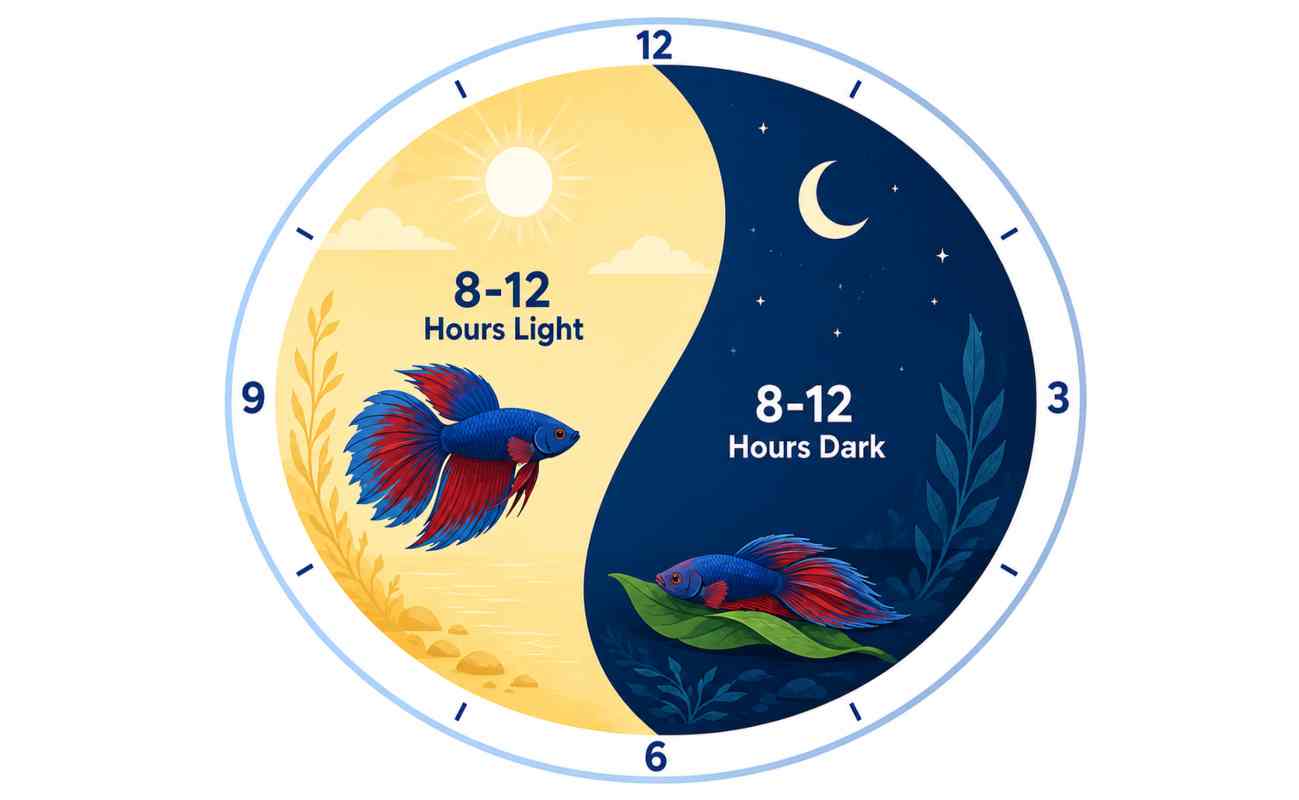 Bettas follow an 8-12 hour light and dark cycle, staying active by day and resting at night.
Where and How Bettas Rest
Betta fish do not use a nest or fixed sleeping spot the way many land animals do, but they do show consistent preferences.
Common resting positions include:
- Lying on a broad leaf near the surface or mid-water
- Resting on the substrate, often tucked near decor or plants
- Wedging into a cave, log, or plant cluster
- Floating almost motionless near the surface, fins relaxed
- Leaning against the tank wall or a decoration for support
| Resting Position | What It Looks Like | Normal or Concerning |
|---|---|---|
| On a leaf | Belly or side resting flat on a plant leaf, fins relaxed | Normal |
| On the substrate | Lying on the tank floor, gill movement steady, reacts if disturbed | Normal |
| Tucked in decor | Partially hidden in a cave or plant cluster | Normal |
| Motionless at the surface, gasping | Rapid or labored breathing, gulping air repeatedly | Concerning, may indicate low oxygen or illness |
| On its side, unresponsive to disturbance | No reaction to tapping the glass or feeding | Concerning, seek closer inspection |
| Clamped fins with pale or blotchy color that persists in daylight | Color does not return once lights are on and fish is active | Concerning, possible illness or stress |
A resting betta will typically respond, even slowly, to food being added or a light being turned on. A betta in distress often will not respond normally or will respond in an abnormal way, such as darting erratically or staying frozen with clamped fins.
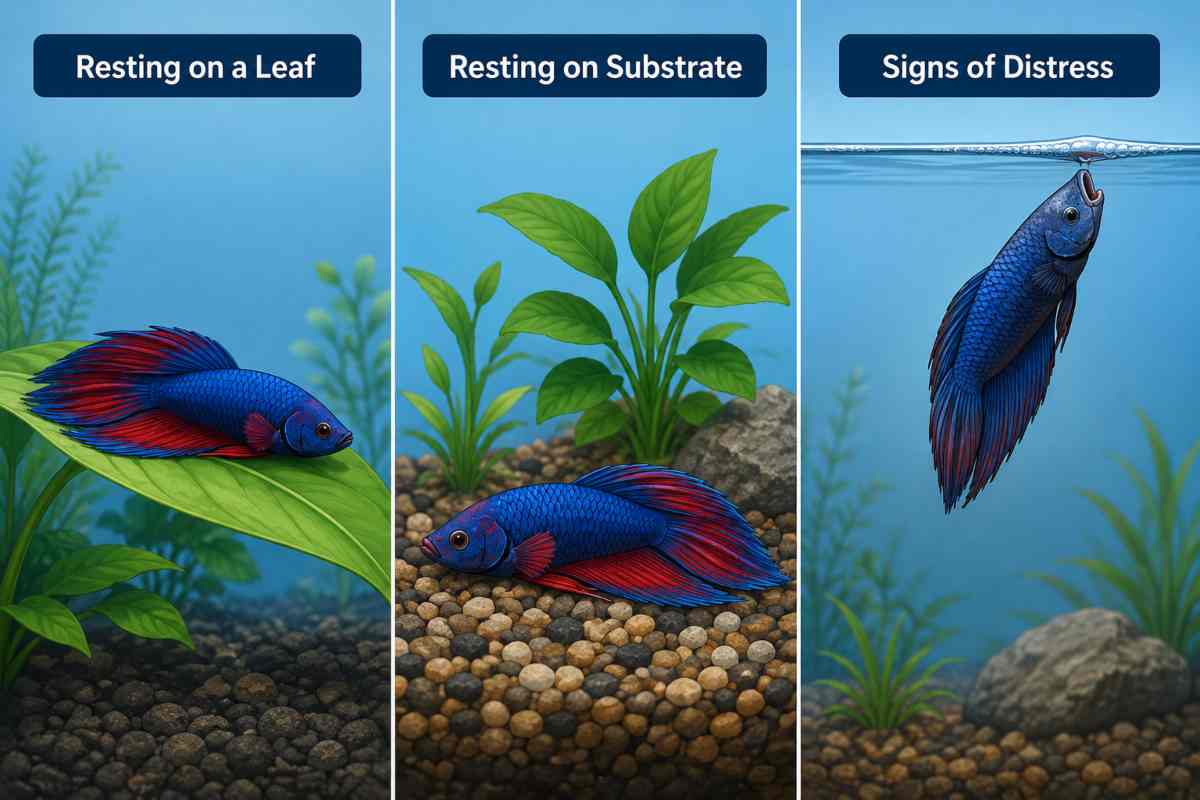 Normal betta resting positions compared to signs of distress like gasping at the surface.
How Long Do Betta Fish Sleep?
There is no single confirmed number of hours for betta sleep duration, since fish rest is harder to measure precisely than mammalian sleep. Based on general activity pattern observations in aquarium keeping and comparable research on fish rest behavior, most bettas rest for roughly 8 to 12 hours across 24 hours, closely tied to the dark portion of their light cycle. This rest is not necessarily one continuous block. Bettas often take shorter rest bouts throughout the night rather than sleeping straight through, and may briefly become active if disturbed by light, sound, or tank vibration.
Do Betta Fish Need Complete Darkness to Sleep?
Bettas rest best with a clear contrast between light and dark. A tank that never gets truly dark, because of room lighting, a nearby television, or a light left on overnight, can interfere with normal rest patterns. Over time, this kind of constant low-level light exposure can contribute to stress, which in turn can affect appetite, coloration, and immune resilience.
Practical tips for a healthy light-dark cycle:
- Use a timer for the aquarium light so the schedule stays consistent
- Aim for 8 to 12 hours of light and a similar stretch of darkness
- Avoid placing the tank where household lights or a television screen shine on it overnight
- Avoid sudden bright light directly after a dark period; a gradual transition is less startling
 Plug in a timer, set consistent light hours, and keep the tank away from ambient light.
Sleeping vs. Sick vs. Dead: How to Tell the Difference
This is the single biggest concern behind this topic, and it deserves a direct, practical answer.
Checklist: Signs your betta is simply resting
- Gills move steadily and rhythmically
- Fish reacts, even slowly, to tapping the glass, feeding, or turning on the light
- Body stays upright or gently leaning, not fully collapsed
- Color returns to normal once the fish becomes active
- Occurs mainly during darkness or dim light
Checklist: Signs of illness or distress (not normal rest)
- No gill movement, or gill movement is extremely rapid and labored
- No response at all to food, light, or tapping the glass
- Fish floats upside down, sideways at odd angles, or sinks and cannot right itself
- Fins remain tightly clamped even during active daytime hours
- Color stays pale, blotchy, or dull throughout the day
- Visible spots, fuzz, ulcers, or a bloated body
If you see signs from the second list, it is worth reviewing water parameters and watching closely for other symptoms of illness, since early intervention makes a real difference in recovery.
Checklist: Signs a betta has died
- No gill movement at all, sustained over several minutes
- No reaction to any stimulus, including gentle water movement near the fish
- A strong odor developing, or visible decay
- Fish remains in the same position for many hours with zero change, even after lights on and feeding
If you are ever unsure, wait and observe for 10 to 15 minutes under normal daytime lighting before concluding anything. Many “is my betta dead” moments turn out to be completely normal rest interrupted by an anxious 2 a.m. flashlight check.
Related: How to Fix Swim Bladder Disease in Betta
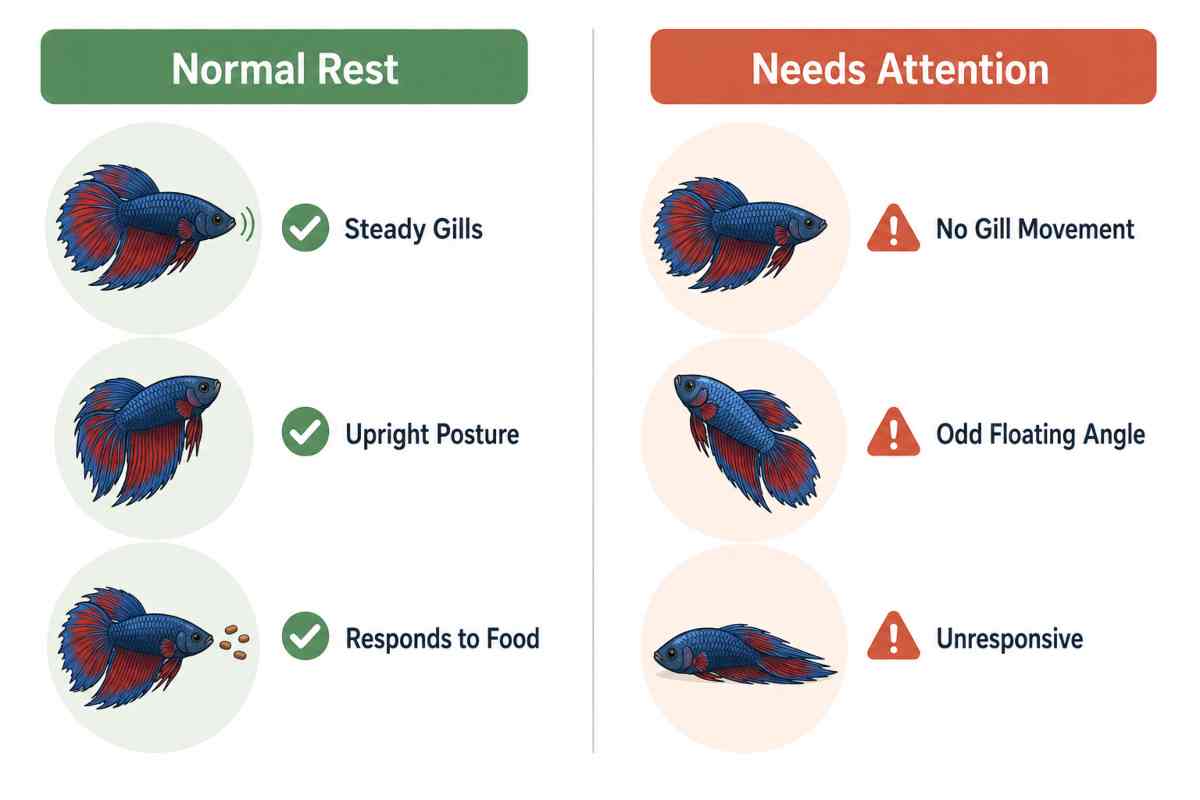 Steady gills and posture signal normal rest; no movement or unresponsiveness need attention.
What Can Disrupt a Betta’s Sleep
Several common tank conditions interfere with normal rest, even when water quality is otherwise fine.
| Disruption | Why It Affects Rest | Simple Fix |
|---|---|---|
| Light left on 24/7 | No clear dark period to trigger rest | Add a timer and aim for 8–12 hours of darkness |
| Strong filter current | Forces constant swimming and provides no calm resting spot | Add a gentle resting area with plants or reduce flow near one zone |
| Aggressive or overly active tank mates | The betta stays alert instead of resting | Review tank mate compatibility |
| Tank in a high-traffic, noisy area | Frequent startling can reduce rest quality | Relocate the tank to a calmer spot |
| Sudden light changes | Flash photography or phone flashlights at night can startle the fish out of rest | Avoid shining direct light into the tank at night |
Common Misconceptions About Betta Sleep
My betta never sleeps because it’s always swimming when I check on it. Most owners check on their fish during the day, when bettas are naturally active. That is not evidence of sleeplessness; it simply means you have not observed the dark hours.
A betta lying still must be sick or dying. Stillness alone is not a red flag. Combined with normal gill movement and a response to stimulus, it is almost always just rest.
Bettas sleep the same way every night in the same spot. Bettas can vary their resting spot from night to night depending on tank conditions, mood, and available hiding areas. There is no single fixed sleeping location.
Bright aquarium lights all night help bettas feel safe. The opposite is usually true. Constant light removes the dark period bettas need for normal rest and can increase stress over time.
Creating a Better Rest Environment for Your Betta
- Provide at least one broad-leafed plant (live or silk) near the lower-to-mid tank level as a resting surface
- Keep a consistent light schedule using a timer
- Avoid placing the tank in direct line with household lights, screens, or heavy foot traffic at night
- Provide a calmer, lower-flow area of the tank if your filter produces strong current
- Keep the dark period genuinely dark, rather than dimly lit all night
A well-designed resting environment is part of the same fundamental setup approach The Fish Care recommends for overall betta wellbeing, stable water conditions, appropriate tank size, and a low-stress layout.
Key Takeaways
Betta fish do sleep, but in a way that looks very different from mammal sleep. There are no closed eyes, no single sleeping position, and no dramatic transition into rest. Instead, look for reduced activity, steady breathing, and a normal response to stimulus as the real signs of healthy rest. Understanding this pattern removes a huge amount of unnecessary worry and helps you catch the rare situations, like labored breathing or total unresponsiveness, that actually do need attention. The Fish Care will continue expanding this behavior series so owners have a clear, science-based reference for every stage of betta care.
Frequently Asked Questions
Do betta fish sleep with their eyes open?
Yes. Bettas have no eyelids, so their eyes remain open whether they are active or resting. Open eyes during stillness are not, by themselves, a cause for concern.
Can I turn the aquarium light off at night to help my betta sleep?
Yes, and it is recommended. A consistent dark period at night supports a healthy rest cycle, as long as the tank still gets adequate light during the day.
Why does my betta rest on the bottom of the tank?
Resting near the substrate is a completely normal position for many bettas, especially at night. As long as gill movement is steady and the fish responds to stimulus, this is not a warning sign on its own.
Is it normal for a betta’s color to look duller while resting?
Yes, mild color dulling during rest is common in many bettas and typically returns to normal once the fish becomes active again. Persistent dullness during active daytime hours is worth investigating further.
Should I avoid feeding my betta right before the lights go off?
It is generally better to feed during active daytime hours so digestion and normal activity align with the fish’s natural rhythm, rather than feeding immediately before a long rest period.
How can I tell if my betta is asleep or has passed away?
Check for steady gill movement and any response to light, tapping the glass, or feeding. A resting betta will react, even slowly. A fish with no gill movement and no response over an extended period, especially with a developing odor, has likely died.