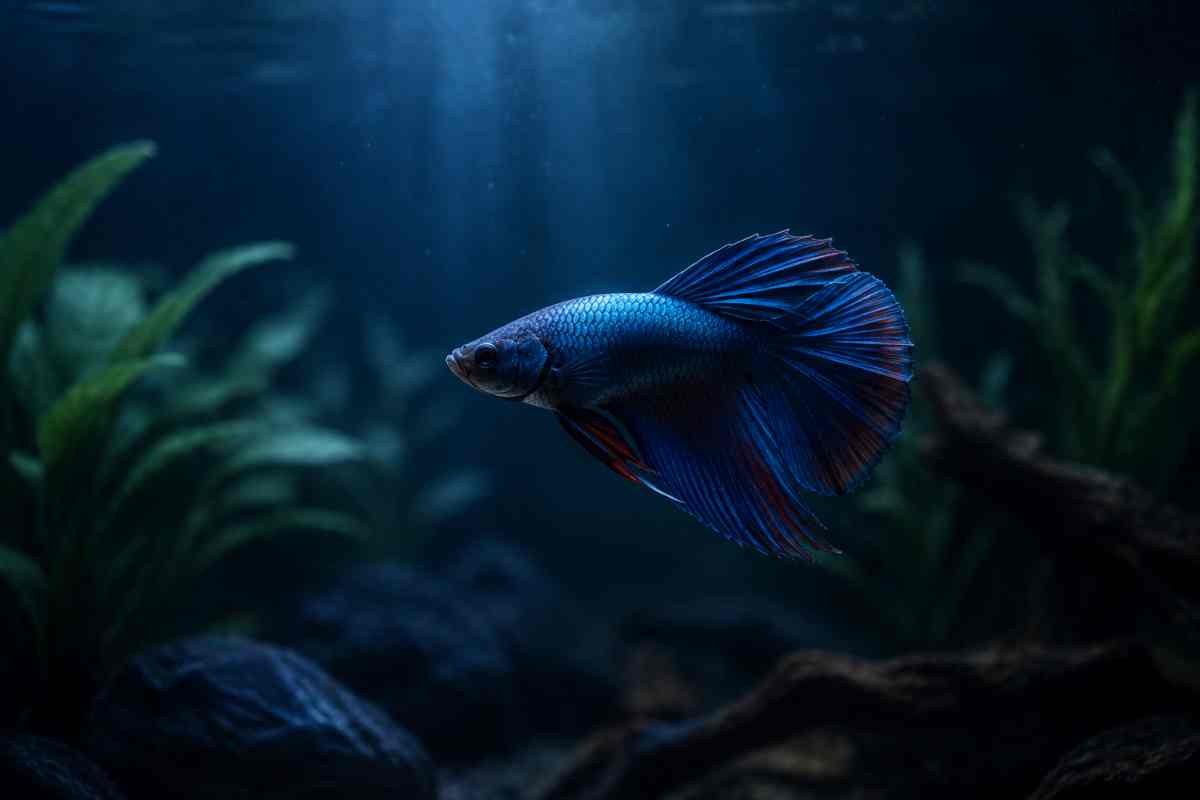
No fish can see in complete darkness, since vision always requires some light. But many species see remarkably well in dim conditions; some deep-sea fish can even detect color near total blackness, and several freshwater species use a chemical switch to see through murky water.
How Do Fish Eyes Work in Low Light?
Fish eyes contain two main types of photoreceptor cells, and the balance between them determines how a species copes with dim conditions. Cone cells detect color and fine detail but need relatively bright light to work well. Rod cells are far more sensitive to low light, though they only register shapes, motion, and contrast, not color.
Species that are naturally active at dawn, dusk, or overnight tend to have a higher share of rod cells in their retinas. Some bottom-dwelling and nocturnal fish also have a reflective layer behind the retina called the tapetum lucidum. It bounces unused light back through the retina for a second pass, giving the photoreceptors another chance to catch it. This is why a flashlight aimed at certain catfish or loaches at night can make their eyes appear to glow.
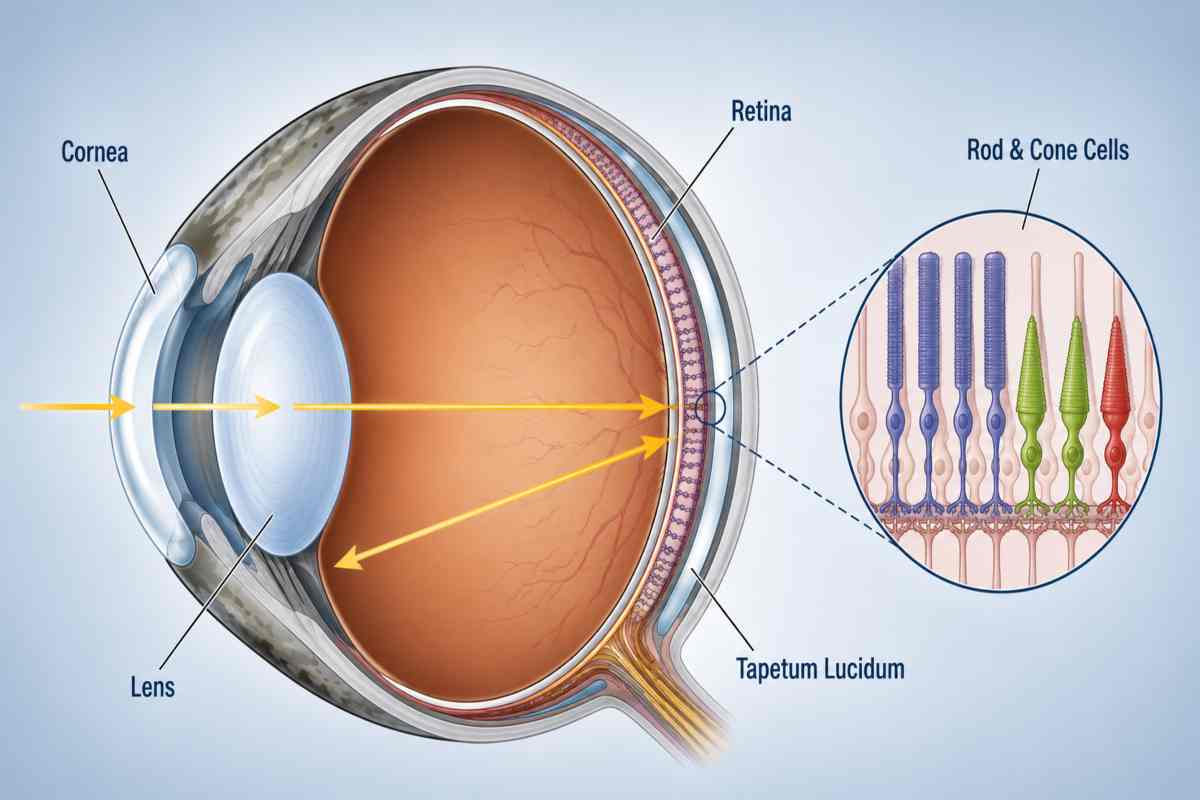 How a fish eye captures and reflects light using rod cells, cone cells, and the tapetum lucidum.
Can Deep-Sea Fish See Color in Near-Total Darkness?
For decades, biologists assumed that low-light vision in animals was essentially colorblind, built for detecting shapes and movement rather than distinguishing hues. A 2019 study published in the journal Science overturned that assumption.
Researchers led by biologist Zuzana Musser found that certain deep-sea fish, including the silver spinyfin, carry an extraordinary number of rod opsin genes, the proteins responsible for detecting light in rod cells. Where humans rely on a single rod opsin gene, some of these species carry dozens of variants tuned to slightly different wavelengths. This lets them distinguish subtle differences in the bioluminescent light produced by prey and other deep-sea animals, effectively giving them a form of color vision in near-total blackness. For more details, read the research study on PubMed.
This species doesn’t live in home aquariums, and freshwater fish don’t have this adaptation. But the study is a useful reminder that fish vision is far more specialized and varied than a simple “good” or “bad” night vision scale suggests. It sets the stage for understanding how freshwater fish, which face a very different challenge- murky rather than dark water- solve their own version of this problem.
How Do Freshwater Fish See in Murky, Low-Light Water?
Freshwater fish rarely deal with total darkness the way deep-sea species do. Their bigger challenge is often murky, tannin-stained, or sediment-heavy water where visible light barely penetrates even during the day.
Researchers led by biologist Zuzana Musser found that certain deep-sea fish, including the silver spinyfin, carry an extraordinary number of rod opsin genes, the proteins responsible for detecting light in rod cells.
Where humans rely on a single rod opsin gene, some of these species carry dozens of variants tuned to slightly different wavelengths. This lets them distinguish subtle differences in the bioluminescent light produced by prey and other deep-sea animals, effectively giving them a form of color vision in near-total blackness. For more details, read the research study on PubMed.
Salmon are among the best-known examples, shifting their visual pigments as they migrate between clear ocean waters and murky river systems. Similar mechanisms have been documented in cichlids and other freshwater species that live in turbid habitats. In practical terms, this gives these fish a biological way to maintain usable visual detail in conditions where most animals would be functionally blind.
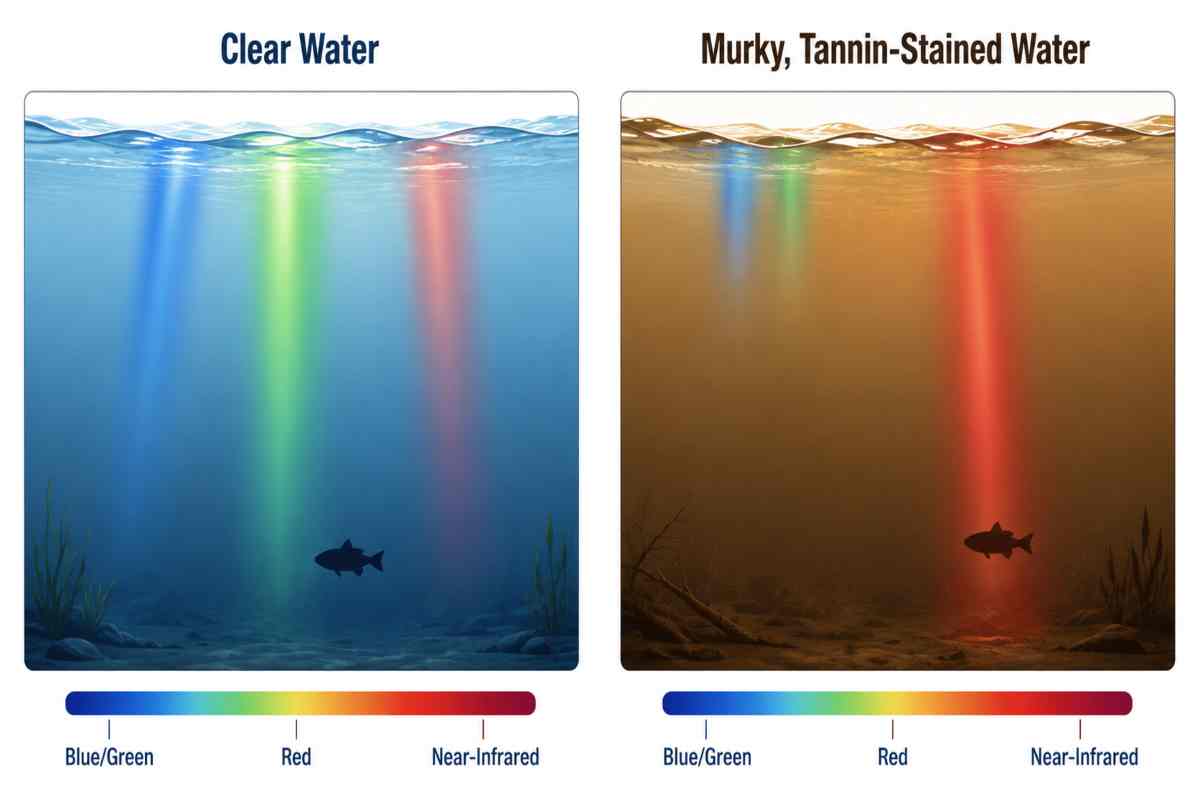 Red and near-infrared light travel deeper than blue and green light in murky, tannin-stained water.
How Do Fish “See” Without Using Their Eyes?
Vision is only one way fish perceive their surroundings, especially in the absence of light.
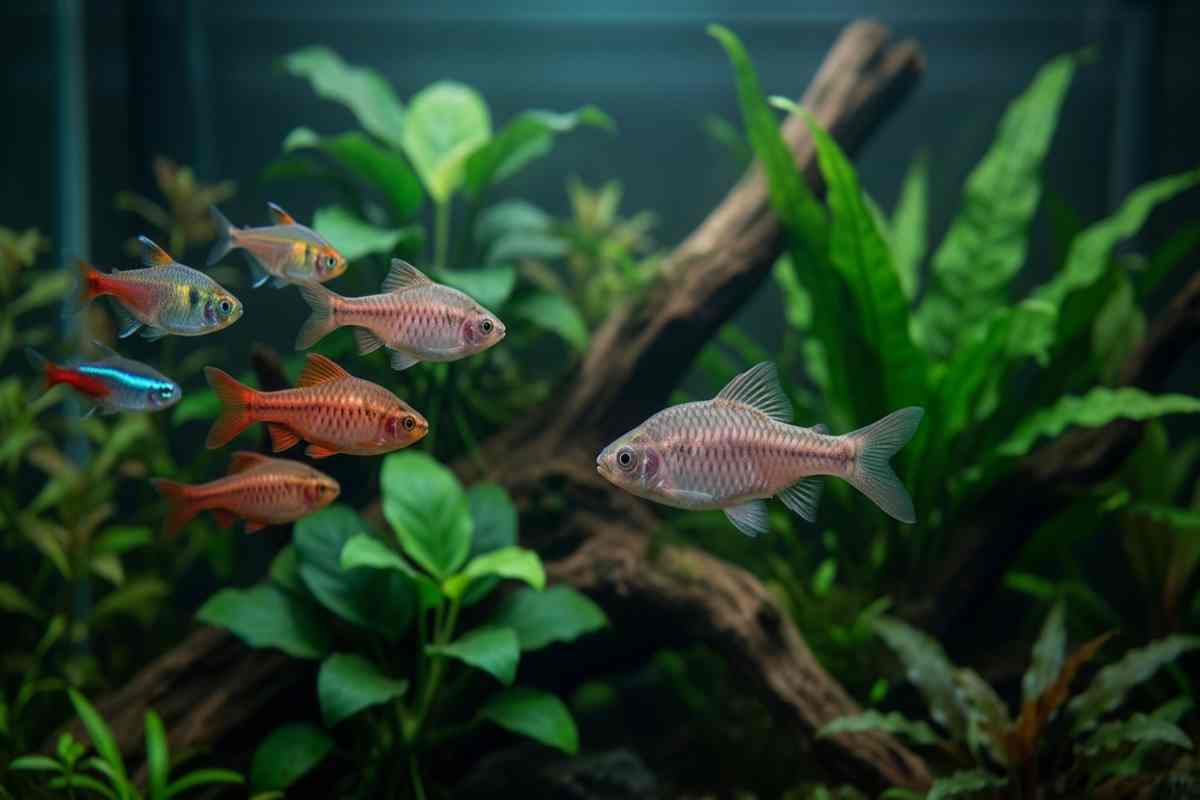
The lateral line is a row of sensory pores running along a fish’s body, often visible as a faint line from gill to tail. It detects tiny changes in water pressure and movement, letting a fish sense nearby objects, tankmates, or predators without seeing them. This is why a school of tetras can still turn together as a tight group in near-total darkness. They are feeling the water displacement created by their neighbors, not watching them.
Fewer freshwater species take this further with electroreception. Weakly electric fish such as elephantnose fish and knifefish generate a mild electric field around their bodies and read distortions in that field to detect objects, prey, and even communicate with other fish of the same species, all without relying on light at all.
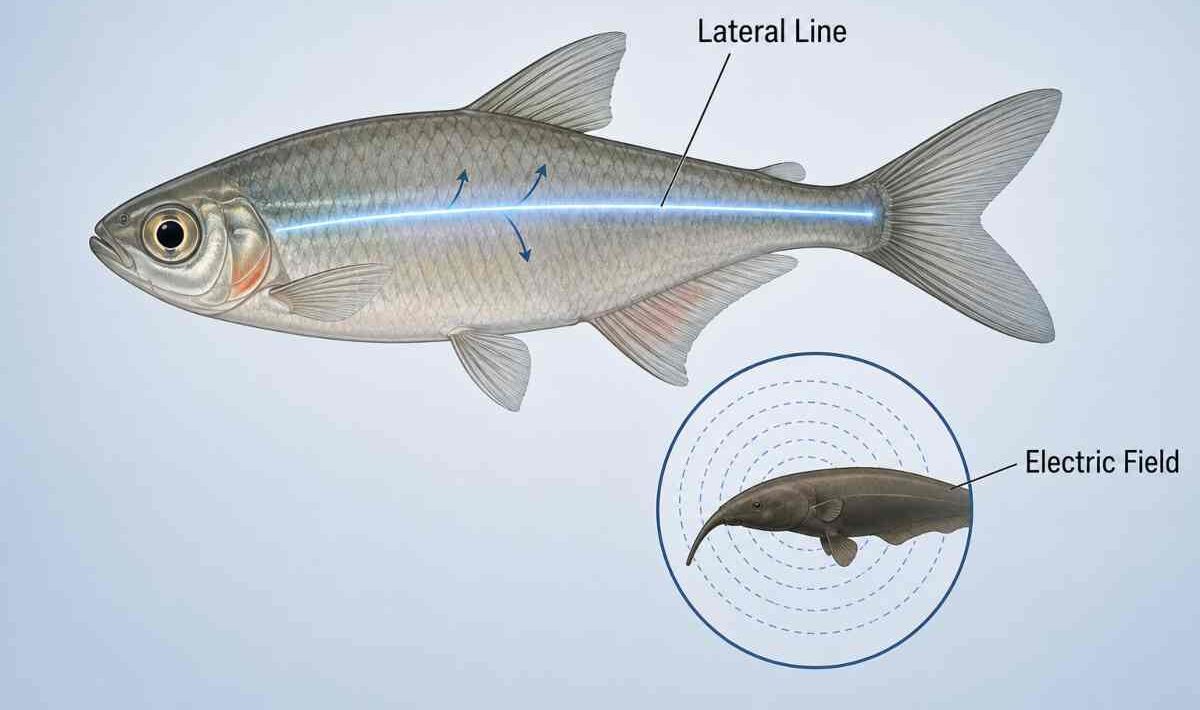 How fish sense their surroundings in the dark using the lateral line and, in some species, electroreception.
Can Betta Fish See in the Dark?
Betta fish have decent low-light vision for a daytime species, but they still need some ambient light to see clearly. In near-total darkness, a betta relies far more on detecting water movement than on sight.
This is also why sudden bright light at night can startle a betta so badly. Its eyes are adjusted to dim conditions, so an abrupt flash is disorienting and can trigger a stress response or a panicked dash into the glass or décor.
Can Goldfish See in the Dark?
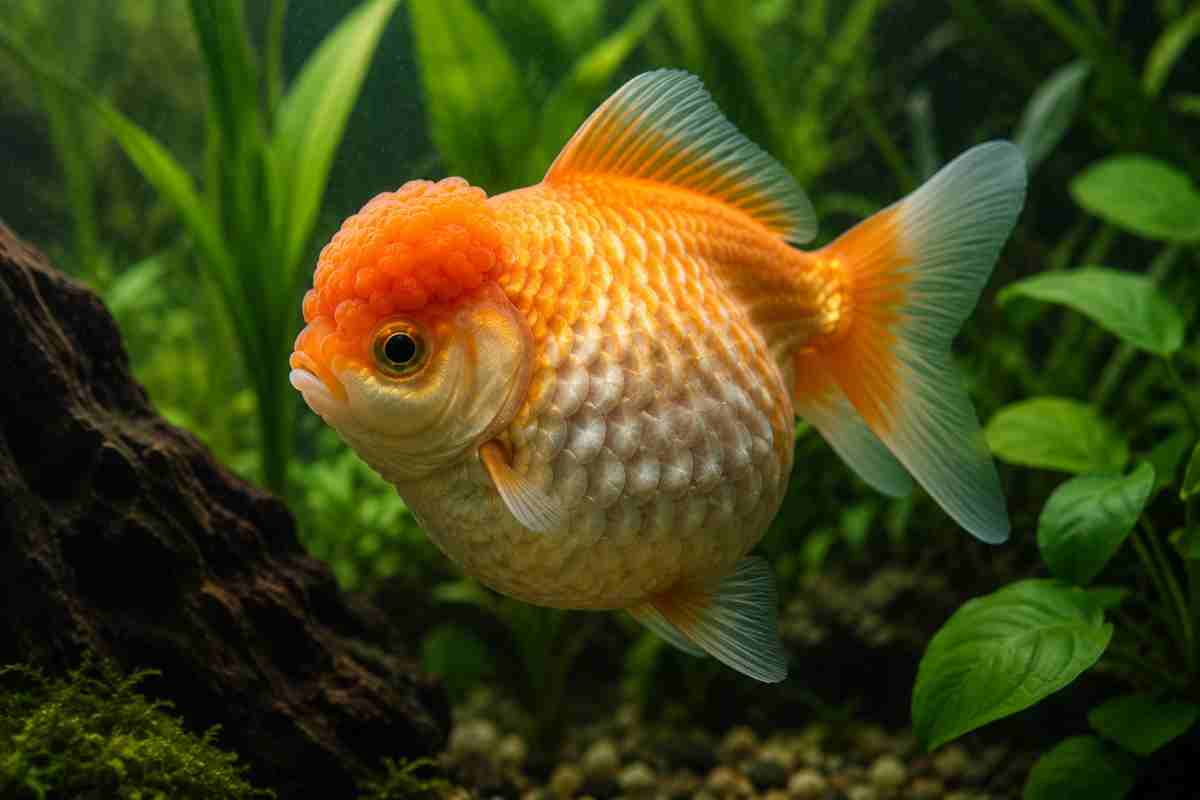
Goldfish have rod-dominant retinas that give them reasonably strong low-light vision, and their visual system has long been used as a reference point in comparative eye research. Even so, goldfish still need some ambient light to see. In true darkness, they slow down, stay near familiar territory, and lean more on smell and lateral line input than sight.
Do Aquarium Fish Need a Dark Period at Night?
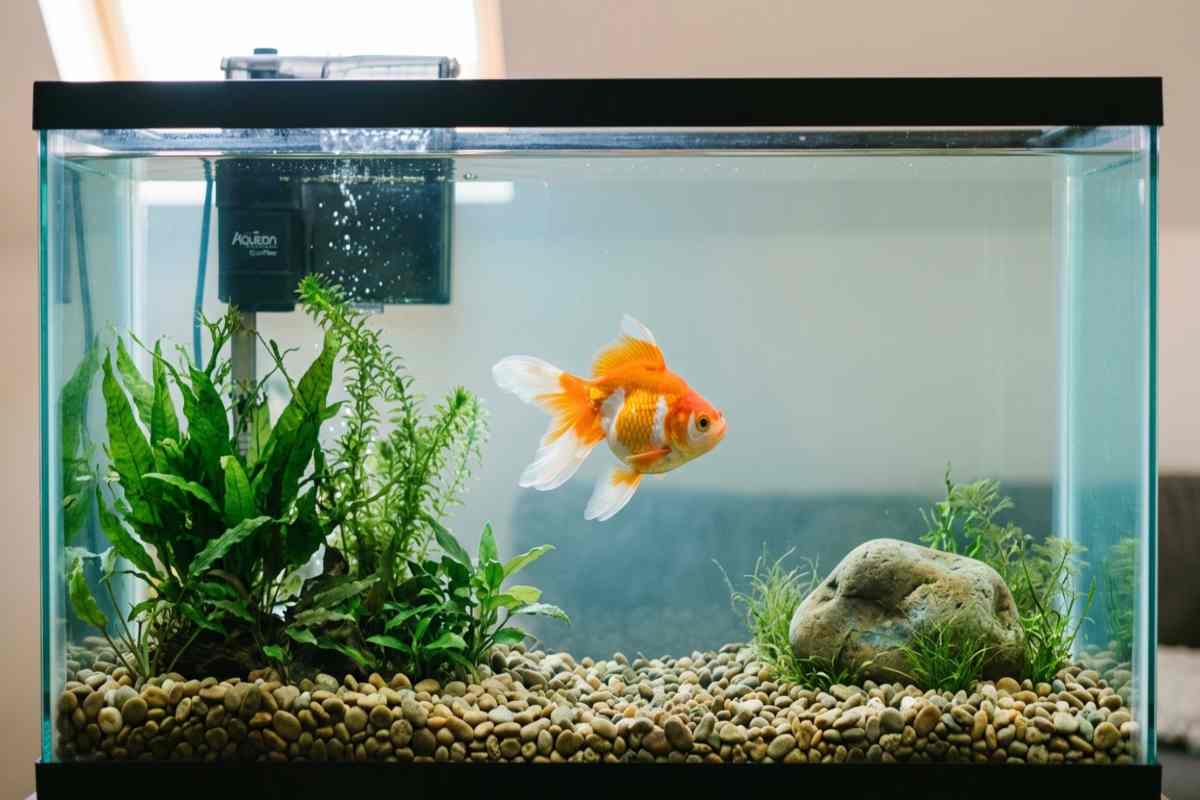
Yes. Fish don’t have eyelids, so they can’t physically block out light the way land animals do. Their sense of “night” depends entirely on the lighting conditions in the tank and room.
A consistent light-and-dark cycle, generally around 8 to 12 hours of light followed by a true dark period, supports healthier long-term behavior. Leaving lights on around the clock removes this rhythm entirely and is linked to chronic stress, disrupted feeding, and excessive algae growth. At The Fish Care, we recommend a fixed lighting schedule on a timer for almost any freshwater tank, since it takes the guesswork out of keeping this cycle consistent.
Which Freshwater Fish See Best in Low Light?
| Fish Type | Typical Activity Pattern | Low-Light Vision | Relies Heavily on Lateral Line? |
|---|---|---|---|
| Corydoras catfish | Crepuscular/nocturnal | Good | Yes |
| Kuhli loach | Nocturnal | Good | Yes |
| Otocinclus | Crepuscular | Moderate | Yes |
| Betta fish | Diurnal (daytime) | Moderate | Moderate |
| Goldfish | Diurnal | Moderate | Moderate |
| Neon tetra | Diurnal, schooling | Weaker in near-dark | Yes, schooling depends on it |
Common Mistakes Fishkeepers Make With Lighting
- Flipping on bright aquarium lights immediately after entering a dark room
- Using strong white light with no dimming or transition period
- Leaving lights on 24 hours a day instead of using a timer
- Assuming fish “sleep” the same way land animals do, when most simply enter a low-activity resting state instead of closing their eyes
A short transition period, such as a few minutes of dim light before the main light turns on, gives fish time to adjust and reduces stress.
Frequently Asked Questions
Can any fish see color in complete darkness?
Certain deep-sea species can detect subtle color differences in near-total blackness thanks to an unusually high number of rod opsin genes. Still, this adaptation is not present in freshwater aquarium fish.
Do freshwater fish have night vision like deep-sea fish?
Not in the same way. Freshwater species like salmon and cichlids instead rely on a chemical shift in their eyes that improves sensitivity to red and near-infrared light, which is more useful for seeing through murky water than in true darkness.
Why do some fish eyes glow when a light is shone on them at night?
The tapetum lucidum causes this: a reflective layer behind the retina found in some nocturnal and bottom-dwelling species that bounces light back to improve low-light sensitivity.
Is it bad to leave an aquarium light on all night?
Yes. It removes the natural light-and-dark cycle that fish need and is associated with stress, disrupted feeding, and increased algal growth.