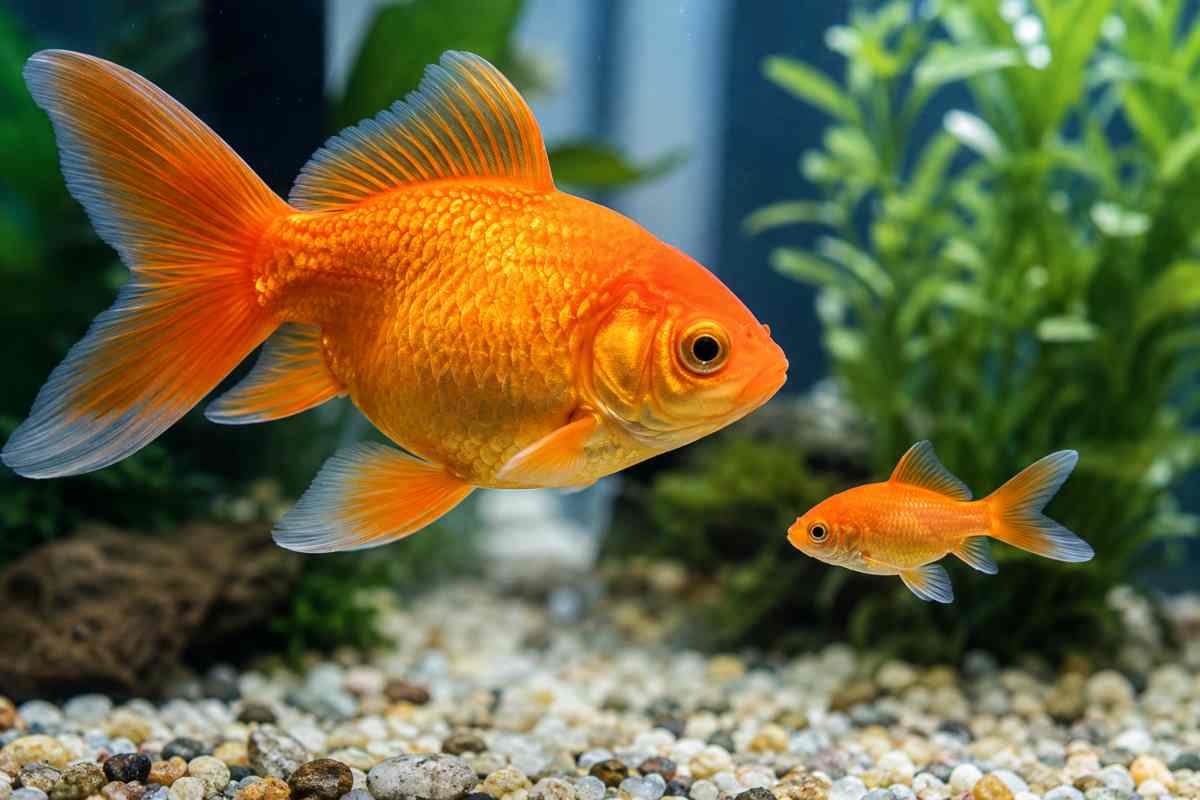
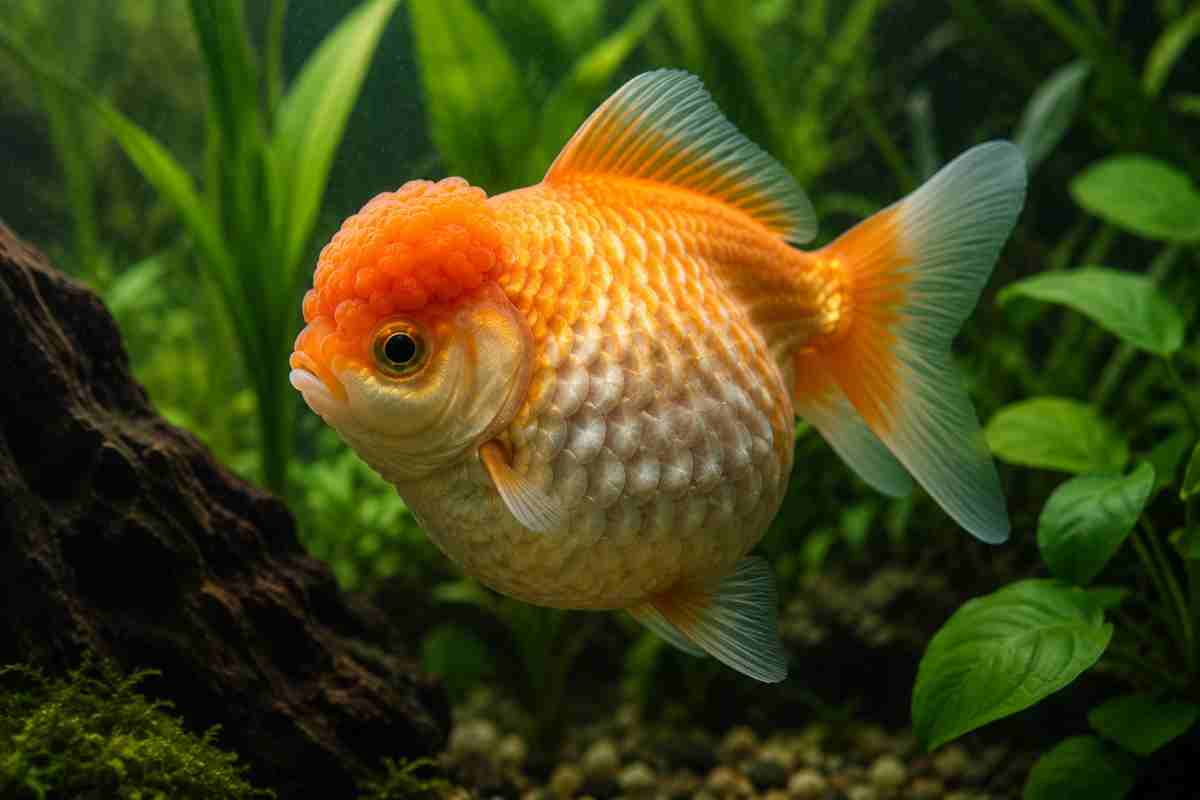
Yes, goldfish can get dropsy, and they’re actually more prone to it than most other freshwater aquarium fish. The reason comes down to three things almost unique to goldfish: they produce an unusually large amount of waste for their size, they’re often kept in water that’s colder than a heated community tank, and widely popular fancy varieties carry genetic traits that make their organs work harder than they should.
Dropsy itself isn’t a disease. It’s a symptom, a visible sign that a goldfish’s kidneys have stopped filtering water properly, causing fluid to build up inside the body. In goldfish, this often shows up alongside, and gets confused with, the naturally rounded, egg-shaped bodies that fancy breeds like Orandas and Ranchus are bred to have, which is exactly why goldfish owners struggle more than most to tell the difference between “normal” and “swollen.”
Key Takeaways
- Goldfish are prone to dropsy because of their high waste output, cold-water husbandry, and the compressed body shapes of many fancy varieties.
- A naturally round, egg-shaped fancy goldfish is not necessarily sick; scales that protrude outward in a pinecone pattern are a key sign of true dropsy.
- Overstocking and undersized filtration are major preventable triggers, making adequate tank size and strong biological filtration essential.
- Early-stage cases that are still eating have a better chance of recovery; advanced pinecone-stage dropsy with severe symptoms is much harder to treat.
- A properly cycled aquarium sized for the adult goldfish, never a bowl, remains one of the most effective ways to prevent dropsy.
Why Are Goldfish Especially Prone to Dropsy?
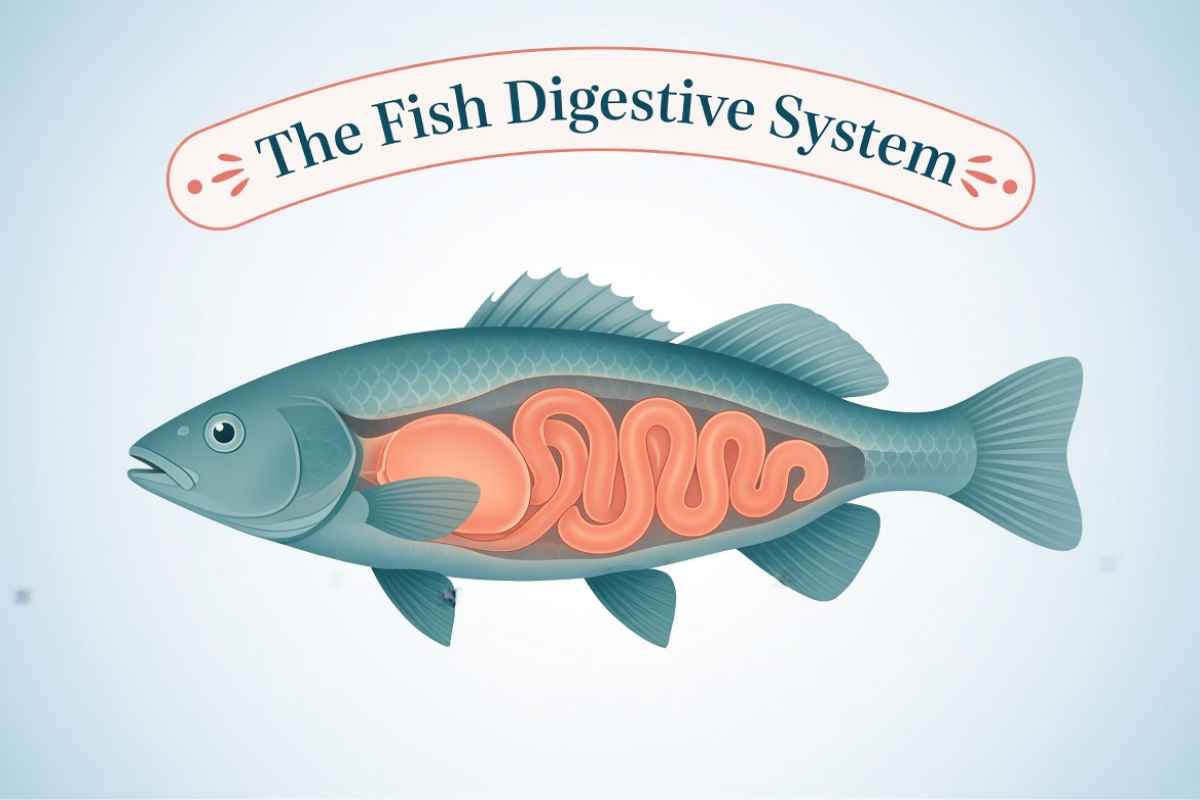
Goldfish eat almost constantly and produce a lot of ammonia-rich waste relative to their body size. In an undersized or lightly filtered tank, that waste load builds up faster than the beneficial bacteria in the filter can process it, which keeps a goldfish’s kidneys under chronic stress. The same stress eventually opens the door to bacterial infections that underlie most cases of dropsy.
Cold water adds a second layer of risk. Goldfish are a cold-water species and don’t require a heater, but unheated tanks and outdoor ponds swing in temperature with the weather. Sudden temperature drops slow a fish’s immune response at exactly the moment bacteria like Aeromonas are most likely to take hold.
Fancy goldfish varieties carry a third risk factor entirely their own. Breeds like the Oranda, Ranchu, and Lionhead have been selectively bred for rounded, compressed bodies, which can crowd internal organs, including the kidneys, and make them more vulnerable to dysfunction over the fish’s lifetime.
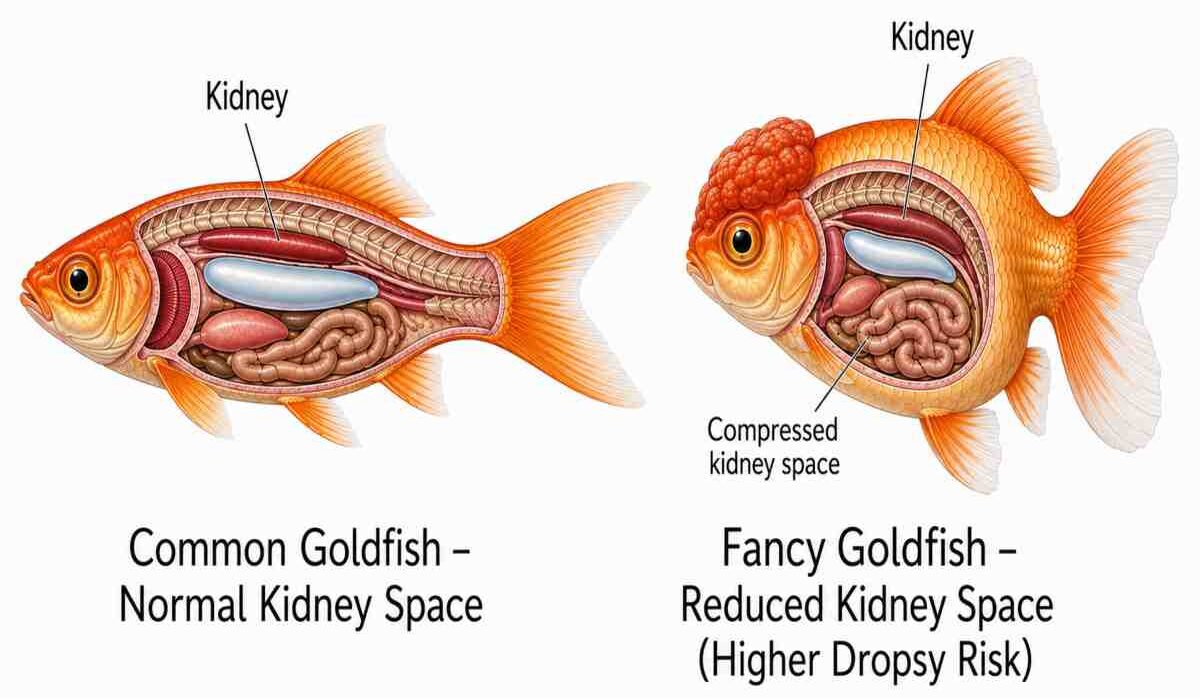
Fancy goldfish have less internal room for the kidney, one reason they’re more prone to dropsy.
What Does Dropsy Look Like in a Goldfish?
Early Signs
- Slight rounding of the belly beyond the fish’s normal shape
- Reduced appetite or picking at food and spitting it out
- Increased time resting near the bottom or tank corners
- Scales just beginning to lift, usually visible only from directly above
Advanced Signs
- Pronounced abdominal swelling
- Scales protruding outward in the classic pinecone pattern
- Bulging eyes
- Pale, stringy feces
- Clamped fins and labored, heavy swimming
- Complete refusal to eat
Catching dropsy early in a goldfish is harder than in most fish because a mildly rounded belly can simply be normal variation, especially in fancy breeds. According to Merck Veterinary Manual’s overview of ascites in fish, which veterinarians use as a reference for this condition, fluid accumulation of this kind is generally a downstream sign of organ dysfunction rather than a disease that appears on its own, which is why the appetite and behavior changes matter just as much as the visual swelling.
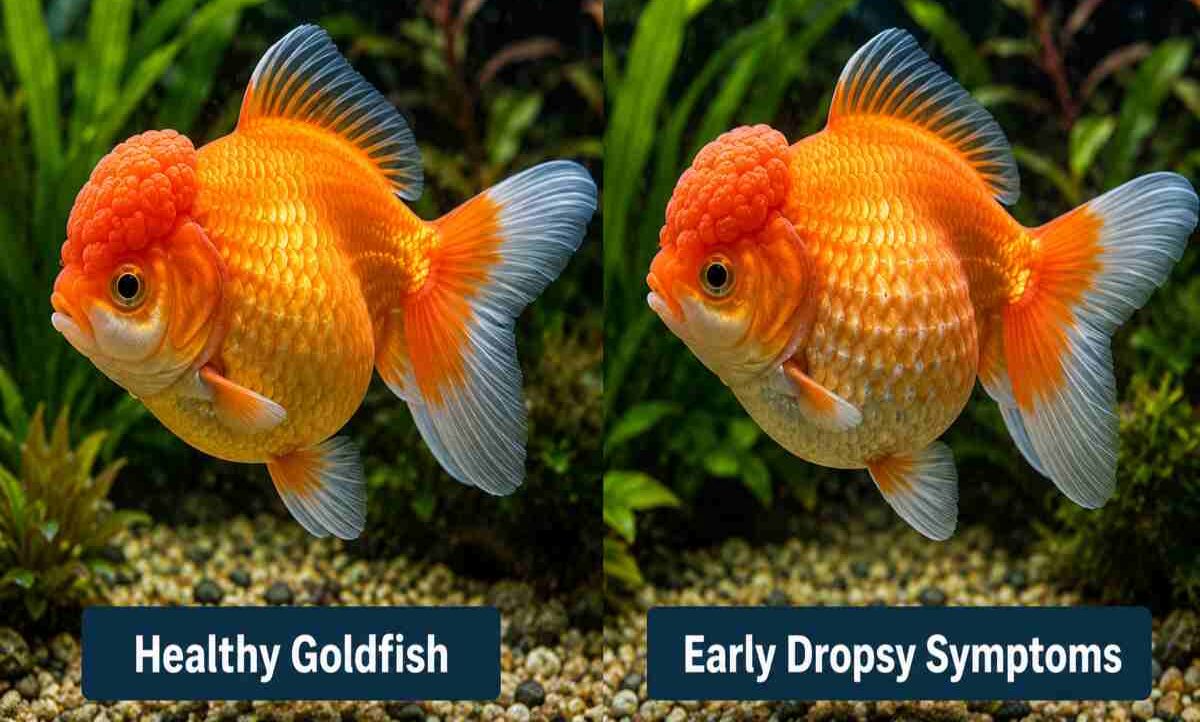 Spotting the subtle difference between a healthy goldfish and early-stage dropsy.
Is It Dropsy, Swim Bladder Disorder, or Just a Goldfish’s Natural Shape?
This is the most common point of confusion for goldfish owners, more so than for almost any other species, because fancy goldfish are already round, and swim bladder disorder is extremely common in the same breeds that are prone to dropsy.
| Condition | What It Looks Like | Key Difference From Dropsy |
|---|---|---|
| Normal fancy body shape | Smoothly rounded belly, present since the fish was young | Scales lie completely flat, fish swims and eats normally, and the body shape has not changed recently |
| Swim bladder disorder | Bloated look, floating or sinking, swimming sideways or upside down | Swelling is tied to buoyancy problems, not fluid retention; scales stay flat |
| Constipation or overfeeding bloat | Firm, round belly, often after a meal of dry pellets | Usually resolves within a day or two of fasting or feeding thawed peas; scales stay flat |
| Egg-bound female | Smooth, even swelling, most common in spring | Fish remains active and continues eating normally |
| True dropsy | Scales protrude outward in a pinecone pattern | Often paired with bulging eyes, clamped fins, lethargy, and appetite loss |
The scale test settles it. Viewed from directly above under good light, a goldfish with true dropsy shows scales sticking outward like a pinecone. A goldfish with a naturally round shape, swim bladder problems, or constipation will still have flat, smooth scales no matter how swollen the belly looks.
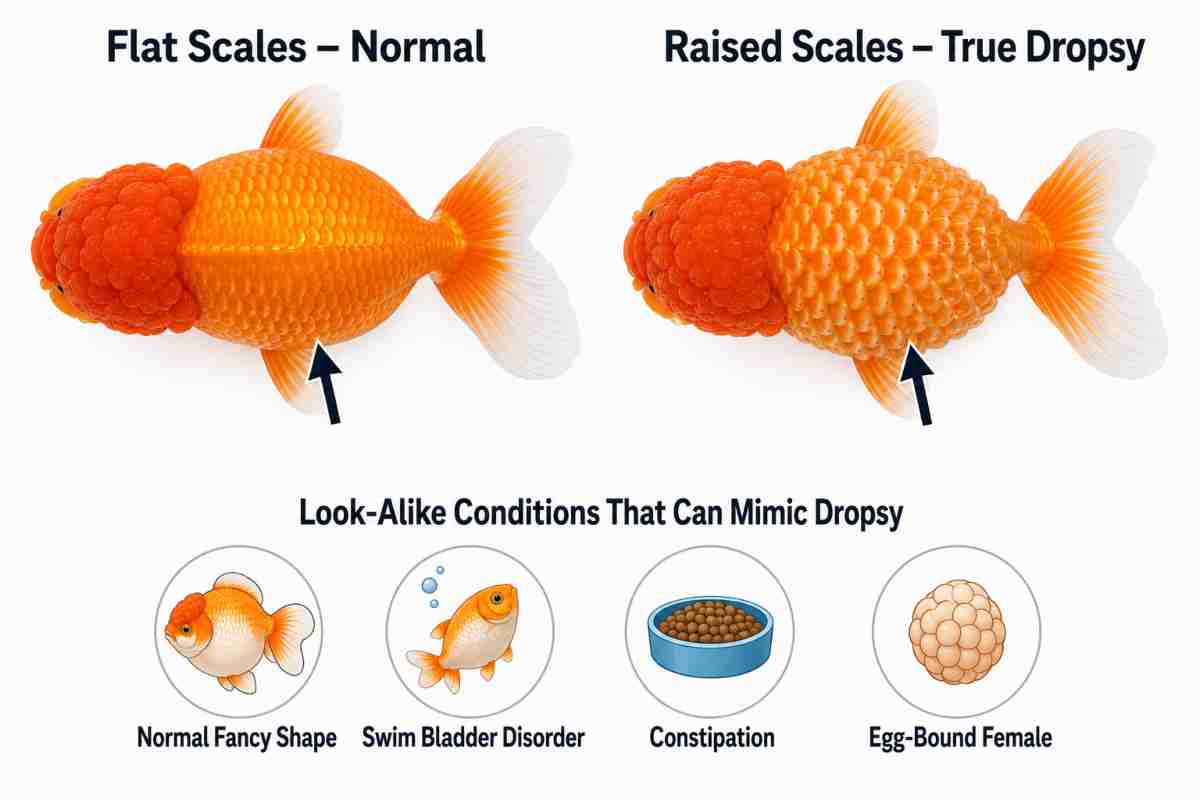 The scale test: how to tell true dropsy apart from four common look-alikes.
What Causes Dropsy in Goldfish?
- Ammonia Buildup: Goldfish are among the highest waste producers of any commonly kept aquarium fish, and a tank or filter sized for a smaller species quickly falls behind, resulting in chronically elevated ammonia and nitrite levels.
- Cold-Water Neglect: Because goldfish don’t need a heater, their water temperature is more exposed to seasonal swings than that of a tropical tank, and sudden drops suppress immune function.
- Bacterial Infection: As in other species, Aeromonas and related bacteria are the most common direct trigger once a goldfish’s immune defenses are already weakened.
- Genetic Vulnerability: Rounded, compressed body types common in Orandas, Ranchus, and similar breeds put ongoing pressure on internal organs, including the kidneys.
- Poor Diet: A diet heavy in dry pellets or flakes without enough fiber contributes to digestive strain and, over time, organ stress; it is also the leading cause of constipation, often mistaken for dropsy, in goldfish.
- Fish Age: Goldfish can live well over a decade with good care, and organ decline becomes more common as fish reach their later years.
- Pond Stress: Outdoor pond goldfish face seasonal ammonia spikes from spring feeding surges and temperature crashes during unexpected cold snaps, both of which are common triggers pond keepers report.
Is Dropsy Contagious in Goldfish?
Dropsy itself is not contagious; it’s a physical symptom, not something that spreads on its own. However, the bacterial infection driving it often is, and goldfish are frequently kept in groups or ponds where an infected fish shares water with several others. Isolating a goldfish showing signs of dropsy is the safer default until the cause is clearer.
How Is Dropsy Treated in a Goldfish?
Treatment follows the same core principles as for any freshwater fish, but goldfish require larger volumes at every step due to their size and waste output.
- Quarantine Tank: Move the goldfish to a quarantine tank of at least 10 gallons for a standard-size adult; smaller fancy varieties can use slightly less, but avoid anything cramped.
- Water Correction: Test and correct the water in the main tank or pond immediately. Ammonia and nitrite should read zero; if they’re not, a partial water change and reduced feeding are the first steps.
- Epsom Salt: Add Epsom salt to the quarantine water at roughly 1 to 3 teaspoons per gallon; it helps draw excess fluid from the tissues through osmosis. This treats the swelling, not the underlying infection.
- Antibiotic Dosing: Use a broad-spectrum antibiotic labeled for internal bacterial infections in fish, dosed according to the product’s instructions for the quarantine tank’s actual volume.
- Stable Warmth: Keep the water stable and slightly warmed, even for a cold-water species; a gentle rise to around 74-76°F during treatment can support the immune system without shocking the fish.
- Offer Food: Offer easily digestible food, such as thawed peas or a small amount of high-quality pellet, only if the goldfish is still interested in eating.
- Daily Monitoring: Monitor daily for changes in swelling, scale position, appetite, and activity level.
When Treatment Fails
If a goldfish shows no improvement after several days, has completely stopped eating, or can no longer stay upright, many fish health professionals consider humane euthanasia the more responsible choice over prolonging visible suffering. This is a hard call, and an aquatic veterinarian, where one is available, can help confirm whether recovery is still realistic.
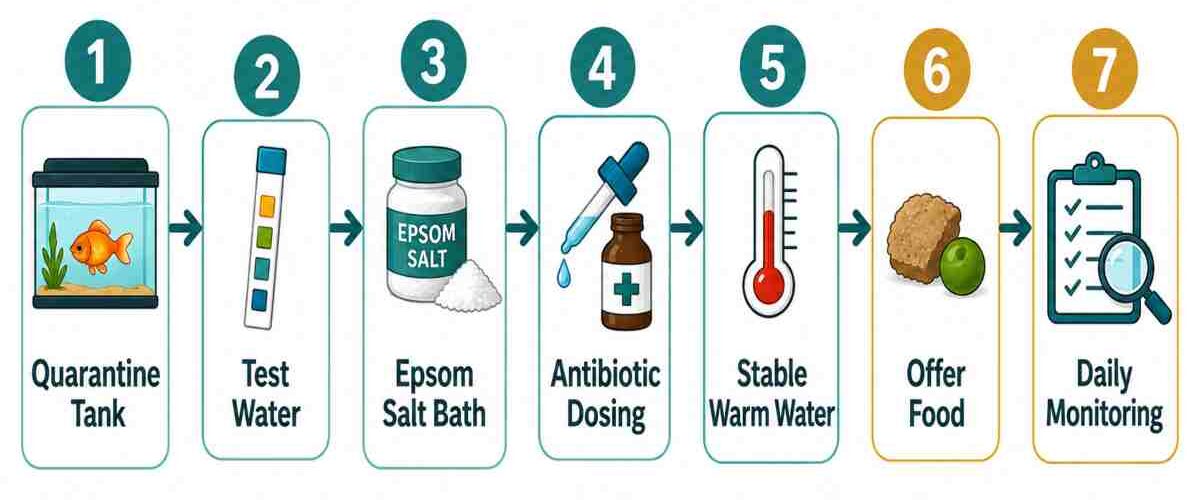 The seven-step treatment sequence for goldfish showing dropsy symptoms.
What About Pond Goldfish?
Dropsy shows up differently in pond-kept goldfish than in tank-kept ones, and it’s a gap most dropsy guides skip entirely. Ponds hold far more water than tanks, which dilutes ammonia more effectively. Still, they also expose fish to outdoor temperature swings and seasonal changes in bacteria levels that indoor tanks never face.
The riskiest period for pond goldfish is typically early spring, when fish resume eating heavily as water warms but their immune systems haven’t fully recovered from winter dormancy. A sudden cold snap during this window is a well-known trigger for bacterial disease outbreaks in outdoor pond fish. If you keep goldfish outdoors, closely monitoring feeding responses and water temperature during spring transitions is more important than almost any other single preventive step.
What Is the Outlook for a Goldfish With Dropsy?
A goldfish caught early, still eating with only mild swelling and flat scales, has a genuine chance of recovery once the underlying water quality or infection issue is addressed. Once a goldfish reaches full pinecone-stage swelling with bulging eyes and no appetite, the outlook is generally poor, since visible symptoms at that point usually mean significant kidney damage has already occurred.
How Can Dropsy Be Prevented in Goldfish?
- Filtration: Keep ammonia and nitrite at zero through a filter sized for goldfish’s higher waste output, not just tank volume.
- Tank Size: House goldfish in a tank appropriately sized for their adult size: 20 gallons or more per fish is the widely recommended minimum, never a bowl.
- Avoid Overstocking: Avoid overstocking tanks and ponds; goldfish waste accumulates faster than most owners expect.
- Varied Diet: Feed a varied diet with fiber-rich foods like blanched vegetables alongside pellets to support healthy digestion.
- Spring Transitions: Watch pond fish closely during spring temperature transitions, when bacterial outbreaks are most common.
- Quarantine New Fish: Quarantine new goldfish for two to four weeks before adding them to an established tank or pond.
- Stable Temperature: Avoid sudden temperature swings during water changes, even though goldfish tolerate cold water well overall.
None of this requires specialized equipment. It requires matching tank size and filtration to how much waste goldfish actually produce, which is where most preventable cases of dropsy in this species originate.
Frequently Asked Questions (FAQs)
Is my goldfish’s round belly normal or is it dropsy?
Most rounded bellies, especially in fancy varieties like Orandas and Ranchus, are completely normal. True dropsy is confirmed by scales sticking outward in a pinecone pattern, not by belly shape alone.
Can dropsy in goldfish be cured?
Sometimes, if caught early. Treatment involves isolation, water correction, an Epsom salt bath, and often an antibiotic, but there’s no guaranteed cure once significant kidney damage has occurred.
Why do fancy goldfish get dropsy more than common goldfish?
Their selectively bred, compressed body shapes put extra pressure on internal organs, including the kidneys, making them somewhat more vulnerable to organ dysfunction over time.
Can pond goldfish get dropsy in winter?
It’s less common during winter dormancy itself, since goldfish metabolism and feeding slow down significantly in cold water. Risk rises in early spring as fish resume normal feeding while their immune systems are still recovering.
Does overfeeding cause dropsy in goldfish?
Not directly, but chronic overfeeding degrades water quality and strains a goldfish’s organs over time, increasing vulnerability to bacterial infections that most often cause dropsy.
How is goldfish dropsy different from betta dropsy?
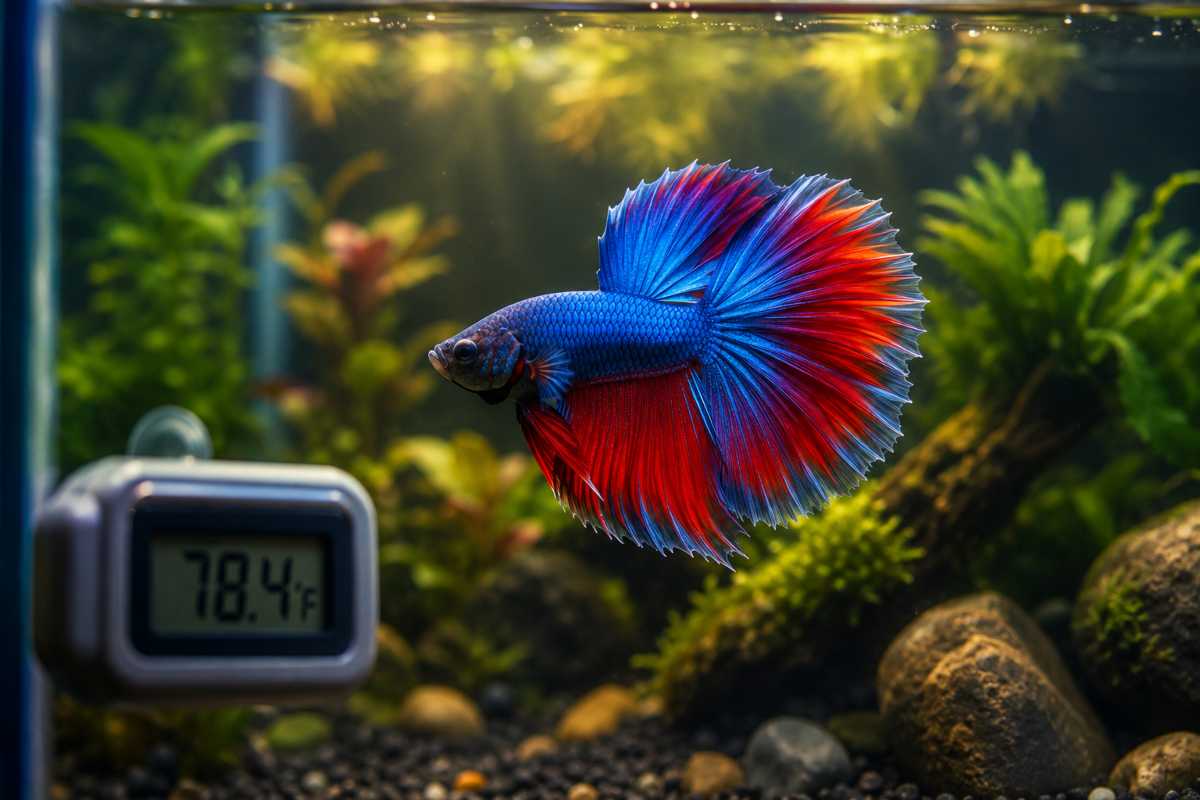
The underlying kidney failure is the same, but goldfish face it more often due to higher waste output, cold-water and pond husbandry, and genetic factors in fancy breeds. In contrast, betta cases are usually more tied to small, unstable tank volumes.
Continue Reading: Dropsy in Betta Fish