Fish tuberculosis, also called mycobacteriosis, is a chronic bacterial infection caused by Mycobacterium marinum and related species. It causes wasting, spinal deformities, skin ulcers, and internal organ damage, and no reliable cure exists once a fish is infected. It can also spread to humans through open cuts, so gloves and good hygiene around infected tanks matter.
Key Takeaways
- Fish tuberculosis, or fish mycobacteriosis, is caused by acid-fast bacteria in the Mycobacterium genus, including M. marinum, M. fortuitum, and M. chelonae.
- Common warning signs include unexplained weight loss despite eating normally, a curved or bent spine, skin ulcers, lethargy, and gradual loss of condition.
- Some fish mycobacteria can infect people through broken skin, causing fishkeeper’s granuloma, so wear gloves when handling infected fish, aquarium water, or equipment.
- There is no reliably proven antibiotic treatment for fish mycobacteriosis, and humane euthanasia may be recommended for confirmed, symptomatic cases.
- Quarantining new fish, maintaining clean water, disinfecting equipment, and avoiding raw fish products can reduce the risk of introducing or spreading the infection.
What Is Fish Tuberculosis?
Fish tuberculosis is not caused by the same bacterium that causes tuberculosis in people. It gets its name because the internal damage it causes, small nodules called granulomas scattered through the organs, looks similar under a microscope to what human TB does to lung tissue. In fish, the disease is more accurately called mycobacteriosis or piscine tuberculosis.
The infection is chronic, meaning it usually builds slowly over weeks or months rather than killing a fish overnight. That slow progression is part of why it’s so often missed until a fish is severely affected. A betta or tetra with early mycobacteriosis might look a little duller and thinner than usual, which owners easily mistake for old age or a temporary appetite dip.
This disease affects a huge range of freshwater aquarium species, including bettas, tetras, danios, gouramis, angelfish, and livebearers like guppies and platies. Goldfish and koi can also develop mycobacterial infections, though the specific strains involved vary somewhat by species and water temperature.
What Causes Fish Tuberculosis?
The disease comes from environmental bacteria in the genus Mycobacterium. These are acid-fast, gram-positive, rod-shaped organisms that live naturally in soil and water worldwide, including in the biofilm and substrate of established aquariums. The three species most often implicated in aquarium fish are:
- Mycobacterium marinum – the most commonly identified species in ornamental fish, and the one most frequently linked to human skin infections.
- Mycobacterium fortuitum – a fast-growing species that can behave more opportunistically, often taking hold in fish that are already stressed or immunocompromised.
- Mycobacterium chelonae – another opportunistic species associated with chronic wasting in aquarium fish.
Unlike many aquarium pathogens, these bacteria don’t need a sick or dying host to survive. They persist for long periods in tank water, gravel, filter media, and biofilm, which is a big part of why the disease is so hard to eliminate once it establishes itself in a tank.
How Do Fish Actually Get Infected?
Fish typically pick up the infection through:
- Eating the carcass of an infected tankmate (cannibalism is a major transmission route, especially in crowded tanks)
- Ingesting contaminated detritus, biofilm, or live and frozen foods that carry the bacteria
- Exposure of open wounds or skin damage to bacteria-laden water
- Introduction of new, unquarantined fish that are already infected but not yet showing symptoms
Stress is a consistent theme in outbreaks. Poor water quality, overcrowding, temperature swings, and other diseases that weaken the immune system all make a fish more likely to develop clinical mycobacteriosis after exposure, even though the bacteria may already be present in many tanks at low levels without causing obvious illness.
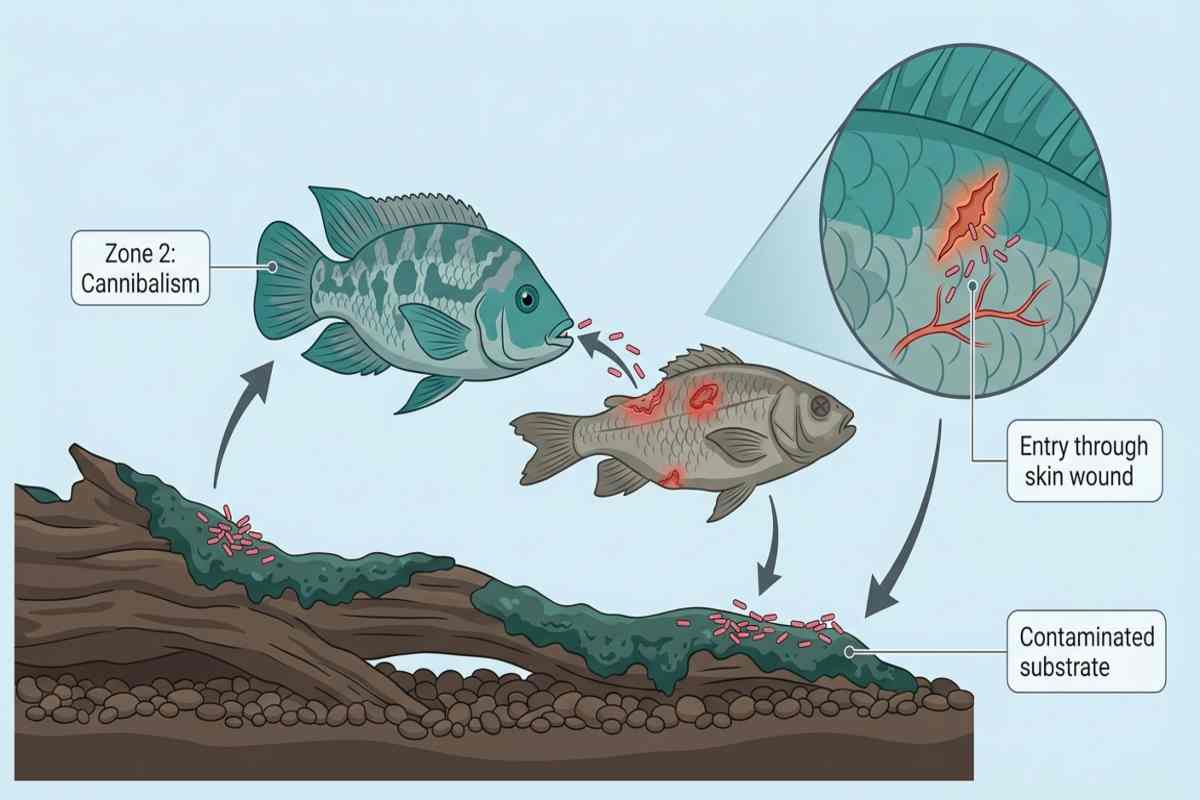 How fish tuberculosis spreads inside an aquarium tank.
What Are the Symptoms of Fish Tuberculosis?
Symptoms usually appear gradually and can resemble several other chronic wasting diseases, so a definitive diagnosis often requires more than observation. It helps to separate the signs into what you can see from the outside and what’s happening internally.
External Symptoms
- Progressive weight loss and a sunken, hollow-bellied appearance despite normal or even increased appetite
- A curved, bent, or kinked spine (scoliosis), sometimes described as a “banana back” appearance
- Skin ulcers or open sores, particularly along the sides and near the fins
- Patchy scale loss or a rough, faded appearance to the skin
- Fin erosion or fraying that doesn’t respond to normal fin rot treatment
- Exophthalmia, better known as pop-eye, in one or both eyes
- Lethargy, hiding, and reduced interaction with tankmates
- Pale or faded coloration compared to the fish’s normal appearance
Internal Symptoms (Usually Only Confirmed on Necropsy)
- Small, grayish-white nodules (granulomas) scattered through the spleen, kidney, liver, and other organs
- Visible organ enlargement or distortion in advanced cases
- Fluid buildup in the body cavity in some cases, which can be confused with dropsy
Because these signs overlap with dropsy, internal parasites, and other bacterial infections, chronic wasting with a bent spine and ulcers that don’t improve with standard treatments is the combination that should raise real suspicion for mycobacteriosis.
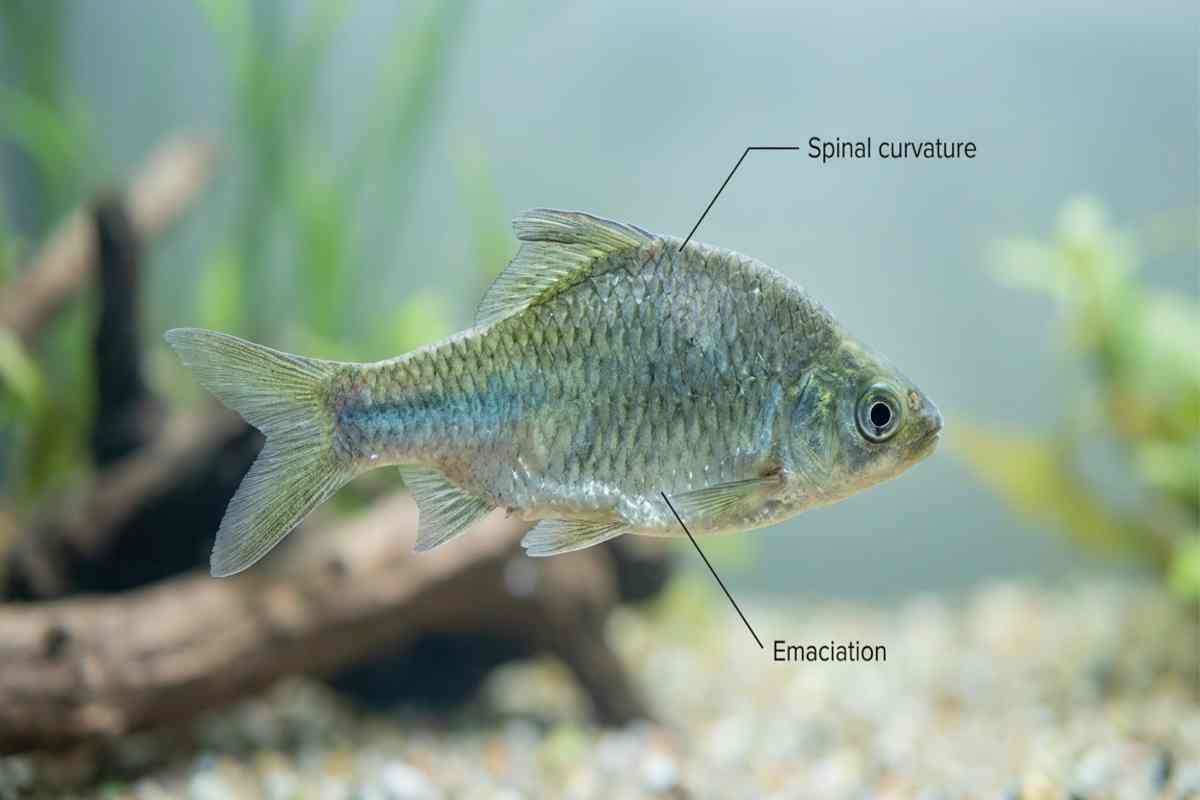 Spinal curvature and wasting are hallmark signs of fish tuberculosis.
Who Is Most at Risk?
Any freshwater tank can develop mycobacteriosis, but certain conditions raise the odds noticeably:
- Overcrowded tanks where waste builds up faster than filtration can handle it
- Tanks that regularly receive new fish without a quarantine period
- Systems fed live or frozen foods from unreliable sources
- Fish already weakened by poor water quality, chronic stress, or another illness.
- Older fish or species naturally prone to slower metabolisms and longer disease courses, such as certain betta and gourami lines
Species that are frequently wild-caught or sourced from crowded commercial farms, including some betta and tetra varieties, are reported more often in mycobacteriosis case studies. However, this likely reflects stress and crowding during transport as much as any special susceptibility.
Can Humans Catch Tuberculosis From Fish?
Yes, and this is the section every fishkeeper should read carefully. Mycobacterium marinum can infect people, typically through a cut, scrape, or hangnail that contacts contaminated tank water, gravel, or fish tissue. The resulting human infection is commonly called fishkeeper’s granuloma, fish tank granuloma, or swimming pool granuloma.
In people, it usually shows up as a slow-growing, reddish or purplish bump or nodule on the hand, wrist, or forearm, often weeks after exposure. It’s rarely life-threatening in people with a healthy immune system. Still, it can be stubborn to treat and sometimes requires a prolonged course of specific antibiotics prescribed by a physician. People who are immunocompromised, including those on immunosuppressive medications or with conditions that weaken immune defenses, are at higher risk of more serious infection and should be especially cautious around aquariums with suspected mycobacteriosis.
Simple Precautions That Actually Matter
- Wear waterproof gloves when working in a tank you suspect is affected, especially if you have any cuts or skin breaks on your hands.
- Avoid submerging bare hands in tank water if you have open wounds, even small ones.
- Wash your hands thoroughly with soap after any tank maintenance.
- See a doctor if you develop a persistent, non-healing bump or lesion after aquarium contact, and mention your aquarium hobby so they can consider mycobacterial infection.
How Is Fish Tuberculosis Diagnosed?
No single at-home test confirms mycobacteriosis. A presumptive diagnosis is often based on the classic combination of chronic wasting, spinal deformity, and non-healing skin lesions in a fish that hasn’t responded to standard bacterial or parasite treatments.
A definitive diagnosis typically requires a veterinary or laboratory workup, which may include:
- Necropsy examination looking for granulomas in internal organs
- Acid-fast staining of tissue samples, since Mycobacterium species stain differently than most other bacteria
- Bacterial culture, though Mycobacterium species are notoriously slow-growing and can take weeks to culture
- PCR testing, which is faster and increasingly used in aquatic diagnostic labs
For a hobbyist with a single suspicious fish, this level of testing is often impractical. Many aquarists rely on strong clinical suspicion rather than lab confirmation, especially when other fish in the tank start showing similar symptoms over time.
How Do You Treat Fish Tuberculosis?
This is the part of the topic that’s important to be honest about. No antibiotic regimen is currently proven to cure mycobacteriosis in fish reliably, and Mycobacterium species are naturally resistant to many common antibiotics because of their unusual cell wall structure. Even when a fish appears to improve temporarily on antibiotics, relapse is common, and the bacteria typically remain in the tank environment regardless of what happens to any one fish.
If You Choose to Attempt Treatment
Because there’s no established cure, view any treatment attempt as supportive care rather than a path to guaranteed recovery. If you do decide to try, prioritize the basics first:
- Isolate the affected fish in a quarantine tank to reduce further spread to tankmates and to make monitoring easier.
- Optimize water quality with frequent partial water changes, stable temperature, and confirmed zero ammonia and nitrite, since immune function suffers badly in poor water conditions.
- Reduce stress by keeping the quarantine tank dim, calm, and free of aggressive tankmates.
- Consult an aquatic veterinarian before using any antibiotic, since appropriate drug choice, dosing, and duration depend on the specific case and local veterinary guidance, and using medications without proper direction rarely helps and can create additional resistant bacteria.
- Monitor closely for worsening symptoms, spread to other fish, or signs that the fish is suffering, since this should guide whether to continue supportive care.
Recovery Timeline
Because mycobacteriosis is chronic and largely untreatable, “recovery” in the sense of full clearance of infection is not something you should expect. Some fish live for extended periods with a low bacterial burden and mild symptoms, essentially managing rather than curing the disease, while others decline steadily over weeks to months. There is no reliable timeline, and assume any fish showing symptoms will remain a source of infection for tankmates for as long as it lives.
When Treatment Fails
If a fish continues to lose weight, develops worsening spinal deformity, or shows non-healing ulcers despite supportive care, that’s a sign the disease is progressing and unlikely to be reversed. At this point, many aquatic veterinarians recommend humane euthanasia rather than prolonging a fish’s decline, both for welfare reasons and to reduce the ongoing risk of the bacteria spreading to other fish in the tank. When available, a veterinarian experienced with fish can advise on the most humane method and confirm the diagnosis through necropsy afterward, which can also help protect the rest of your collection.
How Do You Eradicate and Prevent Fish Tuberculosis?
Because the bacteria persist in tank surfaces, substrate, and biofilm even after affected fish are gone, prevention and thorough cleanup matter more than treatment for this particular disease.
Tank Teardown and Disinfection Checklist
- Remove and humanely euthanize or isolate any fish showing confirmed or strongly suspected symptoms
- Discard porous materials that are hard to fully disinfect, such as driftwood, unglazed decorations, and old filter sponges
- Wash the empty tank, glass, and hardscape with a bleach solution (a commonly cited ratio is about one part household bleach to ten to twenty parts water), then rinse thoroughly and allow to air dry fully
- Disinfect nets, siphons, and other tools separately, since these easily spread bacteria between tanks
- Consider isopropyl alcohol as an alternative disinfectant for items that shouldn’t be exposed to bleach
- Run the tank empty for a period after disinfection to confirm no lingering ammonia or bleach smell before restocking
- Avoid restocking with the same species immediately if the outbreak was severe, and consider a longer fallow period for the tank
Ongoing Prevention
- Quarantine every new fish for at least two to four weeks in a separate tank before adding it to your main display
- Avoid feeding raw, unfrozen fish products of unknown origin, since undercooked or raw fish tissue can carry live Mycobacterium
- Keep stocking levels reasonable and avoid overcrowding, which raises both stress and waste buildup
- Maintain consistent, high water quality with regular testing and water changes
- Remove any dead fish immediately to prevent cannibalism of potentially infected carcasses
- Use a UV sterilizer as a supplementary tool to reduce free-floating bacterial load in tank water, though it won’t eliminate bacteria already established in biofilm or infected fish
Myth vs Fact
Myth: Fish tuberculosis is the same disease as human tuberculosis.
Fact: They’re caused by entirely different bacteria. The name comes from the similar granuloma pattern seen in tissue, not a shared pathogen.
Myth: If one fish gets sick, the rest of the tank is automatically doomed.
Fact: Not every exposed fish develops clinical disease. Stress, immune status, and water quality all influence whether infection turns into visible illness, though the risk to tankmates is real and shouldn’t be ignored.
Myth: A round of antibiotics from the pet store will clear it up.
Fact: Mycobacterium species are resistant to many common antibiotics, and there’s no over-the-counter treatment proven to cure this disease reliably.
Frequently Asked Questions
Is fish tuberculosis contagious to other fish in the same tank?
Yes. It spreads through contaminated water, substrate, and especially through cannibalism of infected fish, so tankmates sharing the same water are at real risk over time.
Can I eat fish that had tuberculosis?
Never eat fish showing signs of mycobacteriosis. Properly cooking fish destroys the bacteria, but ornamental fish affected by this disease should be euthanized and disposed of, not consumed.
How long can a fish live with tuberculosis before dying?
There’s no fixed timeline. Some fish decline over a few weeks, while others live for months with mild, slowly worsening symptoms. Progression depends heavily on the bacterial species involved and the fish’s overall health.
Is it safe to keep aquariums if someone in my house is immunocompromised?
Yes, with sensible precautions like wearing gloves during maintenance and promptly treating any skin injuries. Still, anyone who is significantly immunocompromised should talk to their doctor about their specific risk level around aquariums.
Should I euthanize a fish with suspected tuberculosis right away?
Not necessarily right away, but because there’s no reliable cure and the disease poses both a welfare concern for the fish and a transmission risk to tankmates and potentially to people, many aquatic veterinarians consider humane euthanasia the most responsible option once symptoms are advanced or confirmed.
Fish tuberculosis is one of the more sobering diseases in the freshwater hobby because there’s no clean, satisfying treatment story to tell. The most useful thing any aquarist can do is recognize the early signs, quarantine new arrivals every time, keep water quality consistently high, and take the zoonotic risk seriously enough to wear gloves and wash up after handling a suspicious tank.