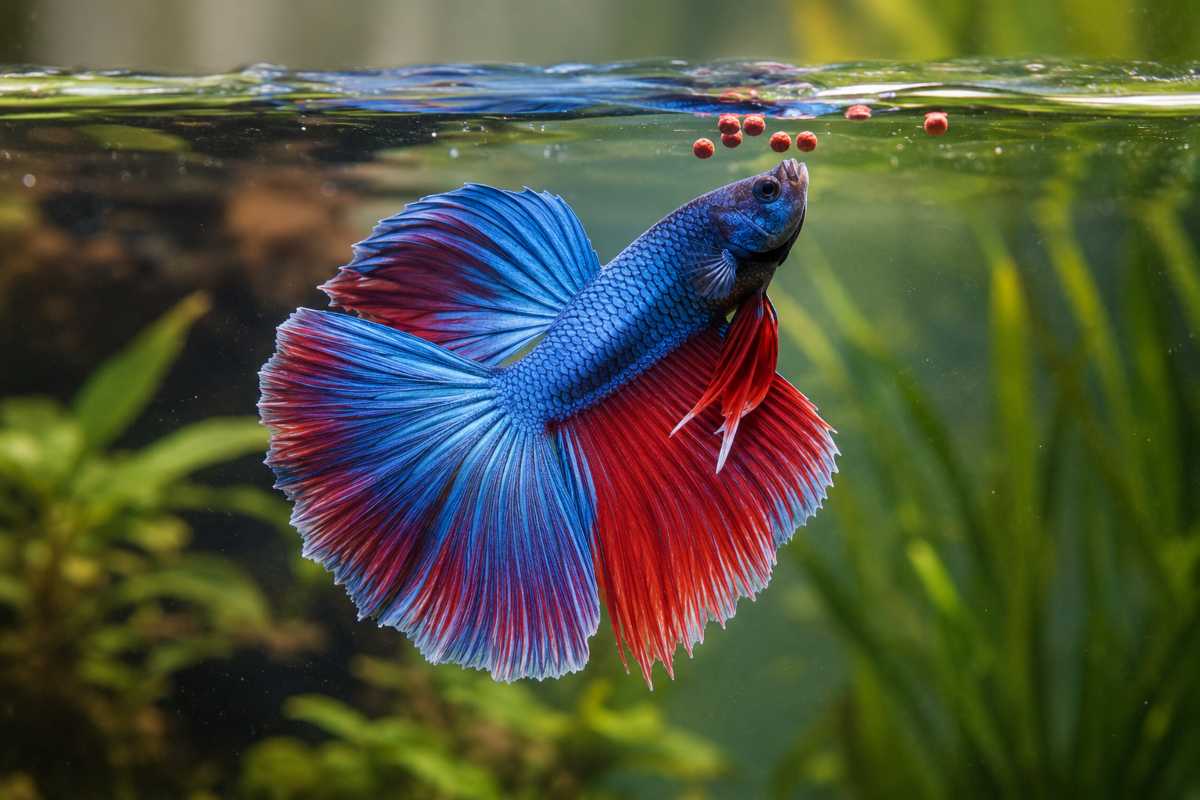
Betta fish need a high-protein, carnivorous diet, ideally 35 to 45 percent protein with low fiber and moderate fat. The best approach combines a high-quality betta-specific pellet as the daily staple with occasional freeze-dried or frozen treats like bloodworms, brine shrimp, or daphnia. Feed only what your betta can eat in about two minutes, once or twice a day, and skip a day of feeding once a week to support digestion.
That’s the short version. The rest of this guide breaks down exactly why bettas need this kind of diet, how to read a food label, how much and how often to feed at every life stage, and how to avoid the two mistakes that send more bettas to the vet than almost anything else: overfeeding and low-quality filler food.
Key Takeaways
- Bettas are carnivores and generally need a diet with 35 to 45 percent protein, under 5 percent fiber, and 5 to 12 percent fat.
- A high-quality betta-specific pellet should be the daily staple, with a named animal protein among the first ingredients.
- Offer freeze-dried or frozen bloodworms, brine shrimp, or daphnia once or twice a week for dietary variety.
- Feed only an amount that fits roughly within the size of the betta’s eye, once or twice a day.
- Include one fasting day each week to help reduce the risk of overfeeding, bloating, and constipation.
- Avoid using goldfish food or generic tropical flakes as the main diet for bettas.
- Betta fry need appropriately sized foods such as infusoria or baby brine shrimp rather than adult pellets until they are large enough.
- Overfeeding is a common contributor to digestive problems such as bloating and swim bladder issues.
What Do Betta Fish Actually Eat In The Wild?
Betta splendens originated in the shallow rice paddies, floodplains, and slow-moving streams of Thailand and neighboring parts of Southeast Asia. In that environment, they are surface-hunting carnivores. Their natural diet consists almost entirely of small insects and invertebrates: mosquito larvae, fruit flies, small crickets, ants, water fleas, and other tiny aquatic organisms that fall onto or live near the water’s surface.
Related Readings: Where Do Betta Fish Live in the Wild
This is the single most important fact to understand about betta nutrition. Bettas did not evolve to graze on plant matter the way goldfish or many community fish do. Their short digestive tract is built to break down protein quickly, not to ferment plant fiber. That biological reality is why generic tropical flakes, which are often formulated with a lot of plant-based filler, tend to fall short of what a betta actually needs.
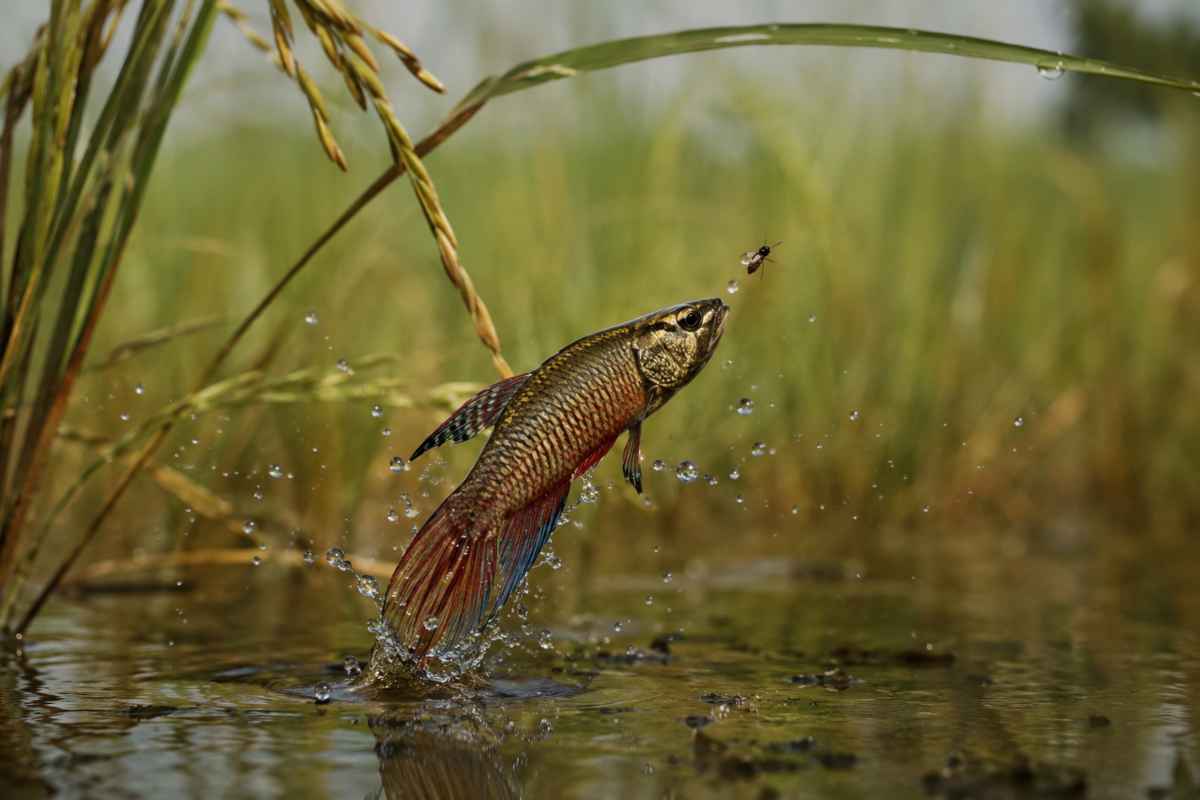 In the wild, bettas leap above the surface to snatch insects like this one mid-air.
What Nutrients Does Betta Fish Food Need To Contain?
A nutritionally complete betta food is built around four things: protein, fat, fiber, and micronutrients. Here is what to look for on a label.
| Nutrient | Target Range | Why It Matters |
|---|---|---|
| Crude protein | 35 to 45 percent | Fuels muscle, energy, and vibrant coloration; should come mainly from named animal sources like fish meal, shrimp meal, or krill meal |
| Crude fat | 5 to 12 percent | Provides concentrated energy and supports cell membrane health, but too much contributes to fatty buildup and constipation |
| Crude fiber | Under 5 percent | Bettas cannot process plant fiber efficiently, so lower fiber content reduces the risk of bloating and waste buildup |
| Vitamins | A, D3, E, K, and the B complex, plus stabilized vitamin C | Support immune function, skin and fin repair, and color development |
| Minerals | Calcium, phosphorus | Support skeletal and metabolic health |
The ingredient list matters as much as the guaranteed analysis panel. A quality betta food lists a whole animal protein, such as whole fish, shrimp, or krill, as one of the first two or three ingredients, rather than leading with wheat flour, soybean meal, or the vague term “fish meal.” When plant-based fillers dominate the first few ingredients, the actual usable protein content for a carnivore like a betta is often lower than the label percentage suggests, because part of that protein comes from plant sources the fish cannot fully digest.
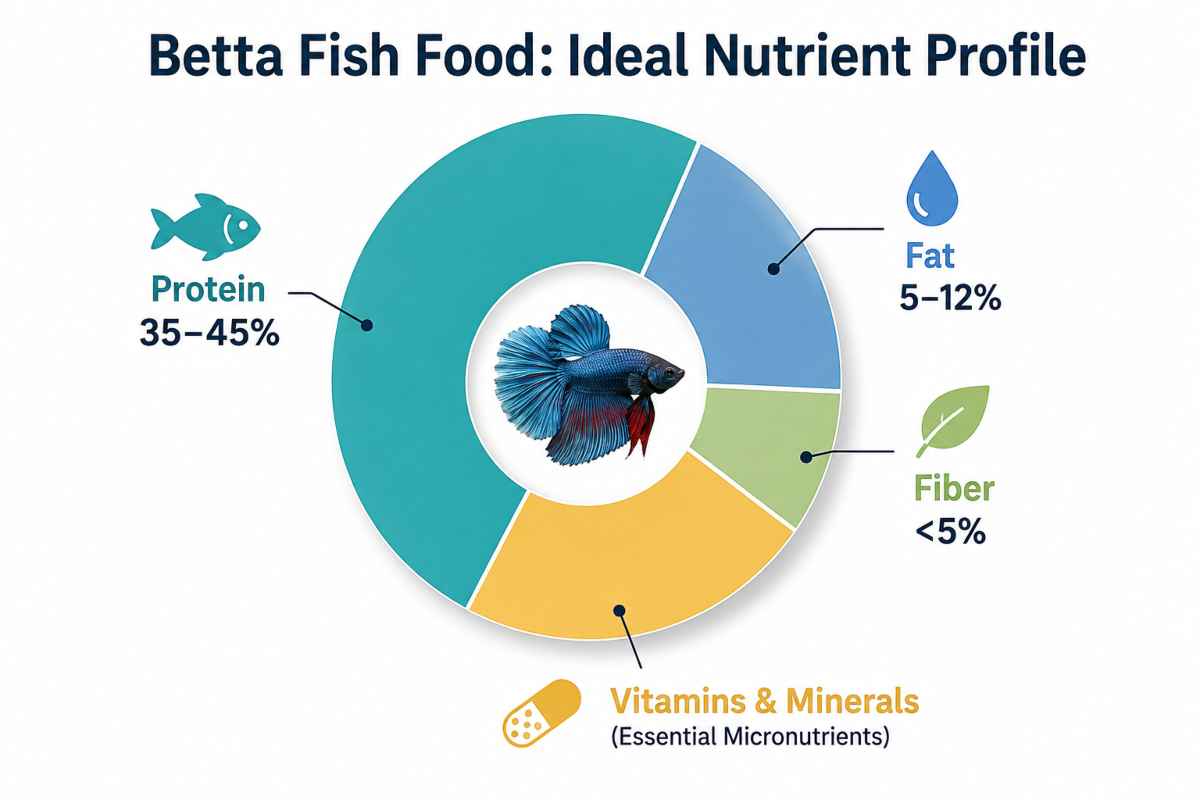 The ideal betta food profile at a glance: 35–45% protein, 5–12% fat, under 5% fiber.
What Are The Different Types Of Betta Fish Food?
No single food type covers every nutritional need on its own, which is why rotating between two or three types generally produces the healthiest, most colorful bettas. Here is how the main options compare.
| Food Type | Protein Quality | Convenience | Best Use | Watch Out For |
|---|---|---|---|---|
| Betta-specific pellets | High, if animal protein leads the ingredient list | Very high, easy to portion | Daily staple food | Some pellets expand significantly after soaking; pre-soak to reduce bloating risk |
| Flakes | Moderate, often lower than pellets | High | Occasional variety, not ideal as sole diet | Sink and foul quickly if uneaten; harder to portion precisely |
| Freeze-dried (bloodworms, brine shrimp, daphnia) | High, but low in moisture | High, long shelf life | Weekly treat, one to two times per week | Must be rehydrated in tank water for a few minutes before feeding to prevent internal swelling |
| Frozen (bloodworms, brine shrimp, daphnia) | High, closer to natural nutrition | Moderate, requires a freezer and thawing | Weekly treat, one to two times per week | Thaw fully and rinse before feeding to reduce waste and bacteria |
| Live foods (brine shrimp, daphnia, mosquito larvae) | Highest, closest to natural diet | Lower, requires sourcing and sometimes culturing | Occasional enrichment, especially for picky eaters or conditioning breeders | Risk of introducing parasites or bacteria if not sourced from a reputable supplier |
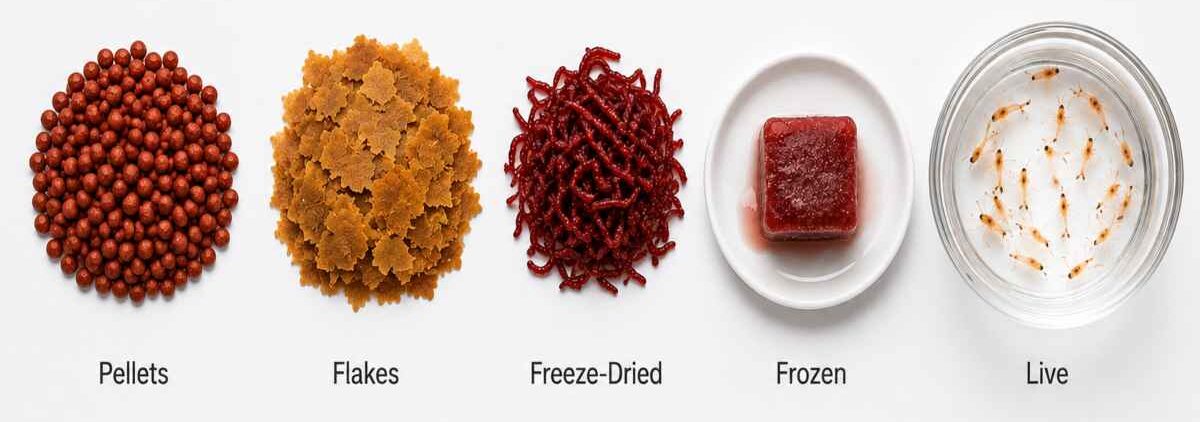 Five common betta food types side by side, from pellets to live brine shrimp.
A well-balanced weekly routine for most adult bettas looks like a pellet-based staple five or six days a week, with one or two of those days replaced or supplemented by a freeze-dried or frozen treat.
How Much Should You Feed A Betta Fish?
This is the question that trips up more new betta owners than any other, because a betta’s stomach is genuinely tiny, roughly the same size as its own eye. A common and reliable guideline used by aquatic veterinarians is to feed only as much as fits within that eye-sized volume per meal.
In practical terms, that usually works out to:
- Two to four small pellets per feeding for an adult betta, or
- A small pinch of flakes that gets fully consumed within about two minutes, or
- A few rehydrated freeze-dried pieces on treat days
If food is still floating or sinking uneaten after two minutes, you fed too much. Uneaten food does two harmful things at once: it decomposes and spikes ammonia in the water, and it tempts owners to keep adding more because the fish still “looks hungry.” Bettas will beg for food even when full, so portion control has to come from you, not from reading the fish’s behavior.
Related Readings: Fish Digestive System Explained
How Often Should You Feed A Betta Fish?
Adult bettas generally do best on one of these two schedules:
- Once daily, feeding a slightly larger single portion
- Twice daily, feeding two smaller portions roughly eight to twelve hours apart
Either approach works well as long as the total daily amount stays small. What matters more than feeding frequency is consistency and portion size.
Many experienced keepers also build in a fasting day once a week, where no food is offered at all. This gives the digestive tract time to process any accumulated waste fully and is one of the simplest ways to reduce the risk of bloating, constipation, and swim bladder problems. A healthy adult betta can comfortably go a day or two without food with no ill effects, since fasting mimics the natural feast and famine rhythm bettas experience in the wild.
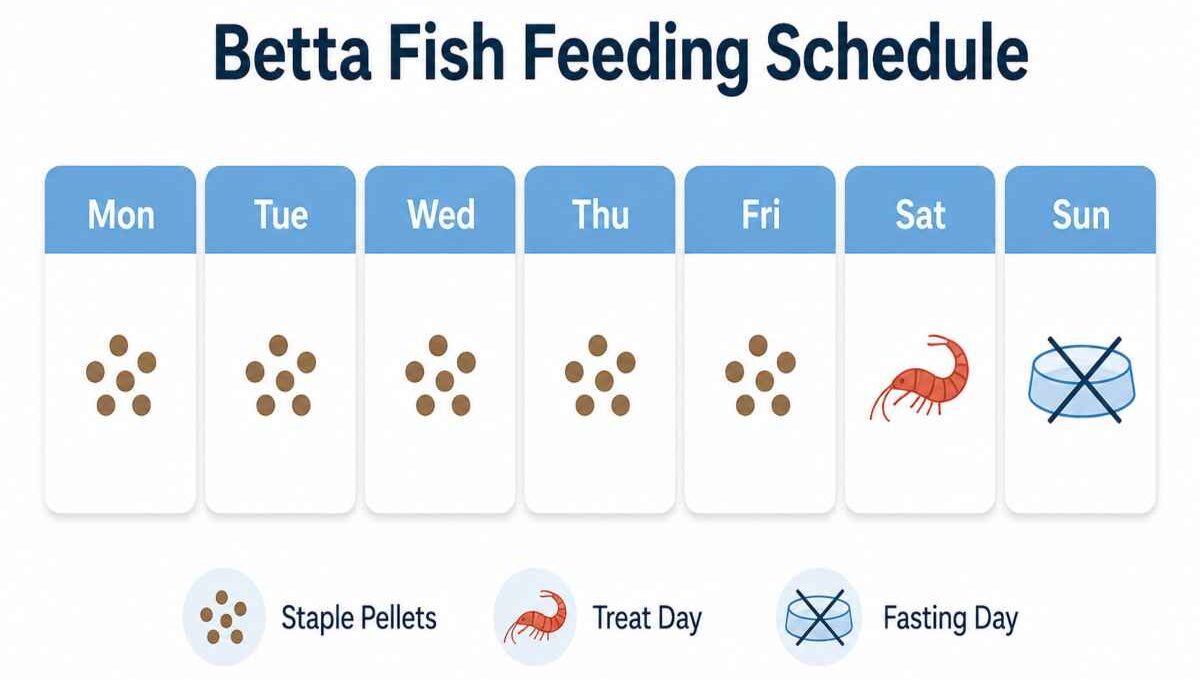 A simple weekly routine: pellets most days, one treat day, one fasting day.
Can Betta Fish Eat Human Food?
Occasionally, and only in very specific, limited ways. Bettas are not built to process most human foods, but a couple of options are commonly used by experienced keepers for specific purposes:
- Cooked, skinned, and mashed peas: Offered once in a while, these are sometimes used to help a constipated betta pass a blockage. Peas are not a nutritional staple, and any uneaten portion should be removed quickly, since they foul water fast.
- A tiny piece of plain, unseasoned, cooked white fish or chicken: Occasionally used as a rare treat by some keepers, though it offers little advantage over betta-specific proteins and carries a higher risk of water fouling.
Bread, cereal, fruit, raw meat, and anything seasoned, fried, or processed should never be fed to a betta. These items are either nutritionally useless to a carnivore or actively harmful to water quality and digestion.
What Should You Never Feed A Betta Fish?
- Goldfish food or generic tropical community flakes, which are primarily plant-based and too low in protein for a carnivore
- Bread, crackers, or any starchy human snack food
- Raw meat intended for mammals, which is not nutritionally matched to fish and can introduce pathogens
- Expired food, especially pellets that smell rancid or show visible mold, since oxidized fats lose nutritional value and can cause digestive upset
- Any food not specifically intended for aquarium fish
How Do You Feed Betta Fry?
Feeding requirements change dramatically in the first weeks of life, and this is one of the most commonly overlooked topics in general betta care guides.
- Days 0 to 2 or 3: Newly hatched fry survive on their attached yolk sac and do not need to be fed.
- After the yolk sac is absorbed: Fry need infusoria, very small free-floating microorganisms, or commercially prepared fry starter foods, since their mouths are far too small for adult pellets.
- From about one to several weeks old: Newly hatched brine shrimp (often called baby brine shrimp or BBS) become the gold standard food, offering high protein in a size fry can swallow.
- Feeding frequency: Fry have small stomachs and fast metabolisms, so they typically need three to four small feedings spread throughout the day rather than one or two larger meals.
As fry grow, foods are gradually upgraded in size, moving toward crushed flakes, small pellets, and eventually standard adult betta food over the following weeks to months.
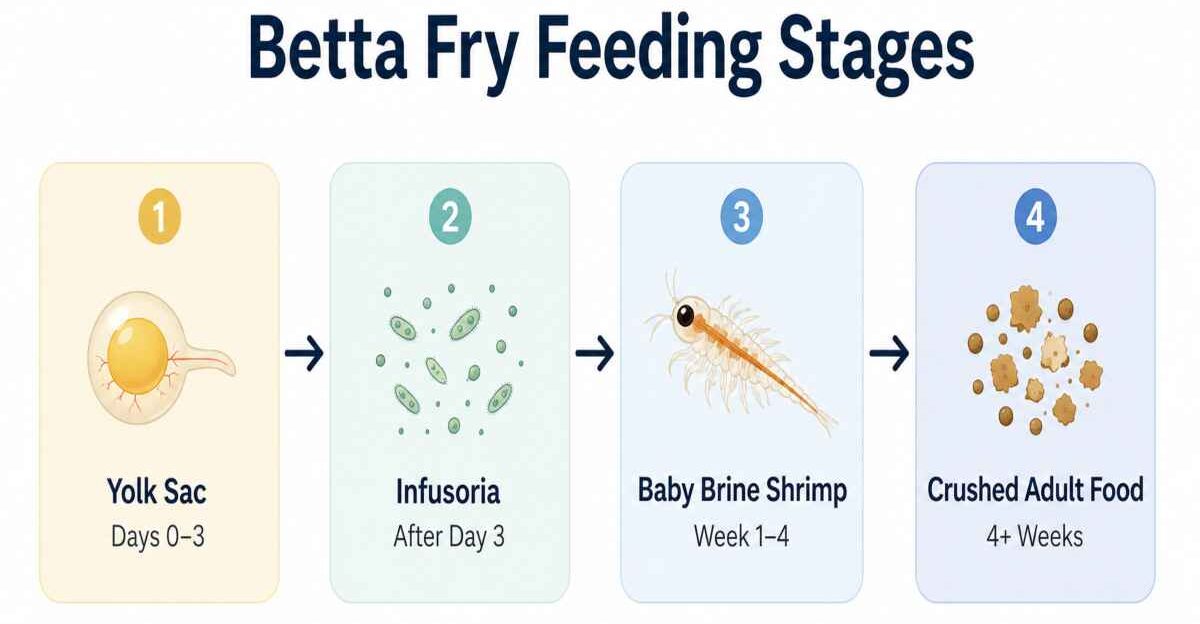 How betta fry feeding progresses from yolk sac to baby brine shrimp to adult food.
What Happens If You Overfeed Or Underfeed A Betta Fish?
Overfeeding is, by a wide margin, the more common and more dangerous mistake. A stomach the size of an eyeball has very little margin for error, and repeated overfeeding is strongly linked to some of the most common betta health issues, including bloating, constipation, and swim bladder disease. This condition affects buoyancy and is often sought by name. Chronic digestive strain from overfeeding can also worsen the internal fluid buildup seen in more serious conditions.
Signs a betta has been overfed include:
- A visibly rounded or swollen belly
- Floating at an odd angle or difficulty swimming upright
- Uneaten food accumulating on the substrate
- Cloudy or ammonia-smelling water between water changes
Underfeeding is less common but still worth watching for, particularly in community tanks where a betta might be outcompeted for food, or when a sick fish stops eating. A healthy betta should show interest in food, maintain a rounded but not swollen belly, and display steady energy and color.
If a betta stops eating for more than two to three days and shows no other symptoms, it is worth reviewing recent water quality, temperature stability, and any tank changes, since appetite loss is often one of the earliest signs that something in the environment or the fish’s health has shifted.
How Do You Choose A High Quality Betta Fish Food?
Use this quick checklist when comparing products at the store or online:
- A named animal protein (fish, shrimp, krill, or fish meal) appears in the first two or three ingredients
- Crude protein sits between 35 and 45 percent
- Crude fiber is listed under 5 percent
- The product is labeled specifically for bettas, not a general community or tropical fish blend
- The package is sealed, within its expiration window, and shows no signs of moisture or clumping
- You are prepared to rotate in a freeze-dried or frozen protein source at least once a week for variety
Common Feeding Mistakes To Avoid
- Feeding by the clock instead of by the eye-sized portion rule. A fixed number of pellets can still be too much for a smaller fish.
- Skipping the pre-soak on expanding pellets. Dry pellets that swell in the stomach are a common cause of bloating.
- Relying only on flakes. They are convenient but generally offer less concentrated nutrition and are harder to portion accurately.
- Never fasting. Continuous daily feeding without a break can contribute to chronic digestive strain over time.
- Ignoring the expiration date. Fish food loses potency and can develop rancid fats well before it looks visibly spoiled.
Final thoughts
Feeding a betta well is not complicated once you understand the two core principles: bettas are carnivores that need concentrated, high-quality protein, and their stomachs are small enough that portion control matters more than almost any other factor in their long-term health. A quality betta pellet as the daily base, occasional protein-rich treats for variety, a weekly fasting day, and consistent, moderate portions will cover the vast majority of what a healthy betta needs to thrive. Getting feeding right is one of the simplest ways to prevent the digestive and buoyancy problems that account for a large share of the health concerns bettas commonly face at home.
Frequently Asked Questions (FAQs)
How many pellets should I feed my betta fish?
Most adult bettas do well with two to four pellets per feeding, once or twice a day. The exact number depends on pellet size, so the better rule is to match the total volume of food to roughly the size of the fish’s eye.
Can betta fish go a day without eating?
Yes. A healthy adult betta can safely skip a day of feeding, and many keepers intentionally build in a weekly fasting day to support digestion.
Is it okay to feed betta fish flakes instead of pellets?
Occasionally, yes, but flakes generally should not replace a quality betta-specific pellet as the primary daily food, since they tend to offer less concentrated protein and are harder to portion precisely.
Do betta fish need live food to stay healthy?
No. Live food offers enrichment and can encourage picky eaters. Still, a high-quality pellet combined with occasional freeze-dried or frozen treats provides complete nutrition without the parasite risk associated with some live food sources.
Why does my betta fish look bloated after eating?
Bloating shortly after a meal is often caused by pellets expanding inside the stomach after being swallowed dry, or by simple overfeeding. Pre-soaking pellets for a minute or two before feeding, and sticking to the eye-sized portion rule, usually resolves this.
Can I feed my betta fish goldfish food?
It should not be a regular part of the diet. Goldfish food is formulated for a largely omnivorous, plant-tolerant species and does not meet the high-protein needs of a carnivorous betta.
References
- Sanders, J., DVM. “What Do Betta Fish Eat?” Fish Vet, Aquatic Veterinary Services. https://cafishvet.com/betta/what-do-betta-fish-eat/
- PetMD Editorial, veterinarian reviewed. “Betta Fish Care Sheet.” PetMD. https://www.petmd.com/fish/betta-fish-care-sheet