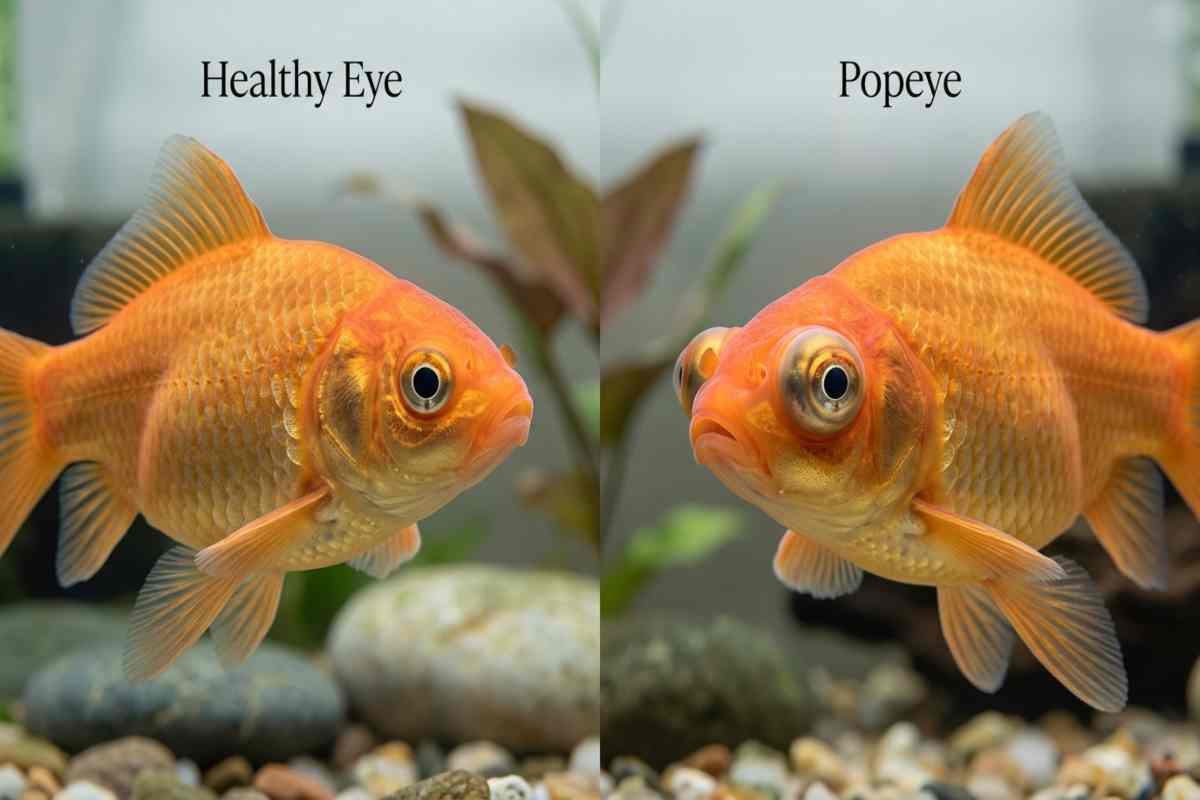
Fish popeye is a condition in which one or both eyes become abnormally enlarged or protrude from the head. The veterinary term is exophthalmia or exophthalmos. Importantly, popeye is not a single disease. It is a visible sign that can result from eye injury, infection, poor environmental conditions, systemic disease, or, less commonly, parasites and gas-related problems.
The most useful first step is therefore not to choose a medication immediately, but to determine why the eye is protruding. Check water quality, inspect the affected eye for injury or cloudiness, look for additional symptoms, and consider whether one or both eyes are affected. Treating the underlying problem gives the fish a much better chance of recovery than using a broad medication without a diagnosis.
What Is Fish Popeye?
Fish popeye occurs when the eye is pushed outward from its normal position. It may affect one eye (unilateral popeye) or both eyes (bilateral popeye). The eye may look enlarged, cloudy, bloody, or surrounded by swollen tissue, depending on the underlying cause.
Popeye can occur in freshwater and marine fish and is seen in many aquarium species. It is particularly important to understand that the appearance alone cannot tell you whether the problem is bacterial, traumatic, environmental, parasitic, or systemic. A veterinary examination may be necessary when the condition is severe or does not improve.
Fish Popeye Causes
There is no single cause of popeye. Several different problems can produce a similar outward appearance, so the surrounding symptoms and aquarium conditions matter.
1. Eye Injury
Physical trauma is one of the important possibilities, particularly when only one eye is affected. A fish can injure its eye against sharp decorations, rough surfaces, aquarium equipment, during netting, or through aggressive interaction with another fish. Transport and handling can also cause eye injuries.
A traumatic case may initially involve swelling or bleeding around the eye without signs of a generalized illness. If the aquarium contains sharp ornaments or aggressive tankmates, correcting those problems is an important part of treatment.
2. Bacterial Infection
Bacterial disease can cause inflammation and swelling of the tissues around the eye and may produce popeye. It is more concerning when ulcers, hemorrhages, lethargy, loss of appetite, abdominal swelling, or other abnormalities accompany the eye problem.
However, not every case of popeye is bacterial. This is why automatically treating every protruding eye with antibiotics is poor practice. Veterinary guidance recommends targeted therapy when possible rather than indiscriminate medication.
3. Poor Water Quality and Stress
Poor water quality can weaken fish and increase their disease susceptibility. Ammonia, nitrite, inadequate maintenance, overcrowding, unstable conditions, and other environmental stressors can contribute to fish health problems.
Water quality should therefore be checked whenever a fish develops popeye. The aquarium should be tested for at least ammonia, nitrite, nitrate, pH, and temperature, with results interpreted according to the species being kept.
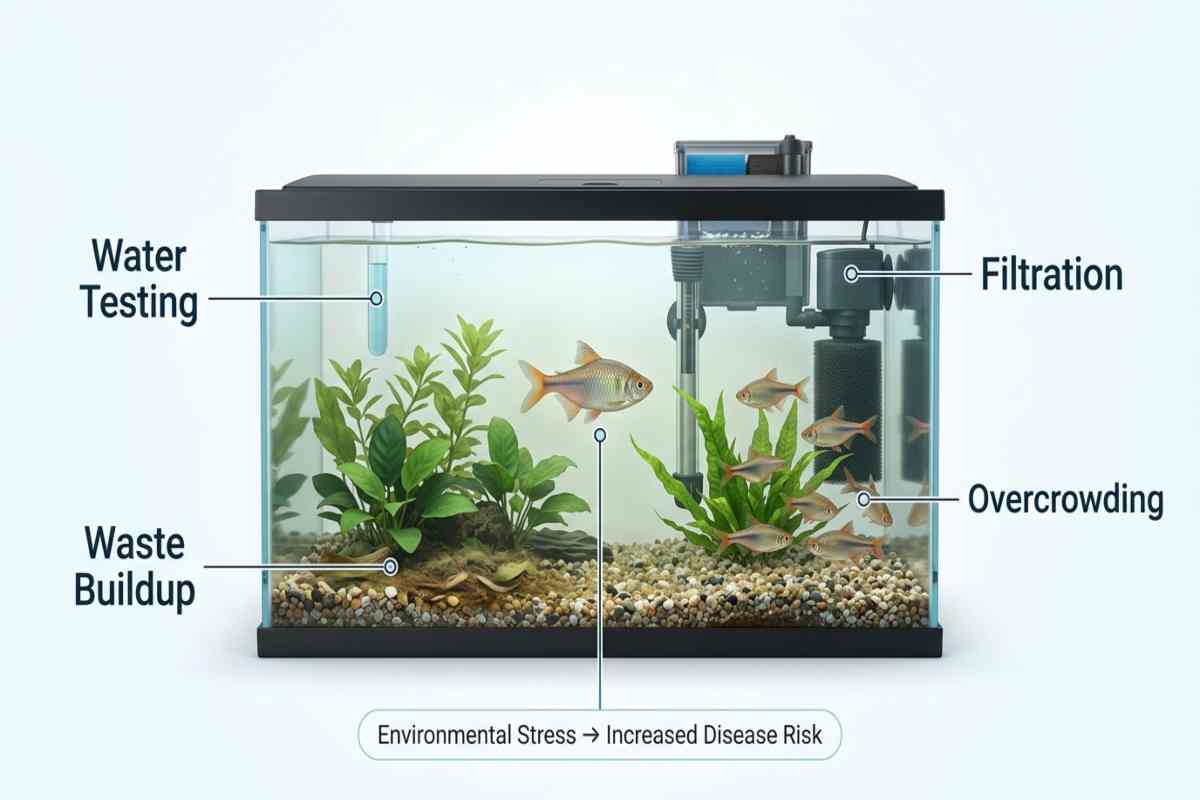 How water quality, waste, filtration, and stress affect fish health.
4. Systemic Disease
Popeye can occur as one sign of a broader infection or internal disease. Some bacterial and viral diseases can produce exophthalmia along with other systemic signs such as hemorrhage, abdominal fluid accumulation, weakness, darkening, or abnormal swimming.
If several fish are developing popeye or the affected fish has multiple serious symptoms, the situation should not be treated as a simple eye infection. A fish health professional or aquatic veterinarian may need to investigate the underlying disease.
Read More: What Is Dropsy in Fish
5. Parasites and Other Less Common Causes
Certain parasites can affect fish eyes. Eye flukes, for example, can cause enlarged or cloudy eyes, although they are more relevant in some wild-caught fish than in typical captive aquarium situations.
Another unusual cause is gas bubble disease. Excess dissolved gas can form bubbles within tissues, including the eye, resulting in exophthalmos. This requires correcting the gas supersaturation problem rather than treating the fish with an antibacterial medication.
Fish Popeye Symptoms
The obvious sign is a protruding eye, but other symptoms can provide clues about the underlying problem.
Common signs include:
- One or both eyes protruding
- Swelling around the eye
- Cloudy or whitish eye
- Redness or bleeding
- Damaged or ulcerated tissue
- Reduced appetite
- Lethargy
- Abnormal swimming
- Skin ulcers or hemorrhages
- Abdominal swelling
- Rapid breathing or other signs of systemic illness
A single swollen eye after obvious trauma suggests a different set of possibilities than both eyes protruding alongside lethargy and abdominal swelling. This distinction is useful when deciding how urgently the fish needs professional assessment.
Is Fish Popeye Contagious?
Popeye itself is not contagious because it is a symptom, not one specific disease. However, the condition causing popeye may be infectious.
For example, if an underlying bacterial or viral disease is responsible, other fish may be at risk. This is why a sudden outbreak affecting multiple fish should be treated as a potential disease problem rather than assuming every fish simply suffered an eye injury.
When practical, move a sick fish to an appropriately prepared hospital or quarantine aquarium, particularly when an infectious disease is suspected. Maintain separate equipment to reduce the chance of transferring pathogens between aquariums.
How to Treat Fish Popeye
Treatment depends on the underlying cause. There is no single “popeye medicine” that is appropriate for every case.
Step 1: Check the Aquarium
Test the water and correct any problems you find. If ammonia or nitrite is detectable, prompt corrective action is important because these compounds can seriously harm fish.
Make sure filtration and aeration are functioning correctly, remove decaying organic matter, and perform an appropriate water change using properly conditioned water.
Step 2: Inspect the Fish and Tank
Look for sharp decorations, damaged equipment, aggressive tankmates, or other possible sources of trauma. Observe whether one or both eyes are affected and check the rest of the body for ulcers, bleeding, parasites, abnormal scales, or other lesions.
Step 3: Reduce Stress
Provide stable environmental conditions, adequate hiding places, suitable temperature, and good oxygenation for the species. Avoid unne
Step 4: Isolate When Appropriate
If infection is suspected, a separate hospital tank can make observation and treatment easier while reducing potential exposure to healthy fish.
Quarantine and biosecurity are important components of fish disease management, and veterinary guidance emphasizes keeping new or sick fish separated when appropriate.
Step 5: Use Targeted Medication When Indicated
Do not automatically use antibiotics simply because an eye is swollen. Bacterial, fungal, parasitic, traumatic, and environmental problems require different approaches.
If a bacterial infection is strongly suspected or the fish has severe systemic signs, consult an aquatic veterinarian or qualified fish health professional about an appropriate medication. Follow the product label carefully and avoid combining medications unless compatibility and safety are known.
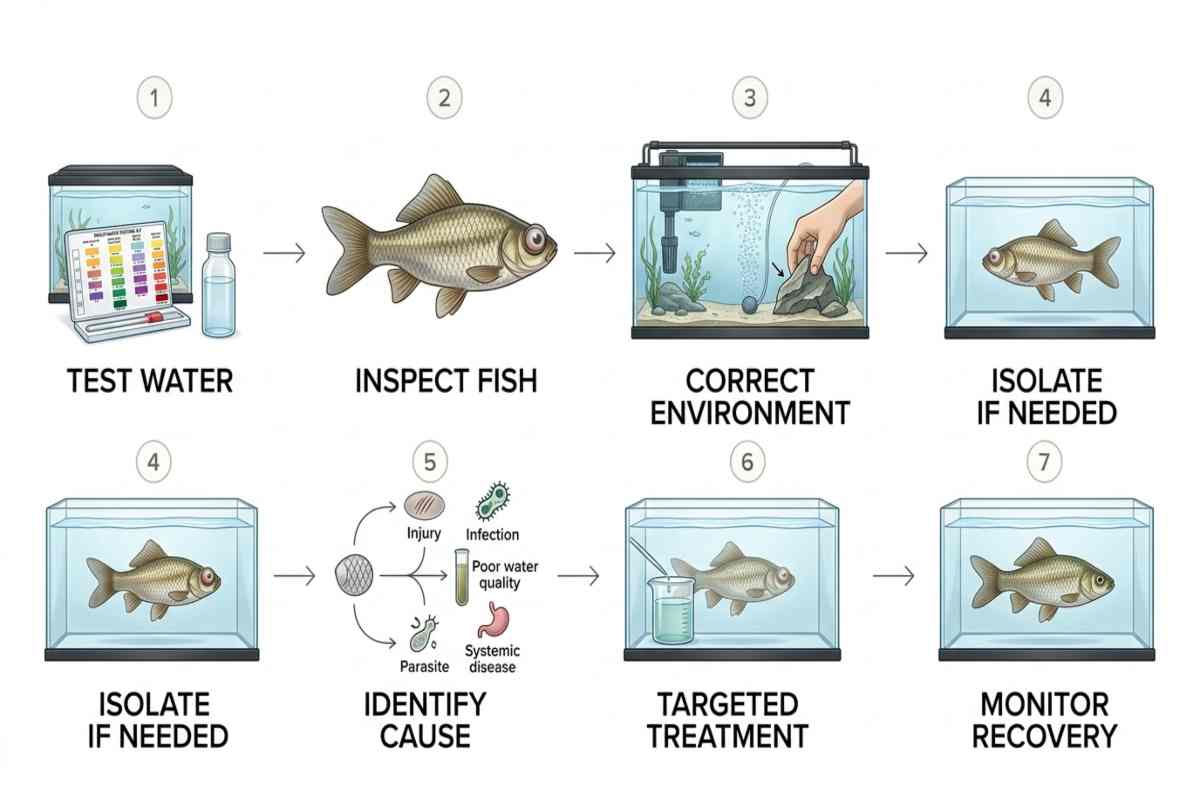 Step-by-step approach to assessing and treating fish popeye.
How Long Does Fish Popeye Take to Heal?
Recovery time varies considerably because Popeye’s different conditions cause Popeye. A mild traumatic case may improve after the underlying irritation is removed, while severe infection or systemic disease can take much longer and may cause permanent eye damage.
An eye that remains severely swollen, becomes increasingly cloudy or bloody, ruptures, or is accompanied by worsening whole-body symptoms requires prompt professional attention. Even when the underlying disease is controlled, the eye may not return completely to its original appearance.
How to Prevent Fish Popeye
Prevention focuses on reducing the conditions that increase the likelihood of injury and disease.
Fish popeye prevention checklist:
- Maintain stable, species-appropriate water conditions.
- Regularly test ammonia and nitrite and monitor nitrate.
- Perform appropriate routine water changes.
- Avoid overcrowding.
- Provide adequate filtration and oxygenation.
- Remove sharp or abrasive decorations.
- Prevent aggressive tankmates from injuring fish.
- Handle fish carefully with appropriate equipment.
- Quarantine new fish before introducing them to an established aquarium.
- Provide a nutritionally appropriate diet.
- Avoid unnecessary medications and chemical treatments.
Good husbandry matters because interactions among the pathogen, the fish, and the environment often influence fish disease. Merck Veterinary Manual identifies stress, poor water quality, overcrowding, and inadequate quarantine as important contributors to fish disease.
Fish Popeye vs. Other Eye Problems
| Condition | Typical Appearance | Possible Clue |
|---|---|---|
| Popeye | Eye protrudes outward | Can have many causes |
| Eye Injury | Swelling, redness, or damage | Often affects one eye |
| Cataract | Eye appears cloudy | Lens is affected |
| Eye Parasite | Enlarged or cloudy eye | May occur in wild-caught fish |
| Gas Bubble Disease | Protrusion with gas bubbles | May also affect fins or gills |
| Systemic Disease | Popeye with other body signs | Multiple fish may be affected |
This table is a guide, not a diagnostic test. Several conditions can look similar, and confirmation may require microscopic examination, culture, imaging, or other veterinary diagnostic methods.
When Should You See a Fish Veterinarian?
Professional help is especially appropriate when the popeye is severe, rapidly worsening, affects both eyes, occurs in multiple fish, or is accompanied by hemorrhage, ulcers, abdominal swelling, severe lethargy, breathing difficulty, or deaths.
For valuable fish or unexplained outbreaks, diagnostic testing can be much more useful than repeatedly trying different medications. Fish health professionals can consider the history, water quality, clinical signs, and diagnostic samples before selecting treatment.
Final Takeaway
Fish popeye is a symptom, not a single disease. The protruding eye may result from trauma, infection, poor environmental conditions, parasites, systemic disease, or unusual problems such as gas bubble disease. The safest approach is to investigate the aquarium, assess the fish for additional symptoms, correct environmental problems, isolate the fish when appropriate, and use targeted treatment rather than guessing at medication.
At The Fish Care, the goal should be to help aquarists distinguish between treating a visible symptom and identifying the underlying disease. That approach is more useful for the fish and produces more reliable long-term aquarium care.
Frequently Asked Questions (FAQs)
Can fish recover from popeye?
Yes. Recovery is possible, particularly when the underlying cause is identified and corrected early. The outcome depends on whether the problem involves trauma, environmental stress, infection, parasites, or systemic disease.
Does poor water quality cause popeye?
Poor water quality can contribute to fish disease and stress, but it is not the only cause of popeye. Trauma, infectious disease, parasites, gas bubble disease, and systemic disorders can also produce exophthalmia.
Should I use antibiotics for popeye?
Not automatically. Popeye is a symptom rather than a diagnosis, and antibiotics are only appropriate when a bacterial infection is suspected or confirmed. Unnecessary antimicrobial use can cause treatment complications and contribute to antimicrobial resistance.
Can popeye spread to other fish?
The swollen eye itself does not spread. However, an infectious disease that causes popeye can spread to other fish. If multiple fish develop similar symptoms, investigate the aquarium as a possible disease outbreak.
Can a fish lose its eye from popeye?
Severe disease or injury can permanently damage the eye. Even if the fish survives, the affected eye may not fully return to its previous appearance. The priority is to control the underlying problem and protect the fish from further injury or infection.
Is one-eye popeye less serious than two-eye popeye?
Not necessarily, but the pattern can provide a useful clue. One-sided popeye can result from localized trauma, whereas bilateral popeye may be associated with systemic or environmental factors. These are possibilities rather than diagnostic rules.
References
- Merck Veterinary Manual – Disorders and Diseases of Fish
Merck Veterinary Manual: Disorders and Diseases of Fish - University of Florida IFAS – Introduction to Fish Health Management
UF/IFAS: Introduction to Fish Health Management
Read next: Columnaris Fish Disease Symptoms Causes and Treatment