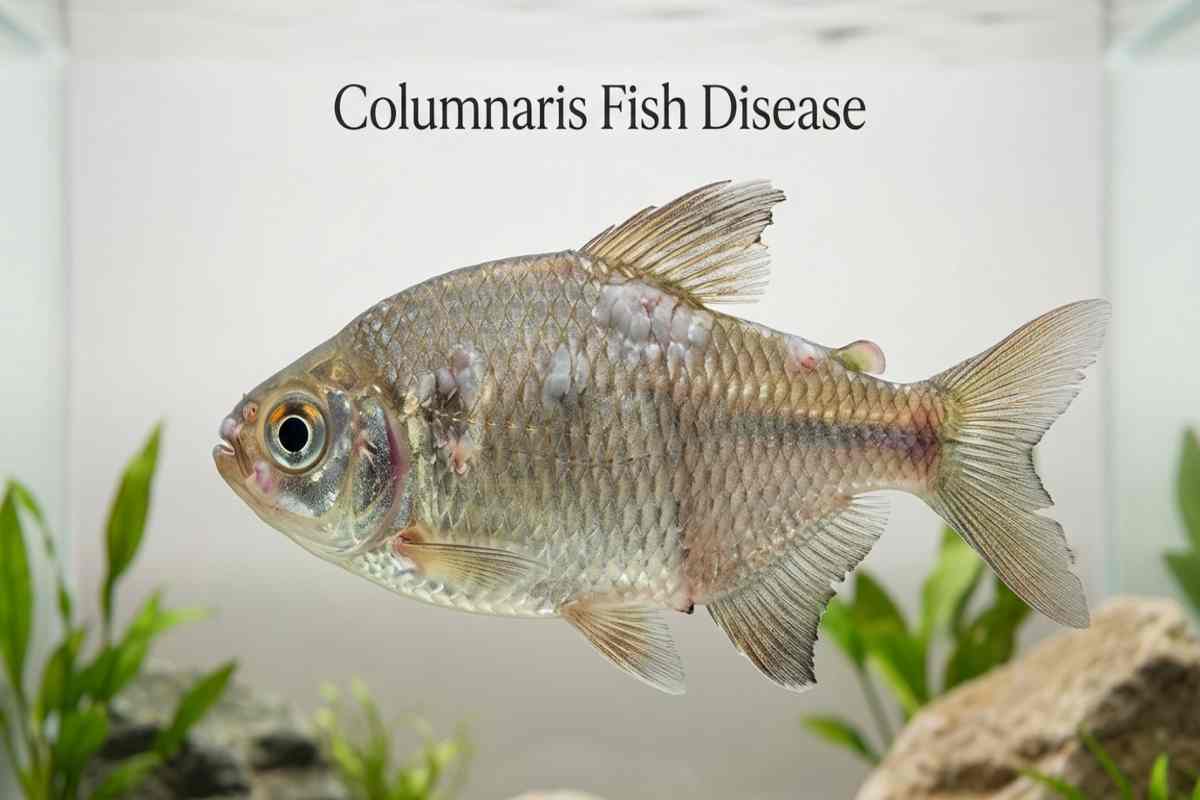
Columnaris fish disease is a bacterial infection that can damage the skin, fins, mouth, and gills of freshwater fish and may become life-threatening when it progresses rapidly. It is most commonly associated with Flavobacterium columnare, a Gram-negative bacterium widely found in freshwater environments. The disease can occur in aquarium, wild, and cultured fish, and severe infections may cause extensive tissue damage and mortality.
The most important point for fish keepers is that Columnaris should not be diagnosed from appearance alone. White or gray lesions can resemble fungal growth, while fin erosion can look like ordinary fin rot. Early isolation, water-quality correction, and appropriate diagnosis can greatly improve the chances of successful management.
Key Takeaways
- Columnaris is a bacterial disease caused by Flavobacterium columnare.
- Typical signs include pale or gray-white lesions, fin erosion, ulcers, mouth lesions, and gill damage.
- Warm water, poor water quality, crowding, handling injuries, and other stressors can increase the risk of disease.
- Appearance alone cannot reliably distinguish Columnaris from fungal, parasitic, or other bacterial diseases.
- Treatment should combine disease management with improved husbandry, and antibiotics should be used responsibly and in accordance with local veterinary or regulatory guidance.
What Is Columnaris Fish Disease?
Columnaris is an infectious bacterial disease affecting many freshwater fish species. The principal organism historically associated with the disease is Flavobacterium columnare. However, modern genomic research has shown that the group of bacteria associated with columnaris disease is more diverse than the traditional name suggests. The bacterium is a gram-negative, slender organism that can colonize damaged skin, fins, and gill tissue.
The infection may remain primarily external or progress to more serious disease involving internal tissues. Its appearance varies according to the bacterial strain, fish species, environmental conditions, and stage of infection. Some rapidly progressing infections can cause death before obvious external lesions become extensive, which is why waiting for dramatic symptoms can be dangerous.
Columnaris Fish Disease Symptoms
The signs of Columnaris can range from subtle skin changes to severe tissue destruction. Early lesions may appear as pale, gray, yellowish, or whitish areas on the skin or fins. As infection progresses, affected tissue may erode, ulcerate, or become covered with mucus and necrotic material. Merck Veterinary Manual describes skin and gill lesions that may have slimy or cotton-like exudates over areas of tissue damage.
Common symptoms include:
- Pale, gray, yellowish, or white skin lesions
- Erosion or deterioration of the fins
- Ulcers or areas of exposed tissue
- Excess mucus on affected areas
- Mouth or facial lesions
- Damaged or necrotic gill tissue
- Rapid breathing or difficulty breathing when the gills are affected
- Loss of appetite and lethargy
- Abnormal swimming in advanced disease
- Sudden deaths in severe outbreaks
A characteristic “saddleback” lesion may develop across the dorsal region of some fish, particularly in certain cultured species. However, this sign is not present in all cases and should not be considered necessary for the diagnosis of Columnaris.
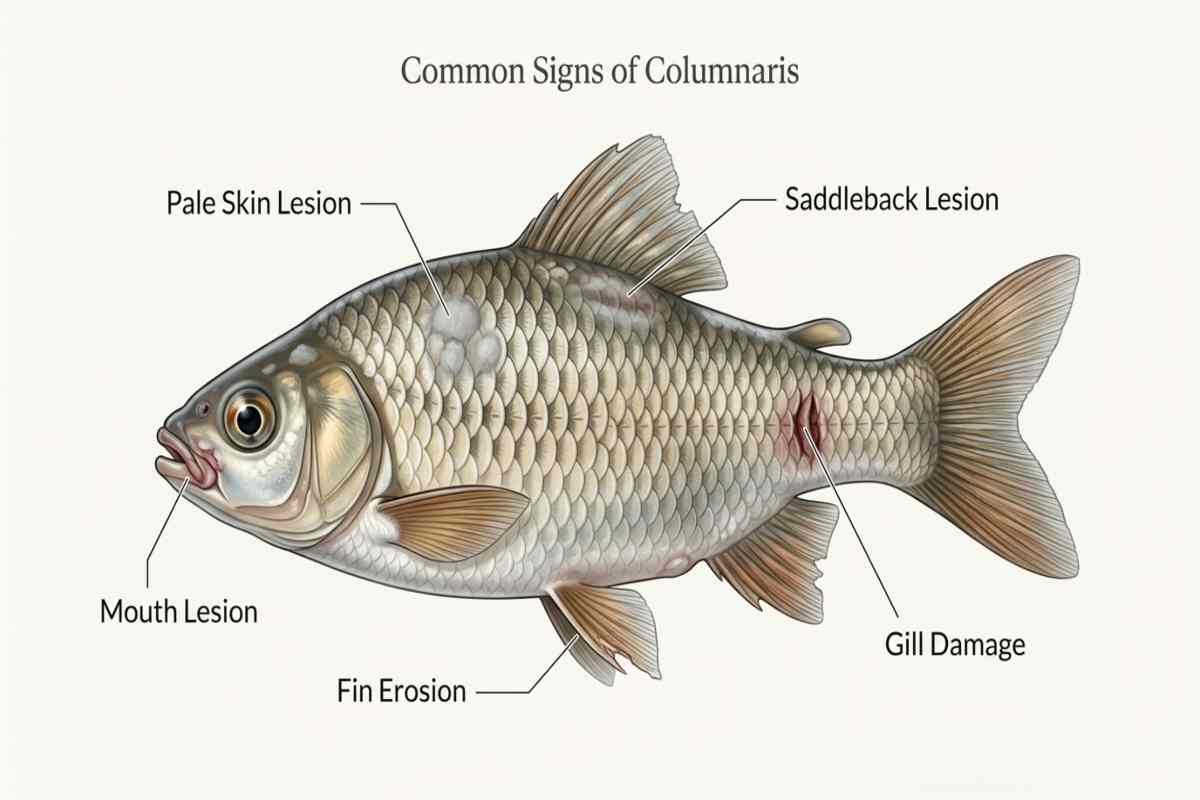 Common areas affected by Columnaris in freshwater fish.
What Causes Columnaris in Fish?
Columnaris is caused primarily by bacteria in the genus Flavobacterium, specifically Flavobacterium columnare. These organisms occur in freshwater environments and can affect numerous fish species. Infection is more likely when environmental or physiological conditions reduce the fish’s ability to resist infection or damage the body’s protective surface.
Several factors can increase the risk of an outbreak. Poor water quality, excessive stocking, handling, physical injuries, nutritional problems, and other infections can stress fish or damage their skin and gills. Warm-water conditions are particularly associated with many Columnaris outbreaks, although temperature alone does not cause the disease.
Common Risk Factors
| Risk Factor | Why It Matters |
|---|---|
| Poor water quality | Increases physiological stress |
| Overcrowding | Increases contact and pathogen transmission |
| Physical injury | Damages the protective skin barrier |
| Rough handling | Can create entry points for bacteria |
| Other infections | Can weaken fish and damage tissues |
| High organic load | Can contribute to unfavorable disease conditions |
| Sudden environmental changes | Add physiological stress |
Important misconception: Columnaris is not simply a disease caused by “dirty water.” Fish can become infected in otherwise well-managed systems, and environmental stressors are better understood as factors that increase susceptibility and disease severity rather than as direct causes.
Is Columnaris Contagious?
Yes. Columnaris can spread between susceptible fish, particularly when fish are kept in close contact or share contaminated water. Equipment, water movement, handling practices, and infected fish can contribute to transmission within a system.
This is why an outbreak should be treated as a tank-level health problem, not just an issue affecting one visibly sick fish. Remove dead fish promptly, avoid sharing nets or equipment between tanks without proper cleaning, and reduce unnecessary handling.
Columnaris vs Fungus and Fin Rot
One of the biggest diagnostic mistakes is assuming that every white or fuzzy growth is fungus. Columnaris can produce pale or cotton-like material over damaged tissue, making it visually similar to fungal infections.
| Feature | Columnaris | Fungal Infection | Fin Rot |
|---|---|---|---|
| Primary cause | Bacterial | Fungal organisms | Usually bacterial |
| Skin lesions | Common | Common | Less typical |
| Cotton-like appearance | Possible | Common | Usually absent |
| Fin erosion | Common | Possible | Very common |
| Gill involvement | Possible | Possible | Usually limited |
| Rapid progression | Can be rapid | Variable | Usually slower |
These differences are general patterns, not definitive diagnostic rules. Mixed infections can also occur, meaning a fish may have Columnaris alongside another bacterial or fungal infection. Clinical appearance alone is therefore insufficient for certainty.
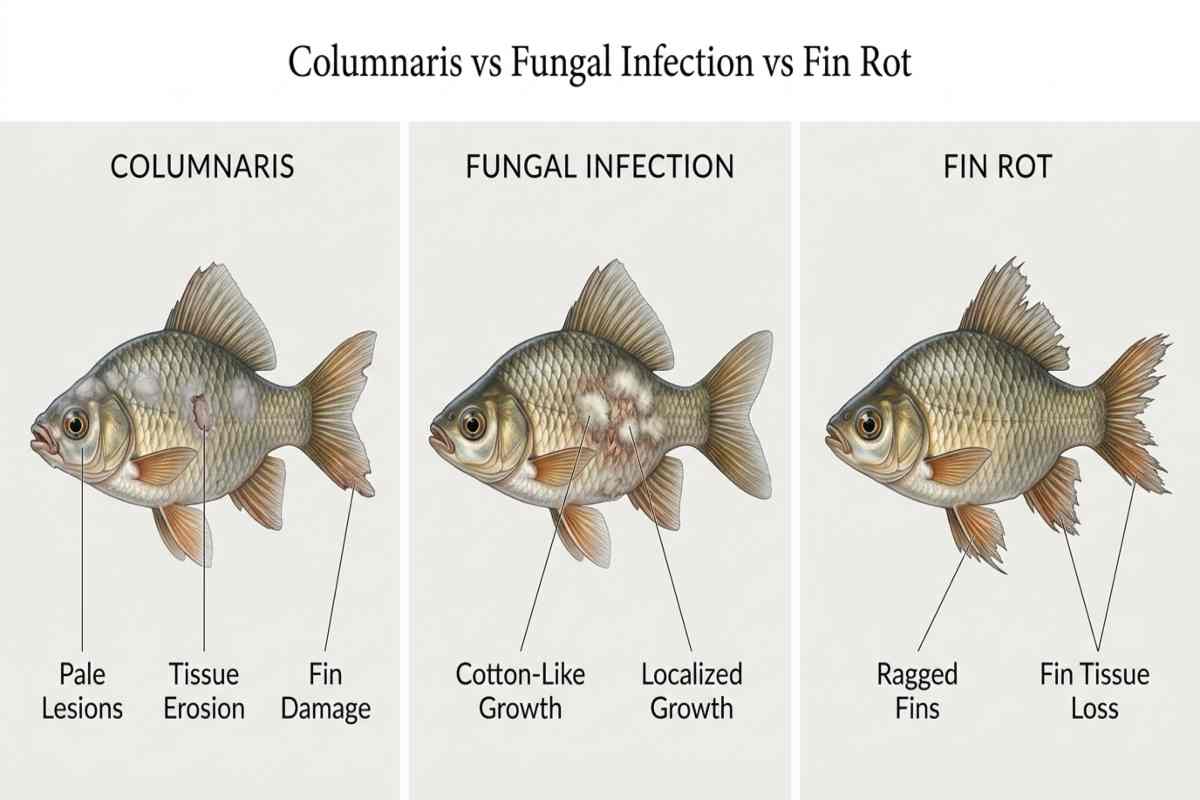 Visual differences between Columnaris, fungal infection, and fin rot.
How Is Columnaris Diagnosed?
A visual inspection can raise suspicion, but laboratory testing is the reliable way to confirm the causative bacterium. Diagnosis may involve microscopic examination, bacterial culture, and molecular testing such as PCR. Merck notes that presumptive diagnosis can involve visualization of characteristic organisms from affected skin or gill tissue, while confirmation can involve isolation on appropriate specialized media.
For valuable fish, repeated deaths, severe outbreaks, or cases that do not respond to appropriate management, contacting an aquatic veterinarian or fish-health diagnostic laboratory is preferable to repeatedly changing medications. This is especially important because bacterial diseases can look similar and mixed infections are possible.
Columnaris Fish Disease Treatment
Treatment depends on the severity and location of the infection, the fish species, local regulations, and whether the diagnosis has been confirmed. The first step is to correct the conditions that are stressing the fish. Test ammonia and nitrite levels, maintain adequate oxygenation, remove decaying material, avoid overcrowding, and keep the aquarium stable.
For confirmed bacterial disease, antimicrobial treatment may be appropriate, but the medication should be selected according to professional guidance, product labeling, species suitability, and where possible, diagnostic or susceptibility testing. Some F. columnare strains show resistance to multiple antimicrobials, making indiscriminate antibiotic use a poor strategy.
Practical Treatment Checklist
- Isolate affected fish when a suitable hospital system is available.
- Test the water and correct any issues with ammonia, nitrite, oxygen, temperature, and other major problems.
- Remove dead or severely decomposing material from the aquarium.
- Minimize handling and additional stress.
- Seek a diagnosis if symptoms are severe, rapidly progressing, or uncertain.
- Use an appropriate antibacterial treatment only as directed by veterinary advice or the legal product label for your location.
- Monitor all fish closely, because apparently healthy tankmates may have been exposed.
- Complete the recommended treatment course rather than stopping as soon as symptoms improve.
Do not assume that a general antifungal medication will treat Columnaris. Likewise, randomly combining several antibiotics or chemicals can increase stress, damage water quality, interfere with biological filtration, and contribute to antimicrobial resistance. UF/IFAS specifically emphasizes diagnosis and appropriate antibiotic selection for ornamental fish rather than unquestioning treatment.
How to Prevent Columnaris
Prevention is largely about reducing the conditions that allow bacterial disease to become established. Maintain stable water quality, avoid excessive stocking, quarantine new fish when practical, provide appropriate nutrition, and handle fish carefully. Good husbandry cannot guarantee that Columnaris will never occur, but it can reduce important risk factors.
The Fish Care recommends treating water quality and stress management as part of disease prevention rather than as an afterthought. Fish-health guidance from UF/IFAS likewise identifies poor water quality, excessive crowding, and other stressful conditions as important contributors to disease outbreaks.
Prevention Checklist
- Keep ammonia and nitrite at zero.
- Maintain adequate dissolved oxygen and circulation.
- Avoid overcrowding.
- Quarantine new fish when possible.
- Disinfect shared equipment appropriately.
- Remove dead fish promptly.
- Avoid unnecessary handling.
- Feed an appropriate, nutritionally complete diet.
- Monitor fish for early behavioral or physical changes.
- Investigate the underlying cause of the disease instead of repeatedly medicating.
Final Thoughts
Columnaris is a serious bacterial disease, but recognizing the warning signs early can make disease management much more effective. Pale or ulcerated lesions, fin erosion, mouth damage, gill problems, and rapid deterioration should prompt immediate attention, particularly when several fish become sick.
The most reliable approach combines accurate diagnosis, excellent water quality, reduced stress, appropriate isolation, and responsible antimicrobial use. Because Columnaris can resemble other diseases and may occur alongside them, persistent or severe cases are best evaluated by an aquatic veterinarian or fish-health diagnostic laboratory rather than treated through trial and error.
Frequently Asked Questions (FAQs)
Can Columnaris kill fish?
Yes. Severe Columnaris infections can progress rapidly and cause extensive damage to the skin, fins, or gills. Highly virulent infections may cause mortality before dramatic external lesions become obvious.
Is Columnaris a fungus?
No. Columnaris is a bacterial disease most commonly caused by Flavobacterium columnare. Its lesions can sometimes look fungal because damaged areas may develop pale or cotton-like material.
Can Columnaris spread to other fish?
Yes. The bacteria can spread within aquatic systems, especially where fish are crowded or environmental conditions favor transmission. Isolating affected fish and improving system hygiene can help reduce spread.
Does clean water cure Columnaris?
Good water quality does not directly eliminate the infection, but it is an important part of treatment and recovery. Poor water quality can increase stress and make disease management more difficult.
Can Columnaris come back after treatment?
Yes. Recurrence can happen if infected or exposed fish remain in the system, environmental risk factors persist, or the original diagnosis was incorrect. Repeated outbreaks warrant a closer investigation rather than simply repeating the same medication.
References
- Merck Veterinary Manual — Bacterial Diseases in Aquaculture. Merck Veterinary Manual
- University of Florida IFAS Extension — Use of Antibiotics in Ornamental Fish Aquaculture. UF/IFAS Extension