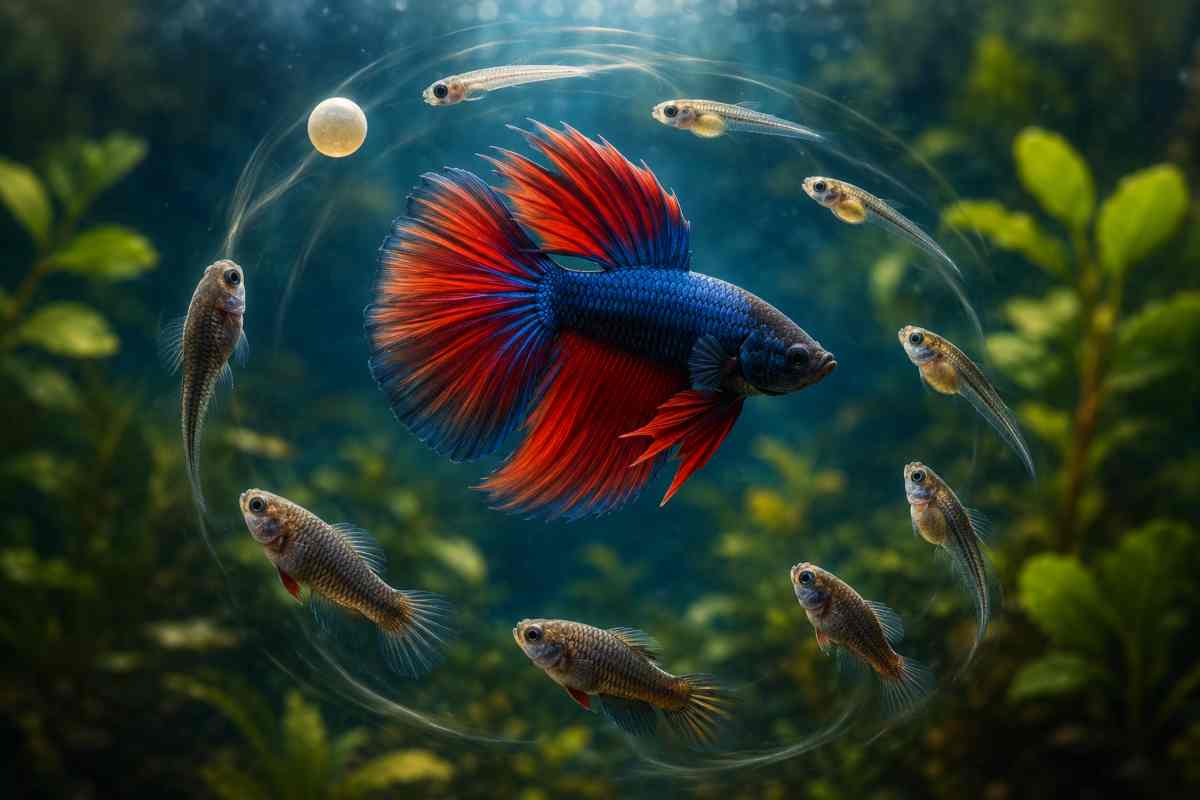
Every freshwater fish passes through six life stages: egg, larva, fry, juvenile, adult, and spawning. Water temperature, food availability, and predation determine how fast a fish moves through these stages and how many individuals survive to reproduce. Most species lose over 90% of their offspring before they ever reach adulthood, which is why understanding each stage matters for anyone breeding or raising fish at home.
This guide walks through what actually happens at every stage, why the fry stage is the hardest to survive, and how the cycle differs between egg-layers, livebearers, and migratory species like salmon.
What Is the Fish Life Cycle?
The fish life cycle describes the biological journey from fertilized egg to reproductive adult, and eventually back to a new generation of eggs. Unlike mammals, most fish are left to survive entirely on their own from the moment they hatch. There is no parental feeding period for the vast majority of species, which is the main reason fish produce so many offspring at once.
| Stage | Defining Feature | Typical Duration |
|---|---|---|
| Egg | Embryo develops inside a protective shell | Hours to several weeks |
| Larva | Feeds only from an internal yolk sac | A few days to two weeks |
| Fry | Hunts external food for the first time | Weeks to a few months |
| Juvenile | Has adult body shape but is sexually immature | Months to a few years |
| Adult | Sexually mature and capable of reproducing | Species-dependent |
| Spawning | Reproductive event that restarts the cycle | Hours to weeks |
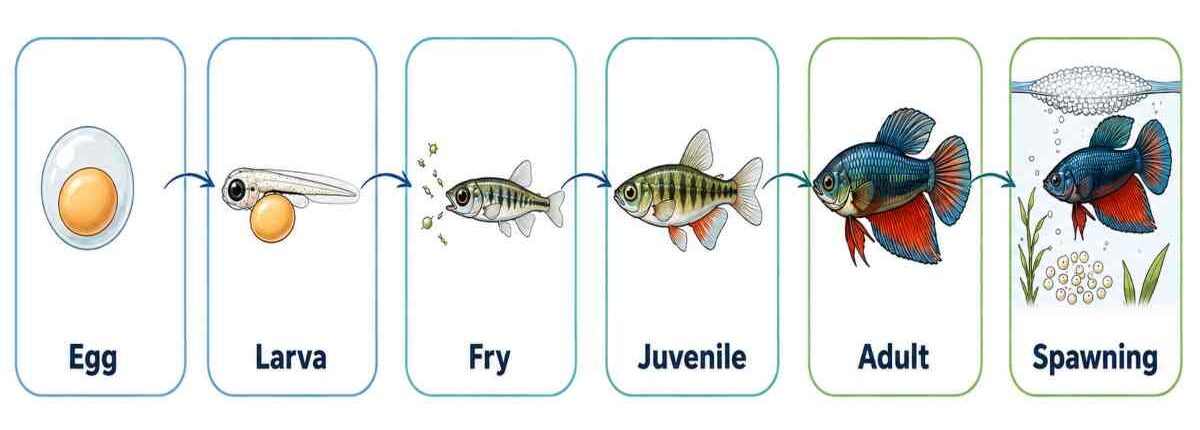 The complete fish life cycle, from a single fertilized egg to a spawning adult.
Stage 1: What Happens During the Egg Stage?
The egg stage begins the moment a female’s eggs are fertilized. Most freshwater fish rely on external fertilization, meaning the female releases eggs into the water and the male fertilizes them externally, a process commonly called spawning. This is different from livebearing species such as guppies and mollies, where fertilization happens internally and the female releases free-swimming young instead of eggs.
Inside the egg, the embryo develops using nutrients stored in the yolk. Water temperature directly controls how fast this development happens. Warmer water speeds up metabolism and shortens incubation, while cooler water slows it down. This is why breeders track exact temperature ranges rather than just counting days.
Fish lay far more eggs than mammals ever produce because egg and larval survival rates are extremely low. A single female can release hundreds to hundreds of thousands of eggs depending on the species, and predators, swept away by currents, eat the overwhelming majority, or fail to develop at all. This reproductive strategy is known as r-selection, and it favors quantity over parental investment.
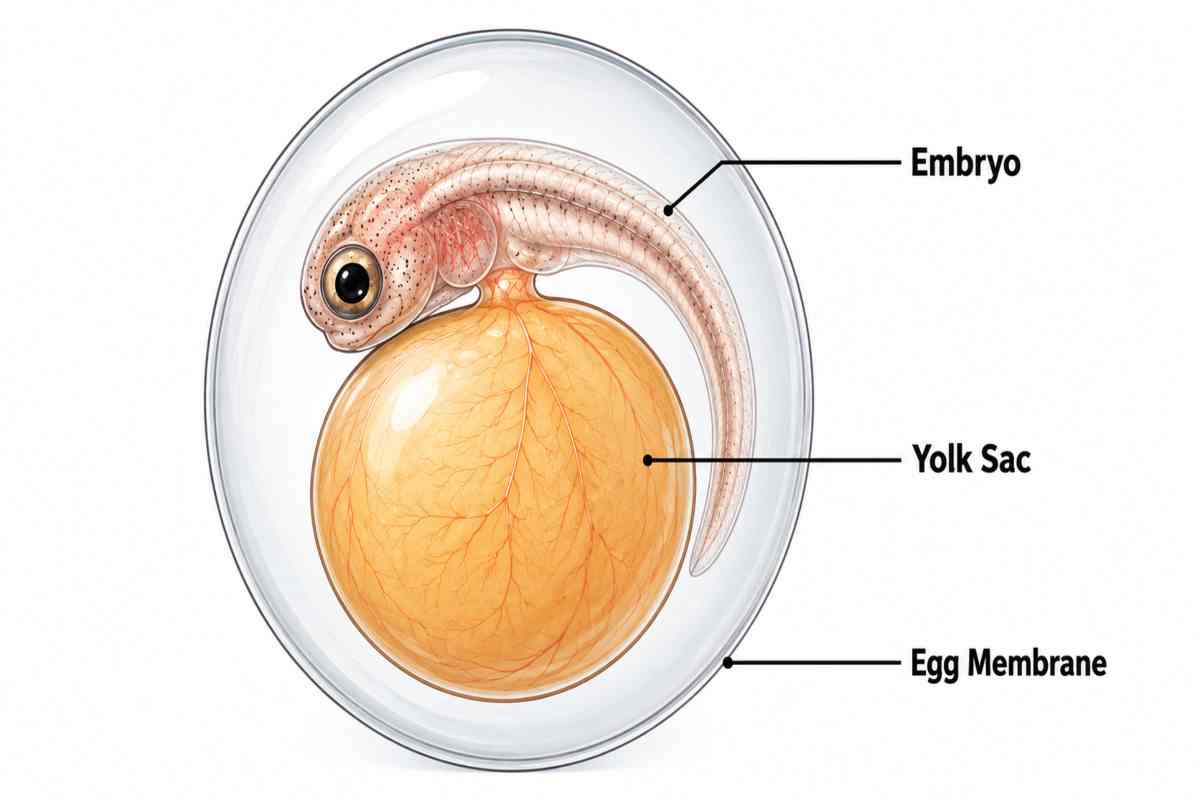
Inside a fertilized fish egg, the embryo develops using nutrients from the attached yolk sac.
Stage 2: What Is the Larva Stage in Fish?
Once a fish hatches, it enters the larva stage, sometimes called the yolk sac stage. At this point, the larva cannot hunt or eat external food. It survives entirely on the yolk sac still attached to its body, which supplies nutrients for the first days of life.
Larvae are nearly transparent, have limited swimming ability, and mostly drift wherever the current takes them. This combination makes them one of the most vulnerable stages in the entire cycle. Predators, poor water conditions, and simple physical displacement away from food-rich areas all take a heavy toll during this short window.
As the yolk sac shrinks, the larva’s digestive system, fins, and eyes continue developing in preparation for independent feeding.
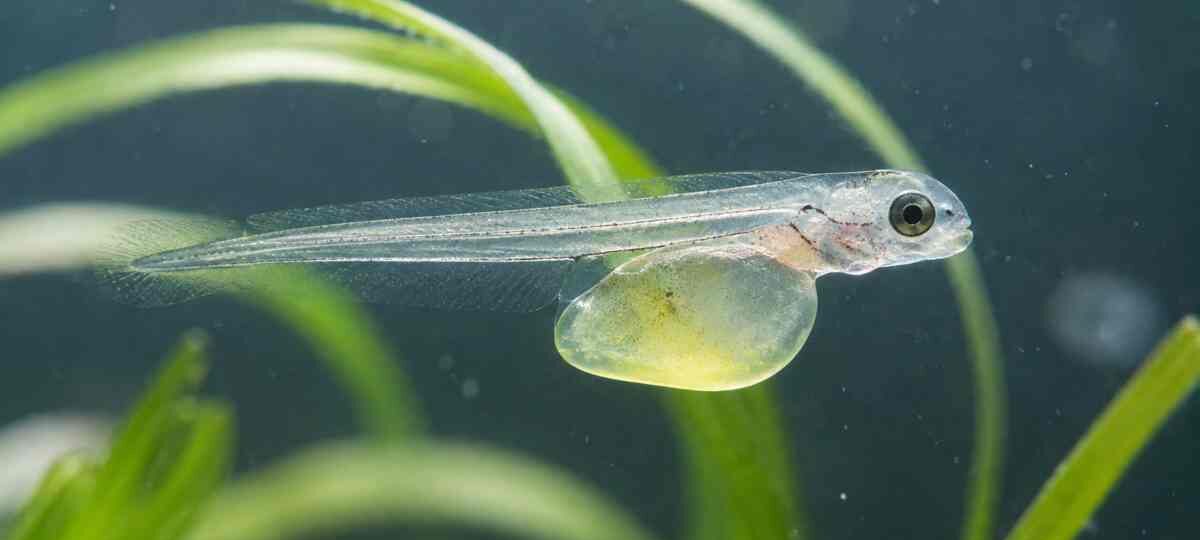 Larvae are nearly transparent and rely entirely on their yolk sac for nutrients.
Stage 3: What Is the Fry Stage, and Why Does It Matter Most?
A fish becomes a fry once the yolk sac is fully absorbed, a moment breeders often call “buttoning up.” From this point on, the fry must hunt for its own food, typically microscopic organisms like infusoria, rotifers, or newly hatched brine shrimp, depending on the species and mouth size.
This transition is widely considered the most critical survival bottleneck in a fish’s life. A fry that cannot find enough food in the first few days after buttoning up will starve, since its energy reserves are gone and its swimming and hunting skills are still undeveloped. Even in a well-maintained aquarium, fry mortality during this window is often the highest of any life stage.
Fry grow quickly relative to their size, developing basic fins and beginning to show faint traces of adult coloration as the weeks progress.
Common mistake: Many new breeders introduce food that is too large for the fry’s mouth size, or they underfeed out of caution. Both lead to starvation even when adult fish in the same tank are healthy.
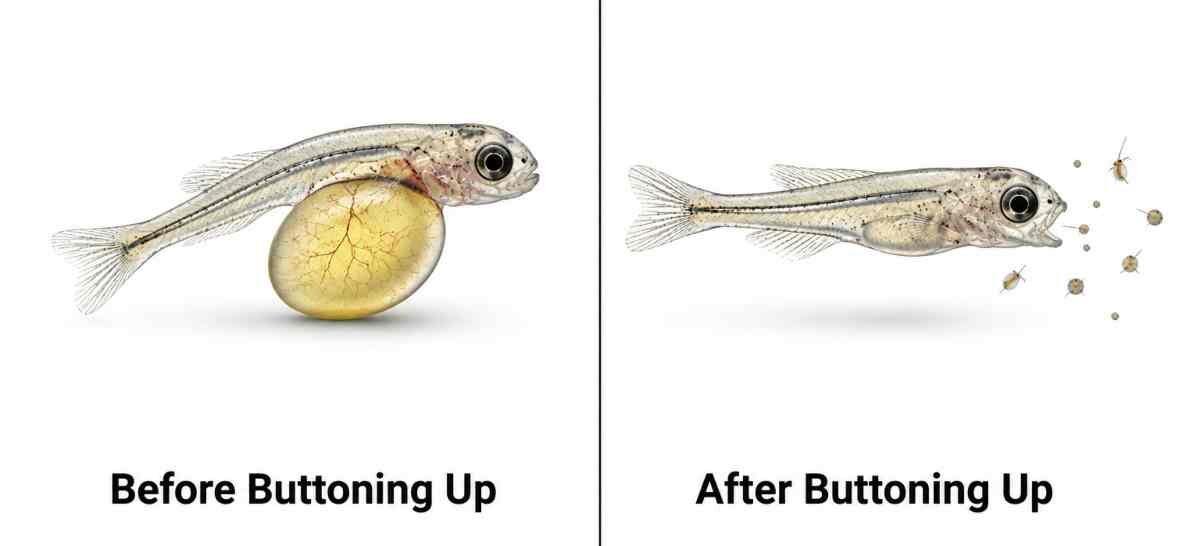 Buttoning up marks the moment a fry’s yolk sac is absorbed and it must start hunting for food.
Stage 4: What Changes During the Juvenile Stage?
By the juvenile stage, a fish looks like a small version of its adult self. Scales are fully formed, fins are complete, and species-specific coloration typically becomes visible for the first time. What separates a juvenile from an adult is sexual maturity, not appearance. Juveniles are not yet capable of reproducing.
Growth during this stage is rapid, and juveniles are far more active and independent than fry, actively schooling, exploring territory, and refining hunting or foraging skills.
Some species undergo a dramatic environmental shift during this stage rather than a physical one. Pacific salmon, for example, migrate from freshwater rivers to the ocean as juveniles, a process called smoltification, during which their bodies physiologically adapt to survive in saltwater.
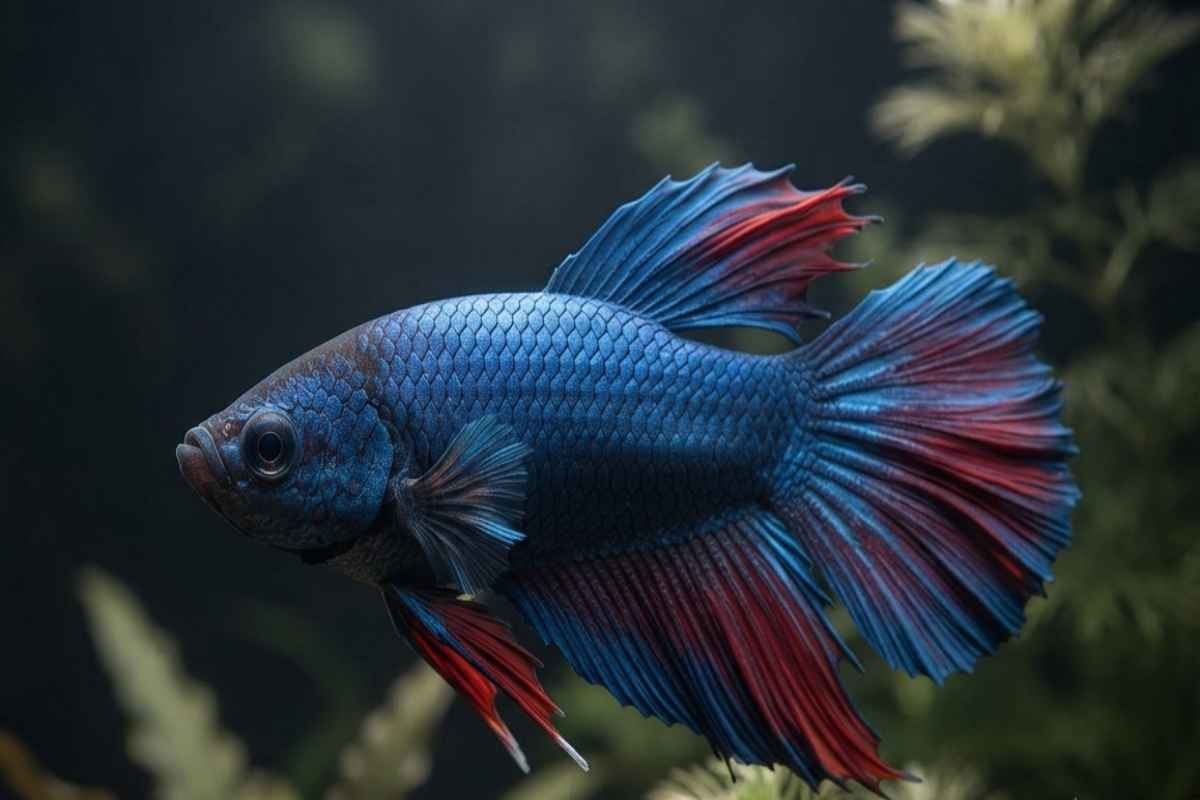
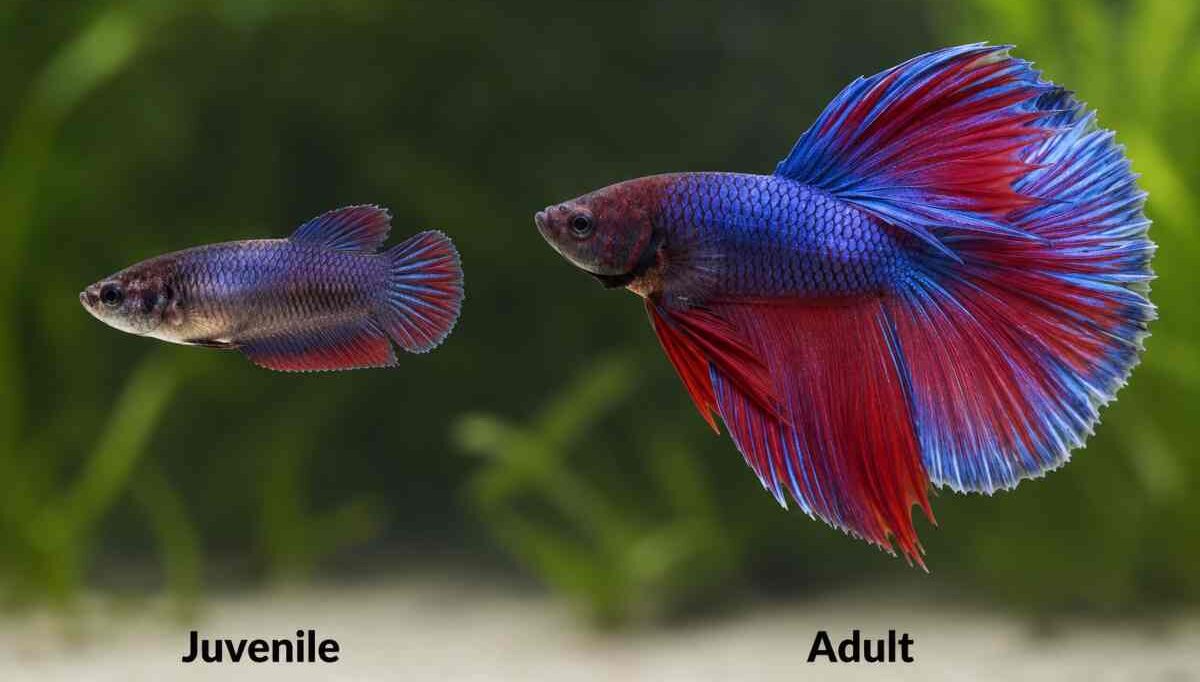 Juvenile bettas have shorter fins and duller color, while adults show full fin growth and vivid coloration.
Stage 5: How Do Fish Change When They Reach Adulthood?
Adulthood begins when a fish becomes sexually mature and capable of reproducing. Structural growth slows noticeably at this point, since the body redirects energy toward maintaining reproductive organs and, in many species, developing secondary sexual characteristics like brighter colors or elongated fins.
Adult fish typically establish stable behaviors that juveniles have not yet developed. This includes defending territories, forming or joining schools, and returning to consistent feeding grounds. In species like bettas, this is also when clear behavioral differences between males and females become obvious, including territorial aggression in males.
Related: Can Male and Female Betta Fish Live Together
Growth does not stop entirely in adulthood for most fish species, but it slows dramatically compared to the fry and juvenile stages.
Stage 6: What Happens During Spawning?
Spawning is the reproductive event that restarts the entire cycle. The behaviors surrounding it vary enormously between species and are among the most studied topics in fish biology.
Some species build physical nests. Salmon dig shallow depressions in gravel riverbeds called redds to protect their eggs, while male bettas build bubble nests at the water’s surface for the same purpose. Many species undergo temporary color changes during spawning to attract mates or signal readiness. Others, like several salmon species, travel enormous distances, sometimes over a thousand miles upstream, to reach the exact spawning grounds where they themselves hatched.
The aftermath of spawning also differs sharply by species. Pacific salmon are semelparous, meaning they spawn once and die shortly afterward, since the physical toll of migration and reproduction depletes their energy reserves entirely. Most freshwater aquarium species, including bettas, goldfish, and guppies, are iteroparous, meaning they can spawn repeatedly across their lifespan under the right conditions.
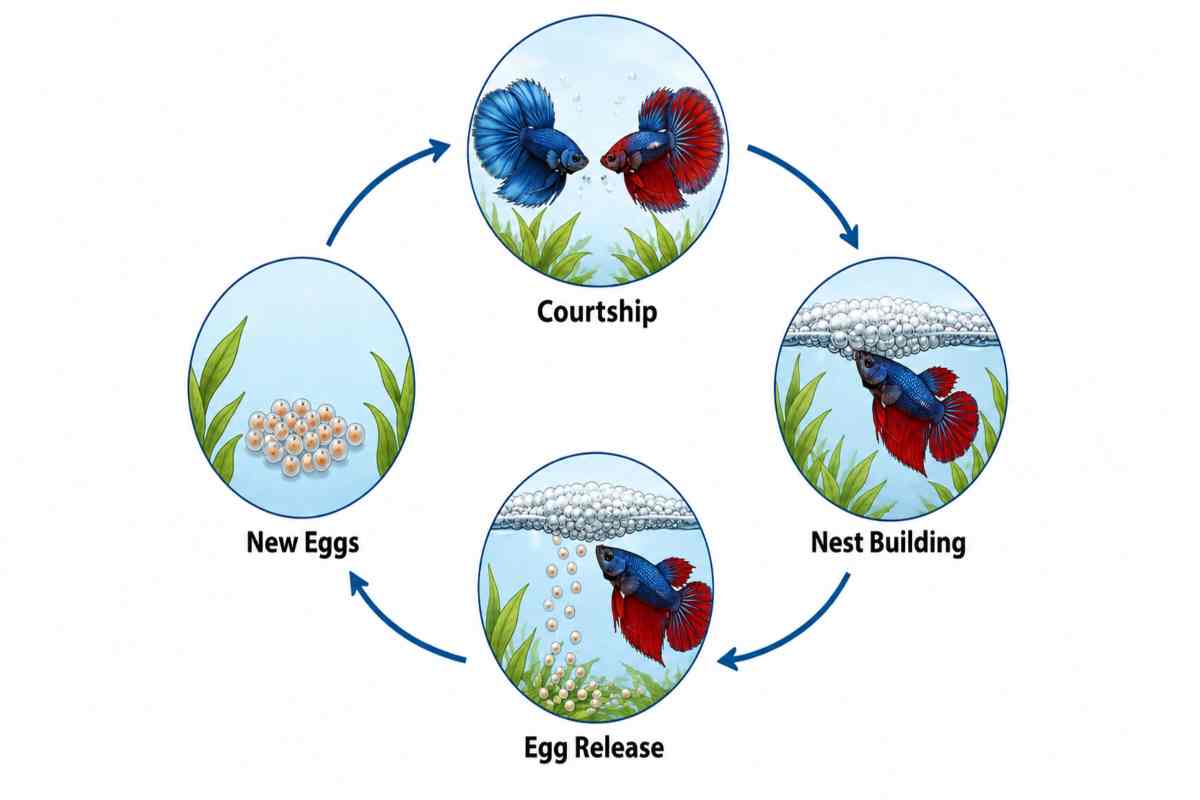 Spawning follows a continuous loop, from courtship through nest building to a new generation of eggs.
How Long Does a Fish’s Life Cycle Take?
Cycle length varies enormously across species, water temperature, and environmental conditions. The table below compares three commonly kept or studied species to illustrate the range.
| Species | Incubation | Time to Reach Fry Stage | Time to Sexual Maturity |
|---|---|---|---|
| Betta fish | 24 to 36 hours | 2 to 3 days after hatching | 4 to 6 months |
| Goldfish | 4 to 7 days | 3 to 5 days after hatching | 1 to 2 years |
| Pacific salmon | Several months (varies by species) | Weeks after hatching | 2 to 7 years |
These figures are strongly influenced by temperature. Warmer water within a species’ safe range generally speeds up incubation and early development, which is why aquarists trying to breed fish at home closely monitor tank temperature during the egg and larva stages.
Do All Fish Follow the Same Six Stages?
The six stages apply broadly across freshwater fish, but the details differ by reproductive strategy.
Egg-layers, including bettas, goldfish, and most tetras, follow the full sequence described above starting with external fertilization. Some, like bettas, guard their eggs and fry closely. Others, like many goldfish, provide no parental care at all once spawning is finished.
Livebearers, including guppies, mollies, and platies, fertilize internally and skip the free egg stage entirely. The female carries developing embryos inside her body and releases fully formed, free-swimming fry. These fry still go through the fry, juvenile, and adult stages, but they skip the external egg and often the larva stage as well, since they are more developed at birth than newly hatched egg-layer fry.
What Factors Affect Survival at Each Stage?
- Water temperature: Controls development speed and metabolic stress at every stage
- Water quality: Ammonia and nitrite spikes are especially dangerous to eggs, larvae, and fry
- Food size and availability: Fry need food small enough to eat and available consistently enough to prevent starvation
- Predation: Adult fish, including the parents in some species, will eat their own eggs or fry if not separated
- Genetics and inbreeding: Reduced genetic diversity can lower egg viability and juvenile survival rates over generations
Also Read: What Type of Water Do Betta Fish Need
Frequently Asked Questions
What is the hardest stage for a fish to survive?
The fry stage is generally the hardest. Once the yolk sac is absorbed, the fry must find food immediately, or it will starve, and its swimming and hunting abilities are still underdeveloped.
How long do fish live after spawning?
It depends entirely on the species. Semelparous species like Pacific salmon die within days to weeks after spawning. Iteroparous species, which include most freshwater aquarium fish, continue living and can spawn multiple times over their lifespan.
Do all fish lay eggs?
No. Most freshwater species are egg-layers, but livebearers such as guppies, mollies, and platies fertilize internally and give birth to free-swimming fry instead of releasing eggs.
Why do fish lay so many eggs at once?
Because survival rates from egg to adult are extremely low in nature. Producing large numbers of eggs increases the statistical chance that at least some offspring survive predation and environmental hazards.
Does water temperature really affect how fast fish develop?
Yes. Temperature directly influences metabolic rate, which controls incubation speed and how quickly larvae and fry progress through early development, within the safe range for that species.
Understanding these six stages is useful well beyond biology trivia. For anyone breeding fish at home, recognizing exactly which stage a fish is in determines what food, water conditions, and protection it needs next, which is a core focus of the educational content at The Fish Care.