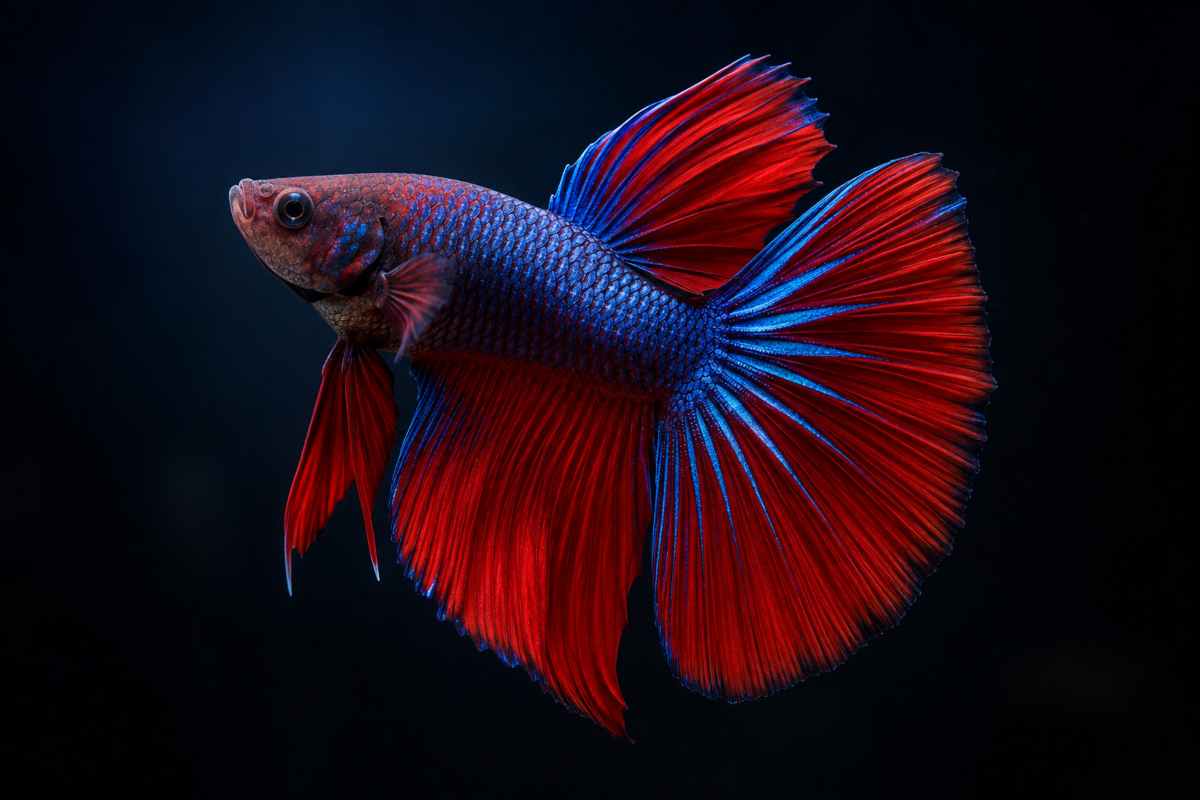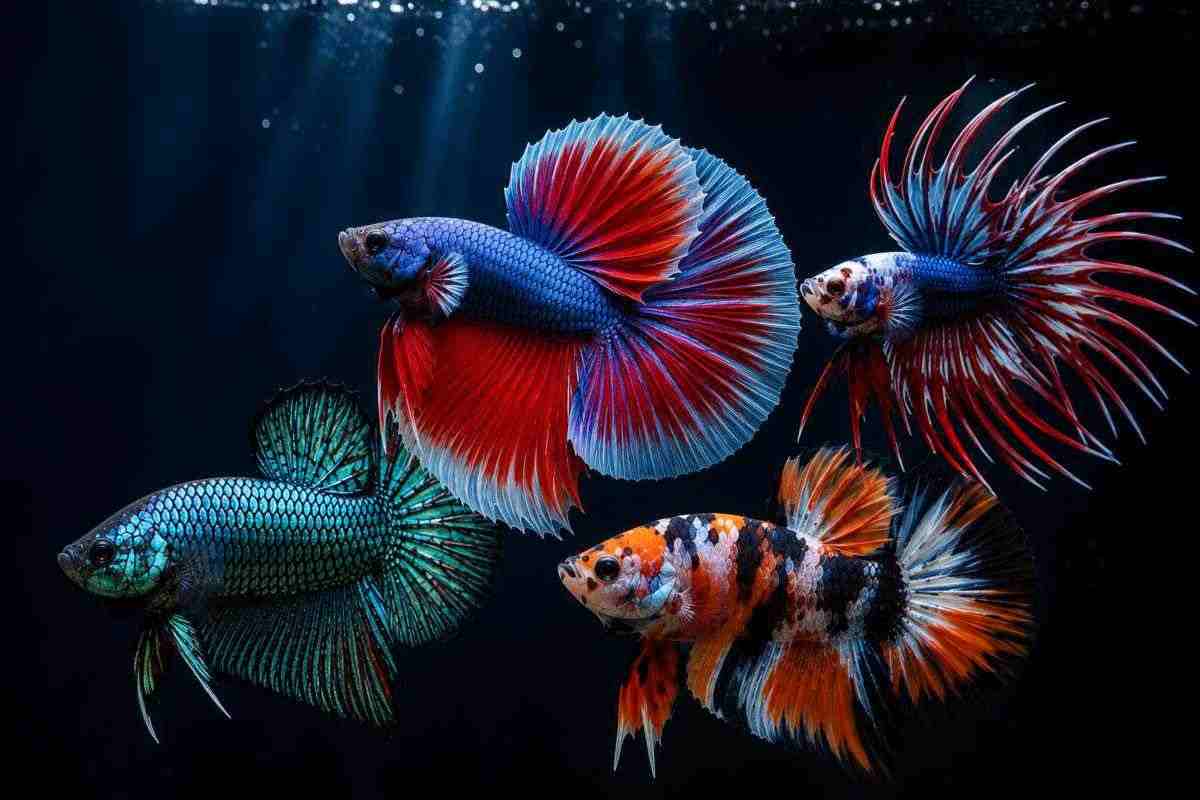
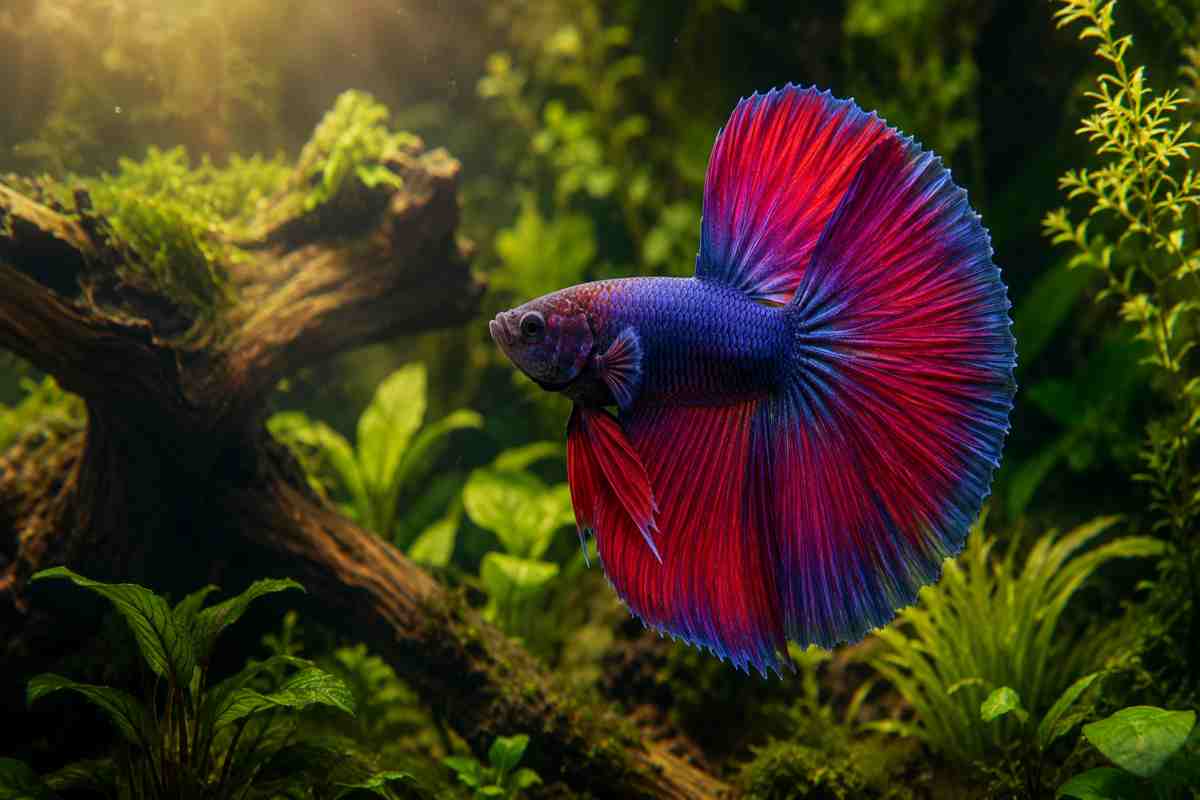
The female halfmoon betta is a Betta splendens variety defined by a tail that opens into a flat 180-degree half-circle when flared. She shares that tail geometry with male halfmoons, but at a smaller scale, and with a calmer, more situational temperament that makes group housing possible, something male bettas can never do. This guide covers her identification, tank setup, feeding, temperament, and lifespan in full detail, plus how to confirm you actually have a true halfmoon rather than a similar-looking delta tail.
What Makes a Betta a “Halfmoon”
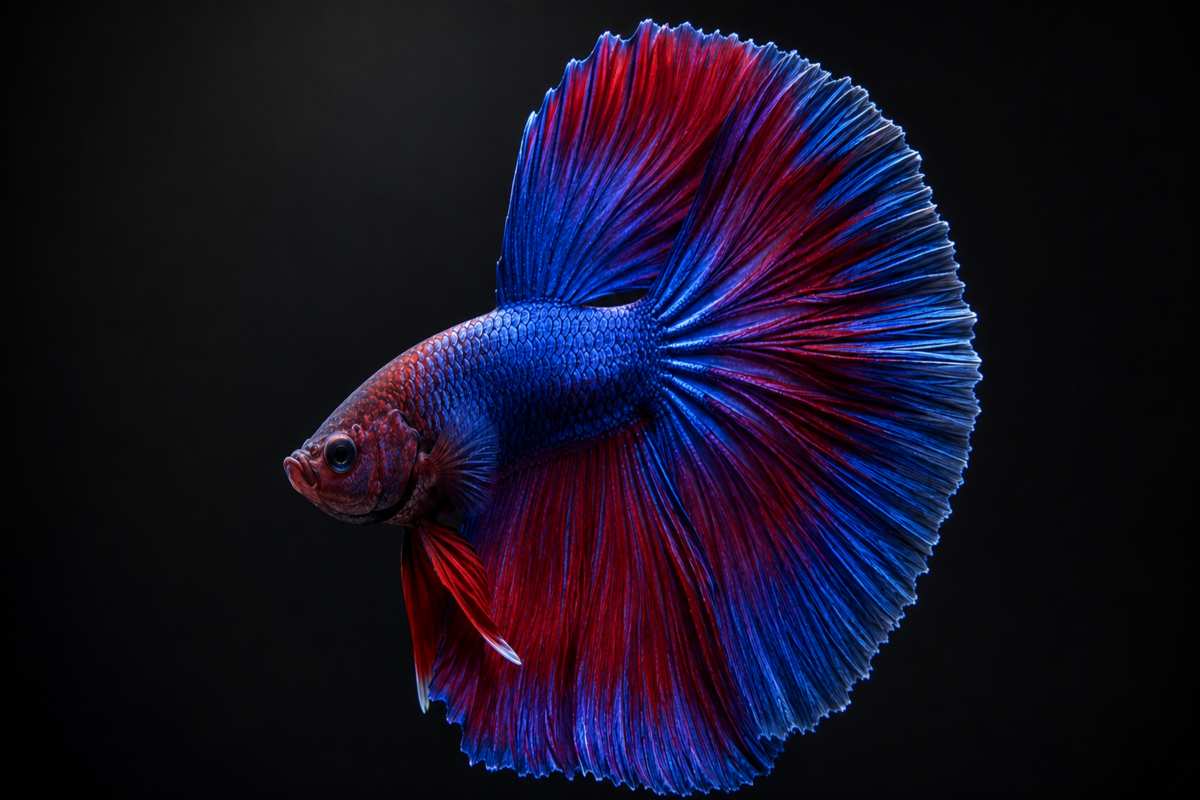
Halfmoon isn’t a species. It’s a tail classification within Betta splendens, produced through decades of selective line-breeding rather than occurring naturally in wild populations. The defining trait is the caudal fin forming a flat, straight-edged half-circle at full flare, with the top and bottom rays running parallel rather than curving inward.
A female carrying true halfmoon genetics shows:
- A caudal fin that opens to a full 180° spread, with a straight rather than rounded edge
- Dorsal and anal fins noticeably longer and fuller than on a standard (non-halfmoon) female
- Heavy branching in the fin rays, which is what allows the fin to hold its shape at full spread instead of drooping
- An ovipositor (a small white dot near the belly), visible on sexually mature females and absent in males
How to Tell a True Halfmoon From a Delta Tail
This is the detail most guides skip, and it’s the one question serious buyers actually have. Gently provoke a flare using a mirror or reflection:
- True halfmoon: the tail edge is flat and straight from tip to tip, forming a clean half-circle.
- Delta tail: the fin flares wide but the edges taper slightly inward, falling just short of a full 180° spread.
Because halfmoon tail genetics are polygenic (controlled by multiple genes rather than one), quality varies significantly between breeding lines. A poorly bred “halfmoon” may only reach delta or super-delta spread, which is why sourcing from a breeder or retailer that grades and photographs the actual fish matters more than the label on the tank.
Female Halfmoon vs. a Standard Female Betta
| Feature | Female Halfmoon | Standard Female Betta |
|---|---|---|
| Tail spread | Full 180°, flat edge | Typically under 120°, rounded edge |
| Fin tissue | Thick, heavier, often slightly ruffled | Thin and smooth |
| Dorsal/anal fins | Long and flowing | Shorter, closer to the body |
| Breeding focus | Selected for tail geometry | Selected mainly for colour or body form |
| Care requirements | Identical | Identical |
| Temperament | Identical | Identical |
The halfmoon classification is purely about fin genetics. It has no bearing on hardiness, temperament, or day-to-day care: a halfmoon female is not more delicate or more difficult to keep than a standard female, despite the more elaborate finnage.
Tank Setup
Tank Size
A single female halfmoon needs a minimum of 5 gallons, though a 10-gallon tank buys more stable water chemistry and a wider margin if you miss a water change. For a sorority (a group of females housed together), the minimum jumps to 20 gallons. A long, low footprint is better than a tall one, since bettas rely on horizontal swimming space far more than depth.
Water Parameters
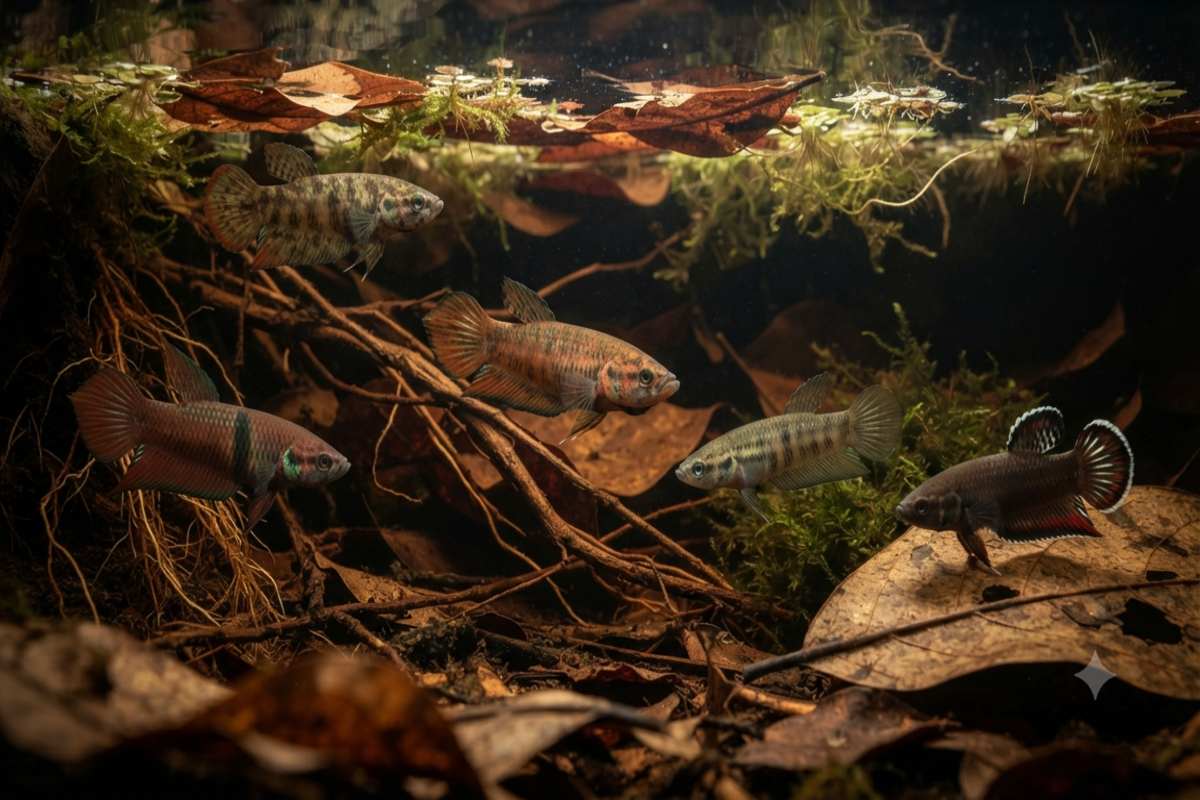
Betta fish come from the warm, slow-moving waters of Southeast Asia, and stable conditions matter more than hitting an exact number:
| Parameter | Target Range |
|---|---|
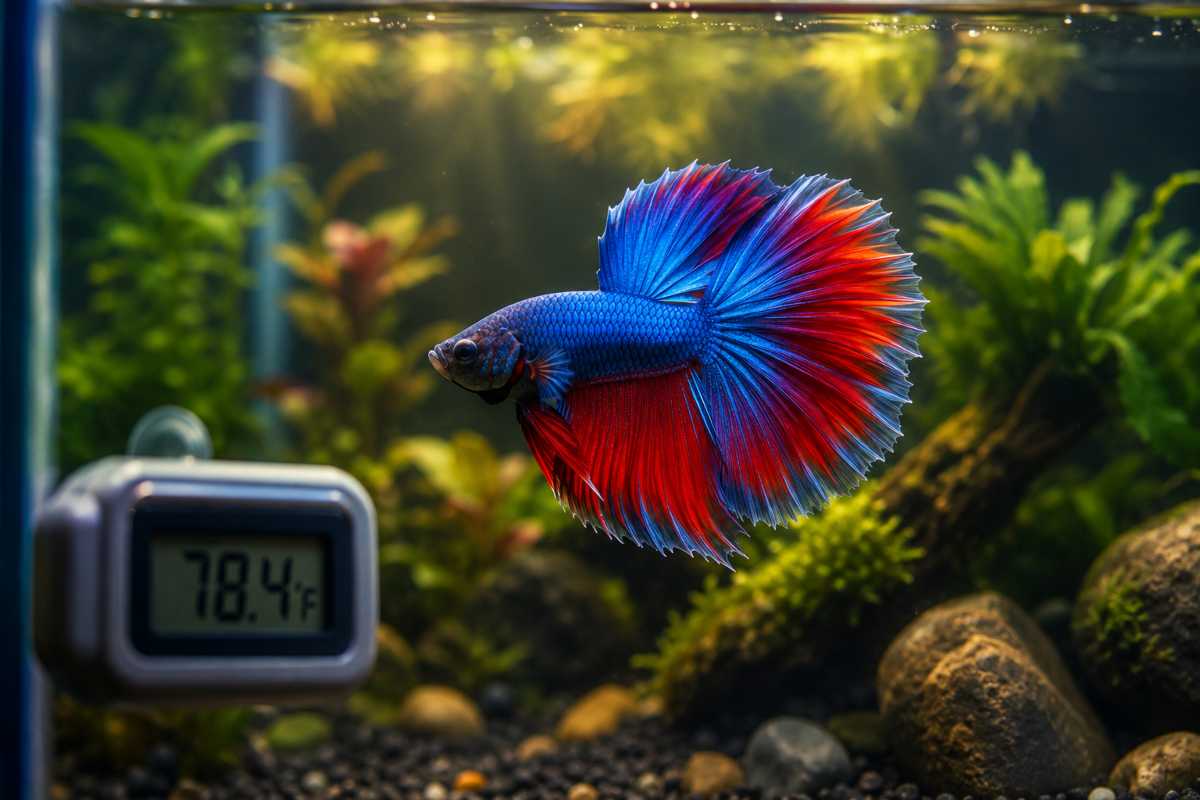
| Temperature | 78–82°F (25–28°C) |
| pH | 6.5–7.5 |
| Ammonia | 0 ppm |
| Nitrite | 0 ppm |
| Nitrate | Under 20 ppm |
| General hardness (GH) | 3–8 dGH |
A tank that swings between 74°F at night and 82°F in the day stresses a betta more than one that holds a steady 78°F. Keep the tank away from windows, vents, and direct sunlight, and check temperature with a separate thermometer rather than trusting a heater’s built-in dial.
Filtration
A filter is not optional. Without one, ammonia from waste builds up and causes gill and fin damage that’s frequently mistaken for fin rot. But flow strength matters as much as filtration itself: a halfmoon’s wide fins are easily overwhelmed by strong current, which exhausts the fish over time.
- Sponge filters: gentle, biological, and the safest default for any betta tank.
- Hang-on-back filters: workable if baffled with a pre-filter sponge or filter floss to cut the outflow.
- Internal filters on low: fine in larger tanks where the fish has room to avoid the flow zone.
Cycle the tank fully before adding a fish. This typically takes four to six weeks and establishes the bacteria that convert ammonia into less harmful nitrate.
Heating
A submersible, adjustable heater is required in almost any home environment. A 50-watt heater covers a 10-gallon tank; a 20-gallon sorority tank needs roughly 100 watts, ideally split across two heaters at opposite ends for even heat distribution. Heaters fail in two directions: they stop heating, or they stick on. Pairing one with an independent thermometer is the only way to catch either failure before it harms the fish.
Lighting
Bettas don’t need intense lighting, but a consistent light cycle supports natural rest patterns and any live plants in the tank. Eight to ten hours of light per day on a timer is enough. Continuous lighting disrupts rest and encourages algae growth.
Decorations and Plants
Decor isn’t purely cosmetic. It breaks sightlines, defines territory, and gives a betta places to rest. Live plants such as java fern, anubias, and hornwort absorb nitrate and provide natural cover; silk plants are the next-best option if live plants aren’t practical. Avoid stiff plastic plants: the halfmoon’s fin membrane tears easily on sharp edges, and a torn fin is an open door for infection.
In a sorority tank specifically, dense planting is the single biggest factor in keeping conflict short. When two females can break each other’s line of sight, disputes stay brief instead of escalating.

Feeding
Female halfmoon bettas are obligate carnivores. A diet leaning on plant-based fillers leads to bloating, dull color, and a weakened immune system over time.
How Much and How Often
A betta’s stomach is around the size of her eye, smaller than most owners assume. Feed twice a day, 2–4 pellets per feeding, and skip food entirely one day a week to let her digestive system clear. Overfeeding is the single most common mistake in betta care: excess food causes constipation and swim bladder problems, and uneaten food breaks down into ammonia in the water.
Pellets
High-quality betta pellets should form the base of the diet. Check the ingredient list: a whole protein source (salmon, herring, shrimp meal) should be listed first, not wheat flour, soy, or corn. Some keepers soak pellets in tank water for about 30 seconds before feeding so they don’t expand inside the fish’s stomach after being swallowed.
Live and Frozen Foods
Rotating in live or frozen foods two to three times a week noticeably improves energy and color:
- Bloodworms: high protein, almost universally accepted; frozen carries less disease risk than live.
- Brine shrimp: easy to digest, widely available frozen.
- Daphnia: acts as a mild natural laxative; useful once a week to support digestion.
- Mosquito larvae: close to a betta’s natural diet where safely sourced.
- Tubifex worms: nutritious but higher parasite risk live; stick to frozen or freeze-dried.
Freeze-Dried Foods
Freeze-dried foods are a convenient middle ground but carry less moisture than frozen or live options, which can contribute to constipation if overused. Soak freeze-dried bloodworms or brine shrimp in tank water for about a minute before feeding, and treat them as an occasional supplement rather than a primary food.
Foods to Avoid
Generic tropical flakes are too low in protein and too high in filler for a betta’s digestive system. Live tubifex worms from unverified sources carry meaningful parasite risk. Human food (bread, cooked vegetables, cooked fish) fouls the water quickly and offers nothing nutritionally appropriate.
Lifespan
With consistent care, a female halfmoon betta typically lives 2–4 years, occasionally reaching 5. Genetics sets the ceiling, but water stability and diet determine whether a fish actually reaches it. Fish kept in fluctuating temperatures or poor water quality tend to have shortened, duller lives regardless of breeding quality.
Temperament
Females are territorial rather than combative. They establish a pecking order through chasing and flaring, which is why they’re the sex used in sorority tanks, unlike males. That said, individual temperament varies. Some females are just as assertive as males, particularly around feeding time or in an undersized tank. Clamped fins, hiding, or torn fins on tankmates are early signs a female isn’t settling into her environment well.
Keeping Female Halfmoon Bettas Together
A sorority can work, but it takes planning rather than simply adding several females to one tank:
- Minimum 20 gallons, heavily planted, with multiple visual breaks
- 4–6 females, introduced simultaneously so no one claims territory first
- Close monitoring for the first two weeks, when most conflicts happen
- A backup tank ready in case one female won’t stop harassing the group
Adding a new female to an already-established sorority is riskier than starting a group from scratch: existing fish often target the newcomer. Rearranging the tank’s decor first helps reset territorial boundaries before an introduction. In a mixed-species community tank, female halfmoons generally coexist well with fast-moving fish and bottom dwellers, though they may chase slow-moving shrimp.
Common Health Problems
- Fin rot: usually linked to poor water quality or fin-nipping in group tanks.
- Ich (white spot disease): spreads fast in sororities and needs prompt treatment.
- Bloating and swim bladder issues: almost always diet-related, tied to overfeeding or too little fasting.
- Stress-related color fading: common in lower-ranking sorority females.
According to Merck Veterinary Manual, ornamental freshwater fish are especially vulnerable to secondary infections when water quality is unstable, which is one reason consistent filtration matters more in group tanks than in solo setups.
Breeding Notes
Because halfmoon tail genetics are polygenic, pairing two halfmoon parents doesn’t guarantee halfmoon fry: some offspring may show delta or super-delta tails instead. A female is typically conditioned with protein-rich feeding for one to two weeks before introduction to a male. She should be removed from the breeding tank promptly after spawning, since the male takes over fry care and may see her as a threat to the nest afterward.
FAQs (Frequently Asked Questions)
How big do female halfmoon bettas get?
Around 2–2.5 inches in body length, not counting fins, smaller than males, which typically reach 2.5–3 inches.
Can a female halfmoon live alone?
Yes. A single female thrives on her own and doesn’t require tankmates.
Do females flare like males?
Yes, though less dramatically and less often.
Can male and female halfmoon bettas share a tank?
Not recommended outside of controlled, supervised breeding setups: the pairing risks aggression on both sides.
Where to Find Female Halfmoon Bettas
Reputable retailers list halfmoon females by pattern and quality grade rather than selling them unlabeled. LiveAquaria carries graded female halfmoon bettas with health guarantees, which is a reasonable starting point if you want a fish with documented lineage rather than an unverified import.
References
Two authoritative sources were used to verify the biological and husbandry claims in this article:
- FishBase: The internationally recognized taxonomic and biological database for Betta splendens
- Merck Veterinary Manual: Veterinary reference for ornamental fish health and disease