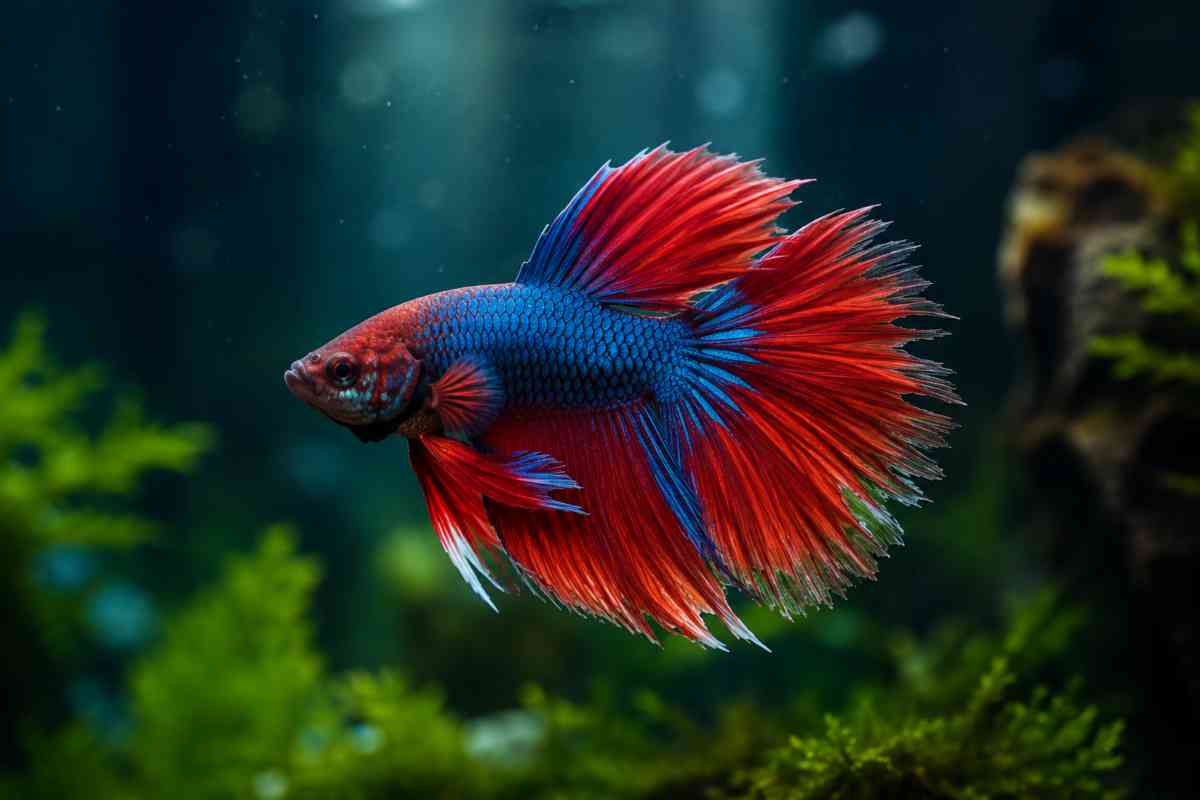
Fin rot is a bacterial (sometimes fungal) infection that eats away at a betta’s fins, usually triggered by poor water quality, stress, or an existing injury. To fix it, do a large water change immediately, start daily 25–50% water changes with a proper conditioner, raise the temperature slightly to 78–80°F, and keep the water pristine for the next 1–2 weeks. Mild cases often heal with clean water alone. Moderate cases respond well to aquarium salt or an antibacterial medication such as API Furan-2 or Maracyn. Severe cases, where the rot has reached the fin base or the body, need a full antibiotic course and closer monitoring, since secondary infections can become life-threatening.
Everything below explains exactly how to tell which category your betta is in, what to do at each stage, and how to stop it from coming back.
What Fin Rot Actually Is
Fin rot is a progressive infection of the fin tissue, most often caused by opportunistic bacteria such as Aeromonas, Pseudomonas, or Vibrio species that are naturally present in most aquariums. These bacteria don’t usually harm a healthy betta. They take hold when poor water conditions, stress, a torn fin, or a compromised immune system weaken the fish.
In less common cases, fin rot is fungal rather than bacterial, or a mix of both. This matters because fungal fin rot tends to look fuzzy or cottony at the edges, while bacterial fin rot usually looks ragged, discolored, or slimy. Treatment differs slightly depending on which one you’re dealing with, which is why identification comes first.
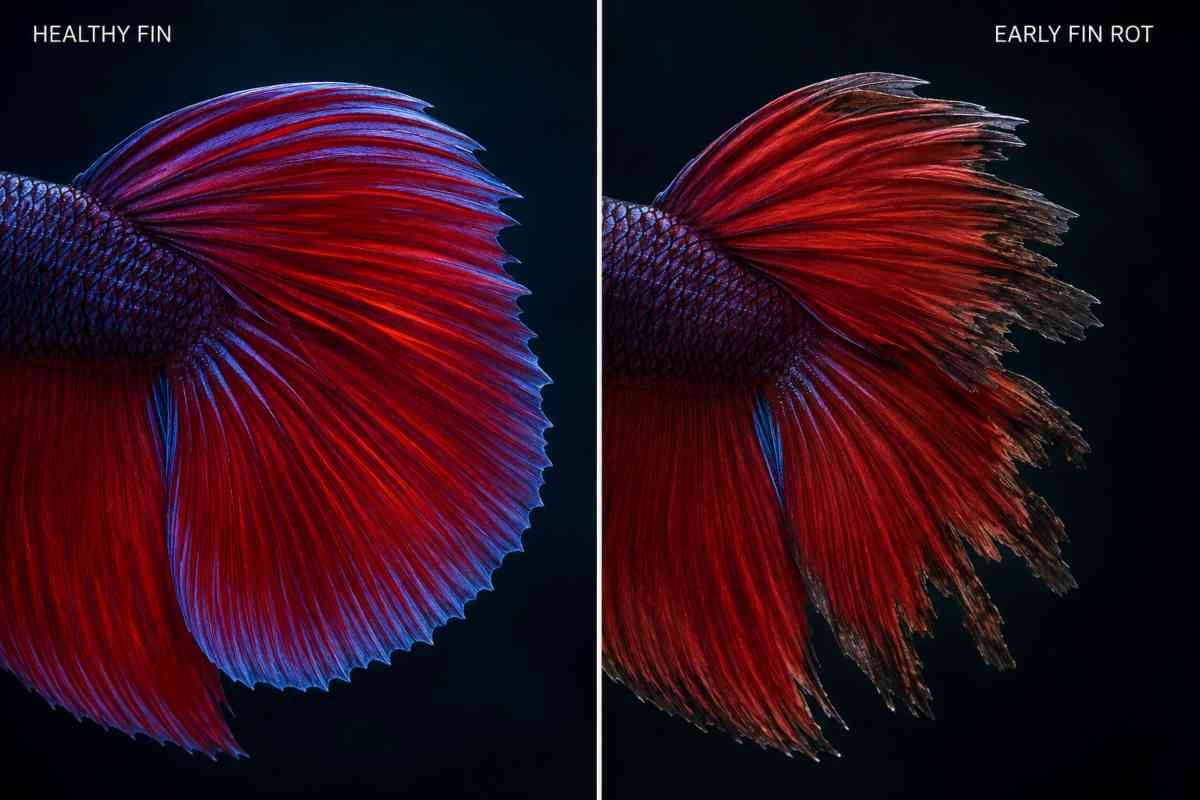 Healthy fin vs. early fin rot: notice the frayed, discolored edges beginning to appear on the right.
How to Identify Fin Rot
Look for these signs, roughly in the order they tend to appear:
- Discoloured fin edges: black, brown, or white margins along the fin, unlike the fish’s normal colour
- Ragged or frayed edges: the fin looks torn or uneven instead of smooth
- Fin shrinkage: the fin visibly gets shorter over a few days
- Redness or inflammation at the base of the fin
- A visible line separating healthy tissue from damaged tissue
- Lethargy or clamped fins in more advanced cases, as the infection starts to stress the fish systemically
A common point of confusion: normal fin wear from age, genetics (especially in long-finned varieties like halfmoons), or minor nipping can look similar to early fin rot but doesn’t progress. If the edges stay the same for a week or two, it’s likely not an active infection. If they keep receding, treat it as fin rot.
For a full breakdown of finnage types and what’s typical for each variety, the Complete Betta Fish Types & Colour Varieties Guide is a useful reference point before assuming an issue is disease-related.
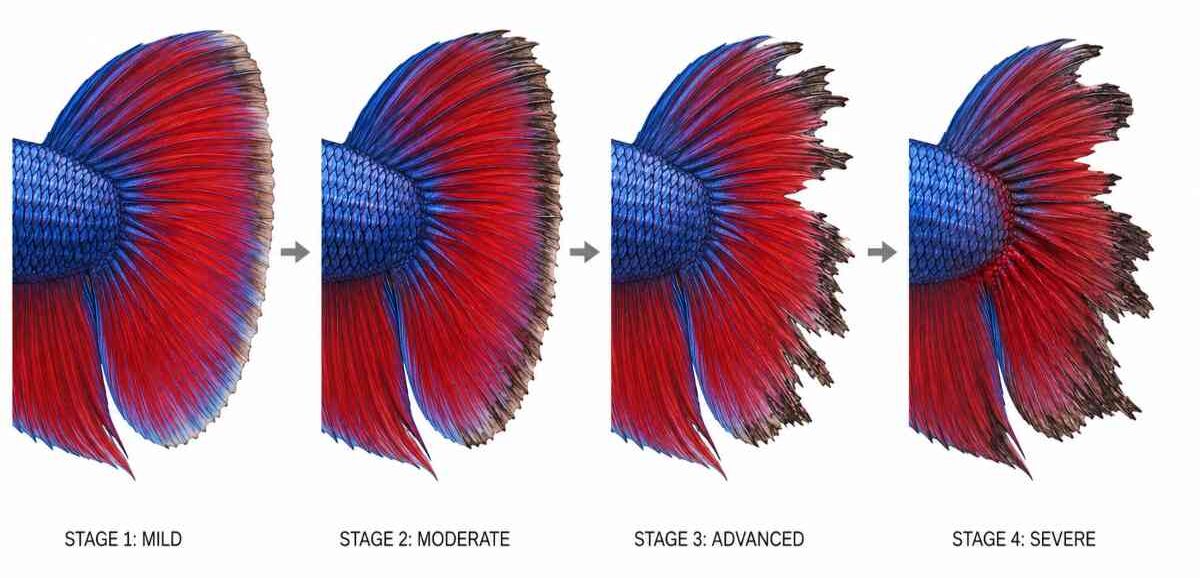 The four stages of fin rot progression, from mild edge damage to severe fin loss.
What Causes Fin Rot
| Cause | How It Leads to Fin Rot |
|---|---|
| Poor water quality | Ammonia, nitrite, or high nitrate levels stress the immune system and irritate fin tissue. |
| Overcrowded or under-cycled tank | Bacterial load builds up faster than beneficial bacteria can process it. |
| Stress | Aggressive tankmates, sudden temperature swings, or a tank that is too small suppress immune function. |
| Physical injury | Torn fins from rough décor, filter intake, or fin-nipping tankmates give bacteria an entry point. |
| Low temperature | Bettas kept below 76°F have slower metabolisms and weaker immune responses. |
| Poor nutrition | A diet lacking variety weakens overall resilience to infection. |
Water quality is, by a wide margin, the most common underlying cause. If you’re unsure whether your setup is contributing to the problem, reviewing your betta fish water temperature and what type of water bettas need is a good starting point, since both directly affect fin health.
Step-by-Step Treatment Plan
Step 1: Do a Large Water Change Immediately
Change 40–50% of the water and test ammonia, nitrite, nitrate, and pH before and after. This single step resolves a surprising number of mild cases on its own, because it removes the bacterial load feeding the infection.
Step 2: Move to a Quarantine or Hospital Tank
If your betta lives with tankmates, or in a tank you can’t easily dose with medication, move it to a bare-bottom quarantine tank of at least 2.5–5 gallons. Use a sponge filter (gentle enough not to damage healing fins) and keep the tank heated to a stable 78–80°F.
A bare bottom is important here, since substrate traps waste and bacteria, which works against the point of quarantine. A simple setup with a heater, sponge filter, and a hiding spot (like a silk plant or clean PVC pipe) is enough.
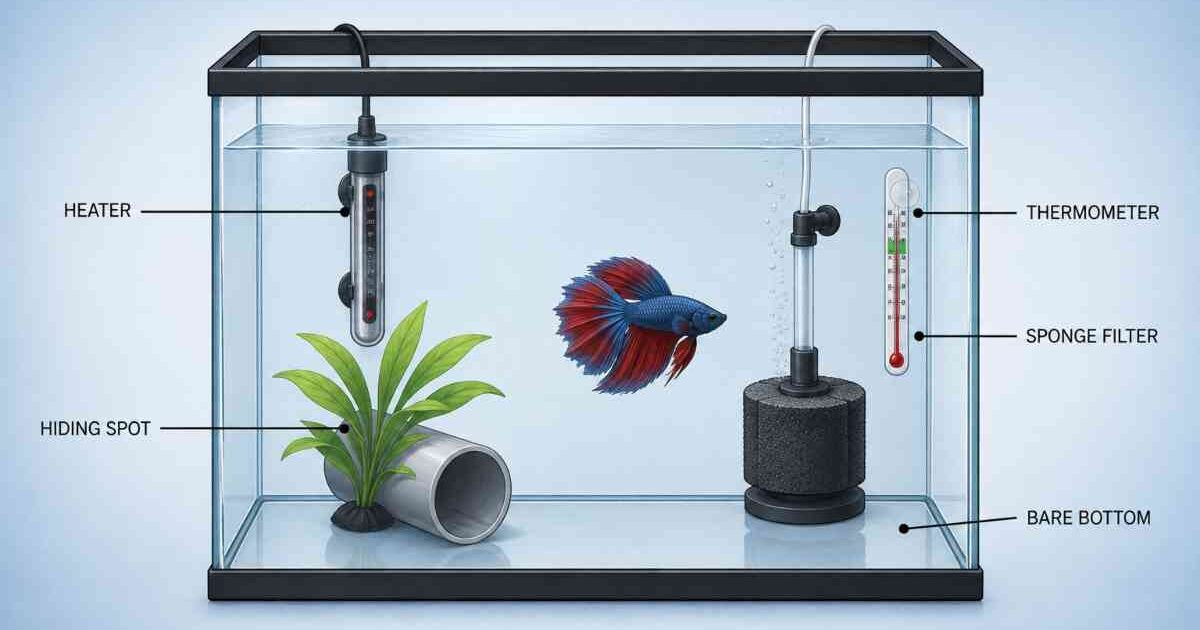
A proper betta hospital tank setup: heater, sponge filter, hiding spot, and bare bottom.
Step 3: Improve and Stabilise Water Quality
Do 25–50% water changes daily (or every other day for milder cases) for the first 1–2 weeks. Always use a dechlorinator/water conditioner, and match temperature closely when changing water to avoid additional stress. Keep ammonia and nitrite at 0 ppm and nitrate under 20 ppm.
This step alone- consistent, pristine water- is what actually stops the infection from progressing in most mild-to-moderate cases. Medication supports healing; it doesn’t replace clean water.
Step 4: Choose the Right Treatment for the Severity
Use the table below to match your betta’s condition to the right level of intervention.
| Severity | Signs | Recommended Treatment |
|---|---|---|
| Mild | Slight discoloration at the fin edges with no fraying beyond a millimeter or two. | Perform daily water changes and monitor for 5–7 days. |
| Moderate | Visible fraying with the damaged edge advancing over 2–3 days. | Maintain clean water and use aquarium salt or a mild antibacterial treatment (such as API Stress Coat) while monitoring closely. |
| Severe | Fin rot reaches the fin base, redness appears near the body, and fin webbing begins to disappear. | Use a full course of antibiotics (such as Furan-2, Maracyn, or Maracyn 2) along with daily water changes. |
| Critical | Infection spreads to the body, with red streaking, lethargy, and loss of appetite. | Seek veterinary advice immediately, as antibiotics alone may not be enough. |
When to Use Aquarium Salt (And When Not To)
Aquarium salt (sodium chloride, not marine/reef salt) can help with mild-to-moderate fin rot because it reduces osmotic stress on damaged tissue and has mild antiseptic properties. A typical dose is 1 tablespoon per gallon in the quarantine tank, added gradually over a few hours, not all at once.
Use aquarium salt when:
- The case is mild to moderate
- You’ve already improved water quality
- Your betta isn’t in a tank with live plants or scaleless/salt-sensitive tankmates
Avoid aquarium salt when:
- The betta is in severe distress or the infection is advanced (salt won’t be enough, and prolonged exposure adds stress)
- Kidneys or overall organ function seem compromised (laboured breathing, bloating)
- You’re treating in the main tank with live plants, snails, or salt-sensitive species
Salt is not a cure for advanced fin rot, and continuous, long-term salt use can itself stress a betta’s kidneys. Treat for a maximum of 10 days, then return to salt-free water.
Do You Need Antibiotics?
Not always. Mild fin rot frequently resolves with clean water alone. Antibiotics become necessary when:
- The infection keeps progressing despite clean water for 5–7 days
- The rot has reached the fin base
- There’s redness, swelling, or odour at the body
Commonly used and effective options:
| Medication | Type | Best For |
|---|---|---|
| API Furan-2 | Nitrofuran antibacterial | Treating general bacterial fin rot, especially infections caused by gram-negative bacteria. |
| Maracyn (Erythromycin) | Antibacterial | Mild to moderate fin rot caused primarily by gram-positive bacteria. |
| Maracyn 2 (Minocycline) | Antibacterial | Advanced fin rot and infections associated with gram-negative bacteria. |
| API General Cure | Antiparasitic and antifungal combination | Cases where fin rot is accompanied by a suspected fungal or parasitic infection. |
Always follow the dosing instructions on the packaging exactly, complete the full course even if fins look better early, and avoid combining multiple antibiotics unless a product is specifically labelled for combination use. Remove carbon filtration while medicating, since it will strip the medication from the water.
How Long Fin Rot Takes to Heal
Healing time depends heavily on how early you catch it and how consistent the water quality stays:
- Mild cases: Stop progressing within 3–5 days of clean water; fully healed and regrown within 2–4 weeks
- Moderate cases: Stop progressing within 5–10 days of treatment; regrowth takes 4–6 weeks
- Severe cases: Can take 6–10+ weeks for fins to regrow, and in some cases fins never return to their original length or shape
Betta fins regenerate from the base outward, so you’ll usually see a thin, clear or slightly darker edge of new growth first, and that’s a good sign, not a new problem.
Signs of Improvement vs Signs It’s Getting Worse
| Signs of Improvement | Signs of Worsening |
|---|---|
| The discolored edge stops advancing. | Discoloration continues moving toward the fin base. |
| Clear or translucent new fin growth appears along the edge. | Redness spreads from the fins toward the body. |
| The betta becomes more active and its colors brighten. | The betta becomes lethargic, clamps its fins, or stops eating. |
| Water parameters remain stable between water changes. | Ammonia or nitrite becomes detectable despite regular water changes. |
If you’re seeing the “worsening” column after 5–7 days of consistent treatment, it’s time to escalate, either to a stronger medication or a vet consultation, not to wait longer on the same approach.
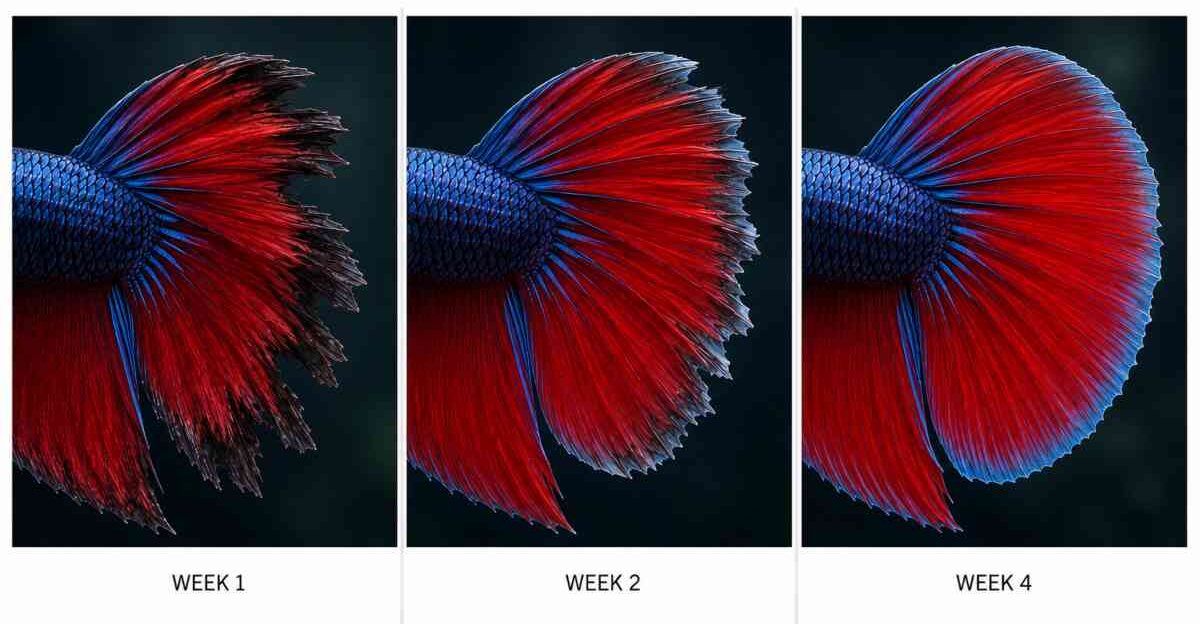 Betta fin rot recovery: from damaged fraying at week 1 to full regrowth by week 4.
When Fin Damage Is Too Severe for Home Treatment
Contact an aquatic veterinarian or a fish-health specialist if you notice:
- Rot that has reached the fin base and is spreading onto the body
- Red streaking, visible sores, or ulcers on the body
- Loss of appetite lasting more than 2–3 days
- Laboured breathing, bloating, or loss of balance
- No improvement at all after a full course of antibiotics
These signs suggest a systemic infection or secondary complication (such as a bacterial infection that has moved past the fins) that over-the-counter medications may not resolve. In cases this advanced, humane euthanasia is sometimes discussed by veterinarians as a welfare option if the fish is in significant distress and not responding to any treatment, a difficult but occasionally necessary consideration in end-stage disease.
Quarantine Best Practices While Treating
- Use a separate tank of at least 2.5–5 gallons, heated and cycled or lightly stocked with a sponge filter
- Keep the water bare-bottom for easy cleaning and to avoid trapping bacteria
- Test water daily during the first week
- Don’t add fresh carbon media while dosing medication
- Keep lighting dim and stress low, and avoid moving the tank or handling the fish more than necessary
- Isolate for at least 2 weeks after visible healing before considering reintroduction to a community tank, if applicable
If the fin rot started in a community tank, it’s worth reviewing your setup fundamentals. The guide to setting up a betta fish tank covers cycling, filtration, and stocking choices that prevent water-quality-driven illness in the first place.
Preventing Fin Rot From Coming Back
- Keep ammonia and nitrite at 0 ppm at all times through proper cycling
- Do consistent weekly water changes (25–30% for most setups)
- Maintain a stable temperature of 76–80°F
- Avoid overstocking and remove fin-nipping tankmates
- Choose smooth decor and avoid sharp or rough ornaments
- Feed a varied, high-quality diet to support immune health
- Avoid unnecessary stress: sudden parameter swings, frequent rearranging, or aggressive tankmates all suppress immunity
Fin rot is almost always a symptom of an underlying husbandry issue rather than a random illness, which is why prevention comes down to consistent water quality more than any single product.
Frequently Asked Questions
Can fin rot heal on its own without treatment?
Very mild cases can stop progressing with clean water alone, but “no treatment” isn’t a reliable strategy, since even a large water change counts as treatment. Ignoring early signs is what allows mild cases to become severe ones.
Is fin rot contagious to other fish?
The bacteria involved are often already present in most tanks, but a sick, stressed fish is more likely to spread infection to tankmates that are also stressed or injured. Quarantine is still the safer choice.
Can a betta’s fin rot come back after healing?
Yes, especially if the underlying cause, usually water quality, wasn’t fully corrected. Fish that have recovered once often show it again if conditions slip.
Will regrown fins look the same?
Usually close, but in severe or repeated cases, regrowth can come back slightly shorter, uneven, or with altered colouration at the regrown edge.
Can I use aquarium salt and medication at the same time?
Yes, in most cases this is fine and is a common combination for moderate cases, but always check the specific medication’s label for interactions.
Do I need to treat the whole tank, or just move the betta?
If other fish show no symptoms, you generally only need to quarantine and treat the affected betta, while still improving water quality tank-wide to prevent further cases.
The Fish Care recommends testing your water parameters before starting any treatment, since correcting water quality resolves the majority of fin rot cases without medication.
📚 Continue Learning
Related guides to help you keep your betta healthy
🦠
How Do You Treat Ich in Betta Fish?
Spot the white-spot symptoms early and stop the spread fast.
→
References
- American Veterinary Medical Association (AVMA), general aquatic animal health guidance: https://www.avma.org/
- Merck Veterinary Manual, bacterial diseases of fish: https://www.merckvetmanual.com/