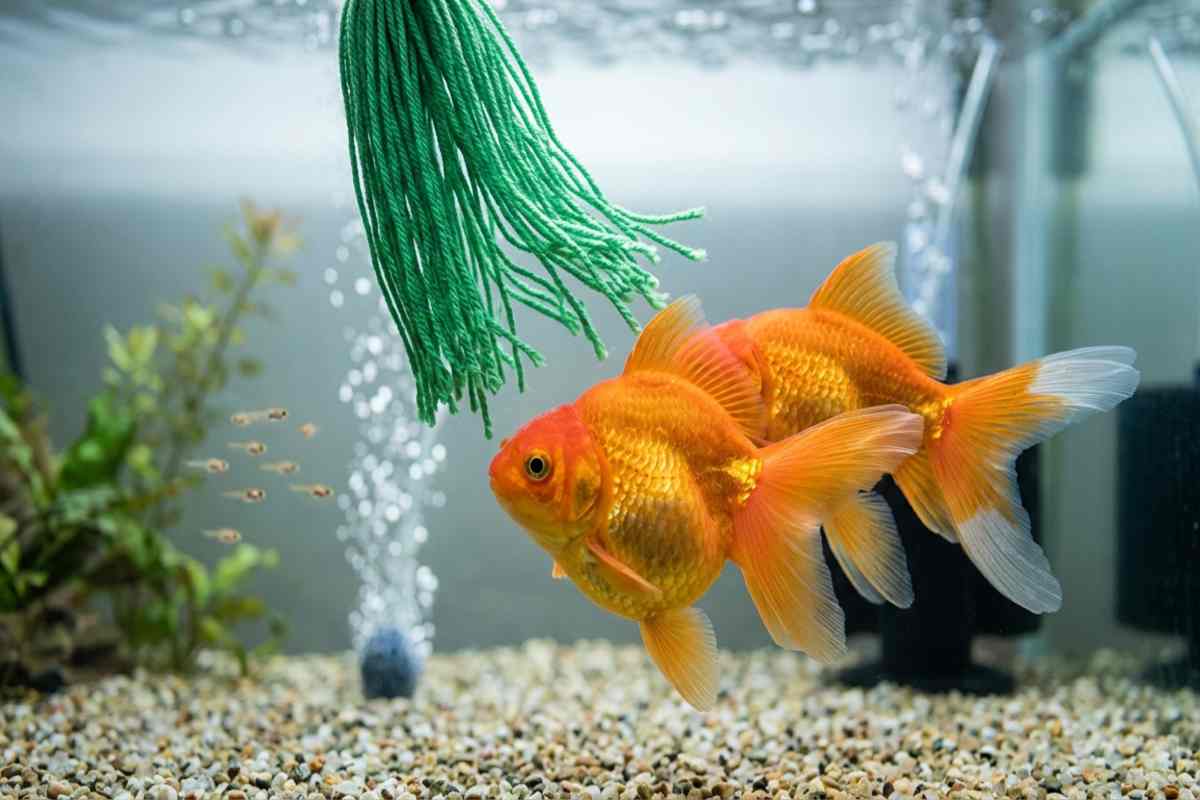
Goldfish breed by external spawning. Once water temperature rises and daylight hours lengthen, a mature female releases hundreds to thousands of eggs into a spawning mop or plant, and one or more males fertilize them with milt as they chase her. The eggs hatch in three to seven days, and the resulting fry need infusoria or crushed food for the first week before graduating to baby brine shrimp. Success depends less on luck and more on getting three things right: healthy conditioned parents, a dedicated breeding setup, and fast, careful egg and fry management.
Key Takeaways
- Goldfish generally need to be at least one to two years old, well conditioned, and exposed to seasonal cues such as rising temperatures and longer daylight before spawning.
- Male goldfish develop small white bumps called mating tubercles on their gill covers and pectoral fins when ready to breed, making them one of the clearest signs of breeding condition.
- A bare or sparsely planted breeding tank with a spawning mop, one female to two or three males, and a tight-fitting cover can help improve spawning and fertilization success.
- Goldfish may eat their own eggs shortly after spawning, so remove the eggs or separate the adult fish promptly after spawning.
- Culling severely deformed fry is a common part of responsible goldfish breeding and can help maintain healthy future generations.
How Do You Know If Goldfish Are Ready to Breed?
Goldfish typically reach sexual maturity between one and two years of age, though this varies with genetics, diet, and growing conditions. Age alone is not the only indicator. Fish also need to be in strong physical condition, with good weight and no signs of illness, before you even attempt breeding.
The most reliable readiness sign in males is the appearance of mating tubercles: small, white, pimple-like bumps that form along the gill plates and the leading edge of the pectoral fins. These are sometimes mistaken for ich, but tubercles are firm, symmetrical, and limited to those areas, while ich spots are scattered irregularly across the body and fins.
Females show a different signal. As they fill with eggs, their bodies become noticeably rounder and heavier, especially when viewed from above, and a small pinkish or white gravid spot may become visible near the vent. A ripe female often feels soft on one side when gently palpated, which experienced breeders use to judge whether she is close to spawning.
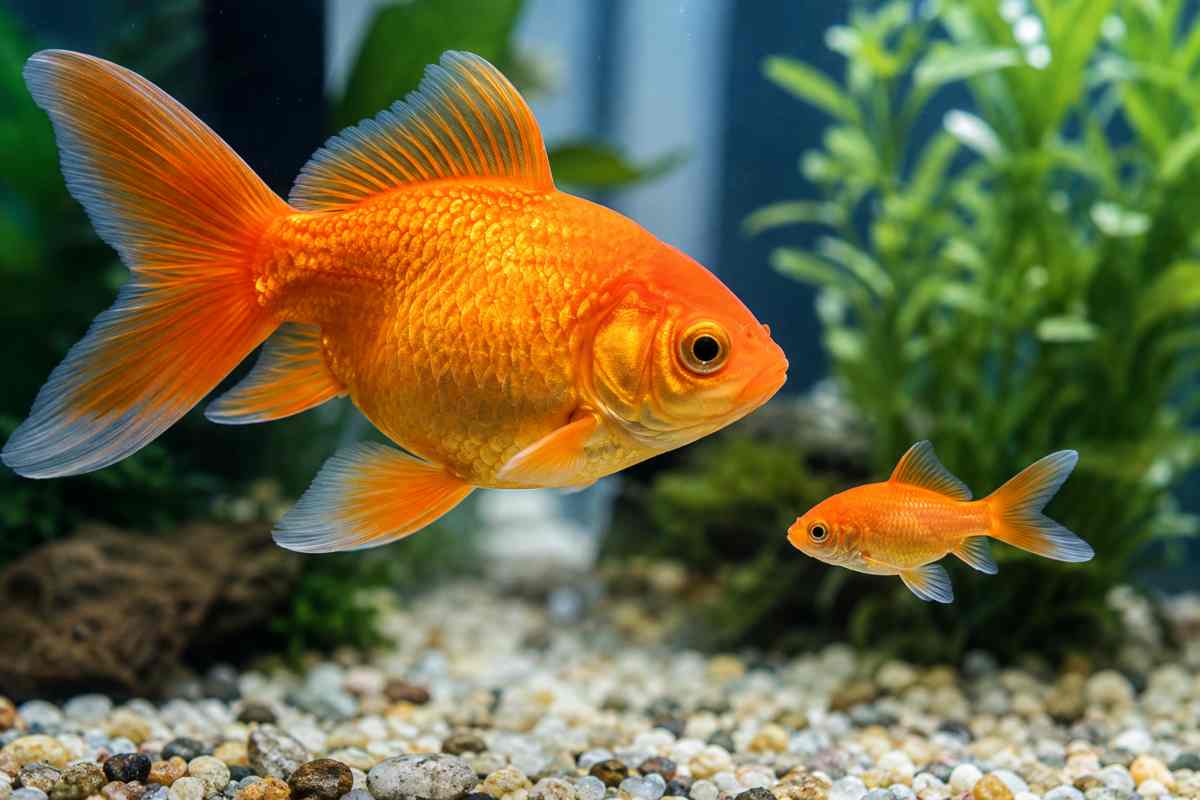
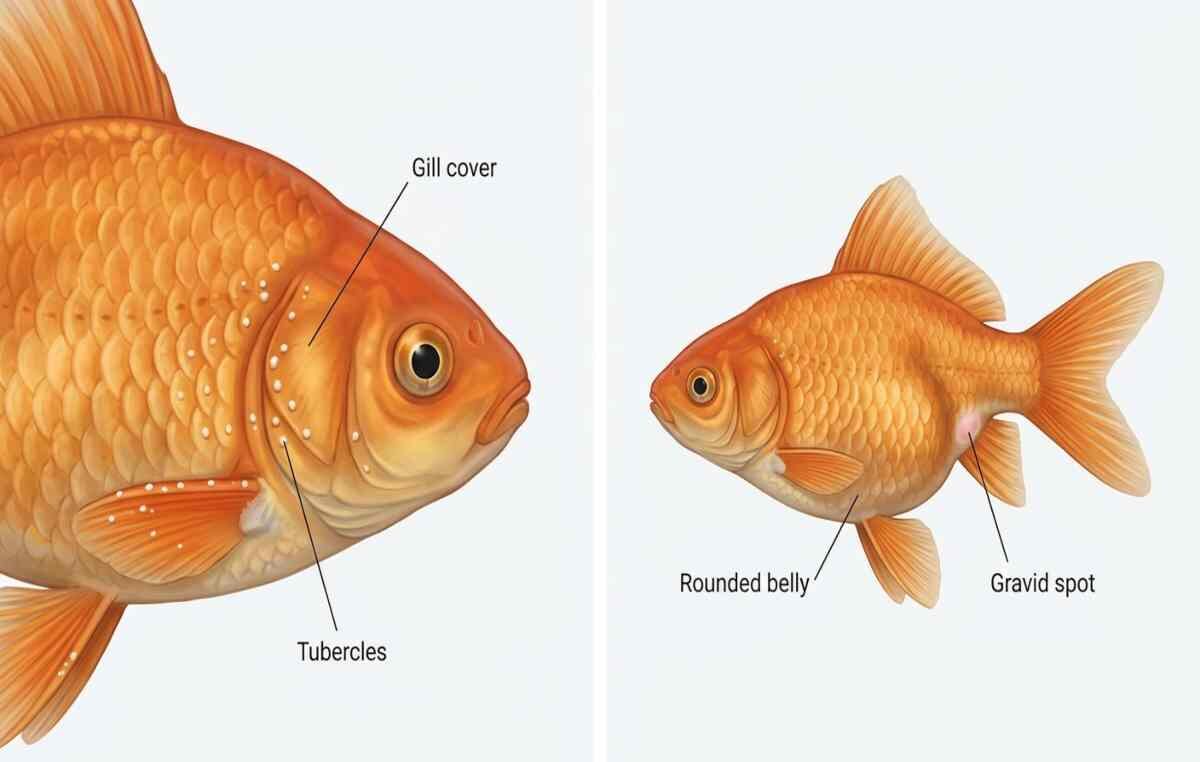 Males develop white tubercles on the gills; females round out with a visible gravid spot when ready to breed.
What Triggers Goldfish to Spawn?
In the wild, goldfish spawn in spring when melting snow cools and then gradually warms shallow water, days grow longer, and rainfall raises water levels over submerged vegetation. Breeders recreate this sequence artificially, since a stable temperature rarely triggers spawning on its own.
The standard approach is to simulate a mild “winter” for several weeks by keeping fish slightly cooler, around 50 to 60°F (10 to 15°C), with shorter light exposure, then gradually raise the temperature by two to three degrees a day up into the mid-60s to low 70s°F (18 to 23°C) while extending the light period to 12 to 14 hours. This temperature climb, paired with longer daylight, is the strongest natural spawning cue for goldfish.
A partial water change with slightly cooler, fresh water right before the expected spawning window often acts as the final trigger, mimicking a spring rain. Many breeders time this for early morning, since goldfish most commonly spawn at dawn.
How Should You Set Up a Goldfish Breeding Tank?
A dedicated breeding tank keeps spawning controlled and makes egg collection far easier than trying to breed fish in a mixed community tank. A 20- to 30-gallon tank is generally sufficient for a small breeding group.
| Setup Element | Recommendation | Why It Matters |
|---|---|---|
| Tank size | 20–30 gallons | Enough swimming room for chasing without excess distance between fish |
| Male-to-female ratio | 2–3 males per female | Increases the chance of full fertilization |
| Substrate | Bare bottom or fine gravel | Prevents eggs from becoming lost or buried |
| Spawning medium | Spawning mop, java moss, or fine-leaved plants | Gives eggs something to adhere to and separates them from the adults |
| Filtration | Gentle sponge filter | Provides oxygen and biological filtration without pulling in eggs |
| Cover | Tight-fitting lid | Goldfish can leap during vigorous spawning chases |
A synthetic spawning mop, made from soft acrylic yarn tied to a floating cork, is the easiest medium to work with because it can be lifted straight out of the tank once eggs are attached, taking the eggs away from hungry adults in seconds. Live plants such as hornwort or java moss work just as well biologically but are harder to inspect for eggs.
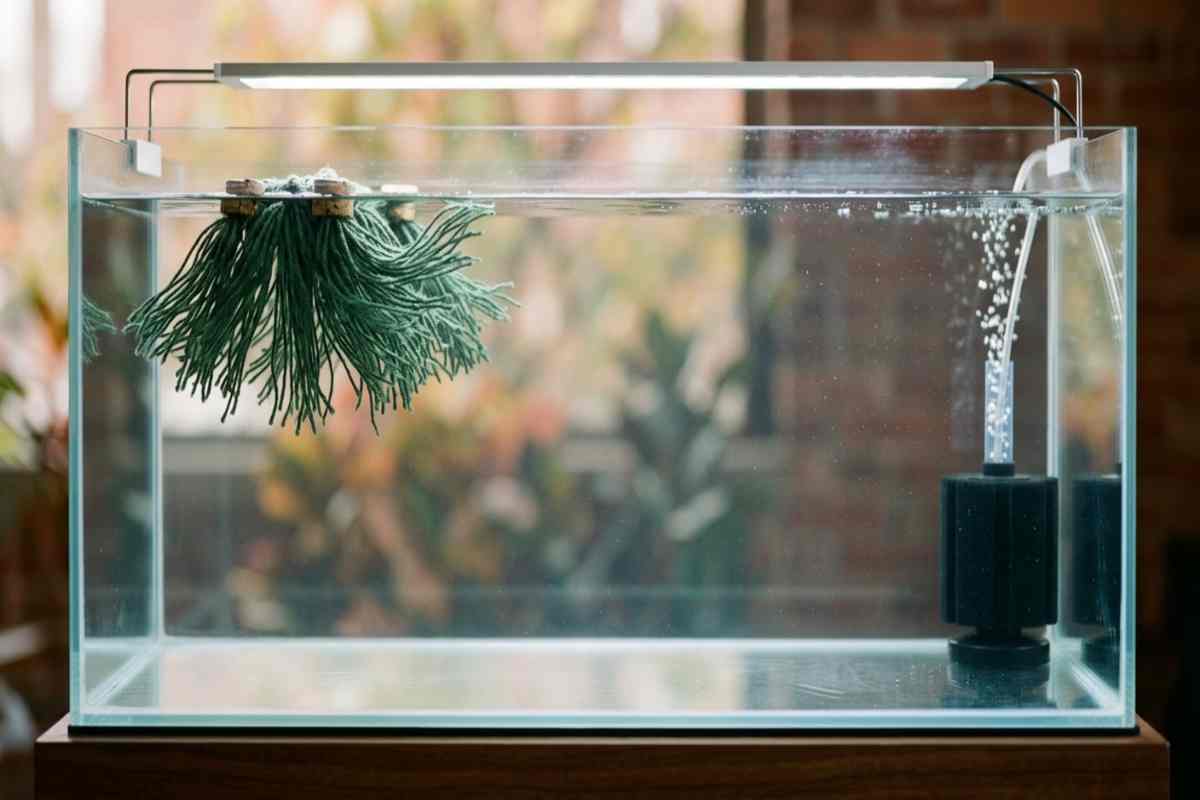 A properly set up goldfish breeding tank with a spawning mop, gentle filtration, and no substrate to trap eggs.
How Do You Condition Goldfish Before Breeding?
Conditioning means building up the fish’s body reserves so females can produce a full, healthy batch of eggs and males can produce ample milt. This starts two to four weeks before the planned breeding attempt.
Feed a varied, protein-rich diet during this period, alternating high-quality pellets with live or frozen foods such as bloodworms, brine shrimp, and daphnia. Feed smaller amounts two to three times a day rather than one large feeding, and do frequent water changes to handle the increased bioload. Well-conditioned goldfish look visibly fuller and more active than fish on a maintenance diet.
Do not condition fish that are underweight, recovering from illness, or older than about seven to eight years, since egg-laying is physically demanding and can compromise fish that aren’t in peak health.
What Happens During Goldfish Spawning?
Once triggered, spawning usually begins in the early morning with males aggressively chasing the female through the plants or spawning mop. This chasing, sometimes described as relentless nudging at her sides and vent, stimulates egg release. It looks alarming to first-time breeders but is normal goldfish reproductive behavior and rarely causes serious injury when tank size and male ratio are adequate.
As the female releases her adhesive eggs in short bursts among the mop or plants, the pursuing males release milt over them to fertilize the eggs externally. A single spawning session can produce several hundred to a few thousand eggs, though fertilization rates and egg quality improve with fish age and conditioning. The entire event typically lasts one to three hours.
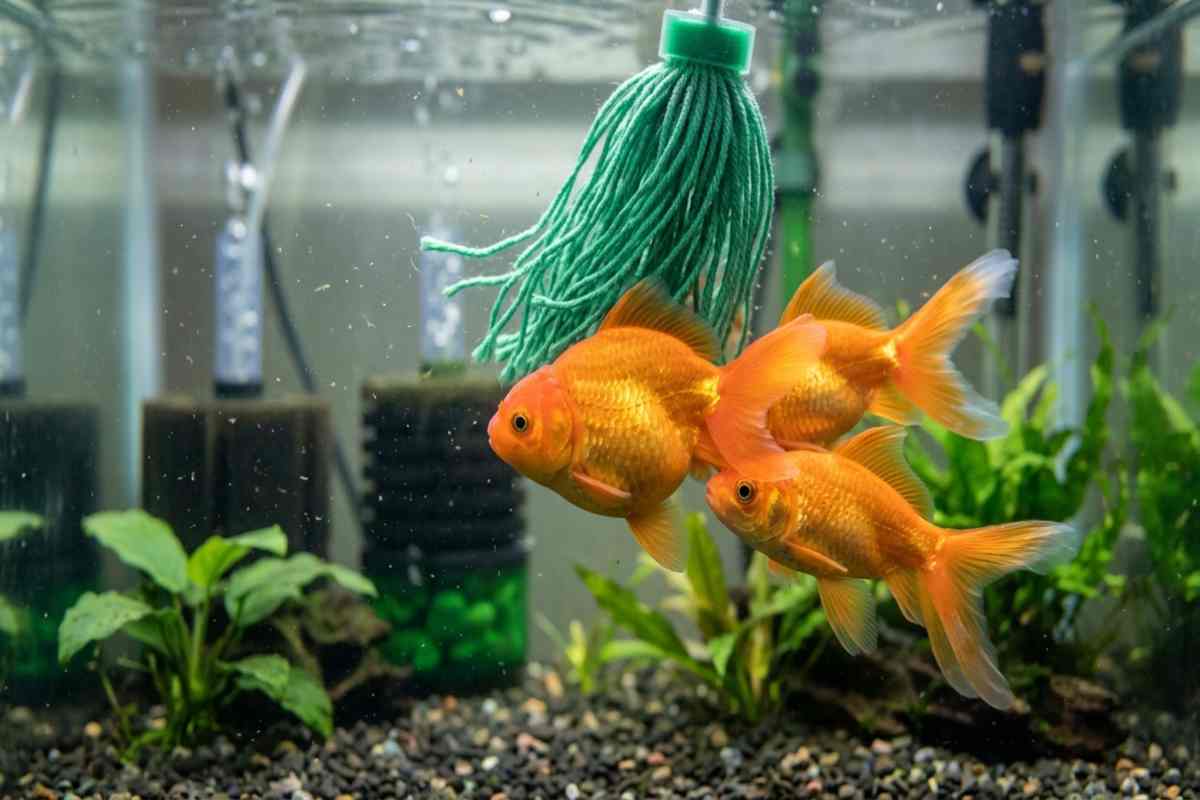
Males closely chase and nudge the female during spawning, a normal part of the goldfish breeding process.
How Do You Take Care of Goldfish Eggs After Spawning?
Goldfish will eat their own eggs, so the single most important step after spawning is separating the eggs from the adults immediately. If a spawning mop was used, lift it directly into a separate hatching container filled with water from the breeding tank. If eggs were laid on plants, move the plants, or net out the adult fish instead if moving the eggs isn’t practical.
Fertile eggs are translucent and pale amber, roughly 1 to 1.5 millimeters across, and become slightly more transparent within 24 to 48 hours as the embryo develops. Infertile or fungus-infected eggs turn opaque white and should be removed daily with a pipette to prevent fungus from spreading to nearby healthy eggs. A small dose of methylene blue in the hatching container helps suppress fungal growth during incubation.
Keep the hatching container gently aerated, at a stable 68 to 74°F (20 to 23°C), with no strong current that could dislodge the eggs, and avoid disturbing the container more than necessary.
How Long Does It Take for Goldfish Eggs to Hatch?
At the recommended incubation temperature, goldfish eggs typically hatch within three to seven days, with warmer water toward the upper end of that range speeding development and cooler water slowing it. Newly hatched fry are nearly invisible, clear, and only a few millimeters long, clinging motionless to the spawning mop, plant leaves, or tank glass for the first two to three days while absorbing their yolk sac.
Do not feed fry during this yolk-sac stage; they cannot yet swim freely or eat, and uneaten food will only foul the water. Once the fry begin swimming horizontally in short bursts, usually around day three or four, they are ready for their first feeding.
What Do Newborn Goldfish Fry Eat?
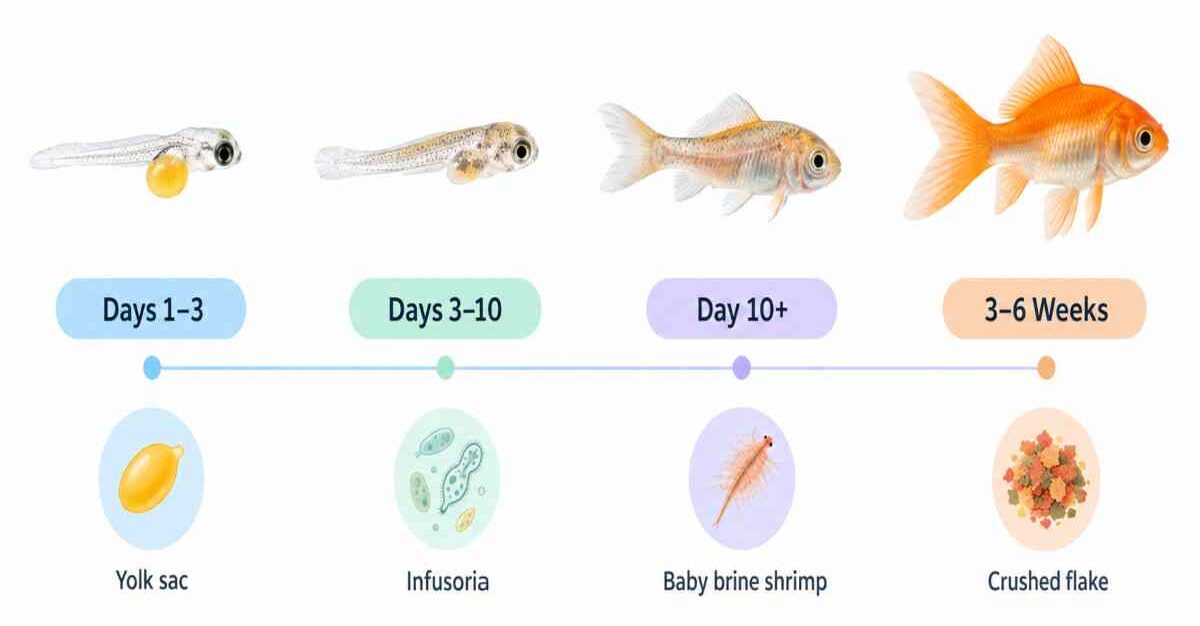
Newborn goldfish fry have tiny mouths and can only eat microscopic food for the first several days.
- Days 1–3 (yolk-sac stage): No feeding needed; fry are living off their yolk reserves.
- Days 3–10: Infusoria (cultured microorganisms), commercially prepared liquid fry food, or finely crushed powdered flake, fed in small amounts several times a day.
- Day 10 onward: Freshly hatched baby brine shrimp (BBS), which most fry can now swallow whole, alongside crushed flake or micro pellets.
- 3–6 weeks onward: Standard crushed flake or small pellet food as the fry’s mouths grow large enough for solid particles.
Baby brine shrimp are considered close to an ideal first “real” food because they are highly nutritious, trigger a strong feeding response, and can be hatched fresh from brine shrimp eggs using a simple hatchery kit. Feed small amounts frequently, three to four times daily, rather than one or two large feedings, since fry have tiny stomachs and cannot process large quantities at once.
 A bare-bottom grow-out tank with gentle filtration keeps water clean for fragile young goldfish fry.
How Do You Grow Out Goldfish Fry Safely?
Fry are highly sensitive to poor water quality, so keep grow-out tanks bare-bottom for the first several weeks, since gravel traps uneaten food and waste that can quickly spike ammonia in a tank that isn’t yet cycled for a heavy bioload. A gentle sponge filter provides biological filtration and oxygenation without the risk of pulling fry into an intake.
Frequent, small water changes, around 10 to 20 percent every one to two days, matter more at this stage than in almost any other part of goldfish care, because young fry have little tolerance for ammonia or nitrite. Overcrowding is a common mistake; a general guideline is no more than one fry per gallon during the first two months, thinning the group as fish grow and require more space.
As fry mature, gradually move them to larger, more established tanks or outdoor ponds where seasonal food sources and stable water conditions support faster, healthier growth.
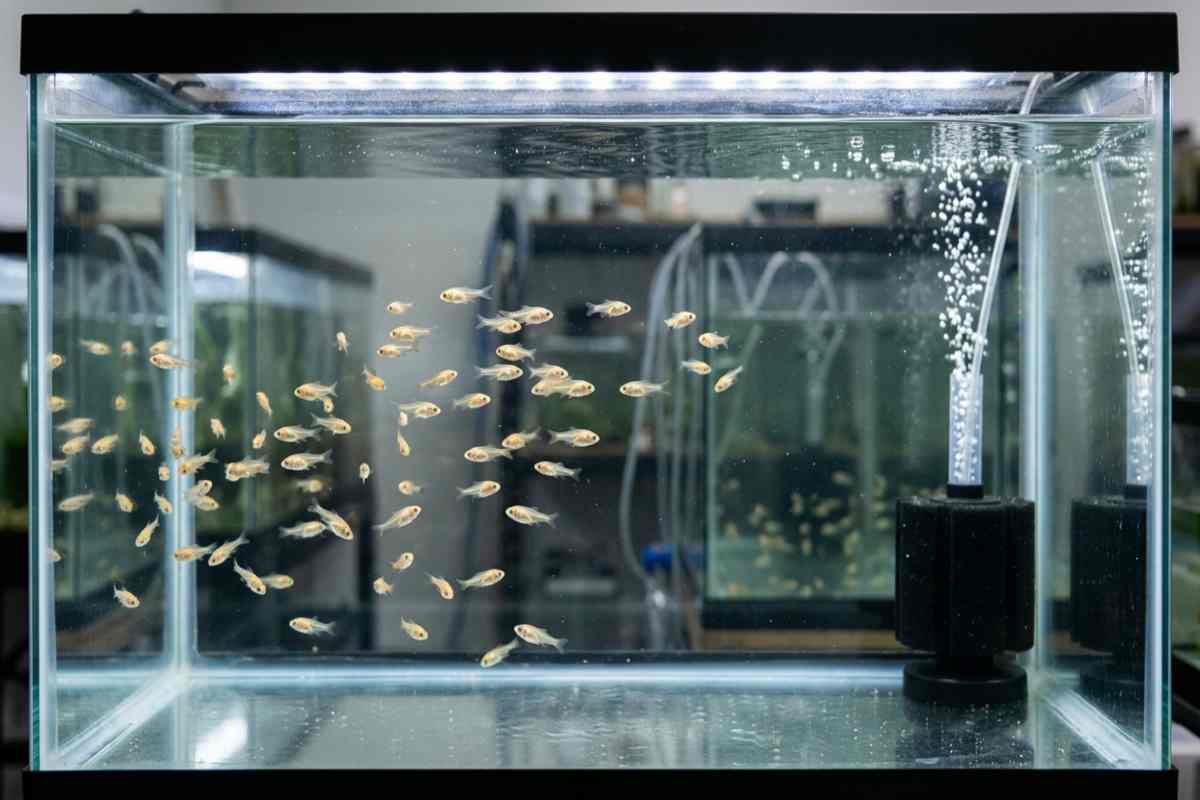 A bare-bottom grow-out tank with gentle filtration keeps water clean for fragile young goldfish fry.
What Is Culling and Why Is It Done in Goldfish Breeding?
Culling is the deliberate removal of fry with severe deformities, such as curved spines, missing gill covers, or inverted swim bladders that leave them unable to swim or feed normally. It is a standard, widely practiced part of responsible fancy goldfish breeding rather than an optional or cruel step, because these fry typically cannot survive long-term and often suffer in the process.
Most breeders wait until fry are at least four to six weeks old, once body shape and swimming ability are clearer, before assessing which fish to cull. Fish with only minor cosmetic differences, such as color, are never culled on that basis alone; culling is reserved for functional deformities that compromise welfare.
Humane culling methods include a fast-acting overdose of clove oil or a similar anesthetic solution, which sedates the fish before it passes. Breeders who are uncomfortable performing this themselves can rehome mildly affected fry as pets rather than breeding stock, provided the fish can still swim, eat, and function normally.
What Is Egg Binding and How Can You Prevent It?
Egg binding occurs when a female is unable to release her eggs during or after the breeding season, and they remain trapped inside her body. It is one of the more serious risks of goldfish breeding and can become life-threatening if left untreated, since retained eggs can compress internal organs and lead to infection.
Signs include a persistently swollen abdomen that doesn’t reduce after the expected spawning window, lethargy, loss of appetite, and in advanced cases, visible redness or a protruding vent. Egg binding is more common in females that are conditioned repeatedly without ever being given a suitable male or spawning trigger, in older or overweight fish, and in fish kept at consistently warm, stable temperatures with no seasonal variation to prompt spawning.
Prevention centers on avoiding over-conditioning without a breeding outlet, ensuring females have access to compatible males and a proper temperature cycle each year, and maintaining a healthy weight rather than overfeeding rich foods indefinitely. A female showing early signs of egg binding may respond to a warm bath, gentle abdominal massage, or a change in water conditions to encourage release, but consult a veterinarian experienced with fish for advanced or persistent cases.
Common Mistakes to Avoid When Breeding Goldfish
- Attempting to breed fish younger than one year or in poor body condition, which usually results in weak eggs, no spawning at all, or complications like egg binding.
- Leaving eggs in the breeding tank with the adults, where they are eaten within minutes to hours.
- Feeding fry food that is too large for their mouths in the first week, which causes starvation even when food is visibly present in the tank.
- Skipping the temperature and daylight cycling step and expecting spawning from a stable, unchanging environment.
- Overcrowding fry in an uncycled tank, leading to ammonia spikes that wipe out an entire spawn within days.
Breeding goldfish successfully comes down to patience and attentive daily care rather than any single trick. Readers who are just getting comfortable with general goldfish husbandry may find it useful to build a strong foundation in day-to-day care before attempting a breeding project, since parent fish in excellent condition are the single biggest factor in a successful spawn. The Fish Care team will continue expanding this breeding series with species-specific fry care and grow-out guides as the site’s biology and nutrition sections grow.
Frequently Asked Questions (FAQs)
How can you tell male and female goldfish apart?
Outside of breeding season, sexing goldfish is difficult since both sexes look similar. During the breeding season, males develop white mating tubercles on their gill covers and pectoral fins, and their pectoral fins often feel slightly stiffer or more pointed. Females become noticeably rounder-bodied as they fill with eggs.
Can goldfish breed in a community tank?
They can, but tankmates, including the parents, almost always eat eggs before they hatch. A dedicated breeding or hatching container is necessary if the goal is actually to raise fry to maturity.
Do goldfish need a male and female to breed, or can they self-fertilize?
Goldfish require both a male and a female; fertilization happens externally when the male releases milt over the eggs. Goldfish cannot self-fertilize or reproduce asexually.
How many eggs does a goldfish lay at once?
A healthy, well-conditioned female can lay anywhere from a few hundred to several thousand eggs in a single spawning session, though only a portion are typically fertilized and survive to hatching.
Why did my goldfish eggs turn white and fuzzy?
White, opaque, fuzzy eggs are unfertilized or have developed a fungal infection. Remove them promptly with a pipette to prevent the fungus from spreading to nearby viable eggs.
How long until goldfish fry look like goldfish?
Fry typically develop recognizable fin shapes and body coloration between six and twelve weeks. However, full color change from the initial dark bronze to gold, red, or white can take several months to a year depending on genetics and growth rate.
References
- FishBase – https://www.fishbase.se/
- Merck Veterinary Manual, Ornamental Fish – https://www.merckvetmanual.com