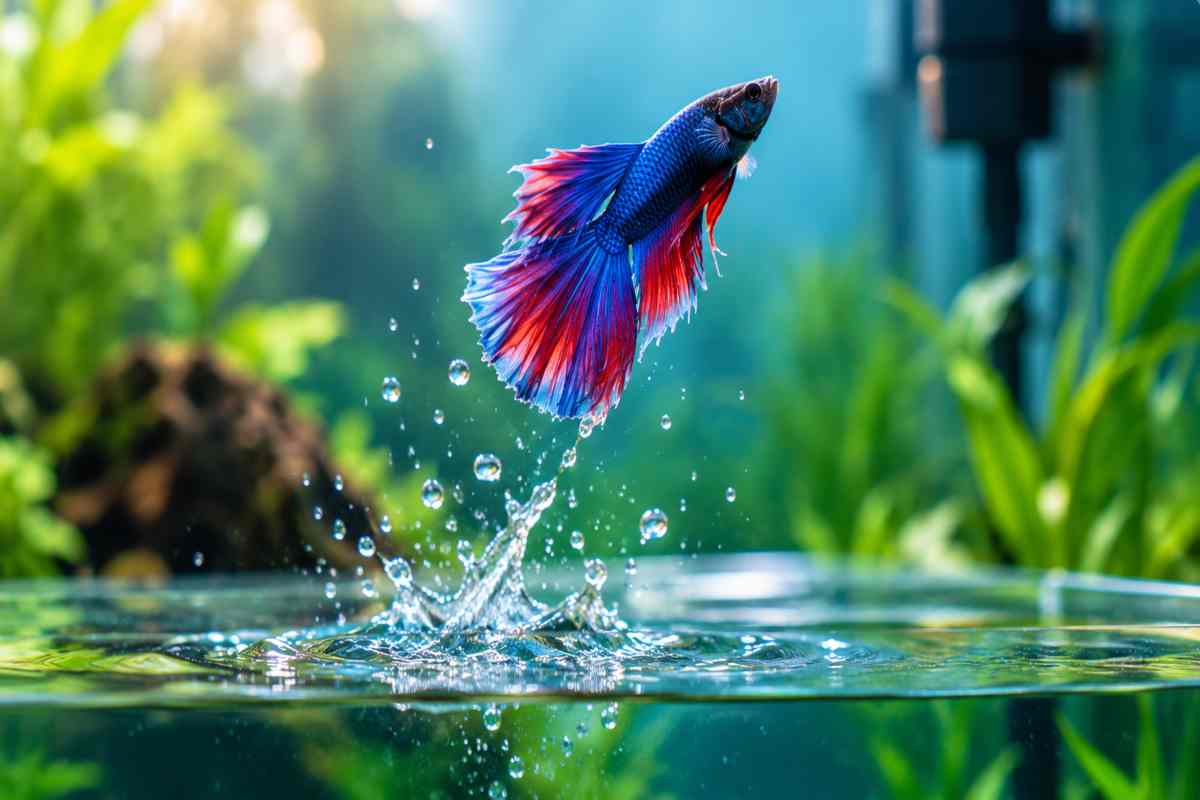
Fish jump out of water mainly because something in their environment feels wrong. The two biggest triggers are poor water quality (ammonia, nitrite, or low oxygen making the water uncomfortable or even painful to breathe) and a startle or stress response (a sudden shadow, an aggressive tankmate, or a perceived predator). For a small number of species, jumping is also instinctive: hunting insects, escaping predators, or dispersing to a new pool are natural behaviors, not malfunctions. In a home aquarium, you can almost always prevent jumping once you identify the underlying cause.
Key Takeaways
- Jumping is usually a response to stress, escape behavior, or a natural instinct rather than random or accidental behavior.
- Poor water quality, including ammonia or nitrite, low oxygen, and sudden pH changes, can strongly increase jumping behavior in aquarium fish.
- Some species, including bettas, killifish, and hatchetfish, are naturally strong jumpers and may leap even when aquarium conditions are good.
- A secure, properly fitted aquarium lid with minimal gaps is one of the most effective ways to prevent fish from jumping out of the tank.
- If a fish jumps out, return it to clean, properly conditioned aquarium water as quickly as possible because prolonged exposure to air can cause severe stress and injury.
What Actually Makes a Fish Jump?
Jumping is powered by the same reflexes and senses fish rely on for everyday survival, not a separate “panic mode.” Understanding the mechanics makes it easier to spot which cause applies to your tank.
The Startle Reflex
Fish have a fast escape response controlled by a pair of giant nerve fibers called Mauthner cells, located in the hindbrain. When a fish detects a sudden vibration, shadow, or touch, these cells trigger an almost instantaneous C-shaped body flex that launches the fish away from the threat, sometimes straight up and out of the water. This reflex fires in milliseconds, faster than the fish can “decide” to jump, which is why even calm, well-adjusted fish can occasionally leap when startled by a slammed door, a sudden light change, or a hand moving quickly over the tank.
Sensing the Surface and What’s Beyond It
Fish use their lateral line, a row of pressure-sensitive receptors along their sides, to detect water movement and locate the surface even with their eyes closed. Combined with vision, this lets a fish aim accurately when it leaps toward an opening, a gap in a lid, or a bright light outside the tank. Contrary to a common myth, fish don’t jump “to their death” on purpose; they aim for what looks like open space or a way out of an uncomfortable environment.
The Role of Oxygen and the Gills
Fish extract dissolved oxygen from water through their gills. When oxygen becomes scarce, whether from overcrowding, warm water, poor circulation, or heavy algae growth, fish instinctively move toward the surface, where oxygen exchange with air keeps concentrations slightly higher. Gasping at the surface (sometimes called “piping”) is the first sign of this; jumping is often the next escalation, as the fish tries to find water with more breathable oxygen.
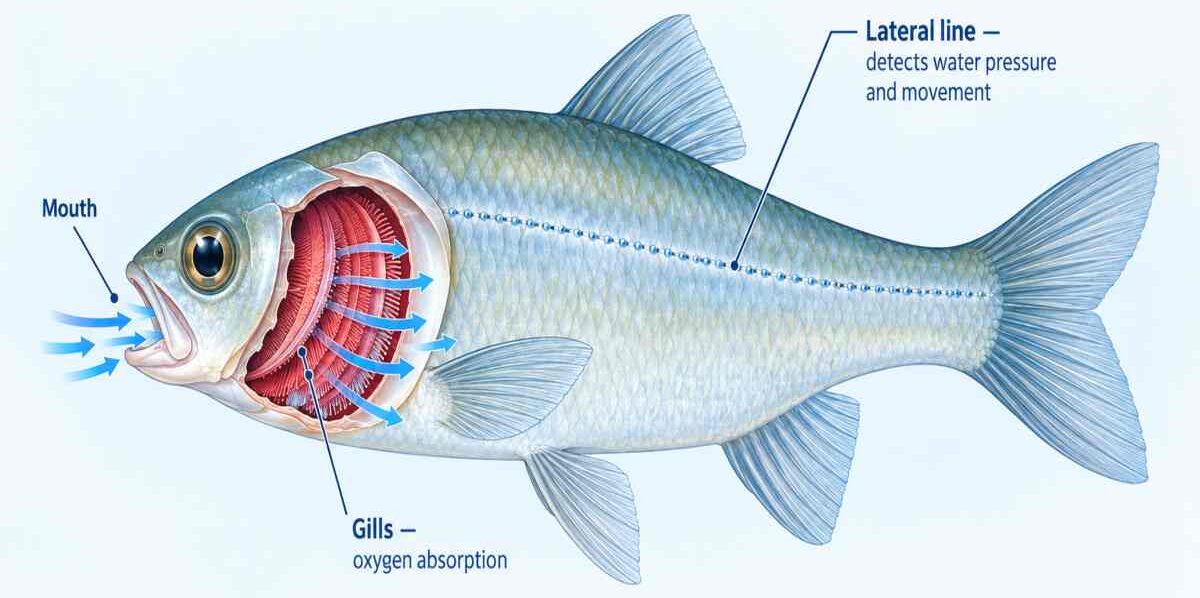 How fish breathe and sense their environment — gills absorb oxygen while the lateral line detects pressure and movement.
Why Do Aquarium Fish Jump Out of the Tank?
In a home aquarium, jumping is rarely an isolated event. It is usually the visible symptom of a condition that has been building for days.
Poor Water Quality
This is the leading cause of jumping in home tanks. Ammonia and nitrite irritate and damage gill tissue even at low concentrations, and fish exposed to them over time become stressed, more prone to infection, and increasingly desperate to leave the water. According to University of Florida IFAS aquaculture research, ammonia causes measurable gill and tissue damage even at low levels, and unionized ammonia concentrations above roughly 0.05 mg/L begin harming fish, with levels around 2.0 mg/L proving lethal. Nitrite becomes toxic to many species at concentrations as low as 0.10 mg/L. A fish trying to escape water like this is not misbehaving; it is responding rationally to a genuinely hostile environment.
Low Dissolved Oxygen
Overstocked tanks, warm water (which holds less oxygen), poor surface agitation, and heavy algae blooms can all lower oxygen levels. Fish gasping near the surface, clustering by filter outflow, or becoming unusually active at dusk are early warning signs that often precede jumping.
Unstable pH or Temperature
Sudden swings in pH or Temperature, often caused by an oversized water change, a malfunctioning heater, or mixing untreated tap water directly into the tank, can shock a fish’s ability to regulate its own body chemistry. This discomfort can trigger the same escape instinct as poor water quality.
Stress From Tankmates
Aggression, fin-nipping, resource competition, or simple incompatibility between species can push a bullied fish to the surface and eventually out of the tank. This is especially common in tanks that are too small for the number or type of fish housed, or where a territorial species like a betta is paired with fin-nippers.
Disease and Parasites
External parasites such as Ichthyophthirius multifiliis (the organism behind ich) or gill flukes cause intense itching, prompting fish to “flash,” rubbing against gravel, decorations, or plants. This erratic darting motion can carry a fish right out of an open tank. Gill infections separately reduce a fish’s ability to absorb oxygen, compounding the problem. If your fish has been flashing or gasping before jumping, review how to treat ich in betta fish or check the broader symptoms of ich disease in fish.
Sudden Light or Shadow Changes
Turning aquarium lights on or off abruptly, or a sudden shadow passing over the tank, can mimic the visual cue of a predator overhead. Many species respond with a startle dash that, in a shallow or uncovered tank, ends in a jump.
Breeding and Territorial Behavior
During spawning, males of some species become intensely territorial and chase rivals or even mates toward the surface and edges of the tank. This is more about pursuit than genuine escape, but the outcome (a fish leaping the rim) is the same.
Natural Hunting Instinct
A handful of species evolved to leap after flying insects at the water’s surface. In captivity, this instinct doesn’t switch off just because there are no insects to catch; it can be triggered by light reflections, surface ripples, or nothing obvious at all.
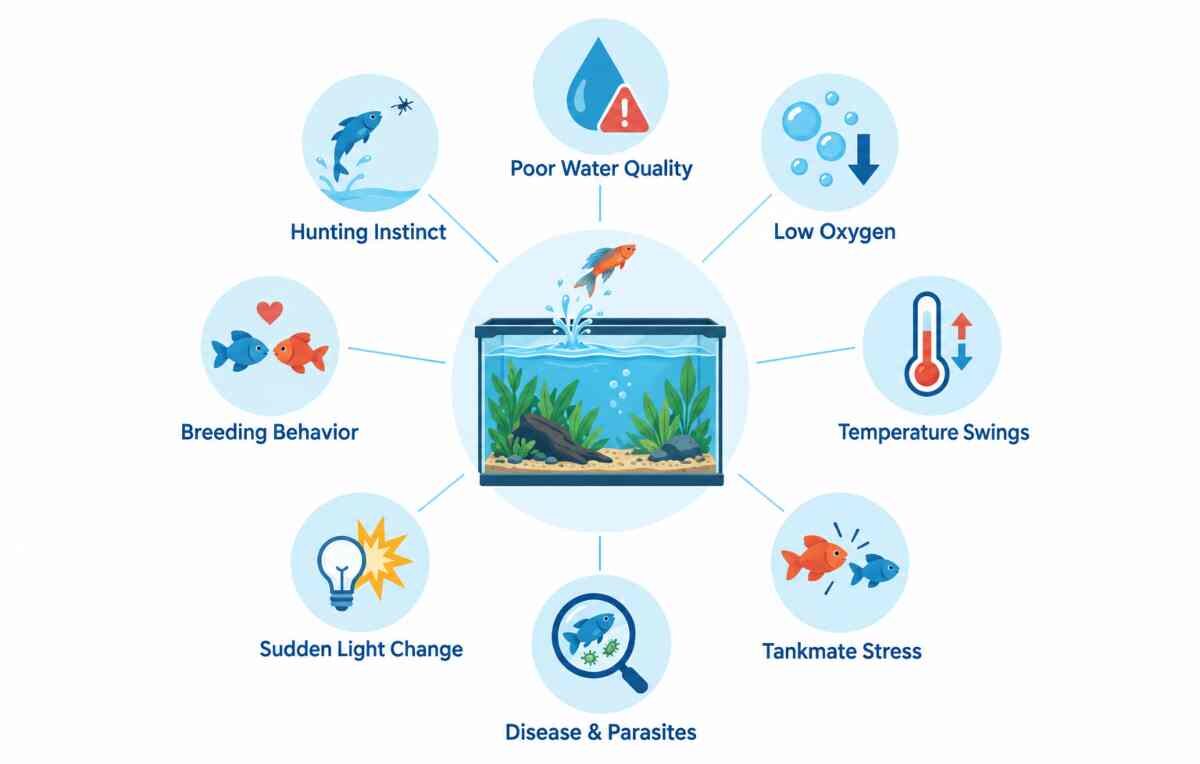 Eight common causes of jumping, from poor water quality to natural hunting instinct.
Which Fish Are the Most Likely to Jump?
Some species are natural jumpers by evolutionary design, regardless of how well their tank is maintained. Others jump almost exclusively when something is wrong.
| Species | Jumping Tendency | Why |
|---|---|---|
| Betta fish | High | Labyrinth organ allows surface-air breathing; strong startle response and territorial behavior can trigger jumping. |
| Killifish | Very high | Many killifish are adapted to seasonal habitats and can jump readily when escaping threats or unsuitable conditions. |
| Hatchetfish | Very high | Powerful pectoral muscles help them leap from the water to escape predators and capture insects near the surface. |
| Danios (zebra, pearl) | Moderate to high | Fast-moving, active fish with a strong startle response that can send them toward or out of the water. |
| Gouramis | Moderate | Labyrinth fish that may jump when startled, stressed, or disturbed near the water surface. |
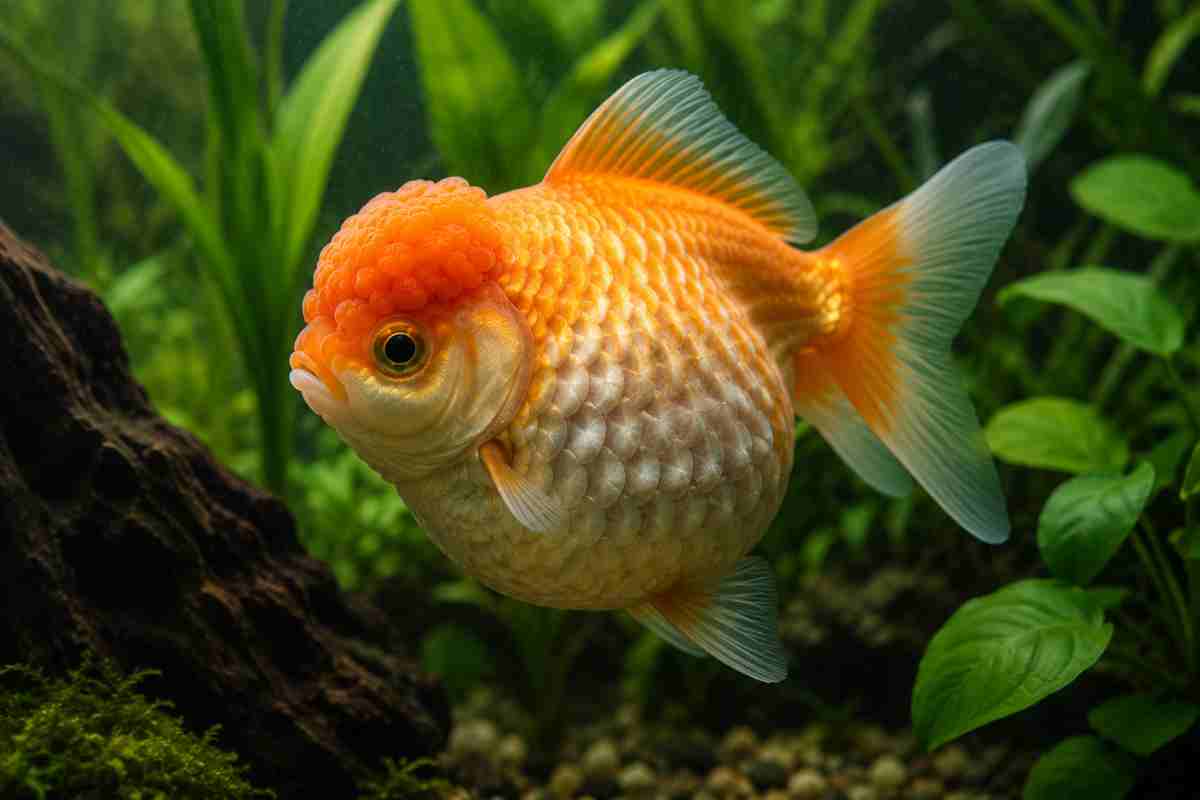
| Goldfish (comet, common) | Moderate | Strong swimmers that can generate enough force to clear an open aquarium rim, particularly when startled. |
| Corydoras catfish | Low | Primarily bottom-dwellers, although they may make rapid trips to the surface and can jump when severely stressed. |
| Angelfish | Low | Generally calm aquarium fish, but sudden movement, severe stress, or poor conditions can cause jumping. |
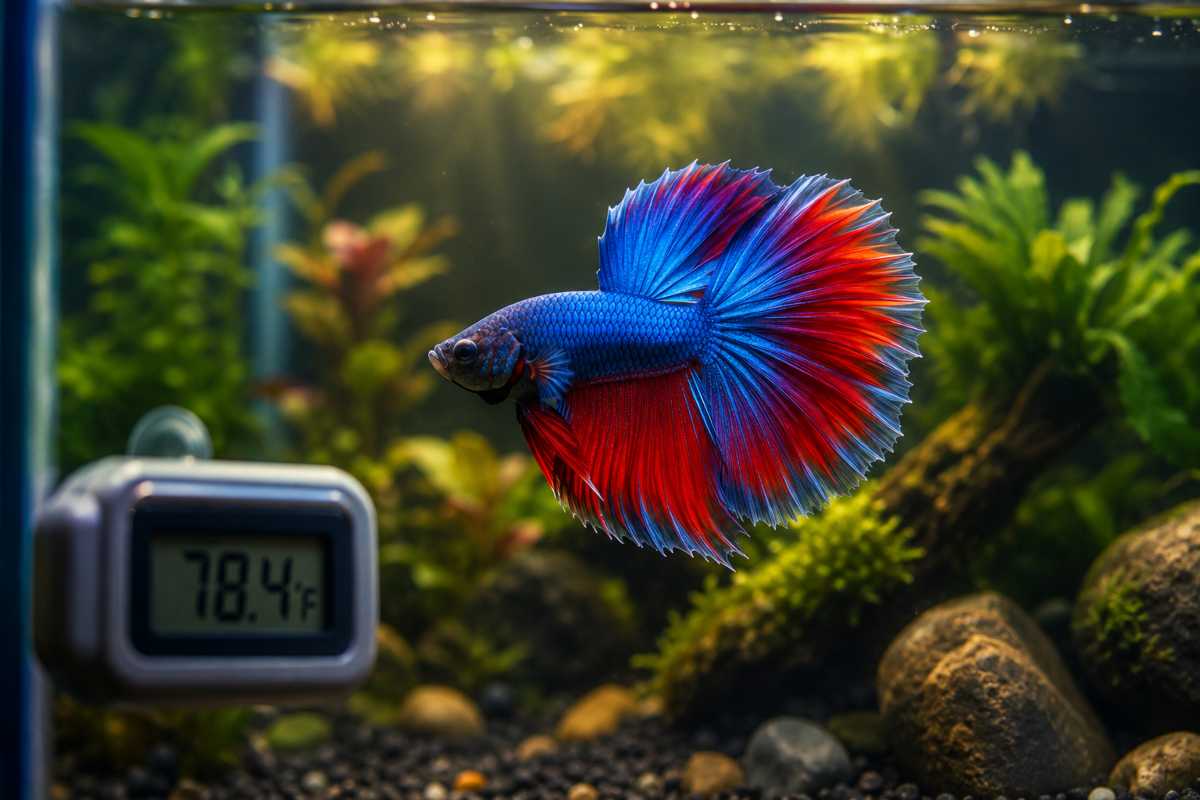
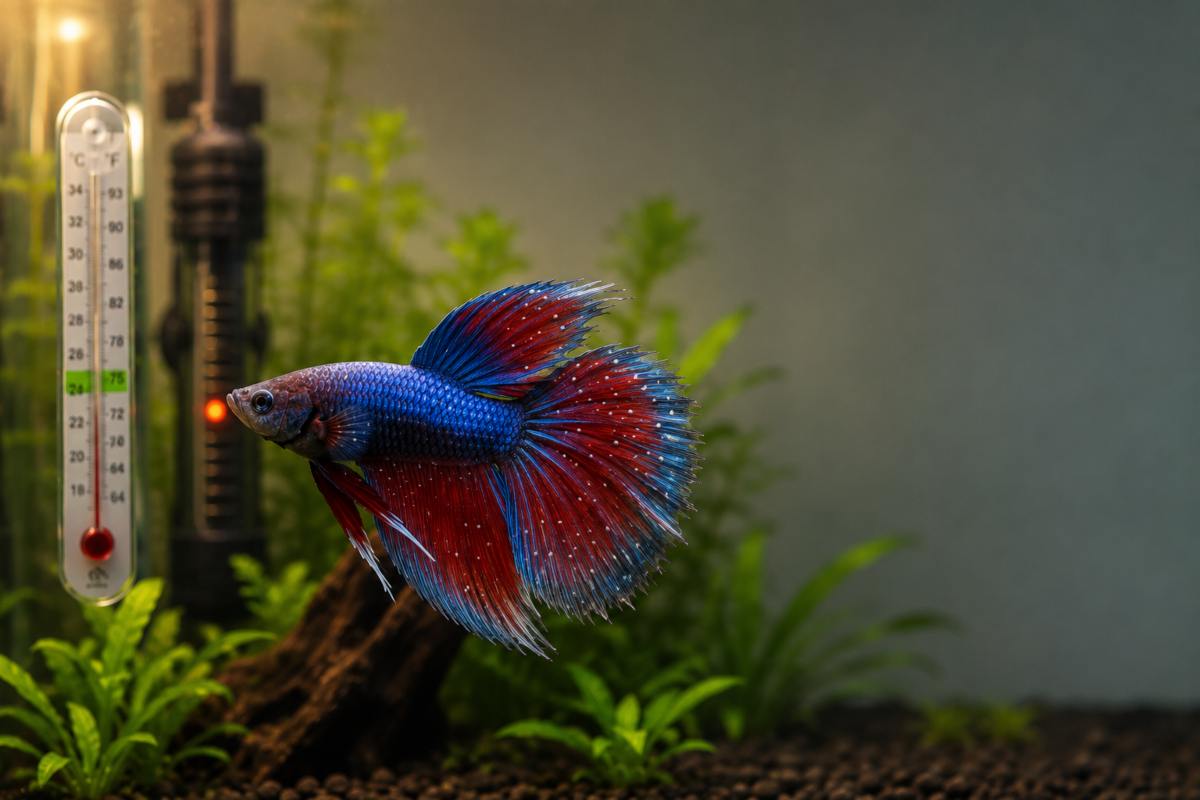
Betta fish deserve a special note: their labyrinth organ, an accessory breathing structure that lets them gulp air directly from the surface, means they are naturally drawn upward and are one of the most frequent jumpers in the hobby. If you keep bettas, pairing a secure lid with the setup guidance in how to set up a fish tank for a betta meaningfully lowers the risk.
Is Jumping Ever Normal, or Always a Warning Sign?
Occasional jumping from a known jumping species (a betta briefly clearing the water surface, a hatchetfish skimming after a fruit fly) can be normal behavior and not a cause for alarm, provided the tank is covered. What is not normal is repeated jumping attempts, jumping paired with gasping at the surface, flashing against decorations, clamped fins, or any other sign of distress. In that case, treat jumping as a symptom to investigate rather than a quirk to ignore.
How Can You Tell If Water Quality Is the Cause?
Before assuming a fish jumped “for no reason,” rule out water chemistry first, since it’s the most common and most fixable cause.
Quick Answer: Test ammonia, nitrite, nitrate, pH, and temperature with a liquid test kit. Ammonia and nitrite should read 0 ppm in an established tank; nitrate is ideally under 20 ppm. If any of these are elevated, or if the fish has also been gasping at the surface, clamping its fins, or clustering near the filter outflow, poor water quality is the likely trigger.
Other supporting clues include:
- A tank that was recently set up (still cycling) or recently had a large gravel clean.
- New fish added without acclimation, temporarily spiking bioload.
- Overdue water changes or a failing filter.
- Warm weather or a heater malfunction that raises the temperature and lowers oxygen capacity.
How Do You Stop Fish From Jumping Out of the Tank?
Prevention works on two levels: removing physical escape routes and reducing the stress that motivates the attempt in the first place.
Prevention Checklist
- Use a tight-fitting lid or glass canopy with no gaps around filters, heaters, or cords.
- Keep the water level at least one to two inches below the rim for known jumping species.
- Test water parameters weekly and perform regular partial water changes.
- Avoid overstocking; research adult size and bioload before adding fish.
- Add an air stone or increase surface agitation if oxygen levels are borderline.
- Provide plants, caves, or driftwood so fish have places to retreat instead of bolting.
- Introduce new fish through slow-drip acclimation to avoid chemical shock.
- Use a gradual timer for aquarium lights rather than switching them on or off instantly.
- Quarantine and treat any fish showing signs of parasites or disease promptly.
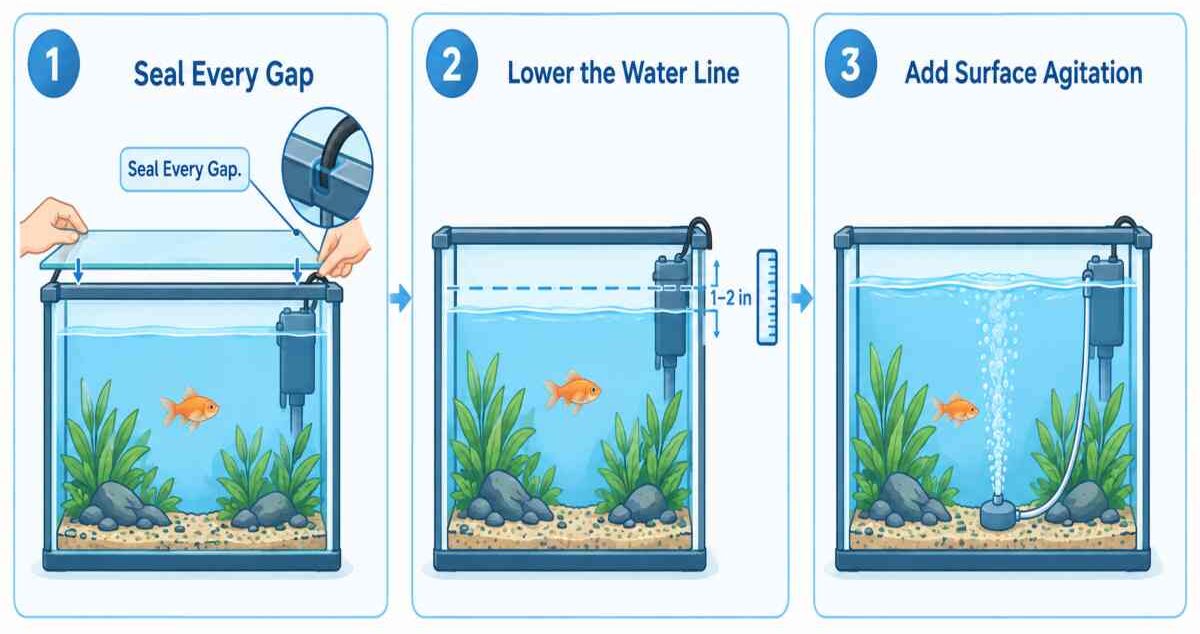 Three simple steps to stop fish from jumping out of the tank.
Fixing the Root Cause, Not Just the Symptom
A lid alone stops a fish from leaving the tank, but it does not fix uncomfortable water. If jumping continues even under a secure cover (visible as a fish repeatedly ramming the underside of the lid), that’s a strong sign the underlying stress hasn’t been resolved and needs direct attention: a water change, a more robust filtration setup, reduced stocking, or disease treatment.
What Should You Do If a Fish Jumps Out?
Time matters. A fish out of water starts to dry out, and its gills begin to collapse within minutes, so acting quickly gives the best chance of recovery.
- Locate the fish immediately. Check the floor, behind furniture, and inside any nearby vents or gaps.
- Gently scoop it up with wet hands or a net, handling it as little as possible.
- Return it to the tank right away. There’s no need to “revive” it first; clean, oxygenated water is the best treatment.
- Watch closely for the next 24 to 48 hours for signs of stress, unusual swimming, or injury such as torn fins or cloudy patches from lost slime coat.
- Address the likely cause using the water quality and stress checks above so it doesn’t happen again.
A fish that survived a jump but lost part of its protective slime coat is more vulnerable to secondary infection for the following few days. Hence, keeping water pristine during that recovery window is especially important.
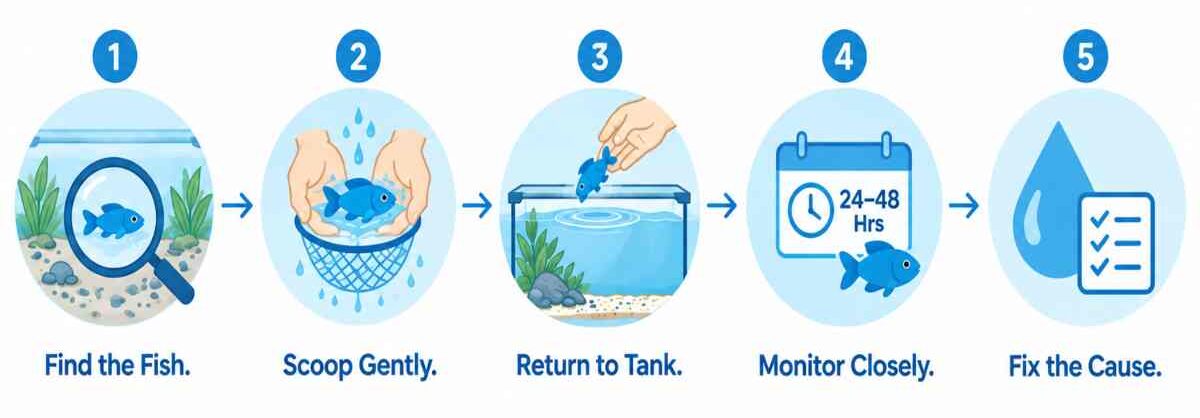 What to do if your fish jumps out: find, scoop, return, monitor, fix the cause.
Can You Prevent Jumping Without a Lid?
A lid is the single most reliable safeguard. However, if a fully open-top setup is unavoidable, risk can still be reduced by keeping the water line noticeably below the rim, avoiding known high-jumping species, maximizing hiding spots, keeping the tank in a low-traffic, low-vibration location, and maintaining consistently excellent water quality so there’s little motivation to escape in the first place. None of these fully replace a cover, but together they meaningfully lower the odds.
Frequently Asked Questions
Do fish jump out of water on purpose?
Yes, in the sense that it’s a deliberate physical response to a stimulus, whether that’s poor water quality, a startle, a predator cue, or natural hunting behavior. It is not random or accidental, even though it often looks that way to the fishkeeper.
Can a fish survive after jumping out of the tank?
Often, yes, if you find it and return it to water within a few minutes. Survival chances drop the longer a fish is out of water, since gills dry out and stop functioning properly without moisture.
Why does my betta keep trying to jump even with clean water?
Bettas naturally explore the surface because of their labyrinth organ, and some individuals are more active jumpers than others. A secure lid is the most effective solution even when water quality is already excellent.
Is it normal for goldfish to jump?
Occasional jumping can occur, especially in ponds or larger setups, but frequent jumping in goldfish usually points to poor water quality, low oxygen, or overcrowding rather than instinct alone.
Does a bigger tank reduce jumping?
Indirectly, yes. A larger tank generally means more stable water parameters, more oxygen capacity, and less territorial stress between tankmates, all of which lower one of the biggest triggers for jumping.