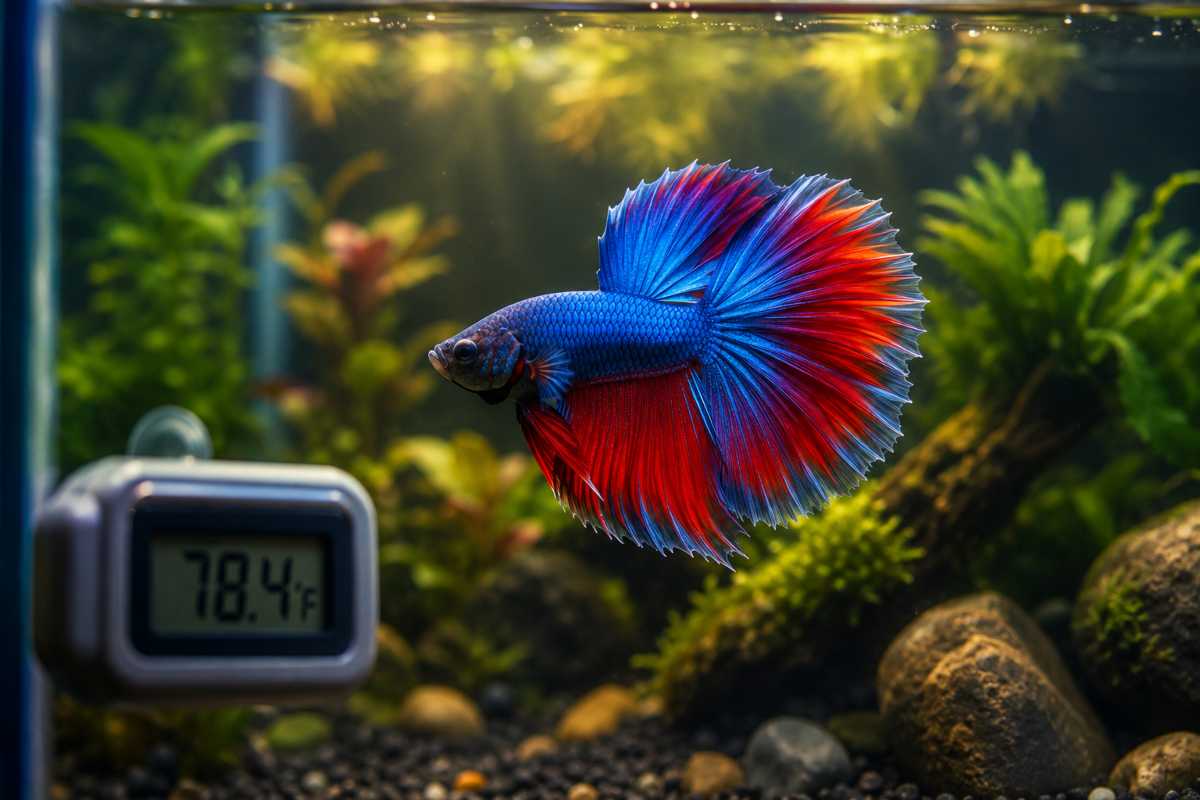
keep betta fish water between 76°F and 80°F (24°C to 27°C), with 78°F (25.5°C) as the sweet spot. Bettas can survive briefly outside this window, but they only thrive (stay active, eat well, and resist disease) inside it.
That single number, however, doesn’t explain why it matters or how actually to hold it steady in a real tank. The rest of this guide covers both.
The Ideal Temperature Range at a Glance
| Zone | Temperature | What Happens |
|---|---|---|
| Too cold | Below 72°F (22°C) | Lethargy, appetite loss, weakened immunity, higher ich risk |
| Survivable but stressful | 72–75°F (22–24°C) | Sluggish, slow digestion, dull colors |
| Ideal / thriving range | 76–80°F (24–27°C) | Active, vivid color, strong appetite, healthy immune response |
| Tolerable but risky | 81–86°F (27–30°C) | Sped-up metabolism, faster aging, low oxygen in water |
| Dangerous | Above 86°F (30°C) | Oxygen depletion, organ stress, potential death |
Bettas (Betta splendens) are native to the shallow rice paddies, ponds, and slow streams of the Mekong basin in Thailand, Cambodia, Laos, and Vietnam, where water naturally sits in the 24–30°C range year-round, according to FishBase, the scientific reference database maintained by marine biologists and fisheries researchers. Home aquariums rarely match a tropical climate on their own, which is why a heater, not just a warm room, is the only reliable way to hit this range consistently.
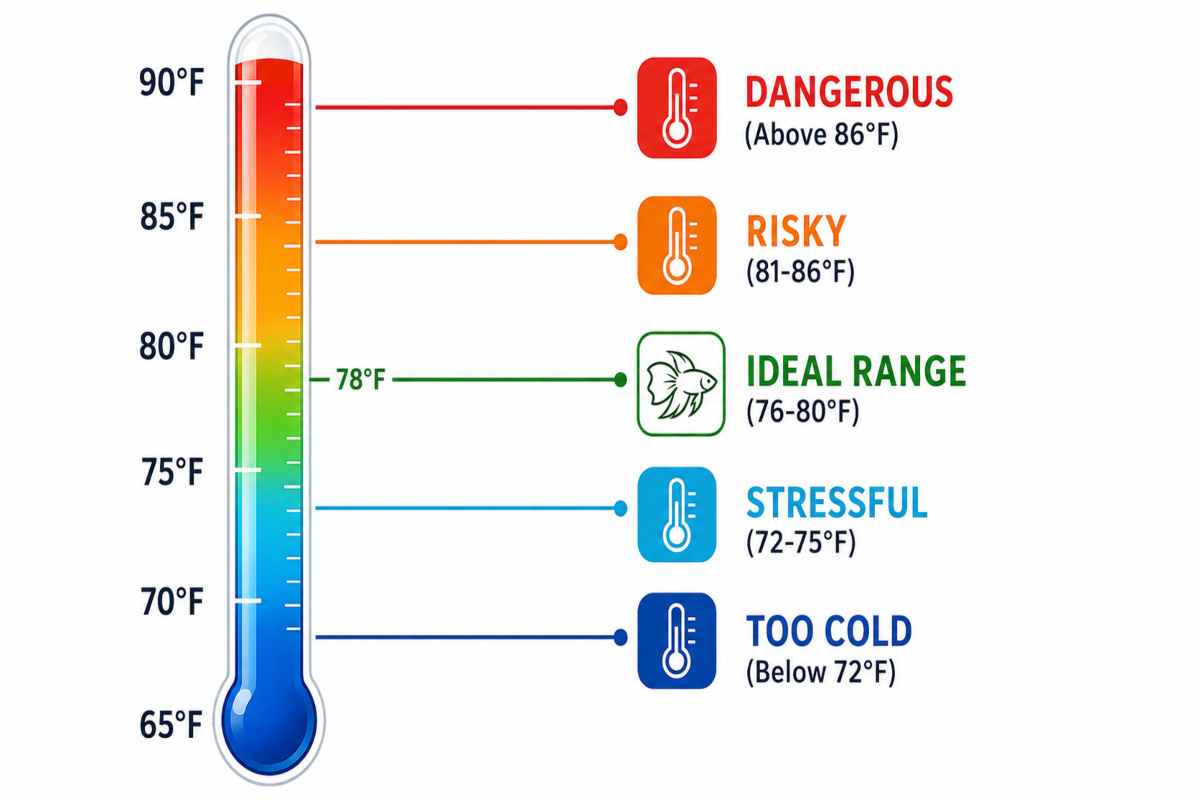 The five betta fish water temperature zones, from too cold to dangerous, with 78°F as the ideal target.
Why Temperature Controls Almost Everything for a Betta
Fish are ectotherms (commonly called cold-blooded), meaning they cannot generate or regulate their own internal body heat the way mammals do. Their body temperature simply matches the water around them, a point well documented by the Merck Veterinary Manual’s section on fish physiology. That single fact explains most of what goes wrong when a betta’s water is too cold or too hot:
- Digestion runs on enzymes that only work efficiently within a narrow temperature band. Cold water slows digestion enough that food can rot in the gut before it’s processed, a common trigger for bloating and constipation.
- Immune function depends on temperature-sensitive white blood cell activity. Below 74°F, a betta’s immune response weakens noticeably, which is why cold tanks see far more cases of ich and fin rot.
- Metabolism speeds up in warm water and slows in cold water. Too warm, and the betta burns through energy and oxygen more quickly than it can replace them; too cold, and it becomes sluggish and stops eating.
In short, “ideal temperature” isn’t a cosmetic preference. It’s the single biggest lever an owner has over a betta’s long-term health, alongside water quality.
Signs Your Betta’s Water Is Too Cold
- Sitting motionless at the bottom of the tank
- Clamped fins held close to the body
- Refusing food or spitting it back out
- Faded or dull coloration
- Slow, labored movement
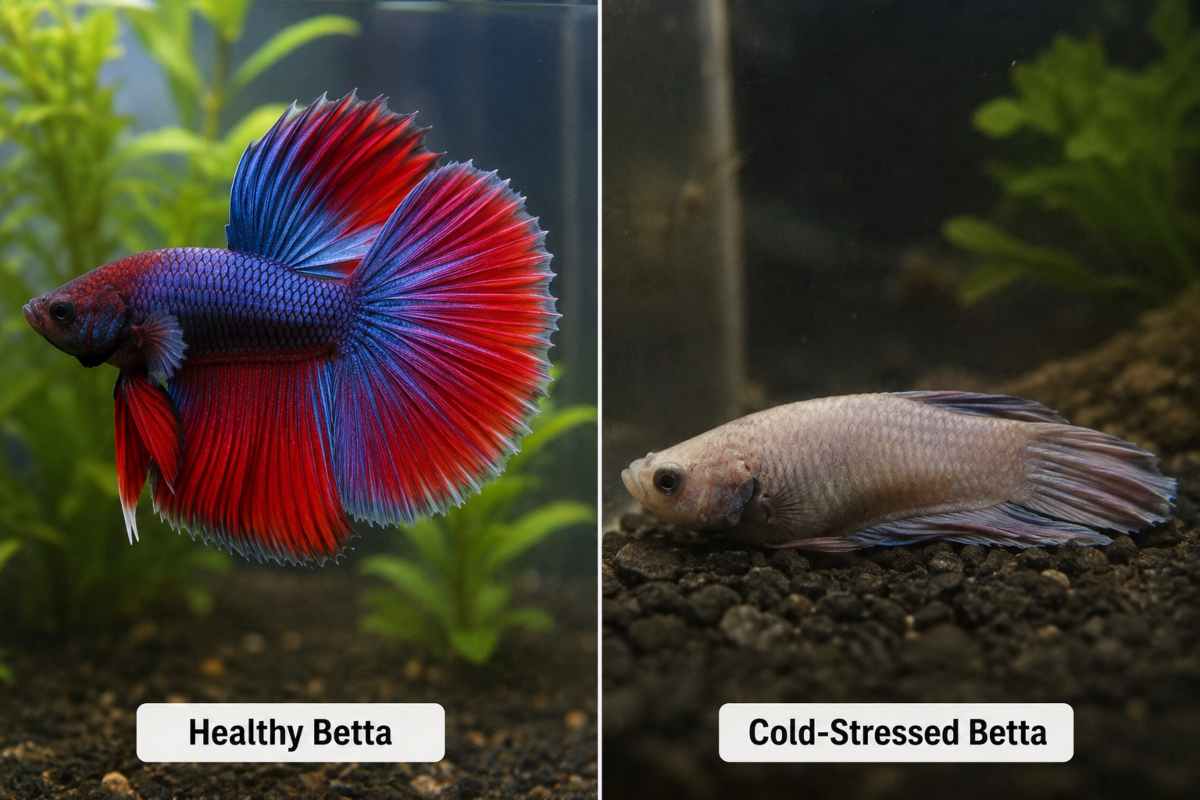 Healthy betta with fins flared vs. a cold-stressed betta resting listlessly on the substrate.
Signs Your Betta’s Water Is Too Warm
- Darting erratically or gasping at the surface
- Rapid gill movement (breathing hard)
- Restlessness that doesn’t settle even after lights-out
- Faster-than-normal appetite followed by sudden lethargy (metabolic crash)
Warm water also holds less dissolved oxygen, so surface gasping in a heated tank is often as much an oxygen issue as a heat issue, and both point to the same fix: bring the temperature back down.
How to Keep Betta Water Temperature Stable
- Use a submersible heater sized to your tank, not just a warm room. Room temperature fluctuates with weather, HVAC cycles, and time of day; a heater with a thermostat does not.
- Match wattage to tank size. A common baseline is roughly 3–5 watts per gallon.
| Tank Size | Suggested Heater Wattage |
|---|---|
| 5 gallons | 25 watts |
| 10 gallons | 50 watts |
| 20 gallons | 75–100 watts |
- Verify with a separate thermometer. Heater dials drift out of calibration over time; a stick-on or digital thermometer on the opposite side of the tank confirms the actual reading.
- Keep the tank away from windows, vents, and exterior walls, where direct sunlight or drafts cause swings a heater has to fight constantly.
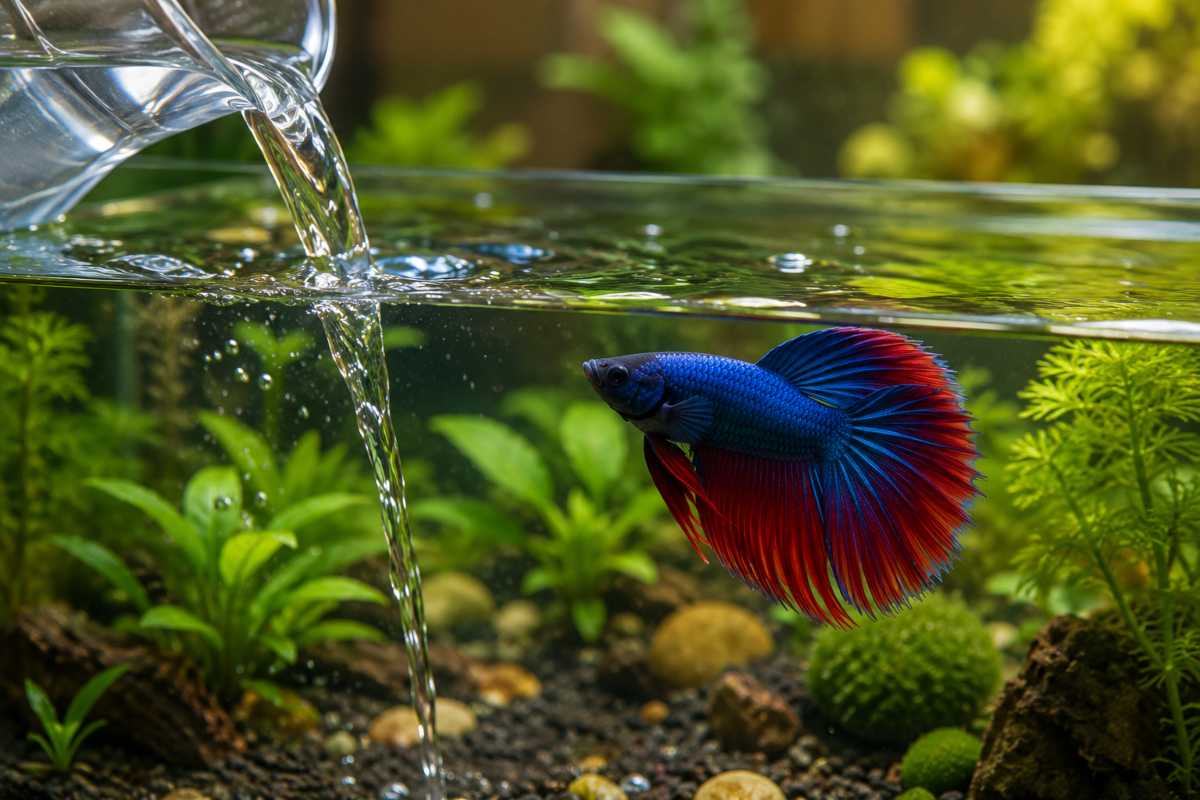
- Match new water to tank temperature during water changes. Pouring in noticeably colder or warmer water, even briefly, is a common source of temperature-shock stress, so matching it within a couple of degrees before adding it back avoids this entirely.
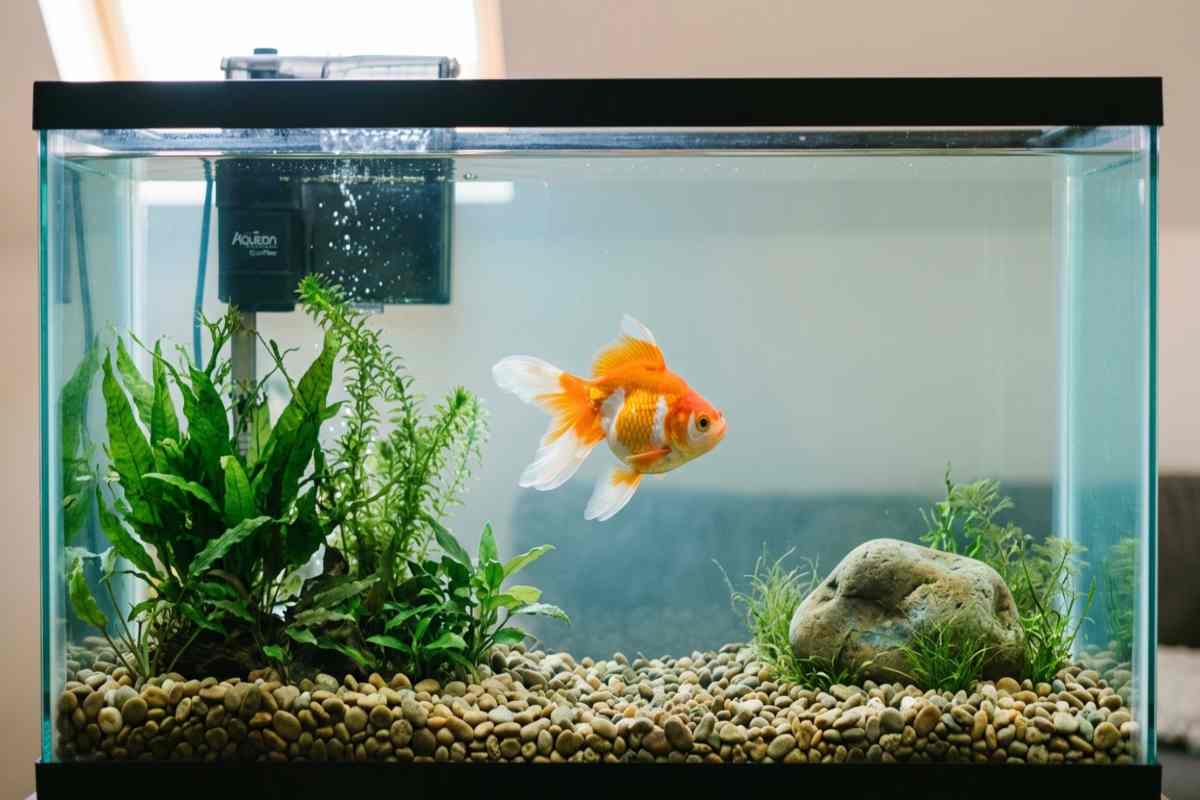
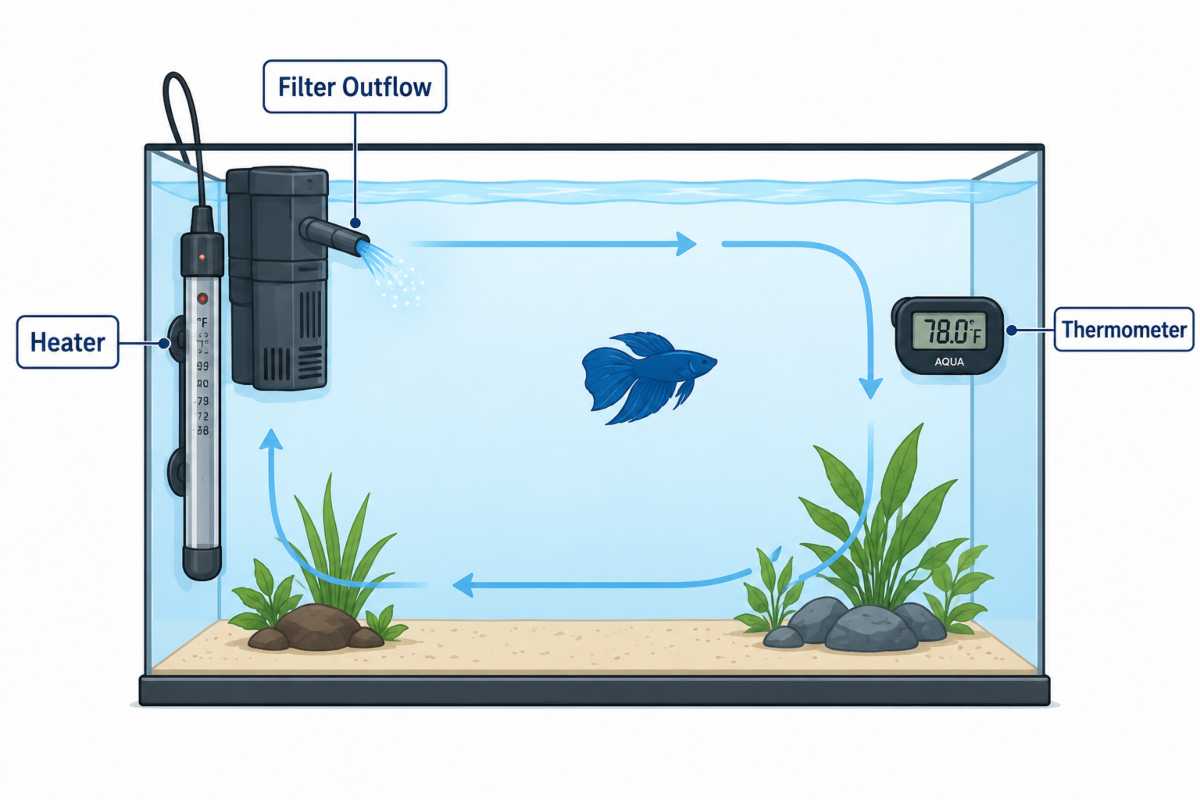 Ideal betta tank setup: heater near the filter outflow, thermometer opposite, for even heat flow.
Do Bettas Need a Heater Year-Round?
Yes, in almost every home. Even rooms that feel “warm” to a person routinely sit at 68–72°F, which falls below a betta’s ideal range and only reaches the danger zone during winter nights or air-conditioned summers. A heater with a built-in thermostat is the only way to guarantee stability regardless of season, and it should stay on and running continuously rather than being switched on and off.
At The Fish Care, every care guide is checked against sources like these before publication, because a betta’s water temperature is too important to get from guesswork. Getting this one variable right does more for a betta’s long-term health than almost any other single decision an owner makes.
FAQs (Frequently Asked Questions)
What is the best temperature for a betta fish tank?
76°F to 80°F (24°C to 27°C), with 78°F as the most commonly recommended target for consistent health and activity.
Can a betta survive in room-temperature water?
Only if the room stays reliably within the mid-to-high 70s°F, which is rare in most homes; below that, a betta will survive short-term but will not thrive, and prolonged exposure raises disease risk significantly.
What temperature is too cold for a betta fish?
Below 72°F (22°C) is stressful; below 65°F (18°C) is dangerous and can be fatal within days.
What temperature is too hot for a betta fish?
Above 86°F (30°C) depletes dissolved oxygen and accelerates metabolic stress; sustained exposure above this point can be fatal.
Do bettas need a heater at night?
Yes. Room temperatures typically drop overnight, and a heater with a thermostat should remain on continuously to prevent that dip.
References
This article draws on temperature and habitat data from the following authoritative sources:
- FishBase: the global scientific fish species database used by researchers and fisheries scientists. fishbase.se
- Merck Veterinary Manual: a peer-reviewed veterinary reference covering fish physiology and husbandry. merckvetmanual.com