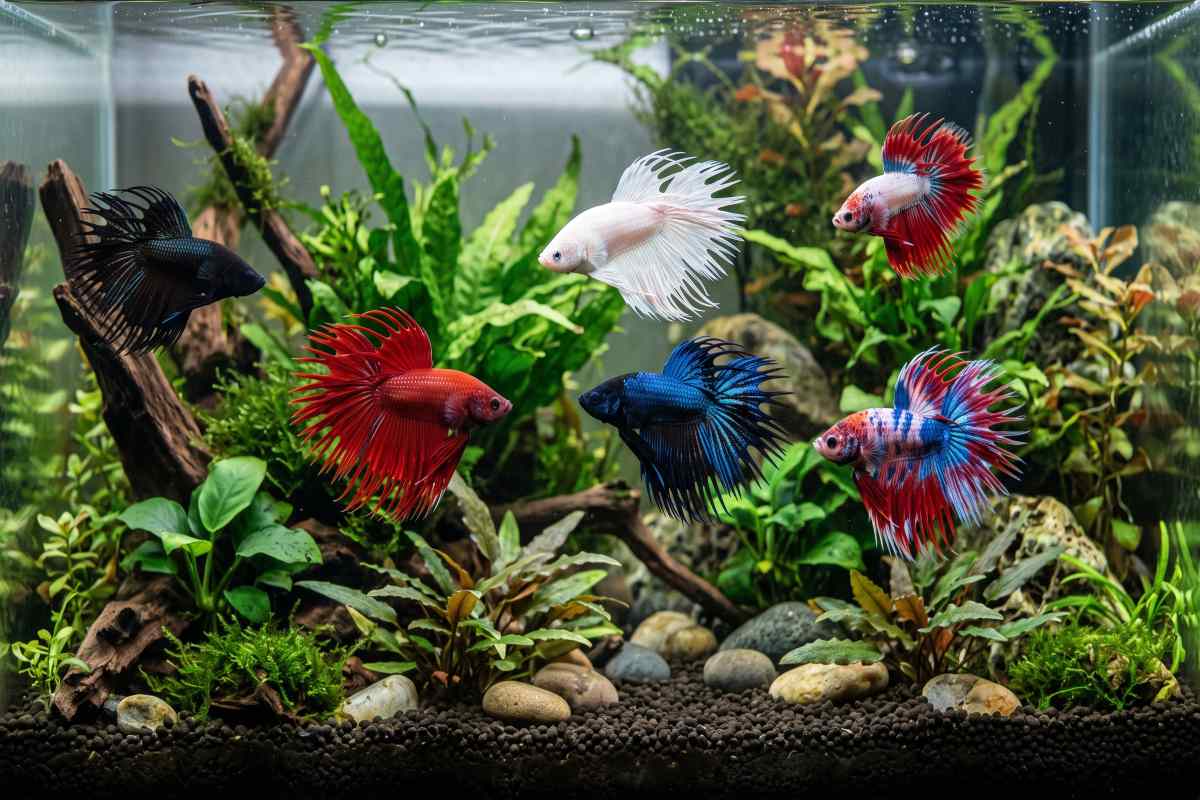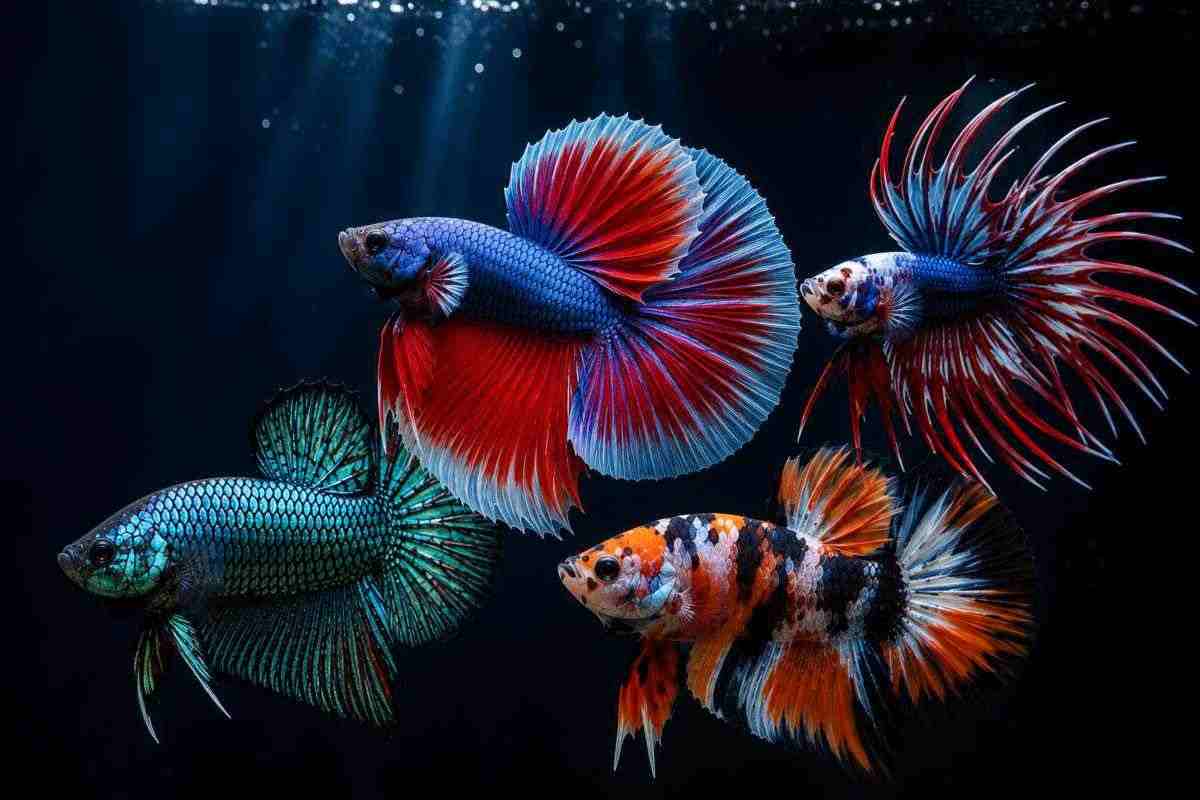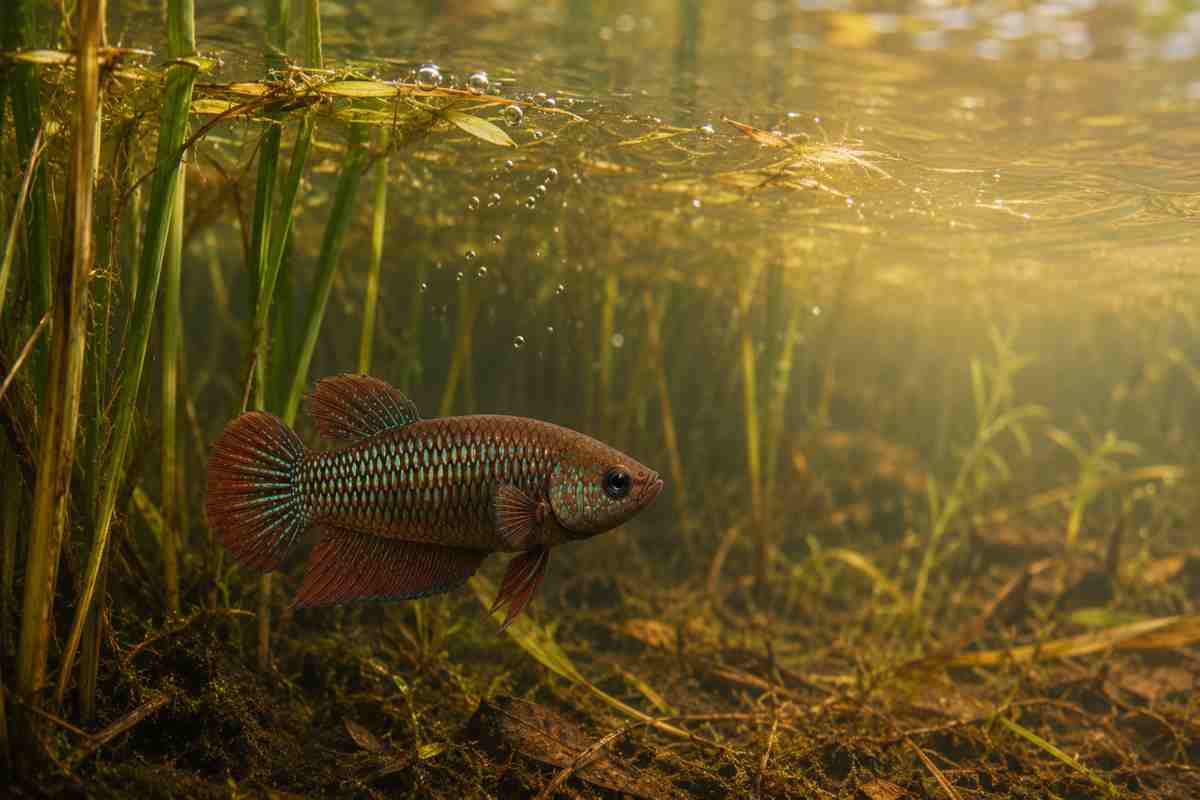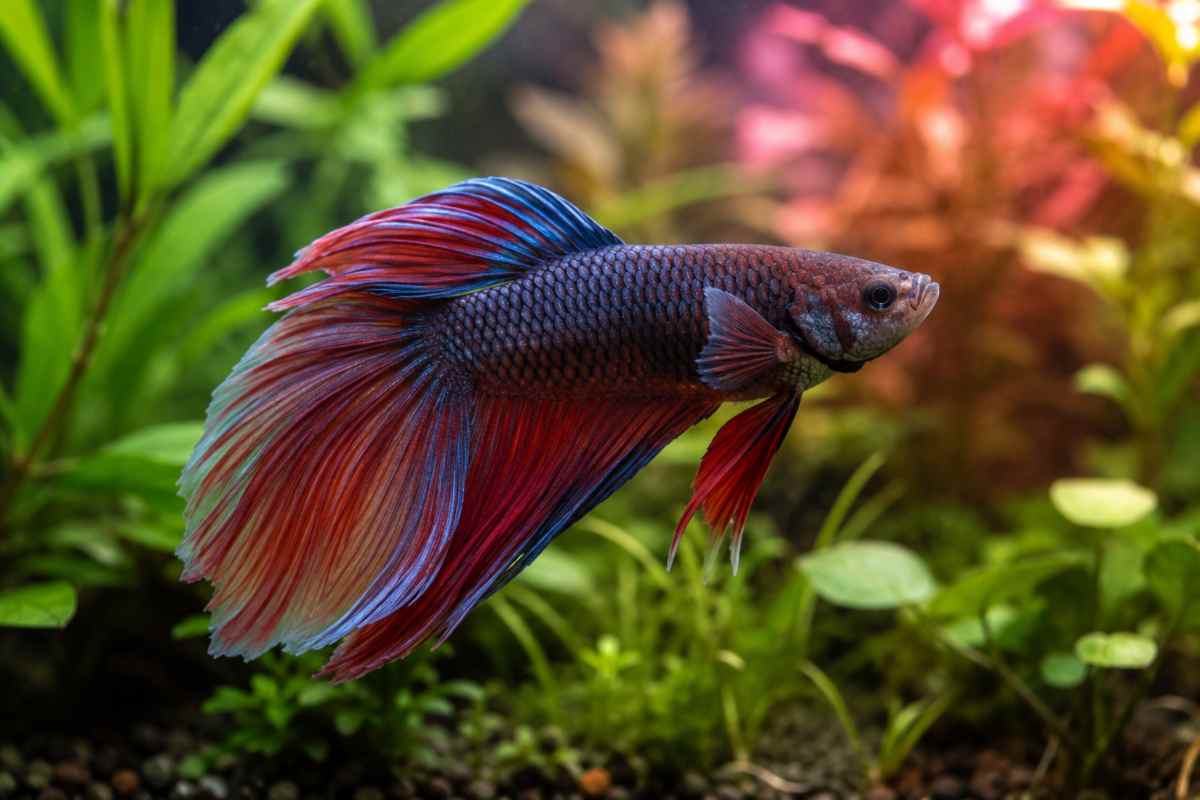
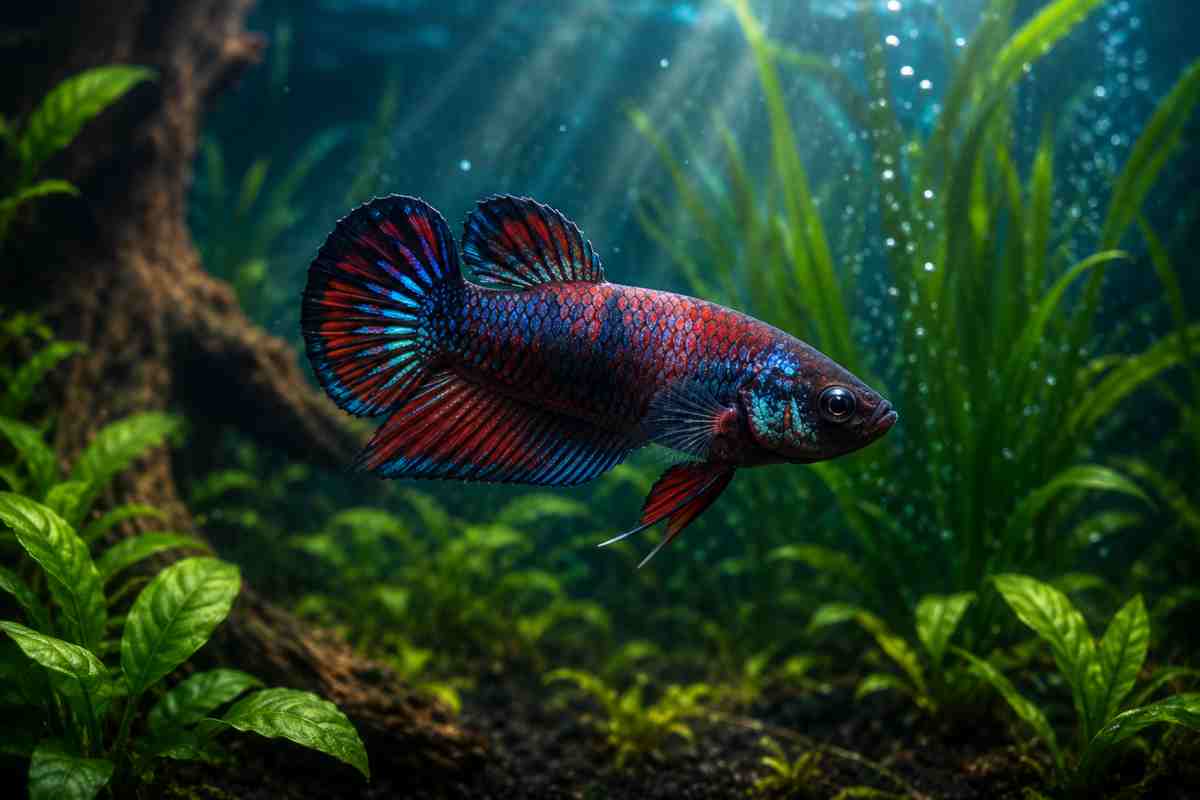
A female plakat betta is the short-finned, closer-to-wild form of Betta splendens, and identifying her correctly starts with knowing what sets that fin type apart. She’s hardier and more active than most long-finned females, and understanding those traits before you buy one will shape how you set up her tank and manage her temperament.
Use this guide to identify a female plakat with confidence, tell her apart from other betta types, and care for her correctly from day one through long-term health.
| Quick Fact | Detail |
|---|---|
| Scientific name | Betta splendens |
| Fin type | Short, rounded plakat (closer to wild-type) |
| Adult size | 1.5–2.25 in (4–6 cm) |
| Average lifespan | 2–4 years (up to 5 with excellent care) |
| Minimum tank size | 5 gallons (single); 20+ gallons (sorority) |
| Water temperature | 76–82°F (24.5–28°C) |
| pH range | 6.5–7.5 |
| Diet | Carnivore; betta pellets + occasional live/frozen food |
| Temperament | Moderate aggression; more social than males |
| Housing | Best kept alone; sorority possible with caution |
What Is a Female Plakat Betta?
“Plakat” comes from the Thai pla kat, meaning “biting fish”: the original short-finned bettas bred in Thailand for fin-nipping contests long before ornamental strains existed. A female plakat betta is simply a female Betta splendens with this short-finned build, rather than the elongated fins seen in veiltail, crowntail, or halfmoon females.
Because plakats are genetically closer to the wild-type betta, their fins are shorter, their bodies are more torpedo-shaped, and they tend to be stronger swimmers than long-finned females. Females of any betta type are naturally shorter-finned than males, so a female plakat’s fins are only modestly shorter than a female veiltail’s. The biggest differences show up in body shape and swimming style rather than fin length alone.
How to Identify a Female Plakat Betta
Use these traits together, not in isolation, since color and pattern vary widely within the plakat line.
- Fin shape: Short, rounded caudal (tail) fin with a compact dorsal and anal fin, no trailing or veil-like extensions.
- Body shape: Thicker, more muscular, and slightly more elongated than long-finned females, built for fast bursts of movement.
- Egg spot: A small white ovipositor tube visible near the underside, between the ventral and anal fins, present in nearly all mature females regardless of fin type.
- Size: Typically 1.5–2.25 inches (4–6 cm), slightly smaller than males.
- Stripes: Vertical “stress bars” may appear and fade depending on mood, temperature, and social context; this is normal and not exclusive to plakats.
Female Plakat vs. Male Plakat Betta
| Trait | Female Plakat | Male Plakat |
|---|---|---|
| Fin length | Short, rounded | Short, but often broader and more flared |
| Body size | 1.5–2.25 in (4–6 cm) | 2–3 in (5–7.5 cm) |
| Coloration | Often muted or patterned | Usually more saturated and vivid |
| Aggression | Moderate; can be housed in groups with care | High; must be kept alone |
| Egg spot | Present | Absent |
| Behavior | More social, curious, active | Territorial, solitary |
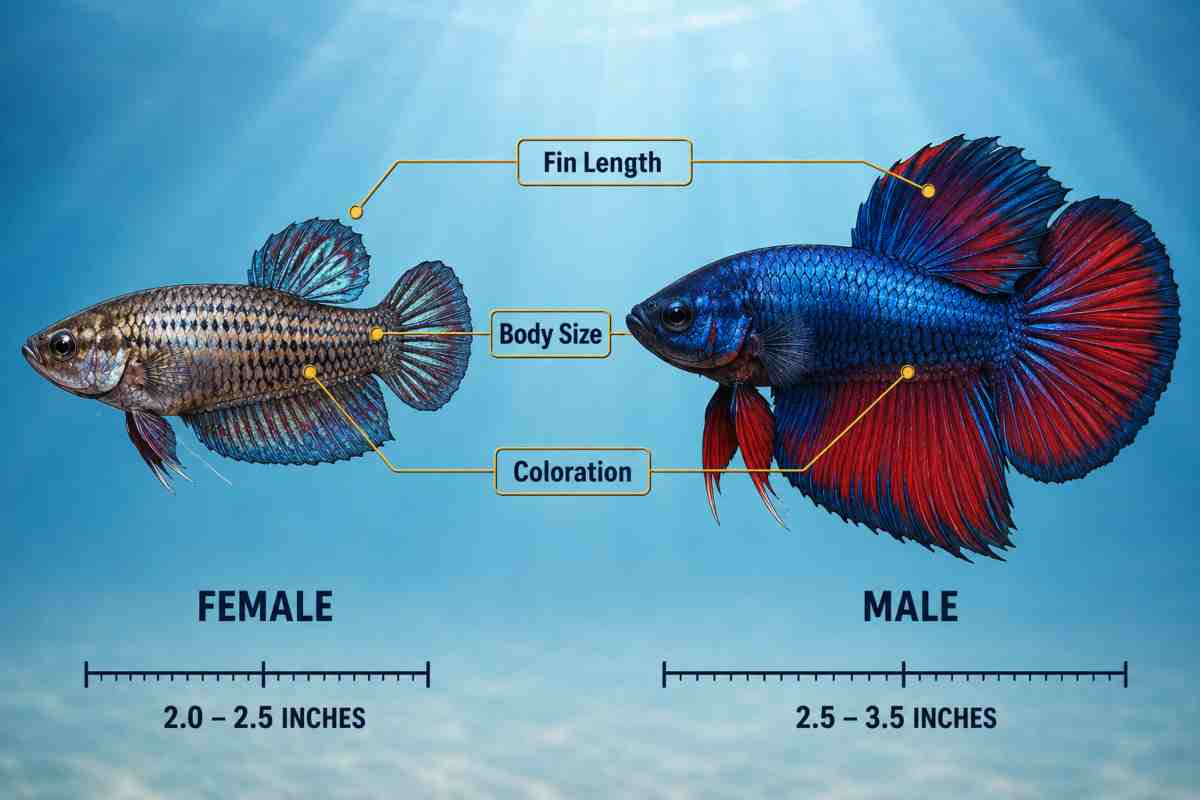 Female vs. male plakat betta: key differences in fin length, size, and coloration at a glance.
Temperament and Behavior
Female plakats inherit the same feisty ancestry as their fighting-line relatives, so while they are generally calmer than males, they are not passive fish. They flare, chase, and establish a pecking order, especially in group settings.
Some keepers house female plakats in a “sorority” of five or more to diffuse aggression across the group, but this setup demands close monitoring, at least 20 gallons of space, and heavy visual breaks (plants, decor) to give weaker fish somewhere to retreat. Sororities are not beginner-friendly and should only be attempted with a backup tank ready in case a fish needs isolation.
Pairing a female plakat with a male in the same tank carries real risk of injury or fatal aggression. It is not recommended as a permanent living arrangement, regardless of how calm either fish seems at first introduction.
Tank Setup and Water Parameters
Because plakats are strong, active swimmers, they benefit from slightly more horizontal swimming space than the minimum recommended for long-finned bettas.
| Parameter | Recommended Range |
|---|---|
| Minimum tank size | 5 gallons (single female); 20+ gallons (sorority) |
| Water temperature | 76–82°F (24.5–28°C) |
| pH | 6.5–7.5 |
| Water hardness | 3–4 dGH (soft to moderately hard) |
| Filtration | Gentle flow; sponge or adjustable filter |
| Substrate | Fine gravel or sand, no sharp edges |
A heater and thermometer are non-negotiable: betta species are tropical fish and become lethargic and immunocompromised below 76°F. For a female plakat’s first tank, a pre-cycled 5-gallon setup with a built-in gentle filter, such as this 5-gallon glass betta starter kit on Amazon, covers the size and filtration requirements without extra guesswork.
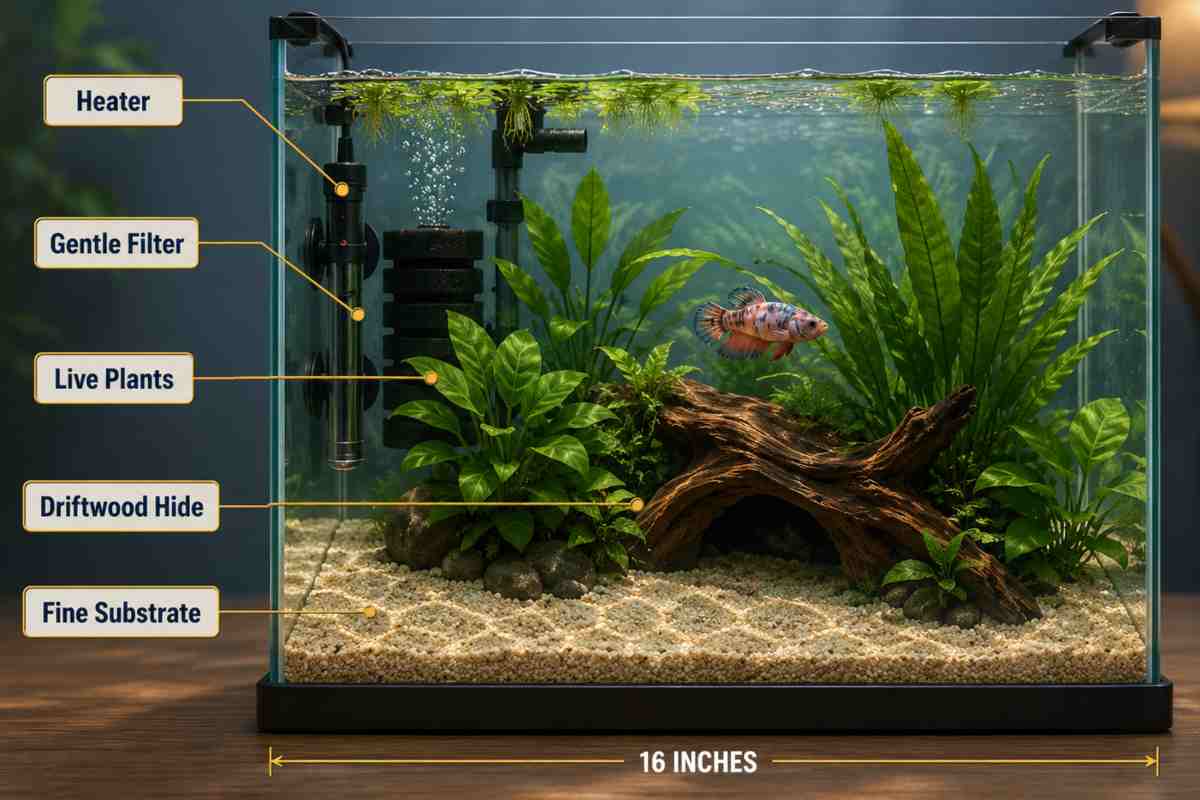 A properly set up 5-gallon tank for a female plakat betta, labeled with all essential equipment.
Diet and Feeding
Female plakats are carnivorous and need a protein-rich diet, like any Betta splendens. High-quality betta pellets should form the base of their diet, supplemented with occasional frozen or freeze-dried bloodworms, brine shrimp, or daphnia.
Feed twice daily, only what she can finish in 1–2 minutes per feeding. Overfeeding is the most common cause of bloating and constipation in bettas of any fin type.
Common Health Concerns
Female plakats are generally hardier than long-finned varieties because their compact fins are less prone to bacterial fin rot and less likely to drag along substrate. However, they remain susceptible to the same core diseases as all bettas:
- Ich (white spot disease): Small white cysts on the skin and fins, caused by the parasite Ichthyophthirius multifiliis. It’s one of the most common and treatable external parasites in freshwater aquarium fish when caught early.
- Fin rot: Ragged, discolored fin edges usually linked to poor water quality.
- Constipation/bloating: From overfeeding or a lack of fiber; often resolved with a short fast and daphnia.
Any sudden lethargy, clamped fins, or loss of appetite warrants an immediate water test and, if needed, isolation in a quarantine tank.
Frequently Asked Questions
Is a female plakat betta the same species as a regular female betta?
Yes. All bettas sold as pets- plakat, veiltail, crowntail, halfmoon- are the same species, Betta splendens. Plakat simply refers to the short-finned form, not a separate species.
Are female plakat bettas more aggressive than long-finned females?
Not inherently more aggressive, but they are faster and more athletic, which can make confrontations in shared tanks more intense if they occur.
Can I keep a female plakat betta alone?
Yes, and for most keepers this is the safest option. A single female in a properly cycled 5-gallon tank thrives without the social-management demands of a sorority.
Do female plakat bettas breed the same way as other bettas?
Yes: the male builds a bubble nest, and breeding, egg care, and fry rearing follow the same process as any Betta splendens cross, regardless of fin type.
The Bottom Line
A female plakat betta is a hardy, active, closer-to-wild betta form best suited to keepers who want a low-maintenance, engaging fish rather than a purely ornamental one. Give her stable warm water, a protein-based diet, and enough swimming room, and she’ll typically outlast and outperform her long-finned relatives in overall health. At The Fish Care, this same evidence-based approach applies across every betta variety we cover so that readers can make confident, informed choices for their aquariums.
References:
- FishBase — the world’s leading online database of fish species, referenced for Betta splendens taxonomy and species profile.
- Merck Veterinary Manual — a widely trusted veterinary reference, referenced for guidance on ichthyophthiriasis (ich) in fish.