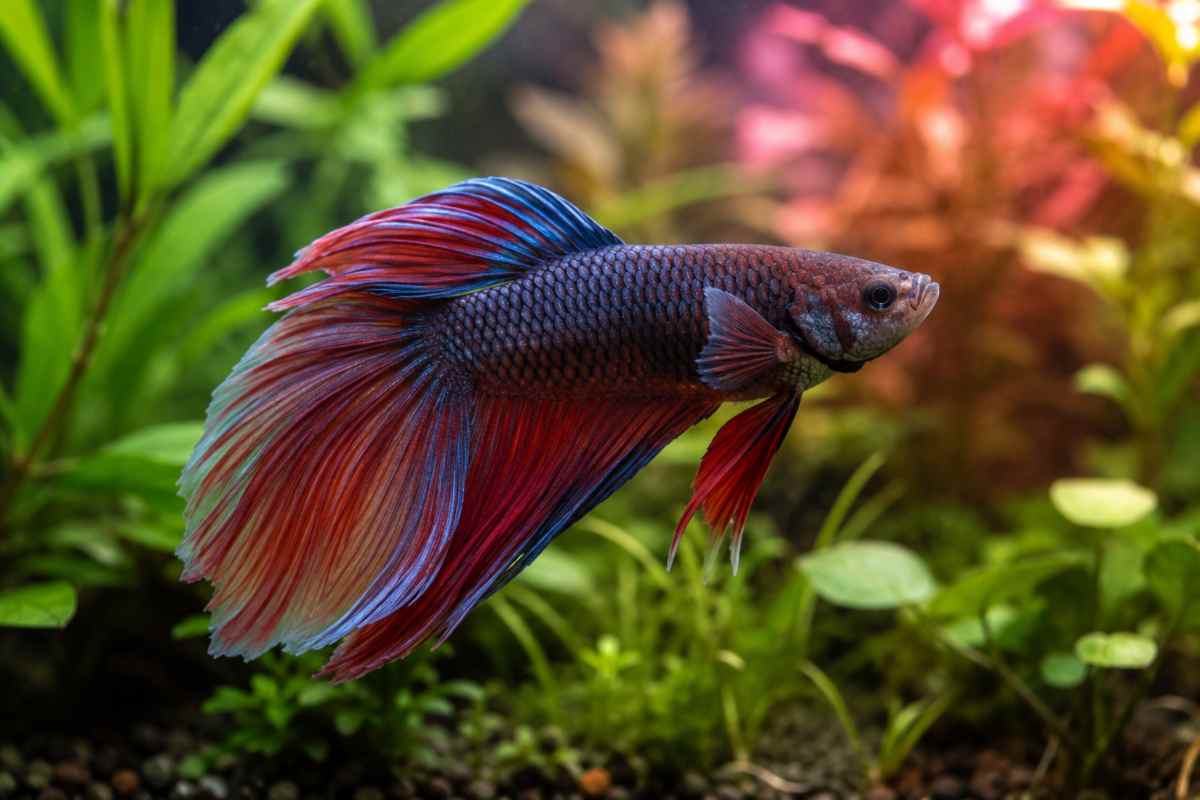
A female veiltail betta is a Betta splendens with the same long, drooping single-tail fin structure as the male veiltail, but in a smaller body with shorter fins and noticeably less intense coloring. She is one of the most commonly available betta fish in the pet trade, easy to identify once you know what to look for, and generally easier to keep in groups than a male of the same variety.
This guide covers how to identify her, how she differs from the male, her behavior, care needs, breeding, lifespan, and where to buy one with confidence.
Female Veiltail Betta at a Glance
| Category | Detail |
|---|---|
| Scientific name | Betta splendens |
| Tail type | Veiltail (long, downward-drooping single tail) |
| Adult size | 1.5 to 2 inches |
| Lifespan | 2 to 4 years, up to 5 with proper care |
| Temperament | Territorial but manageable, less aggressive than males |
| Sorority-friendly | Yes, in groups of 5 or more in a large, well-planted tank |
| pH range | 6.5 to 7.5 |
| Diet | Carnivore, protein-focused pellets plus occasional live or frozen food |
| Care level | Easy to moderate |
| Typical price | Budget-friendly, one of the least expensive betta types |
| Sexing feature | Ovipositor (small white marking near the ventral fins) |
What Is a Female Veiltail Betta Fish?
The veiltail is the oldest and most widespread tail type in the betta hobby, defined by a long caudal fin that droops downward in a soft, flowing curve, similar to a veil. The trait is genetically dominant, which is why veiltails are the most commonly bred and most affordable betta type sold in pet stores.
A female veiltail carries this same drooping fin shape, but her caudal fin is noticeably shorter and less dramatic than a male’s, and her dorsal, anal, and pectoral fins are proportionally smaller as well. Females of every betta fin type also tend to show a rounder, thicker body shape, since they carry eggs.
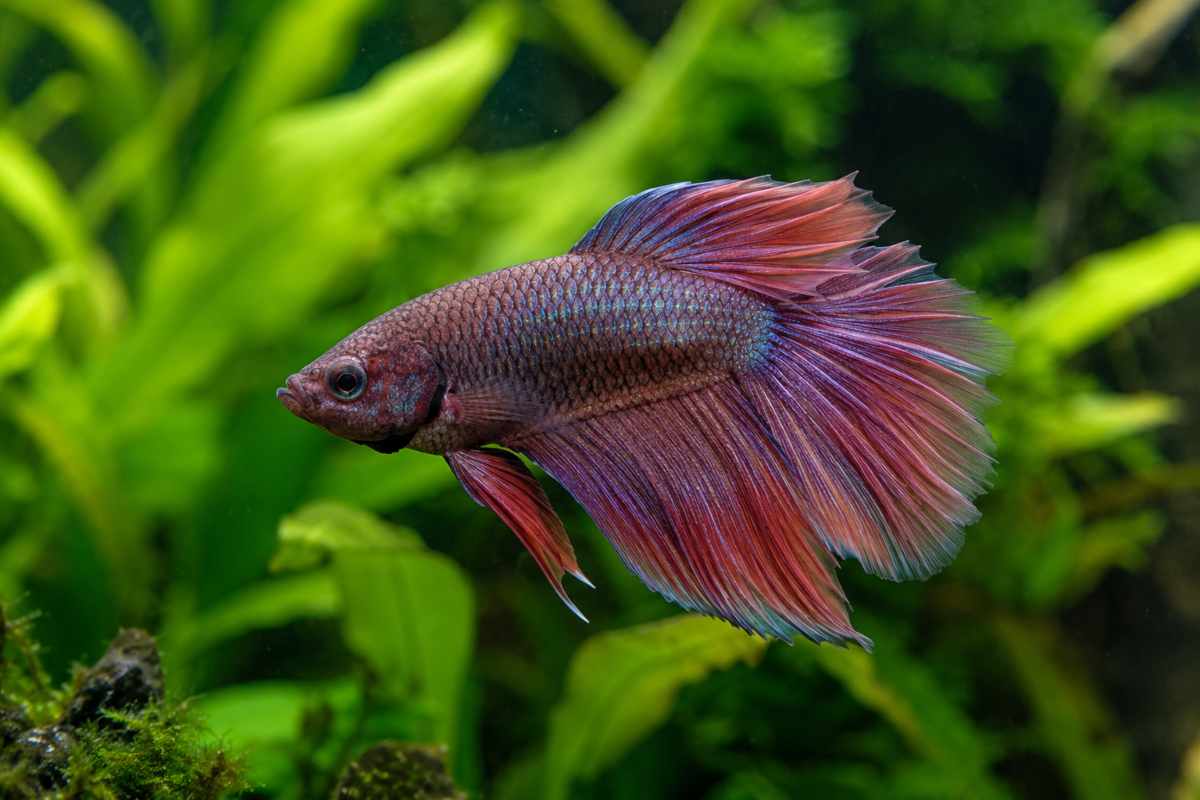 A female veiltail betta showing her rounded body and drooping tail.
How to Identify a Female Veiltail Betta Fish
Use the checklist below to confirm you are looking at a female veiltail rather than a male or a different fin type.
- Caudal fin droops downward but is noticeably shorter than a male veiltail’s flowing tail
- Dorsal, anal, and pectoral fins are smaller and less flared than a male’s
- Body is rounder and thicker, especially when full of eggs
- Coloring is present but more muted and less saturated than a male of the same color line
- A small white marking called the ovipositor sits between the ventral fins on her underside; this is the egg-laying tube and is the single most reliable way to sex a betta
- Horizontal stripes may appear on the body when she is stressed, frightened, or ready to breed
The ovipositor is the most dependable identification feature, since coloring and fin length can vary between individual fish and color lines. It looks like a tiny white dot or short tube just behind the ventral fins and is usually visible on juveniles as young as six to eight weeks old.
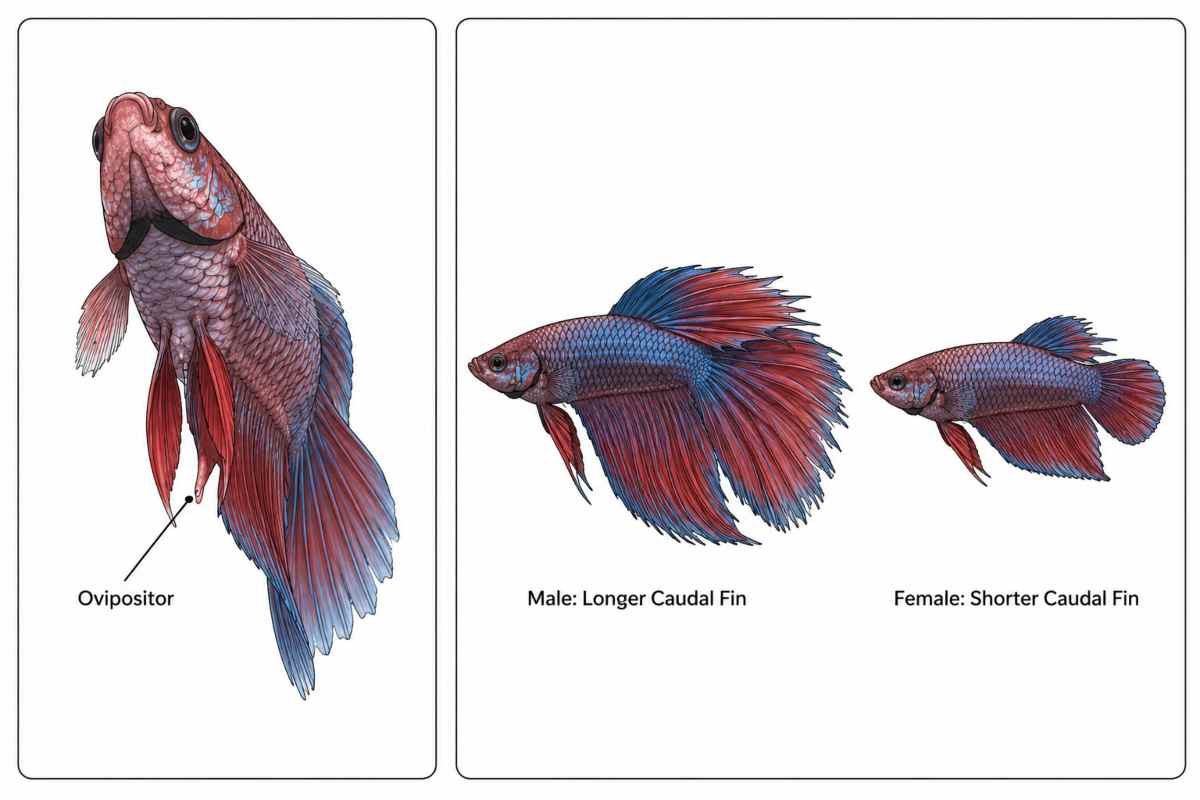 Illustration showing the ovipositor and fin length differences between male and female bettas.
Female vs Male Veiltail Betta: Key Differences
| Trait | Female Veiltail | Male Veiltail |
|---|---|---|
| Caudal fin | Short, gently drooping | Long, dramatically flowing |
| Dorsal and anal fins | Compact, less flared | Large and elaborate |
| Body shape | Rounder, thicker | Slimmer, more streamlined |
| Color intensity | Muted, softer tones | Bright, saturated |
| Average adult size | 1.5 to 2 inches | 2.5 to 3 inches |
| Aggression toward same sex | Moderate, can sometimes cohabit in groups | High, must be kept alone |
| Ovipositor present | Yes | No |
Female Veiltail Betta Temperament and Behavior
Female veiltail bettas are territorial but generally less aggressive than males. In the right setup, some keepers house a small group of females together in what is known as a sorority, though this only works in a large, heavily planted tank with careful monitoring, since females still establish a pecking order and can injure each other, especially in cramped conditions.
A single female kept alone, or in a well-managed sorority of five or more, will typically spend her time exploring, foraging along the substrate, and resting near the surface or among plants. Flaring, brief chasing, and temporary fin nipping can occur even among females and are not automatically a sign that the group needs to be separated, but ongoing bullying, torn fins, or a fish hiding constantly are signs that the group dynamic has failed.
Unlike males, female veiltails can sometimes be housed with other calm, non-aggressive betta females or peaceful community fish, but they should never be paired with a male outside of a supervised breeding attempt, since he may see her as a target for aggression rather than a mate.
Tank Setup and Habitat Requirements
| Requirement | Recommendation |
|---|---|
| Minimum tank size | 5 gallons for a single female, 20 gallons or more for a sorority |
| Water temperature | 76 to 82°F (24 to 28°C) |
| pH | 6.5 to 7.5 |
| General hardness | Soft to moderately hard |
| Filtration | Gentle, adjustable flow to avoid stressing her shorter but still delicate fins |
| Substrate and decor | Fine substrate, live or silk plants, and smooth-edged decorations to protect her fins from tearing |
| Lid | A secure lid is strongly recommended, since bettas of both sexes are capable jumpers |
Females kept in a sorority need enough visual barriers, such as dense planting and driftwood, to break sightlines and give lower-ranking fish places to retreat. Introducing all the females to the tank at the same time, rather than adding new fish to an established group, reduces territorial conflict.
Diet and Feeding
Female veiltail bettas are carnivores and need a protein-focused diet, the same as males. A high-quality betta pellet formulated for carnivorous fish should form the base of her diet, supplemented two or three times a week with frozen or freeze-dried bloodworms, brine shrimp, or daphnia. Feed small amounts once or twice daily, only what she can finish in about two minutes, since bettas are prone to bloating and constipation if overfed.
How to Choose a Healthy Female Veiltail Betta
- Fins are intact, smooth, and free of ragged edges, holes, or clamping against the body
- Eyes are clear and not cloudy or sunken
- Body is free of white spots, red streaking, fuzzy patches, or visible lumps
- She swims actively and investigates her surroundings rather than sitting motionless on the tank bottom
- Breathing is steady, not rapid or labored
- Color is consistent for her pattern, without unexplained fading or blotching
- She is feeding readily, if you are able to observe a store feeding
Avoid any female showing clamped fins, visible parasites, or a distended belly unrelated to normal egg development, since these can indicate illness or poor water quality at the point of sale.
Common Health Problems in Female Veiltail Bettas
| Condition | Signs | Common Cause |
|---|---|---|
| Fin rot | Ragged, disintegrating fin edges, sometimes discolored | Poor water quality, stress, injury |
| Ich | Small white spots resembling salt grains | Temperature stress, new fish introduced without quarantine |
| Columnaris | White or gray patches around the mouth, cottony appearance | Bacterial infection, often linked to poor water conditions |
| Swim bladder issues | Difficulty swimming upright, floating or sinking | Overfeeding or constipation |
| Egg binding | Swollen belly without laying eggs, lethargy | No suitable male or spawning site over an extended period |
Consistent water changes, stable temperature, and a varied diet prevent the majority of these issues.
Breeding and Spawning Behavior
Female veiltail bettas reach sexual maturity around four to six months old. Before breeding, she is typically conditioned with a protein-rich diet for one to two weeks. When ready to spawn, she often displays vertical stripes on her body and may approach the male’s bubble nest.
During spawning, the male wraps around the female to fertilize the eggs as she releases them, then collects them in his mouth and places them in the bubble nest he has built at the water’s surface. Once spawning finishes, the female should be removed from the tank, since the male will guard the nest aggressively and may attack her afterward. The male stays with the eggs and fry until they become free-swimming, at which point he should also be removed to prevent him from eating the young.
Breeding should always take place in a separate, controlled breeding tank rather than the main display tank, and only between healthy, unrelated adults.
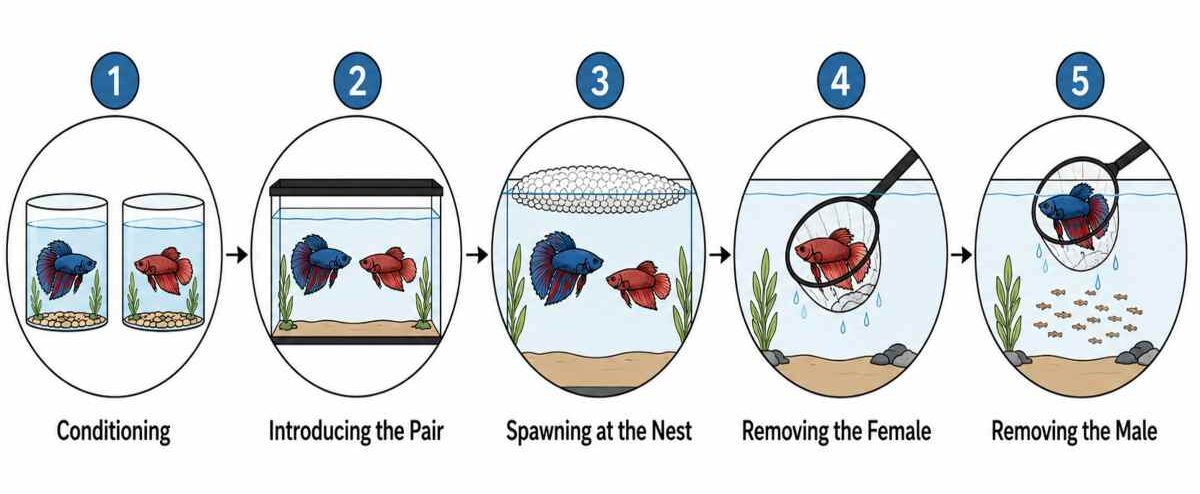 Five stages of betta breeding, from conditioning to removing the male after spawning.
Lifespan and Growth
A female veiltail betta typically lives two to four years, with well-cared-for individuals reaching five years or more. She reaches her adult size, around 1.5 to 2 inches in body length, by roughly six to eight months of age, though growth rate depends on diet, water quality, and genetics. Growth slows considerably after the first year, and any sudden change in size or shape in an older fish should be checked against the health signs listed earlier in this guide.
Are Female Veiltail Bettas Rare or Common?
Female veiltail bettas are among the most common and widely available bettas in the fishkeeping hobby. Because the veiltail fin trait is dominant and breeds true easily, veiltails are the least expensive and most heavily stocked betta type at general pet stores, and females of this type are consistently in stock both in stores and through online fish retailers.
Rarer and more expensive female bettas tend to come from newer or more selectively bred fin types and color lines, such as halfmoon, dragon scale, or koi patterns, rather than from the veiltail itself.
Female Veiltail Betta Price and What Affects It
A typical female veiltail betta costs a modest amount at most general pet retailers, making her one of the more budget-friendly bettas available. Price can increase based on:
- Color saturation and pattern rarity, even within the veiltail type
- Whether the fish comes from a dedicated breeder versus a mass commercial supplier
- Age and size at time of sale
- Shipping costs when ordering online rather than buying in person
Where to Buy a Female Veiltail Betta Fish
Female veiltail bettas can be found at local fish stores, large pet retail chains, and reputable online fish retailers that ship live fish with temperature-controlled packaging. One established retailer that regularly stocks female veiltail bettas is PetSmart.
When buying online, check the retailer’s live arrival guarantee and shipping policy before ordering, since bettas are sensitive to temperature extremes during transit.
When buying online, check the retailer’s live arrival guarantee and shipping policy before ordering, since bettas are sensitive to temperature extremes during transit.
What to Look for When Buying From a Pet Store or Breeder
- Ask to see the fish actively swimming before purchase; avoid fish sitting motionless at the bottom
- Check the store or breeder’s tank water clarity and cleanliness as a general sign of husbandry standards
- Inspect fins closely under good lighting for tears, rot, or clamping
- Ask about the fish’s age and, if buying from a breeder, the parent lineage and any known health history
- Prefer sellers who quarantine new stock before offering it for sale, which reduces the risk of introducing disease to your tank
Frequently Asked Questions
How can I tell if my veiltail betta is male or female for certain?
Look for the ovipositor, a small white dot or short tube between the ventral fins on her underside. Combined with shorter fins, a rounder body, and more muted coloring, this is the most reliable way to confirm her sex.
Are females less aggressive than males?
Generally yes, though they are not passive. They can be kept in carefully managed sororities of five or more in a large, well-planted tank, something that is not possible with males, who must be kept alone.
Can she live with other fish?
Yes, with peaceful, non-fin-nipping tank mates and adequate space. She should never be housed with a male outside of a supervised breeding attempt.
How big do they get?
Adults typically reach 1.5 to 2 inches in body length, noticeably smaller than the 2.5 to 3 inch average size of their male counterparts.
How long do they live?
Two to four years on average, with some individuals living five years or longer under stable water conditions and a proper diet.
Are they hard to find or expensive?
No. This is one of the most common and affordable fin types available, widely stocked at pet stores and online retailers.
Does she need a heater?
Yes. Bettas are tropical fish and need stable water temperatures between 76 and 82°F. Unheated tanks that fluctuate with room temperature put unnecessary stress on the immune system.
References
- LiveAquaria: Betta splendens (Veiltail Betta, Female) species and care information. https://www.liveaquaria.com/
- Aquarium Co-Op: Betta splendens variety and fin type standards, based on International Betta Congress classification. https://www.aquariumcoop.com/