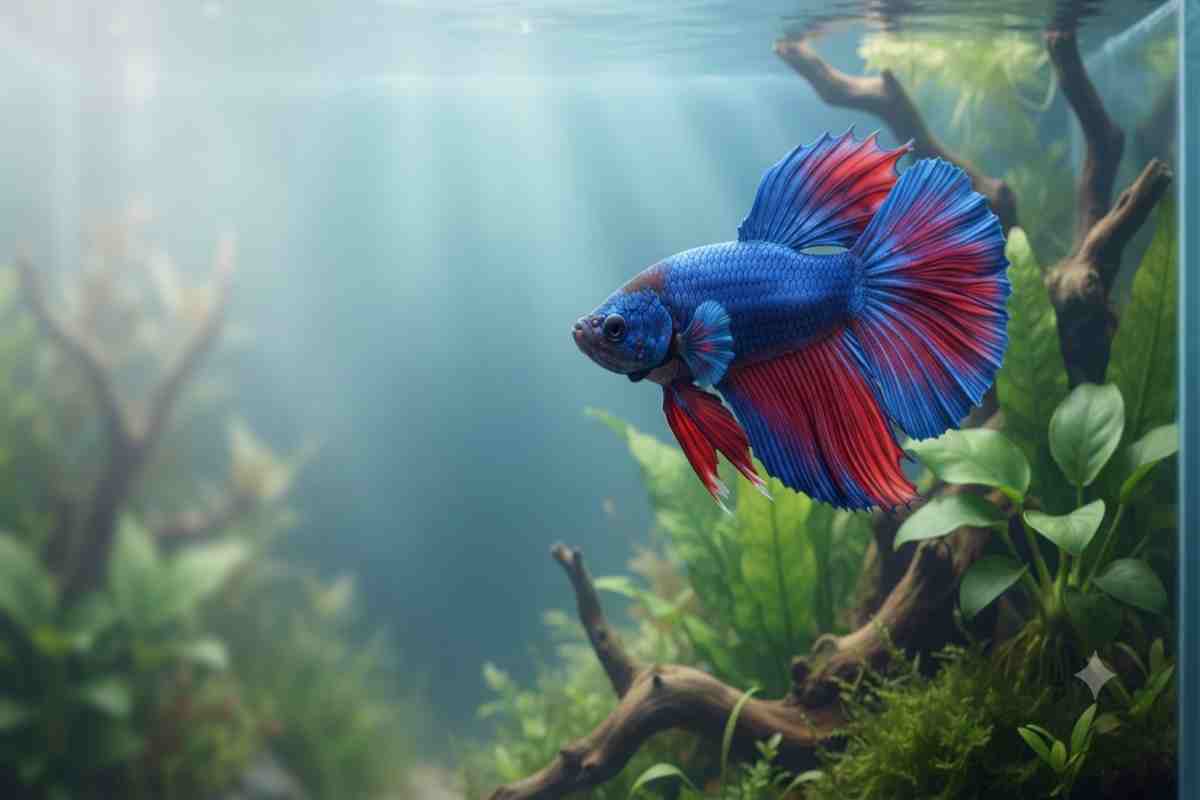
If your betta is floating on its side, sinking to the bottom, or struggling to swim upright, you are likely dealing with swim bladder disease. It looks alarming, but in most bettas it is treatable at home within a few days once you identify the cause. This guide walks through why it happens, how to tell it apart from more serious conditions, and the exact steps to help your betta recover.
Quick Glance: Betta Swim Bladder Disease
| Aspect | Details |
|---|---|
| Most common cause | Overfeeding or constipation from dry pellets |
| Main symptoms | Floating sideways, sinking, tilted swimming, swollen belly |
| First step at home | Fast the betta for 24 to 72 hours |
| Typical recovery time | A few hours to 3 to 4 days for diet-related cases |
| When it needs a vet | No improvement after fasting, spinal curvature, or open sores |
| Is it contagious? | Not on its own, unless caused by a bacterial or parasitic infection |
Why Bettas Get Swim Bladder Problems So Often
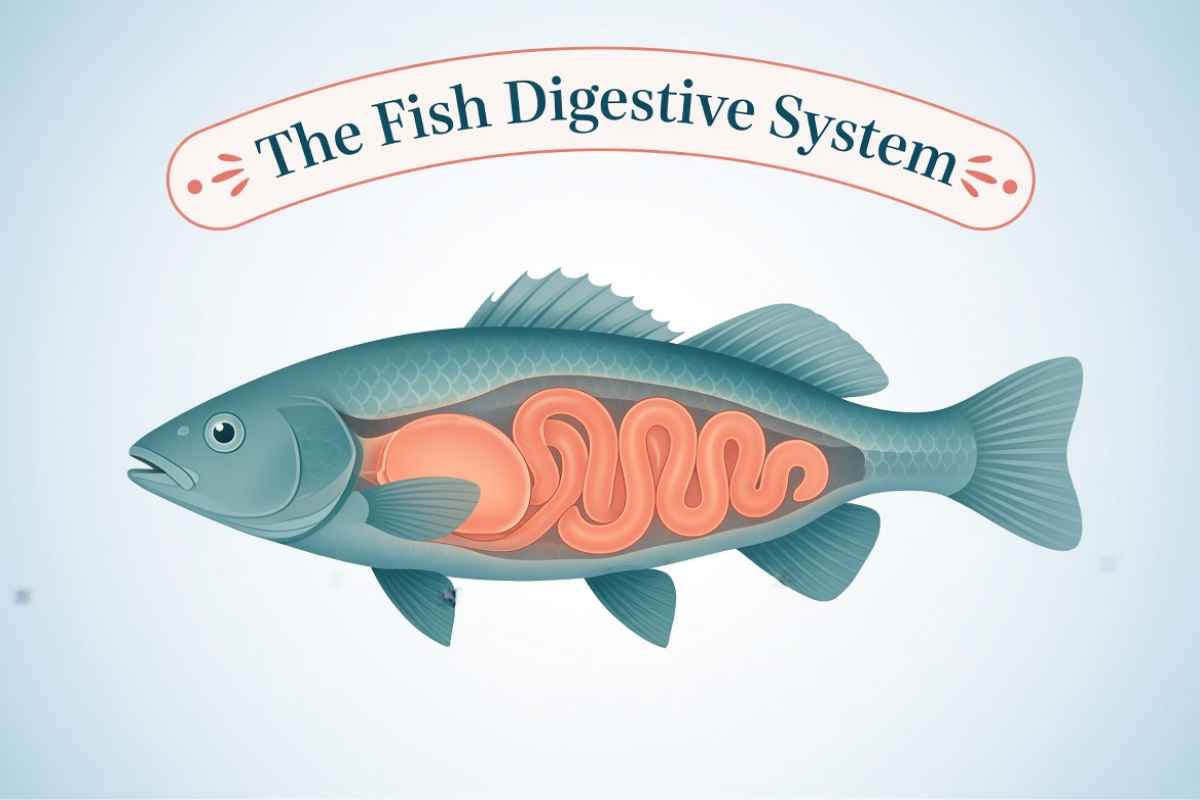
Bettas are unusually prone to swim bladder disease compared to many other aquarium fish, and there is a clear anatomical reason for it. Their digestive tract is short, and their stomach is small relative to their body size, so they process food quickly and have little tolerance for overeating. When a betta eats too much, especially dry pellets that expand once they absorb water, the swollen gut presses directly against the swim bladder sitting just above it. That pressure disrupts the fish’s buoyancy control almost immediately.
Bettas are also physostomous fish, meaning their swim bladder connects to the gut through a small duct rather than being fully sealed off. This is efficient for gulping air at the water’s surface, which bettas do naturally through their labyrinth organ. Still, it also means gas and pressure changes in the digestive system can affect the swim bladder more directly than in fish with a closed system. For a closer look at how this organ fits into betta anatomy, our betta fish anatomy guide covers the internal structures involved.
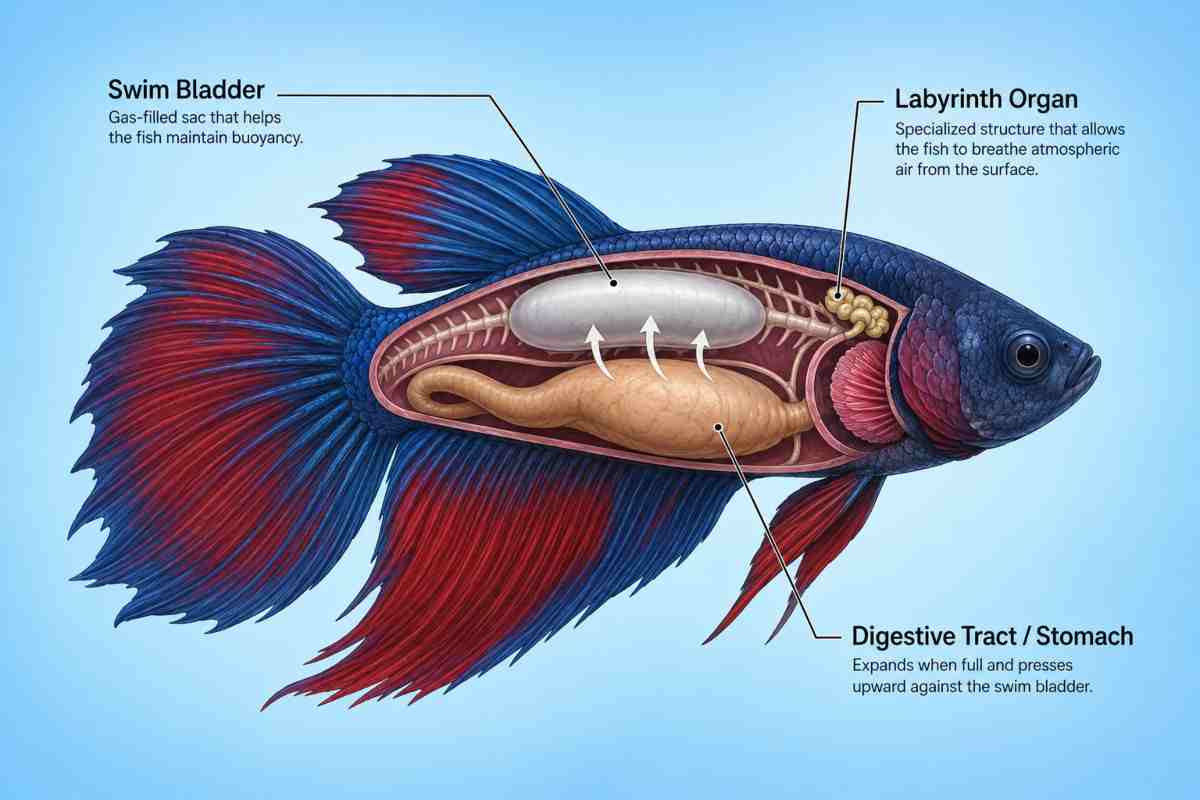 How a full stomach presses against the swim bladder, triggering buoyancy problems in bettas.
Symptoms to Watch For
Not every abnormal swim is swim bladder disease, so it helps to know the specific signs:
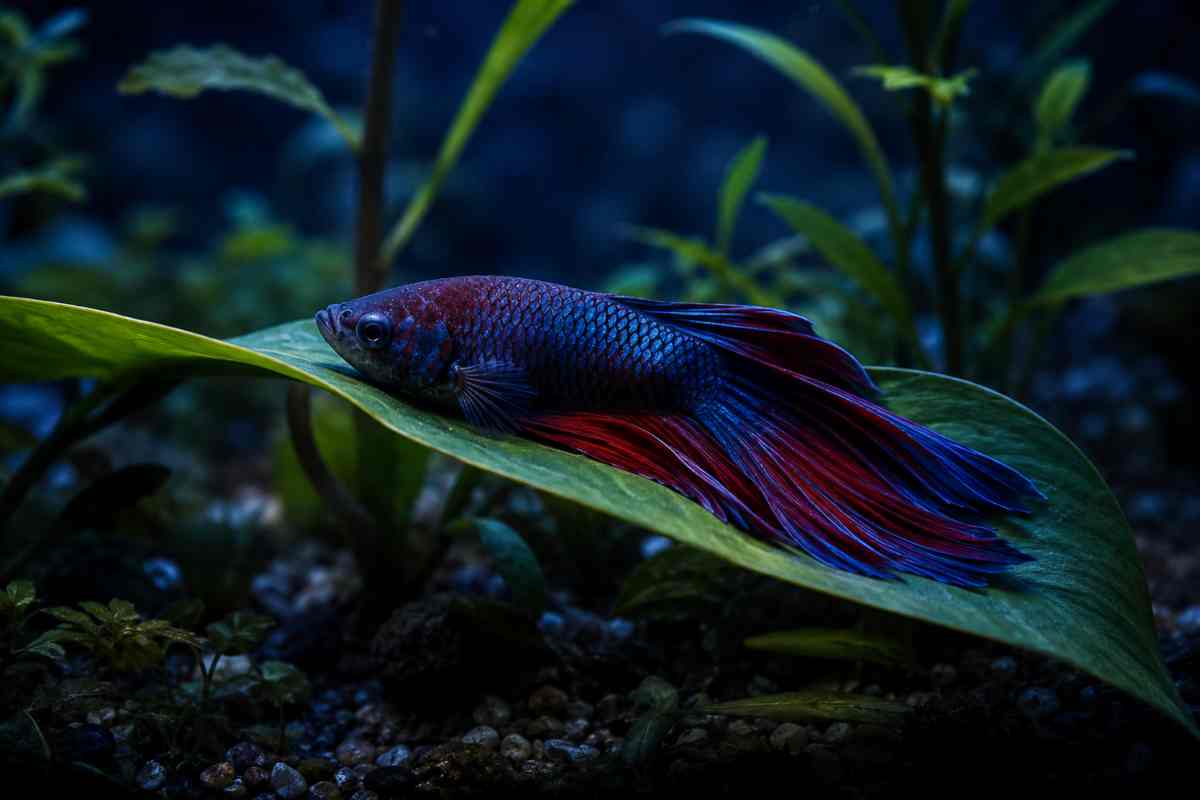
- Floating at the surface on one side, unable to submerge
- Sinking to the substrate and resting there for long periods
- Swimming tilted, upside down, or in a corkscrew pattern
- A visibly swollen or bloated belly
- Difficulty maintaining a level position even when trying to swim normally
- Reduced appetite, though some bettas still try to eat
A betta with true swim bladder disease is usually still alert and reactive to movement outside the tank. If your fish is also lethargic, has clamped fins, discolored patches, or visible sores, something else may be going on alongside it, and a broader health check is warranted.
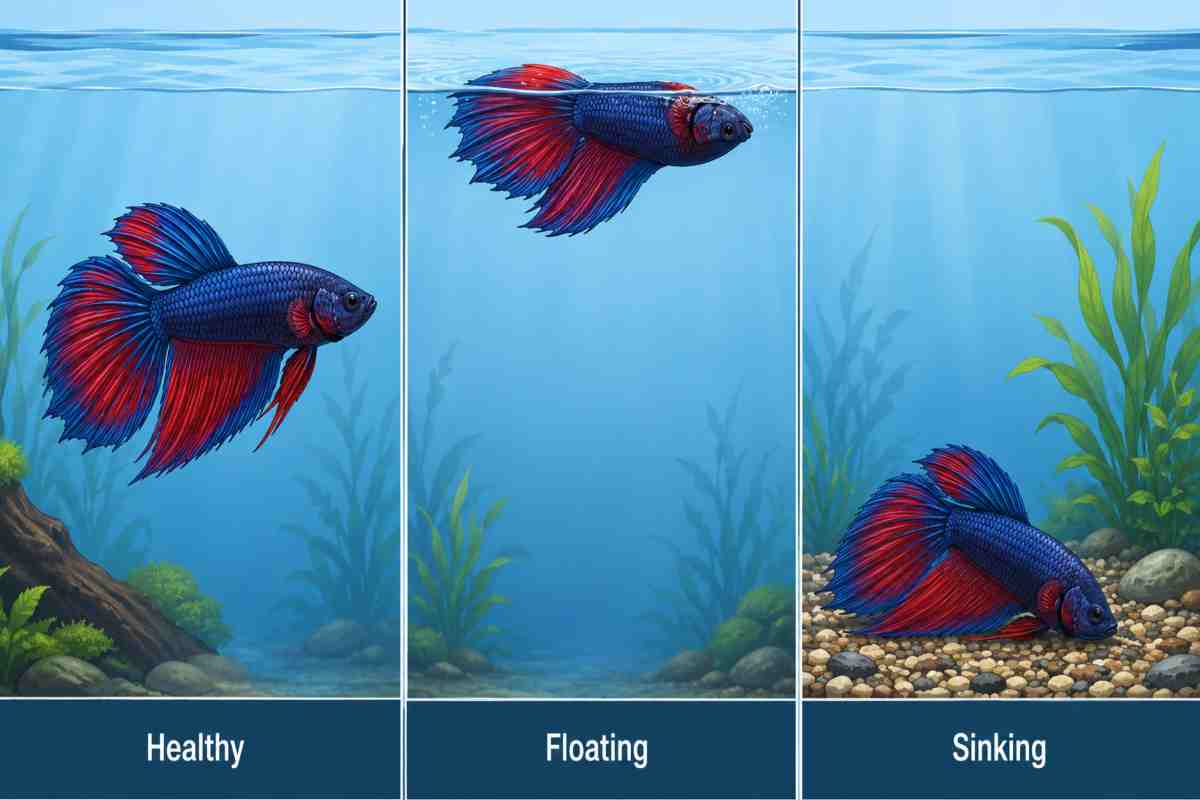 The three visual signs of swim bladder disease compared to a healthy, level-swimming betta.
What Actually Causes It
Swim bladder disease is not a single illness. It is a symptom with several possible underlying causes, and identifying the likely one shapes how you treat it.
1. Overfeeding and Constipation
This is by far the most common cause in bettas kept as pets. Dry pellets and flakes expand in the stomach after being swallowed, and bettas fed too much or too often can develop a blockage that compresses the swim bladder. This is usually the first thing to rule out before assuming anything more serious.
2. Gulping Air While Eating
Bettas that snatch floating food quickly at the surface can swallow air along with it. That extra air can enter the swim bladder through the connecting duct and throw off buoyancy, similar to constipation but with a different mechanism.
3. Bacterial or Parasitic Infection
If fasting does not resolve the problem within a few days, an infection affecting the swim bladder or surrounding organs becomes more likely. This is more serious and usually requires targeted treatment rather than dietary changes alone.
4. Water Quality and Temperature
Cold water slows a betta’s metabolism and digestion, making constipation more likely even on a normal feeding schedule. Poor water quality, particularly elevated ammonia or nitrite, adds systemic stress that can contribute to digestive and buoyancy issues.
5. Physical Injury or Birth Defects
Trauma from an aggressive tank mate, a fall during a water change, or a rough net can damage the swim bladder directly. Some bettas, particularly certain long-finned varieties, are also born with a naturally weaker or malformed swim bladder, which tends to cause recurring rather than one-time symptoms.
Read more: How to Treat Ich in Betta Fish
How to Treat Swim Bladder Disease in Betta Fish
Step 1: Fast Your Betta
Stop feeding for 24 to 72 hours. This is the single most effective first response, since it gives the digestive system time to clear and relieves pressure on the swim bladder. Most diet-related cases start improving within this window.
Step 2: Check and Correct Water Conditions
While your betta is fasting, test ammonia, nitrite, and nitrate, and confirm the temperature sits between 76°F and 80°F (24°C to 27°C). Perform a partial water change with dechlorinated, temperature-matched water if any readings are off. Stable, warm water supports faster digestion and reduces additional stress on an already struggling fish.
Also read: How to Set Up a Fish Tank for a Betta
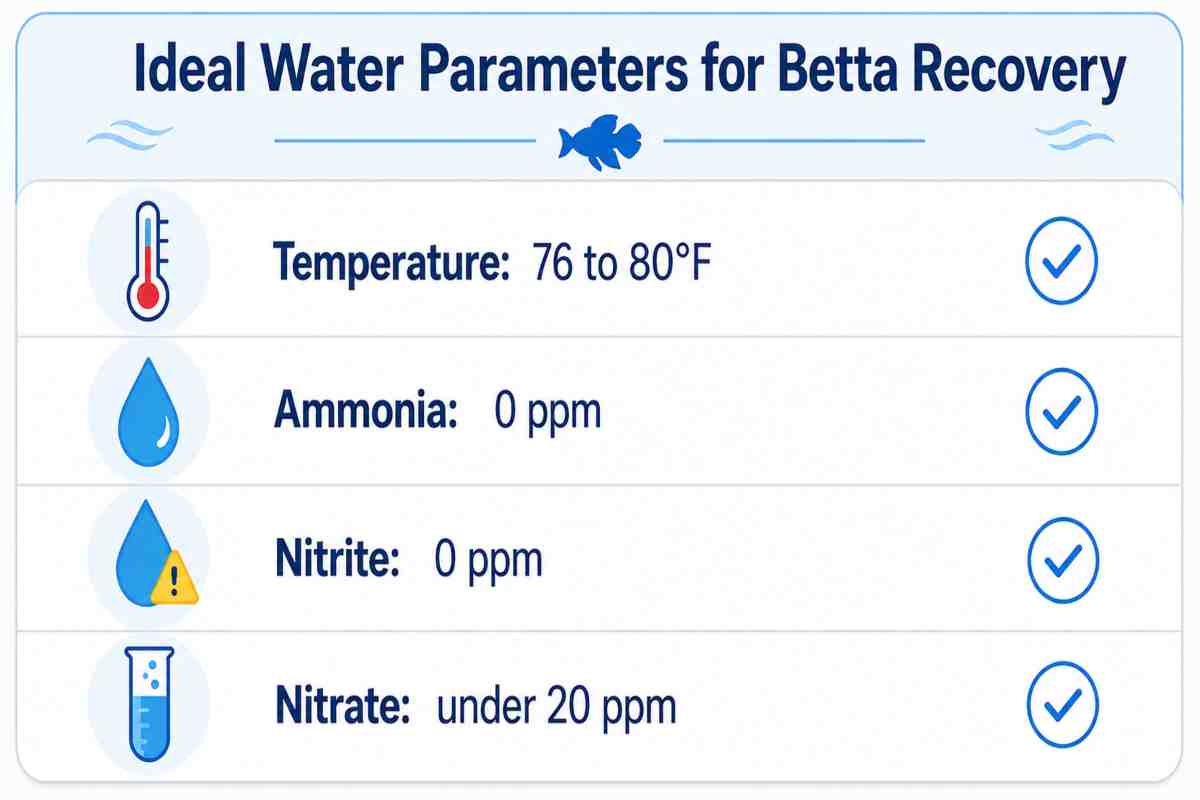 The four water parameters to check when a betta is recovering from swim bladder disease.
Step 3: Offer a Skinned, Blanched Pea
After the fasting period, feed a small piece of a cooked, skinned green pea. The fiber helps move any remaining blockage through the digestive tract. Offer only a pea-sized portion, once, and watch for normal swimming and defecation over the following day before resuming regular feeding.
Step 4: Resume Feeding Carefully
Once your betta is swimming normally, reintroduce food gradually. Pre-soak pellets in tank water for a minute or two before feeding so they expand outside the fish rather than inside it, and feed smaller portions two to three times a day rather than one large meal.
Step 5: Watch for Infection Signs
If there is no improvement after 3 to 4 days of fasting and clean water, an infection or structural issue is more likely than diet. At this point, isolating the betta in a bare-bottomed hospital tank makes it easier to monitor stool and behavior, and a fish-experienced veterinarian can advise on antibiotics if a bacterial cause is confirmed.
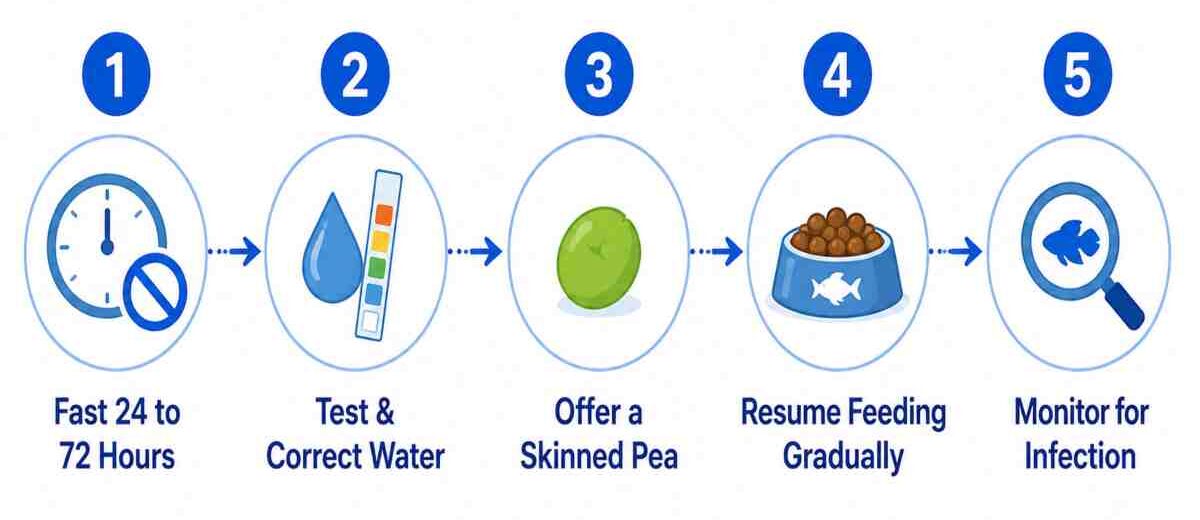 The complete five-step treatment protocol for betta swim bladder disease at a glance.
When to See a Veterinarian
Most diet-related swim bladder disease resolves without professional treatment. However, contact a veterinarian experienced with fish if you notice:
- No improvement after a full fasting and water quality correction cycle
- A visibly curved or S-shaped spine
- Open sores, ulcers, or unusual growths near the belly
- Signs the condition is recurring frequently rather than resolving fully
According to the Merck Veterinary Manual, buoyancy disorders in fish can stem from a wide range of causes, including infection, congenital disabilities, and physical trauma, and imaging such as X-ray is often the most reliable way to confirm what’s happening internally when home treatment does not work. PetMD similarly notes that structural or infectious cases typically need veterinary evaluation rather than dietary adjustment alone, since prolonged buoyancy loss can affect a fish’s ability to feed and avoid stress over time.
Can Swim Bladder Disease Be Prevented?
Prevention comes down to a few consistent habits rather than any single fix:
- Feed small portions two to three times daily instead of one large feeding
- Pre-soak pellets before feeding so they expand outside the fish
- Occasionally offer skinned peas or daphnia to support healthy digestion
- Keep water temperature stable between 76°F and 80°F
- Test water parameters regularly and perform partial water changes on schedule
- Avoid overfeeding, even when your betta appears to beg for more food
Bettas with a history of swim bladder issues often benefit from a permanent shift to smaller, more frequent meals rather than returning to their original feeding routine.
Frequently Asked Questions
Can a betta fully recover from swim bladder disease?
Yes, in most cases. Diet-related swim bladder disease typically resolves within a few days of fasting and improved feeding habits. Cases caused by infection or injury may improve with treatment but can sometimes leave lasting mild buoyancy issues.
Is swim bladder disease painful for a betta?
It is not considered painful in the way an injury or infection would be, but the loss of normal movement is stressful for the fish. It can make feeding and avoiding stress more difficult, especially in prolonged cases.
Should I lower the water level if my betta is struggling to swim?
Yes, temporarily lowering the water level can help a betta with buoyancy problems reach the surface to breathe air without excessive effort, which reduces stress during recovery.
Can swim bladder disease spread to other fish?
Not on its own. It is a symptom rather than a disease itself. However, if the underlying cause is a bacterial or parasitic infection, that pathogen can potentially affect other fish sharing the same water.
Is swim bladder disease the same in bettas and goldfish?
The underlying organ and general causes overlap, but goldfish, especially fancy round-bodied varieties, are prone to it for different anatomical reasons related to their compressed body shape. Betta cases are far more often linked directly to overfeeding.
At The Fish Care, we get asked about swim bladder problems often enough that it’s worth repeating the core lesson: for the vast majority of bettas, this condition is a feeding issue, not an emergency. Careful observation and a short fast solve it more often than any product or medication does.
Sources & Further Reading
This article draws on veterinary-reviewed guidance from the following trusted resources:
Merck Veterinary Manual: A globally trusted veterinary reference covering buoyancy disorders and swim bladder conditions across fish species — merckvetmanual.com
PetMD: A vet-reviewed pet health resource detailing the symptoms, causes, and treatment of swim bladder disease in fish — petmd.com