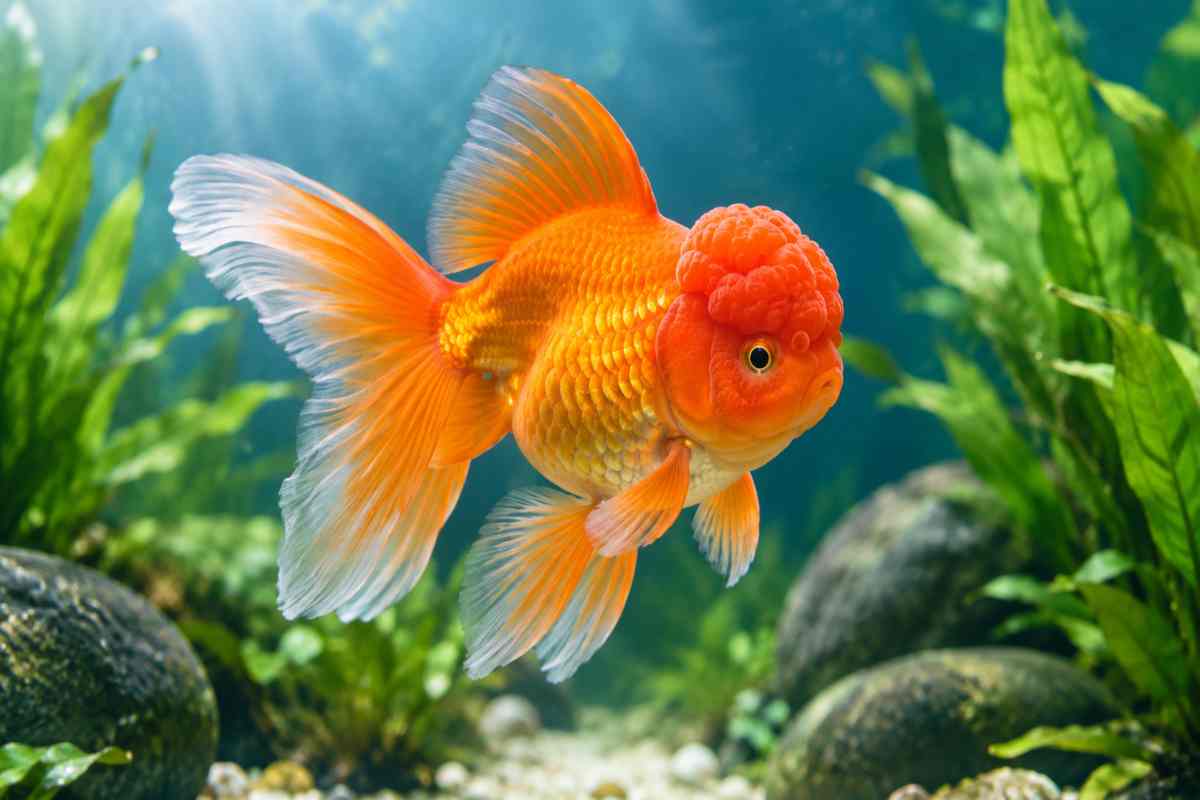
A healthy goldfish needs a properly cycled tank of at least 20 gallons for one single-tail goldfish (more for fancy varieties), stable water parameters with zero ammonia and nitrite, a diet of high-quality pellets supplemented with fresh vegetables, weekly partial water changes, and a filtration system sized for a heavy bioload. Goldfish are not bowl fish. They are long-lived, intelligent, and surprisingly demanding pets that can live 10 to 20 years or more when their needs are actually met.
This guide walks through everything that determines whether a goldfish merely survives or genuinely thrives, from tank size and water chemistry to feeding schedules, tank mates, disease recognition, and the myths that cause most goldfish deaths in the first place.
Key Takeaways
- A single fancy goldfish needs a minimum of 20 gallons, and single-tail varieties like Comets need 30 gallons or more because they grow much larger and produce more waste.
- Goldfish produce an unusually heavy bioload for their size, so rate filtration for at least double the tank’s actual volume.
- Feed goldfish once or twice daily, only what they can finish in about two minutes, since overfeeding is the leading cause of poor water quality and swim bladder problems.
- Weekly water changes of 20 to 30 percent, done with a dechlorinator and without scrubbing the filter media, protect the beneficial bacteria that keep ammonia and nitrite at zero.
- A goldfish in a bowl is not a low-maintenance pet; bowls cause stunted growth, chronic stress, and early death, and are considered outdated and inappropriate by modern fishkeeping standards.
What Do Goldfish Actually Need to Thrive?
Goldfish have a reputation as an easy starter pet, which is one of the most persistent misconceptions in the hobby. In reality, goldfish are cold-water carp, closely related to koi, and they were bred over centuries from wild Prussian carp that could grow well over a foot long. That ancestry matters. It explains why goldfish eat constantly, grow large, and produce far more waste than a similarly sized tropical fish.
To thrive rather than survive, a goldfish needs four things working together at all times: adequate space, stable and clean water, a nutritionally balanced diet, and a filtration system that can keep pace with how much they eat and excrete. Miss any one of these and the others suffer too. A large tank with poor filtration still crashes. Great filtration in a tiny tank still stunts growth. Understanding how these pieces connect is the real foundation of goldfish care, more so than memorizing a single checklist.
How Big of a Tank Does a Goldfish Need?
Tank size is the single most underestimated factor in goldfish care, largely because pet stores still sell small bowls and tanks marketed for goldfish. In practice, goldfish need considerably more room than most beginners expect.
Single-tail goldfish, such as Comets and Shubunkins, are strong swimmers that can grow 10 to 14 inches long and are genuinely more suited to outdoor ponds than standard indoor aquariums. Fancy goldfish varieties, like Orandas, Ranchus, and Fantails, stay smaller and rounder, but they still reach 6 to 8 inches and carry a heavy bioload relative to their size.
| Goldfish Type | Adult Size | Minimum Tank for One Fish | Additional Fish |
|---|---|---|---|
| Fancy goldfish (Oranda, Ranchu, Fantail) | 6 to 8 inches | 20 gallons | +10 gallons per additional fish |
| Single-tail goldfish (Comet, Shubunkin) | 10 to 14 inches | 30 gallons, pond preferred | +15 to 20 gallons per additional fish |
| Common or feeder goldfish | Up to 12 inches or more | 40 gallons, pond strongly recommended | Not recommended for small groups indoors |
A longer, wider tank is always better than a tall one, since goldfish spend most of their time in the middle and lower water column and benefit far more from horizontal swimming space and surface area for gas exchange than from height. As a general rule, the tank’s footprint matters more than the number printed on the box.
What Water Parameters Keep Goldfish Healthy?
Goldfish can indeed handle a fairly wide temperature range, which is part of why people call them hardy. Water quality is a different story, though, and goldfish have very little tolerance for it slipping. In a properly established tank, ammonia and nitrite should stay at zero at all times, while nitrate should stay under roughly 20 to 40 ppm, kept in check through consistent partial water changes. A pH between 7.0 and 8.4 suits goldfish well, and sudden swings are more dangerous than a slightly imperfect but stable number.
Temperature is often misunderstood. Goldfish are a temperate species, not a tropical one, and they do best between 65 and 72°F (18 to 22°C). Warmer water speeds up their metabolism, which means faster growth but also faster waste production and a shorter effective lifespan between water changes. A dedicated water testing kit that measures ammonia, nitrite, nitrate, and pH is one of the most valuable tools a goldfish keeper can own, since it catches problems long before visible symptoms appear in the fish.
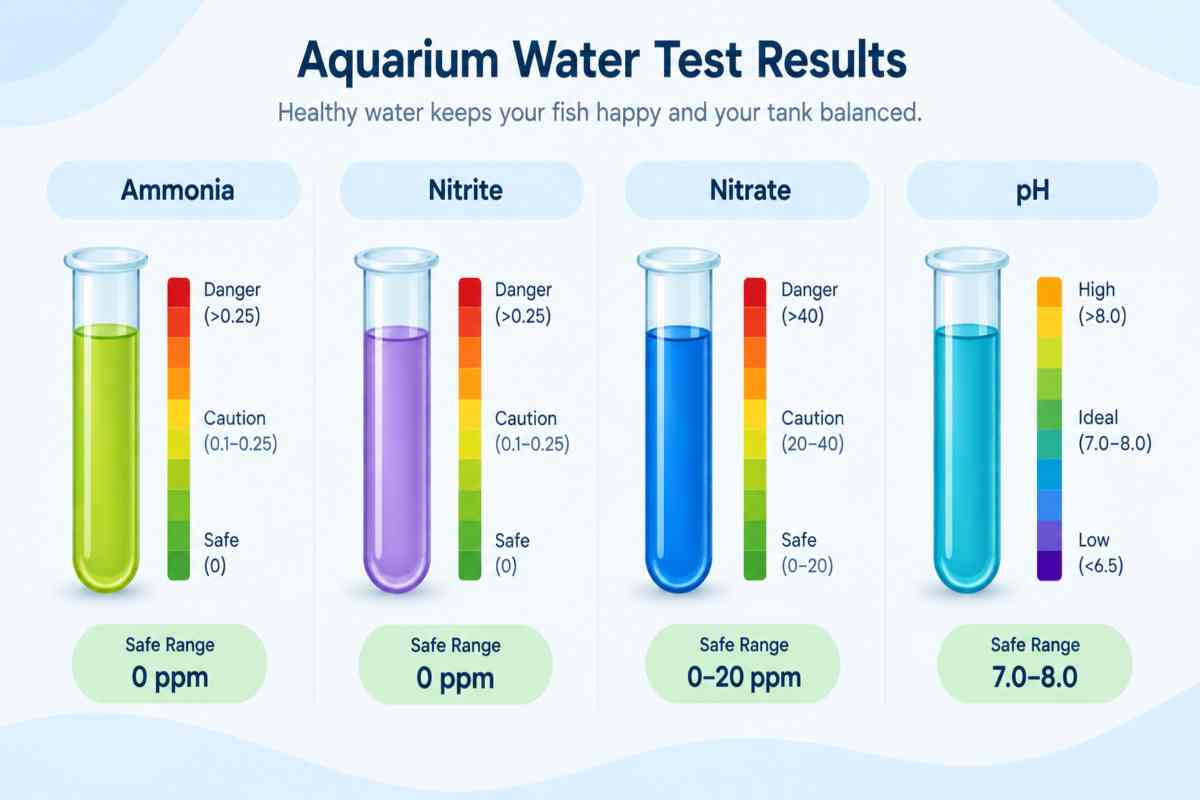 Quick-reference chart for reading your goldfish tank’s water test results.
How Does the Nitrogen Cycle Affect Goldfish Health?
Almost every water quality problem goldfish keepers encounter traces back to the nitrogen cycle, so understanding it changes how you approach the hobby. As waste, leftover food, and decomposing plant material break down in the tank, they release ammonia, a compound that’s dangerous to fish even in small amounts. Beneficial bacteria that colonize the filter media, substrate, and decorations convert that ammonia into nitrite, which is also toxic, and a second group of bacteria then converts nitrite into nitrate, which is far less harmful and is removed through regular water changes.
This colony of bacteria takes roughly four to six weeks to fully establish in a new tank, a process known as cycling. Adding goldfish to an uncycled tank is the single most common reason new fish die within the first few weeks, a pattern often called new tank syndrome. Test the water daily during this period and do partial water changes whenever ammonia or nitrite rises above zero to protect the fish while the bacterial colony matures.
According to the Merck Veterinary Manual, ammonia toxicity is among the most frequent causes of illness and death in aquarium fish, and it is directly tied to insufficient biological filtration or an incompletely cycled system.
What Equipment Do You Need for a Goldfish Tank?
Because goldfish generate so much waste, don’t skimp on filtration. A filter rated for a tank two to three times the actual volume is a reasonable starting point, not an exaggeration. Beyond filtration, a full goldfish setup typically includes a heater only if room temperatures fall outside the 65 to 72°F range, a gravel vacuum for substrate cleaning during water changes, an air stone or bubbler to boost oxygen levels, a water conditioner to neutralize chlorine and chloramine, and a liquid-based water testing kit.
| Equipment | Purpose | Notes |
|---|---|---|
| Canister filter | Strong mechanical and biological filtration for larger or heavily stocked tanks | Best for tanks 30 gallons and up |
| Hang-on-back (HOB) filter | Easier maintenance, good for smaller setups | May need an upgraded or additional unit for goldfish bioload |
| Air stone or bubbler | Increases surface agitation and dissolved oxygen | Especially useful in warmer water or densely stocked tanks |
| Gravel vacuum | Removes waste and uneaten food from substrate during water changes | Prevents ammonia spikes from decaying debris |
| Water conditioner | Neutralizes chlorine and chloramine in tap water | Use with every water change and top-off |
Canister filters generally outperform hang-on-back filters for goldfish because their larger media capacity supports a bigger beneficial bacteria colony and handles solid waste more effectively. A hang-on-back filter can still work well in smaller or lightly stocked setups, particularly when paired with more frequent water changes.
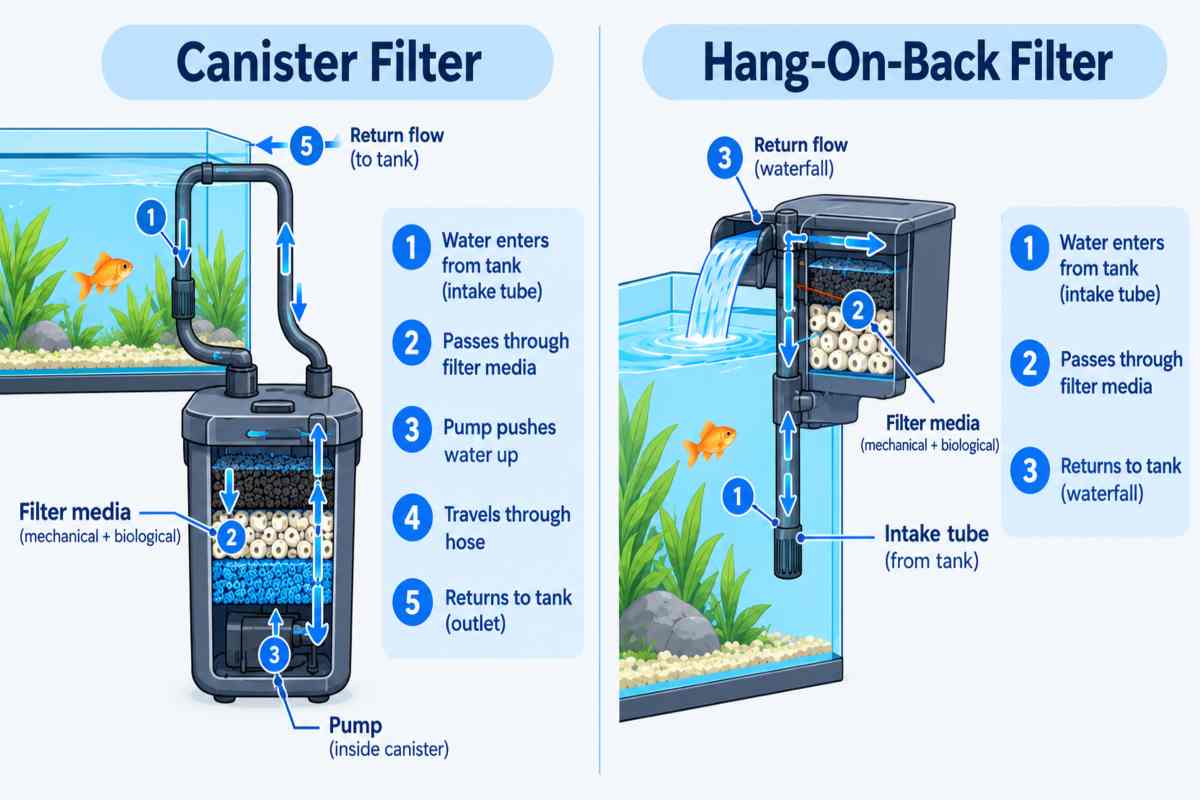 How canister filters and hang-on-back filters differ in water flow and setup.
How Often Should You Feed a Goldfish?
Goldfish don’t have a true stomach as most people imagine, so food moves quickly through their digestive tract, and they are prone to overeating if given the chance. Feeding once or twice a day, in an amount the fish can finish within about two minutes, is a reliable guideline that prevents the two most common feeding-related problems: water quality decline from excess waste, and digestive issues like bloating or swim bladder disorder from overfeeding.
A useful mental model is that most of the visible food should disappear within that two-minute window, and any food still floating afterward should be siphoned out rather than left to decay. Skipping a feeding day once a week is a common and safe practice among experienced keepers, since it allows the digestive tract to fully clear and mirrors how a wild carp would feed opportunistically rather than on a fixed schedule.
What Should You Feed a Goldfish?
A balanced goldfish diet centers on a high-quality sinking or slow-sinking pellet formulated specifically for goldfish, since floating flakes encourage fish to gulp air at the surface, which is a known contributor to swim bladder disorder. Pellets designed for goldfish typically contain more fiber than standard tropical fish food, which supports healthy digestion in a species prone to constipation and bloating.
Fresh vegetables make an excellent supplement two to three times a week. Blanched peas with the skin removed, cucumber slices, and leafy greens like spinach or lettuce give goldfish fiber and micronutrients that dry food alone cannot fully provide, and peas in particular are a well-known home remedy for mild constipation. Occasional protein treats such as brine shrimp or bloodworms, offered sparingly, round out the diet without overloading it with fat.
Common feeding mistakes to avoid:
- Feeding only floating flakes, which increases the risk of swim bladder disorder from swallowed air
- Feeding more than the fish can finish in two minutes, which fouls the water and stresses the biological filter
- Feeding exclusively dry food with no fresh vegetable supplementation
- Leaving uneaten food in the tank instead of removing it after feeding
How Do You Perform Water Changes Without Harming Beneficial Bacteria?
Water changes are essential, but they can be done in a way that either protects or destroys the beneficial bacteria colony that keeps the nitrogen cycle running. The key principle is to disturb the filter media as little as possible, since most of the bacteria live there, and never rinse filter media under tap water, since chlorine and chloramine kill the bacteria almost instantly.
A safe weekly water change routine looks like this:
- Test the water first to confirm ammonia, nitrite, and pH levels before deciding how much to change.
- Unplug the heater and any electrical equipment for safety before starting.
- Use a gravel vacuum to siphon out 20 to 30 percent of the water, pulling debris from the substrate as you go.
- Refill with fresh water treated with a dechlorinator and matched roughly to the tank’s temperature.
- If filter media needs rinsing, do it in a bucket of removed tank water, never under the tap, to preserve the bacteria.
- Retest the water a few hours later to confirm parameters have stabilized.
Sticking to a consistent weekly schedule, rather than waiting until the water visibly looks dirty, keeps nitrate from building up gradually and prevents sudden, large water changes that can shock fish with a rapid shift in parameters.
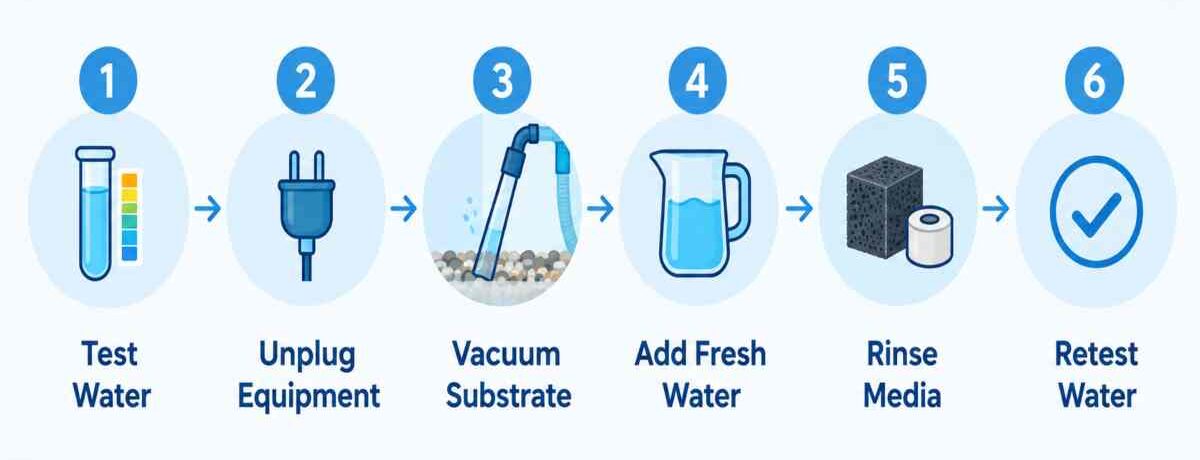 A quick visual guide to a safe, beneficial-bacteria-friendly water change routine.
Can Goldfish Live With Tropical Fish?
Goldfish and tropical fish are rarely a good long-term match, mainly because of conflicting temperature needs rather than aggression. Most tropical fish require water in the 75 to 80°F range, well above the 65 to 72°F range goldfish prefer, and keeping goldfish at tropical temperatures speeds up their metabolism, shortens their effective lifespan, and increases ammonia production from faster waste output.
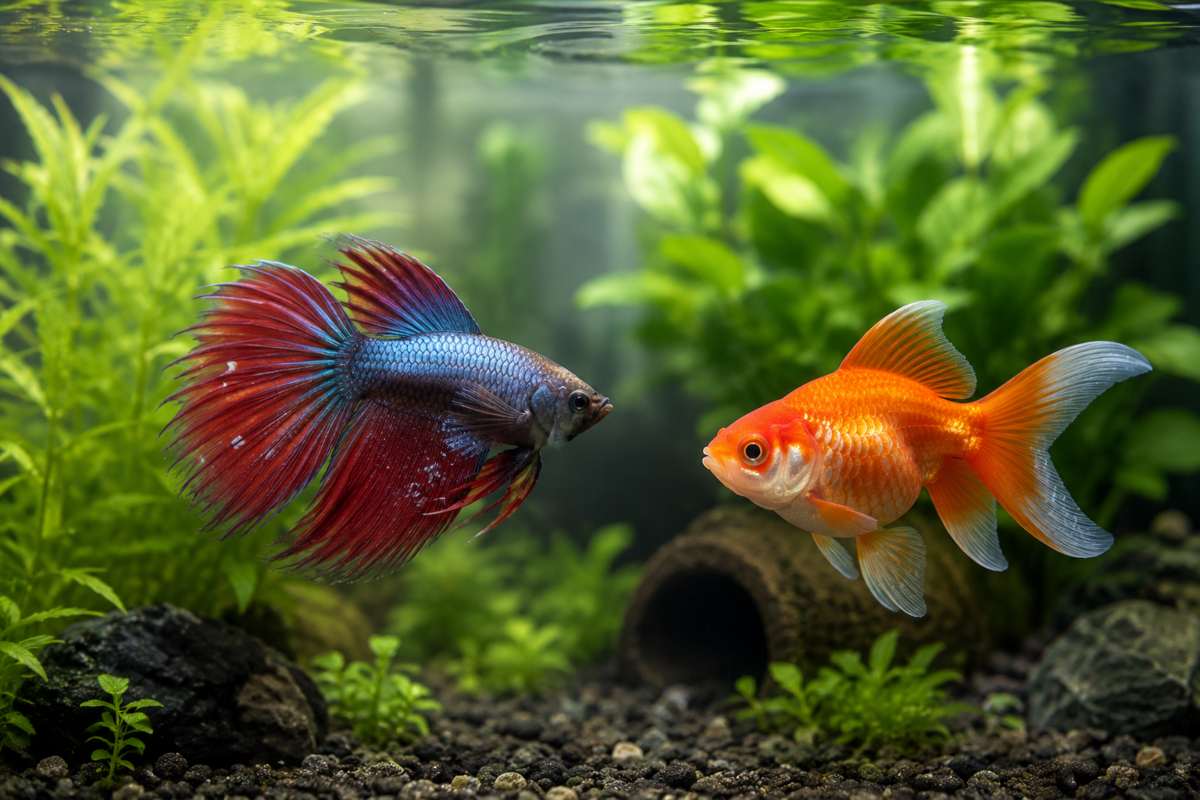
Beyond temperature, goldfish are messy eaters with a heavy bioload that can overwhelm a filtration system sized for a typical tropical community tank, and their constant foraging can uproot delicate plants or stress smaller, more timid tropical species. Goldfish generally do best with other goldfish, or with a small number of genuinely cold-water-tolerant species such as White Cloud Mountain minnows or certain hardy loaches, kept in a tank large enough to accommodate everyone comfortably.
What Are Common Goldfish Diseases and Warning Signs?
Most goldfish diseases develop as a secondary response to stress, and stress in goldfish is overwhelmingly caused by poor water quality, temperature swings, or overcrowding rather than bad luck. Recognizing the early signs of illness gives a keeper the chance to correct the underlying cause before it becomes serious.
| Condition | Key Signs | Common Cause |
|---|---|---|
| Ich (white spot disease) | Small white salt-like spots across body and fins, flashing against decor | Stress, temperature fluctuation, poor water quality |
| Fin rot | Ragged, discolored, or disintegrating fin edges | Poor water quality, bacterial infection |
| Swim bladder disorder | Floating sideways, sinking, or struggling to maintain balance | Overfeeding, constipation, swallowed air |
| Dropsy | Swollen body, pinecone-like raised scales | Underlying bacterial or organ infection, often advanced illness |
| Ammonia or nitrite poisoning | Red or inflamed gills, gasping at the surface, lethargy | Uncycled tank, overstocking, infrequent water changes |
Almost all of these conditions respond better to prompt water testing and a partial water change than to reaching for medication immediately, since correcting the environment often resolves mild cases and always improves the odds, even in more serious ones.
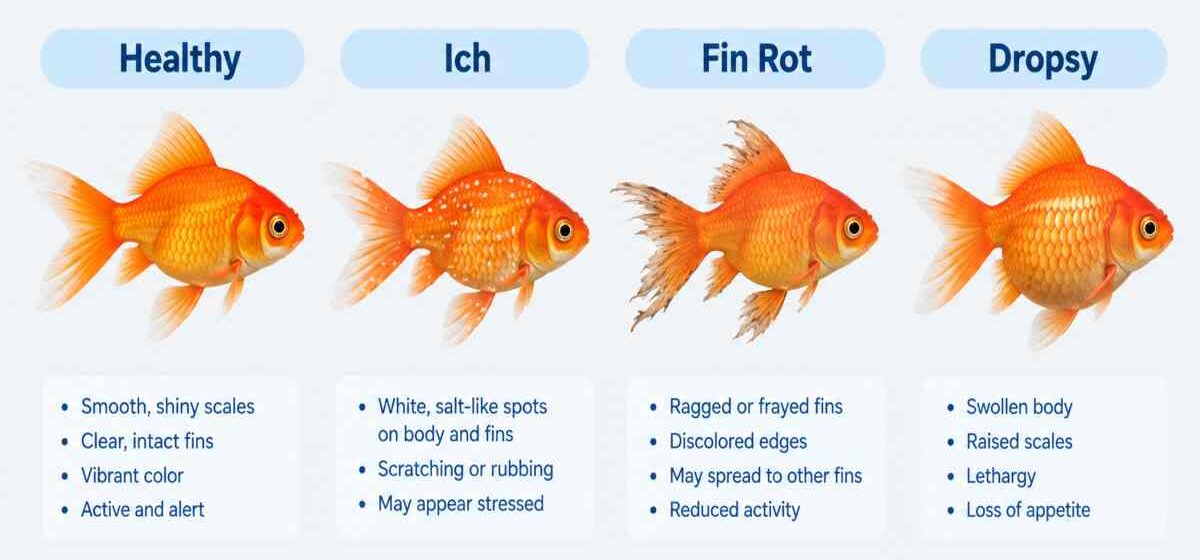 Early visual signs of common goldfish diseases side by side for quick comparison.
Why Is My Goldfish Turning White?
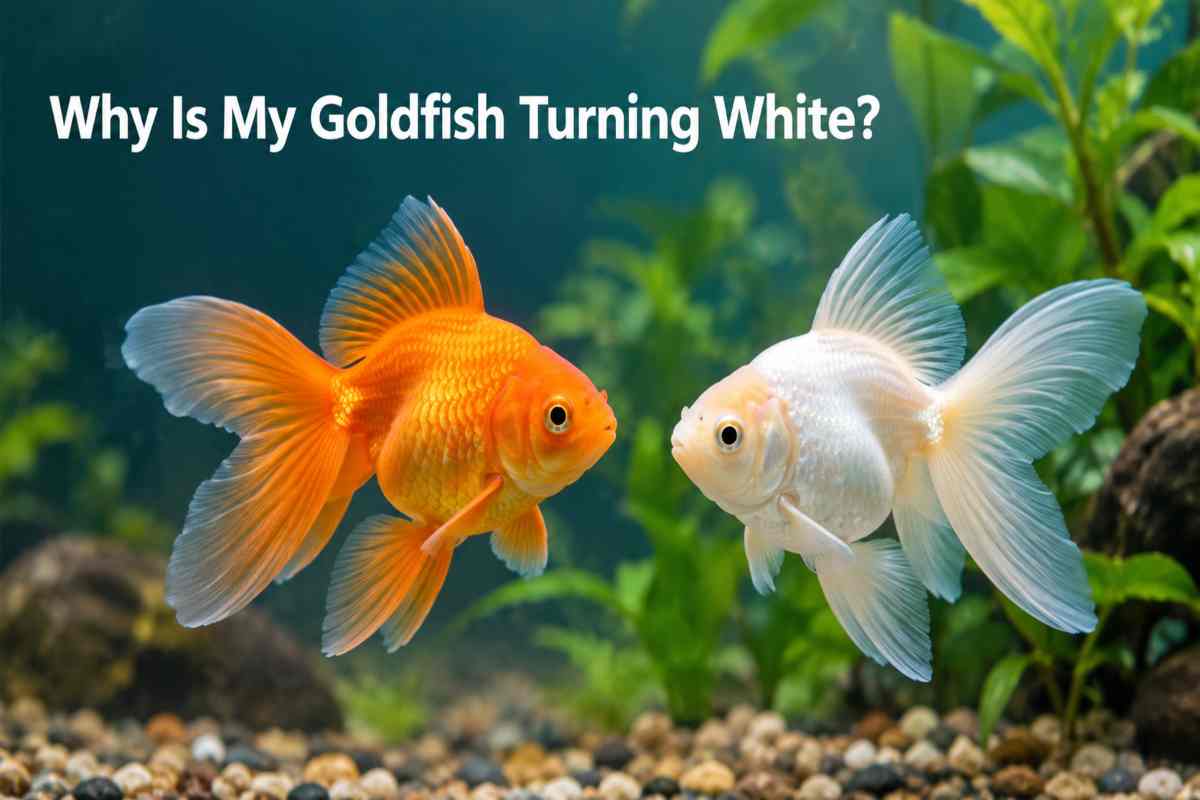
A goldfish gradually losing its orange or red coloration and developing white or pale patches usually isn’t an emergency on its own, but it has several possible explanations worth separating. Genetics play a large role, since many goldfish naturally shift color as they mature, a process called color morphing that can happen gradually over months or even years regardless of water quality.
Lighting also matters more than most keepers expect. Goldfish need enough light to maintain pigment production, and fish kept in consistently dim rooms can pale over time. Diet also plays a role, since color-enhancing foods containing carotenoids help maintain vibrant orange and red tones, and a diet lacking these compounds can allow color to fade.
However, white patches that appear suddenly, come with a fuzzy or cottony texture, or coincide with lethargy and clamped fins point to a health issue such as a fungal infection or the early stages of ich rather than normal color change. Those cases warrant a water test and closer observation rather than a wait-and-see approach.
What Are the Signs of a Dying Goldfish?
Recognizing decline early gives a keeper the best chance of intervening successfully. A goldfish in serious distress typically shows several signs together rather than just one, which helps distinguish a genuine emergency from normal behavior.
- Prolonged gasping at the water’s surface, which often signals low oxygen or ammonia and nitrite toxicity
- Extended lethargy or resting on the tank bottom for long periods, especially combined with clamped fins
- Loss of appetite lasting more than a couple of days
- Rapid, labored gill movement or visibly inflamed, red gills
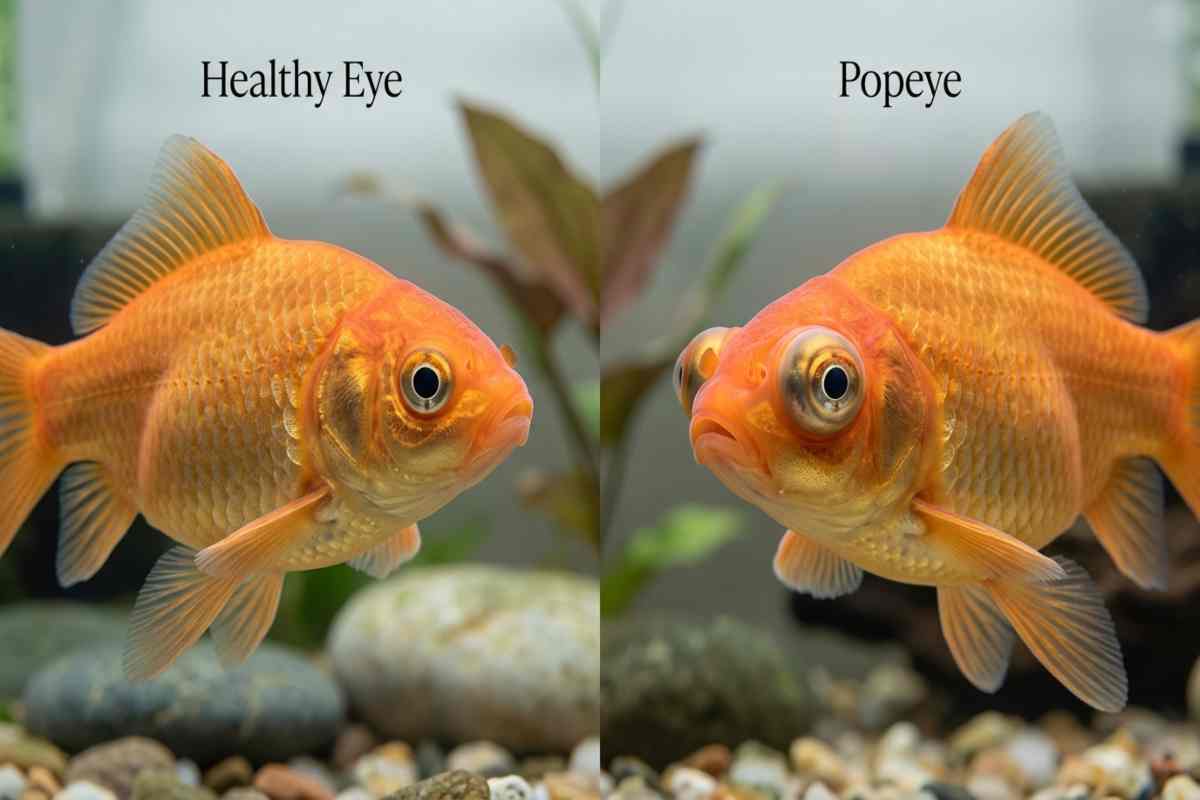
- Severe swelling, pinecone-like scales, or bulging eyes, which point toward advanced dropsy or internal infection
When several of these signs appear at once, the most effective first step is almost always a water test, followed by an immediate partial water change if ammonia or nitrite are elevated, since correcting the water quality addresses the root cause behind a large share of these symptoms.
How Long Can a Goldfish Live in a Bowl?
This question deserves a direct and honest answer because the belief that goldfish are suited to bowls has caused more premature goldfish deaths than almost any other misconception in the hobby. A goldfish kept in a small, unfiltered bowl is not thriving; it is surviving under chronic stress, and it typically lives only a fraction of its natural lifespan, often just a year or two instead of a decade or more.
Bowls lack the surface area needed for adequate oxygen exchange, cannot support meaningful biological filtration, and accumulate ammonia far faster than the small water volume can dilute safely. The result is stunted growth, weakened immune function, and chronically elevated stress hormones, all of which shorten lifespan even when the fish does not die outright from acute ammonia poisoning. Modern fishkeeping guidance is unambiguous: a goldfish needs a filtered, appropriately sized tank, not a bowl, regardless of how the species has historically been marketed.
What Is a Goldfish’s Lifespan and How Do You Maximize It?
With proper care, common and single-tail goldfish routinely live 10 to 15 years, and well-documented individuals have lived past 20, with the oldest recorded goldfish reportedly living into its 40s in a stable outdoor pond environment. Fancy varieties, particularly those with more extreme body shapes like Ranchus and Orandas, tend to have slightly shorter average lifespans because selective breeding can create inherent health vulnerabilities, but 10 to 15 years is still a realistic and achievable target with attentive care.
The factors that most reliably extend lifespan are the same ones covered throughout this guide: adequate tank size that allows for full, unstunted growth, consistent water quality maintained through weekly changes and proper filtration, a balanced diet that avoids both overfeeding and nutritional gaps, and stable, species-appropriate water temperature. Genetics set an upper limit, but environment determines how close a given fish comes to reaching it.
What Are the Different Goldfish Varieties?
Goldfish varieties fall broadly into two body types, which have real practical implications for care rather than being purely cosmetic.
| Variety | Body Type | Approximate Adult Size | Care Notes |
|---|---|---|---|
| Comet | Single-tail, streamlined | Up to 12 inches | Strong swimmer, benefits from pond or large tank |
| Shubunkin | Single-tail, calico patterned | Up to 12 inches | Similar needs to Comet, hardy and active |
| Fantail | Fancy, rounded body | 6 to 8 inches | More sensitive digestion, prone to swim bladder issues |
| Oranda | Fancy, with head growth (wen) | 6 to 8 inches | Wen requires monitoring for infection risk |
| Ranchu | Fancy, curved back, no dorsal fin | 6 to 7 inches | Slower swimmer, needs gentle current |
Single-tail varieties are generally hardier swimmers, better suited to spacious tanks or outdoor ponds. In contrast, fancy varieties, with their compressed body cavities, are more prone to digestive and swim bladder problems, which is part of why sinking, fiber-rich pellets and occasional fasting days matter even more for this group.
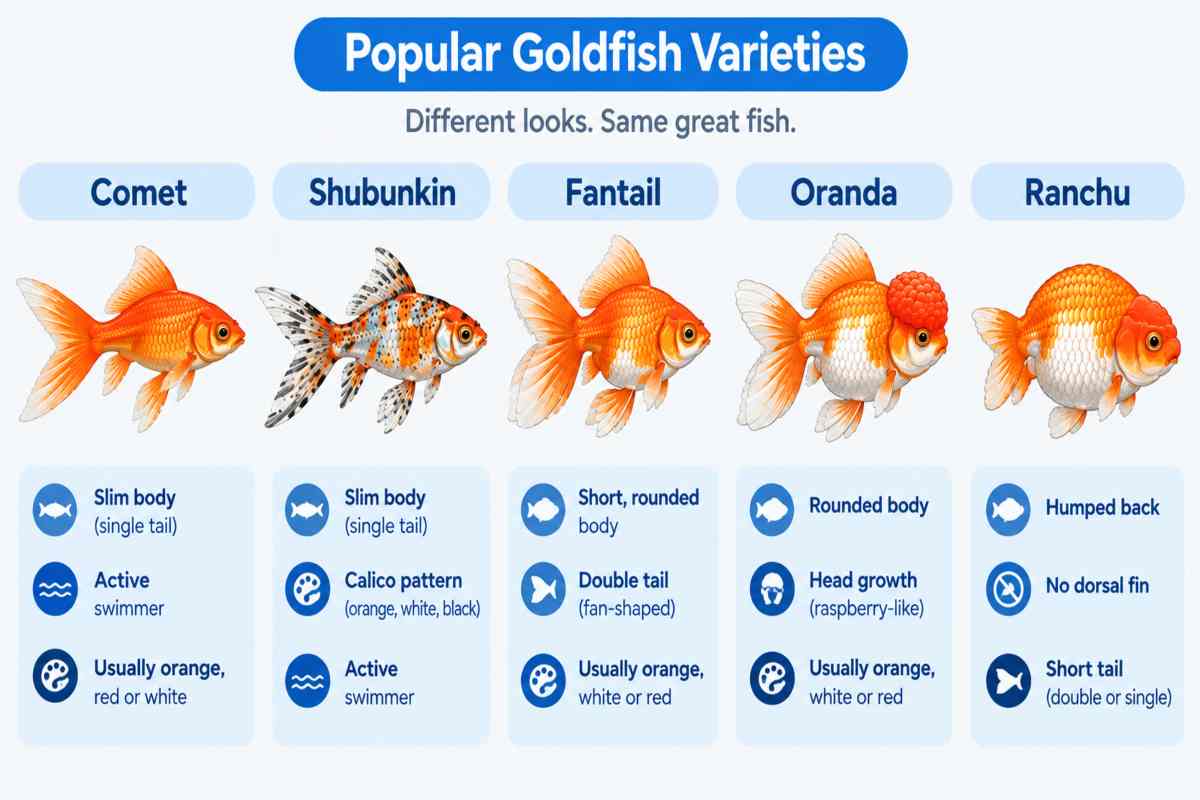 Side-by-side look at the five most common goldfish varieties and their features.
What Common Mistakes Do New Goldfish Keepers Make?
A handful of avoidable mistakes account for most preventable goldfish deaths, and most trace back to the myths this species is unfortunately famous for.
- Housing a goldfish in a bowl or tank under 20 gallons, underestimating both adult size and bioload
- Adding fish before the tank has finished cycling, causing new tank syndrome
- Overfeeding, or feeding only floating flakes instead of sinking pellets
- Skipping regular water testing and only reacting once symptoms appear
- Rinsing filter media under tap water, which kills the beneficial bacteria colony
- Mixing goldfish with tropical fish that require incompatible water temperatures
Conclusion
Good goldfish care comes down to respecting what this species actually is: a long-lived, fast-growing carp with a genuinely heavy bioload, not a low-maintenance bowl fish. A properly sized, cycled, and filtered tank, paired with a balanced diet fed in sensible amounts and consistent weekly water changes, addresses the root cause of nearly every common goldfish health problem before it starts. Readers at The Fish Care who apply these fundamentals consistently give their goldfish a realistic shot at a decade or more of healthy life, rather than the year or two so often associated with outdated bowl-keeping advice.
Frequently Asked Questions (FAQs)
Do goldfish need a filter?
Yes. Goldfish produce a heavy bioload, and a filter is essential for both mechanical waste removal and housing the beneficial bacteria that process ammonia and nitrite. An unfiltered goldfish tank cannot maintain safe water quality for more than a few days.
Do goldfish need a heater?
Not usually. Goldfish are a cold water species and generally do best between 65 and 72°F, which matches typical indoor room temperature in most homes. A heater is only necessary if the room regularly drops below that range.
How many goldfish can I keep together?
This depends entirely on tank size, since each additional fancy goldfish generally needs about 10 extra gallons, and each additional single-tail goldfish needs 15 to 20 extra gallons, on top of the base minimum for the first fish.
Can goldfish live in a pond?
Yes, and for single-tail varieties in particular, a well-maintained outdoor pond is often a better long-term home than an indoor tank, provided the pond includes adequate filtration, sufficient depth to avoid freezing solid in winter, and protection from predators.
Why does my goldfish keep gasping at the surface?
This usually indicates low dissolved oxygen or elevated ammonia and nitrite, so do a water test and do a partial water change rather than waiting to see if it resolves on its own.