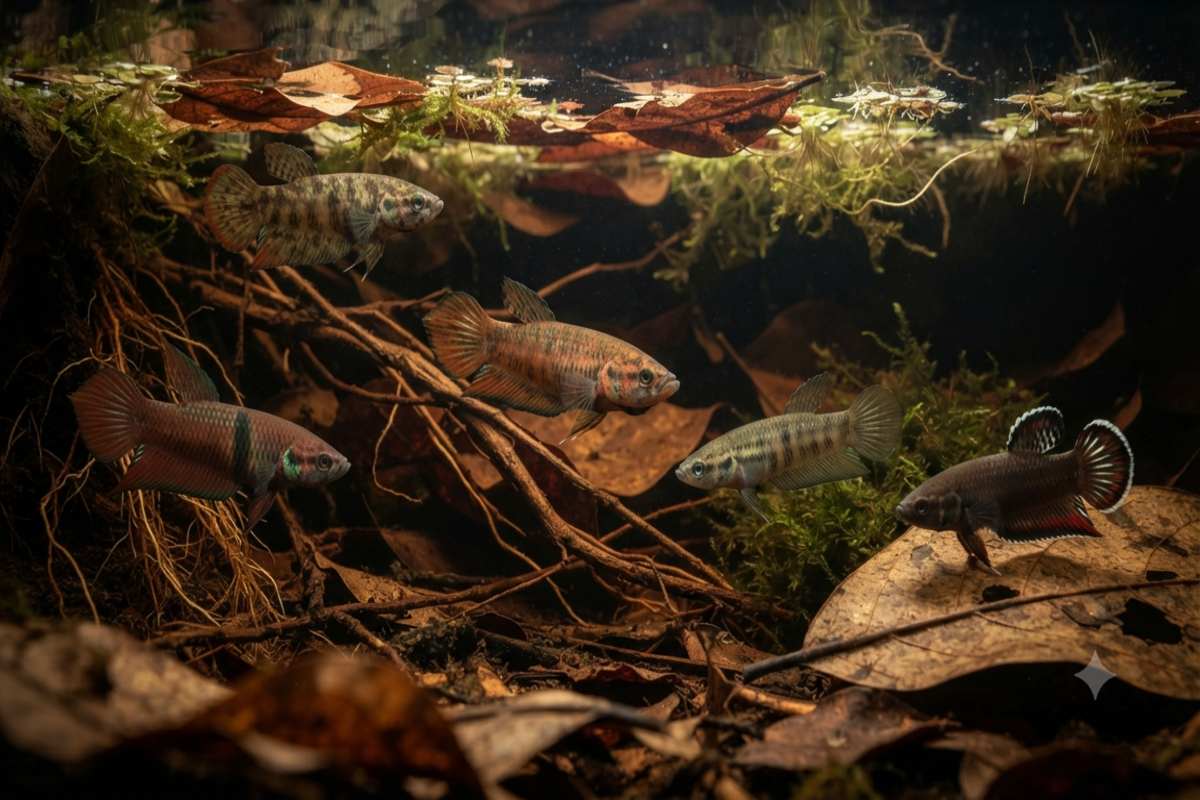
The betta fish sold in pet-store cups is one animal: Betta splendens, reshaped over centuries of selective breeding. The genus it belongs to is a different story entirely.
Betta contains more than 80 recognized wild species, native to the swamps, peat bogs, and blackwater streams of Thailand, Malaysia, Indonesia, and Borneo. Some are drab until they flare, revealing hidden iridescence. Others carry eggs, and later free-swimming fry, inside the male’s mouth for up to three weeks. A few never grow past the size of a fingernail.
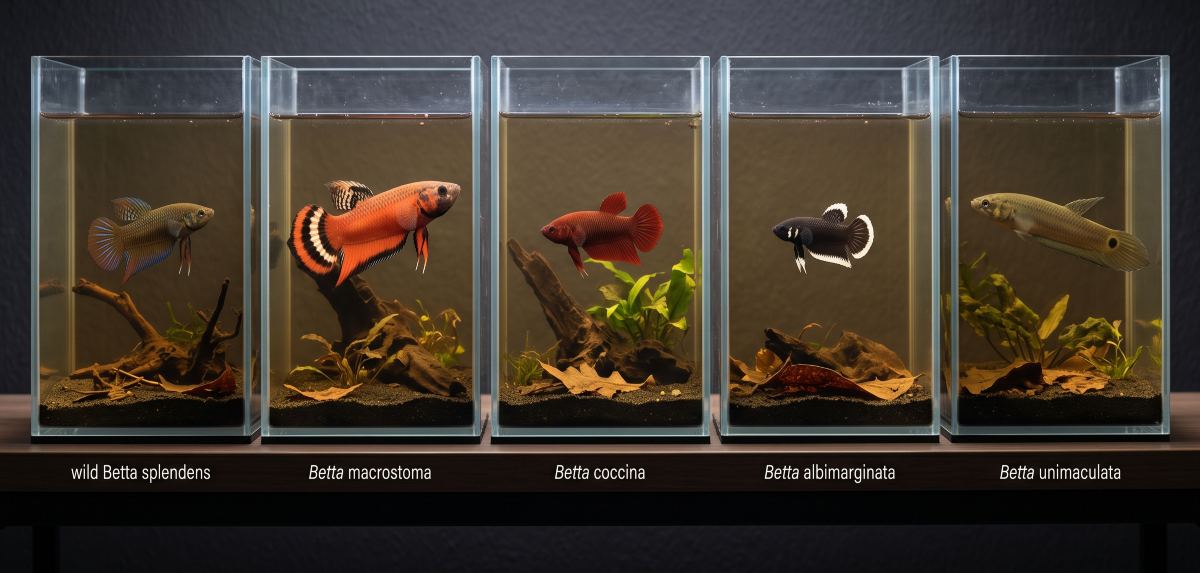 Five wild bettas, five completely different looks.
What Actually Separates a “Wild Betta” from a Domestic One?
Three traits define the split, and they matter more than color alone.
Fin shape reflects function, not fashion.
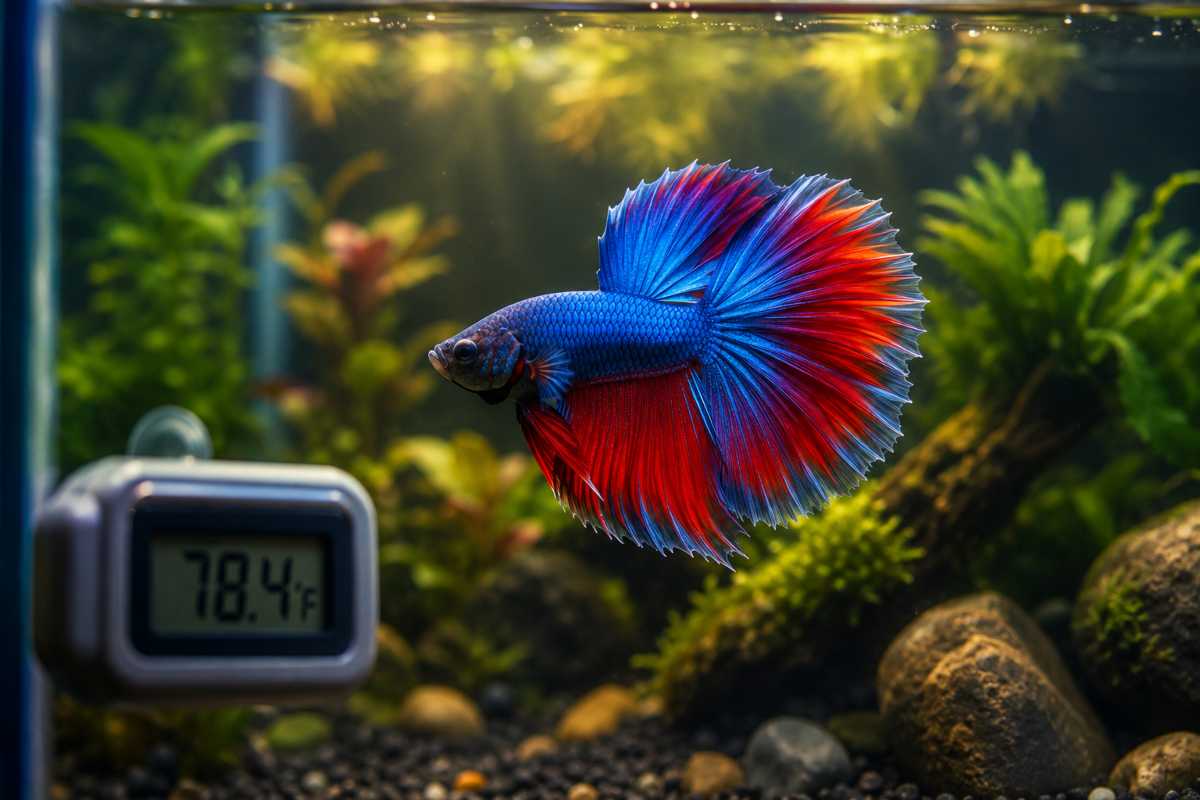
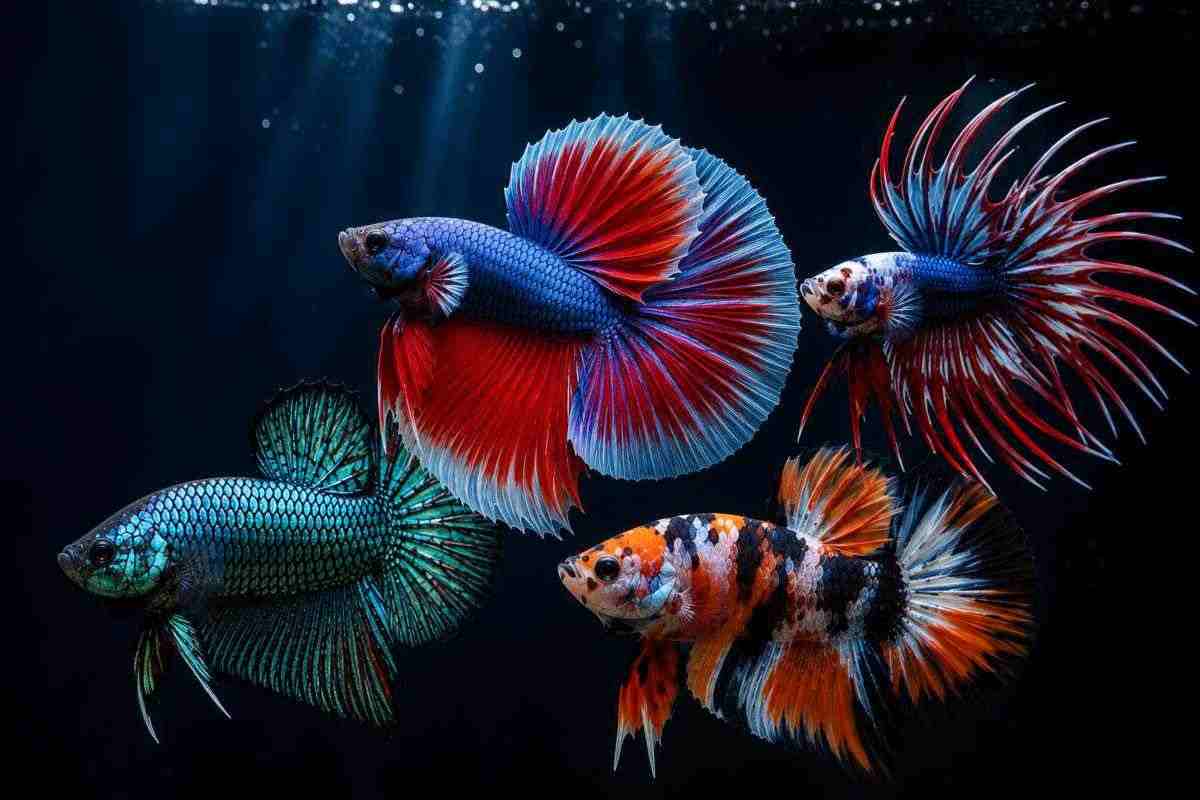
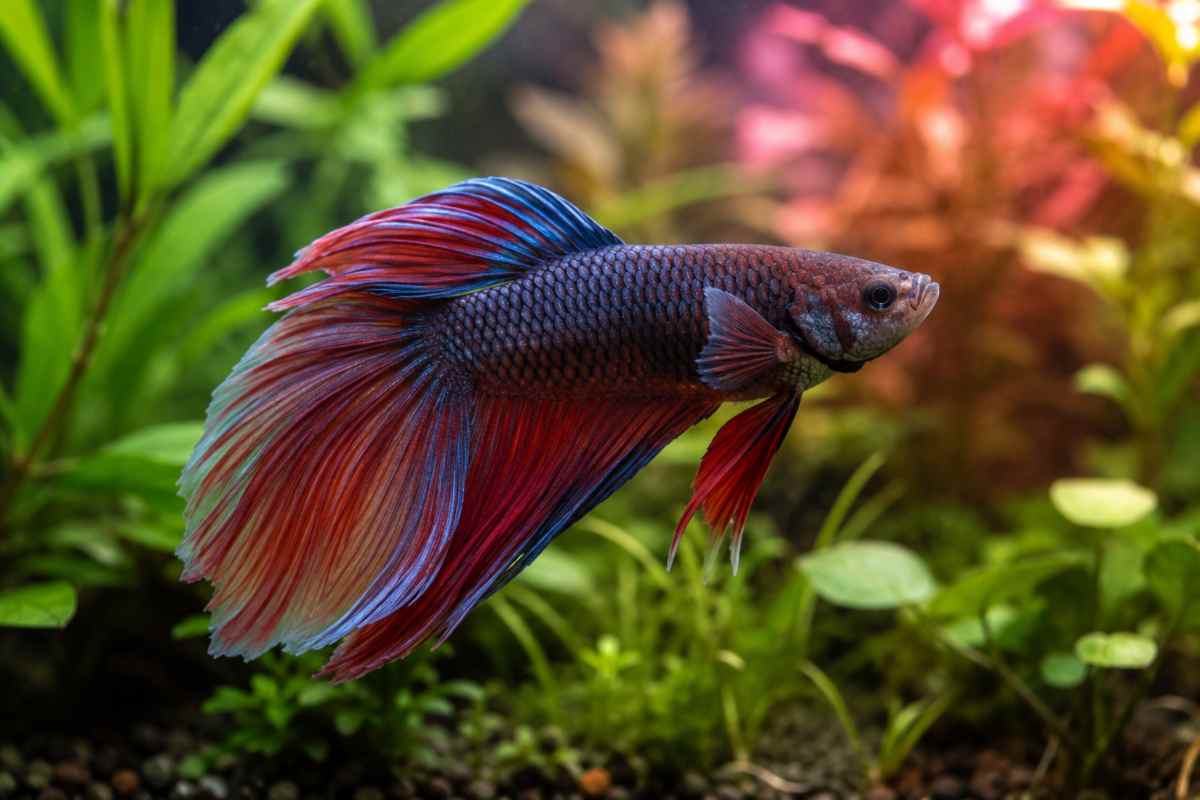
Wild bettas have short, rounded fins built for slipping through dense vegetation and escaping predators. Domestic bettas carry long, trailing fins bred purely for visual display; those fins would be a liability in the wild.
Resting color is often a disguise.
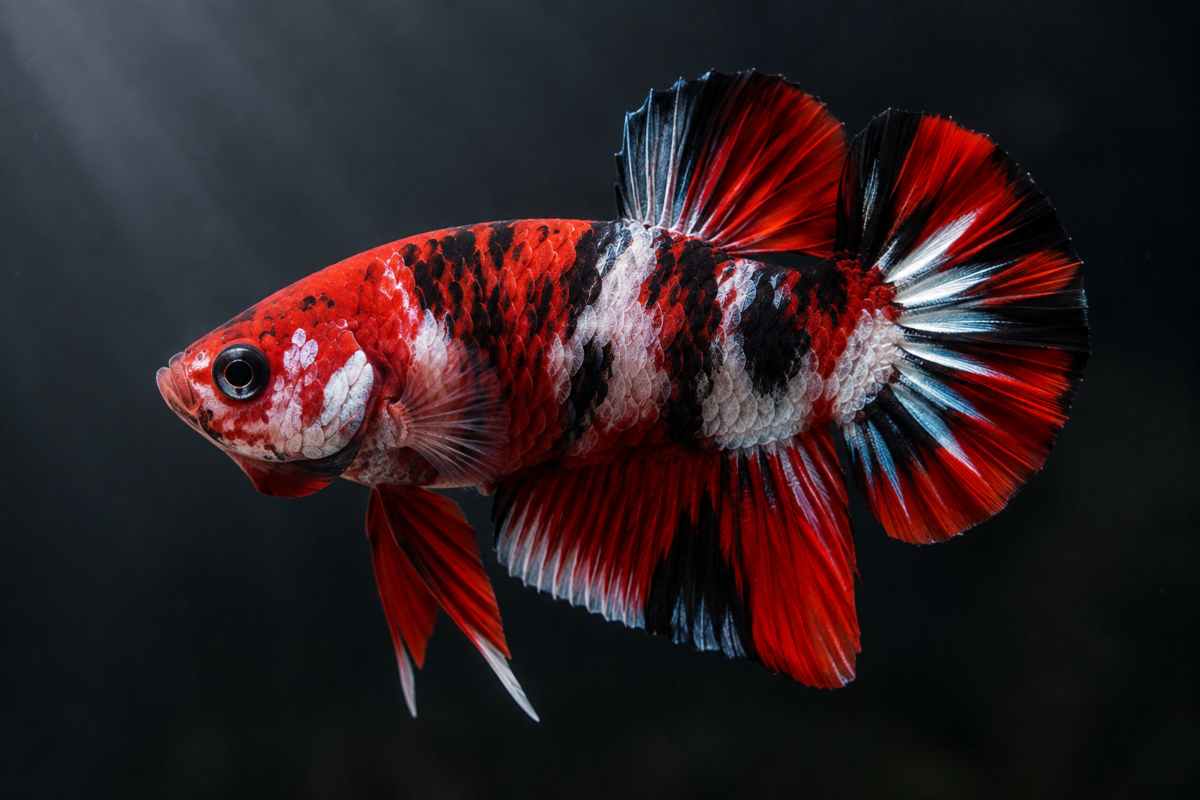
Most wild species look olive, brown, or grey at rest. Their color only becomes vivid when they flare at a rival or display for a mate. Domestic bettas, bred for constant visual appeal, stay colorful even at rest.
Behavior was never selected out.
Roughly half of all Betta species carry their eggs in the male’s mouth instead of building a nest. This trait exists because wild populations were never selectively bred, not because domestic breeders removed it.
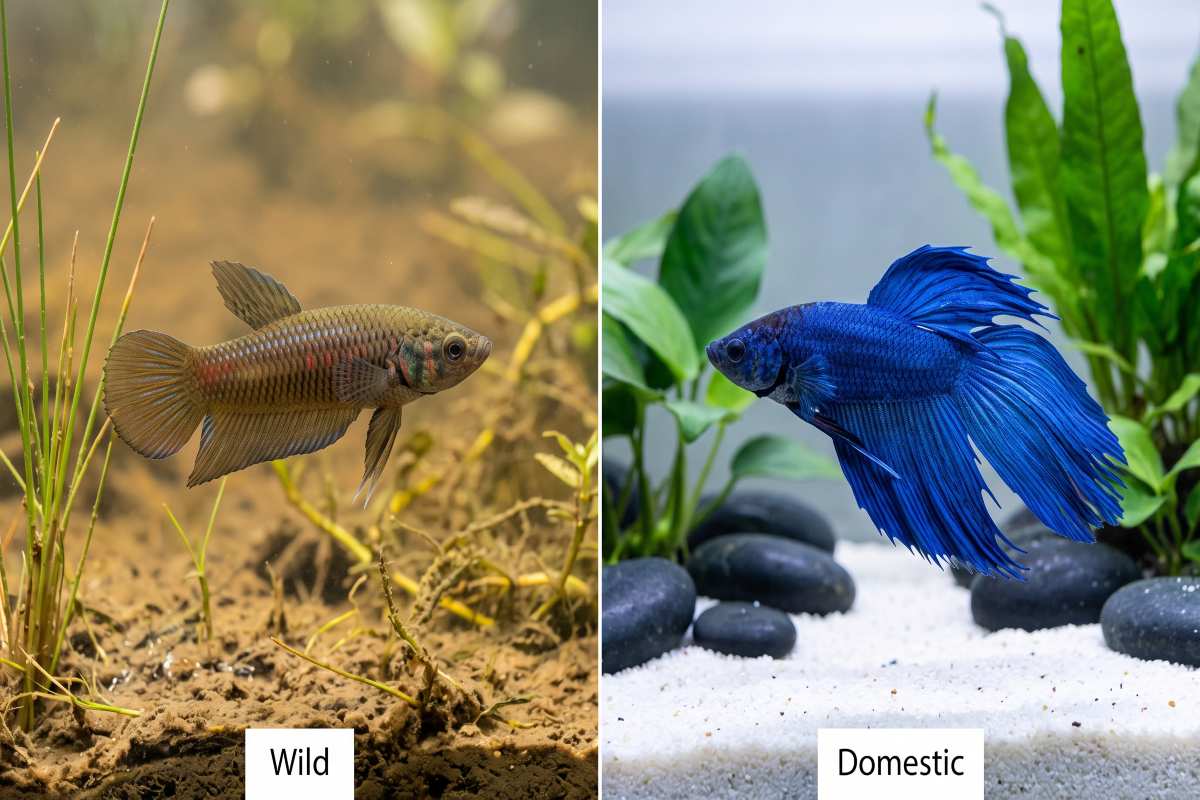 Same species, generations apart.
The Real Classification System: Species Complexes
Ichthyologists don’t sort Betta species by color. They group them into species complexes, clusters of closely related species that share breeding strategy, body shape, and habitat. This is the framework hobbyists and researchers actually use, and it’s the fastest way to understand the genus without memorizing 80+ Latin names.
The one split that matters most: how they reproduce
Every wild betta falls into one of two reproductive groups.
- Bubble-nest builders construct floating foam nests at the water’s surface, the same behavior seen in pet-store bettas.
- Mouthbrooders skip the nest entirely. The male holds fertilized eggs in his mouth, without eating, for 10 to 18 days until the fry can swim on their own.
This single behavioral difference is the biggest divide in the genus, larger than color or size, and it’s the fastest way to identify which complex an unfamiliar species belongs to.
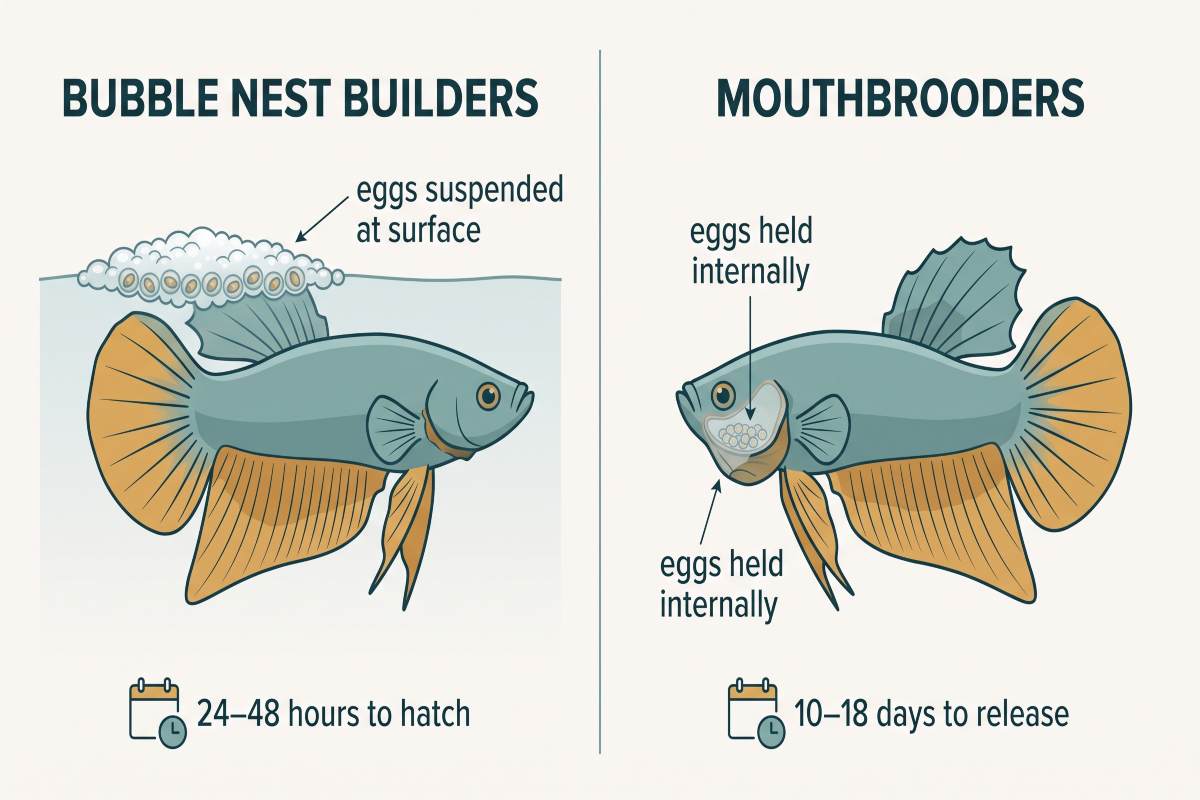 Two betta breeding strategies, two very different timelines.
Species complexes at a glance
| Complex | Breeding Style | Typical Size | Known For |
| Splendens | Bubble nest | 5–7 cm | Ancestor of the pet-store betta |
| Coccina | Bubble nest | 2.5–4 cm | Deep red color, smallest bodies |
| Bellica | Bubble nest | 7–12 cm | Largest of the bubble-nesters |
| Akarensis | Mouthbrooder | 4–6 cm | Peat-swamp camouflage specialists |
| Picta | Mouthbrooder | 3–5 cm | Widest geographic range |
| Pugnax | Mouthbrooder | 5–8 cm | Larger, more territorial |
| Unimaculata | Mouthbrooder | 6–10 cm | Elongated, eel-like body |
| Macrostoma | Mouthbrooder | 6–12 cm | Most vividly colored mouthbrooders |
| Foerschi/Waseri & Albimarginata | Mouthbrooder | 3–4 cm | Smallest mouthbrooders, understudied |
Splendens Complex: The Ancestors of the Domestic Betta
This complex holds the closest wild relatives of the fish sold in every pet store, though none of them resemble their fancy-finned descendant.
Betta splendens (wild form)
Native to central Thailand’s rice paddies and slow-moving canals. Olive-brown at rest, with red and blue iridescence that only appears when flaring. Conservation status: Vulnerable.
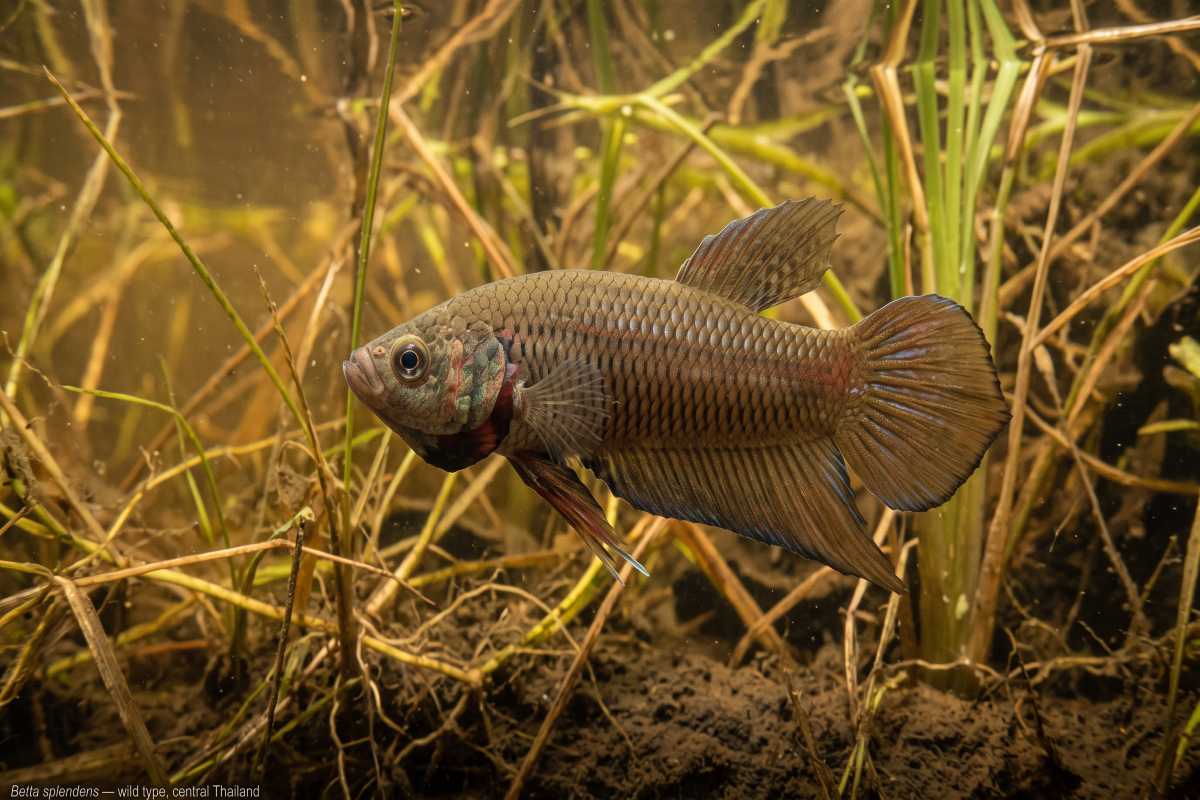 This is what a betta looked like before we bred it.
Betta imbellis (Peaceful Betta)
Native to Thailand and Malaysia. Metallic green-blue body with a red-edged tail. Despite the genus’s aggressive reputation, this species is noticeably calmer than B. splendens—conservation status: Least Concern.
Betta mahachaiensis (Mahachai Betta)
Restricted to brackish peat swamps near Samut Sakhon, Thailand. One of the most habitat-restricted bettas in the genus, and Critically Endangered as a result of that narrow range.
Betta siamorientalis and Betta stiktos
Found in eastern Thailand and Cambodia. Both closely resemble B. splendens visually but are genetically distinct species; B. stiktos is identifiable by spotted fin patterning and was only formally described in 2013.
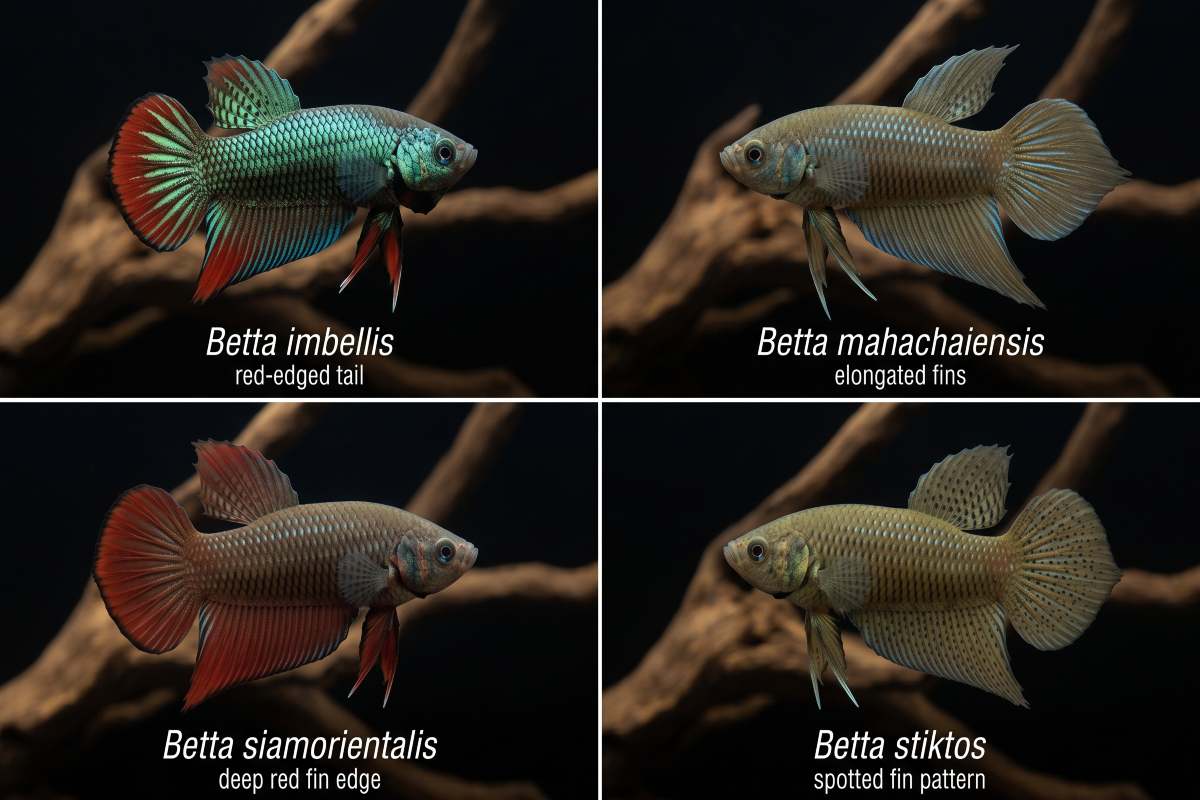 Four fish, one easy mix-up.
Coccina Complex: The Miniature Red Specialists
The smallest bettas in the genus, rarely exceeding 4 cm, known for deep red coloring that intensifies during breeding displays.
Betta coccina
The namesake species. Deep brick-red body, native to Sumatra. Conservation status: Vulnerable.
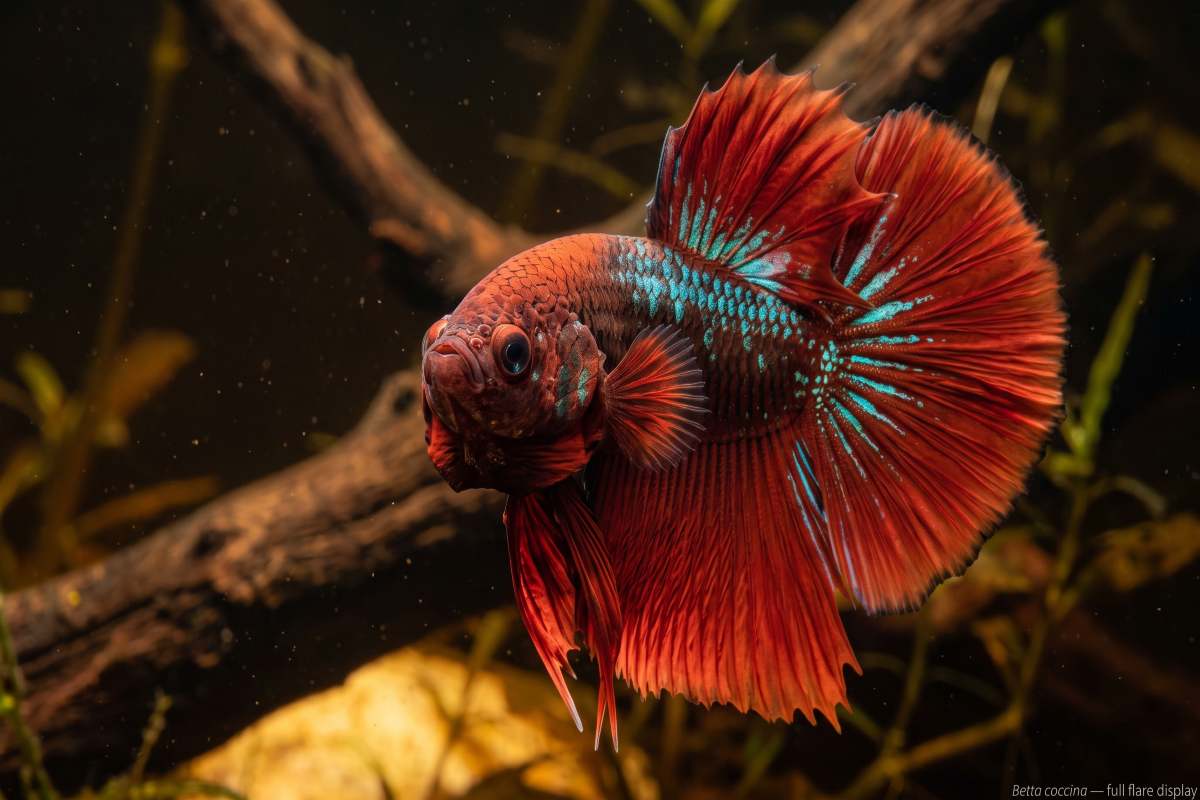 This is what “deep red” actually looks like in the wild.
Betta brownorum, Betta tussyae, and Betta livida
All three are Malaysian peat-swamp natives. B. brownorum is the smallest of the trio at 2.5 cm, with red and blue highlights. B. tussyae shows a more muted red-brown tone. B. livida stands out with metallic blue-green accents layered over red, and is Endangered due to shrinking swamp habitat.
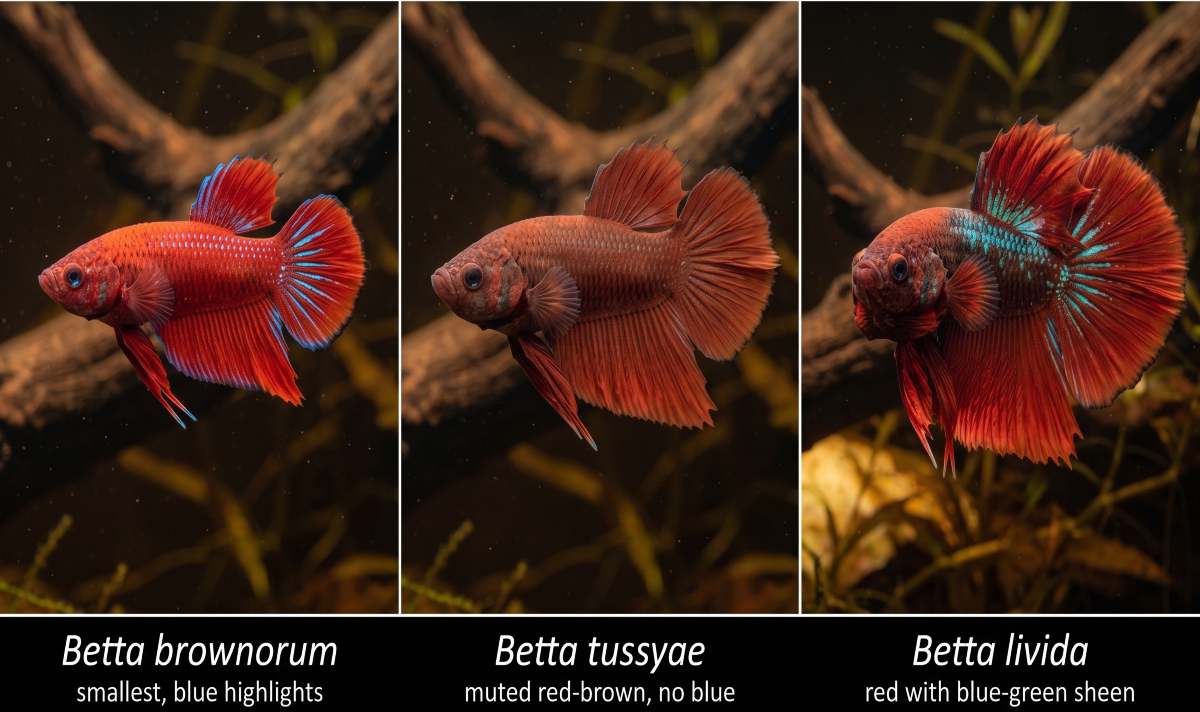 Same red family, three different shades.
Bellica Complex: The Giants of the Bubble-Nesters
Most bubble-nest bettas stay small. The Bellica complex is the exception, reaching 10–12 cm.
Betta bellica (Slim Betta)
A long, torpedo-shaped body found in Malaysia and Singapore. Olive body with reddish fin edges. Conservation status: Vulnerable.
Betta simorum
A Sumatran relative with a similarly elongated shape and copper-toned scales.
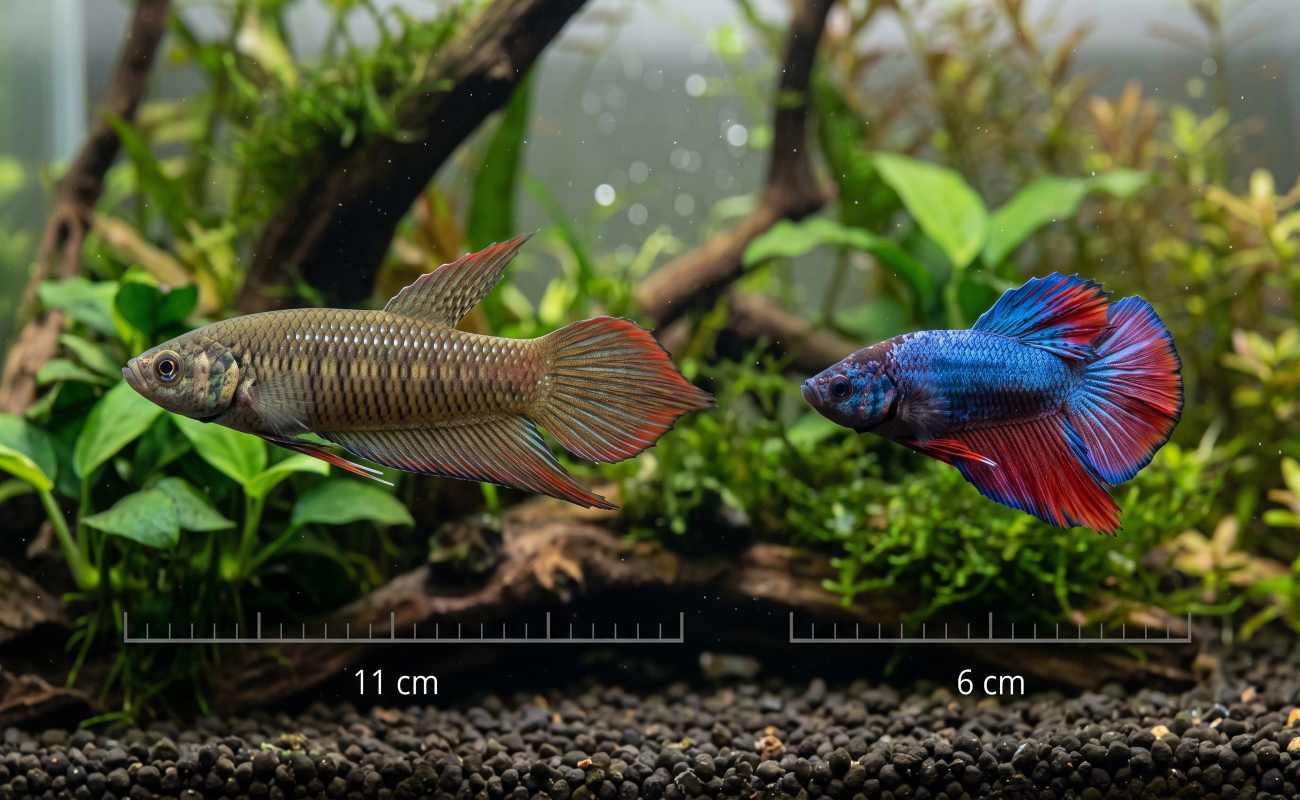 Nearly double the size of a standard betta.
Mouthbrooding Complexes: The Parental Specialists
Roughly half of all Betta species are mouthbrooders. Instead of building a nest, the male holds fertilized eggs in his mouth for 10 to 18 days, eating nothing during that period, until the fry can swim freely. This single reproductive strategy splits into five distinct complexes.
Akarensis Complex
Peat-swamp dwellers from Borneo, typically 4–6 cm, with muted brown-and-black coloring that camouflages them in leaf litter. Betta akarensis and Betta antoni are the best-known members.
Picta Complex
The most geographically widespread mouthbrooding group, found across Sumatra, Java, and Borneo. Betta picta and Betta taeniata both display horizontal striping used for camouflage among roots and driftwood.
Pugnax Complex
Named for Betta pugnax, one of the largest and most territorial mouthbrooders. Found across Malaysia, Sumatra, and Thailand. Unlike most mouthbrooders, this species is usually kept singly due to its aggression.
Unimaculata Complex
Identified by an elongated, eel-like body and a single dark spot near the tail base, the source of the name “unimaculata,” meaning “one spot.” Betta unimaculata from Borneo is the most frequently documented species in this complex.
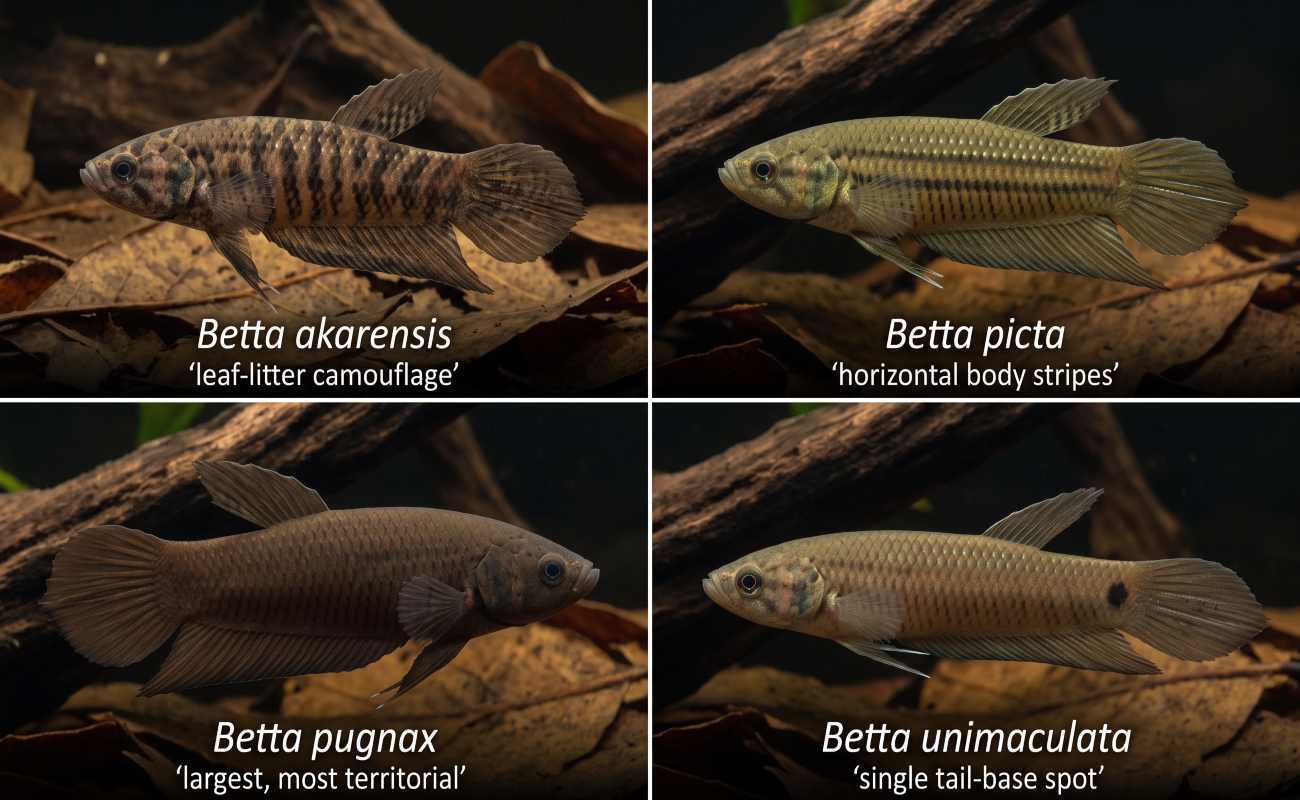 Camouflage over color, this group plays a different game.
Macrostoma Complex: The Crown Jewels
This is the most visually striking mouthbrooding group, and the one most often photographed for the aquarium trade.
Betta macrostoma (Bruneian Beauty): Bright orange-red body with a black-and-white banded tail. Endemic to Brunei and endangered due to habitat loss.
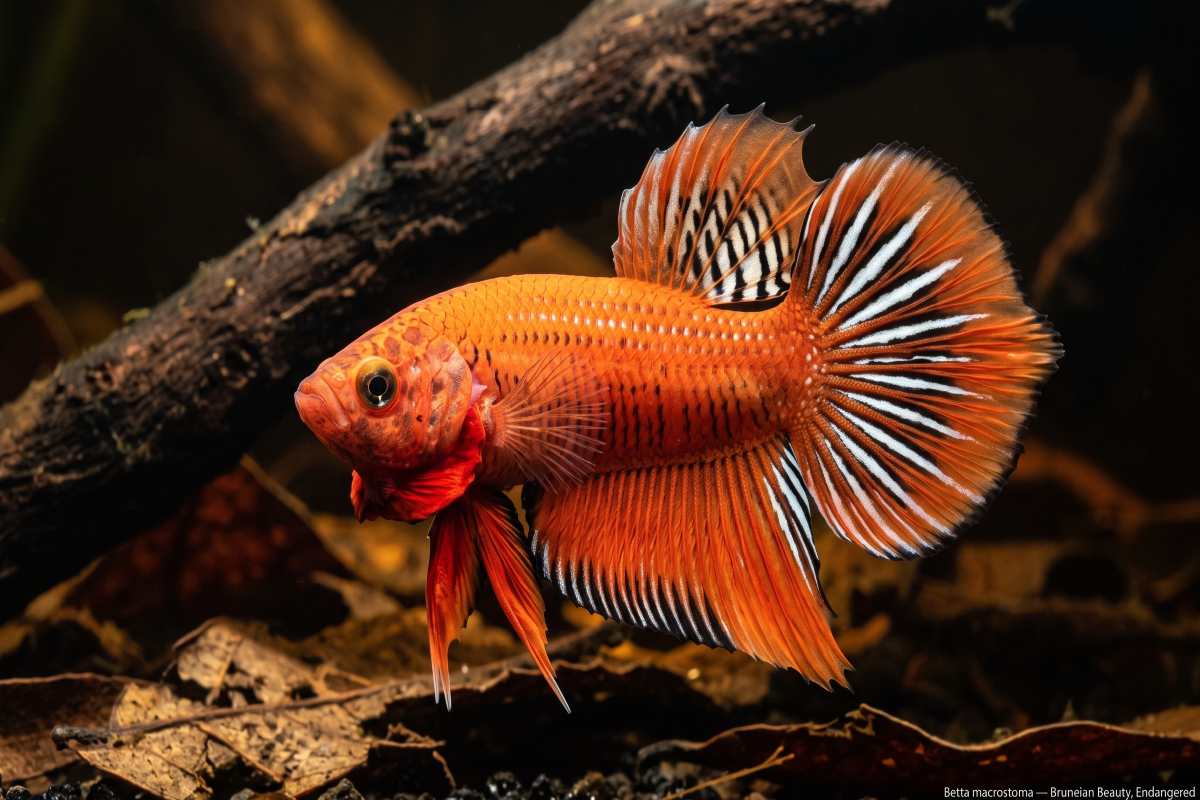 The Bruneian Beauty, endangered and unforgettable.
Betta rubra (Wine Red Betta): Deep wine-red body, found only in Sumatra’s Aceh province—a true single-region endemic.
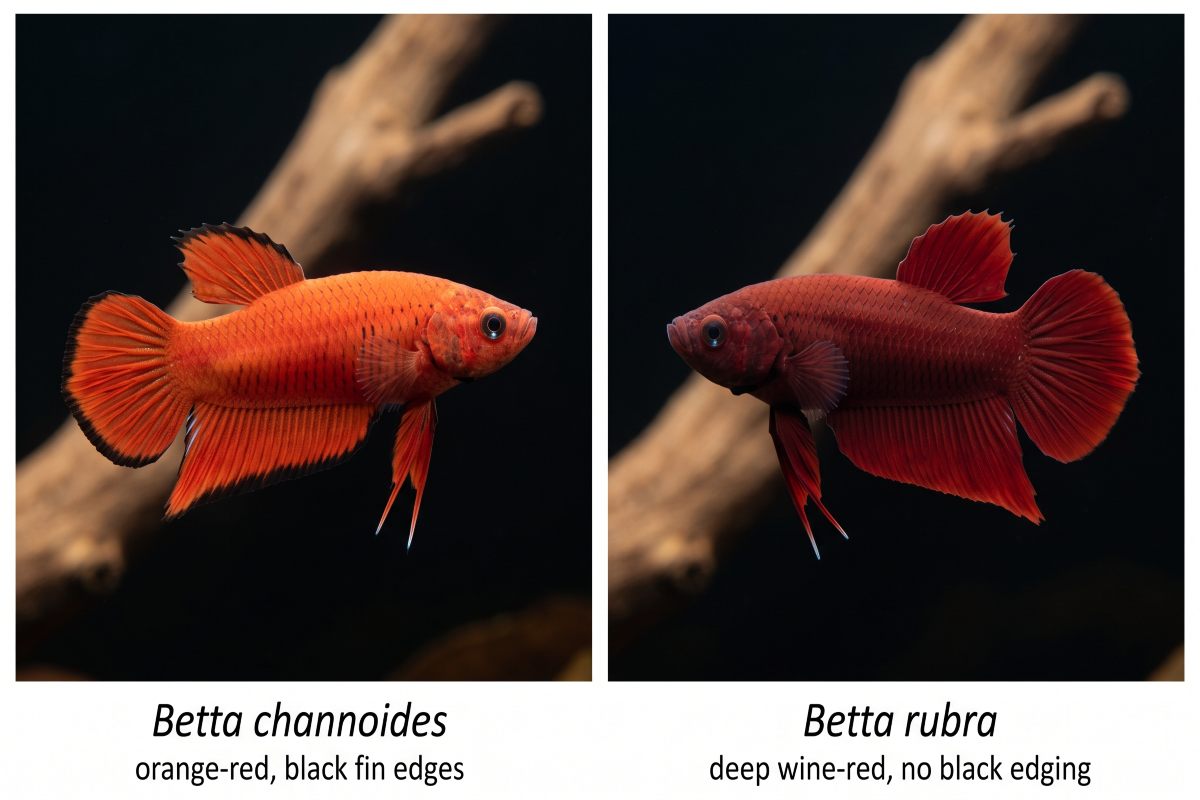 Betta channoides (left) and Betta rubra (right) showing the key color differences between the two species.
Foerschi/Waseri and Albimarginata Complexes
The smallest mouthbrooders in the genus, at 3–4 cm, and among the least studied. Betta albimarginata is the best-documented member, identifiable by bright white edging along its fins against an otherwise dark body.
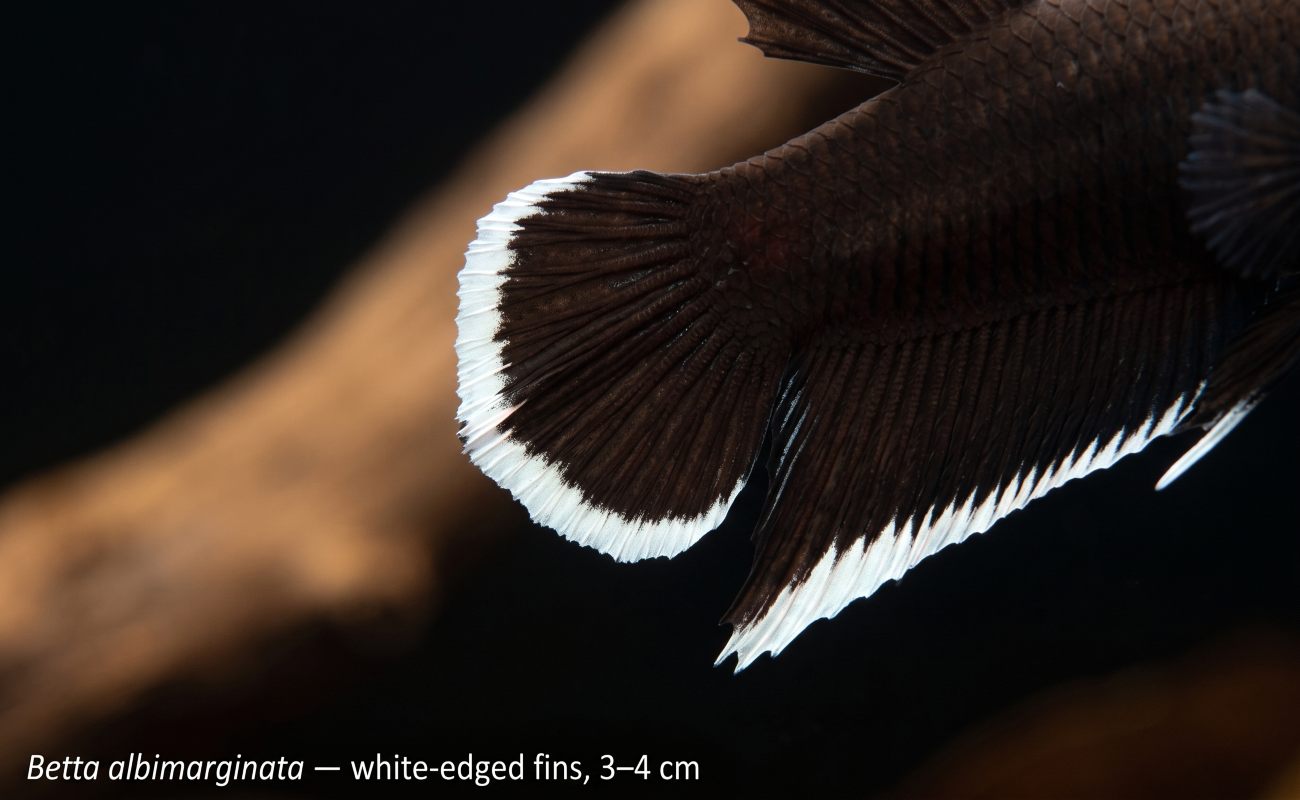 Betta albimarginata is recognized by its bold white fin margins and compact body.
Wild Betta Species at a Glance
| Species | Complex | Breeding | Adult Size | Native Range | Conservation Status |
| B. splendens (wild) | Splendens | Bubble nest | 5–6 cm | Thailand | Vulnerable |
| B. imbellis | Splendens | Bubble nest | 5 cm | Thailand, Malaysia | Least Concern |
| B. mahachaiensis | Splendens | Bubble nest | 5 cm | Thailand (Samut Sakhon) | Critically Endangered |
| B. coccina | Coccina | Bubble nest | 4 cm | Sumatra | Vulnerable |
| B. brownorum | Coccina | Bubble nest | 2.5 cm | Malaysia | Endangered |
| B. livida | Coccina | Bubble nest | 3.5 cm | Malaysia | Endangered |
| B. bellica | Bellica | Bubble nest | 10–12 cm | Malaysia, Singapore | Vulnerable |
| B. akarensis | Akarensis | Mouthbrooder | 5 cm | Borneo | Least Concern |
| B. picta | Picta | Mouthbrooder | 4 cm | Sumatra, Java, Borneo | Least Concern |
| B. pugnax | Pugnax | Mouthbrooder | 7–8 cm | Malaysia, Thailand | Least Concern |
| B. unimaculata | Unimaculata | Mouthbrooder | 8–10 cm | Borneo | Least Concern |
| B. macrostoma | Macrostoma | Mouthbrooder | 10–12 cm | Brunei | Endangered |
| B. channoides | Macrostoma | Mouthbrooder | 6–7 cm | Kalimantan | Vulnerable |
| B. rubra | Macrostoma | Mouthbrooder | 6 cm | Sumatra (Aceh) | Vulnerable |
| B. albimarginata | Albimarginata | Mouthbrooder | 3–4 cm | Borneo | Data Deficient |
How to Identify a Wild Betta: A Quick Checklist
Use this when you’re looking at an unlabeled or vaguely labeled fish for sale.
- Fin length: Short and rounded points to wild type. Long and flowing points to domestic breeding.
- Resting color: Plain or brownish at rest points to wild type. Vivid and colorful at rest points to domestic.
- Body shape: Elongated and torpedo-like suggests a mouthbrooding species. Deeper and shorter suggests a bubble-nest species.
- Behavior when threatened: Retreating and hiding is typical of mouthbrooders. Flaring and displaying is typical of bubble-nest species.
- Label accuracy: A reputable seller lists the full scientific name, such as Betta channoides, not a generic “wild betta.” A vague label is a red flag for misidentification.
Which Type Fits a First-Time Wild Betta Keeper?
Not all complexes are equally beginner-friendly. This isn’t about care instructions; it’s about which type to start researching first.
| If you want… | Start with | Why |
| Something closest to a familiar betta | Splendens complex | Same species root, most documented care requirements |
| The most color for the least tank space | Macrostoma complex | Vivid color in a compact 3–4 gallon footprint per fish |
| A calmer temperament | Picta or Akarensis complex | Mouthbrooders are generally less confrontational |
| A statement centerpiece fish | Bellica or Unimaculata complex | Largest wild bettas, more presence in a display tank |
| To avoid endangered or habitat-restricted species | B. imbellis, B. akarensis, B. picta | All rated Least Concern, sourced more sustainably |
Conservation Snapshot
Several species on this list, including B. mahachaiensis, B. macrostoma, and B. brownorum, are endangered or critically endangered. The primary drivers are peat swamp drainage, palm oil agriculture, and urban expansion across Southeast Asia. Because many wild bettas exist in only a single river system or swamp, localized habitat loss can threaten an entire species at once.
Buying captive-bred wild-type fish from reputable breeders, rather than wild-caught specimens, is the most direct way hobbyists can reduce collection pressure on fragile populations.
Frequently Asked Questions
How many wild betta species exist?
Over 80 species are currently recognized in the genus Betta, and new species are still being described as remote habitats in Borneo and Sumatra are surveyed.
Do all wild bettas mouthbrood?
No. Roughly half the genus builds bubble nests instead, including the entire Splendens, Coccina, and Bellica complexes.
Are wild bettas more aggressive than domestic bettas?
It depends on the species, not on wild-versus-domestic status. Bubble-nest species like B. splendens and B. pugnax (a mouthbrooder) are among the most territorial, while species like B. imbellis and most Akarensis-complex fish are comparatively calm.
Can wild bettas interbreed with domestic bettas?
Some closely related species, particularly wild B. splendens, can technically interbreed with domestic bettas. This is discouraged, since it mixes wild genetics with heavily inbred domestic lines and tends to weaken the offspring.
Is it legal to own wild betta species?
Most species have no ownership restrictions, but a few, including B. macrostoma, face export controls tied to their endangered status in their native country. Always verify a seller’s import documentation for endangered species before purchasing.
Which wild betta species is easiest to find for sale?
Wild-type B. splendens and B. imbellis are the most commonly available through specialty importers, since both come from a wider native range and carry no endangered status.
Related Reads