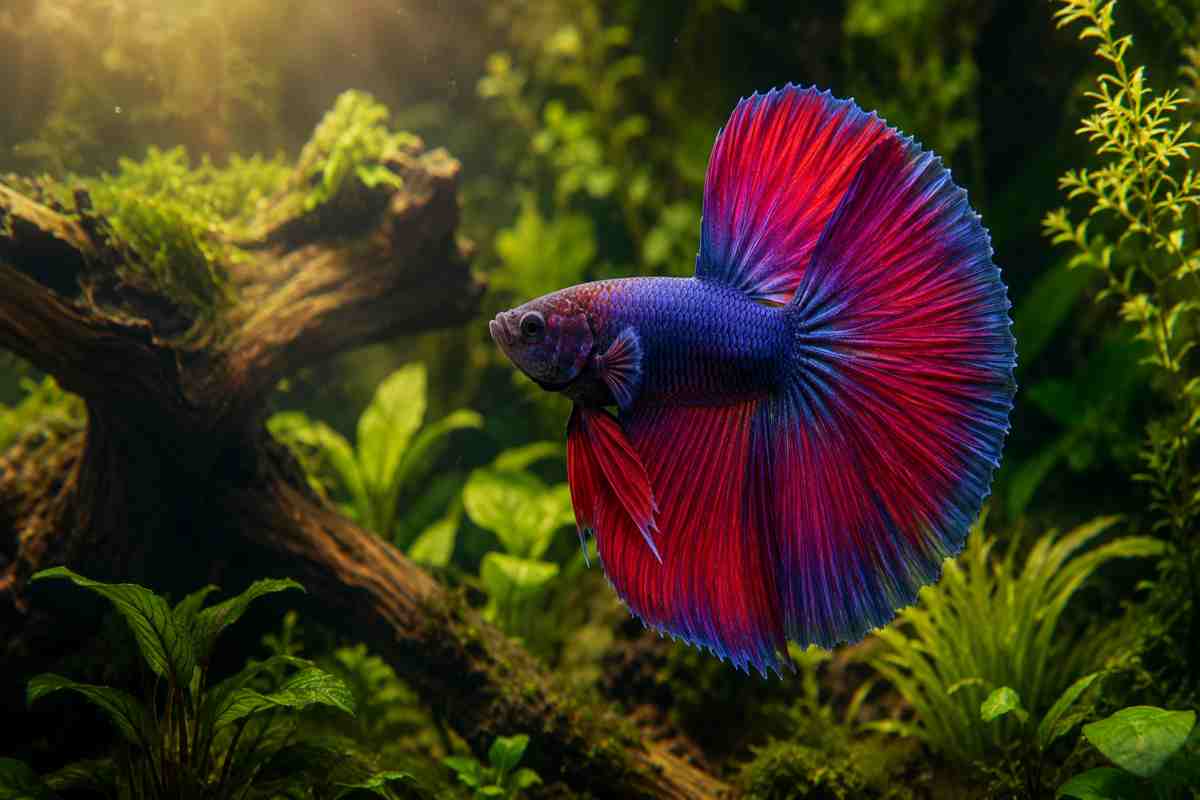
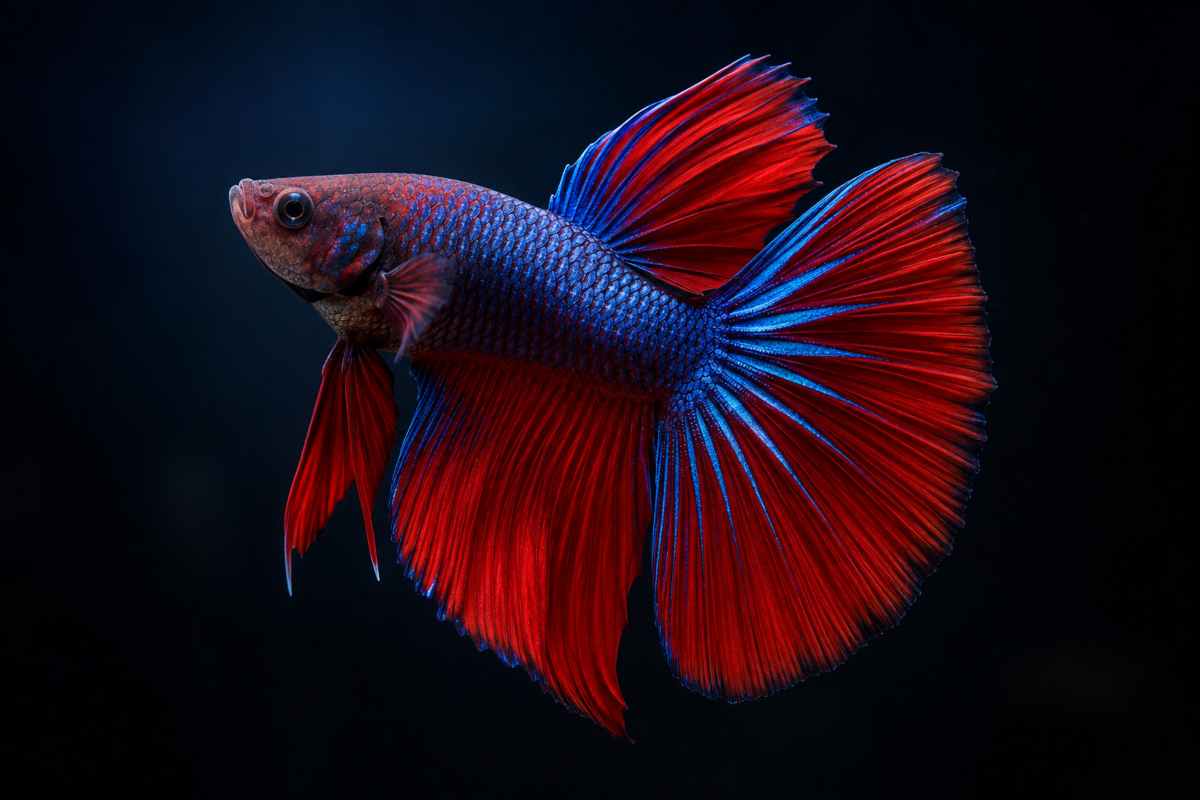
A Delta Tail Betta is a betta fish (Betta splendens) whose caudal fin spreads into a wide, triangular, fan-like shape with fairly straight edges. Unlike a Halfmoon Betta, it does not reach a full 180-degree spread. Its tail typically opens somewhere between 120 and 160 degrees, forming a “D” or delta-letter silhouette when viewed from the side or behind.
This tail shape is a genetic trait, not a separate species. Any colour or pattern of betta can carry the Delta tail form, which is part of why the variety is so common and so varied in appearance.
Quick Facts
| Trait | Detail |
|---|---|
| Tail spread | 120–160° |
| Adult size | 2.5–3 inches |
| Lifespan | 3–5 years (up to 6 with good care) |
| Minimum tank size | 5 gallons |
| Water temperature | 76–82°F (24–28°C) |
| Temperament | Territorial, best kept alone |
| Typical price | $8–$25 |
| Beginner friendly | Yes |
How to Identify a Delta Tail Betta by Its Fin Shape
Three details separate a true Delta Tail from its close relatives:
- Spread angle: roughly 120 to 160 degrees when fully flared. A Halfmoon reaches 180 degrees or slightly more, while a Veiltail droops downward and never holds a rigid spread at all.
- Edge shape: the top and bottom edges of the tail are straight or only slightly curved, giving the fin a clean triangular outline rather than a rounded or ragged one.
- Fin rigidity: when flared, a Delta tail holds its shape with visible tension in the fin rays, instead of folding or drooping the way a softer-finned variety would.
Dorsal and anal fins are usually large and match the tail’s angular style. Body shape is identical across tail types, so the difference is entirely in fin genetics, not in size, colour, or behaviour.
Delta Tail vs Super Delta and Halfmoon Betta
“Super Delta” is not a separate variety. It is a quality grade that sits between standard Delta and Halfmoon, used to describe bettas whose spread comes close to, but doesn’t quite reach, 180 degrees. The line between the two is judged by eye rather than measured precisely, and sellers often label fish inconsistently, so it’s worth treating “Super Delta” as a spectrum rather than a fixed category. These fish also tend to cost more, since achieving a wider, more symmetrical spread takes more selective breeding.
The comparison that matters most to buyers is Delta Tail versus true Halfmoon, since the two are often confused on pet store labels.
| Feature | Delta Tail Betta | Halfmoon Betta |
|---|---|---|
| Tail spread | 120 to 160 degrees | 180 degrees, a full half circle |
| Tail edges | Straight, slightly less uniform | Perfectly straight and symmetrical |
| Fin durability | Sturdier, less prone to tearing | Large fins tear more easily |
| Breeding predictability | Forgiving for beginners | Needs careful line breeding to hold 180 degrees |
| Typical price | $8 to $25 | $20 to $60 or more for show quality |
| Best suited for | Beginners and community-style keeping | Experienced keepers, showing, breeding projects |
Neither tail type changes the fish’s core care needs. Water quality, temperature, and diet requirements are identical across tail forms. The difference is cosmetic and genetic, not biological.
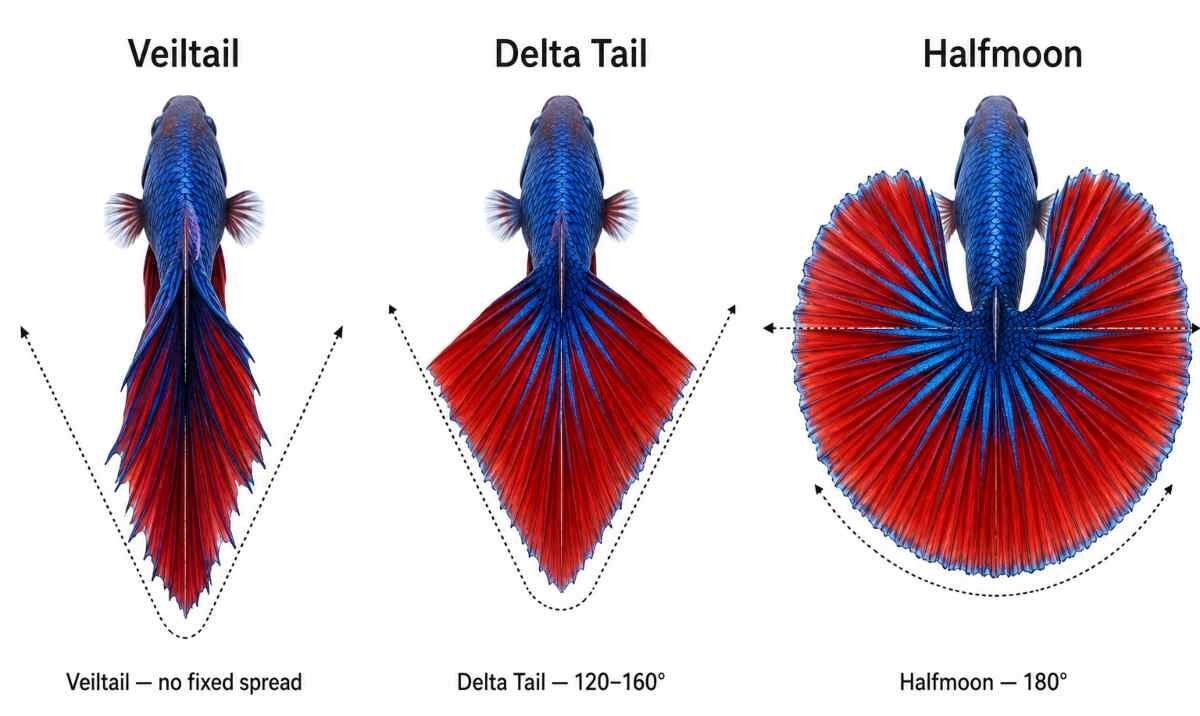
- Veiltail, Delta Tail, and Halfmoon betta tails compared side by side by spread angle.
Delta Tail Betta Care Requirements
Tank Size and Setup
A single Delta Tail Betta needs a minimum of 5 gallons, though 10 gallons gives more stable water parameters and room for enrichment. Larger, flowing fins mean these bettas do best with gentle filtration, since a sponge filter or adjustable-flow filter avoids battering the tail against decor.
A good setup includes live or silk plants, since rough plastic plants can tear delicate fins, along with a soft substrate that won’t snag trailing fin edges. A tight-fitting lid is also worth adding, as bettas are capable jumpers, and a heater is non-negotiable, since bettas are tropical fish that cannot regulate their own body temperature. If your tank came without a listed capacity, our aquarium volume calculator will confirm the exact gallon count before you size a heater or filter for it.
Related: How to Set Up a Fish Tank for a Betta
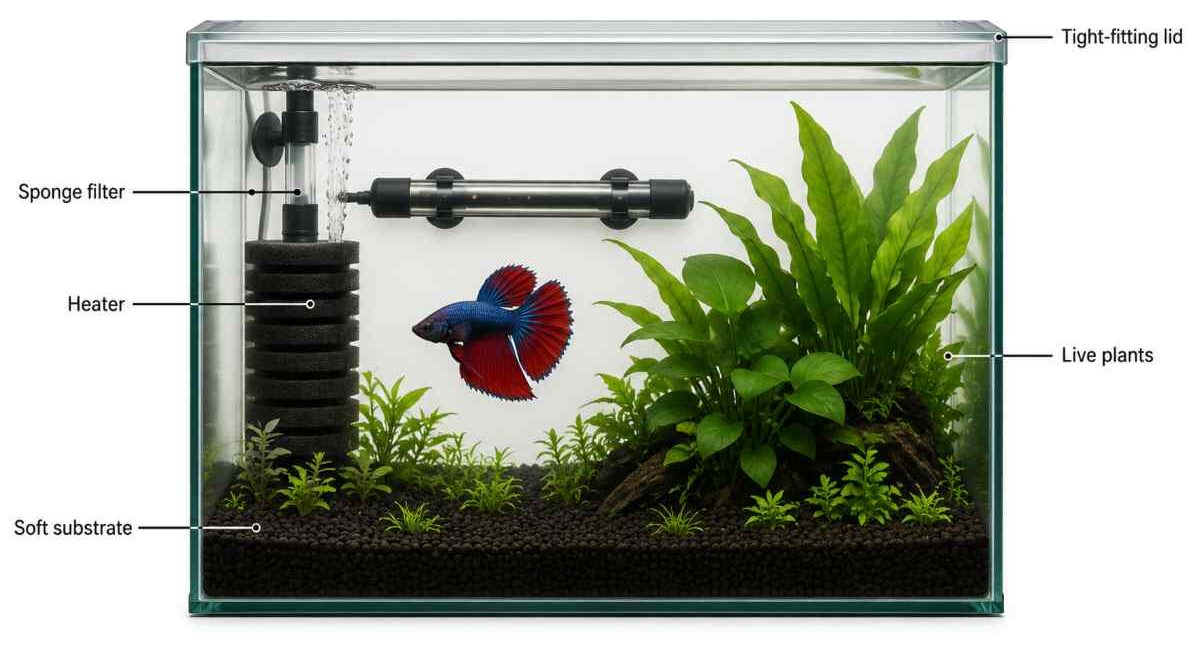 A properly equipped 10-gallon Delta Tail Betta tank with all essentials labeled.
Water Parameters, Size, and Lifespan
Stable water conditions matter more for fancy-finned bettas than for short-finned varieties, since sudden swings are a common and avoidable cause of stress and fin clamping.
| Parameter | Ideal Range |
|---|---|
| Temperature | 76 to 82°F (24 to 28°C) |
| pH | 6.5 to 7.5 |
| General hardness (GH) | 3 to 4 dGH |
| Ammonia and nitrite | 0 ppm |
| Nitrate | Under 20 ppm |
Weekly partial water changes of 25 to 30 per cent keep these parameters stable. Adult Delta Tail Bettas typically reach 2.5 to 3 inches in body length, with the tail adding significant visual size. With consistent water quality and a proper diet, average lifespan is 3 to 5 years, and some well-cared-for individuals reach 6 years.
Related: What Temperature Should Betta Fish Water Be
Temperament and Behaviour
Delta Tail Bettas share the same temperament as other betta varieties. Males are territorial, especially toward other bettas or fish with bright colours and flowing fins that resemble a rival. They are also intelligent and curious, often recognising their owners, responding to routine, and learning to follow a finger or take food from feeding tongs. Flaring at their own reflection is common and not a sign of distress.
Two male Delta Tail Bettas, or any two male bettas, should never be housed together. Females can sometimes be kept in a “sorority” of five or more in a large, heavily planted tank, but this requires careful monitoring and isn’t recommended for beginners.
Suitable Tank Mates
Because of their large fins and territorial nature, tank mates should be fast-moving, dull-colored to avoid triggering aggression, and free of any fin-nipping tendencies. In a tank of 10 gallons or more, good options include corydoras, catfish, nerite snails, and mystery snails, along with ember tetras or harlequin rasboras in larger, well-established setups.
Fish to avoid include other bettas, fin-nipping species like tiger barbs, and anything that requires drastically different water parameters than a betta can tolerate.
Feeding and Diet
Bettas are carnivores in the wild, feeding on small insects, larvae, and zooplankton. A high-quality betta-specific pellet should form the base of the diet, supplemented with frozen or live bloodworms, brine shrimp, and daphnia for variety and enrichment.
Feed 2 to 4 small pellets twice a day, and skip a feeding day once a week. This prevents constipation and bloating, a common issue in bettas with large, heavy fins that can struggle to swim if overfed.
Breeding Delta Tail Bettas
Breeding Delta Tail Bettas follows the same general process as breeding other betta varieties, with genetics determining whether offspring lean toward Delta, Super Delta, or Halfmoon spread. Start by conditioning both fish separately for one to two weeks with high-protein live or frozen food, then introduce the female to a breeding tank where the male has already started a bubble nest.
Allow spawning under supervision and remove the female immediately afterwards, since males can become aggressive once eggs are laid. The male guards the nest and fry alone for the first several days. Remove him once the fry are free-swimming, then raise them on infusoria before moving to baby brine shrimp as they grow.
Tail type is polygenic, meaning pairing two Delta Tails does not guarantee Delta Tail offspring. Some fry may show Halfmoon or Super Delta spreads depending on the parents’ genetic background.
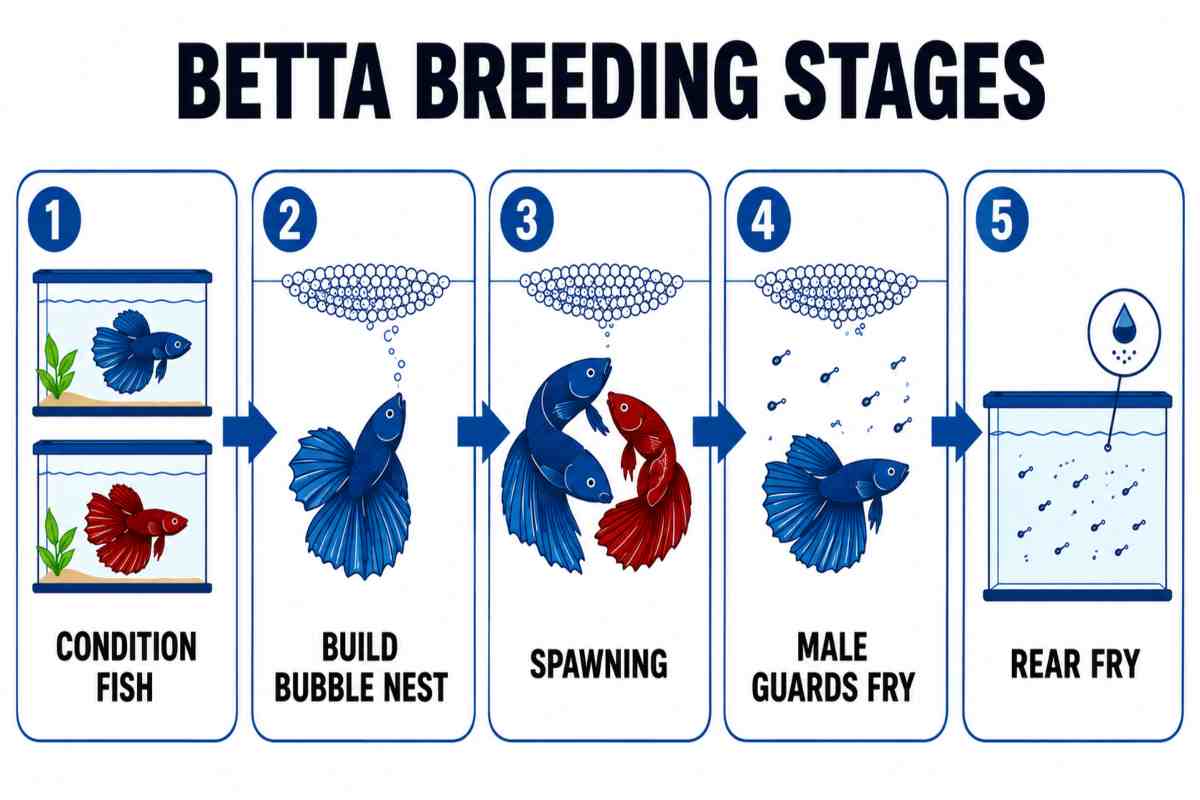 The five stages of betta breeding, from conditioning fish to rearing fry.
Common Diseases and Health Issues
Because Delta Tail Bettas carry more fin surface area than short-finned varieties, fin rot and fin biting are the two issues owners run into most often. The most common conditions to watch for include:
- Fin rot: ragged, discoloured, receding fin edges, usually caused by poor water quality or bacterial infection.
- Fin biting: clean-cut, ragged edges from the betta biting its own fins, typically driven by boredom or a stressful tank environment.
- Ich (white spot disease): small white spots across the body and fins, often triggered by stress or temperature swings.
- Swim bladder disorder: floating sideways or difficulty swimming upright, usually linked to overfeeding.
- Velvet: a fine gold or rust, dust-like coating on the skin, caused by a stress-related parasitic infection.
Consistent water changes and avoiding sharp or rough decor prevent the majority of these cases before they start.
Colours and Patterns
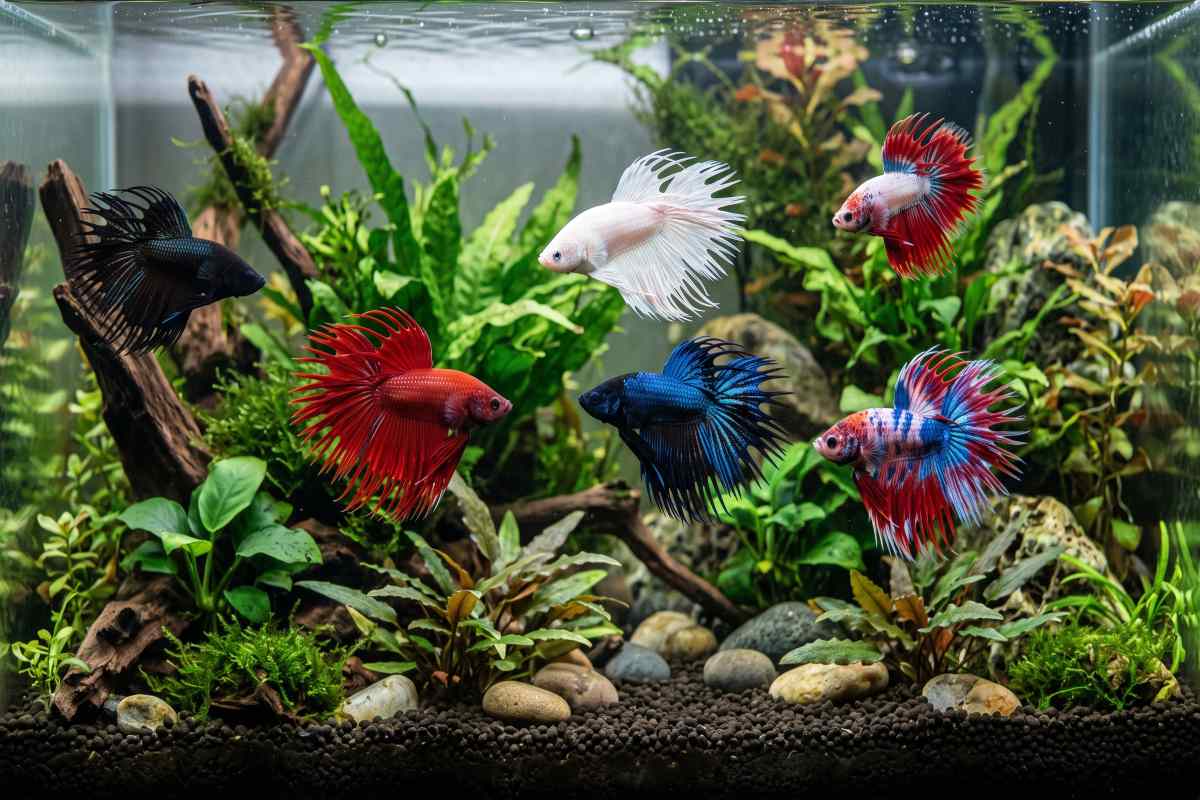
Delta Tail is a fin-shape trait, so it appears across the full range of betta colours and patterns, including solid colours like red, blue, black, white, and yellow, bi-colour combinations, marble patterns, butterfly patterns with bi-colour banded fin edges, koi-patterned fish, and metallic dragon-scale varieties. Colour and tail shape are inherited independently so that a Delta Tail Betta can display virtually any pattern seen in Halfmoon or Veiltail lines.
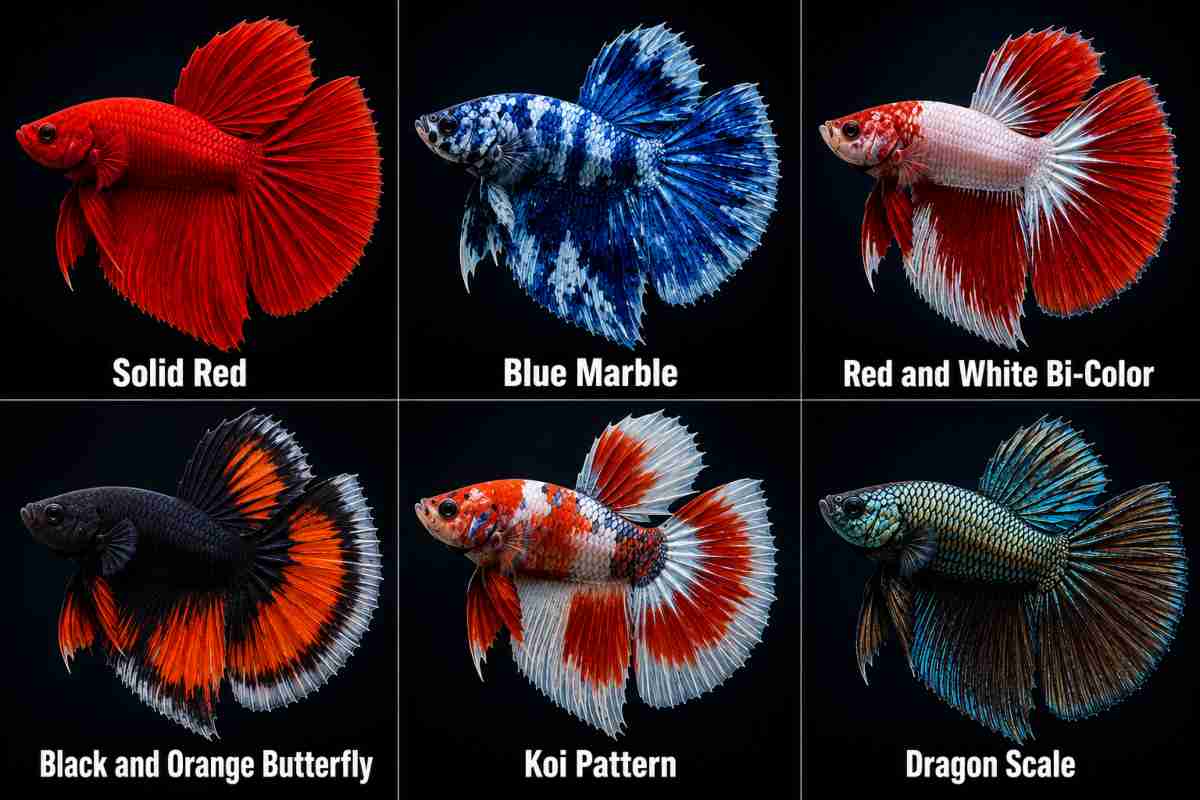 Six common Delta Tail Betta color and pattern varieties, side by side.
Price and Where to Buy
Delta Tail Bettas are among the more affordable fancy-tail varieties, typically priced between $8 and $25 depending on colour quality, fin symmetry, and source. Show-quality or breeder-selected individuals with a spread closer to Super Delta can run higher.
Local fish stores and big-box pet retailers commonly stock standard Delta Tails at the lower end of the price range. Speciality breeders, often found through betta-specific online marketplaces or aquarium society classifieds, offer higher-quality, health-guaranteed stock and are usually the better route for anyone planning to breed or show their fish.
For readers looking to buy online, Petco carries live male Delta Tail Bettas, making it a convenient option for beginners who want a straightforward, in-stock purchase.
Frequently Asked Questions
Is a Delta Tail Betta rare?
No. It’s one of the more common fancy-tail varieties and widely available at pet stores, making it a good entry point into fancy betta keeping.
Can a Delta Tail Betta’s tail become a Halfmoon over time?
No. Tail spread angle is fixed by genetics from maturity onward. It does not change or improve with age or care.
Do Delta Tail Bettas need a bigger tank than other bettas?
No. Tank size requirements are based on the fish’s overall care needs, not tail type. Five gallons minimum applies regardless of tail shape.
Are Delta Tail Bettas good for beginners?
Yes. Their care is identical to standard bettas, and their fins are somewhat sturdier than a full Halfmoon’s, making them a forgiving choice for first-time fancy betta owners.
The Fish Care covers freshwater species profiles like this one to help both new and experienced keepers choose and care for bettas with confidence.
References
- Merck Veterinary Manual, Overview of Ornamental Fish
- FishBase, Betta splendens species profile