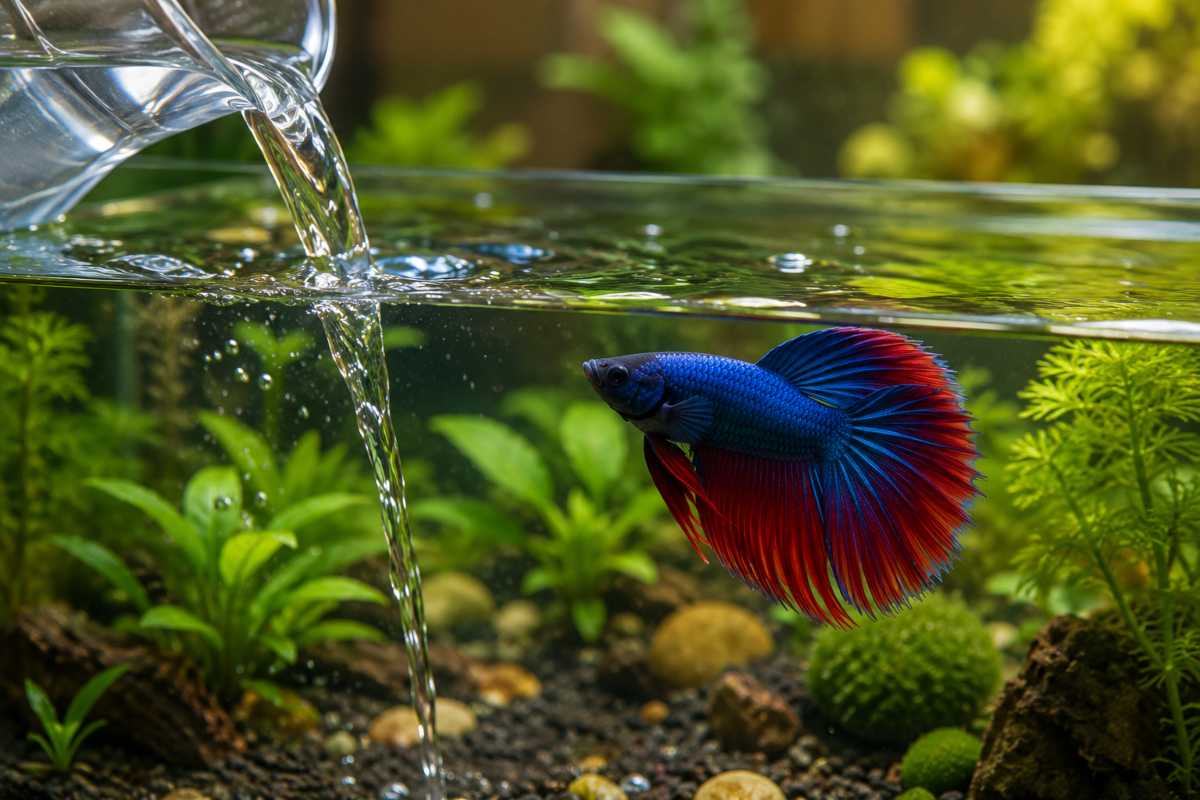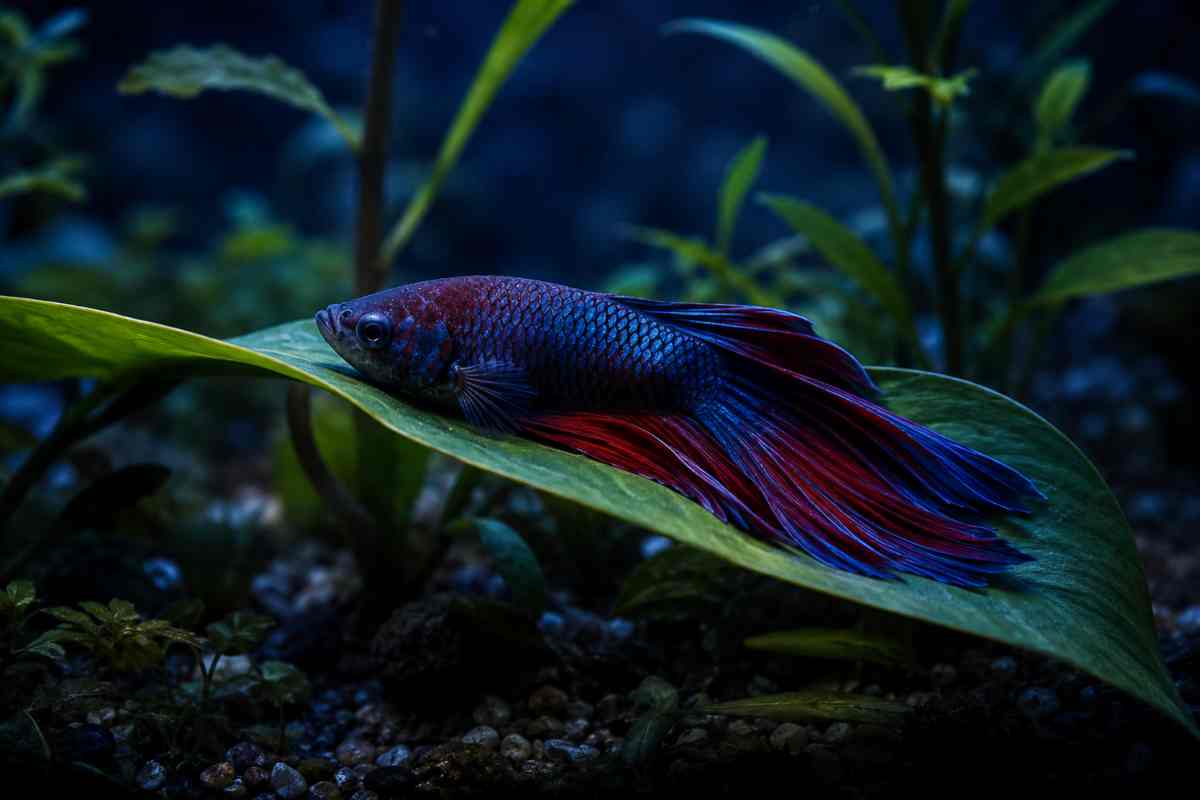
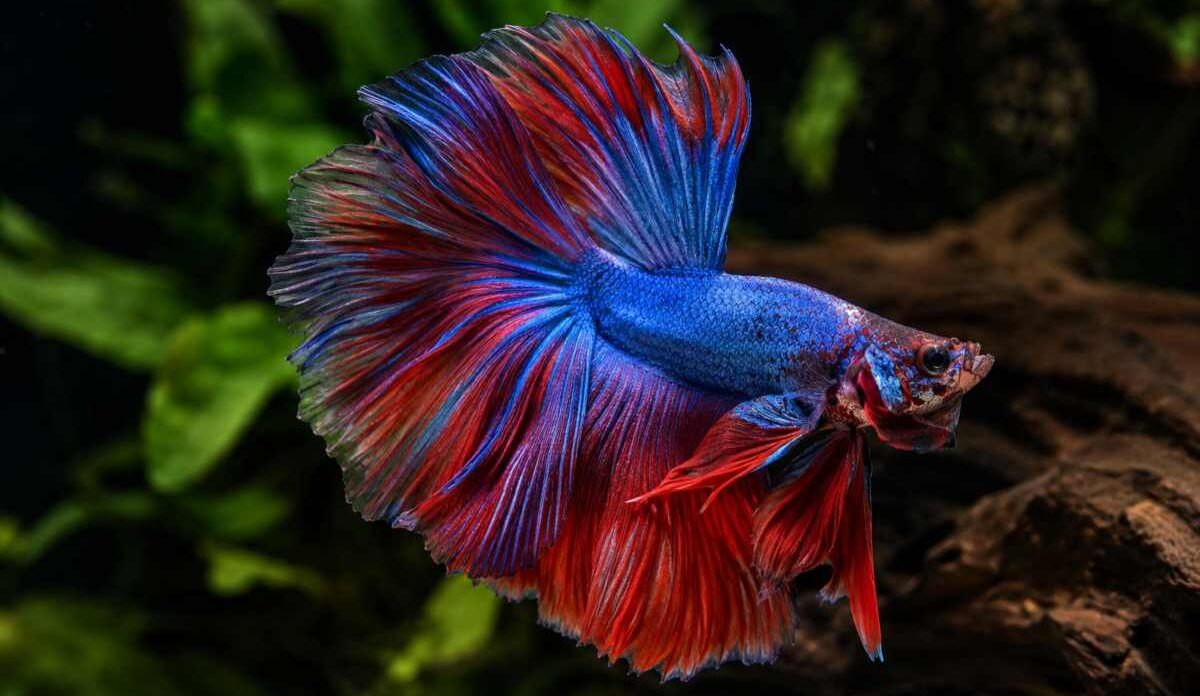
Normal betta behavior includes flaring at reflections or other fish, building bubble nests, resting on leaves or the substrate, exploring the tank, and swimming toward you at feeding time. Concerning behavior includes prolonged hiding, clamped fins, resting at the bottom without moving, gasping at the surface, or loss of appetite lasting more than two to three days. The difference usually comes down to context, duration, and whether other physical changes, such as color loss or fin damage, accompany the behavior.
Bettas are unusually expressive for a fish. Unlike a tetra or a cordyrophorus, a single betta in a well-kept tank develops habits, moods, and reactions that owners notice almost immediately. That expressiveness is exactly why behavior questions come up so often, and why it is worth understanding the biology behind what you are seeing rather than guessing.
Key Takeaways
- Normal betta behavior includes flaring, bubble nesting, resting on leaves, and swimming toward you at feeding time.
- Warning signs include prolonged hiding, clamped fins, surface gasping, or appetite loss lasting more than two to three days.
- Context matters more than any single behavior. Duration and accompanying physical changes help determine whether a behavior is normal or concerning.
- Bettas are naturally expressive, so learning your own fish’s baseline habits is more useful than comparing it with a generic behavior list.
What Counts As Normal Betta Fish Behavior?
Bettas (Betta splendens) are labyrinth fish, meaning they have a specialized organ that lets them breathe atmospheric air at the surface in addition to using their gills. This single trait explains a surprising amount of their behavior. Wild bettas evolved in shallow, oxygen-poor rice paddies and slow-moving water across Thailand, Cambodia, and Vietnam, so they are built to be independent, territorial, and comfortable near the surface.
A healthy betta typically:
- Swims actively through the middle and upper water column
- Investigates new decorations, plants, or objects
- Flares occasionally at its own reflection or a rival
- Rests on a leaf, log, or the substrate for short periods, especially at night
- Reacts to movement outside the tank, particularly around feeding time
- Builds bubble nests, more common in males
- Has steady, even coloration when calm and deeper, more saturated color when excited or displaying
None of these behaviors are cause for concern on their own. Problems usually show up as a change from a fish’s normal pattern, which is why knowing your own betta’s baseline matters more than comparing it to a generic checklist.
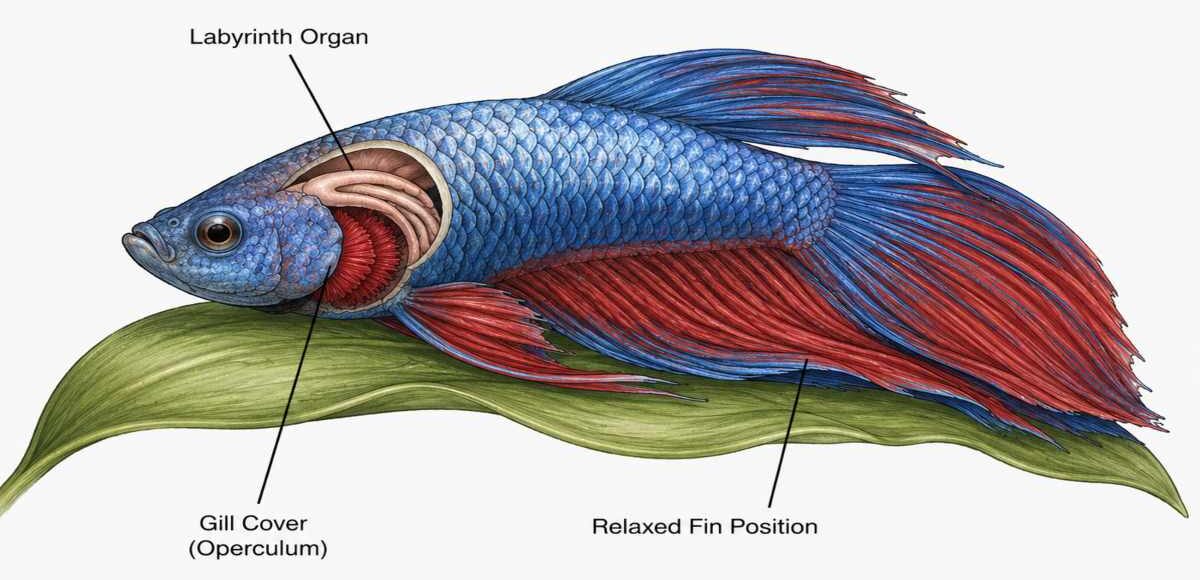 Betta anatomy behind resting behavior, labyrinth organ exposed.
How Do Betta Fish Communicate Through Body Language?
Bettas do not vocalize, so almost everything they communicate happens through fins, color, and posture. Learning to read these signals is the fastest way to understand what a betta is actually feeling.
| Signal | What It Usually Means | Context That Changes The Meaning |
|---|---|---|
| Full fin flare, extended gills | Territorial display, excitement, or perceived threat | Brief flaring at a mirror or another fish is normal; constant flaring for hours can indicate chronic stress |
| Darkened or intensified color | Arousal, whether from aggression, courtship, or excitement | Sudden color loss, rather than darkening, is more concerning than deepening |
| Clamped fins held tightly against the body | Stress, cold water, poor water quality, or illness | Fins clamped only right after a water change may just be a brief adjustment |
| Fast, erratic swimming or glass surfing | Stress, boredom, or a tank that feels too small | Occasional bursts of speed during play or feeding are normal |
| Sitting motionless at the bottom | Resting, or a sign of illness if prolonged | Short rest periods, especially at night, are normal; hours of stillness with clamped fins are not |
| Gasping at the surface | Normal labyrinth organ air-gulping, or a sign of poor water oxygenation if frequent | Occasional surface trips are normal; constant gasping suggests a water quality problem |
Reading betta behavior is rarely about one signal in isolation. A betta that flares once and then swims off normally is behaving typically. A betta that flares constantly, stops eating, and clamps its fins is showing a cluster of signs that warrant investigation.
Why Are Betta Fish Aggressive Toward Other Fish?
Betta splendens translates loosely to “splendid fighting fish.” That name reflects centuries of selective breeding in Southeast Asia, where male bettas were bred specifically for intense aggression during organized fights. That history shaped the temperament hobbyists see today.
In the wild, male bettas defend small territories around bubble nests and confront rivals that enter their space. In captivity, that same instinct triggers aggression toward:
- Other male bettas, almost always, regardless of tank size
- Fish with long, flowing fins or bright colors that resemble a rival betta
- Their own reflection, which they cannot distinguish from another fish
- Occasionally, female bettas outside of a supervised breeding introduction
Aggression is not misbehavior. It is a hardwired territorial response, which is why most experienced keepers house bettas alone or with carefully chosen, fast, dull-colored tankmates that do not resemble a rival. If you are deciding whether a male and female betta can share a tank, that decision depends heavily on tank size, hiding spots, and supervision rather than on general compatibility.
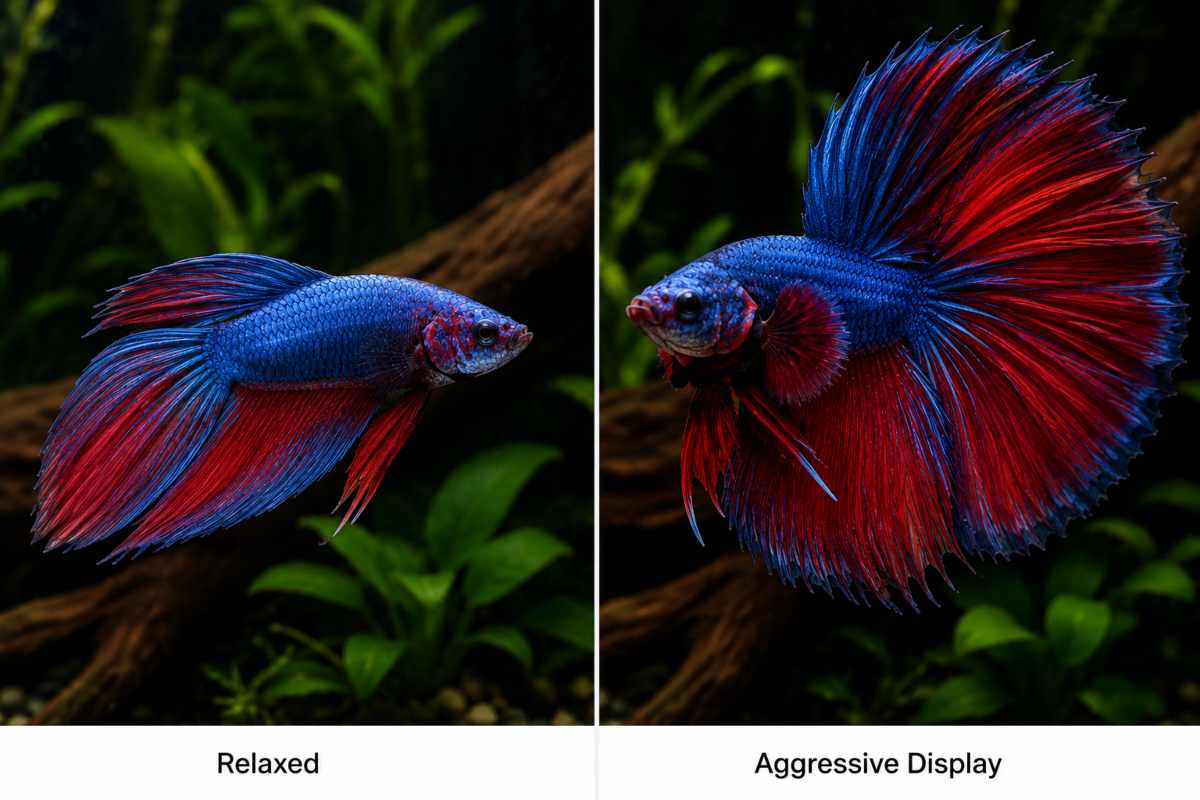 Relaxed betta versus full aggressive flare, side by side.
Do Betta Fish Recognize Their Owners?
Bettas often swim to the front of the tank when a familiar person approaches, follow fingers along the glass, and seem calmer around one household member than a stranger. This is real behavior, not imagination, but it is important to describe it accurately.
The strongest scientific evidence that fish can discriminate between individual human faces comes from a 2016 study published in Scientific Reports by researchers from the University of Queensland and the University of Oxford. The study found that archerfish could learn to distinguish a familiar human face from unfamiliar faces, achieving peak test accuracy of 77% to 89% even when color, brightness, and head shape were controlled for. Read the original Scientific Reports study.
However, the research was conducted on archerfish, not bettas, and no comparable controlled study has confirmed true individual human-face recognition in Betta splendens.
What betta behavior most likely reflects is associative learning. A betta connects a person’s silhouette, movement pattern, clothing color, and the timing of their approach with a positive outcome, usually food. Repeated over weeks, this builds a consistent, learnable response that looks a lot like recognition, even if it is not proven to work the same way human facial recognition does. Either way, the practical result is the same: bettas that are handled and fed consistently by one person often respond more actively to that person than to others.
What Does Normal Betta Fish Sleep Behavior Look Like?
Bettas do not have eyelids, so a resting betta looks different from a sleeping mammal. Instead, look for stillness combined with faded color and slowed breathing, usually during darkness or low-light periods.
Common resting positions include:
- Lying flat on a broad leaf near the surface
- Resting on the substrate, sometimes slightly tilted to one side.
- Wedging into a corner or plant thicket
- Occasionally floating near the surface in a way that can look alarming but is normal if the fish reacts quickly to movement or light.
A betta that cannot be roused, floats upside down, or sinks and struggles to right itself is showing signs that go beyond normal rest and usually point toward a swim bladder or health issue rather than sleep.
Why Is My Betta Fish Hiding, Lethargic, or Not Moving?
This is one of the most common behavior questions owners ask, and the cause is almost always one of a small number of factors.
A betta that suddenly hides or stops moving is most often responding to poor water quality, incorrect temperature, stress from tankmates, a recent tank change, or the early stages of illness. Check water parameters and temperature first, since they are the fastest to rule out.
Common causes, roughly ordered by likelihood:
- Water Temperature: Bettas are tropical fish and become sluggish and lethargic in water that is too cold, and stressed or overactive in water that is too warm.
- Water Quality: Ammonia, nitrite, or nitrate buildup causes stress-related hiding well before it causes visible illness.
- New Tank Changes: A new environment, new decorations, or a recent move can cause several days of cautious, hidden behavior while the fish adjusts.
- Tankmate Stress: Fin nippers or overly active tankmates can push a betta into constant hiding.
- Illness: Parasitic or bacterial issues frequently cause lethargy alongside other symptoms like clamped fins, color loss, or visible spots.
- Old Age: Bettas typically live two to four years, and older fish naturally slow down and rest more.
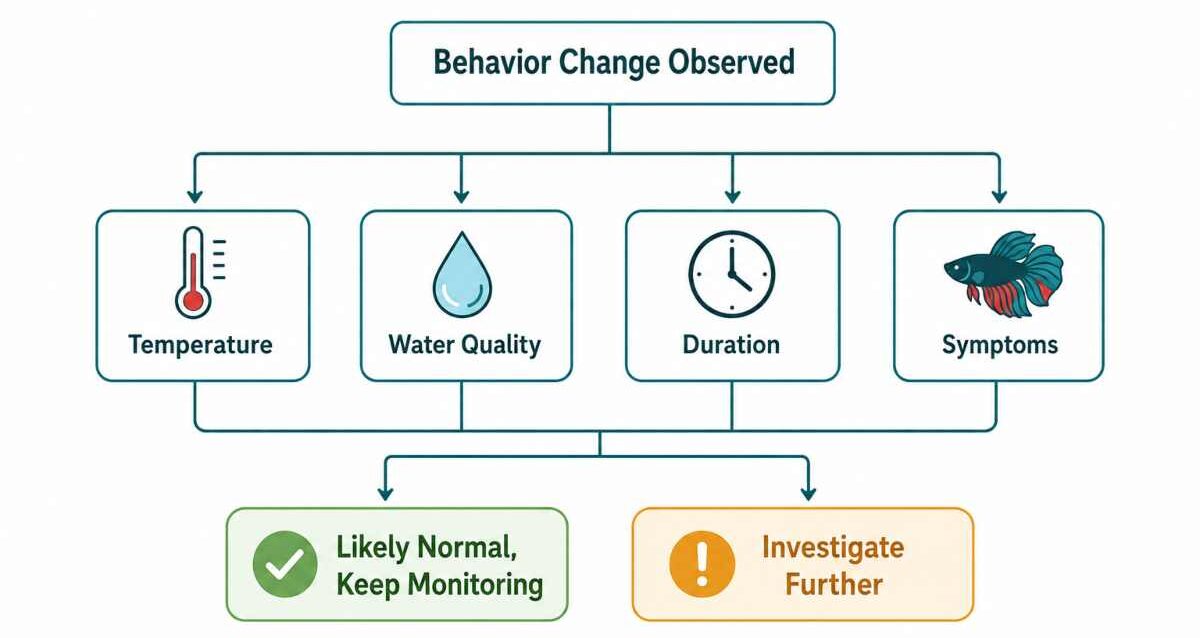 Decision flowchart to troubleshoot changes in betta behavior.
What Does Stressed Or Sick Betta Behavior Look Like?
Stress and illness often overlap in bettas, since prolonged stress weakens the immune system and makes disease more likely. Knowing the difference helps you respond appropriately instead of waiting too long.
| Behavior | More Likely Stress | More Likely Illness |
|---|---|---|
| Clamped fins | Yes, especially after water changes or new tankmates | Yes, especially if paired with other symptoms |
| Hiding | Yes, often temporary | Yes, if prolonged and combined with appetite loss |
| Loss of appetite | Yes, short-term (1 to 2 days) | Yes, if it lasts beyond 3 days |
| Color fading | Yes, temporary during stress | Yes, especially with white patches or fuzzy growth |
| Rubbing against decorations | Rare | Common, often a sign of parasites |
| Rapid gill movement | Occasionally, from temperature swings | Common with water quality issues or gill infection |
| Visible spots, fuzz, or lesions | No | Yes |
A betta showing only one item from the stress column and no physical symptoms usually recovers on its own within a few days once the underlying cause is fixed. A betta showing behaviors from the illness column, or several stress signs at once, is worth a closer look at symptoms and possible disease.
Why Do Betta Fish Build Bubble Nests?
Bubble nest building is one of the most misunderstood betta behaviors. Male bettas blow clusters of mucus-coated bubbles at the water’s surface, usually anchored under a leaf or in a tank corner, as part of their natural reproductive instinct.
A few key facts worth knowing:
- Nest Without a Mate: Bubble nests are built by males with or without a female present. A nest does not mean breeding is imminent or even planned.
- Sign of Contentment: Nest building is generally a sign of good health and stable water conditions, since stressed or unwell males rarely build them.
- Egg Protection: The nest holds fertilized eggs above the water’s surface after spawning, keeping them oxygenated until they hatch.
- Varies By Individual: Not every male builds nests regularly. Some do so often, others rarely, and this varies by individual and strain.
There is no need to remove a bubble nest. It causes no harm and will naturally break down and be rebuilt over time.
 A betta bubble nest built beneath a broad aquarium leaf.
How Does The Tank Environment Shape Betta Behavior?
Behavior is not just instinct. It is heavily shaped by the environment in which a betta lives. A cramped, bare, or poorly maintained tank can produce more stress-related behavior, even in an otherwise healthy fish. In contrast, a spacious, well-planted tank with stable water conditions tends to produce a calmer, more active, more curious fish.
Environmental factors that most strongly influence behavior include:
- Tank size: More swimming space reduces stress-driven pacing and glass surfing.
- Water temperature stability: Fluctuations trigger sluggishness or erratic activity.
- Hiding spots: Plants, caves, and decorations give a betta somewhere to retreat, which actually reduces overall hiding time because the fish feels secure enough to explore.
- Filtration and current: Bettas prefer gentle flow. Strong current causes fin fatigue and stressed swimming patterns.
- Lighting consistency: A steady day-and-night cycle supports normal rest behavior.
Setting up the tank correctly from the start prevents a large share of the stress-related behavior questions owners ask later.
What Common Betta Behavior Myths Should You Ignore?
A few persistent myths lead owners to misread completely normal behavior as a problem, or overlook a real one.
Myth: Bettas are fine in bowls because they’re used to small spaces
Wild bettas live in shallow but expansive rice paddies, pools, and ditches, not tiny enclosed volumes. Small, unfiltered bowls can create unstable water conditions and contribute to stress behavior.
Myth: A betta flaring at its reflection means it’s unhappy
Occasional flaring is a normal territorial reflex and does not automatically mean your betta is distressed. Constant, hours-long flaring is more concerning because it can indicate prolonged stimulation or stress.
Myth: Bettas float near the top because they’re dying
Resting near the surface is often normal for bettas because they can breathe atmospheric air using their labyrinth organ. Prolonged floating combined with difficulty swimming or maintaining position is more concerning.
Myth: Building a bubble nest means the tank needs a mate
Bubble nest building can occur with or without a female present. It is a natural reproductive behavior, not an invitation to introduce a mate impulsively, especially since bettas can become aggressive toward one another.
Signs Of A Genuinely Happy, Healthy Betta
Use this as a quick reference rather than a strict checklist. A betta does not need to show every item every day.
- Bright, even coloration for its variety
- Fins held open and relaxed most of the time
- Active swimming through open areas of the tank
- Responds to movement or feeding time
- Eats within a minute or two of food being offered
- Occasional flaring, exploring, or nest building
- Rests calmly at night without distress signs the next morning
Understanding The Fish In Front Of You
Most betta behavior questions come down to the same core idea: bettas are territorial, air-breathing, highly visual fish whose instincts were sharpened by both evolution and generations of selective breeding. Once you understand that context, flaring, nest-building, resting, and even the occasional bad mood stop looking mysterious and start looking like exactly what they are: a fish responding sensibly to its world.
At The Fish Care, the goal is always to help you tell the difference between a betta simply being a betta and a betta trying to tell you something is wrong. Watching for changes rather than isolated moments is the single most reliable way to do that.
Frequently Asked Questions
Is it normal for a betta to sit still for long periods?
Yes, in short bursts, especially at night or after eating. It becomes a concern only when paired with clamped fins, color loss, or refusal to eat.
Why does my betta attack the glass or its reflection?
It is reacting to what it perceives as a rival betta invading its territory. This is normal, but it can become stressful if it happens constantly; in that case, covering the sides of the tank during rest periods can help.
Can two bettas ever be housed together?
Two males should never share a tank. A male and female can sometimes coexist in a large, heavily planted tank under close supervision, but this carries real risk and is not recommended for beginners.
Why did my betta suddenly become aggressive after being calm for months?
Sudden aggression usually follows a change, such as a new tankmate, a new decoration resembling a rival, a decline in water quality, or maturity-related hormonal shifts in younger fish.
Does a betta get bored?
There is growing behavioral evidence that bettas benefit from environmental enrichment, such as rearranged decorations or feeding puzzles, and become more sedentary in bare, unstimulating tanks.
How long can a betta go without eating before it becomes a concern?
A healthy adult betta can safely fast for several days, but appetite loss lasting beyond two to three days, along with other behavioral changes, warrants further investigation.