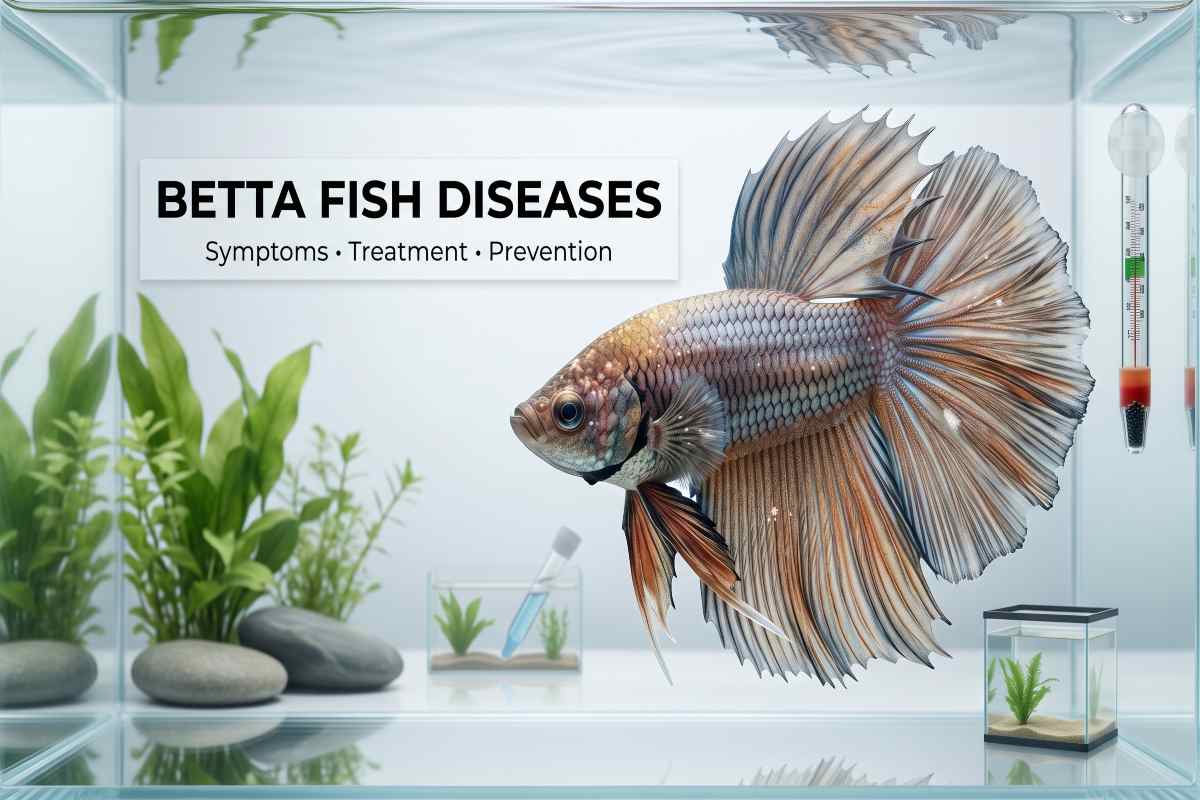
Most betta fish diseases fall into five categories: fin rot, ich (white spot disease), velvet, swim bladder disorder, and internal infections such as dropsy and columnaris. Nearly all of them trace back to poor water quality, temperature stress, or an unquarantined new tankmate. Catching symptoms early and correcting the water first gives a betta the best chance of full recovery.
Key Takeaways
- Poor water quality is a major cause of betta illness, so test ammonia, nitrite, and nitrate before starting medication.
- Clamped fins, fading color, and appetite loss can be early warning signs that your betta may be becoming sick.
- A 5 to 10 gallon quarantine tank helps treat sick fish safely while reducing the risk of spreading pathogens or medication to the main aquarium.
- Not every illness requires medication; many early problems improve with clean, warm, stable water and reduced stress.
- Advanced dropsy and severe swim bladder problems can have a poor prognosis, making early recognition and appropriate care especially important.
What Are the Most Common Betta Fish Diseases?
Betta fish are hardy in stable conditions but are prone to a fairly predictable set of illnesses because of their long fins, labyrinth organ, and tropical origin. The most frequently reported conditions are:
- Fin and tail rot – bacterial or fungal erosion of the fins
- Ich (white spot disease) – a parasitic infection
- Velvet disease – a parasitic infection that coats the skin in a gold dust
- Swim bladder disorder – a buoyancy problem, often digestive in origin
- Dropsy – a symptom of internal organ failure, usually bacterial
- Popeye – swelling behind the eye from infection or injury
- Columnaris (cotton wool disease) – a fast-moving bacterial infection
- Constipation and bloating – a common, often overlooked digestive issue
Each is covered in detail below, but the pattern across all of them is the same: stressed fish in poor water get sick, and healthy fish in clean, warm, stable water rarely do.
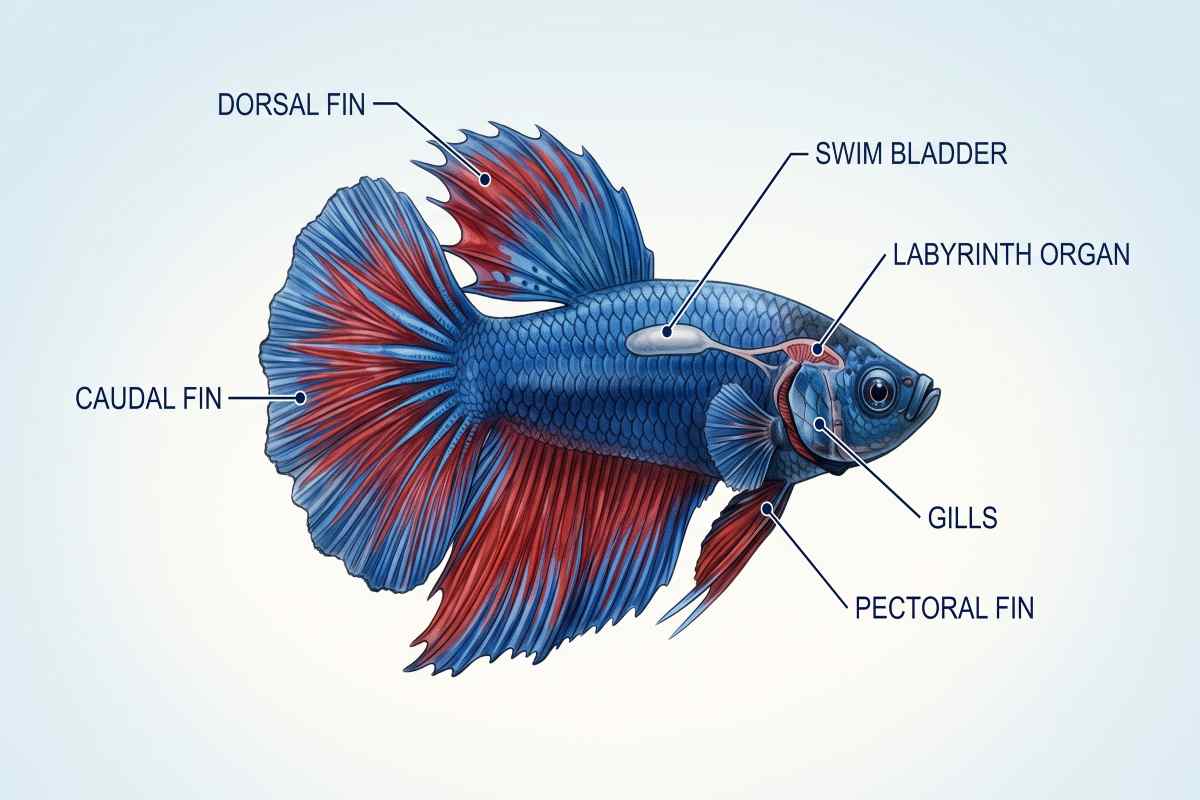 Betta fish anatomy: the key organs and fins referenced throughout this disease guide.
What Causes Betta Fish to Get Sick?
| Cause | How It Leads to Illness |
|---|---|
| Ammonia or nitrite spikes | Burns gills and skin, weakens immune response |
| Water temperature swings | Stresses the immune system, slows healing |
| Overcrowded or too-small tanks | Raises stress hormones and waste concentration |
| New fish or plants added without quarantine | Introduces parasites, bacteria, or fungus |
| Overfeeding | Fouls water and causes digestive blockages |
| Sharp or rough décor | Creates open wounds that become infected |
| Chronic stress (bullying, bright light, noise) | Suppresses the immune system over time |
Almost every disease on this page can be traced back to one or more of these triggers. This is why water testing comes before medication in nearly every treatment plan below.
How Do You Know If Your Betta Fish Is Sick?
Early signs are often behavioral before they become visible. Watch for:
- Clamped fins held close to the body
- Loss of appetite or spitting out food
- Faded or blotchy color
- Lethargy or hiding at the bottom
- Rapid gill movement or gasping at the surface
- Rubbing against decorations (flashing)
- Visible spots, fuzz, sores, or swelling
What Is Fin Rot and How Do You Treat It?
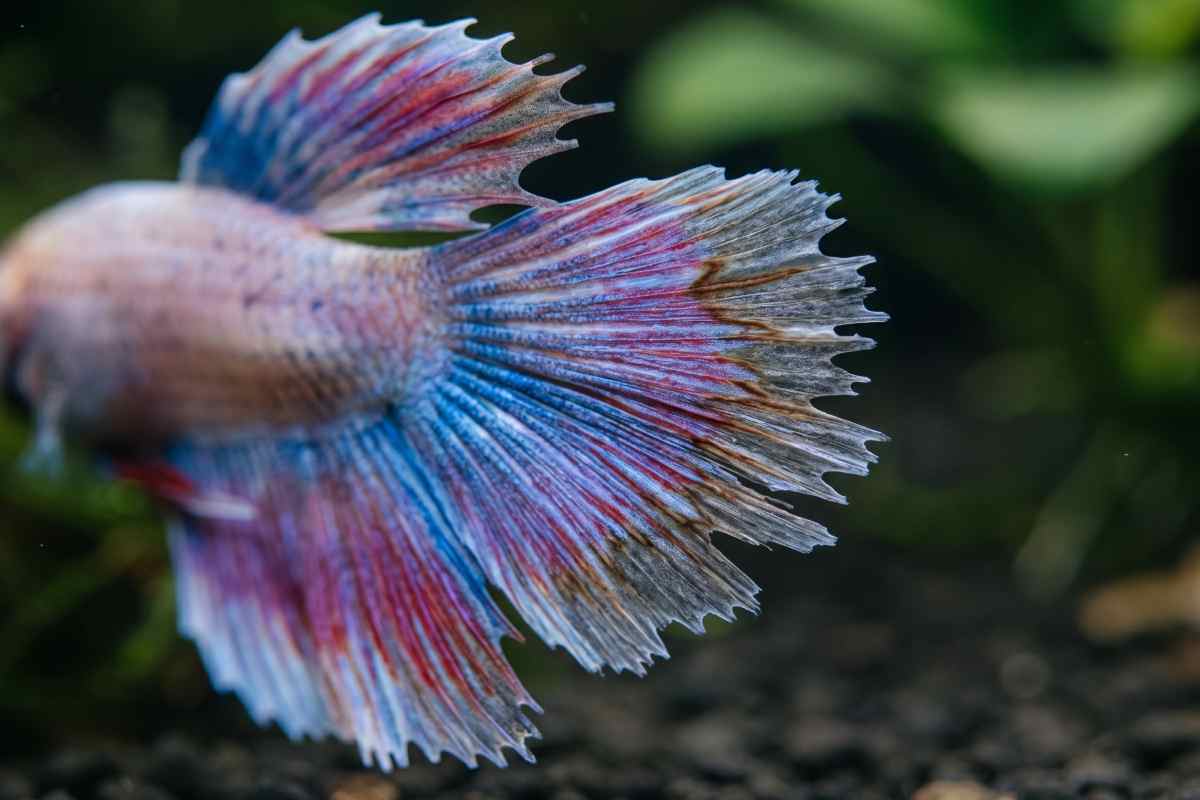 Close-up of fin rot damage on a betta fish’s fins
Fin rot is a bacterial and occasionally fungal infection that eats away at the fin edges, usually starting as a thin brown or black line along the fin tips. It is almost always secondary to poor water quality or a fin injury rather than a random illness that appears without cause. Long-finned bettas are especially prone to it, since their trailing fins pick up bacteria more easily than short-finned varieties. Left unchecked, the infection spreads from the fin margin toward the body, so catching it early makes recovery far more likely. For treatment details, see our fin rot guide.
Symptoms: ragged or shortened fin edges, a thin brown or black line along the fin margin, fraying, and, in advanced cases, fin loss down to the body.
Treatment:
- Test water parameters and correct ammonia or nitrite immediately.
- Perform a 25 to 50 percent water change and increase change frequency to every two to three days during treatment.
- Raise the temperature slightly to 78-80°F to support the immune system.
- For mild cases, clean water alone often stops progression within a week.
- For advanced or fast-spreading cases, use an antibacterial treatment containing ampicillin or a broad-spectrum antibacterial formulated for aquarium use.
Fins that have not been destroyed down to the body usually regrow over several weeks. A full treatment breakdown, including product options and week-by-week recovery expectations, is covered in the site’s dedicated fin rot guide.
What Is Ich (White Spot Disease) in Betta Fish?
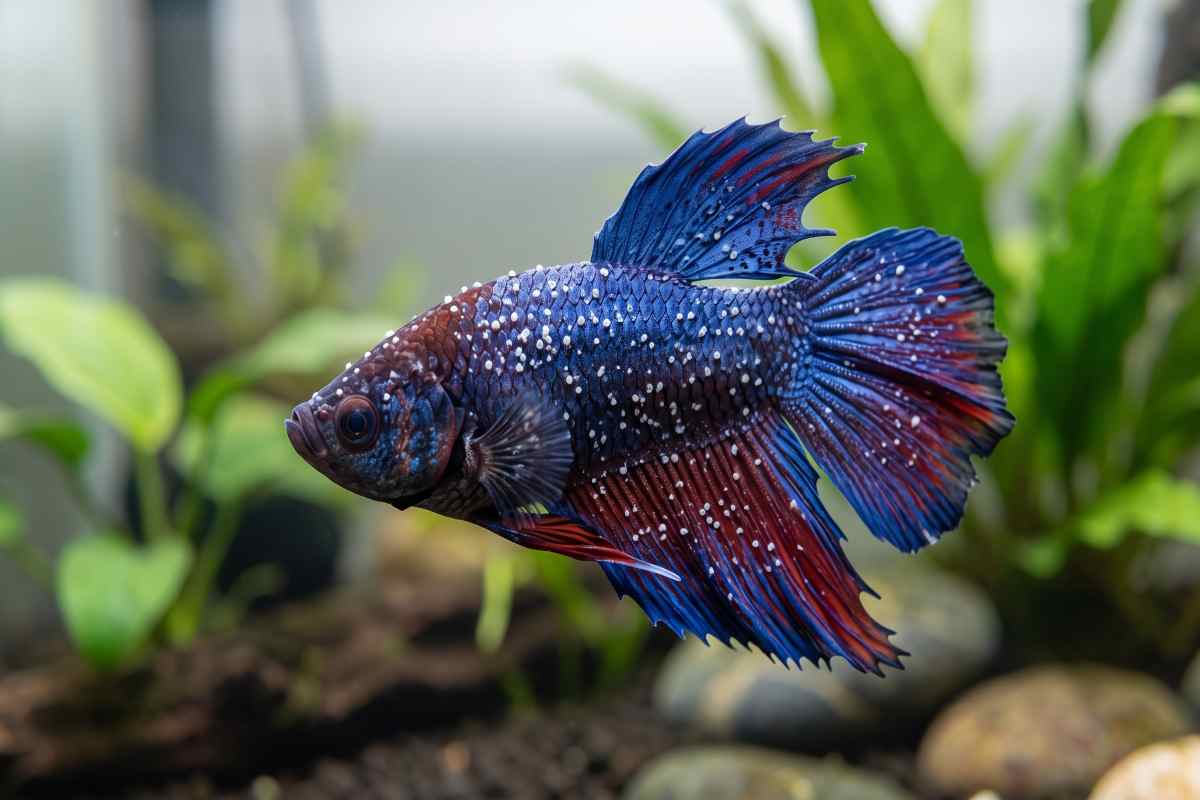 Betta fish showing white spots associated with ich
Ich is caused by the parasite Ichthyophthirius multifiliis, which embeds in the skin and gills before rupturing, releasing hundreds of free-swimming parasites into the water. It’s one of the most common freshwater fish diseases and spreads rapidly in a shared tank once a single parasite completes its cycle.
A sudden temperature drop or the stress of a recent move is often what lets a dormant infection take hold. Because it has a multi-stage life cycle, treatment has to continue well past the point when visible spots disappear. For a step-by-step treatment approach, see our How to Treat Ich in Betta Fish guide.
Symptoms: small white dots resembling grains of salt across the body and fins, flashing against décor, clamped fins, rapid breathing.
Treatment:
- Raise the tank temperature gradually to 82-86°F, which accelerates the parasite’s life cycle and makes it more vulnerable to treatment sooner.
- Add aquarium salt at the dosage recommended for the tank size, unless live plants are present, in which case use a copper-free or plant-safe ich medication instead.
- Continue treatment for a full 10 to 14 days even after spots disappear, since the parasite cycles through stages that are temporarily invisible.
- Maintain pristine water quality throughout treatment.
The site’s dedicated ich treatment guide covers exact salt dosing and medication timing for betta tanks in more depth.
What Is Velvet Disease in Betta Fish?
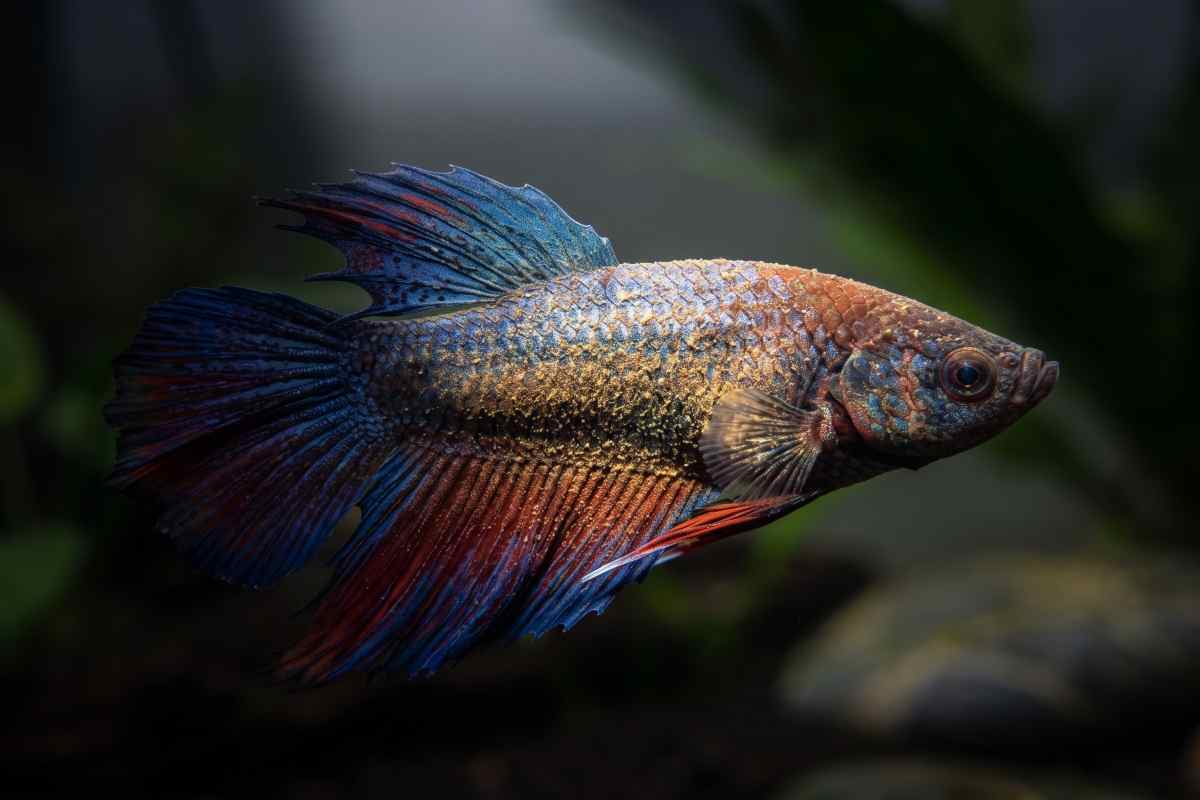 Betta fish showing gold dusting associated with velvet disease
Velvet is caused by the parasite Piscinoodinium, which gives infected fish a fine gold or rust-colored dusting, most visible under a flashlight in a darkened room. It attacks the skin and gills in a similar way to ich, but tends to progress faster and affect the respiratory system more severely. New fish and live plants are a common source, since the parasite can arrive dormant and activate once conditions favor it. Because the dusting is easy to miss under normal lighting, many cases aren’t caught until labored breathing appears.
Symptoms: gold or rust-colored dusting on the skin, clamped fins, lethargy, labored breathing, scratching against objects.
Treatment:
- Darken the tank, since the parasite relies on light for part of its life cycle.
- Raise the temperature slightly to 80°F.
- Treat with a copper-based medication or a formula specifically labeled for velvet, following dosing instructions exactly since bettas are sensitive to copper overdose.
- Continue treatment for at least 10 days to break the full parasite life cycle.
Velvet spreads quickly and is considered more dangerous than ich if left untreated, so early intervention matters more here than with most other conditions.
What Is Swim Bladder Disease in Betta Fish?
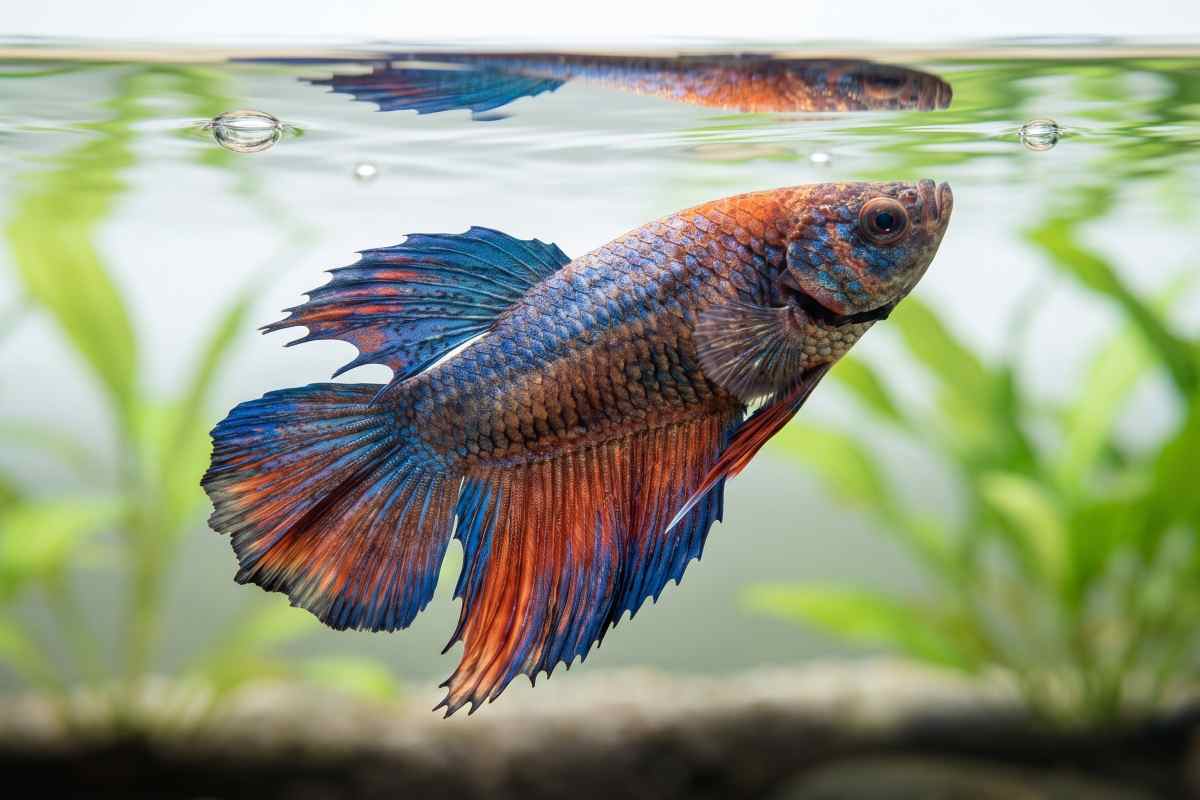 Betta fish showing abnormal buoyancy near the water surface
Swim bladder disorder is not a single disease but a symptom, most often caused by overfeeding, constipation, or a rapid temperature change affecting the organ that controls buoyancy. It’s one of the more alarming issues to witness, since a fish that suddenly can’t swim upright often looks far sicker than it actually is. In most cases, the underlying cause is mechanical or digestive rather than infectious, which is why fasting resolves most cases on its own. Persistent buoyancy problems after correcting diet and water intake, though, usually point to a deeper organ issue. For more details, see our swim bladder guide.
Symptoms: floating sideways or upside down, sinking to the bottom and struggling to rise, difficulty swimming in a straight line, a visibly bloated belly.
Treatment:
- Fast the fish for 24 to 48 hours to relieve digestive pressure.
- Offer a small piece of cooked, skinned pea to help clear a possible blockage.
- Keep water warm and clean to reduce additional stress on the fish.
- If bloating and buoyancy problems persist beyond a week, an underlying bacterial infection or organ issue may be responsible rather than diet.
Because this condition has multiple possible causes, the site’s swim bladder disease guide walks through the full decision process for identifying which one applies.
What Is Dropsy in Betta Fish?
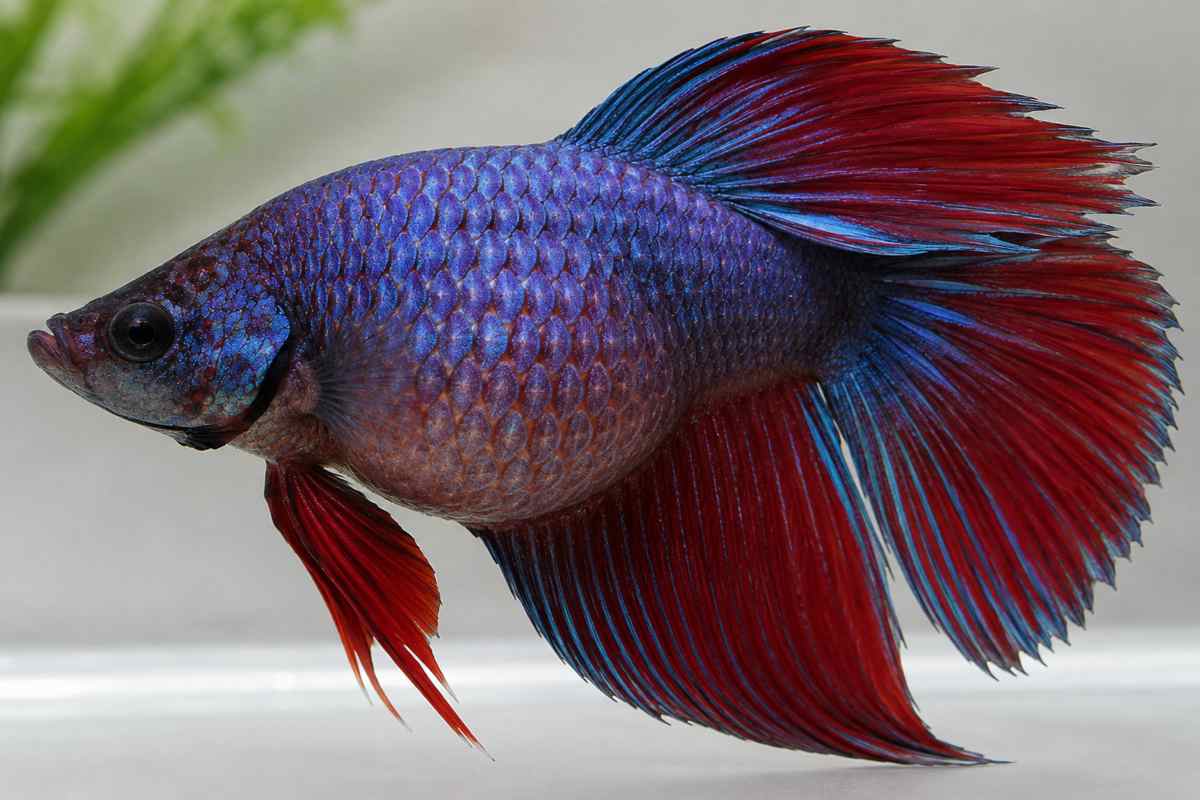 Betta fish showing signs of bloating and constipation
Dropsy is not a specific disease either. It is a visible symptom of severe internal organ failure, usually caused by a bacterial infection that leads to fluid buildup inside the body cavity. By the time the classic pinecone appearance shows up, the underlying infection has typically been progressing internally for some time already. It’s one of the more serious conditions on this list, and the outcome depends heavily on how early it’s caught relative to how far the infection has spread. For detailed information, see our dropsy in betta fish guide.
Symptoms: a swollen, bloated body, scales that stick outward in a pinecone pattern, lethargy, loss of appetite, pale gills.
Treatment:
- Move the fish to a quarantine tank with clean, warm water immediately.
- Add aquarium salt at a low therapeutic dose to help draw out excess fluid.
- Use a broad-spectrum antibacterial medication, since a systemic bacterial infection is the most common underlying cause.
- Understand that dropsy is frequently diagnosed at a late stage of illness. Even with prompt treatment, the survival rate is low once pineconing has developed, because it typically reflects kidney failure rather than an early-stage infection.
Because dropsy is often mistaken for simple bloating, the site’s dedicated dropsy article explains how to tell the two apart before starting treatment.
What Is Popeye Disease in Betta Fish?
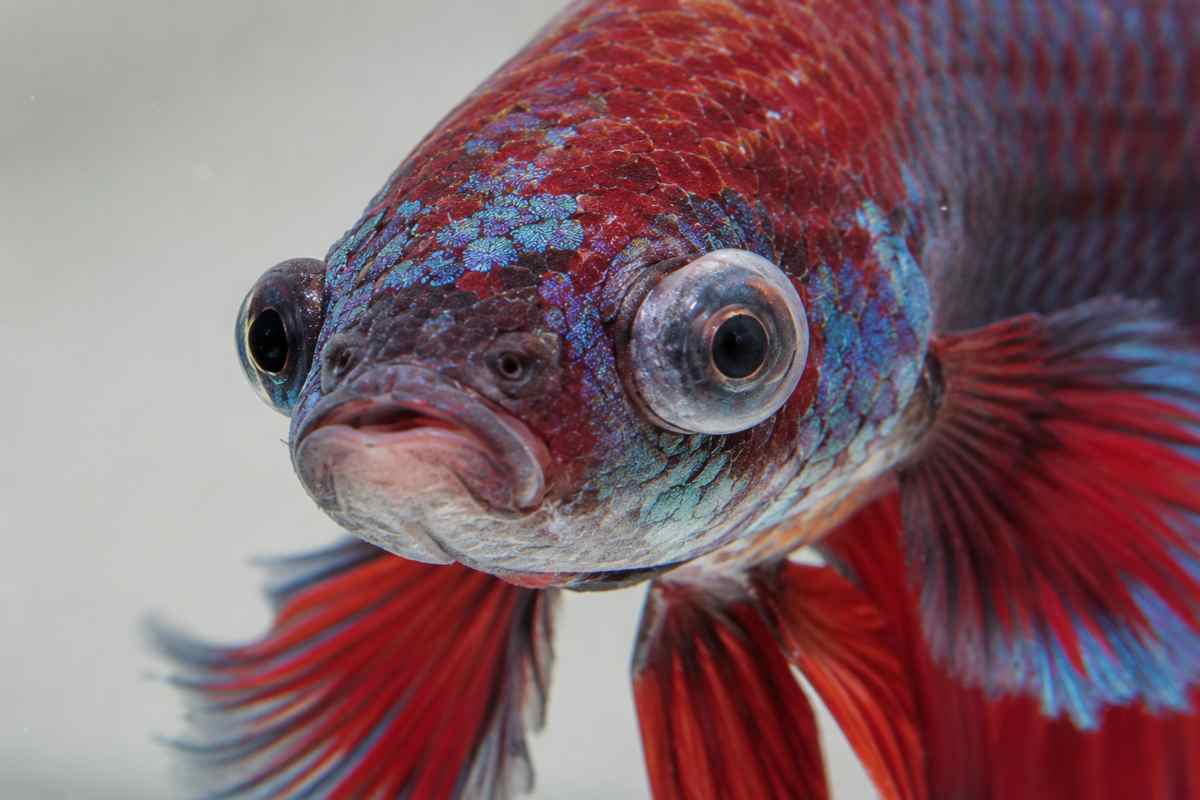 Betta fish showing signs of popeye disease
Popeye refers to swelling or bulging of one or both eyes, caused by fluid buildup behind the eye from bacterial infection, injury, or poor water quality. It can affect a single eye after a collision with décor or both eyes at once when the cause is systemic. Although it can look alarming, Popeye on its own is rarely life-threatening if it’s addressed early. Bettas with naturally protruding eyes can make the condition harder to spot, so comparing against the fish’s normal appearance helps.
Symptoms: one or both eyes appear swollen or protruding, cloudiness in the eye, occasional redness at the base of the eye.
Treatment:
- Test and correct water parameters, since ammonia exposure is a common trigger.
- Perform frequent water changes and add aquarium salt at a low dose.
- If only one eye is affected, an injury from décor is more likely than infection and may resolve with clean water alone.
- If both eyes are affected or swelling worsens, treat with a broad-spectrum antibacterial medication, as this pattern often indicates a systemic infection.
What Are Columnaris and Fungal Infections in Betta Fish?
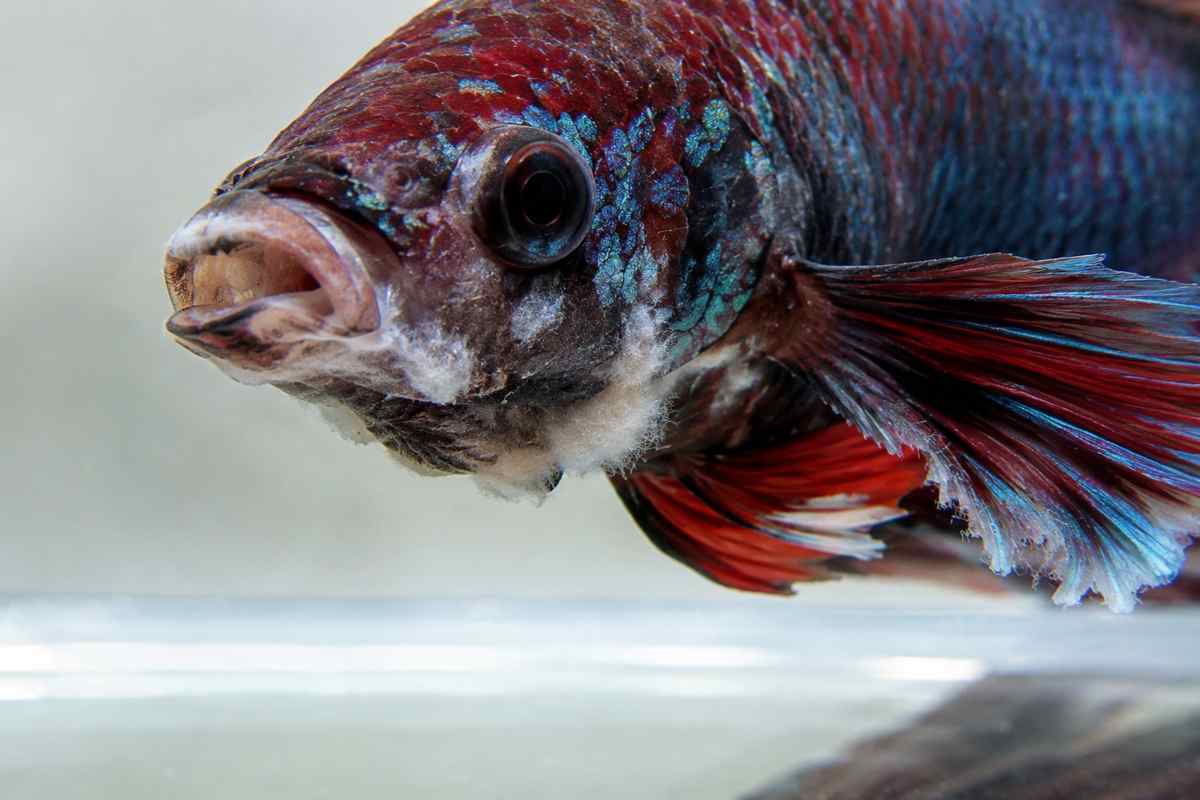 Betta fish showing cottony patches associated with columnaris infection
Columnaris, sometimes called cotton wool disease, is a fast-moving bacterial infection often mistaken for fungus because of its white, cottony appearance. It’s caused by the bacterium Flavobacterium columnare, which thrives in warm, poor-quality water and can enter through even minor skin damage. Unlike most conditions on this list, columnaris can kill a betta within days rather than weeks, which makes prompt identification critical. It also spreads easily to tankmates, so isolating an affected fish should happen right away.
Symptoms: white or gray patches resembling cotton on the mouth, fins, or body, frayed fins, rapid onset, ulcers in advanced stages.
Treatment:
- Isolate the fish immediately, since columnaris spreads quickly to tankmates.
- Treat with an antibacterial medication effective against gram-negative bacteria, since general fungus treatments are not effective against it.
- Improve water quality and reduce stress, as columnaris often takes hold in fish that are already immunocompromised.
- Act quickly. Columnaris can progress from first symptoms to fatal within 24 to 72 hours in severe cases, making it one of the more urgent conditions on this list.
What Is Betta Fish Constipation and Bloating?
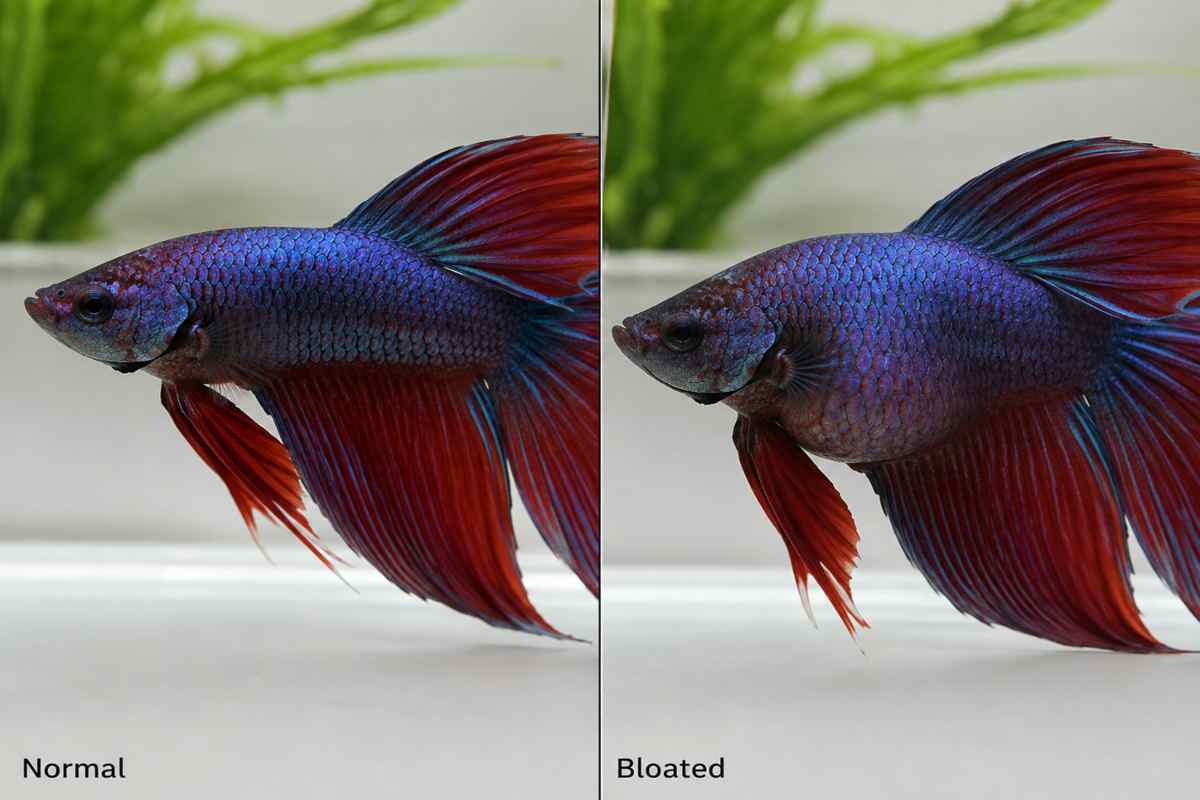 Normal and bloated belly shapes in betta fish
Constipation is common in bettas due to their small digestive tract and is frequently confused with more serious conditions like dropsy or swim bladder disorder. It typically develops after a period of overfeeding or from a diet too heavy in dry pellets without enough fiber. Unlike dropsy, the scales stay flat and smooth rather than protruding outward, which is the easiest way to tell the two apart. Most cases clear up within a couple of days once feeding is adjusted.
Symptoms: visibly bloated belly, stringy or absent waste, lethargy, loss of interest in food after initial bloating.
Treatment:
- Fast the fish for 24 to 48 hours.
- Offer a small piece of cooked, deshelled pea.
- Keep water temperature in the stable 76 to 80°F range to support digestion.
- Avoid overfeeding going forward, since this is the most common recurring cause.
Quick Reference: Betta Fish Disease Comparison
| Disease | Key Symptom | Primary Cause | First Step |
|---|---|---|---|
| Fin rot | Ragged, shortening fins | Poor water quality, injury | Water change and parameter check |
| Ich | White salt-grain spots | Parasite, temperature stress | Raise heat, treat 10 to 14 days |
| Velvet | Gold or rust dusting | Parasite | Darken tank, copper-safe treatment |
| Swim bladder disorder | Floating or sinking abnormally | Overfeeding, constipation | Fast 24 to 48 hours |
| Dropsy | Pinecone scales, bloating | Internal bacterial infection | Quarantine, salt, antibacterial |
| Popeye | Swollen eye | Injury or infection | Water change, isolate if bilateral |
| Columnaris | Cottony white patches | Fast-spreading bacteria | Immediate isolation and treatment |
| Constipation | Bloated belly, no waste | Overfeeding | Fast, then offer pea |
How Do You Treat Betta Fish Diseases at Home?
Most home treatment plans follow the same general sequence regardless of the specific disease:
- Isolate the fish in a heated, filtered quarantine tank of 5 to 10 gallons if tankmates are present.
- Test the water for ammonia, nitrite, nitrate, and pH before doing anything else.
- Correct the environment first by making water changes, adjusting temperature, and reducing stress.
- Identify the specific disease using visible symptoms rather than guessing or treating for everything at once.
- Medicate precisely, following dosage instructions exactly, since bettas are sensitive to overdosing, particularly with copper and salt.
- Monitor daily for improvement or worsening, and adjust the plan if there is no change within the expected recovery window.
What Medications Are Safe for Betta Fish?
| Medication Type | Used For | Notes |
|---|---|---|
| Aquarium salt | Ich, dropsy, popeye, general stress | Use at low therapeutic dose, avoid with scaleless or sensitive species in a shared tank |
| Antibacterial (broad-spectrum) | Fin rot, dropsy, popeye, columnaris | Follow full course even if symptoms improve early |
| Antiparasitic (ich-specific) | Ich | Combine with gradual heat increase |
| Copper-based medication | Velvet | Dose carefully, remove carbon filtration during treatment, unsafe for invertebrates |
| Antifungal | True fungal infections (less common than bacterial look-alikes) | Confirm it is fungal, not columnaris, before use |
Always remove activated carbon from the filter before medicating, since carbon will absorb most treatments and reduce their effectiveness.
How Can You Prevent Betta Fish Diseases?
Prevention accounts for far more disease control than treatment ever will. The core habits that prevent the majority of the conditions above are:
- Test water weekly and perform partial water changes on a consistent schedule.
- Keep temperature stable, ideally in the 76 to 80°F range.
- Quarantine new fish and live plants for two weeks before adding them to an established tank.
- Avoid overfeeding, offering only what a betta can finish in about two minutes.
- Choose smooth, fin-safe décor to prevent tears that can lead to infection.
- Avoid sudden parameter swings during water changes.
Water quality specifically deserves attention on its own, since it underlies nearly every disease covered here. A closer look at what type of water bettas actually need helps prevent most of these issues before they start.
When Should You See a Vet or Consider Euthanasia?
Most betta illnesses can be managed at home, but a small number of situations call for outside help or a harder decision:
- An aquatic veterinarian can be consulted for persistent or unclear cases, though availability for fish specifically varies by region.
- If a fish shows no improvement after a full, correctly dosed treatment course, the underlying cause may not match the diagnosis.
- In cases of advanced dropsy, severe columnaris, or total loss of mobility and responsiveness with no realistic path to recovery, humane euthanasia using a veterinarian-approved method, such as clove oil overdose following an established protocol, may be the most compassionate option rather than prolonging suffering.
This is a difficult call, and it is only relevant in genuinely advanced, unresponsive cases rather than early or moderate illness.
Frequently Asked Questions
Can betta fish diseases spread to other fish?
Yes, most infectious diseases covered here, including ich, velvet, and columnaris, can spread to tankmates, which is why quarantine is standard practice for sick or new fish.
Can betta fish recover from disease without medication?
Many early-stage conditions, particularly mild fin rot and constipation, resolve with clean, warm, stable water alone. More advanced or parasitic conditions generally need targeted treatment.
How long does it take for a betta fish to recover from illness?
This depends on the condition. Fin rot regrowth can take several weeks, ich clears in 10 to 14 days of treatment, and digestive issues often resolve within a couple of days.
Is aquarium salt safe for all betta fish diseases?
Salt helps with several conditions but is not a universal cure and should be dosed carefully, as bettas can be sensitive to prolonged exposure to high salt levels.
Why does my betta keep getting sick even with clean water?
Recurring illness despite good water quality usually points to chronic stress, an unquarantined new addition, a compromised immune system from a previous illness, or an unaddressed parameter issue, such as unstable pH or hidden ammonia sources like overfeeding.
References
- Merck Veterinary Manual, Ornamental Fish section: https://www.merckvetmanual.com
- World Organisation for Animal Health (WOAH): https://www.woah.org