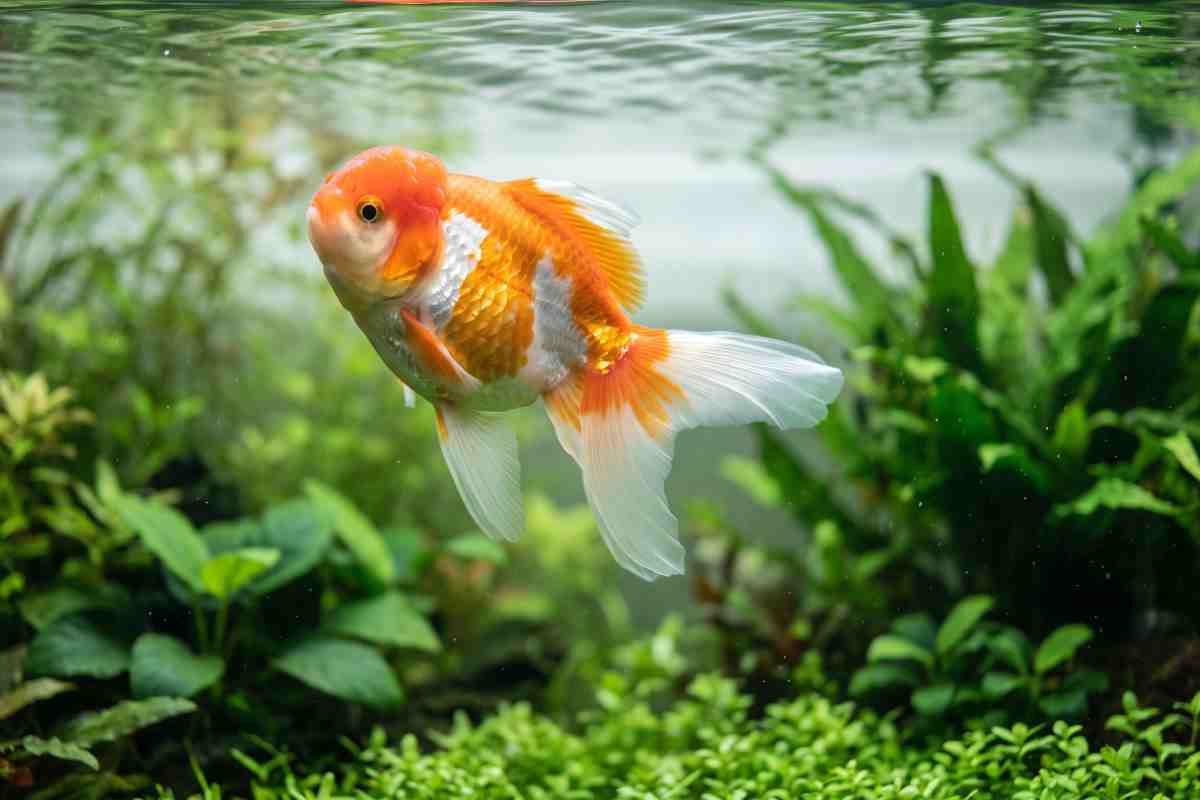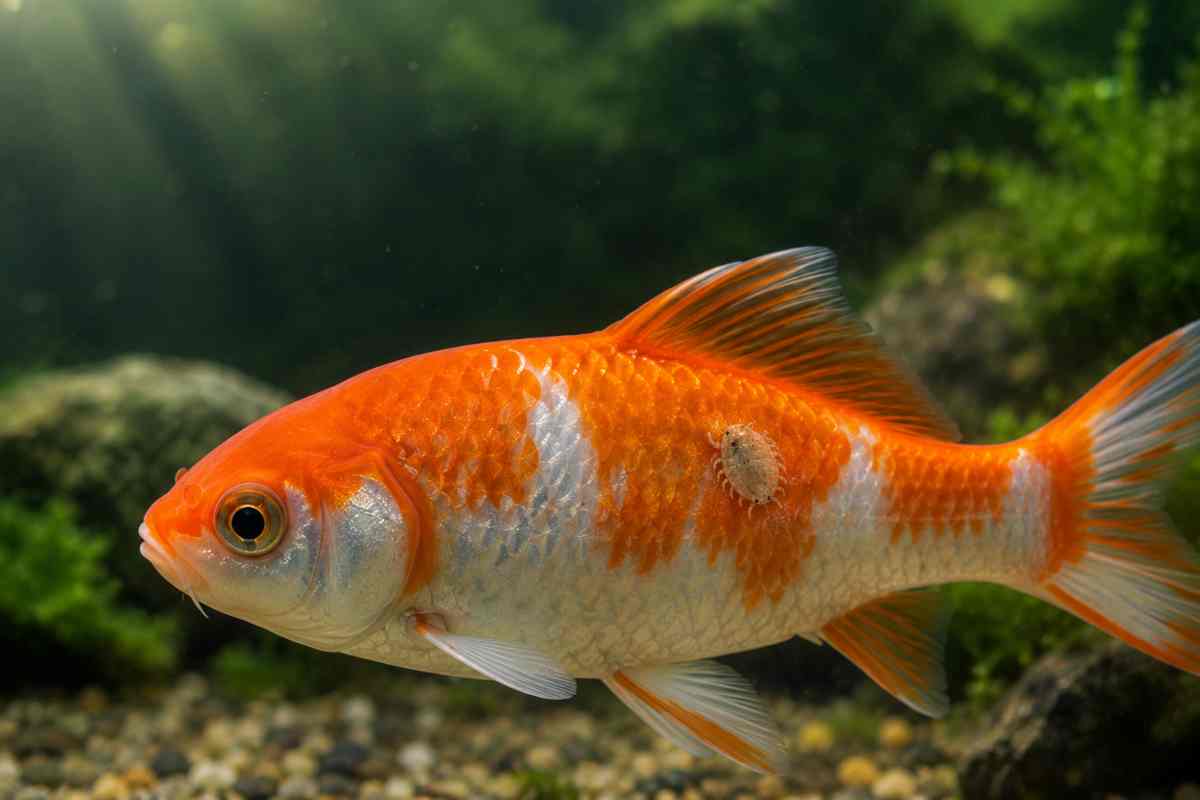
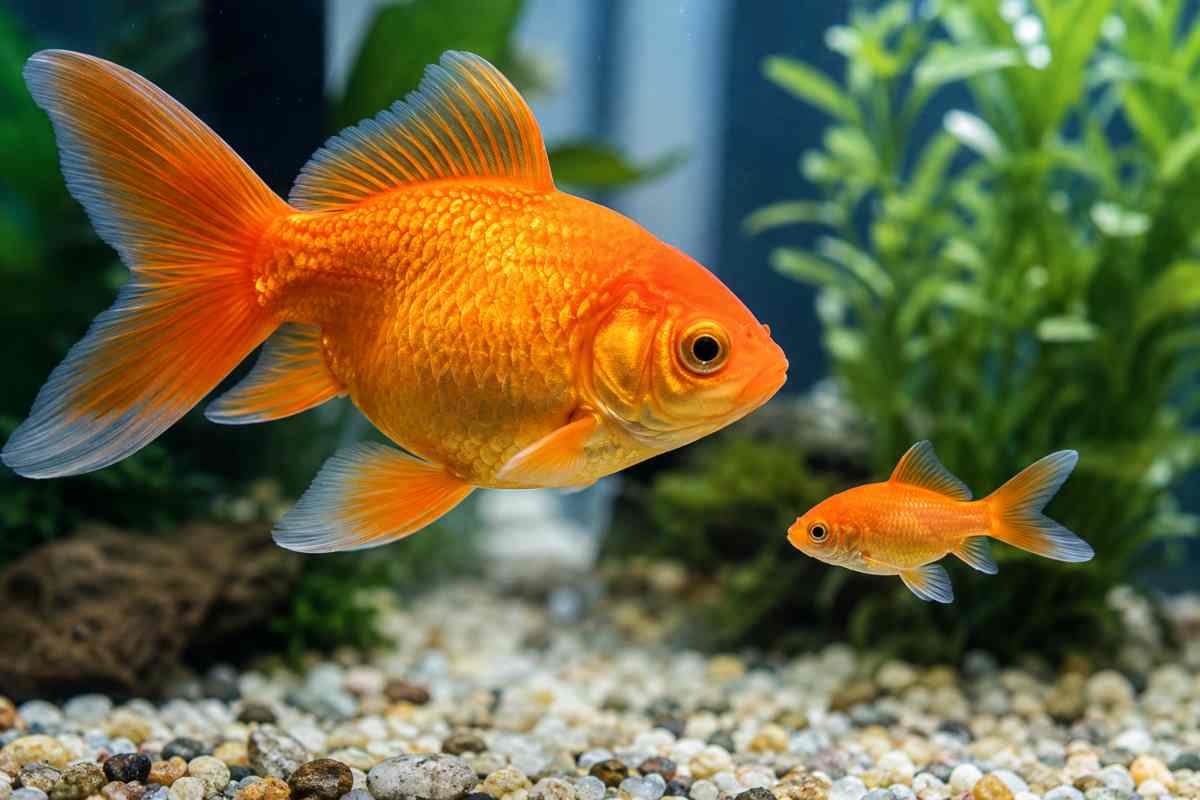
Most pet goldfish reach 6 to 12 inches long as adults, though the exact size depends heavily on the variety and how they’re cared for. Single-tailed types like Common and Comet goldfish are the biggest, often reaching 10 to 12 inches and occasionally more in large tanks or ponds. Rounder, double-tailed “fancy” varieties such as Oranda, Ryukin, and Fantail usually stay smaller, typically 6 to 8 inches. In the wild or in spacious outdoor ponds, goldfish can exceed 14 inches, and the largest documented specimens have topped 18 inches.
Key Takeaways
- Goldfish continue growing throughout their lives, with their final size influenced mainly by genetics, nutrition, and overall living conditions.
- Single-tailed goldfish such as Common Goldfish, Comets, and Shubunkins generally grow the largest, often reaching 10 to 12 inches or more.
- Fancy, egg-bodied goldfish such as Orandas, Ryukins, Fantails, and Black Moors typically reach around 6 to 8 inches as adults.
- A goldfish kept in a small bowl or undersized tank does not remain small because it is comfortable; poor conditions can restrict growth, harm organ development, and shorten its lifespan.
- A single adult goldfish generally needs at least 20 to 30 gallons of water, with additional space needed for each goldfish added.
How Big Do Different Goldfish Varieties Get?
Not all goldfish grow to the same size, even under identical care. Body shape is the biggest clue. Single-tailed goldfish have a slender, torpedo-shaped body built for speed, and that streamlined shape allows them to grow considerably longer than their round-bodied cousins. Fancy goldfish were bred for their ornamental fins and egg-shaped bodies, and that selective breeding limits how much length they can add, even though many still put on significant girth.
| Variety | Body Type | Typical Adult Size (Tank) | Typical Adult Size (Pond) |
|---|---|---|---|
| Common Goldfish | Single-tail | 8–12 inches | Up to 14–16 inches |
| Comet | Single-tail | 8–12 inches | Up to 14 inches |
| Shubunkin | Single-tail | 8–12 inches | Up to 14 inches |
| Fantail | Fancy (twin-tail) | 6–8 inches | Up to 10 inches |
| Oranda | Fancy (twin-tail) | 6–8 inches | Up to 10–12 inches |
| Ryukin | Fancy (twin-tail) | 6–8 inches | Up to 10 inches |
| Black Moor | Fancy (twin-tail) | 5–7 inches | Up to 8 inches |
| Ranchu | Fancy (twin-tail) | 6–8 inches | Up to 10–12 inches |
| Lionhead | Fancy (twin-tail) | 6–7 inches | Up to 9 inches |
| Bubble Eye | Fancy (twin-tail) | 5–6 inches | Rarely kept outdoors |
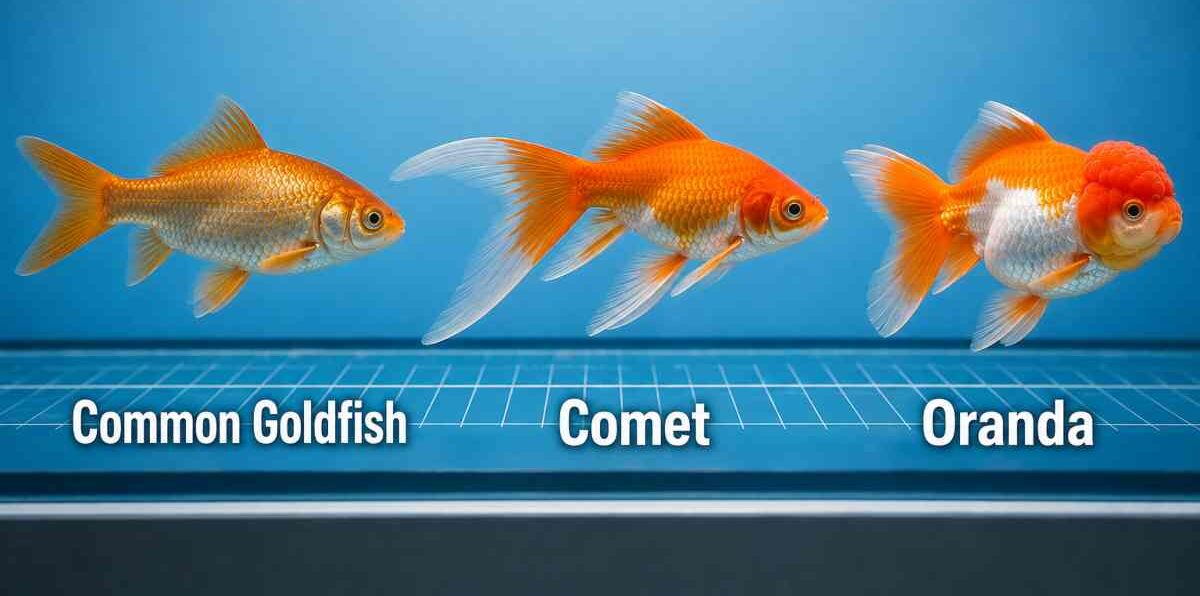
These figures describe healthy adults raised in good conditions, not the tiny 1- to 2-inch fish sold at pet stores. A young feeder goldfish or fancy goldfish only a couple of inches long is nowhere near its adult size, and buyers often underestimate how much it will eventually grow. Common goldfish, Comets, and Orandas may look similar as babies, but they grow to very different adult sizes.
Is It True That Goldfish Only Grow to the Size of Their Tank?
This is one of the most persistent myths in the hobby, and it has it backward. A goldfish confined to a small bowl or tank doesn’t grow to match the container out of some biological courtesy. Instead, cramped conditions and the ammonia buildup that comes with them physically stunt the fish, and stunting is a form of harm, not a convenience.
When a young goldfish is repeatedly exposed to poor water quality, its skeleton and internal organs stop developing normally while its metabolism keeps running. The result is a fish with a compressed spine, a body cavity too small for its organs, and often a shortened lifespan. A stunted goldfish is not a healthy small goldfish; it’s an unhealthy fish that has been prevented from reaching the size its genetics intended for it.
Goldfish sold in tiny bowls in movies and at carnivals reinforce this myth. Still, a goldfish, properly kept in clean, spacious, well-filtered water, will continue to grow for years, often reaching a foot or more, depending on the variety.
How Fast Do Goldfish Grow?
Growth speed varies by age, variety, water temperature, and diet, but most goldfish follow a broadly predictable pattern.
| Age | Approximate Length | Growth Notes |
|---|---|---|
| 0–3 months | 0.5–2 inches | Fastest growth phase; fry grow rapidly on frequent small feedings |
| 3–12 months | 2–4 inches | Growth remains quick as the fish develops its adult shape |
| 1–2 years | 4–6 inches | Growth slows to roughly 1 inch per year |
| 2–5 years | 6–10 inches | Steady, gradual growth continues if conditions stay good |
| 5+ years | 8–14+ inches (variety dependent) | Growth continues slowly throughout life, never fully stopping |
Goldfish are indeterminate growers, meaning they don’t stop growing once they reach “adult size” the way mammals do. They simply grow more slowly with age. Warmer water and pond living tend to accelerate growth, while cooler indoor aquariums produce steadier, slower gains.
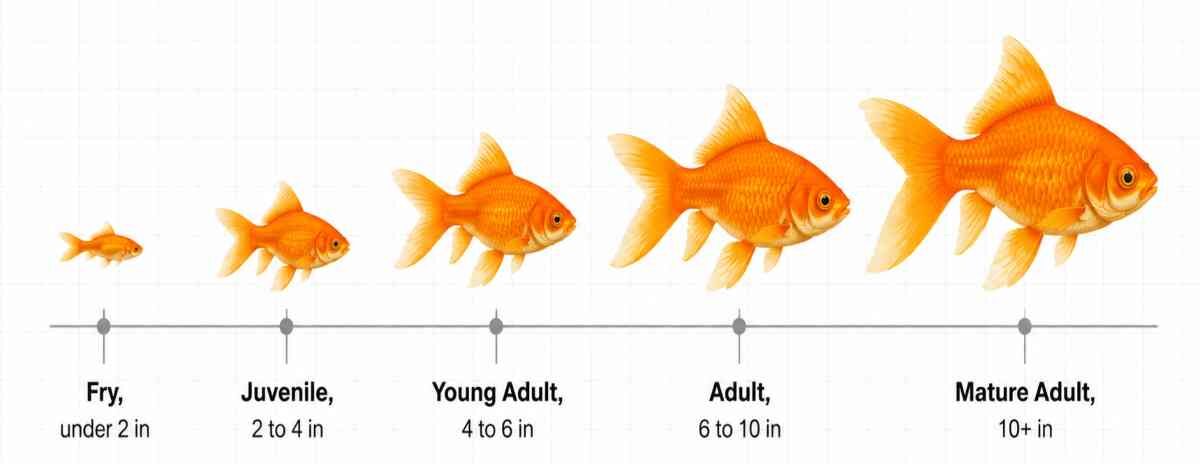
- Goldfish keep growing for years, moving from under 2 inches as fry to 10+ inches at maturity.
What Determines How Big a Goldfish Gets?
Several factors interact to decide a goldfish’s final size, and no single one works in isolation.
Genetics and variety. This sets the ceiling. A Bubble Eye will never reach the length of a Comet no matter how well it’s cared for, because its body shape simply wasn’t bred for it.
Tank size and water quality. Cramped, poorly maintained water slows or stunts growth through chronic exposure to ammonia and nitrite. Larger tanks with strong filtration and frequent water changes support steady, healthy growth toward a fish’s genetic potential.
Diet and feeding frequency. A varied diet of high-quality pellets, along with occasional vegetables and protein sources such as brine shrimp or daphnia, supports consistent growth. Underfeeding slows growth; overfeeding contributes to obesity and waste buildup rather than healthy length gain.
Water temperature. Goldfish are coldwater fish, but they grow faster in the moderately warm end of their comfortable range (roughly 68 to 74°F) than in very cold water, where their metabolism slows down.
Pond versus aquarium living. Ponds offer more swimming space, more natural food sources, and typically more stable, diluted water conditions, which is why pond-raised goldfish often outgrow their aquarium counterparts.
Number of fish and stocking density. Overcrowding raises the bioload per gallon, degrading water quality faster and indirectly limiting growth, even in a tank that seems large enough on paper.
How Big of a Tank Does a Full-Grown Goldfish Need?
Because goldfish grow considerably larger than their appearance in a pet store suggests, tank planning should be based on adult size, not the fish’s size at purchase. A commonly recommended starting point is at least 20 to 30 gallons for a single goldfish, with an additional 10 to 20 gallons for each goldfish added afterward. Single-tailed varieties, being larger and more active swimmers, generally benefit from being on the higher end of that range or more.
Fancy goldfish need less swimming length than single-tails but still produce a substantial bioload, so their tanks shouldn’t be scaled down as aggressively as their smaller size might suggest. If you’re unsure how much water your current setup holds, calculating your tank’s exact volume in gallons is a useful first step before deciding how many goldfish it can comfortably support.
Filtration matters as much as raw volume. Goldfish are messy eaters and heavy waste producers relative to their size. Hence, a tank stocked at the “minimum” gallon guideline needs filtration rated well above that minimum, plus a consistent water-change schedule, to keep growth on track.
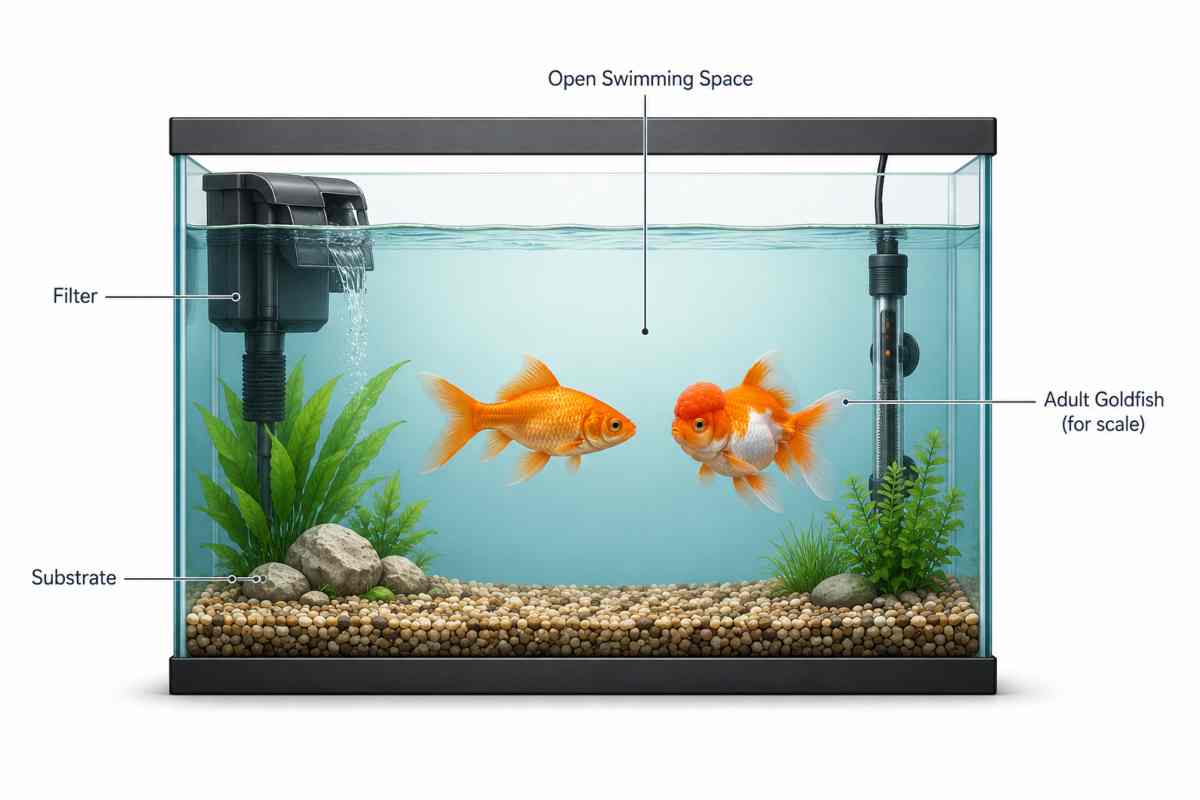 A properly set up goldfish tank needs strong filtration and plenty of open swimming room.
How Can You Tell If a Goldfish’s Growth Is Healthy or Stunted?
Healthy growth looks proportional. A well-grown goldfish’s body, fins, and head grow together, and its behavior stays active and alert as it gets bigger. Stunted growth, by contrast, tends to show up as a combination of warning signs rather than one obvious symptom.
- The fish stays under 2 to 3 inches well past its first year despite regular feeding.
- The head appears noticeably larger than the body, giving a lopsided, “bobblehead” appearance.
- The fish shows a curved or compressed spine.
- Growth has visibly plateaued in water that hasn’t been upgraded or well maintained.
- The fish seems lethargic or struggles with buoyancy more than expected for its variety.
If several of these signs appear together, the likely cause is long-term exposure to a tank that’s too small or too poorly filtered for the fish’s needs, and the priority should be improving water quality and space rather than adjusting feeding alone.
Common Mistakes People Make About Goldfish Size
- Buying a small tank or bowl based on the goldfish’s size at the pet store rather than its adult size.
- Assuming a goldfish “stopped growing” when poor conditions have actually stunted it.
- Keeping single-tailed goldfish, which need the most space, in tanks sized for fancy varieties.
- Adding more goldfish to an existing tank without recalculating the total gallons needed.
- Overfeeding in an attempt to speed up growth, which raises ammonia levels and works against healthy development.
At The Fish Care, we recommend planning tank size around a goldfish’s expected adult length from day one, since undersizing a setup is one of the most common and preventable mistakes new keepers make.
Frequently Asked Questions (FAQs)
Do goldfish really grow to be a foot long?
Yes. Many single-tailed goldfish, including Common and Comet varieties, comfortably reach 10 to 12 inches in a properly sized tank, and pond-raised individuals often exceed that.
How big can a goldfish get in a fish bowl?
A goldfish kept long-term in a bowl typically stays severely undersized, often only 1 to 3 inches, but this reflects stunted, unhealthy growth rather than a natural adult size. Bowls lack the filtration and volume goldfish need.
Which goldfish stays the smallest?
Bubble Eye and Celestial Eye goldfish tend to stay among the smallest fancy varieties, generally topping out around 5 to 6 inches, due to their delicate, slow-growing body types.
Do goldfish grow faster in ponds than in tanks?
Generally yes. Ponds offer more space, more stable water parameters, and natural food sources, all of which tend to support faster, larger growth than indoor aquariums.
At what age is a goldfish considered fully grown?
Goldfish reach most of their size within their first 3 to 5 years but continue growing slowly for the rest of their lives, which can span 10 to 15 years or more with good care.
Can I stop my goldfish from growing to save tank space?
No safe method exists to limit a goldfish’s growth intentionally. Any approach that does so, such as keeping it in undersized, poorly filtered water, causes stunting and health problems rather than a harmless smaller adult.
References
- FishBase, “Carassius auratus (Goldfish)” – species data on maximum recorded length and growth: https://www.fishbase.se/summary/Carassius-auratus.html
- U.S. Fish and Wildlife Service, “Goldfish (Carassius auratus) Ecological Risk Screening Summary”: https://www.fws.gov/