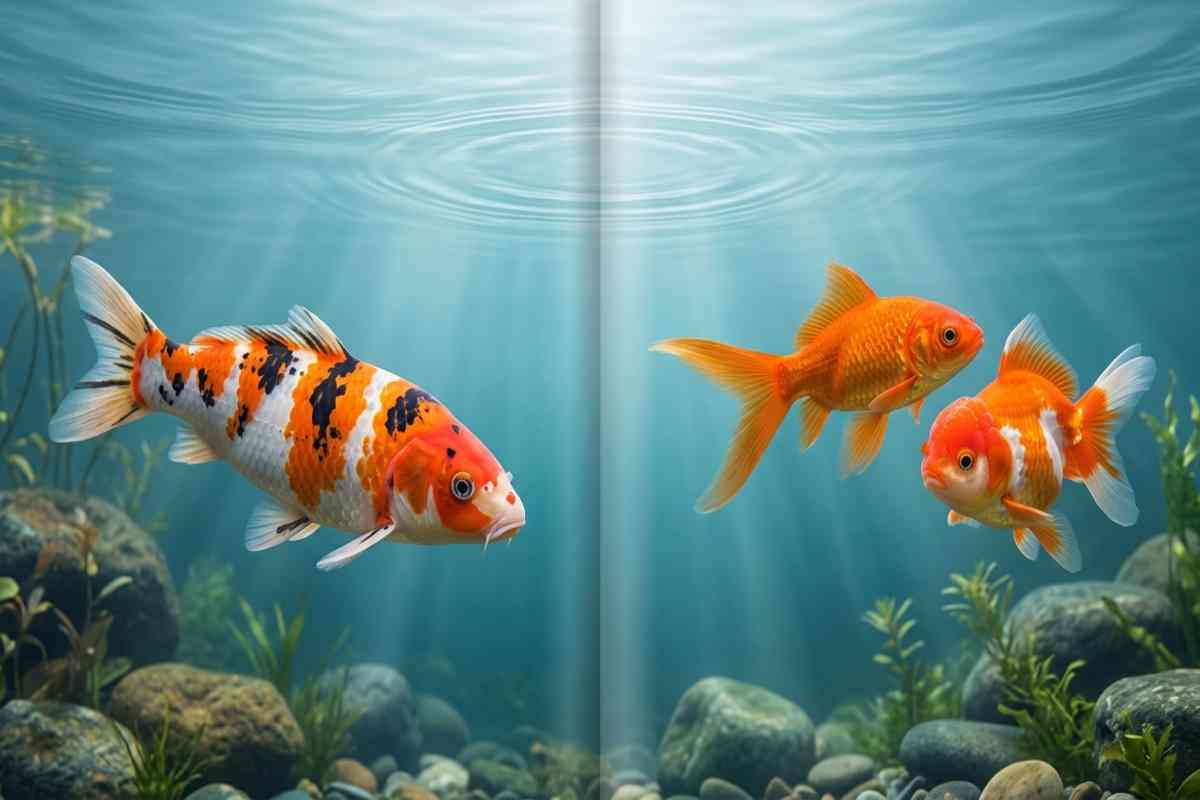
Goldfish and koi are both members of the carp family, but they are different fish and don’t need the same amount of space. Koi grow far larger, live substantially longer, and need pond-level filtration, while most goldfish varieties can spend their whole lives in a well-sized aquarium. Knowing these differences before you buy either fish will save you from an expensive setup mistake down the road.
Key Takeaways
- Koi can reach up to 3 feet (90 cm) and often live 25 to 40 years, while most goldfish stay under 12 to 14 inches (30 to 35 cm) and live 10 to 20 years depending on variety and environment.
- Koi have barbels, small whisker-like sensory organs near the mouth, while goldfish do not.
- Common, comet, and shubunkin goldfish can share a pond with koi, but fancy goldfish generally cannot keep up with koi and may be at greater risk of stress or injury.
- Koi require significantly more pond volume and filtration than goldfish because of their larger adult size, higher waste output, and rooting behavior.
- Koi and goldfish can interbreed, but their offspring are often sterile and can have unpredictable appearances and characteristics.
What Is the Difference Between Koi and Goldfish?
Koi and goldfish both belong to the Cyprinidae family, the same broad group that includes carp and minnows. That shared ancestry is why people often confuse them, especially when the fish are young, or a pond holds a mix of both. Despite the family resemblance, koi and goldfish are different species with different origins, body types, and long-term care needs.
Koi (Cyprinus carpio) descend from the common carp and were selectively bred in Japan for color and pattern. Goldfish (Carassius auratus) descend from a wild carp species native to East Asia and were domesticated in China centuries earlier. Both fish come in an enormous range of colors and patterns, but their bodies, growth rates, and lifespans diverge sharply as they mature.
Are Koi and Goldfish the Same Species?
No. Koi and goldfish are closely related but genetically distinct species. They can technically interbreed because they share enough genetic material to produce hybrid offspring, but that doesn’t make them the same fish, and the hybrids are usually infertile.
The clearest physical difference is the presence of barbels. Koi have two pairs of small barbels near the corners of their mouth, which they use to search the substrate for food. Goldfish have no barbels at all. If you are looking at a young fish and trying to identify it, checking for barbels is the fastest way to tell koi and goldfish apart.
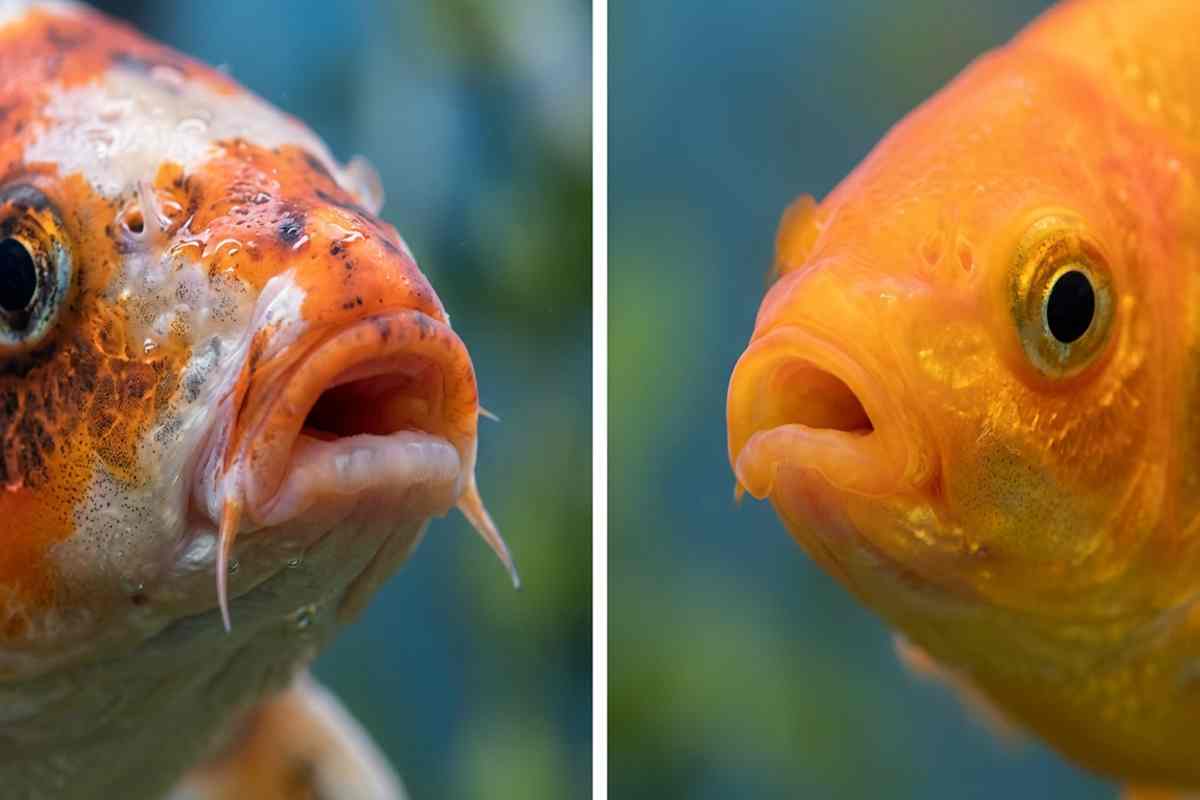 Koi have barbels near the mouth; goldfish don’t — the easiest way to tell them apart.
How Can You Tell a Baby Koi From a Goldfish?
Young koi and goldfish look remarkably similar, which often confuses new pond owners who buy mixed batches of “pond fish” from a garden center. A few clues help at this stage:
- Barbels: Even tiny koi fry usually show the beginnings of barbels by a few months of age, while goldfish never develop them.
- Body shape: Koi tend to have a slightly more elongated, torpedo-shaped body, while many goldfish varieties, especially fancy types, have a rounder profile even when young.
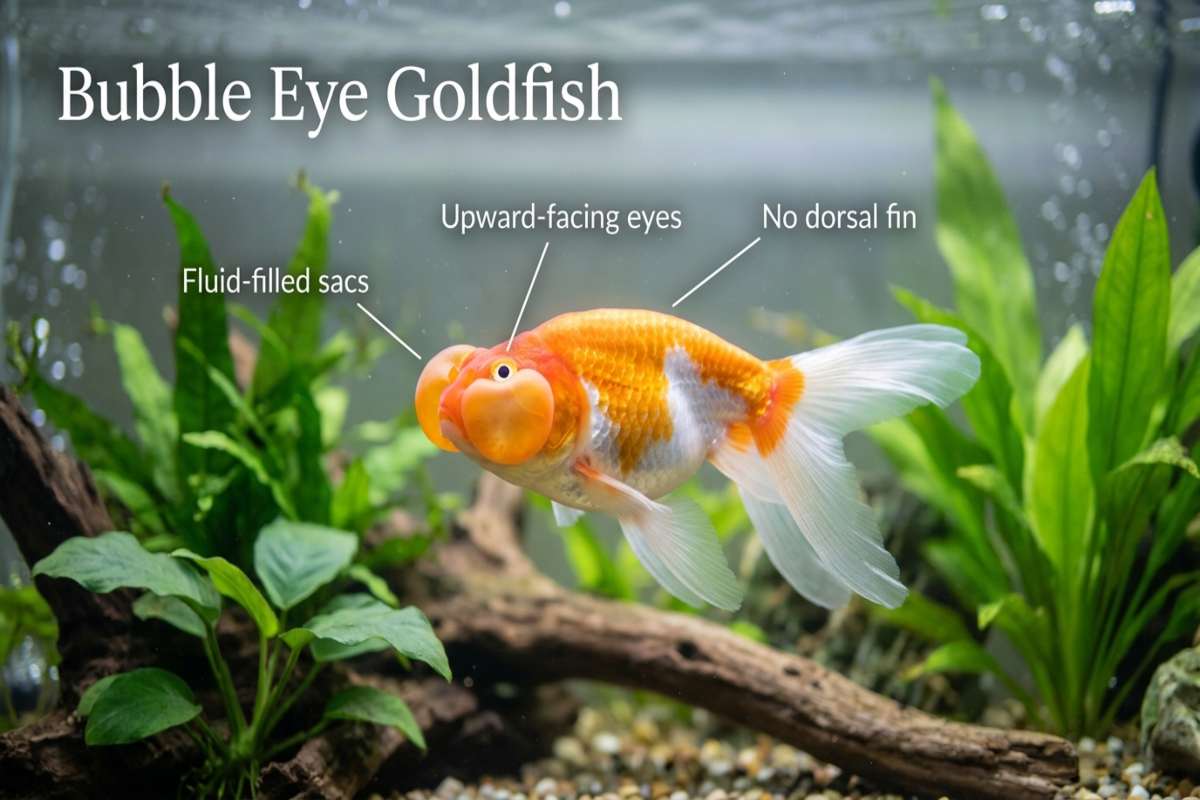
- Fin shape: Single-tail goldfish varieties like comets and commons look closest to koi at a young age, since fancy goldfish traits like double tails and telescope eyes are the ones that stand out.
- Growth speed: Koi that are fed well tend to outgrow same-age goldfish within the first year, which is often the first obvious sign for owners who started with what they thought were all goldfish.
If you are unsure, the safest approach is to observe the fish for a few months. Rapid, sustained growth past 6 to 8 inches (15 to 20 cm) in the first year is a strong sign you are looking at a koi rather than a goldfish.
How Big Do Koi and Goldfish Get?
Size matters most in the goldfish vs. koi comparison for tank and pond planning. Koi are built to get much bigger, and that difference should shape every decision about housing them.
| Fish | Typical Adult Size | Maximum Recorded Size | Growth Pattern |
|---|---|---|---|
| Koi | 18–26 in (45–66 cm) | Around 3 ft (90 cm) | Fast, steady growth for several years, especially in large ponds |
| Common & Comet Goldfish | 8–12 in (20–30 cm) | Up to 18–23 in (45–59 cm) in rare cases | Moderate growth, with adult size strongly influenced by genetics and available space |
| Fancy Goldfish (Oranda, Fantail, Ryukin) | 6–8 in (15–20 cm) | Rarely exceeds 10–12 in (25–30 cm) | Generally slower-growing, with a shorter, deeper body shaped by selective breeding |
According to the Smithsonian National Zoo, koi can grow up to 3 feet (90 cm) in length, which is well beyond what any goldfish variety typically reaches. Goldfish size is also strongly influenced by their environment. A goldfish kept in a small tank will stay stunted and undersized, not because the tank limits its “true size,” but because poor water quality and restricted swimming space slow and damage its growth. A goldfish given a large pond or aquarium with excellent water quality will grow substantially larger than the same fish in a bowl.
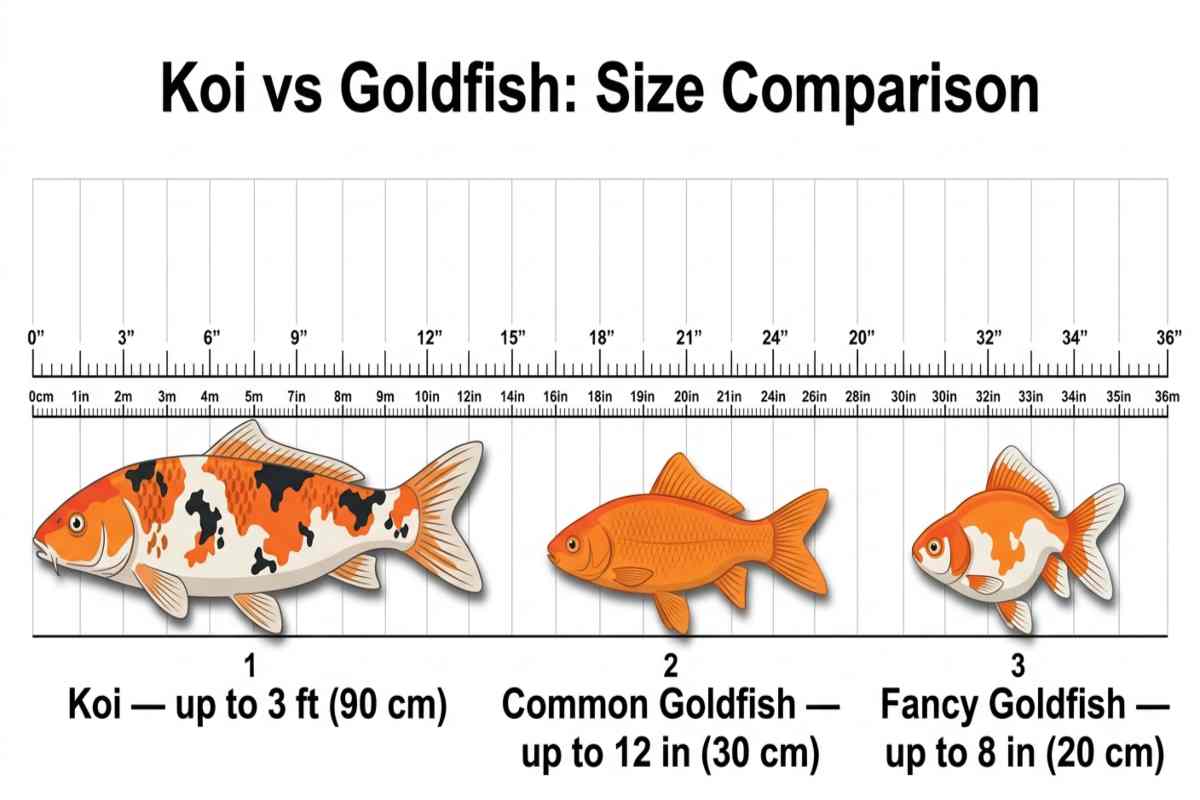 Koi dwarf goldfish — up to 3 feet versus 8–12 inches for most goldfish varieties.
How Fast Do Koi Grow Compared to Goldfish?
Koi growth rate is one of the most underestimated factors when people set up a “goldfish and koi pond” without planning. A healthy, well-fed koi typically reaches around 8 inches (20 cm) by the end of its first year, roughly 14 inches (35 cm) by its second year, and around 20 inches (50 cm) by its third year, though genetics and pond size cause real variation.
Goldfish grow more slowly and more moderately, particularly fancy varieties, which were bred for rounded body shapes rather than length. This growth gap is the main reason koi eventually outgrow tanks and even modest backyard ponds designed with goldfish-level space in mind.
If you are stocking a new pond, plan for the koi’s adult size from day one, not its size at purchase. A young koi that looks pond-appropriate at 4 inches (10 cm) can realistically triple in length within two years.
How Long Do Koi and Goldfish Live?
Koi are known for exceptional longevity, and this is one of the biggest lifestyle commitments people underestimate when buying one.
| Fish | Typical Lifespan | Maximum Reported Lifespan |
|---|---|---|
| Koi | 25–40 years | Well over 100 years in exceptional cases with suitable genetics and excellent care |
| Goldfish (aquarium) | 10–15 years | 20+ years with excellent care |
| Goldfish (outdoor pond) | 15–20+ years | 20–30 years in stable, well-maintained ponds |
The Smithsonian National Zoo lists koi as having an average lifespan of around 40 years, and individual koi with strong genetics and consistent care have been documented living considerably longer. Goldfish lifespan also varies significantly by environment. Aquarium goldfish tend to live shorter lives than pond goldfish, mainly because indoor tanks are more prone to inconsistent water quality and cramped space, both of which shorten a goldfish’s life regardless of species.
A common myth is that goldfish “only live a few years” no matter what. In reality, a goldfish kept in appropriate water conditions with regular maintenance routinely lives well past a decade, and pond-kept goldfish frequently reach 15 to 20 years or more.
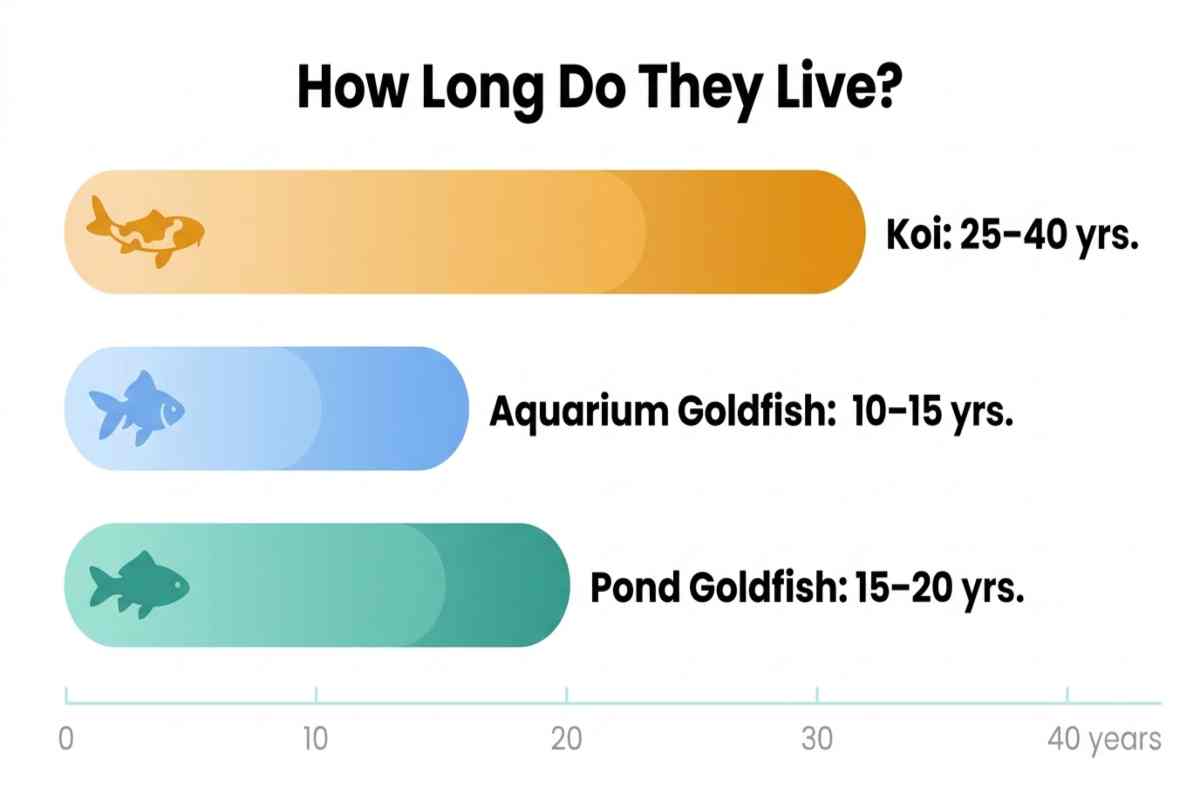 Koi can outlive goldfish by decades — up to 40 years versus 10–20 for most goldfish.
What Tank or Pond Size Do Koi and Goldfish Need?
This is where the goldfish vs. koi comparison has the most practical consequences. Koi are not appropriate for standard aquariums, no matter how large the tank looks to a new hobbyist.
Minimum Space Guidelines
- Single koi: A minimum of 1,000 gallons (about 3,785 liters) of pond volume is a realistic starting point for one adult koi, and most experienced keepers recommend more. Koi are not suitable for indoor aquariums long-term.
- Small koi group: Established guidance from koi and pond associations generally recommends at least 250 to 500 gallons (950 to 1,900 liters) per adult koi as they mature, since bioload increases quickly with size.
- Single goldfish (common/comet): At least 30 gallons (about 115 liters) for the first fish, with 10 to 20 additional gallons per additional fish, since these varieties still grow large for an aquarium species.
- Fancy goldfish: At least 20 gallons (about 75 liters) per fish, since fancy varieties stay smaller but still produce significant waste.
Why Koi Need So Much More Filtration
Koi have a much higher bioload than goldfish simply because of their size. Bioload refers to the total waste a pond or tank must process, and koi waste output scales with their rapid growth. Two related concepts matter here:
- Turnover rate: This is how many times per hour a filter processes the total pond volume. Koi ponds generally need a turnover rate of the entire pond volume every 1 to 2 hours, which is far more demanding than a typical goldfish setup.
- Dissolved oxygen: Adult koi need consistently high dissolved oxygen levels, especially in warm weather when oxygen naturally drops. Aeration is considered essential in koi ponds, not optional.
Koi also physically disturb their environment more than goldfish. Their rooting behavior while foraging for food can damage plant roots and uproot aquatic plants like water lilies, an effect sometimes called substrate destruction. Goldfish forage too, but their smaller size and gentler feeding pattern cause far less structural damage to a planted pond or tank.
Can Koi and Goldfish Live Together?
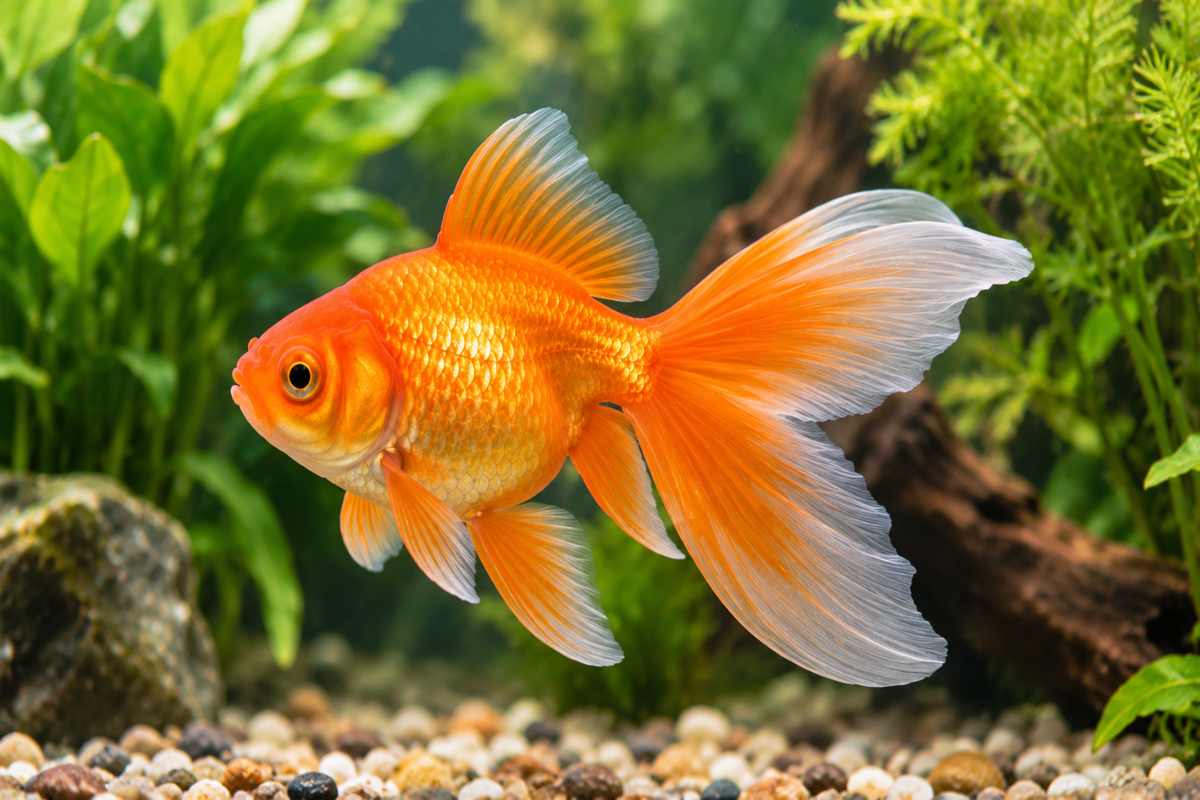
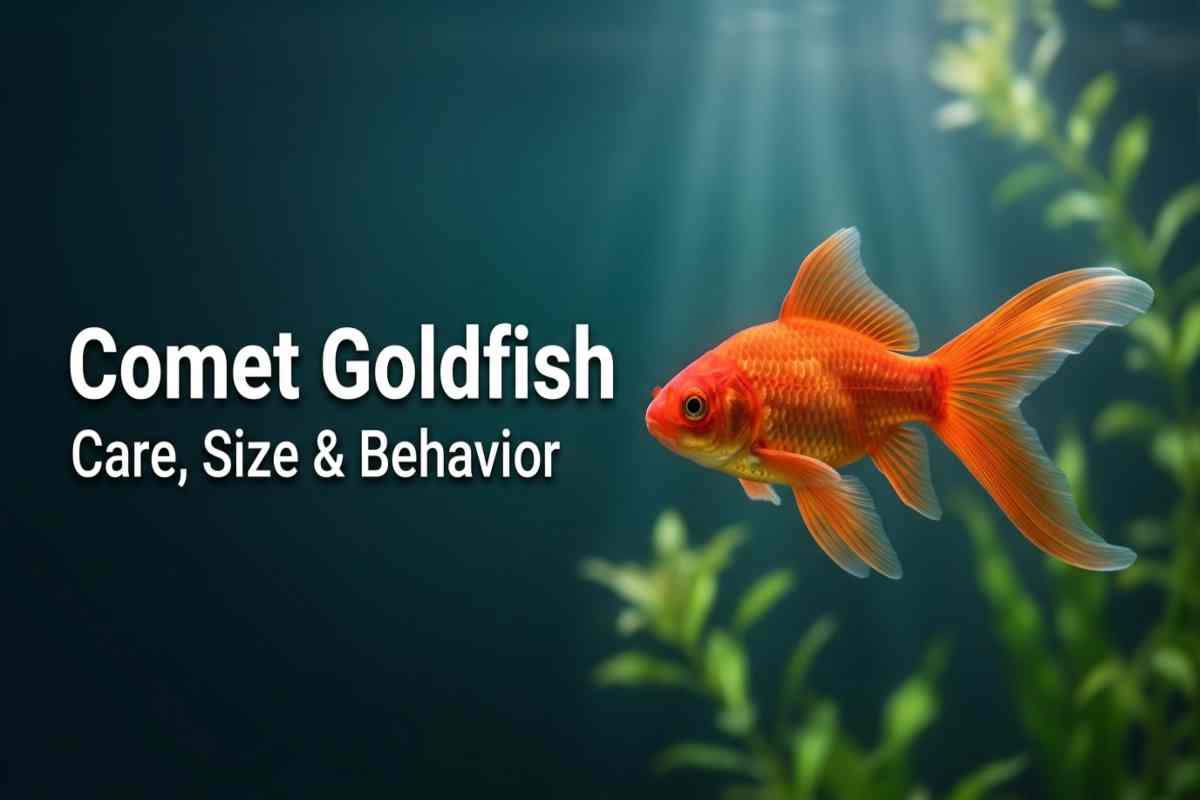
Yes, but only under the right conditions, and this is one of the most searched questions in the goldfish vs koi comparison. Single-tail goldfish varieties, particularly comets, common goldfish, and shubunkins, can generally keep pace with koi in a shared pond. They are fast, hardy swimmers that can compete for food and tolerate similar water conditions.
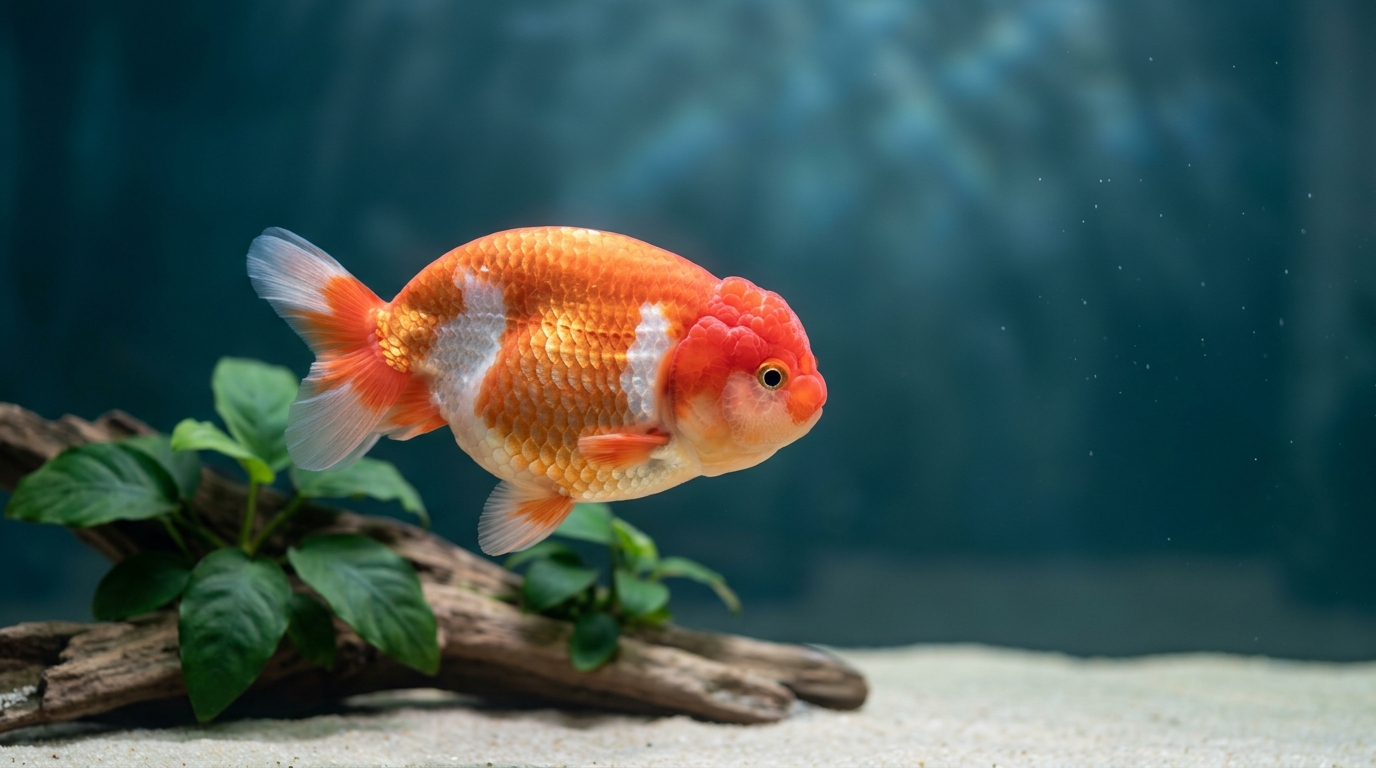
Fancy goldfish varieties are a different story. Orandas, fantails, ryukins, and other rounded, slow-swimming varieties struggle to compete with koi for food and are more vulnerable to fin damage from koi’s more assertive feeding behavior. Fancy goldfish also tend to prefer calmer water and are more sensitive to the colder temperatures many outdoor koi ponds experience seasonally.
Do Koi Eat Goldfish?
Adult koi generally will not target adult goldfish as food, since both are peaceful omnivores by nature. However, koi are opportunistic feeders, and very small goldfish fry are at genuine risk in a shared pond, especially from larger koi. If breeding either species is a goal, a separate grow-out area protects the fry.
What Happens if Koi and Goldfish Interbreed?
Koi and goldfish can interbreed because they are closely related Cyprinidae species, but the resulting hybrids are typically sterile and cannot reproduce further. Hybrid offspring often show unpredictable coloration and body shape, blending traits from both parent fish. Most dedicated koi or goldfish breeders avoid letting the two species share a breeding pond specifically to prevent this crossbreeding.
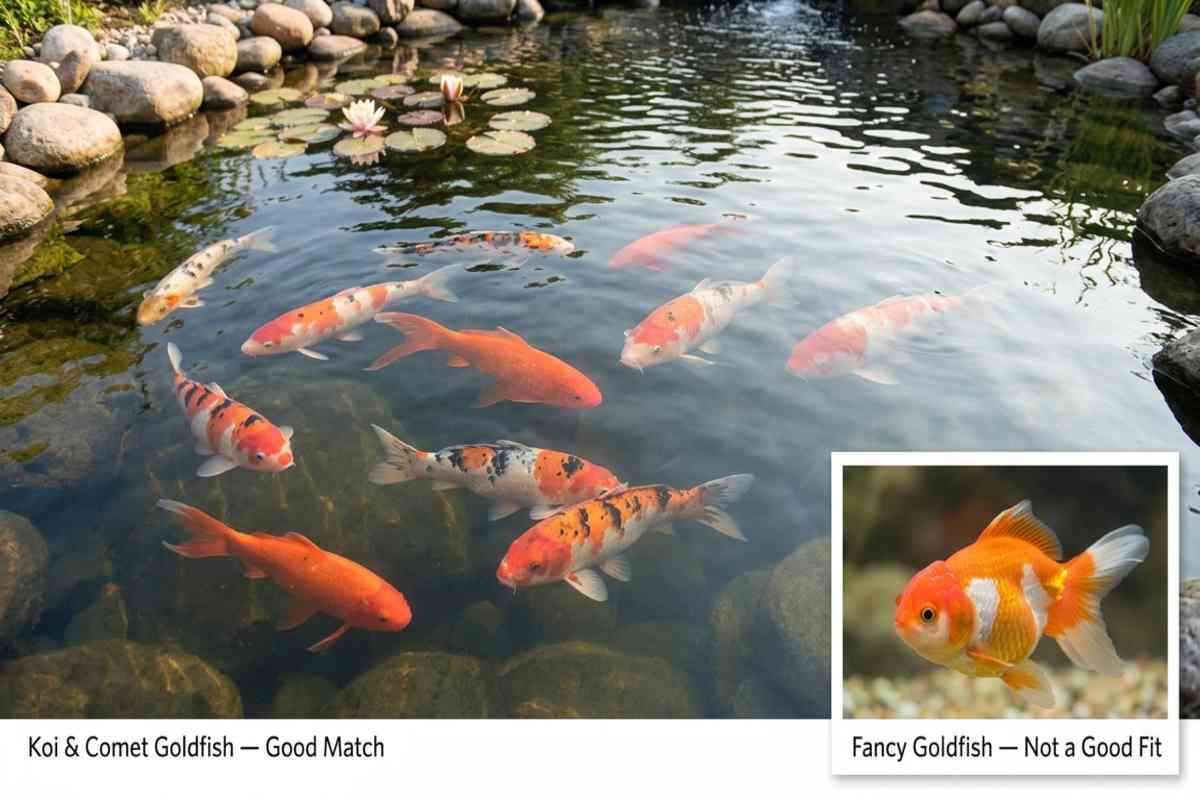 Comets keep pace with koi — fancy goldfish generally can’t.
What Do Koi and Goldfish Eat?
Both koi and goldfish are omnivorous and do well on high-quality omnivorous pellets formulated for their species, supplemented with occasional vegetables like peas or blanched greens. Diet needs do shift seasonally for both fish, since their metabolism slows significantly as water temperature drops.
- Warmer months: Both koi and goldfish benefit from higher-protein food that supports active growth.
- Cooler months: As temperatures fall, both species need easily digestible, lower-protein food, since a sluggish cold-weather metabolism struggles to process heavy meals.
- Near-freezing conditions: Feeding typically stops altogether once water temperature drops low enough that the fish become largely inactive, since undigested food can cause serious digestive problems in cold water.
Koi generally need proportionally more food than goldfish because of their larger size and faster growth rate, but overfeeding either species is one of the most common causes of poor water quality in ponds and tanks alike.
Common Mistakes When Comparing or Keeping Koi and Goldfish
- Buying koi for a goldfish-sized tank. Koi are not suitable for standard aquariums long-term, regardless of how small they look at purchase.
- Assuming all goldfish can live with koi. Fancy goldfish varieties are generally not a good match for a koi pond.
- Underestimating koi growth rate. A small koi at the store can add over a foot of length within two years.
- Ignoring filtration needs as fish grow. Bioload increases with size, and a filter sized for young fish quickly becomes inadequate.
- Overfeeding in cold weather. Both species need reduced feeding as temperatures drop, and new pond owners often overlook this.
Which One Should You Choose: Koi or Goldfish?
The right choice depends less on which fish is “better” and more on what kind of space, budget, and long-term commitment you can realistically offer.
Choose koi if:
- You have or plan to build a large outdoor pond, generally 1,000 gallons (3,785 liters) or more.
- You can invest in strong filtration and aeration equipment.
- You want a fish that can live for decades and grow to an impressive size.
Choose goldfish if:
- You want a fish suited to an indoor aquarium or a smaller backyard pond.
- You prefer lower filtration and space demands.
- You are drawn to a wide range of body shapes and fin types, including fancy varieties that koi cannot offer.
Conclusion
Goldfish and koi share a family tree, but they are not interchangeable pets. Koi need pond-scale space, strong filtration, and a multi-decade commitment, while most goldfish varieties suit an aquarium or a modest backyard pond better. If you match the fish to the space and care you can realistically provide, both make rewarding, long-lived additions to a freshwater setup. At The Fish Care, we always recommend taking an honest look at your available pond or tank size before choosing, since that single decision determines whether either fish can thrive long term.
Frequently Asked Questions (FAQs)
How big do koi fish get in a backyard pond?
Most backyard koi reach 18 to 26 inches (45 to 66 cm) as adults, with some individuals approaching 3 feet (90 cm) given enough pond space, good genetics, and consistent care.
How can you tell the difference between a baby koi and a goldfish?
Check for barbels near the mouth, which only koi have, and watch growth speed over the first several months. Koi typically grow noticeably faster and develop a more elongated body shape than goldfish.
Do koi fish need a bigger pond and filtration setup than goldfish?
Yes. Koi require substantially more pond volume, stronger filtration, and a faster turnover rate than goldfish because of their larger adult size and higher bioload.
How long do goldfish live in an outdoor pond versus an aquarium?
Pond-kept goldfish often live 15 to 20 years or more due to more stable water volume and temperature, while aquarium goldfish commonly live 10 to 15 years, though both can live longer with excellent care.
What is the minimum tank size for a single koi fish?
Koi are not appropriate for standard aquariums. A single adult koi needs a pond of at least 1,000 gallons (3,785 liters), and many keepers recommend significantly more as the fish matures.
References
- Smithsonian National Zoo & Conservation Biology Institute, Koi Fish fact sheet: https://nationalzoo.si.edu/node/6876
- Michigan Sea Grant, Goldfish biology and lifespan overview: https://www.michiganseagrant.org/