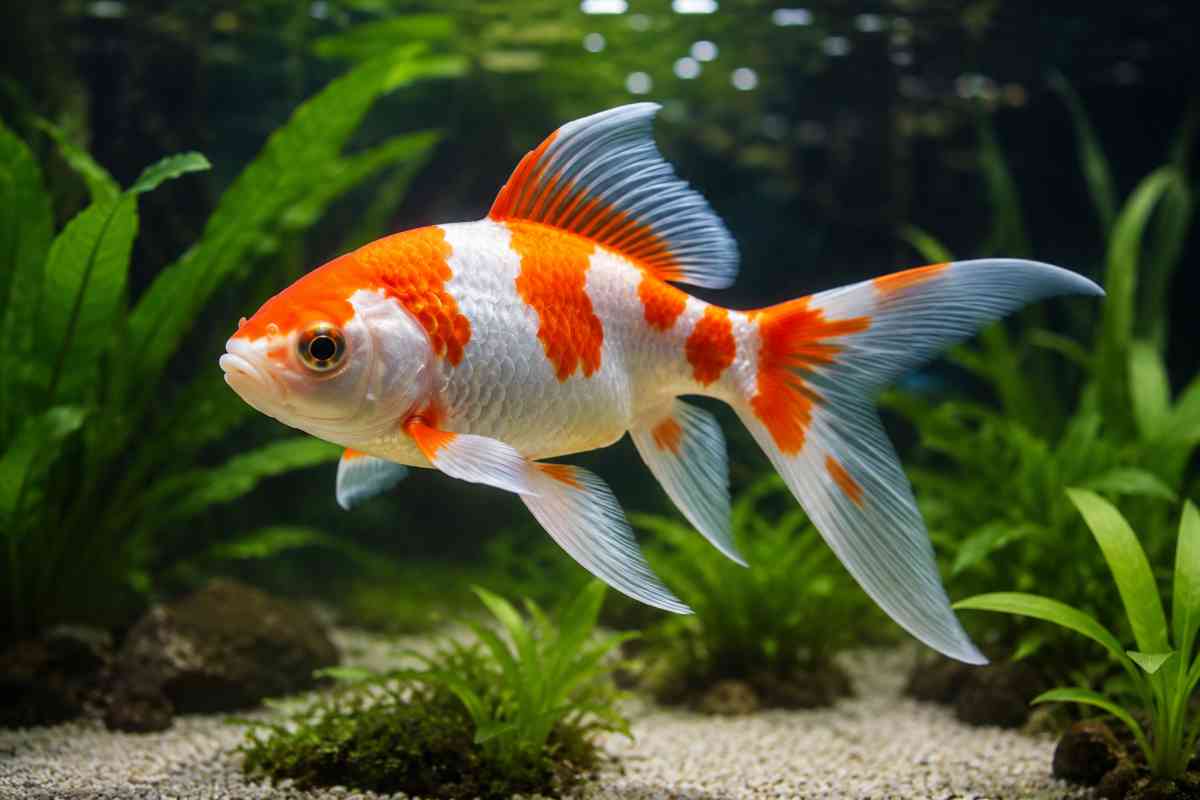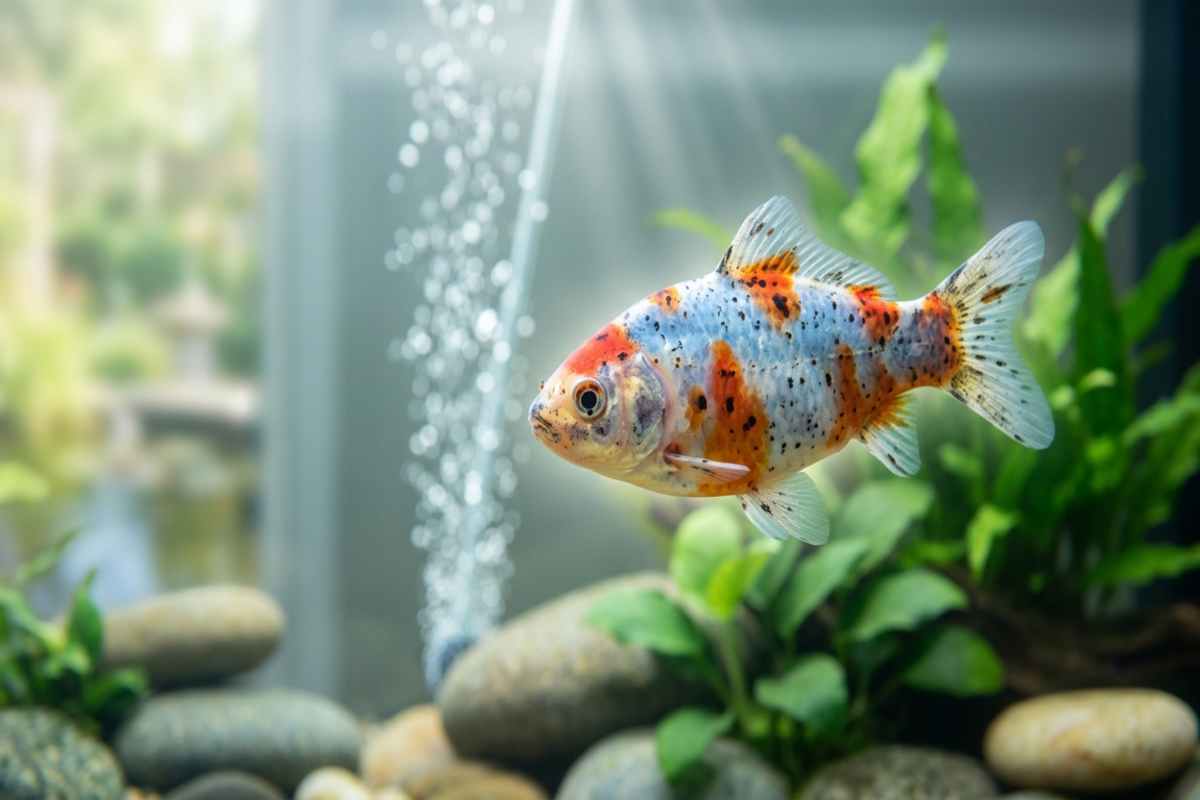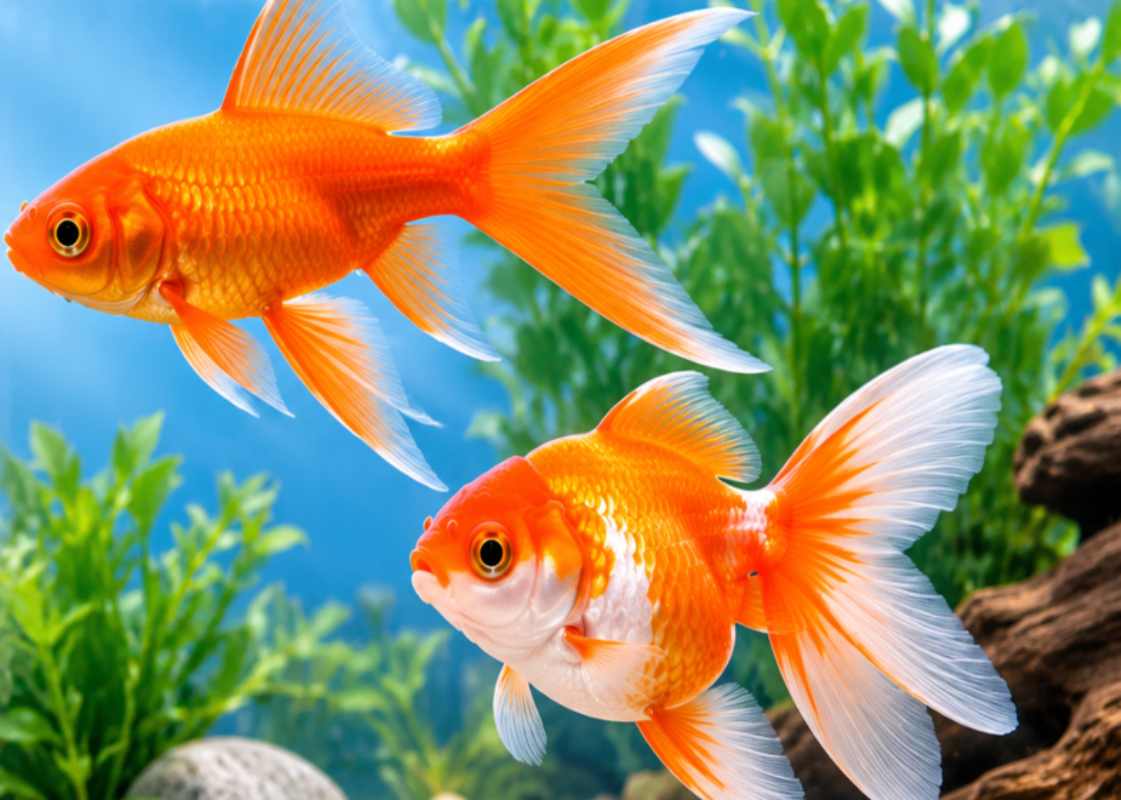
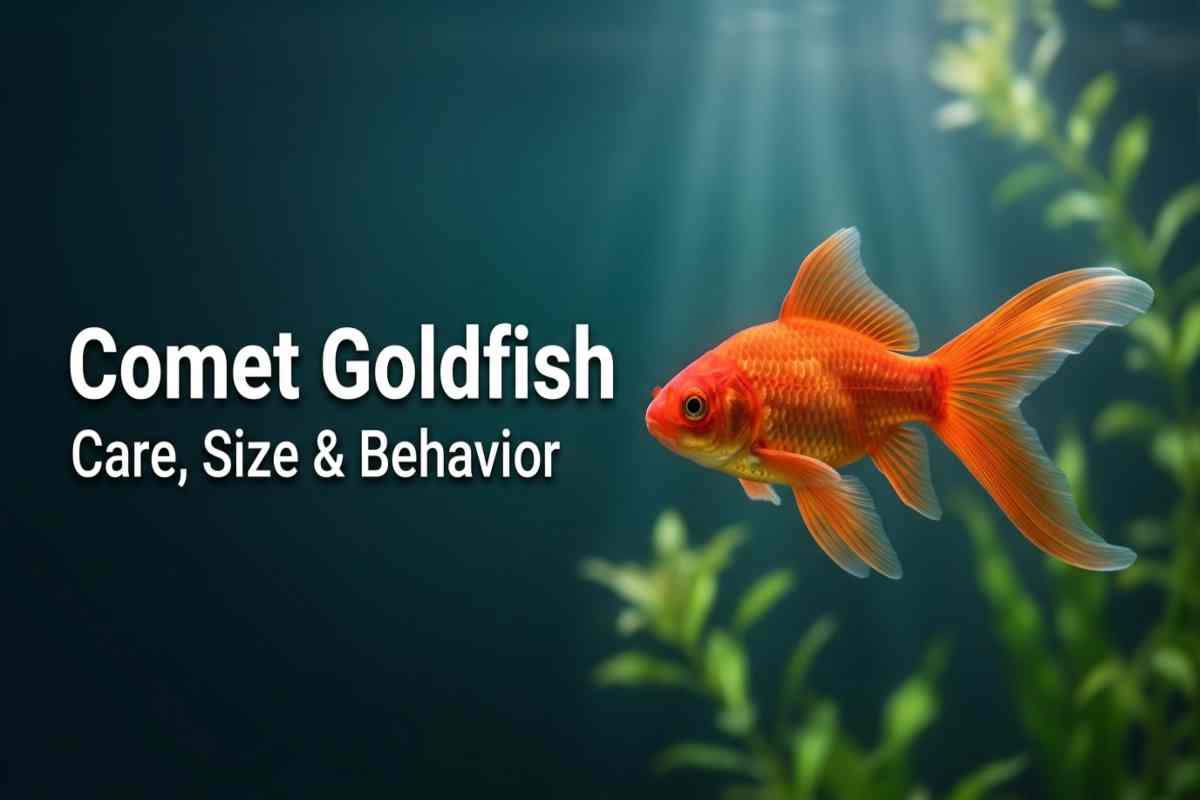
The comet goldfish is a hardy, single-tailed goldfish with a slim body and a long, deeply forked tail. It often reaches 10 to 12 inches (25 to 30 cm), can live 10 to 15 years or more, and does best in an outdoor pond or a very large, well-filtered tank rather than a small aquarium or bowl.
Most people meet comets as tiny, inexpensive fish, which is exactly why so many are kept in setups they outgrow within a year. This guide covers what a comet really needs, from tank size and water quality to diet, tank mates, pond life, and the health problems worth watching for.
Key Takeaways
- Plan for an adult fish about 10 to 12 inches (25 to 30 cm), not the 2-inch fish sold in stores.
- A pond is the natural home for a comet. In an aquarium, treat 75 gallons (about 280 L) as a sensible starting point for one fish, and more for each extra fish.
- Comets are cold-water fish. Most do well between roughly 60 and 75°F (15 to 24°C) without a heater.
- Keep them with other hardy, single-tailed goldfish, not with slow fancy goldfish, tropical fish, or tiny fish that fit in their mouths.
- White spots, fluffy patches, and gradual pale color are three different problems, so check which one you have before treating.
What Is a Comet Goldfish?
A comet goldfish is a cultivated form of Carassius auratus, the same species as every other goldfish. It has one tail fin rather than the double tail of fancy types, and that tail is long and forked, which gives the fish its name. The body is streamlined and torpedo-shaped, built for speed rather than for show.
Comets are generally described as an American development from the late 1800s, usually credited to the breeder Hugo Mulertt. Details of that history vary between sources, so treat the exact story with some caution. What is clear is that the comet is a relatively “close to nature” goldfish. Unlike puffy, round-bodied fancy goldfish, it keeps the athletic build of its wild ancestors, which is a big reason it is tougher and more forgiving.
The most common color is orange to red, but comets also come in yellow, white, and red-and-white combinations. The red-and-white form is often sold as a Sarasa Comet. Young comets are sometimes brownish or bronze and gain their brighter color as they grow, which is normal.
How Is a Comet Goldfish Different From a Common Goldfish?
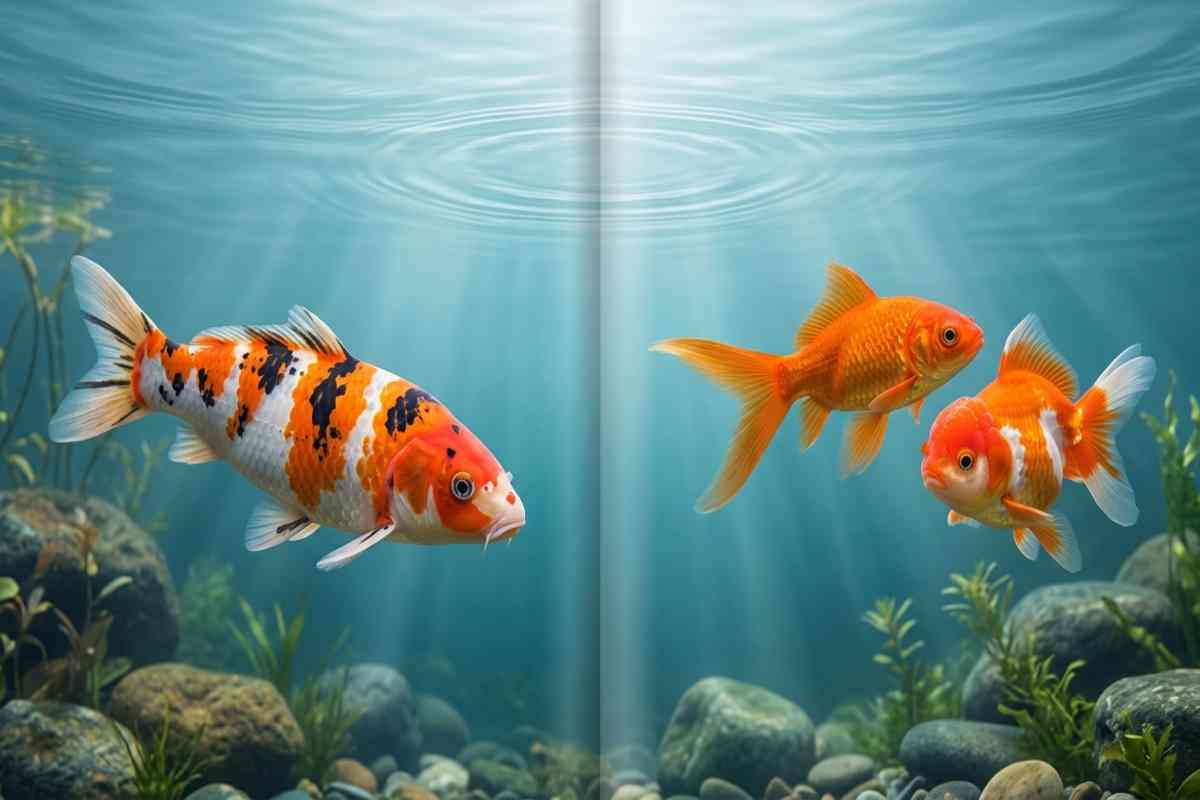
The two are close relatives and are often confused, especially in pet store tanks. The easiest way to tell them apart is the tail and the body outline. A comet has a noticeably longer, more deeply forked tail and a slimmer body. A common goldfish has a stockier body and a shorter, more rounded or shallowly forked tail.
| Feature | Comet Goldfish | Common Goldfish |
|---|---|---|
| Tail | Long, deeply forked, single | Shorter, rounded or shallow fork, single |
| Body | Slim and streamlined | Stockier, deeper body |
| Typical adult size | About 10 to 12 in (25 to 30 cm) | Similar or somewhat larger |
| Care difficulty | Easy once the space is right | Easy once the space is right |
| Best home | Pond or very large tank | Pond or very large tank |
Size overlaps a lot between the two, and individual fish vary, so tail shape is a better clue than length. Both belong in the same care category: hardy, fast-growing and heavy waste producers.
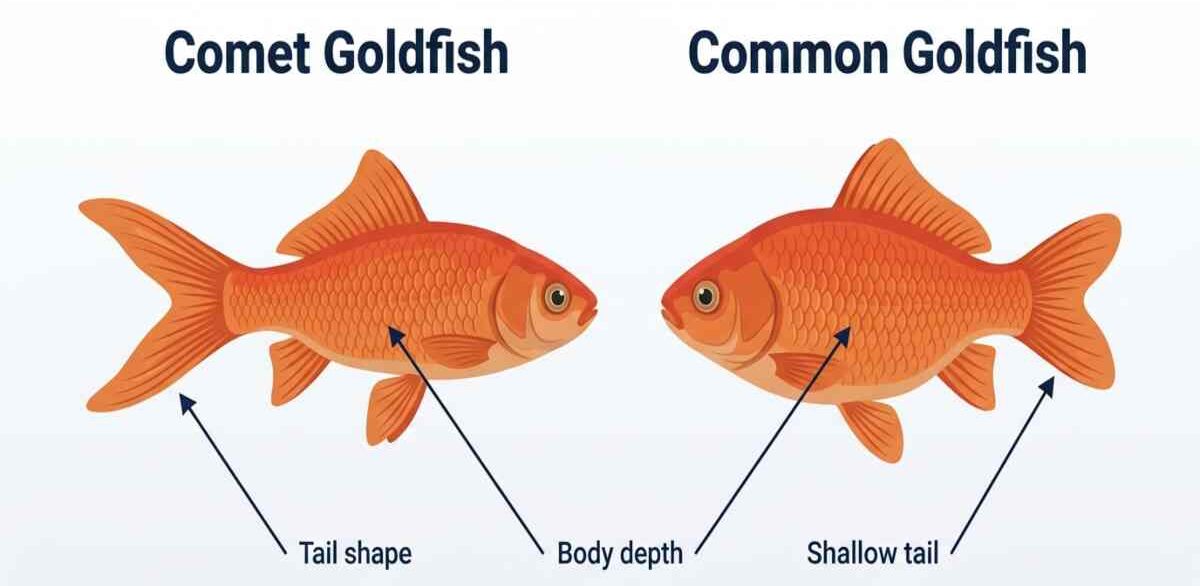 Comet goldfish have slimmer bodies and longer tails
How Big Do Comet Goldfish Get, and How Fast Do They Grow?
Most healthy comets reach about 10 to 12 inches (25 to 30 cm), and some grow larger in ponds. Sources differ on whether that figure includes the long tail, so think of it as a fish that will be roughly a foot long overall.
Growth is fastest in the first year or two and then slows, though it does not stop entirely. The exact rate depends on water temperature, food, space, and water quality, so no single “inches per month” figure is reliable.
One myth deserves a direct answer: goldfish do not stay small to match their container. A comet kept in a cramped tank that looks small for its age is usually stunted by poor water quality and chronic stress, not by a natural size limit. Stunting shortens life and often damages organs and fins.
A separate guide on how big goldfish get covers the wider goldfish family if you want to compare varieties.
How Long Do Comet Goldfish Live?
With good care, comets commonly live 10 to 15 years, and some reach 20 years or more. Online lifespan claims vary widely, and the very high numbers are exceptions, not promises. The main things that separate a short life from a long one are space, clean water, and sensible feeding.
Fish kept in bowls or undersized tanks often die within a few years from ammonia damage, stress, or disease. Fish kept in ponds or large filtered tanks with steady maintenance regularly outlive that expectation. If you are not ready for a pet that could be with you for a decade or longer, that is worth knowing before you buy.
What Size Tank Does a Comet Goldfish Need?
A pond is ideal. If you keep comets indoors, use at least 75 gallons (about 280 L) for a single adult and add roughly 40 to 50 gallons (150 to 190 L) for each additional fish. Some sources suggest as little as 40 to 55 gallons for one comet, and a young fish can live in a smaller tank temporarily. Because comets are fast swimmers that grow to a foot long and produce a lot of waste, the larger figure gives you a safer margin.
Length and floor space matter more than height. A long tank gives a fast swimmer room to move and more surface area for oxygen exchange. Choose a filter rated for a tank larger than yours, since goldfish create far more waste than most aquarium fish of similar size. Fine sand or smooth gravel that is too large to swallow is a safe substrate, and sturdy plants or decorations should have no sharp edges that could tear the tail.
A Quick Decision Rule
Ask yourself these three questions before you buy a comet goldfish:
- ✅ Space: Can you provide a pond or at least 75 gallons (about 280 L)?
- ✅ Routine: Can you do a partial water change every week and test the water?
- ✅ Commitment: Are you prepared to keep the fish for ten years or more?
Your answer: If you can say yes to all three, a comet goldfish is a great fit. If any answer is no, a different, smaller species will suit you better.
What Water Conditions Do Comet Goldfish Need?
Comets are true cold-water fish, so their water needs are simple once you know the key numbers:
- Temperature: Most thrive between about 60 and 75°F (15 to 24°C), tolerate cooler water well, and do not need a heater in a typical home.
- pH: A stable pH somewhere around 7.0 to 8.0 suits them, and stability matters more than hitting a specific number.
- Ammonia, nitrite and nitrate: Ammonia and nitrite should both read zero, and nitrate should be kept as low as practical with regular water changes.
Water that stays above about 80°F (27°C) holds less oxygen and stresses them, so a warm room or summer heat wave needs attention. Sudden temperature swings are harder on them than a steady, cool temperature.
Avoid very soft water with low carbonate hardness, because it can cause pH to drop suddenly. A liquid test kit is more dependable than test strips.
Every new tank needs to complete the nitrogen cycle before you add fish, or you can cycle it with the fish in carefully, because beneficial bacteria convert toxic ammonia into less harmful compounds. Use a water conditioner to remove chlorine and chloramine from tap water, and match new water temperature closely at each water change.
How Long Can a Comet Goldfish Live Without a Filter?
There is no safe number of days. A comet in unfiltered water may survive for a while, but ammonia builds up, damages the gills and skin, and the fish suffers long before it dies. Small bowls make this worse.
A large, lightly stocked, heavily planted pond can function without a mechanical filter because plants and natural bacteria do some of the work, but that is a different situation from a home aquarium. For any tank, use a filter.
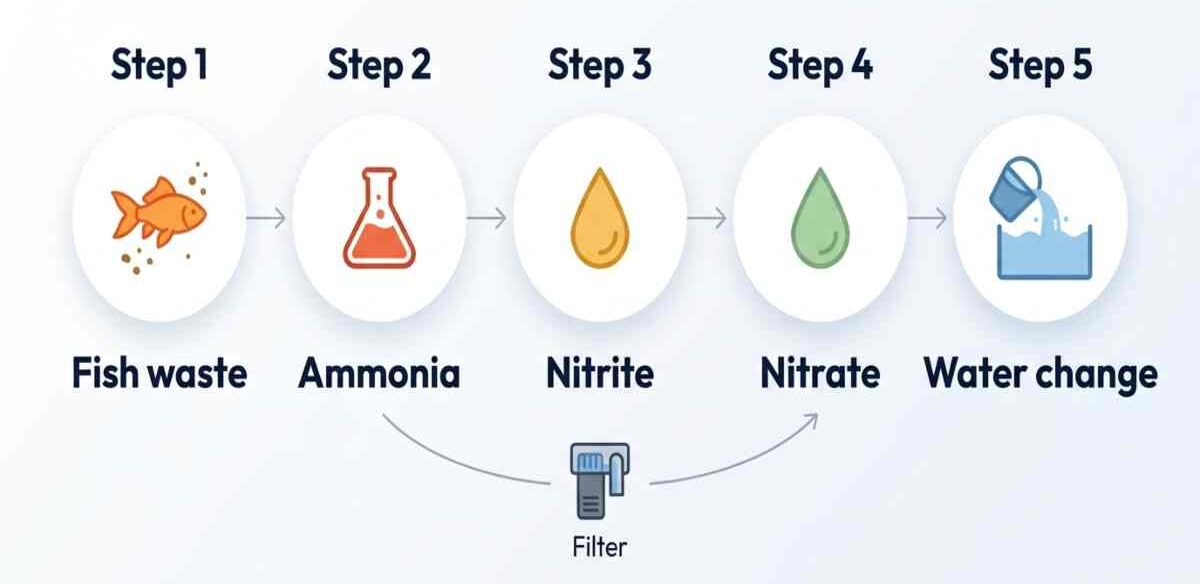 How fish waste becomes nitrate and is removed by water changes
What Do Comet Goldfish Eat?
Comets are omnivores. Their wild goldfish ancestors feed on insect larvae, small crustaceans, plant material, and detritus, and a good captive diet reflects that mix. Comets themselves are a bred form, not a wild species, so “what they eat in the wild” really refers to their ancestors.
A quality goldfish flake or sinking pellet should be the base. Sinking pellets help reduce the air they gulp at the surface. Add variety with frozen or live foods such as brine shrimp and daphnia, and offer plant foods such as shelled peas, blanched lettuce, or spinach. Fresh vegetables are commonly used to add fiber, though evidence that they prevent digestive trouble is limited.
Feed small portions once or twice a day, and remove anything left uneaten after a few minutes. Comets act hungry constantly, so their begging isn’t a reliable sign they need more. Overfeeding fouls the water and can cause digestive problems.
Can Comet Goldfish Live in a Pond, and With Koi?
Yes, and a pond is where comets look and behave their best. They are active, hardy, and tolerate seasonal temperature swings that would harm tropical fish. A pond gives them room, a natural food source of insects and algae, and steadier water chemistry than a small tank.
In cold climates, depth matters. The pond should be deep enough not to freeze solid, and it needs a way for gases to escape if the surface freezes over. Many keepers stop or greatly reduce feeding when the water is very cold, because the fish’s digestion slows down. Exact depth and feeding cut-offs depend on your local winters, so check advice for your region. Provide some cover as well, since birds and other predators take fish from open ponds.
Comets can share a pond with koi, as long as the pond is large. Koi grow much bigger than comets and also produce a lot of waste, so the pond needs strong filtration and plenty of volume. Feeding time can favor the bigger, more aggressive eaters, so make sure the smaller comets get their share.
Never release unwanted goldfish into local waters. According to the USGS Nonindigenous Aquatic Species program, goldfish have established populations outside their native range in North America. If you cannot keep your comet, contact a fish store, a local aquarium club, or a rescue group instead.
Which Tank Mates Suit Comet Goldfish?
Comets are active, sociable fish that do better with company of their own kind. The best companions are other hardy, single-tailed goldfish of similar size, such as common goldfish, shubunkins, and other comets. They share the same temperature needs and swimming speed.
Avoid mixing them with slow, round-bodied fancy goldfish. Comets are fast, competitive feeders and will often eat before a slower fish gets a bite. Tropical fish are a poor match because they need warmer water, and any fish small enough to fit in a comet’s mouth is at risk. Bettas are not suitable either, as they need warm, still water.
Aggression is rare, but chasing can happen during spawning, when males pursue females. Give the group plenty of room and hiding spots, and watch for torn fins.
Why Is My Comet Goldfish Turning White?
Three common reasons look different.
- Tiny white dots like grains of salt point to ich (white spot disease), a parasite. Fish may flick against objects or hold their fins clamped.
- White or gray patches, cottony fluff, or a fuzzy mouth or fin edge can point to a bacterial infection such as columnaris or a fungal problem, often after injury or poor water quality.
- Pale patches with red streaks can be ammonia or nitrite burns.
- Gradual, even fading over weeks or months may be age, genetics, diet, or lack of light. Young fish also change color as they mature, and some colors naturally fade.
If the fish is eating and active and the water tests clean, this usually isn’t an emergency.
Start with your water test. If ammonia or nitrite is above zero, do a water change and fix the cause. If dots or fluffy patches appear, set up a hospital tank if you can, keep water quality excellent, and follow the directions for medication specific to the problem. Do not guess at doses. If the fish gets worse, stops eating, or you are unsure what you are seeing, an aquatic veterinarian can examine it properly.
A dedicated article on why goldfish turn white goes deeper into diagnosis.
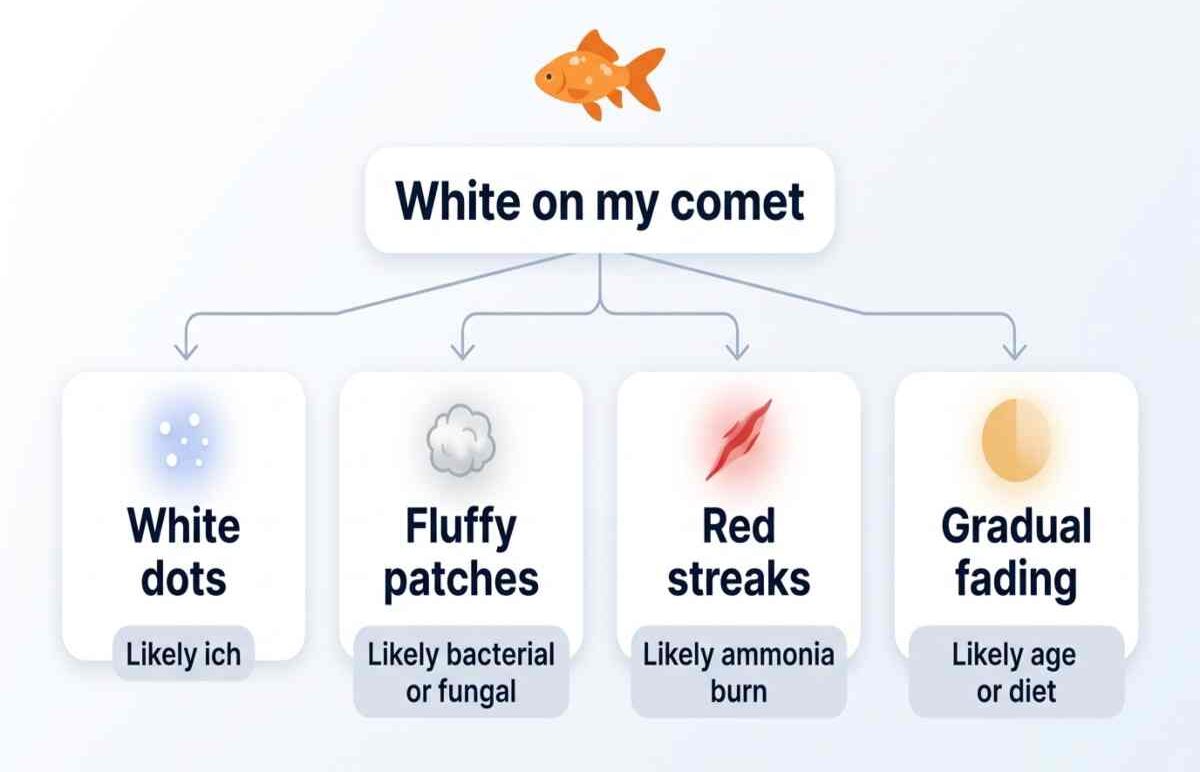 Match the white marks on your comet to the likely cause
What Other Health Problems Affect Comet Goldfish?
Comets are hardy, but they are not immune. Most common problems stem from water quality and stress, so prevention mostly comes down to good husbandry. Ammonia and nitrite poisoning cause gasping, red or inflamed gills, lethargy, and clamped fins. Treat with water changes and by fixing the source, such as overfeeding, an overloaded filter, or a new tank that is not cycled.
Fin rot shows as frayed, ragged fins, sometimes with reddened edges, and is closely tied to poor water and injury. Swim bladder problems, where a fish floats sideways or struggles to stay level, are more common in round-bodied fancy goldfish than in slim comets, but overfeeding and gulping air can still contribute. Ich is often triggered by stress or by introducing new fish without quarantine.
Quarantine every new fish in a separate tank for a couple of weeks or longer before adding it to your main setup. Recovery times vary by problem and severity, and serious or unclear cases deserve professional help.
Which Myths About Comet Goldfish Are Wrong?
| Myth | What Is Actually True |
|---|---|
| A bowl is fine for a comet | Bowls are too small, unfiltered and unstable for a fish that can reach a foot long |
| Goldfish only grow to the size of their tank | Cramped fish are stunted by poor water, not by natural limits |
| Comets need a heater | They are cold-water fish and most do well at typical room temperatures |
| If it is begging for food, it needs more | Comets act hungry all the time, and overfeeding harms water and health |
| Comets can live with any fish | Tank mates should be hardy, cool-water, similar-sized and not slower than the comet |
What Should You Do Next?
The comet goldfish is an easy, rewarding fish once its space and water needs are met, but frustrating when treated as a bowl pet. Decide first where a foot-long fish will live, either a pond or a large filtered tank, and set that up and cycle it before you buy. The Fish Care has related guides on goldfish tank setup, water temperature, and common diseases if you want to build the rest of your plan.
Frequently Asked Questions (FAQs)
How many gallons does one comet goldfish need?
A practical minimum for one adult is 75 gallons (about 280 L), with more for each extra fish. Some sources say 40 to 55 gallons can work, but the larger size gives more margin for waste and growth.
Can a comet goldfish live in a small tank or bowl?
Not long-term. It can survive there briefly as a juvenile, but it will outgrow the space and the water will foul quickly.
What is the ideal temperature for a comet goldfish?
Roughly 60 to 75°F (15 to 24°C) suits most fish. They tolerate cooler water, but sudden changes and prolonged heat are stressful.
Do comet goldfish need a filter?
Yes, in any aquarium. They produce a lot of waste, and a filter and regular water changes keep ammonia at zero.
How long do comet goldfish live?
Commonly 10 to 15 years with good care, and some live 20 years or more.
Can comet goldfish live with koi?
In a large pond with strong filtration, yes. Koi will outgrow them, so watch feeding and water quality.
References
- FishBase, Carassius auratus species information: https://www.fishbase.se
- U.S. Geological Survey, Nonindigenous Aquatic Species program: https://nas.er.usgs.gov