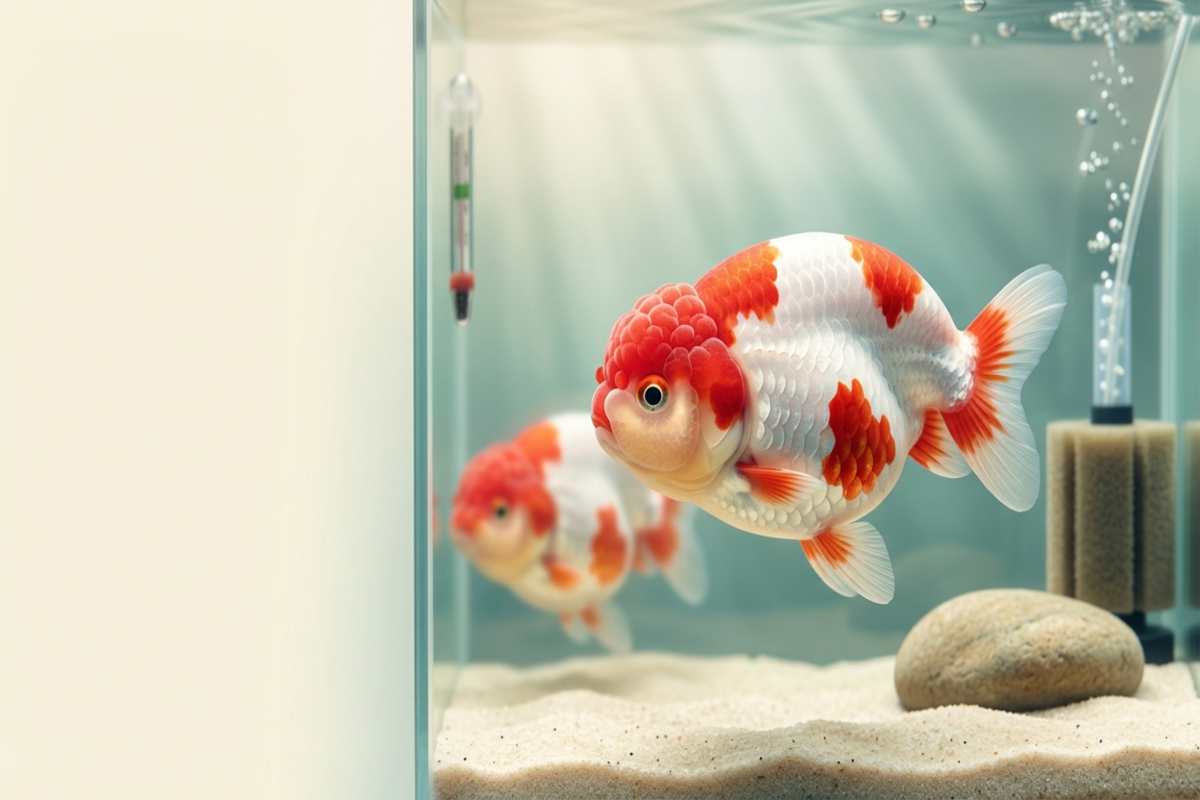
A healthy Ranchu goldfish typically grows to 5–8 inches (13–20 cm), lives 10–15 years with good care, and needs a filtered tank of at least 20 gallons for one fish (30 gallons for two), cool-to-moderate water of 65–75°F (18–24°C), and small meals of sinking food. Get those four things right and most Ranchu problems never start.
This guide covers everything beyond the basics: how to recognize a well-bred Ranchu, how to set up a tank that suits its awkward swimming style, what to feed, which tank mates are safe, and how to fix the most common health problems.
Ranchu Goldfish Care at a Glance
| Care Point | Target |
|---|---|
| Adult size | 5–8 inches (13–20 cm) body length, sometimes larger |
| Lifespan | 10–15 years with good care |
| Minimum tank | 20 gallons for one, plus 10–15 gallons per extra fish |
| Temperature | 65–75°F (18–24°C), kept stable |
| pH | 7.0–8.0 |
| Ammonia / nitrite | 0 ppm, always |
| Nitrate | Below 20 ppm ideally |
| Filtration | Gentle, high-capacity (sponge or canister) |
| Heater | Optional, useful in rooms with temperature swings |
| Diet | Sinking pellets, gel food, blanched vegetables, occasional frozen foods |
| Tank mates | Other slow, round-bodied fancy goldfish only |
What Is a Ranchu Goldfish?
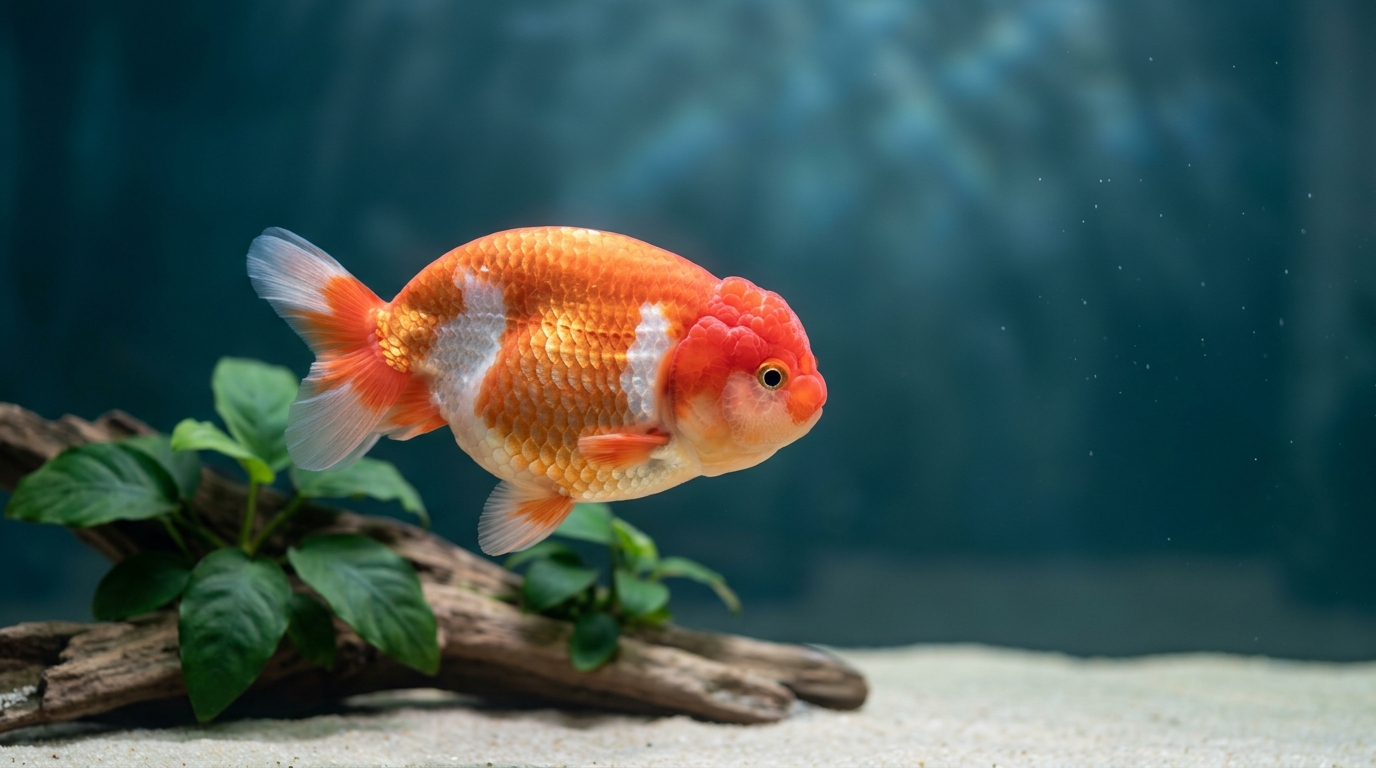
The Ranchu is a fancy goldfish bred in Japan from Chinese stock and often nicknamed the king of goldfish. It has a short, deep, egg-shaped body; an arched back with no dorsal fin; a short tail set at a steep angle; and a fleshy head growth called a wen.
Each trait results from selective breeding, and each affects care. The compressed body makes Ranchu slow, clumsy swimmers. The missing dorsal fin removes a stabilizer. The wen traps debris if the water is dirty.
Think of a Ranchu as a goldfish that has traded speed and hardiness for shape. It can thrive for over a decade, but it forgives far less than a comet or common goldfish.
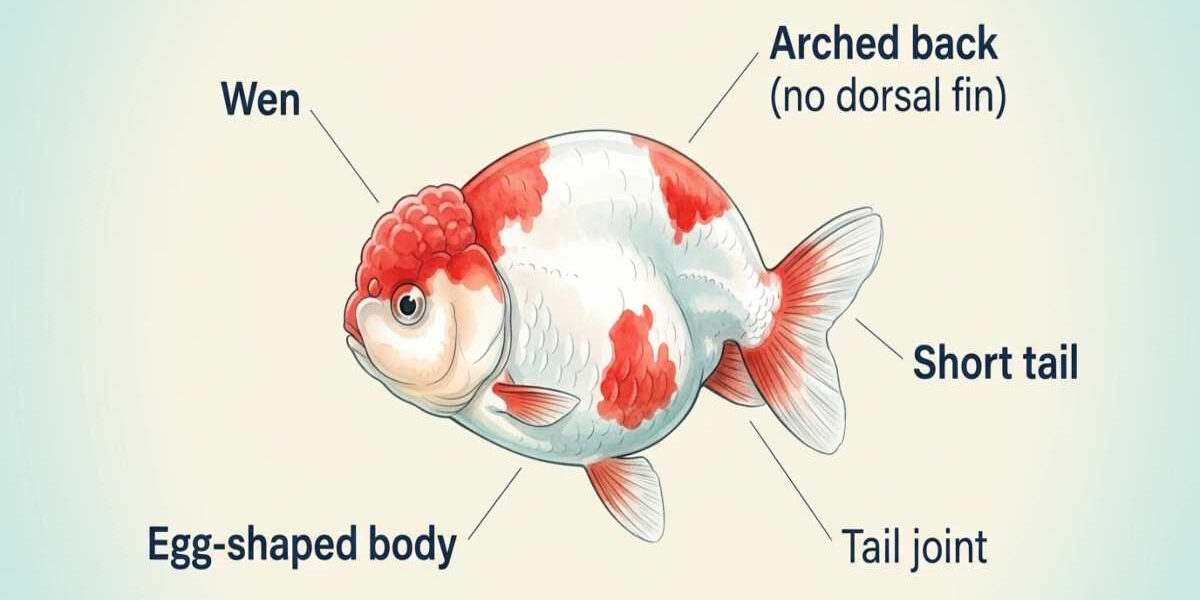 Key features of a Ranchu: wen, arched back, and no dorsal fin
Japanese Ranchu vs Thai Ranchu
Japanese Ranchu are traditionally judged from above, so breeders value a broad back, a smooth curve, and a tail that flows naturally behind the body. Thai Ranchu are often bred with the side view in mind, favoring a very deep, rounded body and a large wen.
For home care, the difference is small. Both need the same gentle water flow and clean conditions. Deeper-bodied lines may be a little more prone to buoyancy trouble, so feeding discipline matters even more.
Ranchu vs Lionhead vs Oranda: How to Tell Them Apart
The quickest check is the back. A Ranchu has a strongly arched back and a short tail that tucks downward. A Lionhead has a straighter, flatter back and a longer, more horizontal tail. An Oranda has a dorsal fin.
| Feature | Ranchu | Lionhead | Oranda |
|---|---|---|---|
| Dorsal fin | None | None | Present |
| Back line | Strongly arched | Flatter, straighter | Normal curve |
| Tail | Short, angled downward | Longer, more horizontal | Long, flowing |
| Wen | Develops on head, often with cheeks | Heavy wen covering head and cheeks | Wen on head |
| Swimming | Slow, rocking | Slow | Moderate |
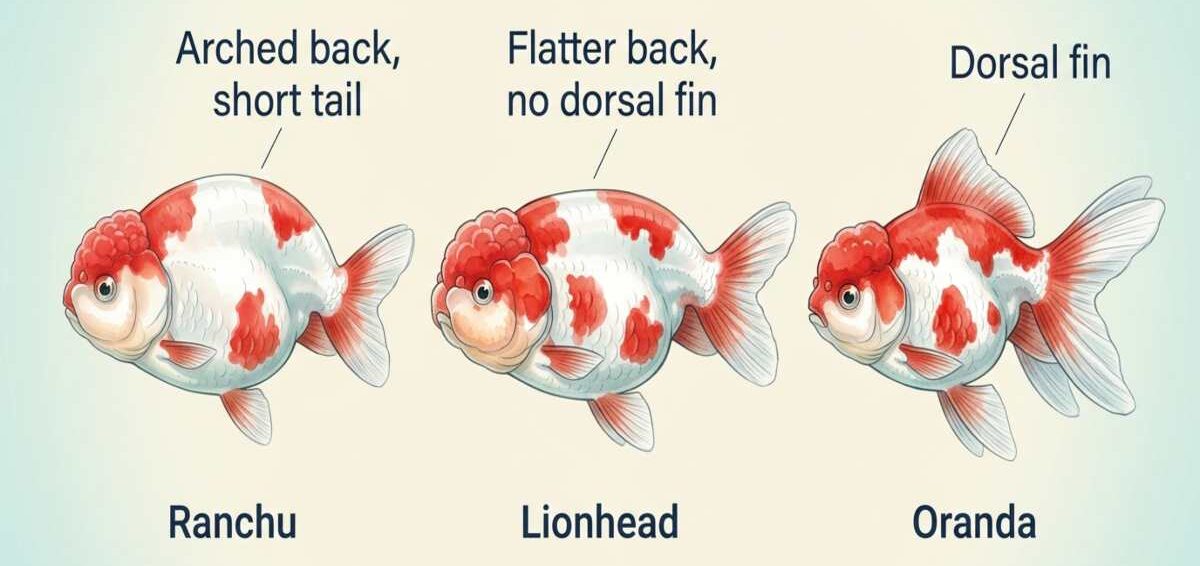 Spot the difference: back line, tail and dorsal fin
How Big Do Ranchu Goldfish Get?
Most pet Ranchu reach 5–8 inches (13–20 cm) measured from nose to tail base. Well-fed fish from strong lines can exceed that. Growth is slow, and most fish look close to adult size by two to three years, although the wen keeps developing for longer.
Compare that with the wild-type goldfish species, which FishBase lists with a maximum recorded length of 48 cm. Ranchu are much smaller because of their compact body, but they are still big enough to outgrow a bowl or a 10-gallon tank in a year or two.
A common mistake: keeping a Ranchu in a small tank and assuming it will stay small. Poor water quality and cramped space don’t keep a goldfish tiny in a healthy way. They stunt growth, can damage organs, and usually shorten the fish’s life.
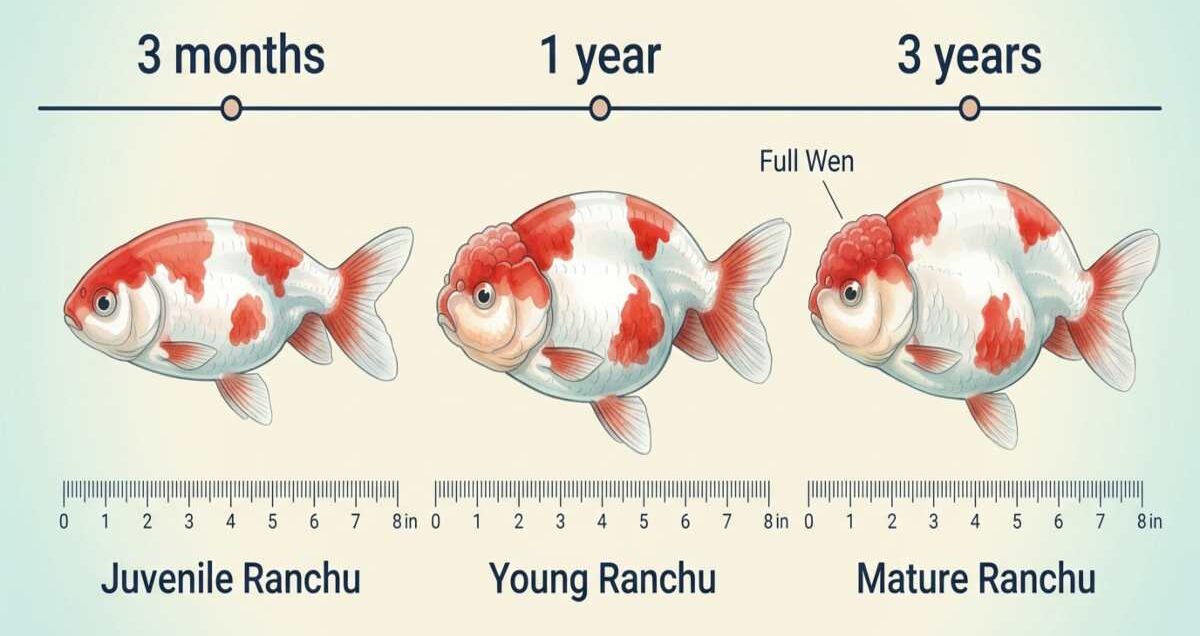 How a Ranchu’s size and wen develop over three years
How Long Do Ranchu Goldfish Live?
With stable water and good feeding, a Ranchu usually lives 10–15 years. Some live longer. Poor conditions can cut that to a few years.
Three things matter most:
- Water quality. Ammonia and nitrite damage gills and make fish vulnerable to infection.
- Stable temperature. More than a few degrees of fluctuation in a day stress fancy goldfish.
- Feeding habits. Overfeeding and floating dry food are the most common causes of buoyancy problems.
Buying healthy stock matters as much as care. Choose a fish with clear eyes, intact fins, a smooth wen, and an upright, balanced swimming style.
Ranchu Goldfish Tank Setup
Tank Size
Start at 20 gallons for one Ranchu. For two, 30 gallons is a sensible minimum, and each extra fish needs roughly 10–15 more gallons. Choose a wider tank over a tall one. Surface area improves oxygen exchange, and Ranchu are poor swimmers that don’t benefit from extra height.
Goldfish produce a lot of waste, so a larger volume dilutes it. If you are deciding between two tanks, buy the bigger one.
Filtration and Water Flow
You do need a filter. Aim for strong biological filtration with gentle flow. A sponge filter is the classic choice for fancy goldfish, and a canister filter works well when you diffuse its output with a spray bar or baffle.
A good test: watch the fish. If it is being pushed around or struggles to hold position, the current is too strong.
Do Ranchu Need a Heater?
Not always. Ranchu are comfortable at 65–75°F (18–24°C) and many keepers prefer the cooler end. A heater helps if your room swings more than a few degrees overnight, because stability matters more than any single number. Set it to hold the tank around 68–72°F and use a thermometer to verify.
Substrate and Decor
Bare-bottom tanks are the easiest to keep clean. If you want a substrate, use fine sand or smooth gravel larger than the fish’s mouth so it can’t swallow it. Avoid sharp rocks, rough decorations, and anything with tight gaps, since a Ranchu’s wen and body can snag on them. Live plants such as anubias and java fern are worth trying, though goldfish may uproot or nibble softer species.
Water Parameters
| Parameter | Target |
|---|---|
| Temperature | 65–75°F (18–24°C) |
| pH | 7.0–8.0 (goldfish tolerate roughly 6–8, per FishBase) |
| Ammonia | 0 ppm |
| Nitrite | 0 ppm |
| Nitrate | Below 20 ppm ideally |
| Hardness | Moderate; avoid very soft water that lets pH drop |
Use a liquid test kit instead of paper strips to test ammonia, nitrite, and nitrate. Always add a dechlorinator to tap water.
Cycle the Tank First
Before adding fish, you need beneficial bacteria that convert toxic ammonia to nitrite, then to far less harmful nitrate. This is the nitrogen cycle, and it normally takes about four to six weeks to establish without fish.
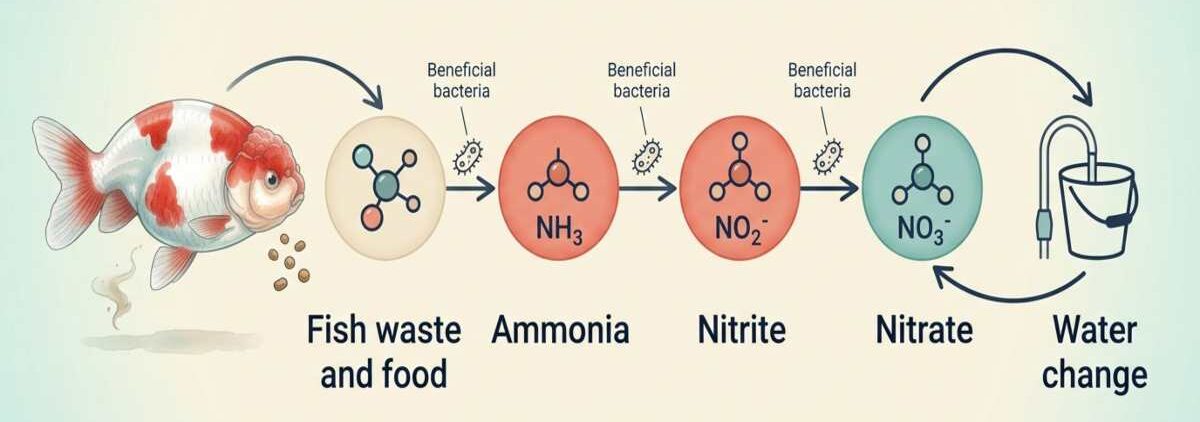 How bacteria turn toxic ammonia into nitrate, which water changes remove
Water Change Routine
Change 30–50% of the water weekly with temperature-matched, dechlorinated water. Ranchu produce a lot of waste for their size, so this is the single most useful habit you can build. Siphon debris from the bottom each time. Rinse filter media in old tank water, never straight from the tap.
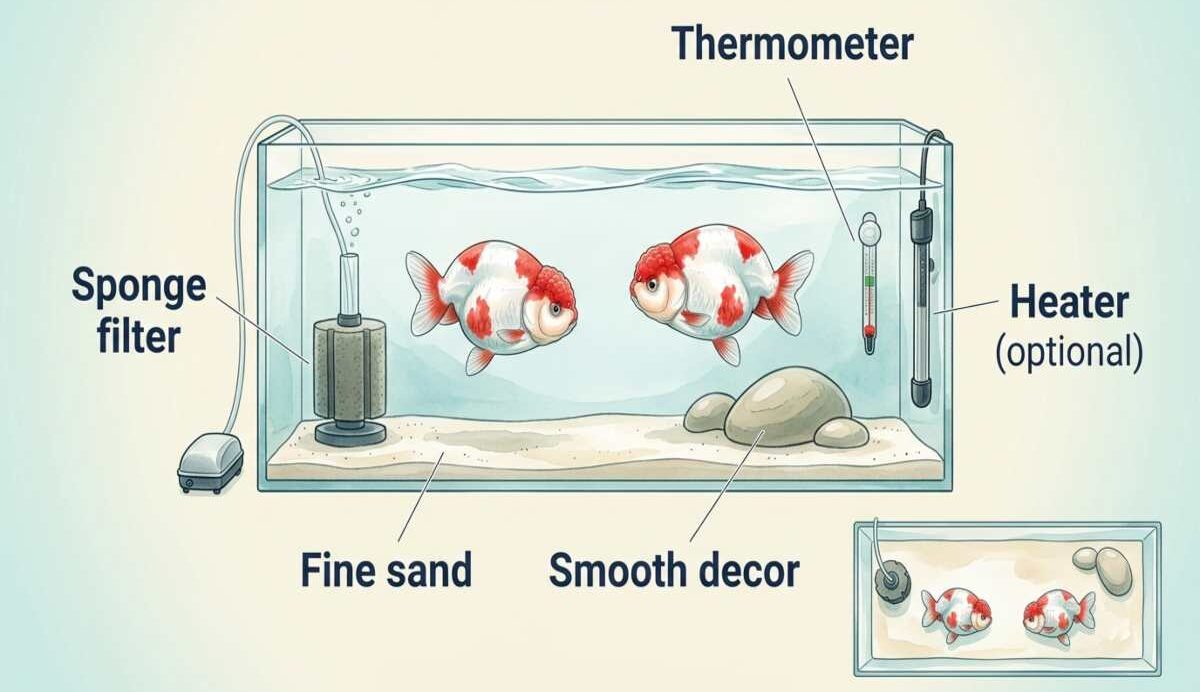 A simple, safe setup for two Ranchu in a 30-gallon tank
What to Feed Ranchu Goldfish
The best diet is a quality sinking pellet or gel food, supported by blanched vegetables and occasional live or frozen foods. Ranchu are slow and have short guts, so slow-sinking food keeps them from gulping air at the surface, a common trigger for buoyancy trouble.
| Food | Why It Works | How Often |
|---|---|---|
| Sinking pellets (soaked briefly) | Easy to digest, limits air gulping | Daily staple |
| Gel food (such as Repashy) | Soft, hydrating, gentle on the gut | Several times a week |
| Blanched peas (shelled), zucchini, spinach | Fiber that supports digestion | A few times a week |
| Brine shrimp, bloodworms (frozen or live) | Protein and enrichment | Occasional treat |
| Floating dry flakes | Encourages surface gulping | Avoid or limit |
How Often and How Much
Feed adults once or twice a day. Give juveniles three or four small meals a day, because frequent small feedings support steady growth. Offer only what the fish finishes in about one to two minutes, then remove the rest.
Skipping food one day a week is a common keeper habit, and many keepers find it helps digestion. Ranchu eat eagerly, so keepers have to limit their food.
Best Tank Mates for Ranchu Goldfish
The safest tank mates are other slow, round-bodied fancy goldfish. Fast fish outcompete Ranchu for food, and many tropical fish need heat that Ranchu don’t.
| Good Choices | Poor Choices |
|---|---|
| Other Ranchu | Comets, commons, shubunkins (fast, much bigger) |
| Lionheads | Plecos (may rasp the slime coat) |
| Similar slow fancy goldfish with matching body shape | Bettas and tropical fish (heat and aggression mismatch) |
| Nippy or fin-biting species |
When in doubt, keep Ranchu with other Ranchu. Quarantine every new fish for around four weeks before introducing it, since disease from a new arrival is far more common than aggression.
Ranchu Colors and Varieties
Ranchu come in several color patterns:
- Red and white (sarasa): the classic show pattern.
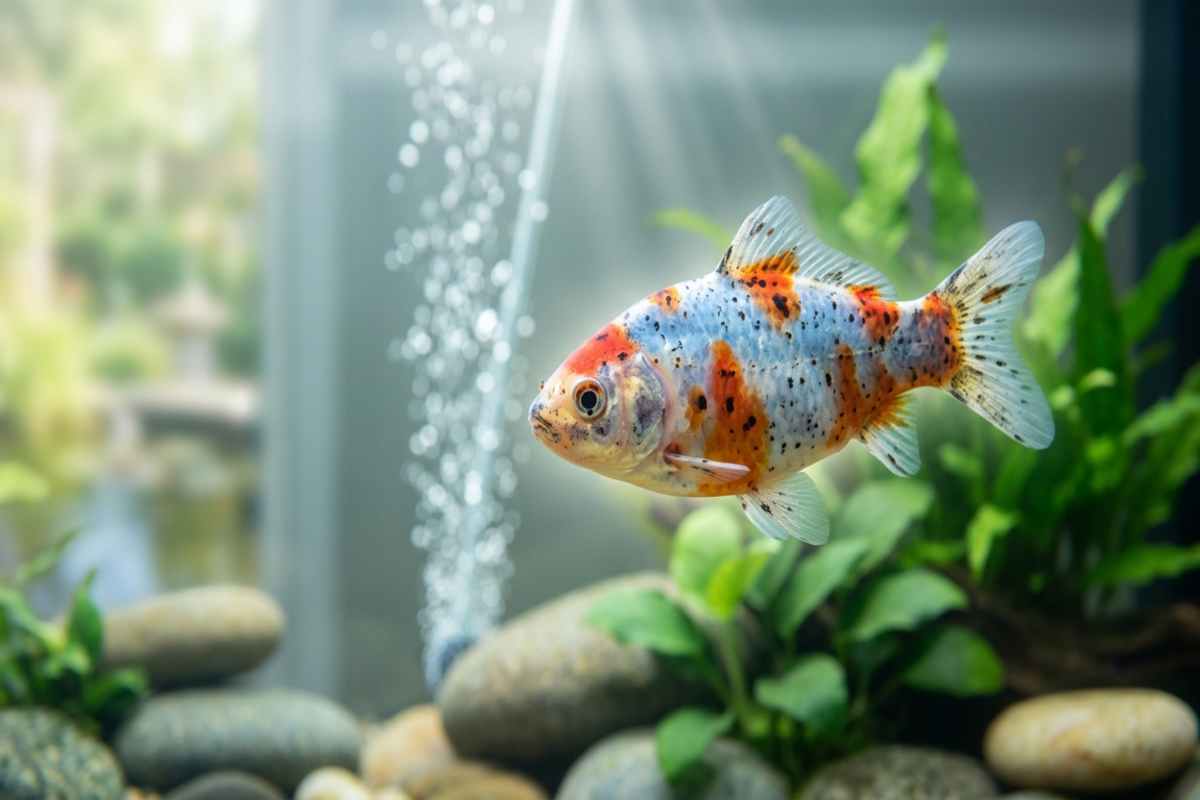
- Calico: a mix of colors over nacreous (matte) scales. Patterns can shift as the fish matures.
- Black: striking when young, but black goldfish often fade toward bronze or orange as they age. This is normal, though it can also respond to water conditions and light.
- Red, white, chocolate, blue: less common single-color variations.
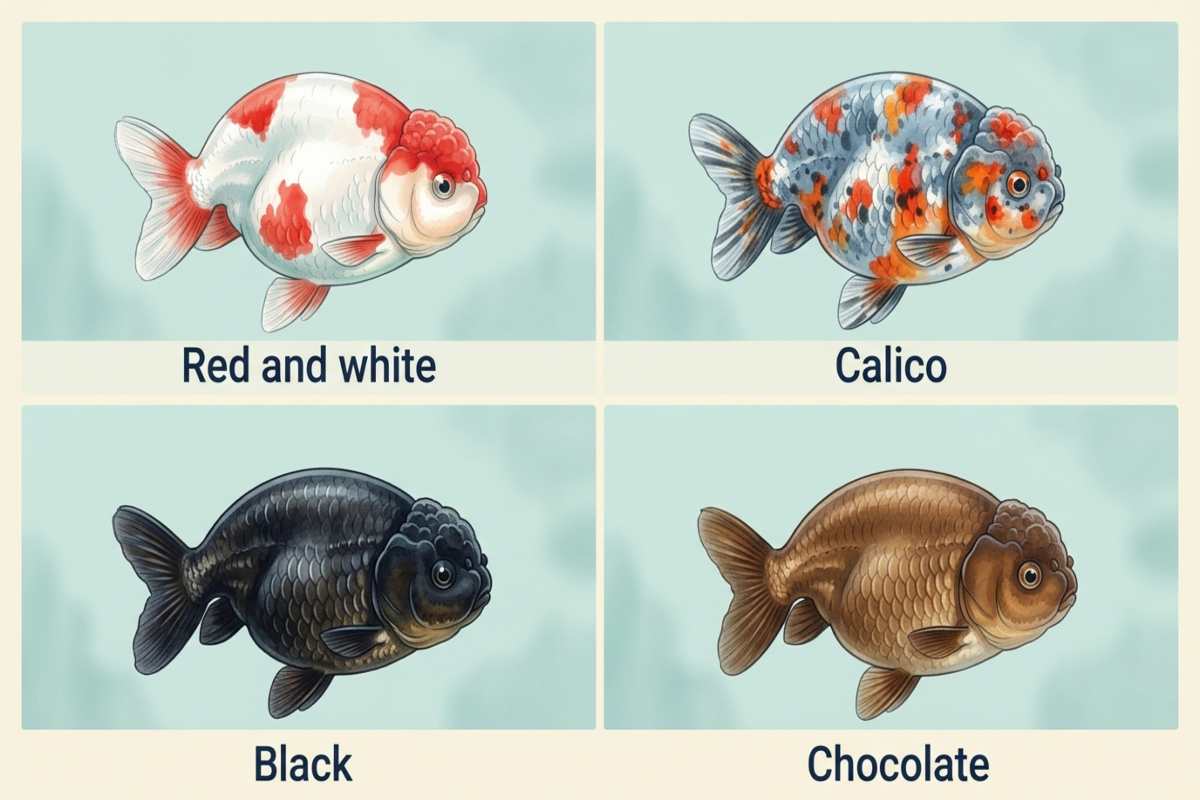 Common Ranchu colors, and how they can change with age
How Much Does a Ranchu Cost?
Prices vary widely by quality and seller. Pet-quality fish from stores are typically affordable, show-quality fish from specialist breeders cost much more, and top Japanese champions can reach very high prices. Pay more for health and body shape, not just color.
Common Ranchu Health Problems
| Problem | Signs | First Steps |
|---|---|---|
| Swim bladder trouble | Floating, tipping, swimming upside down, sinking | Test water, fast 24–48 hours, then feed soaked pellets and a shelled pea |
| Ich (white spot) | White dots, flashing, clamped fins | Raise temperature gradually and treat as directed; see the full ich treatment |
| Dropsy | Swollen belly, raised pinecone-like scales | Isolate, improve water, seek advice early; often serious |
| Flukes or lice | Scratching, visible parasites, red patches | Identify the parasite, then treat specifically |
| Fin rot or ammonia burn | Ragged fins, red edges | Fix water quality first |
Why Is My Ranchu Swimming Upside Down?
The most common cause is a buoyancy problem linked to the Ranchu’s compressed body, but start with the water. Test for ammonia and nitrite. If those are zero, think about food: floating flakes, overfeeding, and constipation are the usual culprits. A short fast, a soaked sinking pellet, and a blanched shelled pea often help.
If it persists, doesn’t improve in a few days, or the fish also has swelling or bleeding, consult an aquatic veterinarian. The Merck Veterinary Manual is a good reference for diagnosing and treating diseases in aquarium fish.
Wen Care
The wen is soft and slow-growing. Keep the water clean so debris and bacteria don’t build up in its folds, and avoid sharp decor. A very large wen can partly block the eyes or mouth, so watch that your fish can still feed and see.
Ranchu Goldfish Breeding Basics
Ranchu generally breed in spring after a gentle rise in temperature. Males develop small white breeding tubercles on the gill covers and pectoral fins. Because Ranchu are poor swimmers, breeders often hand-spawn or provide spawning mops and a spacious tank.
Eggs hatch in a few days, and the fry need careful feeding and frequent water changes. Successful breeding means culling, raising, and rehoming many fry, so it is best left to keepers with the room and a plan.
Ranchu Care Checklist
- Tank of at least 20 gallons (30 for two), cycled for several weeks before adding fish
- Gentle sponge or canister filtration
- Stable temperature of 65–75°F
- Ammonia and nitrite at zero, nitrate low
- Weekly 30–50% water change
- Sinking food, small meals, vegetables for fiber
- Only slow, fancy tank mates
- Four-week quarantine for new fish
- Smooth decor and a safe substrate
Final Thoughts
A Ranchu rewards patient keepers. Give it space, clean water, gentle flow, and sinking food, and it will grow into one of the most characterful fish you can keep. At The Fish Care, we make that kind of long-term care practical, and a well-run Ranchu tank shows how far consistent basics can go.
Frequently Asked Questions
What is the minimum tank size for two Ranchu goldfish?
A 30-gallon tank is a sensible minimum. Larger is better.
How long do Ranchu goldfish live?
Usually 10–15 years with stable water and good feeding.
How big do Ranchu goldfish get in inches?
Typically 5–8 inches, sometimes more.
Do Ranchu goldfish need a heater or filter?
A filter, yes. A heater is optional, but helpful if your room temperature swings.
How often should I feed my Ranchu goldfish?
Once or twice a day for adults, three or four small meals for juveniles, only as much as they finish in one to two minutes.
What food is best for Ranchu growth?
A high-quality sinking pellet or gel food, with vegetables and occasional frozen foods.
Can Ranchu live with other goldfish?
Only with slow, round-bodied fancy goldfish. Fast single-tail goldfish out-compete them for food.
Can Ranchu live in a bowl?
No. Bowls are too small, hard to filter, and hold too little water to dilute waste.