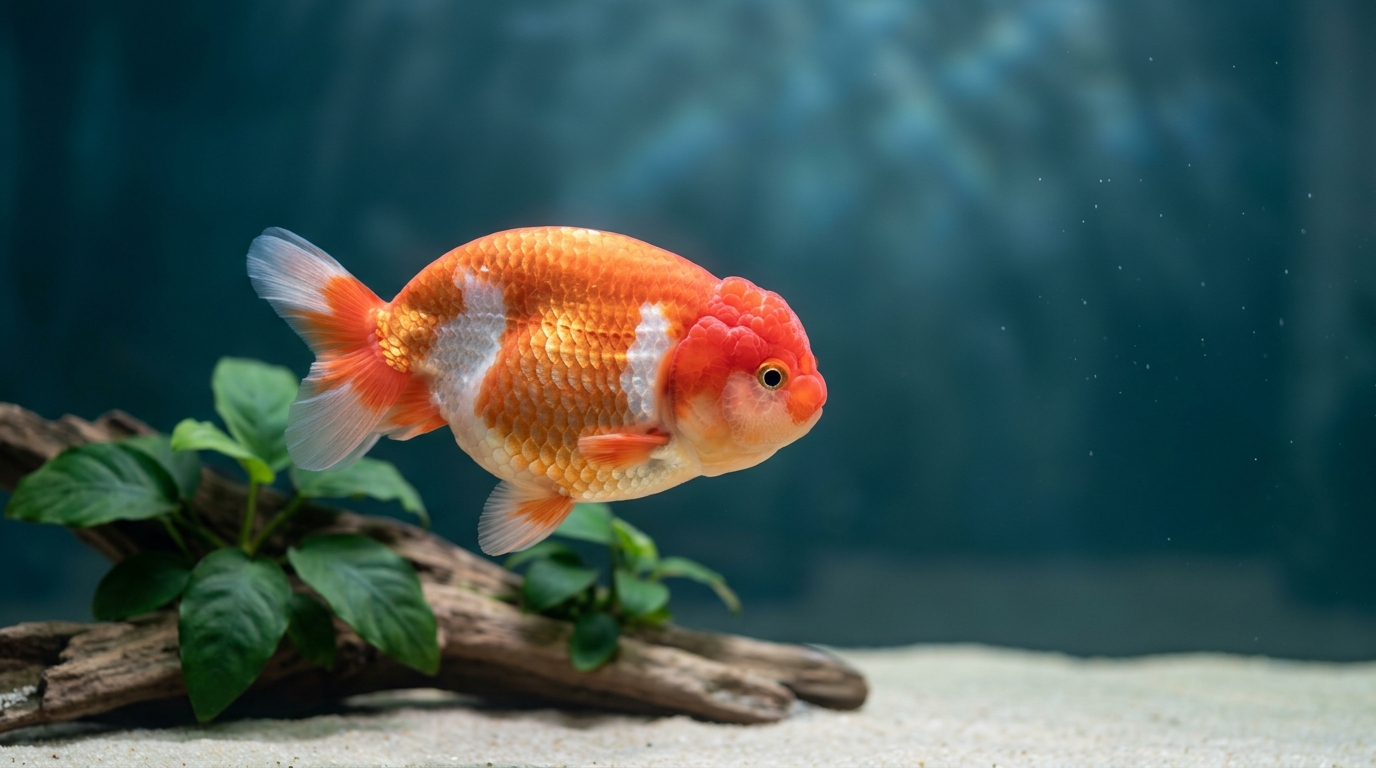
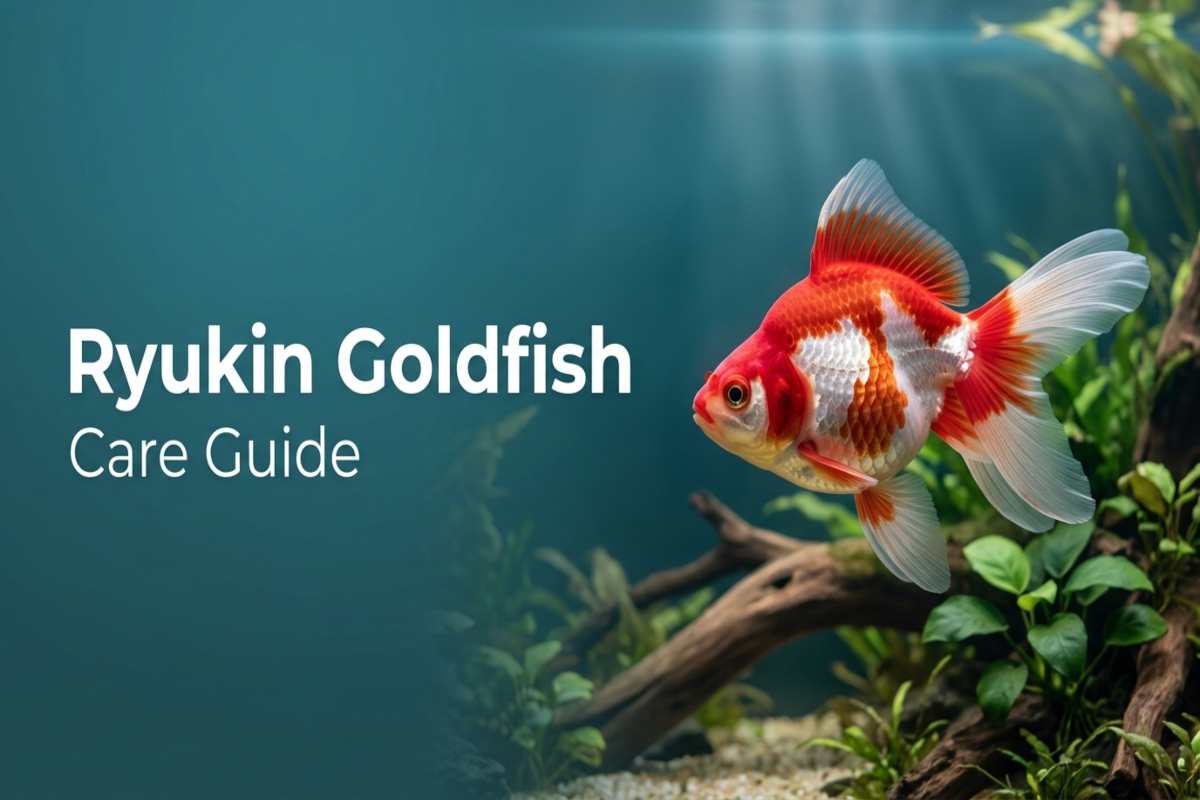
Ryukin goldfish are deep-bodied fancy goldfish with a tall dorsal fin, a raised shoulder hump, and a double tail. They typically reach 6 to 8 inches (15 to 20 cm), live 10 to 15 years with good care, and need at least a 30-gallon tank, stable water around 68 to 74°F (20 to 23°C), and sinking food to protect their delicate buoyancy.
They are not hard to keep, but they are less forgiving than single-tail goldfish. Their compact bodies make them prone to swim bladder problems, and they swim poorly in strong currents. Get the setup and feeding right from day one and a Ryukin becomes a long-term, characterful pet.
Key Takeaways
- Ryukin reach 6 to 8 inches, and some exceed 10 inches, so start with 30 gallons for one fish and add 15 to 20 gallons per extra fish.
- Stable water matters more than warm water: aim for 68 to 74°F, 0 ppm ammonia and nitrite, and nitrate ideally under 20 ppm through weekly water changes.
- Sinking pellets, blanched peas and occasional frozen protein in small portions reduce air gulping and constipation, the main triggers of swim bladder trouble.
- Pair Ryukin only with other slow, round-bodied fancy goldfish. Fast single-tail goldfish and tropical fish are poor matches.
- A tall, erect dorsal fin is the quickest visual health check. A clamped or drooping one signals stress or illness.
What Is a Ryukin Goldfish?
The Ryukin is a fancy goldfish, a domesticated form of Carassius auratus, the species FishBase lists as native to East Asia. The name means “Ryukyu goldfish” in Japanese. The breed is generally believed to have reached Japan from China via the Ryukyu Islands in the 1700s, and it has been refined there ever since.
Three features separate a Ryukin from most other goldfish.
Shoulder Hump
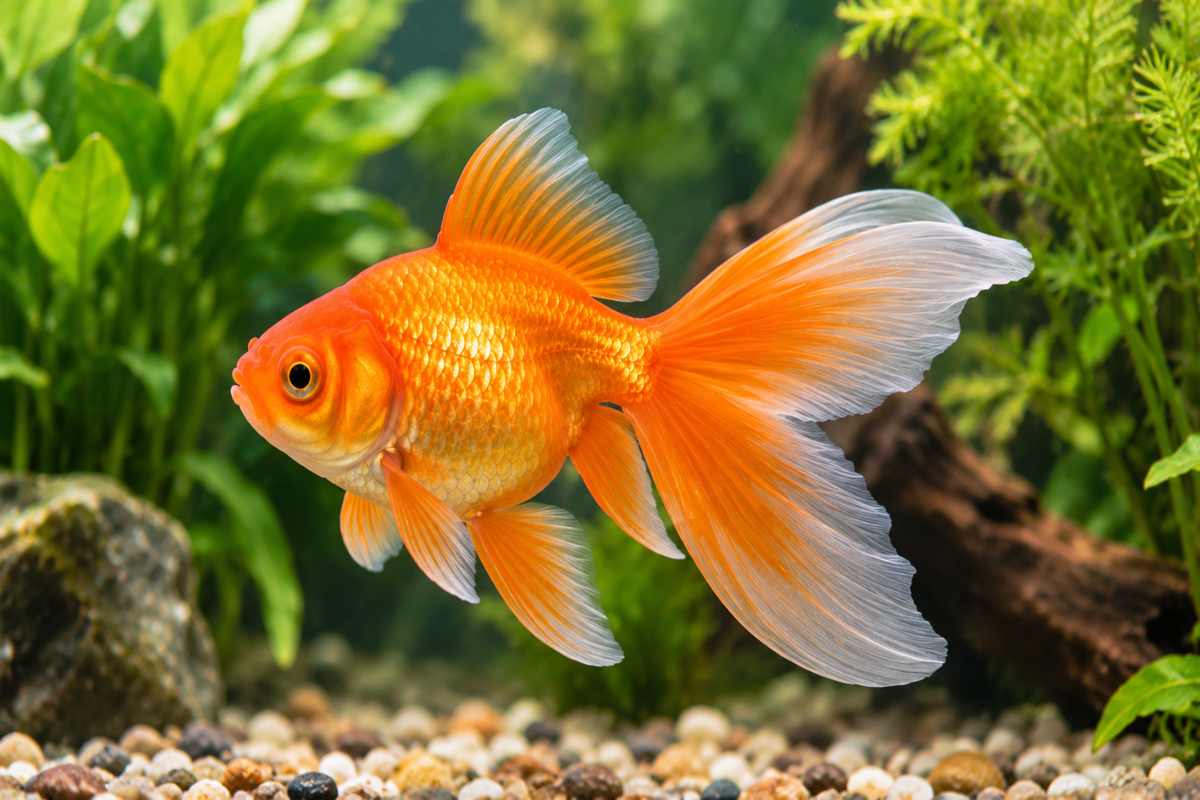
The hallmark trait is a raised ridge of the back right behind the head, rising toward the dorsal fin. It gives the fish its high-backed, almost hunchbacked silhouette. A smooth, pronounced hump signals quality.
Egg-Shaped Body and Dorsal Fin
The body is short, deep, and rounded, often described as egg-shaped. The dorsal fin is tall and held upright. Unlike some fancy breeds, Ryukin always have one.
Double Tail (Caudal Fin)
The tail is split into two lobes, and its length varies from short and sturdy to long and flowing. Together, the tail and compact body make Ryukin slower, less precise swimmers than a comet or common goldfish. That matters for filtration, tank mates, and feeding.
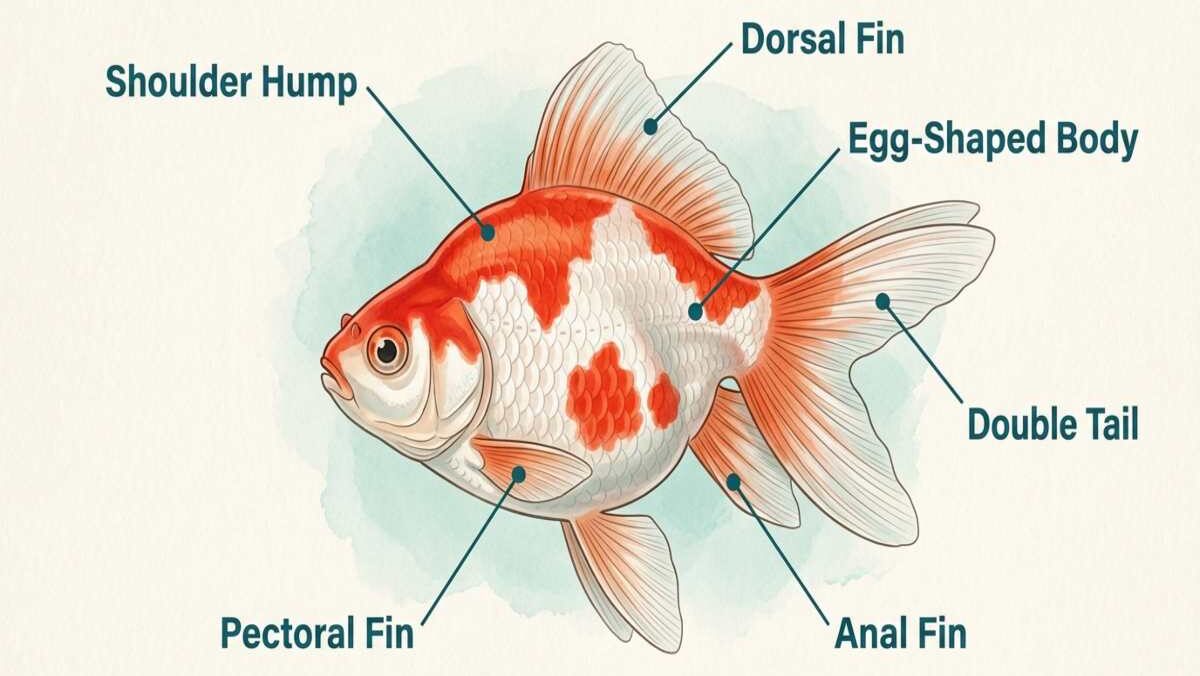 The shoulder hump and tall dorsal fin identify a Ryukin.
Ryukin vs Fantail and Other Look-Alikes
New keepers most often confuse Ryukin with fantails. Both have an egg-shaped body and a double tail, but the hump gives it away. Fantails have a smoother, more streamlined back and a less prominent dorsal.
| Breed | Shoulder Hump | Dorsal Fin | Body Depth | Head Growth |
|---|---|---|---|---|
| Ryukin | Pronounced | Tall, erect | Very deep | Smooth |
| Fantail | None or slight | Present, lower | Moderately deep | Smooth |
| Oranda | None | Present | Deep | Fleshy head growth (wen) |
| Ranchu | Rounded back, no hump | None | Very deep, short | Wen present |
| Pearlscale | None | Present | Round, ball-like | Smooth, domed scales |
Quick test: a tall dorsal plus a visible hump behind the head means Ryukin. A wen on the head means Oranda or Ranchu. No dorsal at all means Ranchu.
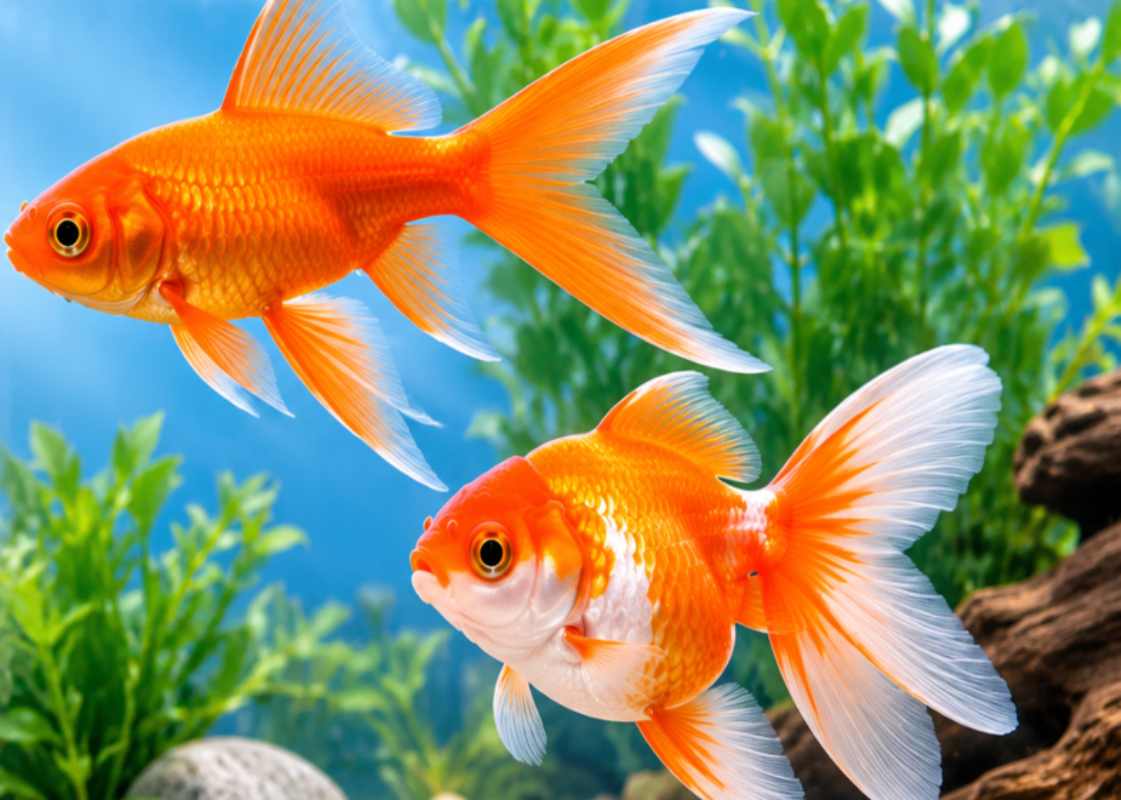
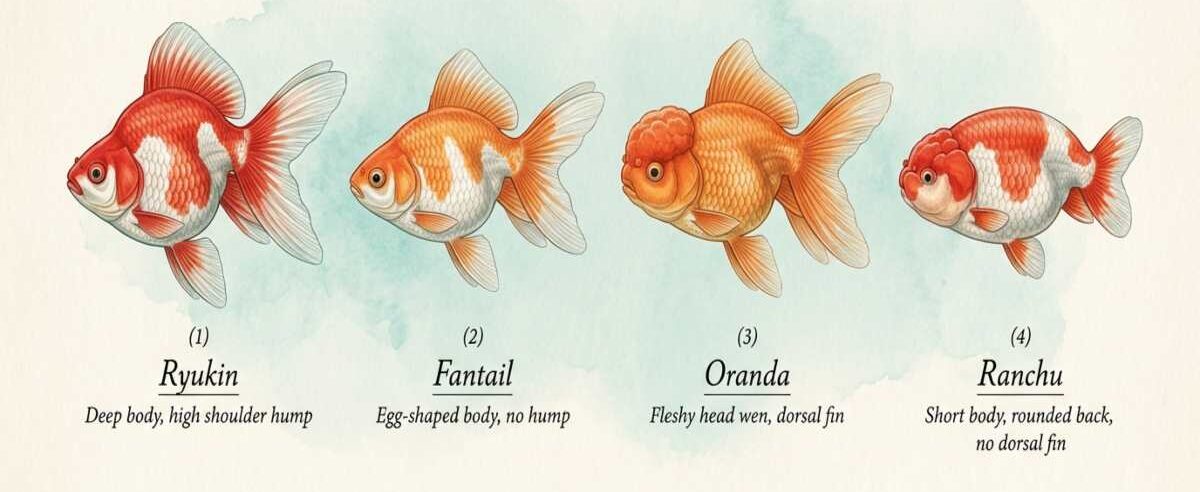 The shoulder hump and tall dorsal fin set Ryukin apart.
Ryukin Goldfish Varieties and Colors
Ryukin come in several color patterns. Popular ones include:
- Red and white: The classic bicolor, with bold red patches over a white body. Pattern placement varies from fish to fish.
- Calico: A mottled mix of colors such as red, orange, white, blue, and black, produced by nacreous (pearly, matte) scales. Calico patterns often shift as the fish matures.
- Solid red, orange, white, or chocolate: Single-color fish, usually with bright metallic scales.
- Black and bronze: Less common, and some darken or fade with age and water conditions.
Beyond color, you will see short-tail and long-tail Ryukin. Long-tailed fish look dramatic but are more prone to fin damage and more vulnerable to fin rot if water quality slips. Beginners generally do better with shorter-finned fish.
How Big Do Ryukin Goldfish Get?
Most adult Ryukin reach 6 to 8 inches (15 to 20 cm) of body length, and well-kept fish can pass 10 inches. They grow fastest in the first two to three years, then slow down.
The old claim that goldfish “grow to the size of their tank” is a myth. A fish kept in cramped, polluted water may look stunted, but it is accumulating stress and organ damage instead of simply staying small. That is a main reason such fish die young.
Ryukin Goldfish Tank Size and Minimum Setup
Goldfish produce a lot of waste, so volume is your main buffer against ammonia and nitrate. Choose a long tank at least 36 inches wide so the fish have room to swim and the surface has plenty of gas exchange.
| Number of Ryukin | Minimum Tank Size |
|---|---|
| 1 | 30 gallons (115 L) |
| 2 | 45 to 50 gallons (170 to 190 L) |
| 3 | 65 gallons (245 L) |
| Each additional fish | Add 15 to 20 gallons |
Bowls and tiny tanks are never suitable. They cannot hold water stably or cycle properly.
Minimum Setup Checklist
- Tank of at least 30 gallons with a secure, well-fitted hood or lid
- Filter rated for 1.5 to 2 times your tank volume, either a canister or hang-on-back (HOB) with strong biological media
- Spray bar or baffle to soften the flow
- Liquid water test kit (ammonia, nitrite, nitrate, pH)
- Water conditioner that neutralizes chlorine and chloramine
- Smooth substrate or a bare bottom
- Heater with guard, only if your room drops below about 65°F
Filtration and Water Flow
Heavy biological filtration is non-negotiable. A canister filter or a large HOB is best, and either lets you over-filter without crowding the tank.
Because Ryukin are clumsy swimmers, direct the outflow at the glass or through a spray bar. Fish constantly pushed around waste energy and can get injured against decor.
Substrate, Decor and Plants
Goldfish constantly sift the bottom with their mouths in search of food. Let that natural foraging behavior shape your substrate choice.
- Best: Smooth, fine sand, or a bare-bottom tank for easy cleaning.
- Acceptable: Smooth, rounded gravel large enough that it cannot fit in the fish’s mouth.
- Avoid: Medium gravel the size of a fish’s mouth, which can lodge in the throat.
Skip sharp plastic ornaments. A good rule is to run a pair of nylon tights over any decoration. If it snags, it can tear fins. Tough, low-light plants such as Anubias and Java fern survive goldfish grazing. Attach them to rocks or wood instead of burying the rhizome.
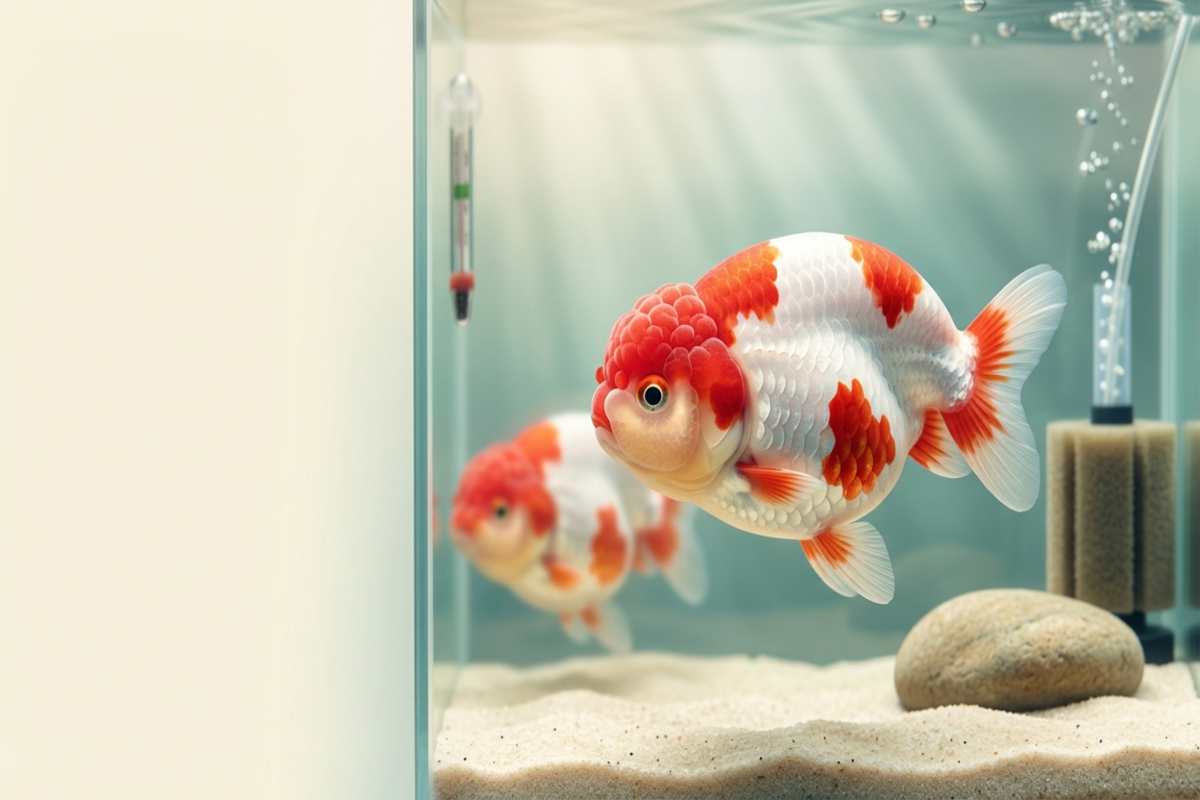
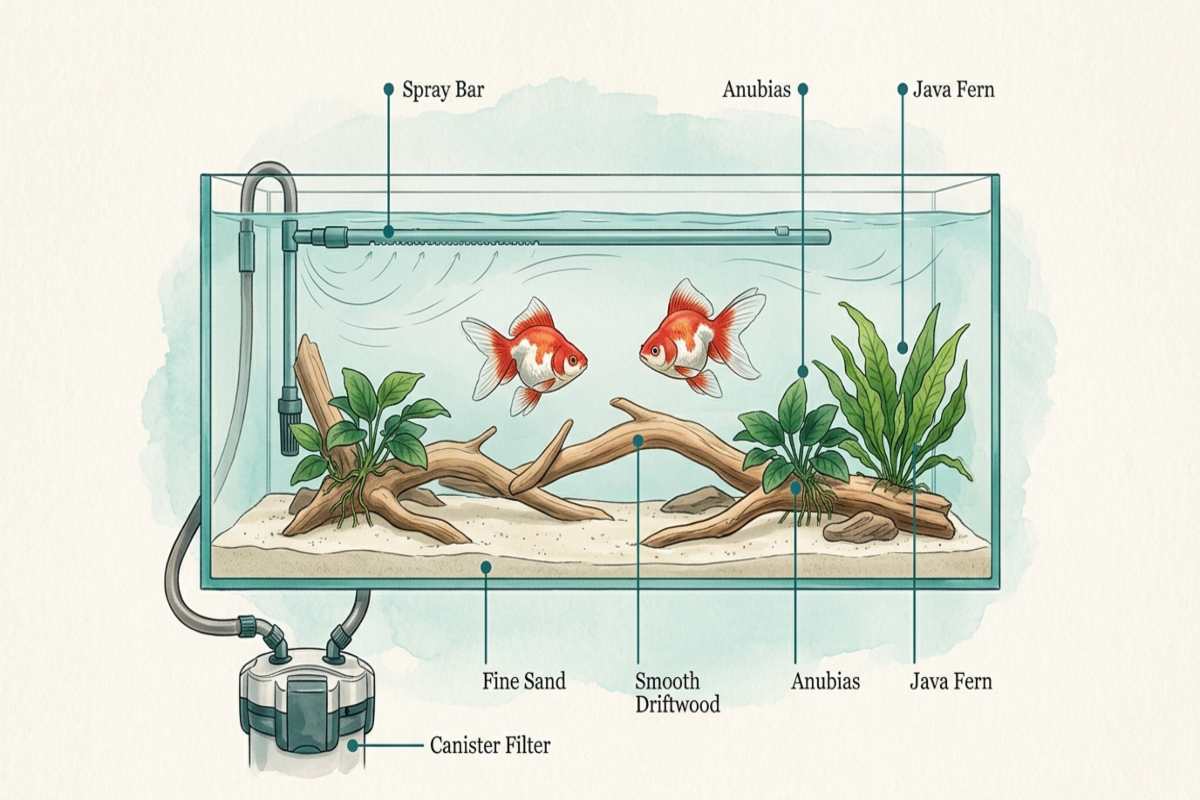 An ideal setup uses a canister filter, spray bar and sand.
Water Parameters and Temperature
Water quality is the single biggest predictor of Ryukin health. Veterinary references such as the Merck Veterinary Manual identify poor water quality as the most common underlying cause of disease in aquarium fish, and ammonia and nitrite are directly toxic even in small amounts.
| Parameter | Target |
|---|---|
| Ammonia | 0 ppm |
| Nitrite | 0 ppm |
| Nitrate | Ideally under 20 ppm (never above 40 ppm) |
| pH | 7.0 to 8.0, stable |
| Hardness | Moderate GH (roughly 6 to 12 dGH), with carbonate hardness high enough to hold pH steady |
| Temperature | 68 to 74°F (20 to 23°C) |
Cycle Before You Add Fish
A new tank has no beneficial bacteria. Cycle it first so bacteria can convert ammonia to nitrite, then to less harmful nitrate. Adding fish to an uncycled tank is the most common reason new goldfish die in the first weeks.
Weekly Water Changes
Change 30 to 50 percent of the water weekly, and vacuum the substrate. Use your nitrate reading to adjust. If it climbs above 20 ppm before the week ends, change more or change more often. Always treat new water with conditioner and match the temperature.
What Temperature Do Ryukin Need?
Ryukin are coldwater fish, but they tolerate cold less well than single-tail goldfish. Aim for 68 to 74°F. They can handle roughly 65 to 75°F, but sustained temperatures below 60°F slow digestion and weaken immunity, while anything above about 78°F lowers dissolved oxygen.
A sudden swing of several degrees stresses them more than a steady, slightly cool temperature does. In a fluctuating room, a small thermostat-controlled heater is worth it.
What Do Ryukin Goldfish Eat?
Goldfish are omnivores. Their digestive tract is a long, simple tube with no true stomach, so they process food continuously and turn waste around quickly. Overfeeding and low-fiber diets show up fast as constipation and buoyancy problems.
Why Sinking Pellets Matter
Floating food makes fish gulp air at the surface. In deep-bodied Ryukin, trapped air and constipation are widely considered key contributors to swim bladder disorder. Most experienced keepers therefore use high-quality sinking pellets or gel food. If you use floating pellets, soak them for a minute first. The evidence here comes mostly from keeper and veterinary experience instead of controlled studies, but the advice is low-risk and consistently effective.
Ryukin Diet at a Glance
| Food | Role | How Often |
|---|---|---|
| Quality sinking pellets or gel food | Daily staple | Once or twice daily |
| Blanched, shelled peas | Fiber, helps prevent constipation | 2 to 3 times weekly |
| Blanched spinach, zucchini, romaine | Plant matter | A few times weekly |
| Frozen daphnia | Gentle fiber and protein | Weekly |
| Frozen bloodworms or brine shrimp | Protein treat | Once or twice weekly, small amounts |
How Much to Feed
Offer only what your Ryukin eats in about one to two minutes, once or twice a day. Remove leftovers. Many keepers include a no-feed day each week, which does no harm and gives digestion a rest.
Soak freeze-dried foods first. Freeze-dried foods can swell in the gut.
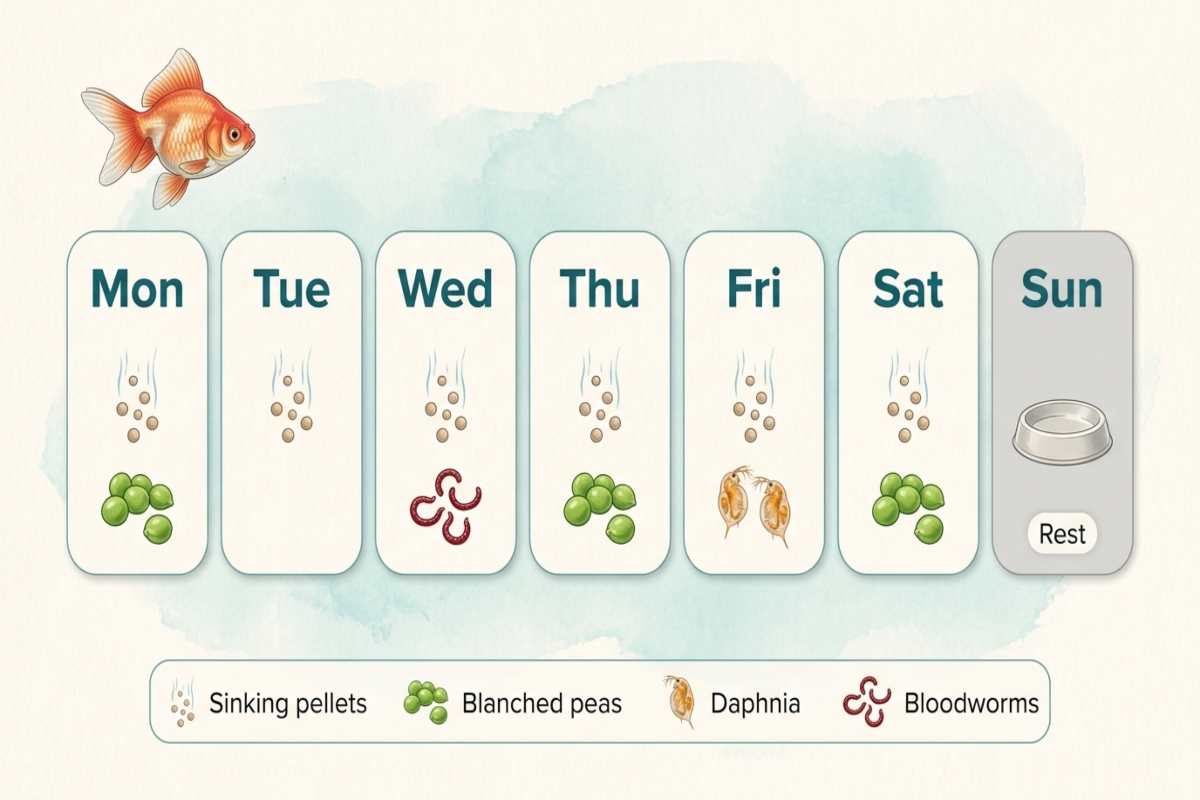 A simple weekly plan with pellets, peas and one rest day.
Ryukin Goldfish Tank Mates: Are They Aggressive?
Ryukin are peaceful. The real problem is competition. They are slower than most goldfish, and fast feeders will outcompete them.
Good tank mates:
- Other fancy goldfish with similar body shape and speed, such as fantails, orandas, lionheads, and pearlscales
Poor tank mates:
- Single-tail goldfish (comets, commons, shubunkins), which are fast and grow large
- Tropical fish, because the temperatures do not match
- Small fish such as tetras, which may be eaten
- Bettas, plecos, and other fish that may nip or rasp slime coats
One seasonal exception: in spring, males may chase females during spawning. Extra space and hiding spots reduce the stress.
How Long Do Ryukin Goldfish Live?
Ryukin typically live 10 to 15 years, and some pass 15 with excellent care. Fancy goldfish tend to live shorter lives than single-tail breeds because their compressed anatomy leaves little margin for error. Water quality, diet, and stable temperature are what determine whether your fish lands at the high or low end.
Why Is My Ryukin Swimming Upside Down?
Upside-down swimming, floating, or sinking usually points to swim bladder disorder. The swim bladder controls buoyancy, and the Ryukin’s compressed spine and body leave it vulnerable to pressure and constipation.
Common triggers include constipation, overfeeding, gulping air, cold water, poor water quality, and, less often, bacterial infection or a congenital disability.
What to Do
- Test the water. Fix any ammonia, nitrite, or high nitrate with an immediate water change.
- Pause feeding. Many keepers fast the fish for one to two days.
- Offer fiber. Afterward, feed a blanched, shelled pea or frozen daphnia.
- Keep the temperature steady toward the upper end of the safe range, around 72 to 75°F.
- Reduce flow and consider lowering the water level slightly so the fish can reach the surface and rest.
- Call an aquatic or exotic vet if there is no improvement in a week, or if you see a swollen belly, raised scales, or sores.
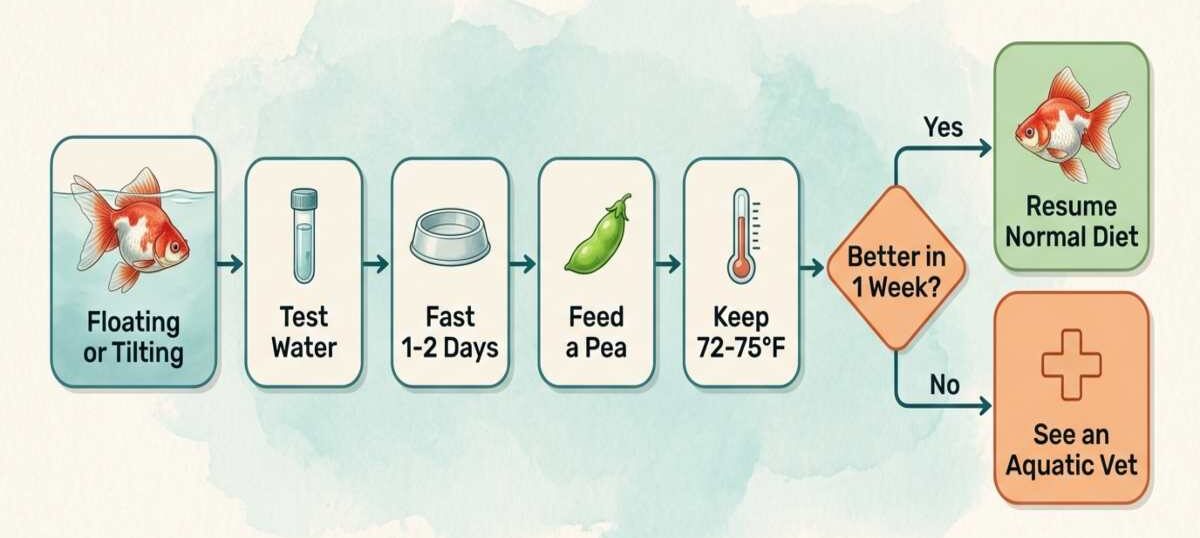 Test the water first, then fast, feed a pea and reassess.
Other Common Ryukin Health Problems
- Dropsy: Swollen body and raised, pinecone-like scales. Serious and needs prompt attention.
- Ich: White, salt-like spots, often after temperature swings.
- Fin rot: Frayed, whitened, or receding fins, often due to poor water quality.
- Ammonia burn: Red streaks on the body or fins.
Most of these trace back to water quality, so prevention begins with the routine above.
How to Choose a Healthy Ryukin
Buying from a seller who keeps clean tanks matters more than anything else. At The Fish Care, we recommend checking these before you buy:
- Dorsal fin tall and fully erect
- Level, controlled swimming with no tilting or floating
- Clear eyes, smooth scales lying flat with no raised pinecone scales
- No red streaks, white spots, or ragged fins
- Active, with a healthy appetite
Quarantine every new fish in a separate tank for about four weeks before adding it to your main setup.
Final Thoughts
A Ryukin rewards patience. A large cycled tank, gentle filtration, sinking food, and steady water carry most of the care. The Fish Care publishes more guides on each of these topics so you can keep building your knowledge as your fish grows.
Frequently Asked Questions (FAQs)
Are Ryukin goldfish good for beginners?
They can be, if the beginner commits to a large tank and a steady routine. They are less forgiving of mistakes than hardy single-tail goldfish.
Do Ryukin need a heater?
Not always. If your room stays around 65°F or above, you may not need one. A heater with a guard helps if the room cools at night or in winter.
Can Ryukin live outdoors in a pond?
In mild climates, yes, with proper shelter and depth. They are less cold-tolerant than single-tail goldfish, so many keepers bring them indoors when temperatures fall consistently low.
Why is my Ryukin’s dorsal fin drooping?
A clamped or drooping dorsal usually signals stress or illness. Test the water first, then check for other symptoms.
Why does my Ryukin gasp at the surface?
That usually means low oxygen, ammonia, or water that is too warm. Test the water, do a water change, and increase surface agitation.
Can a Ryukin live alone?
Yes. Goldfish are social, though, and many do better with one or two compatible companions, provided the tank is big enough.
References
- FishBase: https://www.fishbase.se
- Merck Veterinary Manual: https://www.merckvetmanual.com